化学学报 ›› 2026, Vol. 84 ›› Issue (3): 280-286.DOI: 10.6023/A25120401 上一篇 下一篇
研究通讯
韩中艳, 陈梅梅, 张驰, 薛伟, 谷利军*( )
)
投稿日期:2025-12-08
发布日期:2026-01-19
基金资助:
Han Zhongyan, Chen Meimei, Zhang Chi, Xue Wei, Gu Lijun*()
Received:2025-12-08
Published:2026-01-19
Contact:
*E-mail: gulijun2005@126.com; Tel.: 0851-83620521; Fax: 0851-83622211
Supported by:文章分享
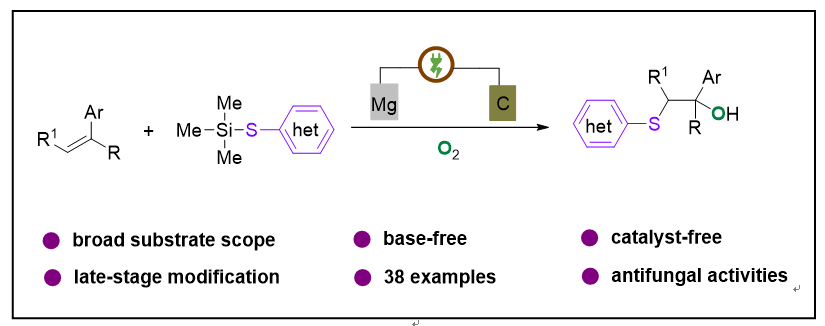
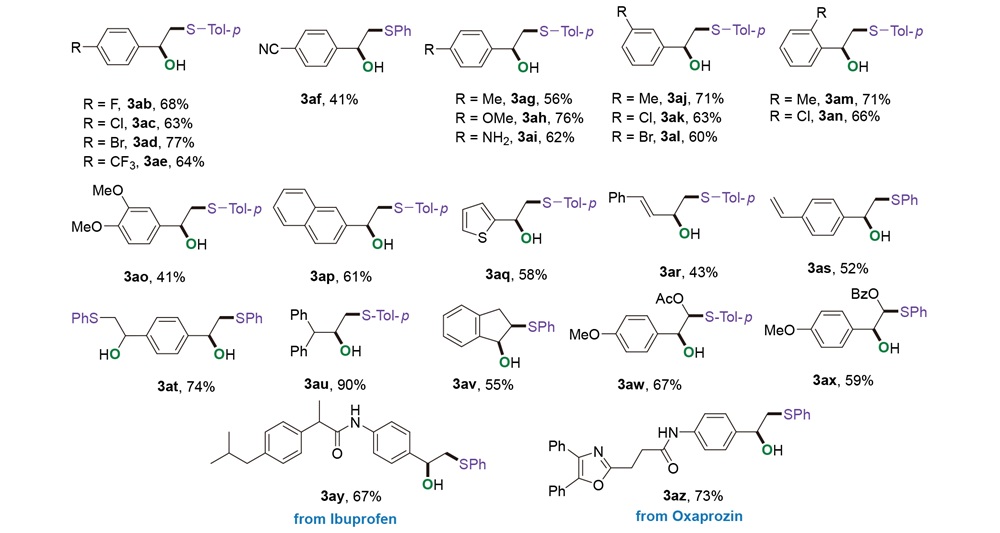
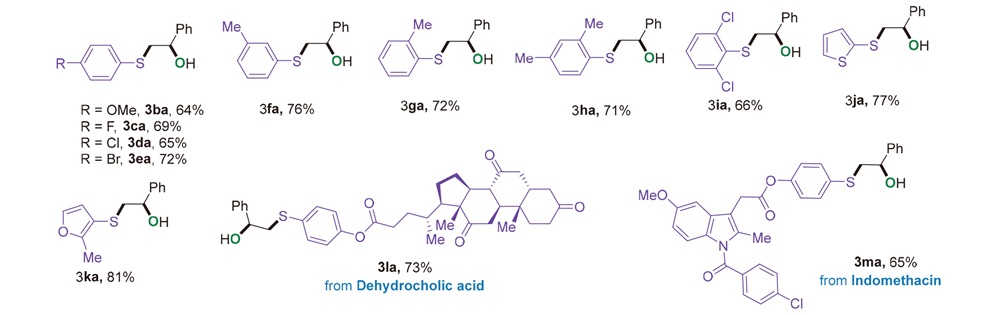
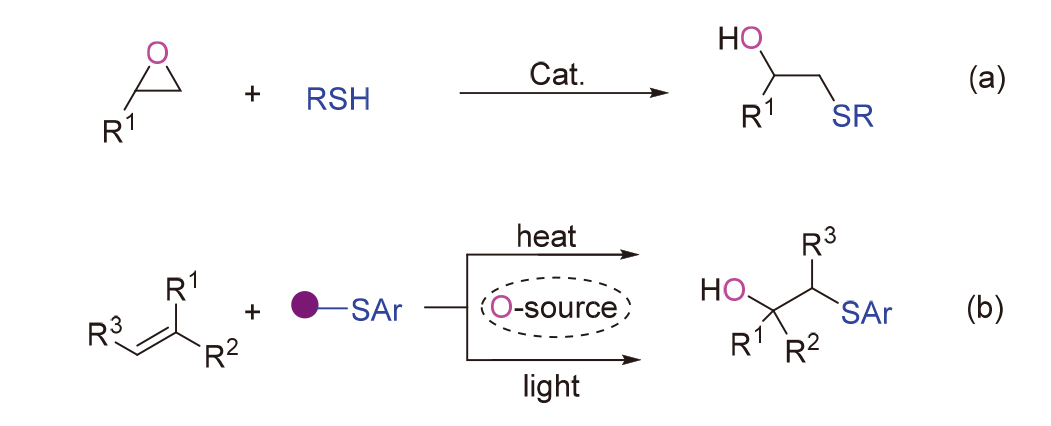
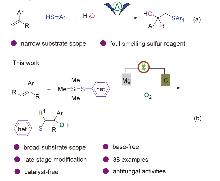
β-羟基硫醚是许多药物及天然产物分子的重要结构单元. 该类化合物具有抗菌、抗炎、抗肿瘤及抗-HIV等活性, 还是一种重要的有机合成中间体, 发展高效、绿色的合成方法构建β-羟基硫醚具有重要意义. 以廉价易得的芳基乙烯和三甲基硅基硫醚为原料, 镁棒和碳棒做阳极及阴极, 在无分隔电解瓶中, 电催化条件下, 室温下一步实现芳基乙烯的硫羟基化反应, 高收率地合成了系列β-羟基硫醚. 该反应条件温和, 原子经济性高, 底物范围广, 避免了氧化剂、过渡金属催化剂及恶臭硫酚的使用. 在合成的基础上, 采用菌丝生长速率法测试了目标化合物β-羟基硫醚的体外抗真菌活性. 部分化合物在浓度为100 μg/mL时, 对水稻纹枯病菌、蓝莓灰霉病菌表现出较好的体外抑制活性, 优于对照药剂嘧菌酯.
韩中艳, 陈梅梅, 张驰, 薛伟, 谷利军. 电化学芳基乙烯硫羟基化反应合成β-羟基硫醚及其抗菌活性[J]. 化学学报, 2026, 84(3): 280-286.
Han Zhongyan, Chen Meimei, Zhang Chi, Xue Wei, Gu Lijun. Electrochemistry-Enabled Hydroxysulfurization of Aryl Alkenes for the Synthesis of β-Hydroxysulfides and Their Antifungal Activities[J]. Acta Chimica Sinica, 2026, 84(3): 280-286.
| Entry | Variations from the standard condition | Yieldb/% |
|---|---|---|
| 1 | None | 88 |
| 2 | Zn (+) | C (−) instead of Mg (+) | C (−) | 53 |
| 3 | Ni (+) | C (−) instead of Mg (+) | C (−) | 31 |
| 4 | Mg (+) | Pt (−) instead of Mg (+) | C (−) | Trace |
| 5 | Mg (+) | GF (−) instead of Mg (+) | C (−) | 66 |
| 6 | nBu4NI, nBu4NCl, nBu4NOAc instead of nBu4NBF4 | 26, 38, 51 |
| 7 | LiClO4 instead of nBu4NBF4 | Trace |
| 8 | DMF, THF, MeOH instead of MeCN | 33, 52, 71 |
| 9 | HCO2H, H2O instead of CH3CO2H | 68, 45 |
| 10 | 8 mA, 4 h instead of 16 mA, 4 h | 72 |
| 11 | 20 mA, 1.5 h instead of 16 mA, 4 h | 71 |
| 12 | Without electricity | N.R. |
| 13 | Under N2 | N.R. |
| 14 | 10 mmol scale reaction | 75 |
| Entry | Variations from the standard condition | Yieldb/% |
|---|---|---|
| 1 | None | 88 |
| 2 | Zn (+) | C (−) instead of Mg (+) | C (−) | 53 |
| 3 | Ni (+) | C (−) instead of Mg (+) | C (−) | 31 |
| 4 | Mg (+) | Pt (−) instead of Mg (+) | C (−) | Trace |
| 5 | Mg (+) | GF (−) instead of Mg (+) | C (−) | 66 |
| 6 | nBu4NI, nBu4NCl, nBu4NOAc instead of nBu4NBF4 | 26, 38, 51 |
| 7 | LiClO4 instead of nBu4NBF4 | Trace |
| 8 | DMF, THF, MeOH instead of MeCN | 33, 52, 71 |
| 9 | HCO2H, H2O instead of CH3CO2H | 68, 45 |
| 10 | 8 mA, 4 h instead of 16 mA, 4 h | 72 |
| 11 | 20 mA, 1.5 h instead of 16 mA, 4 h | 71 |
| 12 | Without electricity | N.R. |
| 13 | Under N2 | N.R. |
| 14 | 10 mmol scale reaction | 75 |
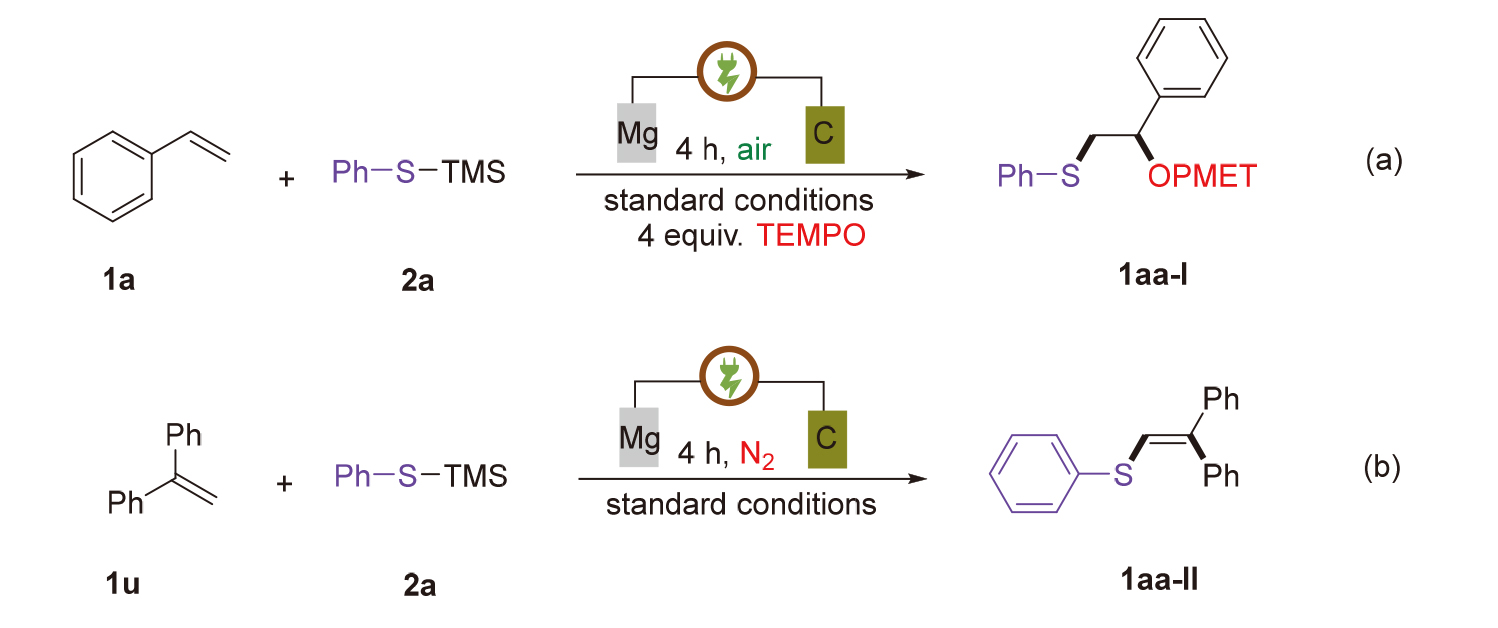
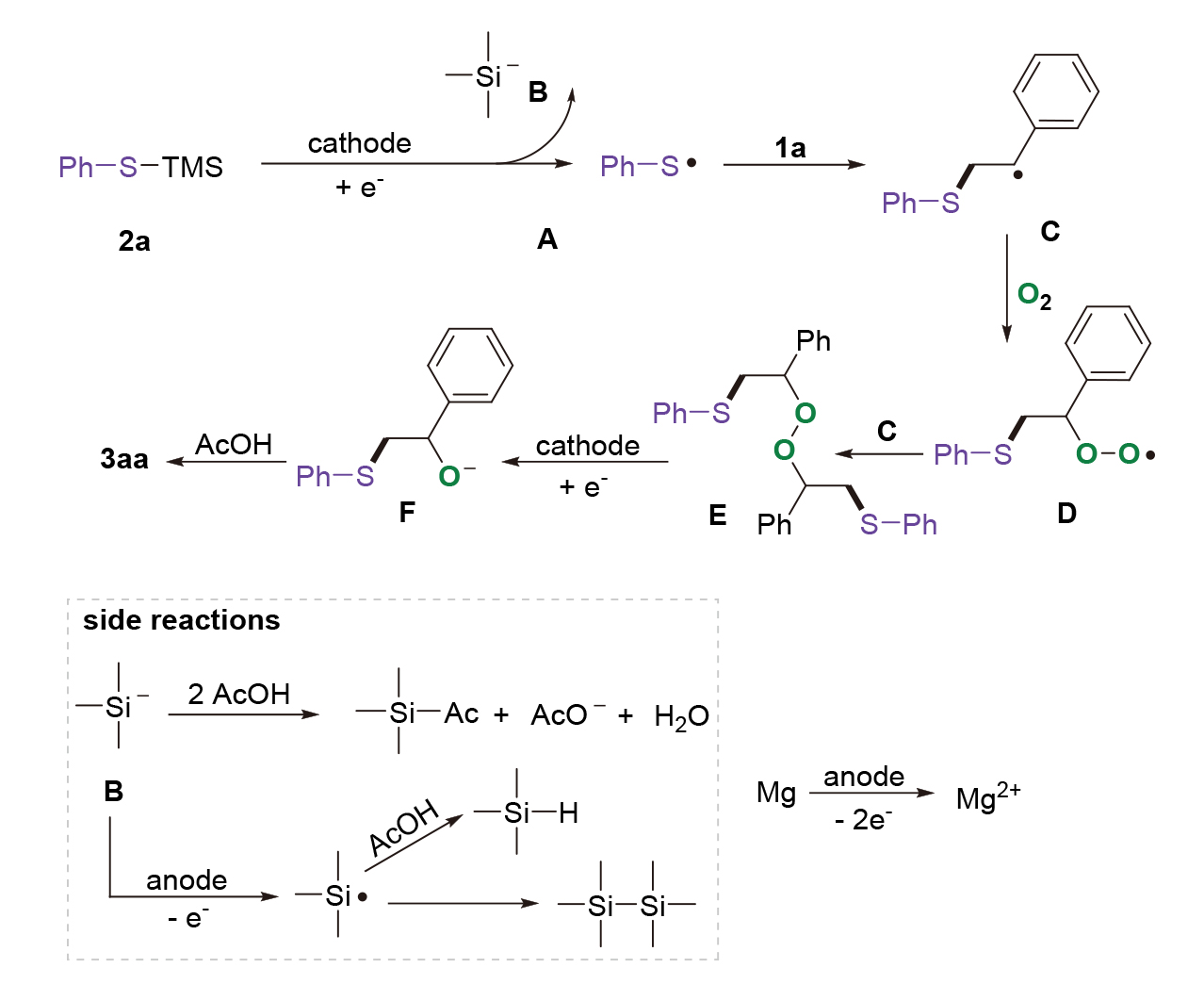
| Compds. | Inhibition ratea/% | Compds. | Inhibition ratea/% | ||
|---|---|---|---|---|---|
| R.s. | B.c. | R.s. | B.c. | ||
| 3ab | 85.93±2.07 | 85.93±2.07 | 3at | 48.89±2.19 | 7.84±2.07 |
| 3ac | 97.78±0.00 | 97.65±0.00 | 3au | 48.89±1.26 | 46.67±3.17 |
| 3ad | 95.93±1.51 | 63.14±1.09 | 3av | 44.07±1.51 | 16.86±4.14 |
| 3ae | 90.37±1.63 | 97.65±0.00 | 3aw | 54.44±3.52 | 17.65±1.33 |
| 3af | 64.44±1.26 | 61.18±2.21 | 3ax | 22.96±2.07 | 25.88±3.71 |
| 3ag | 83.33±1.67 | 71.76±1.33 | 3ay | 60.74±1.03 | 70.98±1.09 |
| 3ah | 76.30±1.03 | 97.65±0.00 | 3az | 65.19±1.03 | 69.41±1.88 |
| 3ai | 57.78±1.26 | 68.24±2.21 | 3ba | 21.48±2.07 | 15.69±2.07 |
| 3aj | 78.15±1.51 | 97.65±0.00 | 3ca | 64.81±1.51 | 75.69±1.72 |
| 3ak | 80.37±1.51 | 94.51±1.72 | 3da | 60.37±0.82 | 28.24±1.76 |
| 3al | 74.81±1.63 | 59.22±1.09 | 3ea | 43.33±1.67 | 19.61±1.58 |
| 3am | 90.37±1.03 | 54.12±1.15 | 3fa | 85.93±2.07 | 96.08±1.72 |
| 3an | 88.89±0.00 | 97.65±0.00 | 3ga | 57.04±2.42 | 70.98±2.88 |
| 3ao | 50.00±1.10 | 36.08±3.63 | 3ha | 57.41±3.88 | 58.82±2.21 |
| 3ap | 11.85±1.03 | 21.57±5.10 | 3ia | 65.19±2.42 | 60.39±2.80 |
| 3aq | 32.59±1.03 | 38.82±1.33 | 3ja | 64.44±2.53 | 32.55±1.72 |
| 3ar | 77.04±1.03 | 70.59±1.76 | 3ka | 51.11±1.79 | — |
| 3as | 71.11±1.26 | 58.04±1.58 | 3la | 40.74±1.63 | 53.73±1.09 |
| Azob | 72.96±0.82 | 74.90±5.44 | 3ma | 50.74±1.51 | 60.39±3.10 |
| Compds. | Inhibition ratea/% | Compds. | Inhibition ratea/% | ||
|---|---|---|---|---|---|
| R.s. | B.c. | R.s. | B.c. | ||
| 3ab | 85.93±2.07 | 85.93±2.07 | 3at | 48.89±2.19 | 7.84±2.07 |
| 3ac | 97.78±0.00 | 97.65±0.00 | 3au | 48.89±1.26 | 46.67±3.17 |
| 3ad | 95.93±1.51 | 63.14±1.09 | 3av | 44.07±1.51 | 16.86±4.14 |
| 3ae | 90.37±1.63 | 97.65±0.00 | 3aw | 54.44±3.52 | 17.65±1.33 |
| 3af | 64.44±1.26 | 61.18±2.21 | 3ax | 22.96±2.07 | 25.88±3.71 |
| 3ag | 83.33±1.67 | 71.76±1.33 | 3ay | 60.74±1.03 | 70.98±1.09 |
| 3ah | 76.30±1.03 | 97.65±0.00 | 3az | 65.19±1.03 | 69.41±1.88 |
| 3ai | 57.78±1.26 | 68.24±2.21 | 3ba | 21.48±2.07 | 15.69±2.07 |
| 3aj | 78.15±1.51 | 97.65±0.00 | 3ca | 64.81±1.51 | 75.69±1.72 |
| 3ak | 80.37±1.51 | 94.51±1.72 | 3da | 60.37±0.82 | 28.24±1.76 |
| 3al | 74.81±1.63 | 59.22±1.09 | 3ea | 43.33±1.67 | 19.61±1.58 |
| 3am | 90.37±1.03 | 54.12±1.15 | 3fa | 85.93±2.07 | 96.08±1.72 |
| 3an | 88.89±0.00 | 97.65±0.00 | 3ga | 57.04±2.42 | 70.98±2.88 |
| 3ao | 50.00±1.10 | 36.08±3.63 | 3ha | 57.41±3.88 | 58.82±2.21 |
| 3ap | 11.85±1.03 | 21.57±5.10 | 3ia | 65.19±2.42 | 60.39±2.80 |
| 3aq | 32.59±1.03 | 38.82±1.33 | 3ja | 64.44±2.53 | 32.55±1.72 |
| 3ar | 77.04±1.03 | 70.59±1.76 | 3ka | 51.11±1.79 | — |
| 3as | 71.11±1.26 | 58.04±1.58 | 3la | 40.74±1.63 | 53.73±1.09 |
| Azob | 72.96±0.82 | 74.90±5.44 | 3ma | 50.74±1.51 | 60.39±3.10 |
| [1] |
(a)
doi: 10.1039/D2CS00013J |
|
(b)
doi: 10.1021/acs.accounts.6b00328 |
|
|
(c)
doi: 10.1039/D5CS00670H |
|
|
(d)
doi: 10.6023/A23110487 |
|
|
(邓沈娜, 彭常春, 牛云宏, 许云, 张云霄, 陈祥, 王红敏, 刘珊珊, 沈晓, 化学学报, 2024, 82, 119).
doi: 10.6023/A23110487 |
|
|
(e)
doi: 10.6023/cjoc201808031 |
|
|
(付晓飞, 赵文献, 有机化学, 2019, 39, 625).
doi: 10.6023/cjoc201808031 |
|
|
(f)
doi: 10.6023/A25050159 |
|
|
(左恒昕宇, 虎亚光, 乔霞, 张野, 王少华, 化学学报, 2025, 83, 981).
doi: 10.6023/A25050159 |
|
|
(g)
doi: 10.1002/cjoc.v42.20 |
|
| [2] |
(a)
doi: 10.6023/cjoc202204066 |
|
(李秀英, 陶萍芳, 程泳渝, 胡琼, 黄伟娟, 李芸, 罗志辉, 黄国保, 有机化学, 2022, 42, 4169).
doi: 10.6023/cjoc202204066 |
|
|
(b)
doi: 10.1021/cr500064w |
|
|
(c)
doi: 10.6023/cjoc202500013 |
|
|
(鄢东, 何卫民, 有机化学, 2025, 45, 1781).
doi: 10.6023/cjoc202500013 |
|
|
(d)
doi: 10.1039/D5CC04124D |
|
|
(e)
doi: 10.1002/ajoc.v10.12 |
|
|
(f)
doi: 10.1039/D0OB02446E |
|
|
(g)
doi: 10.1002/cjoc.v42.7 |
|
|
(h)
doi: 10.1002/cjoc.v43.15 |
|
| [3] |
(a)
doi: 10.1021/acs.accounts.7b00148 pmid: 32055811 |
|
(b)
doi: 10.1021/acs.orglett.7b03371 pmid: 32055811 |
|
|
(c)
pmid: 32055811 |
|
|
(d)
doi: 10.1039/c9cs00692c pmid: 32055811 |
|
|
(e)
pmid: 32055811 |
|
| [4] |
(a)
doi: 10.2174/1568026615666150915111741 |
|
(b)
doi: 10.1016/j.cclet.2021.09.068 |
|
|
(c)
doi: 10.6023/cjoc202411019 |
|
|
(庄诗怡, 尤晓琴, 金伟伟, 有机化学, 2025, 45, 3701).
|
|
| [5] |
(a)
|
|
(b)
doi: 10.1080/10426507.2012.740702 |
|
|
(c)
doi: 10.1016/S0968-0896(99)00286-2 |
|
|
(d)
doi: 10.1021/acs.orglett.6b02620 |
|
|
(e)
doi: 10.1021/acs.jnatprod.6b00295 |
|
|
(f)
doi: 10.1111/fcp.1999.13.issue-2 |
|
|
(g)
doi: 10.1039/D3GC03828A |
|
| [6] |
(a)
pmid: 3305946 |
|
(b)
doi: 10.3762/bjoc.14.143 pmid: 3305946 |
|
|
(c)
pmid: 3305946 |
|
|
(d)
doi: 10.1039/D0RA09848E pmid: 3305946 |
|
|
(e)
pmid: 3305946 |
|
| [7] |
(a)
|
|
(b)
doi: 10.1039/D2QO00957A |
|
|
(c)
doi: 10.1016/S0957-4166(99)00446-2 |
|
|
(d)
doi: 10.1080/00397919608003848 |
|
| [8] |
(a)
doi: 10.1016/S0040-4039(00)00687-0 |
|
(b)
doi: 10.1016/j.catcom.2013.06.032 |
|
|
(c)
|
|
|
(d)
doi: 10.3390/catal12101259 |
|
| [9] |
(a)
doi: 10.1021/acs.joc.4c00276 pmid: 35561230 |
|
(b)
doi: 10.1021/acs.joc.4c02149 pmid: 35561230 |
|
|
(c)
doi: 10.1039/C8CC01359D pmid: 35561230 |
|
|
(d)
doi: 10.1002/cjoc.v42.23 pmid: 35561230 |
|
|
(e)
doi: 10.1021/acsomega.3c02070 pmid: 35561230 |
|
|
(f)
doi: 10.1021/acs.joc.2c00595 pmid: 35561230 |
|
| [10] |
(a)
doi: 10.31635/ccschem.021.202101451 |
|
(b)
doi: 10.1016/j.scib.2021.07.011 |
|
|
(c)
doi: 10.6023/cjoc202309024 |
|
|
(高瑞林, 文丽荣, 郭维斯, 有机化学, 2024, 44, 892).
doi: 10.6023/cjoc202309024 |
|
|
(d)
doi: 10.6023/A25050173 |
|
|
(文延萃, 朱丽君, 易荣楠, 沈超, 祝海涛, 王祖利, 何卫民, 化学学报, 2025, 83, 1124).
doi: 10.6023/A25050173 |
|
|
(e)
doi: 10.1021/acs.orglett.5c00562 |
|
|
(f)
doi: 10.1021/acs.accounts.9b00472 |
|
|
(g)
doi: 10.1021/acs.accounts.9b00512 |
|
|
(h)
doi: 10.1039/C8QO00645H |
|
|
(i)
doi: 10.1039/D4CS01142B |
|
|
(j)
doi: 10.1002/cjoc.v43.21 |
|
|
(k)
doi: 10.6023/A23080386 |
|
|
(李珊, 路俊欣, 刘杰, 蒋绿齐, 易文斌, 化学学报, 2024, 82, 110).
doi: 10.6023/A23080386 |
|
| [11] |
(a)
pmid: 36320920 |
|
(b)
doi: 10.1021/acs.joc.2c03020 pmid: 36320920 |
|
|
(c)
doi: 10.1007/s11426-024-2532-2 pmid: 36320920 |
|
|
(d)
doi: 10.1039/d2sc04027a pmid: 36320920 |
|
|
(e)
doi: 10.1039/D4CC06306F pmid: 36320920 |
|
|
(f)
doi: 10.1002/celc.v6.5 pmid: 36320920 |
|
| [12] |
doi: 10.1039/C8GC01337C |
| [13] |
(a)
doi: 10.1039/D0GC00375A |
|
(b)
doi: 10.1039/D2CC05570H |
|
|
(c)
doi: 10.1002/cjoc.v42.17 |
|
|
(d)
doi: 10.1021/acs.orglett.4c01831 |
|
|
(e)
doi: 10.1016/j.tet.2024.134131 |
|
|
(f)
doi: 10.1039/D4CC06246A |
|
|
(g)
doi: 10.1021/acs.orglett.5c02295 |
|
|
(h)
doi: 10.1039/D5CC05687J |
|
| [14] |
(a)
doi: 10.1021/acs.jafc.5c09130 |
|
(b)
|
|
|
(c)
doi: 10.1016/j.bioorg.2024.107965 |
| [1] | 张梓菡, 詹小鹏, 梅晋豪, 刘一, 马娅诺, 魏弋茗, 许辰宇. 银纳米颗粒等离激元促进光电催化二氧化碳制乙醇[J]. 化学学报, 2026, 84(1): 43-52. |
| [2] | 崔雨琪, 李军玉, 孙建科. 多孔有机笼用于能源转换及储存的研究进展[J]. 化学学报, 2025, 83(6): 624-638. |
| [3] | 王瑛琦, 常嘉怡, 李敏, 梁红, 李知恒, 谢文富, 王强. 金属原子表面修饰TiO2光电催化CO2与$NO_{2}^{-}$共还原合成尿素[J]. 化学学报, 2025, 83(3): 247-255. |
| [4] | 周泉, 蒋佳怡, 罗年华, 黄家翩. 甲磺酰化反应的最新研究进展[J]. 化学学报, 2025, 83(3): 274-286. |
| [5] | 王佳雨, 赵文娟, 贾宏宇, 刘永博, 张敏, 董龙龙, 张安杰, 王锐. 铜配位三维共价有机框架提升电催化硝酸盐还原制氨[J]. 化学学报, 2025, 83(12): 1507-1513. |
| [6] | 冷静, 谢承佳, 郭双华, 汤超. 硫酰氟介导下芳基乙醇向芳基乙烯的转化[J]. 化学学报, 2025, 83(11): 1335-1339. |
| [7] | 李一, 翁蓓蓓, 赵静雯, 杜然. 贵金属气凝胶的可控制备及其电催化与表面增强拉曼散射应用[J]. 化学学报, 2024, 82(7): 805-818. |
| [8] | 王南南, 陈玉贞. CoNi-MOF-74/泡沫镍衍生的CoNi@C/NF复合物用于高效有机电合成[J]. 化学学报, 2024, 82(6): 621-628. |
| [9] | 刘浩, 徐旭莉, 郭勇, 刘晓晖, 王艳芹. Ru/NiPOx高效电催化醛还原胺化反应的研究[J]. 化学学报, 2024, 82(5): 477-485. |
| [10] | 雷雅茹, 熊廷楷, 于湘涛, 黄秀兵, 唐晓龙, 易红宏, 周远松, 赵顺征, 孙龙, 高凤雨. 新型多孔三聚氰胺负载MnCe用于高选择性电催化CO2产甲酸[J]. 化学学报, 2024, 82(4): 396-408. |
| [11] | 韩晶, 廖润华, 邓文强, 梁博宇, 周雨晴, 任帅, 洪燕. 铜掺杂氮化碳电催化硝酸盐产氨性能研究[J]. 化学学报, 2024, 82(3): 295-302. |
| [12] | 李珊, 路俊欣, 刘杰, 蒋绿齐, 易文斌. 氟烷基亚磺酸钠盐电化学合成α-氟烷基酮[J]. 化学学报, 2024, 82(2): 110-114. |
| [13] | 许廷强. 基于PtAu阳极催化剂的柔性生物燃料电池的性能研究[J]. 化学学报, 2024, 82(10): 1022-1030. |
| [14] | 刘建川, 李翠艳, 刘耀祖, 王钰杰, 方千荣. 高稳定二维联咔唑sp2碳共轭共价有机框架材料用于高效电催化氧还原★[J]. 化学学报, 2023, 81(8): 884-890. |
| [15] | 杨镇鸿, 干晓娟, 王书哲, 段君元, 翟天佑, 刘友文. 金属性Ni3N纳米粒子的制备与乙二醇电氧化性能★[J]. 化学学报, 2023, 81(11): 1471-1477. |
| 阅读次数 | ||||||
|
全文 |
|
|||||
|
摘要 |
|
|||||