

Acta Chimica Sinica ›› 2026, Vol. 84 ›› Issue (7): 1096-1104.DOI: 10.6023/A26030071 Previous Articles Next Articles
Article
张辉, 陈玉贞*( )
)
投稿日期:2026-03-09
发布日期:2026-04-14
基金资助:
Hui Zhang, Yuzhen Chen*()
Received:2026-03-09
Published:2026-04-14
Contact:
* E-mail: yzchen@qust.edu.cn; Tel.: 0532-84022927; Fax: 0532-84022927
Supported by:Share
Hui Zhang, Yuzhen Chen. PtCu/PCN-224 Heterojunction for Photothermal-Driven Selective Oxidation of Benzyl Alcohol[J]. Acta Chimica Sinica, 2026, 84(7): 1096-1104.

| Entry | Catalyst | Time/min | T/℃ | Yieldc/% |
|---|---|---|---|---|
| 1a | Pt NCs | 30 | 34 | 39 |
| 60 | 36 | >99 | ||
| 2a | Pt1Cu1 NCs | 60 | 30 | >99 |
| 3a | Pt/PCN-224 | 20 | 32 | 68 |
| 60 | 36 | >99 | ||
| 4a | Pt2Cu1/PCN-224 | 10 | 26 | 56 |
| 25 | 34 | >99 | ||
| 5a | Pt1Cu1/PCN-224 | 10 | 25 | 70 |
| 15 | 30 | >99 | ||
| 6a | Pt1Cu2/PCN-224 | 60 | 36 | 81 |
| 80 | 36 | 95 | ||
| 7a | Cu/PCN-224 | 60 | 29 | 0 |
| 8a | PtCu+PCN-224 | 60 | 27 | 55 |
| 9a | Pt1Cu1/PCN-224 +carotene | 60 | 28 | 44 |
| 10b | Pt1Cu1/PCN-224 | 60 | 35 | 10 |
| 11a | Pt1Cu1/ZIF-8 | 60 | 26 | 66 |
| Entry | Catalyst | Time/min | T/℃ | Yieldc/% |
|---|---|---|---|---|
| 1a | Pt NCs | 30 | 34 | 39 |
| 60 | 36 | >99 | ||
| 2a | Pt1Cu1 NCs | 60 | 30 | >99 |
| 3a | Pt/PCN-224 | 20 | 32 | 68 |
| 60 | 36 | >99 | ||
| 4a | Pt2Cu1/PCN-224 | 10 | 26 | 56 |
| 25 | 34 | >99 | ||
| 5a | Pt1Cu1/PCN-224 | 10 | 25 | 70 |
| 15 | 30 | >99 | ||
| 6a | Pt1Cu2/PCN-224 | 60 | 36 | 81 |
| 80 | 36 | 95 | ||
| 7a | Cu/PCN-224 | 60 | 29 | 0 |
| 8a | PtCu+PCN-224 | 60 | 27 | 55 |
| 9a | Pt1Cu1/PCN-224 +carotene | 60 | 28 | 44 |
| 10b | Pt1Cu1/PCN-224 | 60 | 35 | 10 |
| 11a | Pt1Cu1/ZIF-8 | 60 | 26 | 66 |

| Entry | Substrate | Time/min | Yieldb/% | Selectivity/% | Entry | Substrate | Time/min | Yieldb/% | Selectivity/% |
|---|---|---|---|---|---|---|---|---|---|
| 1 | 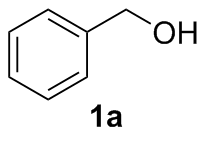 | 15 | >99 | 100 | 7 | 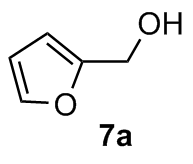 | 30 | >99 | 100 |
| 2 | 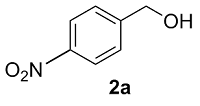 | 20 | >99 | 100 | 8 | 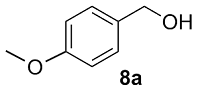 | 15 | >99 | 100 |
| 3 | 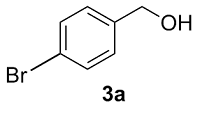 | 15 | >99 | 100 | 9 | 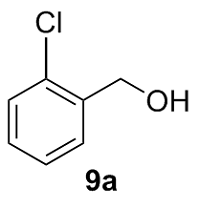 | 90 | >99 | 100 |
| 4 | 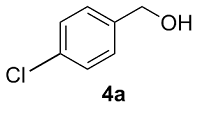 | 15 | >99 | 100 | 10 | 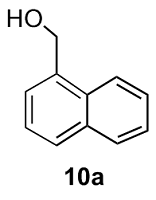 | 50 | >99 | 100 |
| 5 | 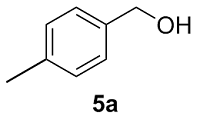 | 30 | >99 | 100 | 11 | 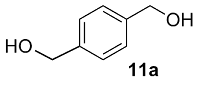 | 15 | >99 | 100 |
| 6 | 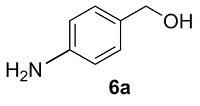 | 30 | >99 | 100 |
| Entry | Substrate | Time/min | Yieldb/% | Selectivity/% | Entry | Substrate | Time/min | Yieldb/% | Selectivity/% |
|---|---|---|---|---|---|---|---|---|---|
| 1 | | 15 | >99 | 100 | 7 | | 30 | >99 | 100 |
| 2 | | 20 | >99 | 100 | 8 | | 15 | >99 | 100 |
| 3 | | 15 | >99 | 100 | 9 | | 90 | >99 | 100 |
| 4 | | 15 | >99 | 100 | 10 | | 50 | >99 | 100 |
| 5 | | 30 | >99 | 100 | 11 | | 15 | >99 | 100 |
| 6 | | 30 | >99 | 100 |
| [1] |
doi: 10.6023/A16010036 |
|
(张婷, 蔡雪刁, 刘娜, 许春丽, 化学学报, 2016, 74, 441.)
doi: 10.6023/A16010036 |
|
| [2] |
doi: 10.1016/j.matchemphys.2019.04.053 |
| [3] |
|
| [4] |
|
| [5] |
doi: 10.1016/j.ccr.2024.216372 |
| [6] |
doi: 10.1021/acscatal.0c01432 |
| [7] |
doi: 10.1016/j.ceramint.2024.12.463 |
| [8] |
doi: 10.1021/acsomega.1c02163 pmid: 34368547 |
| [9] |
doi: 10.1016/S1872-2067(23)64451-1 |
| [10] |
doi: 10.1021/jacs.7b10997 pmid: 29319310 |
| [11] |
doi: 10.1039/C7RA11569E |
| [12] |
doi: 10.3390/molecules24224157 |
| [13] |
doi: 10.1021/ar800023v |
| [14] |
doi: 10.1021/jacs.6b12074 pmid: 28103670 |
| [15] |
doi: 10.1038/s41586-023-06485-8 |
| [16] |
doi: 10.1021/acssuschemeng.4c05654 |
| [17] |
doi: 10.6023/A24010040 |
|
(王南南, 陈玉贞, 化学学报, 2024, 82, 621.)
doi: 10.6023/A24010040 |
|
| [18] |
doi: 10.1039/C4CS90059F |
| [19] |
doi: 10.6023/A22020085 |
|
(谢晨帆, 徐玉平, 高明亮, 徐忠宁, 江海龙, 化学学报, 2022, 80, 867.)
doi: 10.6023/A22020085 |
|
| [20] |
doi: 10.1126/science.aam7232 |
| [21] |
doi: 10.1016/j.scib.2023.07.031 |
| [22] |
|
| [23] |
|
| [24] |
doi: 10.1021/acs.chemrev.2c00460 |
| [25] |
doi: 10.1021/jacs.0c09466 |
| [26] |
doi: 10.1039/D4EE01748J |
| [27] |
doi: 10.1021/ja408084j |
| [28] |
doi: 10.1021/jacs.0c05530 |
| [29] |
doi: 10.1021/jacs.5b08773 |
| [30] |
|
| [31] |
|
| [32] |
doi: 10.1021/jacs.7b09553 pmid: 29172485 |
| [33] |
doi: 10.1021/acscatal.0c05145 |
| [34] |
|
| [35] |
|
| [36] |
doi: 10.1002/adfm.v34.25 |
| [37] |
doi: 10.1021/acs.analchem.5c02165 |
| [38] |
doi: 10.1039/D5SC07319G |
| [39] |
doi: 10.1016/j.ccr.2025.216771 |
| [40] |
doi: 10.1021/ja512951e |
| [41] |
doi: 10.1038/s41929-018-0138-x |
| [42] |
doi: 10.1039/C9SC01866B |
| [43] |
doi: 10.1021/acs.chemrev.9b00443 |
| [44] |
|
| [45] |
|
| [46] |
|
| [47] |
doi: 10.3390/molecules29245834 |
| [48] |
doi: 10.1039/D4CS00317A |
| [49] |
doi: 10.1002/asia.v15.7 |
| [50] |
doi: 10.1039/D5MA00928F |
| [51] |
|
| [52] |
|
| [53] |
doi: 10.1016/j.seppur.2018.06.064 |
| [54] |
|
| [55] |
doi: 10.1016/j.bios.2025.117339 |
| [56] |
doi: 10.1016/j.jcis.2021.05.087 |
| [57] |
doi: 10.1021/acscatal.3c05454 |
| [58] |
doi: 10.1039/D4NA00528G |
| [59] |
doi: 10.1039/C9QM00633H |
| [60] |
|
| [1] | Jiang Li, Jingle Xie, Hao Dong, Jintong Bi, Zhonglin Li, Gaofeng Zhong, Haoran Fan, Shuqin Qi. Defect Repair of ZIF-90 Membranes for Efficient Ion Sieving [J]. Acta Chimica Sinica, 2026, 84(6): 909-915. |
| [2] | Huiying Chen, Ningyu Huang, Peiqin Liao. A Novel Silver-Carbon Bond-Engineered Metal-Organic Framework toward Efficient Artificial Photosynthesis of Hydrogen Peroxide★ [J]. Acta Chimica Sinica, 2026, 84(5): 626-630. |
| [3] | Dashuai Huang, Peiqin Liao. Applications and Perspectives of Metal-Organic Framework Materials in Electrocatalytic Conversion of Low-Concentration CO2★ [J]. Acta Chimica Sinica, 2026, 84(5): 689-696. |
| [4] | Zhaoxing Wang, Xinchao Wang, Chenyang Zheng, Shangda Li, Jian Zhang. A Staircase-Like Chiral Metal-Organic Framework Constructed from Natural Camphoric Acid for Cooperative Asymmetric Catalysis★ [J]. Acta Chimica Sinica, 2026, 84(5): 619-625. |
| [5] | Zhitao Wang, Yuke Lin, Yan Wan, Xinwei Huang, Yunbin Li, Dinghao Ji, Shengchang Xiang, Zhangjing Zhang. Rapid and Green Mechanochemical Synthesis of UTSA-16(Zn) for High-Performance CO2 Capture★ [J]. Acta Chimica Sinica, 2026, 84(5): 631-637. |
| [6] | Yingguo Li, Xiaoyi Yue, Mengmeng Fu, Chao Yu, Wei Gong. Advances in Post-Synthetic Ligand Insertion Engineering for Zirconium-Based Metal-Organic Frameworks★ [J]. Acta Chimica Sinica, 2026, 84(5): 709-722. |
| [7] | Lu Liu, Yan-Long Zhao, Xuefeng Bai, Xin Zhang, Jian-Rong Li. Efficient CH4/N2 Separation in a Scalable Stacked Coordination Polymer★ [J]. Acta Chimica Sinica, 2026, 84(5): 638-642. |
| [8] | Yang Zhang, Jinli Zhang, Jiandong Pang, Xian-He Bu. High-sensitivity Eu-MOF Fluorescent Probe for the Detection of 1-Hydroxypyrene in Urine★ [J]. Acta Chimica Sinica, 2026, 84(5): 667-672. |
| [9] | Baotong Ding, Junkai Cai, Shaojie Guo, Chunying Duan. Topology-Fixed 2D Cu(I)-Halide Metal-Organic Frameworks with Tunable Stability and Emission★ [J]. Acta Chimica Sinica, 2026, 84(5): 682-688. |
| [10] | Weihong Zhang, Yanan Ma, Han Fang, Dongxu Xue. Multi-Component Metal-Organic Frameworks for One-Step Ethylene Purification: Metalloligand-Directed Synthesis and High-Efficiency Separation of C2 Mixed Gas★ [J]. Acta Chimica Sinica, 2026, 84(5): 659-666. |
| [11] | Qianlong He, Jieying Hu, Lai-Hon Chung, Jun He. Metal-Organic Framework-Based Electrocatalysts for Neutral Nitrate-to-Ammonia Conversion: Design Strategies and Mechanistic Insights★ [J]. Acta Chimica Sinica, 2026, 84(5): 775-804. |
| [12] | Tiankai Sun, Zongsu Han, Peng Cheng, Wei Shi. Research Progress in the Synthesis and Properties of Chiral Metal-Organic Frameworks★ [J]. Acta Chimica Sinica, 2026, 84(5): 723-735. |
| [13] | Jiayue Wu, Wenbo Wang, Yulong Xie, Weihui Fang. Recent Advances in Host-Guest Chemistry of Aluminum-Based Metal-Organic Framework Materials★ [J]. Acta Chimica Sinica, 2026, 84(5): 697-708. |
| [14] | Ya Zhang, Gongbing Zhou, Wei-Yin Sun. Recent Advance and Perspective of Metal-Organic Frameworks Based on Nitrogen-Containing Heterocyclic Ligands for Electrocatalytic CO2 Reduction★ [J]. Acta Chimica Sinica, 2026, 84(5): 755-774. |
| [15] | Peng Tianzi, Shen Jiake, Guo Shuya, Xia Xiaoxiao, Li Wei. Transfer Learning Predicted the Self-Diffusion Coefficients of Light-Gas in Metal/Covalent Organic Frameworks [J]. Acta Chimica Sinica, 2026, 84(3): 305-315. |
| Viewed | ||||||
|
Full text |
|
|||||
|
Abstract |
|
|||||
