有机化学 ›› 2025, Vol. 45 ›› Issue (11): 4227-4233.DOI: 10.6023/cjoc202502013 上一篇 下一篇
研究论文
刘金波, 郭倩, 杨成*( ), 伍晚花*()
收稿日期:2025-02-15
修回日期:2025-03-17
发布日期:2025-04-08
基金资助:
Jinbo Liu, Qian Guo, Cheng Yang*(), Wanhua Wu*()
Received:2025-02-15
Revised:2025-03-17
Published:2025-04-08
Contact:
*E-mail: yangchengyc@scu.edu.cn; wuwanhua@scu.edu.cn
Supported by:文章分享
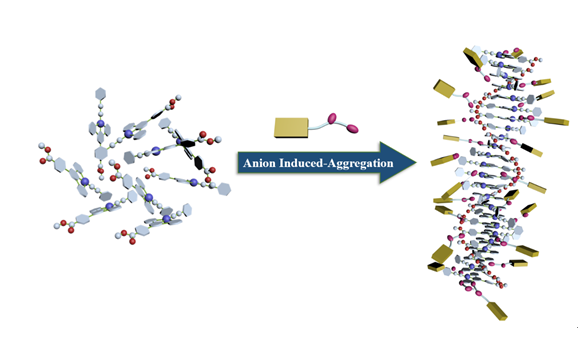
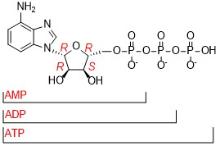
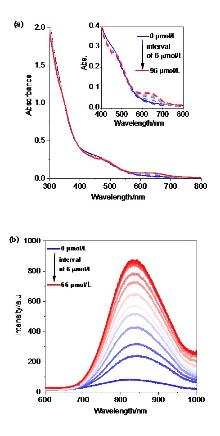
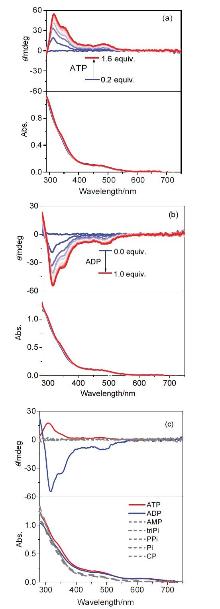
研究了三联吡啶铂(II)配合物P-1在磷酸根阴离子诱导下的聚集行为, 并用于结构类似化合物腺苷酸三磷酸盐(ATP)、腺苷酸二磷酸盐(ADP)和腺苷酸单磷酸盐(AMP)分子的高效识别. 在荧光光谱和紫外可见吸收光谱中, 配合物P-1与不同磷酸根阴离子通过分子间的π-π作用、Pt…Pt作用和静电作用发生聚集, 进而产生不同的1MMLCT吸收和3MMLCT发射, 这些微妙的光谱差异可以将配合物P-1用于识别不同的磷酸根阴离子. 更重要的是, 手性小分子化合物ATP和ADP可以诱导P-1聚集, 在300~500 nm处分别产生向上和向下的圆二色信号, 而AMP则无法诱导P-1产生聚集, 故无圆二色信号, 从而实现对ATP、ADP和AMP高效识别. 这一发现为识别结构相似的核苷酸分子(如ATP、ADP和AMP)提供了一种新颖且高效的方法.
刘金波, 郭倩, 杨成, 伍晚花. 阴离子诱导三联吡啶铂(II)配合物3MMLCT发射: 核苷酸的高效识别[J]. 有机化学, 2025, 45(11): 4227-4233.
Jinbo Liu, Qian Guo, Cheng Yang, Wanhua Wu. Anion-Induced 3MMLCT Emission of Tripyridine-Platinum Complex: Efficient Identification of Nucleotides[J]. Chinese Journal of Organic Chemistry, 2025, 45(11): 4227-4233.




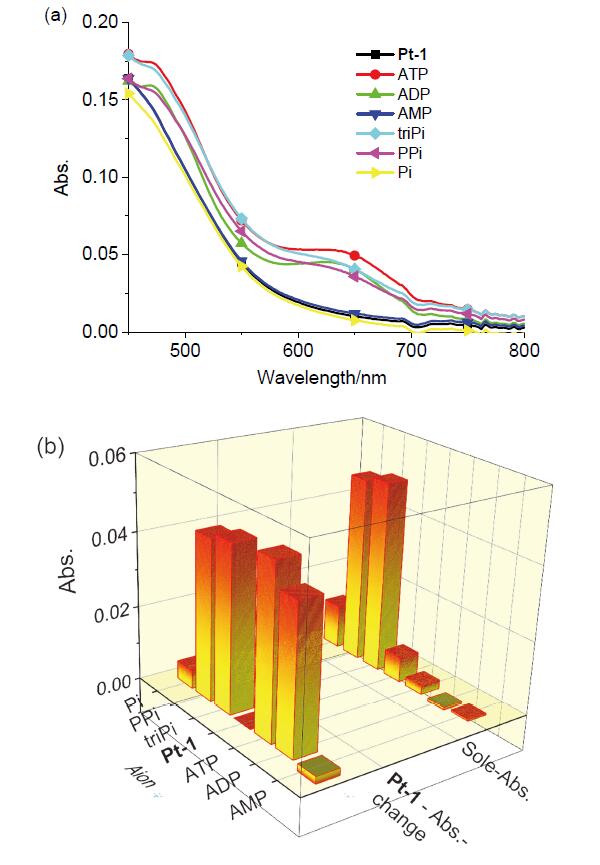
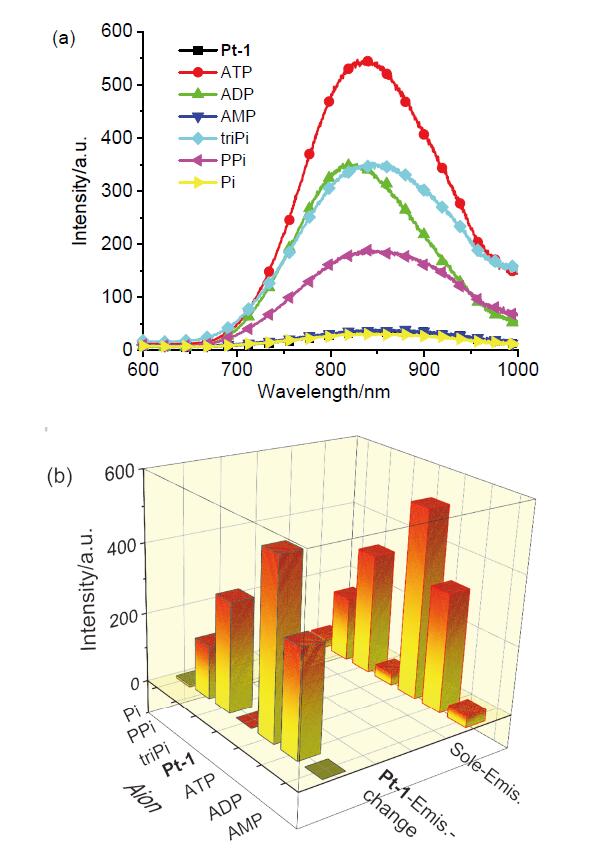
| Compd. | λabs/nm | Absb | A/A0c | λemd/nm | I/I0e |
|---|---|---|---|---|---|
| P-1 | 472 | 0.011 | 1.0 | 859 | 1.0 |
| P-1+ATP | 472/640 | 0.052 | 4.5 | 836 | 14.1 |
| P-1+ADP | 472/640 | 0.044 | 3.8 | 821 | 9.1 |
| P-1+AMP | 472 | 0.013 | 1.1 | 859 | 1.0 |
| P-1+triPPi | 476/642 | 0.044 | 3.8 | 844 | 9.2 |
| P-1+PPi | 476/642 | 0. 039 | 3.4 | 848 | 4.8 |
| P-1+Pi | 476 | 0.009 | 0.8 | 859 | 0.9 |
| Compd. | λabs/nm | Absb | A/A0c | λemd/nm | I/I0e |
|---|---|---|---|---|---|
| P-1 | 472 | 0.011 | 1.0 | 859 | 1.0 |
| P-1+ATP | 472/640 | 0.052 | 4.5 | 836 | 14.1 |
| P-1+ADP | 472/640 | 0.044 | 3.8 | 821 | 9.1 |
| P-1+AMP | 472 | 0.013 | 1.1 | 859 | 1.0 |
| P-1+triPPi | 476/642 | 0.044 | 3.8 | 844 | 9.2 |
| P-1+PPi | 476/642 | 0. 039 | 3.4 | 848 | 4.8 |
| P-1+Pi | 476 | 0.009 | 0.8 | 859 | 0.9 |

| [1] |
doi: 10.1039/D1TC04194K |
| [2] |
doi: 10.1039/D1MH00552A |
| [3] |
doi: 10.1016/j.dyepig.2022.110582 |
| [4] |
|
| [5] |
doi: 10.1039/C9TC01905G |
| [6] |
doi: 10.1016/j.tetlet.2023.154427 |
| [7] |
doi: 10.1021/acssuschemeng.3c02096 |
| [8] |
doi: 10.1021/jacs.9b05824 |
| [9] |
doi: 10.1039/D2DT01373H |
| [10] |
doi: 10.1021/acs.jpca.5b11233 |
| [11] |
doi: 10.1039/C8CC01652F |
| [12] |
doi: 10.1039/C7QM00424A |
| [13] |
|
| [14] |
doi: 10.1021/om990256h |
| [15] |
doi: 10.1039/c0cc02631j |
| [16] |
doi: 10.1073/pnas.1301252110 |
| [17] |
doi: 10.1021/acsami.7b11807 |
| [18] |
doi: 10.1002/chem.v24.45 |
| [19] |
doi: 10.1021/acs.inorgchem.7b02736 pmid: 29336558 |
| [20] |
doi: 10.1021/jacs.9b04447 |
| [21] |
doi: 10.1021/acsami.8b18739 |
| [22] |
doi: 10.1021/ja510048b |
| [23] |
doi: 10.1039/C2SC20897K |
| [24] |
pmid: 6250450 |
| [25] |
pmid: 7356164 |
| [26] |
doi: 10.1111/jfds.1982.47.issue-4 |
| [27] |
doi: 10.3390/chemosensors11070417 |
| [28] |
doi: 10.1021/jacs.4c01621 |
| [29] |
pmid: 7859285 |
| [30] |
doi: 10.1016/j.cclet.2023.108360 |
| [31] |
doi: 10.1016/j.isci.2020.100927 |
| [32] |
doi: 10.1039/D4CC05494F |
| [33] |
doi: 10.1016/j.jphotochem.2017.10.043 |
| [34] |
doi: 10.1016/j.snb.2023.133764 |
| [35] |
doi: 10.1002/anie.v56.43 |
| [36] |
doi: 10.1021/jacs.6b12845 |
| [37] |
doi: 10.3390/molecules29102203 |
| [38] |
doi: 10.1016/j.cclet.2024.110103 |
| [39] |
|
| [40] |
doi: 10.1038/s41467-021-22880-z |
| [41] |
doi: 10.1016/j.cclet.2024.109927 |
| [42] |
doi: 10.1021/jacs.1c13210 |
| [43] |
|
| [44] |
doi: 10.1002/anie.v58.18 |
| [45] |
doi: 10.1002/anie.v59.42 |
| [46] |
doi: 10.1021/ic300061u pmid: 22656070 |
| [47] |
doi: 10.1002/chem.v24.46 |
| [48] |
doi: 10.1021/ic9001913 pmid: 19757854 |
| [1] | 尹烨, 王惠, 吴建芳, 王力立, 杨留攀, 赵承达, 姚欢. 基于酰胺萘管的指示剂置换法对琥珀酰胆碱的荧光检测[J]. 有机化学, 2025, 45(8): 2953-2959. |
| [2] | 郭静, 李诗瑶, 姚欢, 杨留攀, 王力立. 四内酰胺大环的分子识别与应用研究进展[J]. 有机化学, 2024, 44(6): 1777-1785. |
| [3] | 王天洋, 李艳梅. 干扰素基因刺激蛋白(STING)激动剂环二核苷酸类化合物的合成及活性研究进展[J]. 有机化学, 2023, 43(3): 892-913. |
| [4] | 黄国保, 陈志林, 韦贤生, 陈钰, 李秀英, 仲辉, 谭明雄. 含有氢键供体大环化合物的构筑及其功能研究进展[J]. 有机化学, 2020, 40(3): 614-624. |
| [5] | 王姣, 姚虹, 周琦, 阚晓彤, 樊彦青, 关晓文, 张有明, 林奇, 魏太保. 基于柱[5]芳烃主客体包结构筑分子响应型超分子水凝胶[J]. 有机化学, 2020, 40(1): 175-180. |
| [6] | 李四聪, 季绍聪, 赵亮, 廖晓雨, 刘传峰, 汤浩东, 舒正宁, 杨鹏, 裴月湖. N-水杨醛腙修饰11-氮杂青蒿素衍生物的合成及性质研究[J]. 有机化学, 2019, 39(10): 2860-2866. |
| [7] | 刘传志, 王辉, 张丹维, 赵新, 黎占亭. 中国有机氟化合物卤键研究[J]. 有机化学, 2019, 39(1): 28-37. |
| [8] | 孙广军, 聂承斌, 赵新, 黎占亭. C-H…O氢键驱动的1,2,3-三氮唑折叠体:评估分子间C-H…X-(X=Cl,Br,I)和C-H…N氢键的稳定性[J]. 有机化学, 2017, 37(7): 1757-1763. |
| [9] | 肖立伟, 任萍, 景学敏, 任丽磊, 李政, 戴富才. 1,2,3-三唑类化合物在分子识别中的应用[J]. 有机化学, 2017, 37(12): 3085-3095. |
| [10] | 李文婷, 曲文娟, 张海丽, 李翔, 林奇, 姚虹, 张有明, 魏太保. 吩嗪衍生物在分子识别与自组装中的应用进展[J]. 有机化学, 2017, 37(10): 2619-2639. |
| [11] | 彭龙, 刘慧君, 胡趁, 孙允凯, 龙威. 对苯二甲酰氯桥联β-环糊精的合成及其对染料分子的协同键合[J]. 有机化学, 2015, 35(6): 1330-1334. |
| [12] | 翁官欢, 朱彬, 叶杨, 李世军. 溶液酸碱度调控的分子机器与分子开关[J]. 有机化学, 2015, 35(2): 309-324. |
| [13] | 石治川, 赵志刚, 李晖, 谭炯. 新的席夫碱型鹅去氧胆酸分子钳的微波无溶剂合成[J]. 有机化学, 2014, 34(3): 572-577. |
| [14] | 赵邦屯, 朱卫民. 共价键链杯芳烃-四硫富瓦烯超分子体系研究进展[J]. 有机化学, 2014, 34(10): 1992-2000. |
| [15] | 夏振洋, 赵志刚, 石治川, 刘敏. 以取代氨基硫脲为手臂的新型脱氧胆酸类分子钳的微波合成[J]. 有机化学, 2013, 33(01): 132-137. |
| 阅读次数 | ||||||
|
全文 |
|
|||||
|
摘要 |
|
|||||


