有机化学 ›› 2026, Vol. 46 ›› Issue (10): 3904-3932.DOI: 10.6023/cjoc202603001 上一篇 下一篇
综述与进展
金成a,b, 祝鑫c, 吴宪姚a, 巫辅龙a,b, 王长娟a,b, 廉翔a,b,*( ), 吴晶晶a,b,*(), 吴范宏a,b,*()
收稿日期:2026-03-02
修回日期:2026-05-11
发布日期:2026-06-17
基金资助:
Cheng Jina,b, Xin Zhuc, Xianyao Wua, Fulong Wua,b, Changjuan Wanga,b, Xiang Liana,b,*(), Jingjing Wua,b,*(), Fanhong Wua,b,*()
Received:2026-03-02
Revised:2026-05-11
Published:2026-06-17
Contact:
Supported by:文章分享
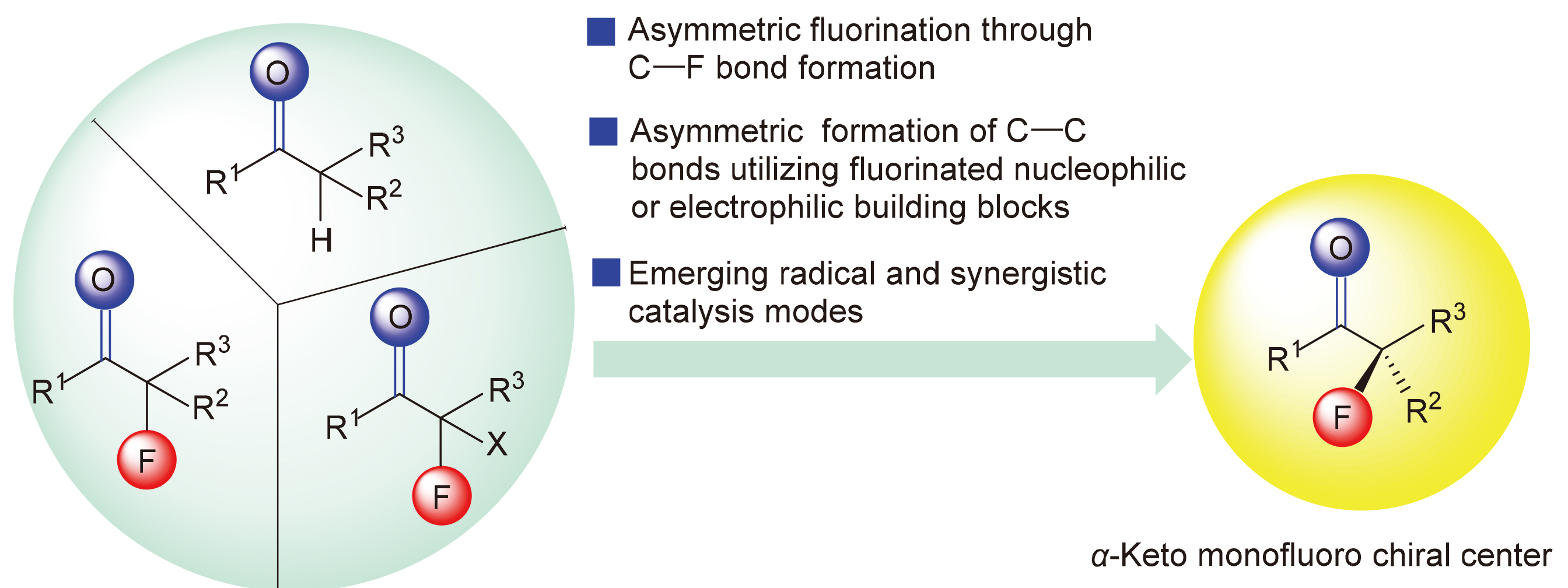
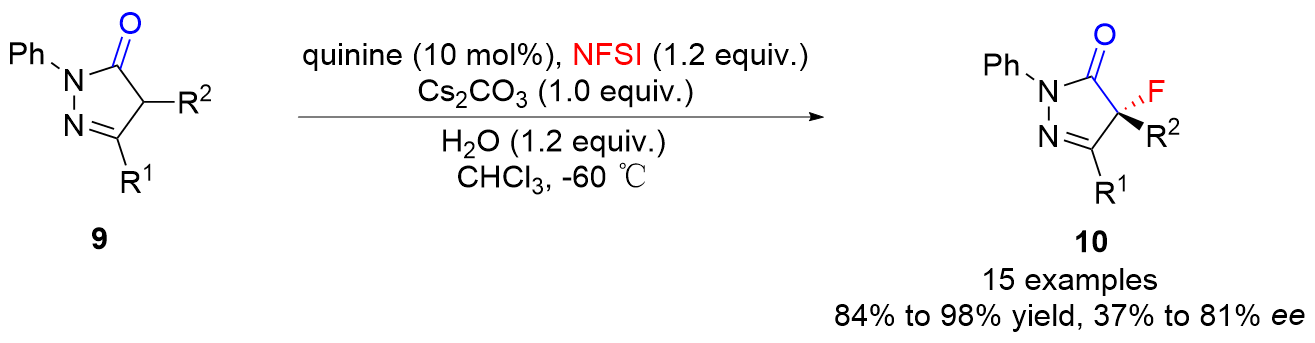
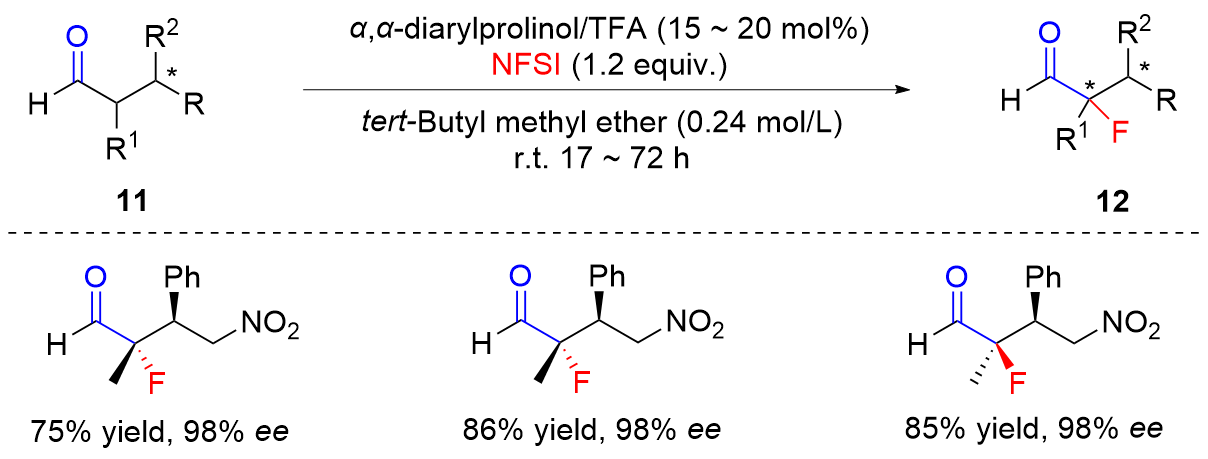
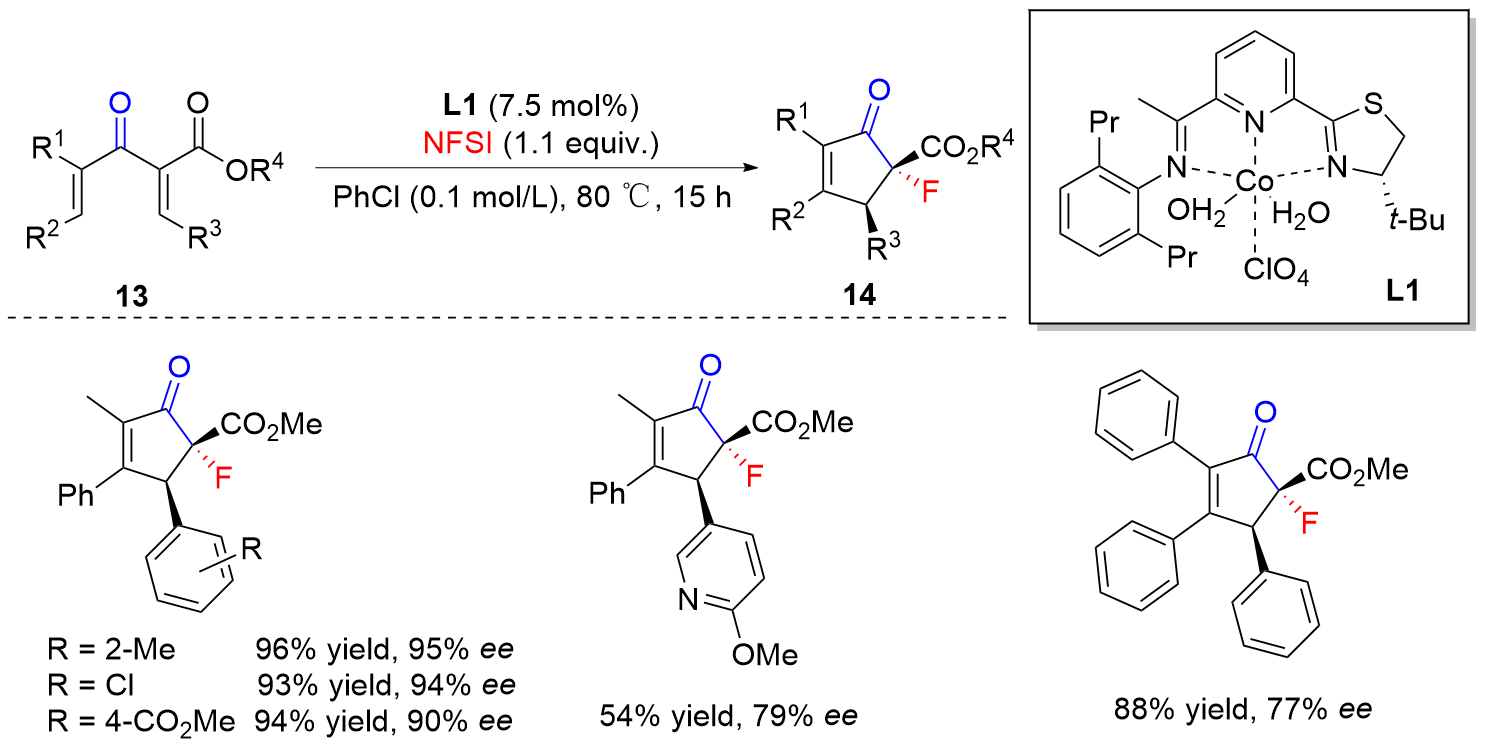
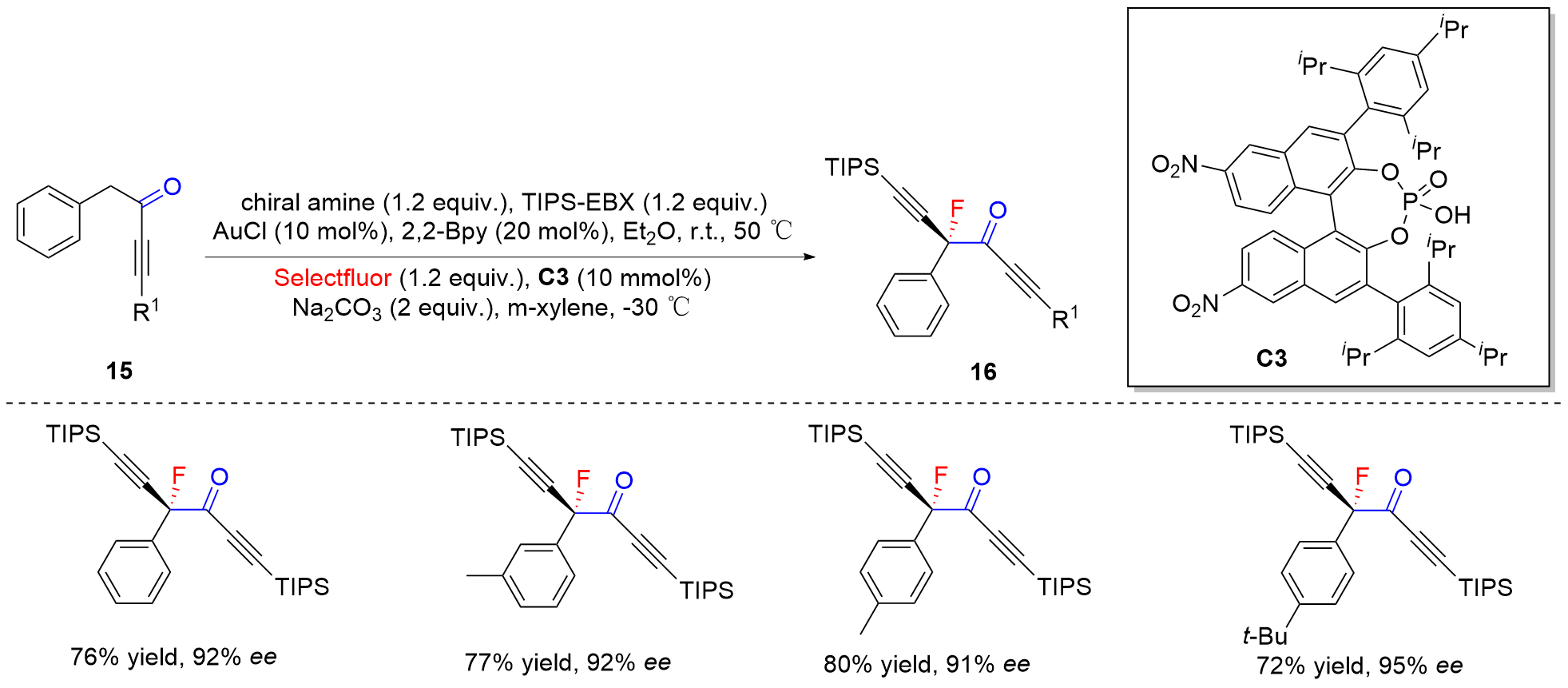
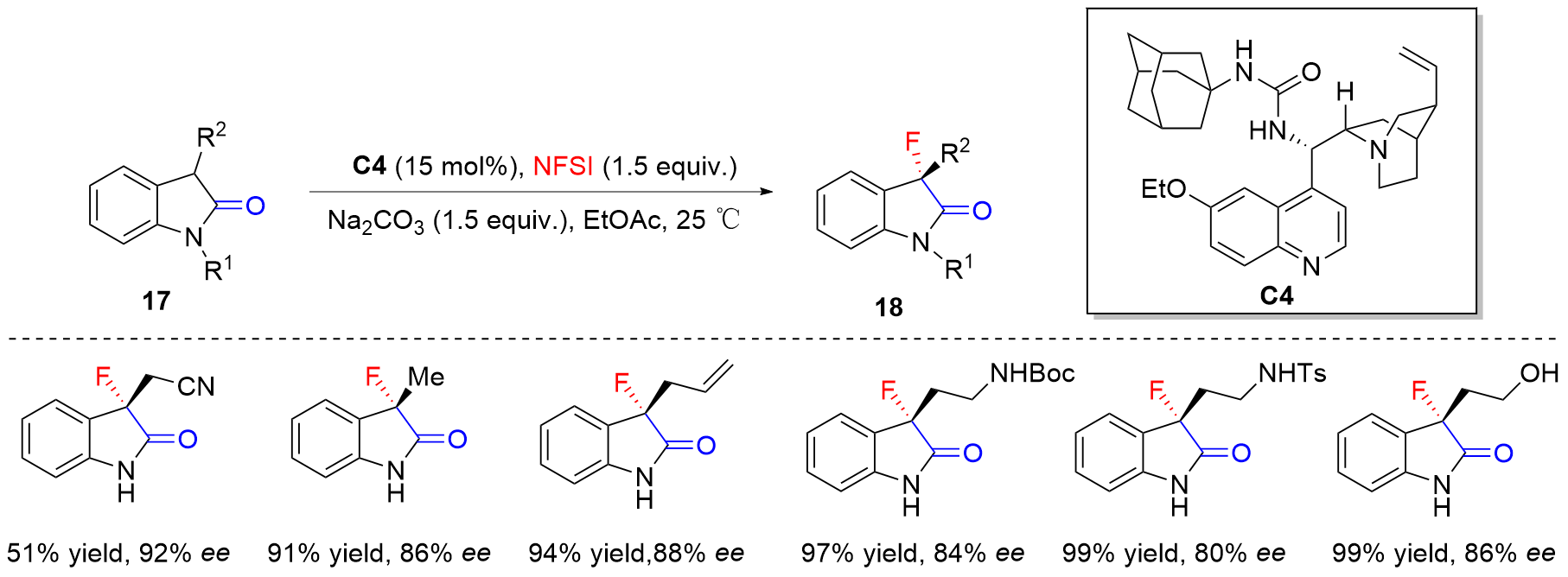
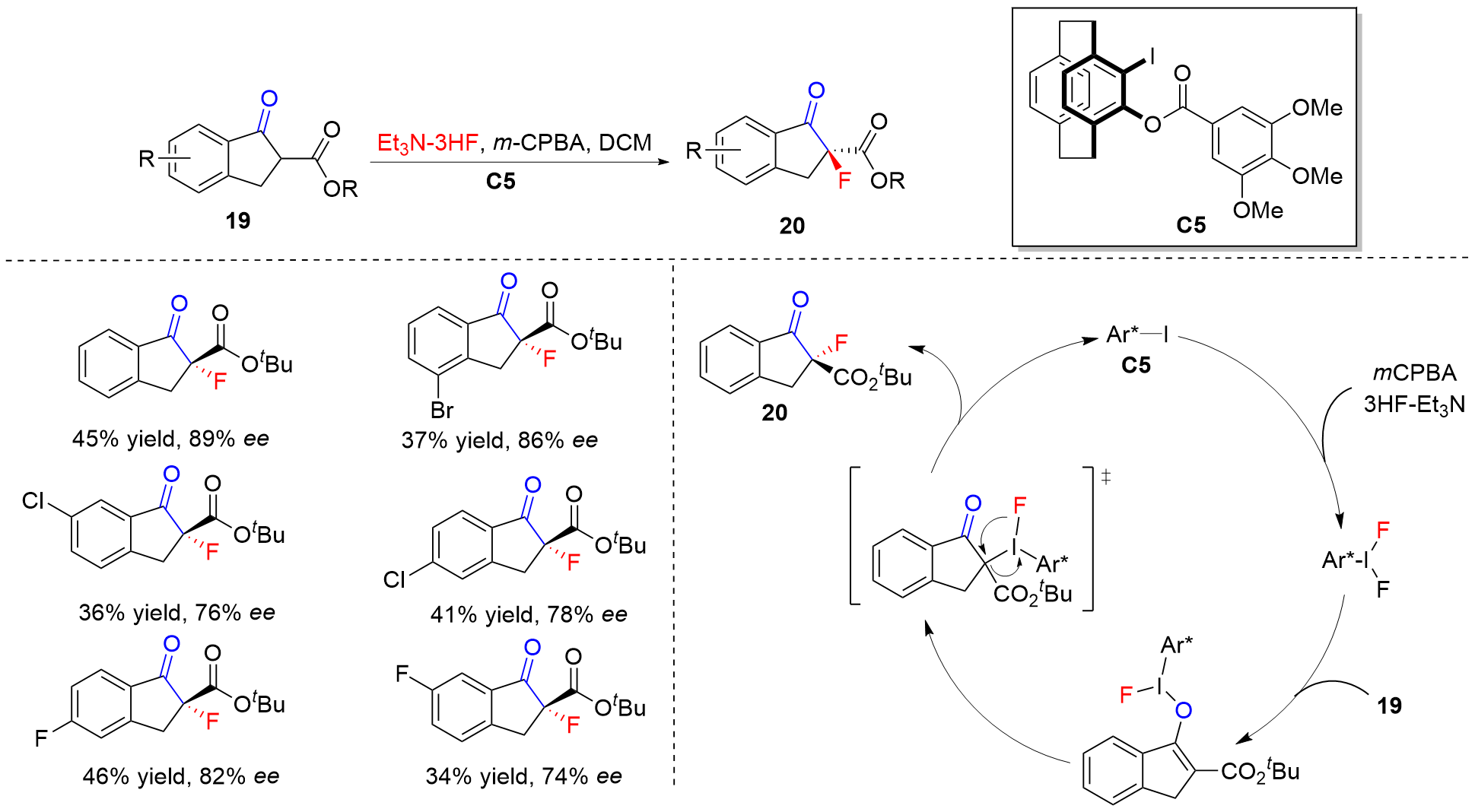
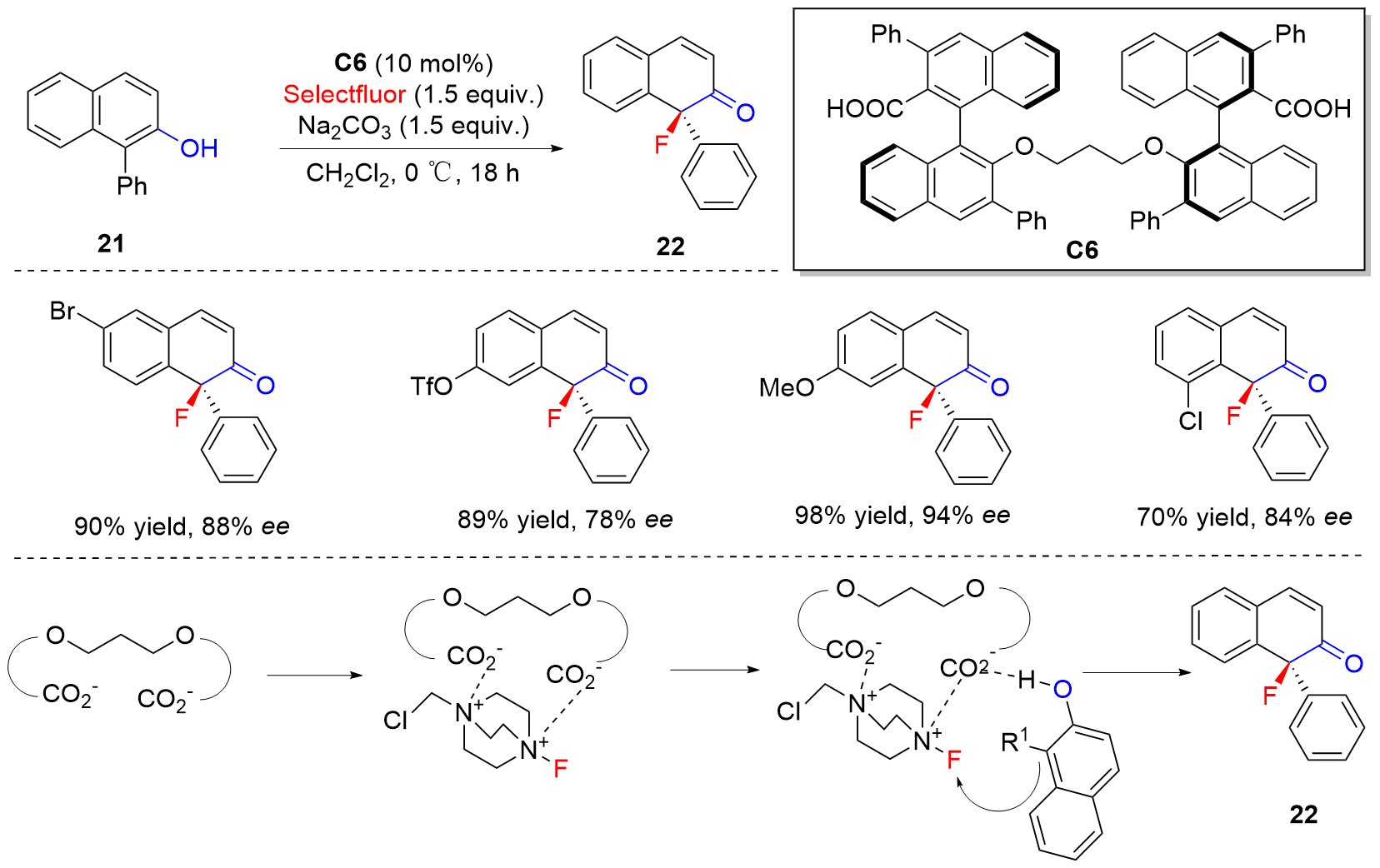
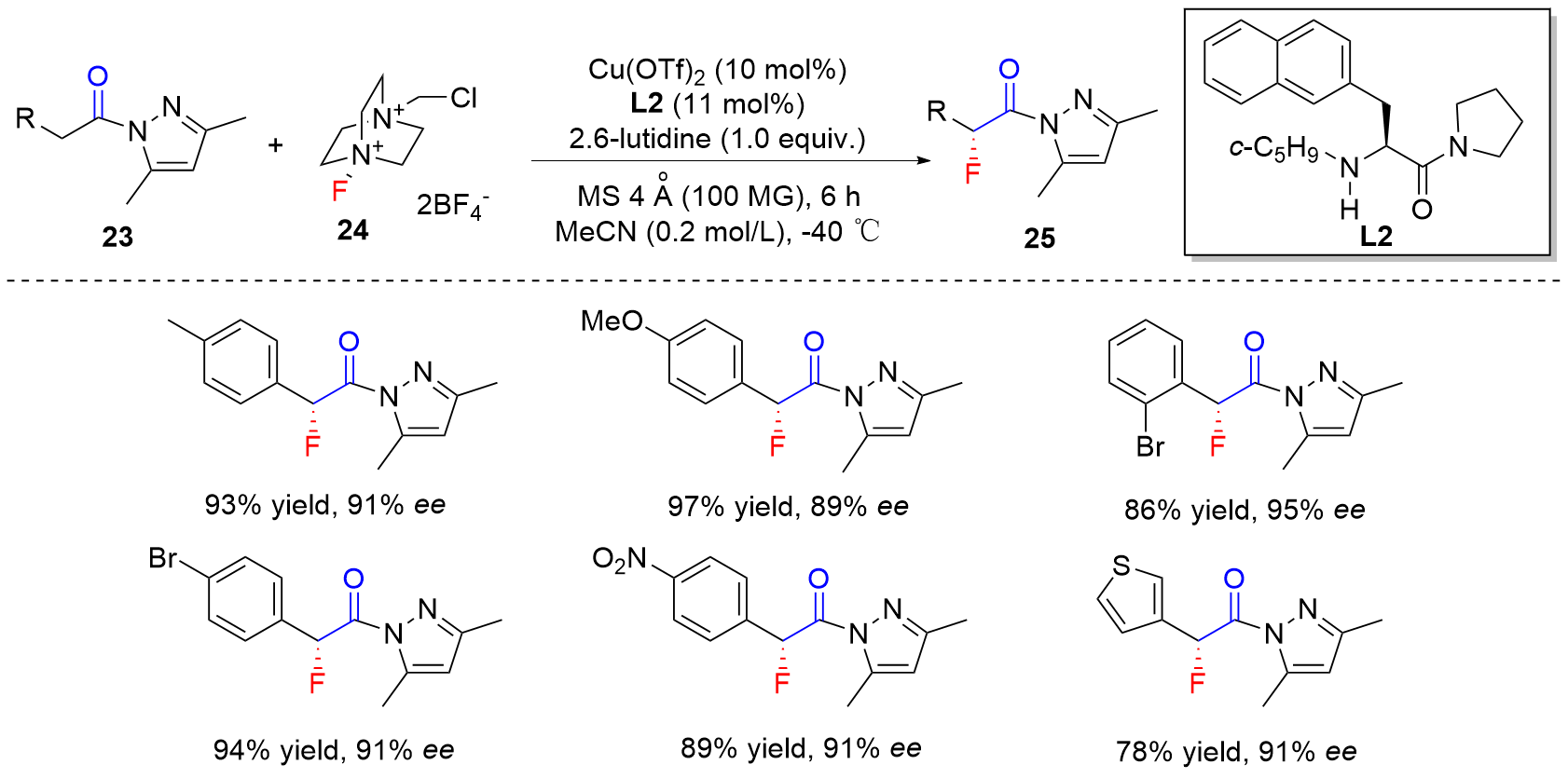
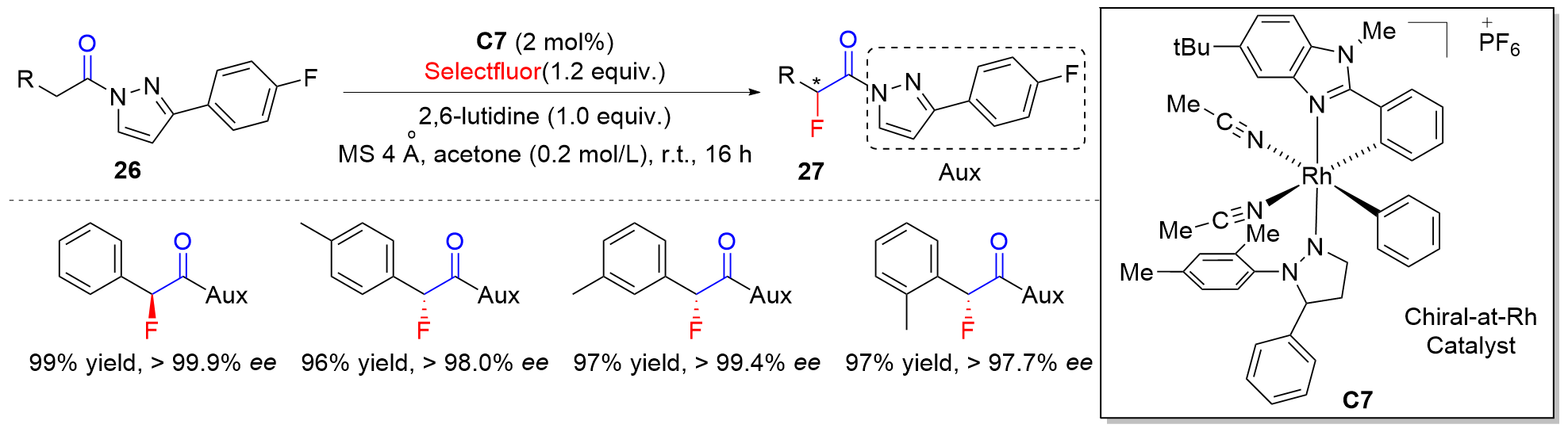
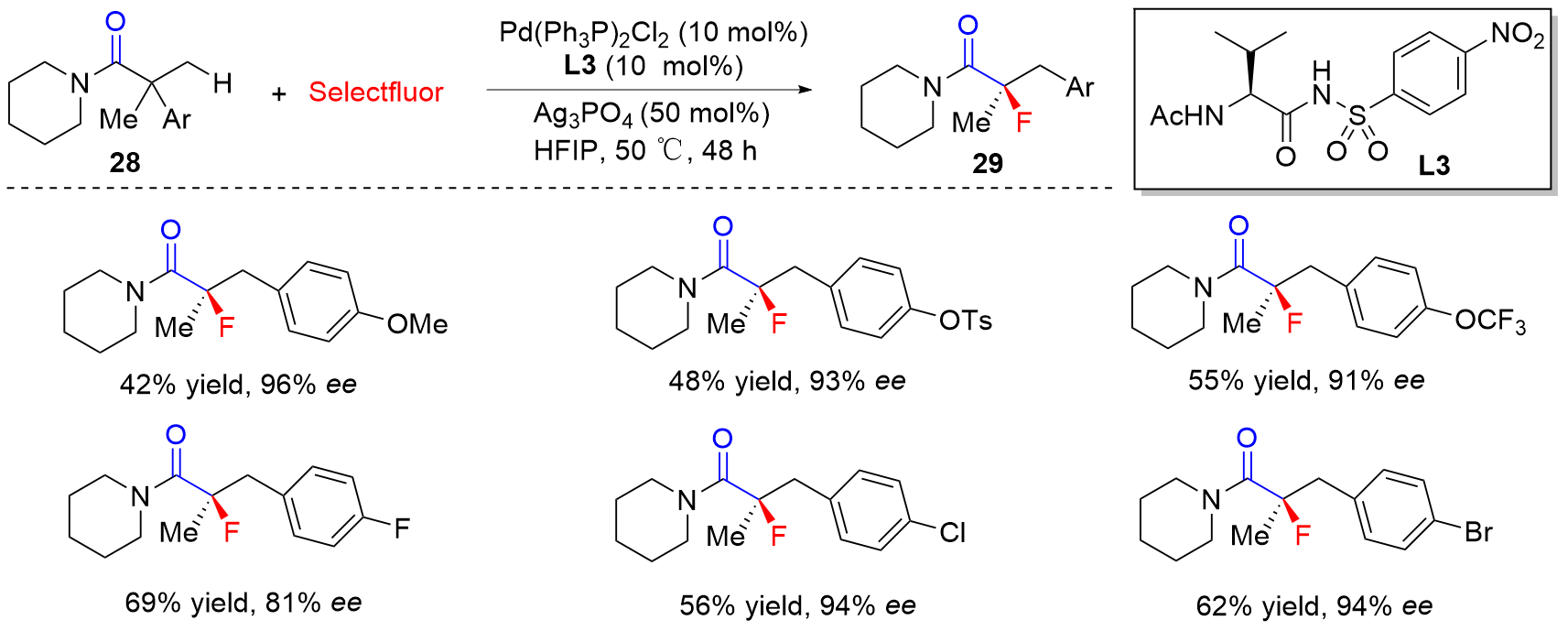
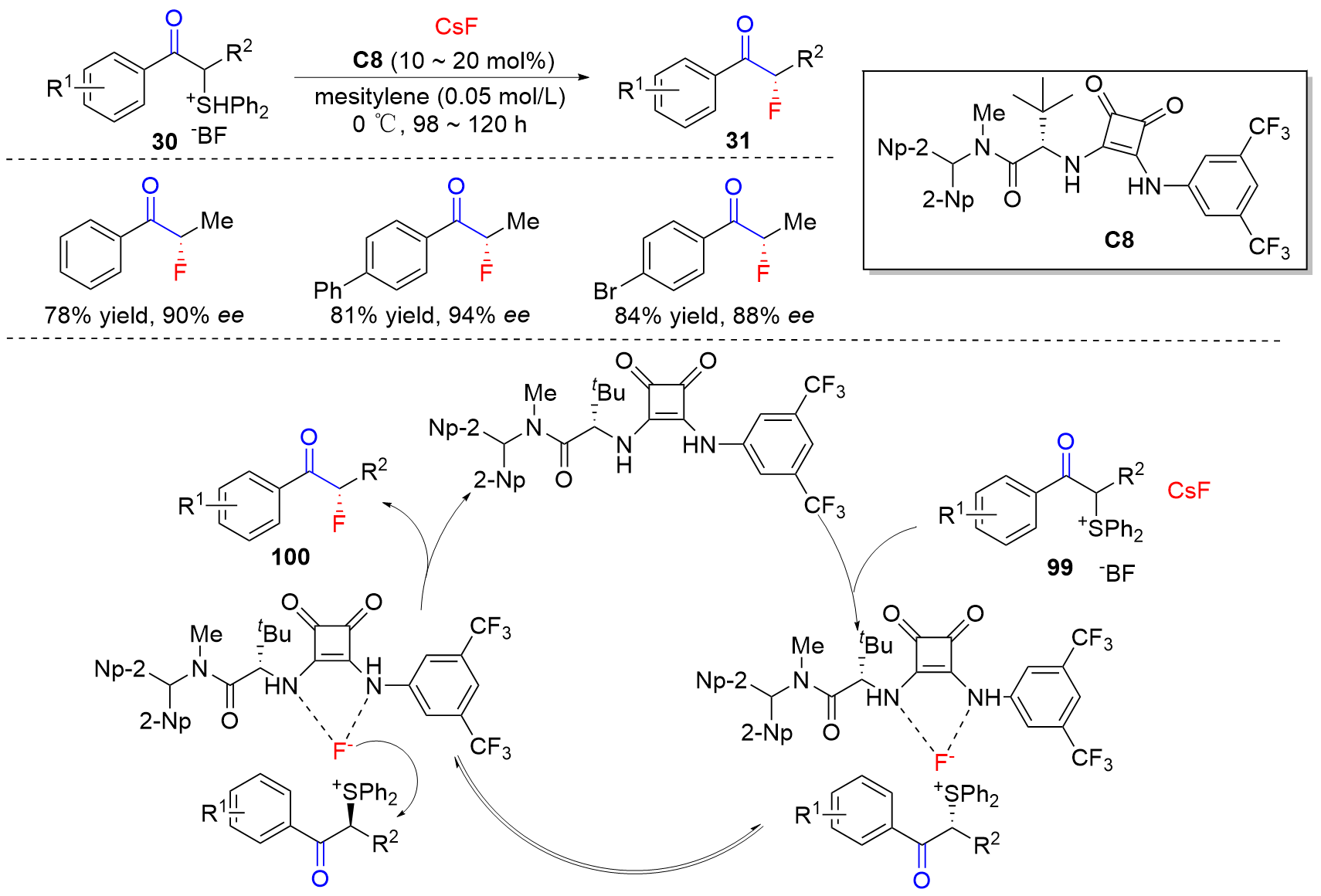
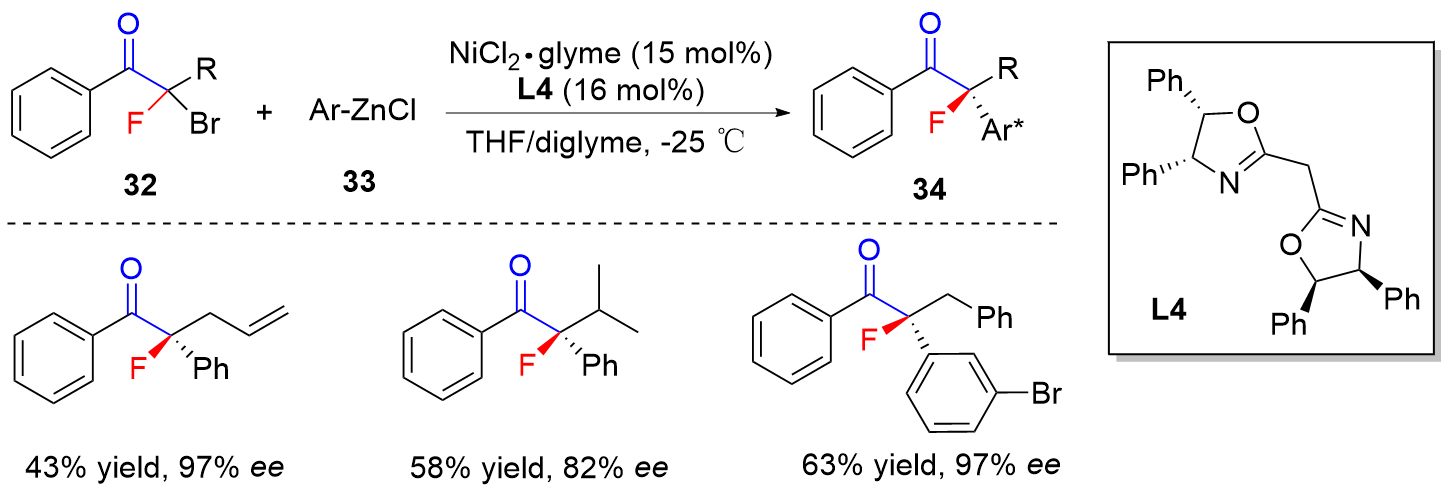
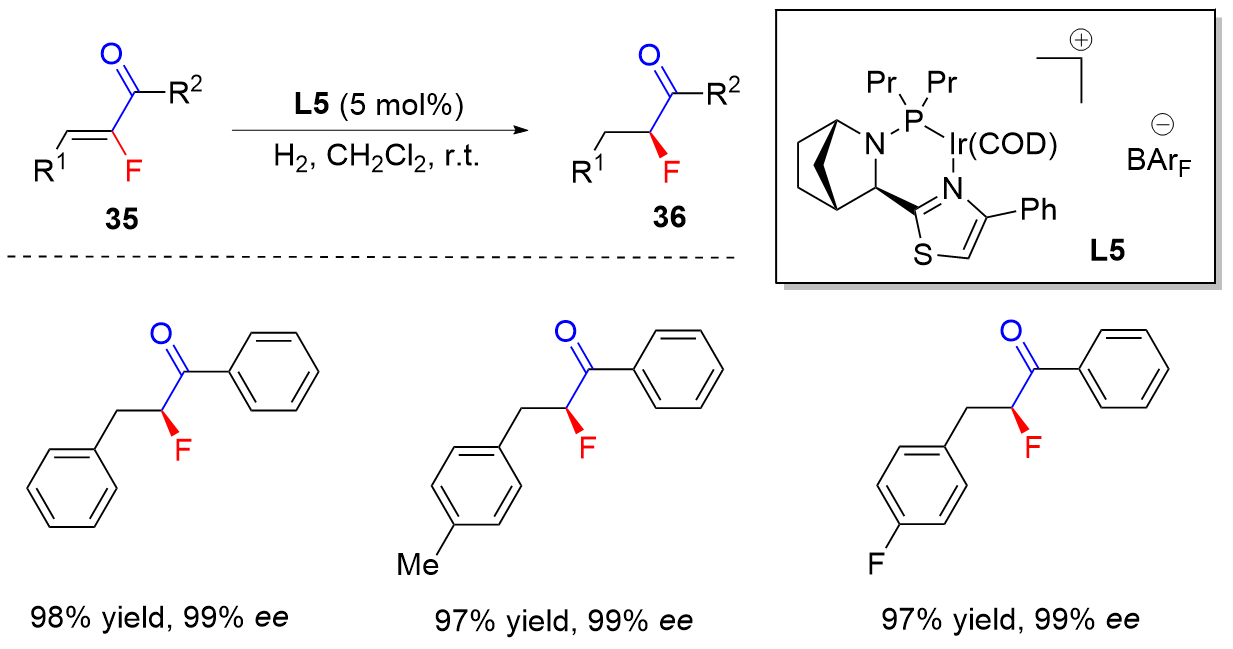
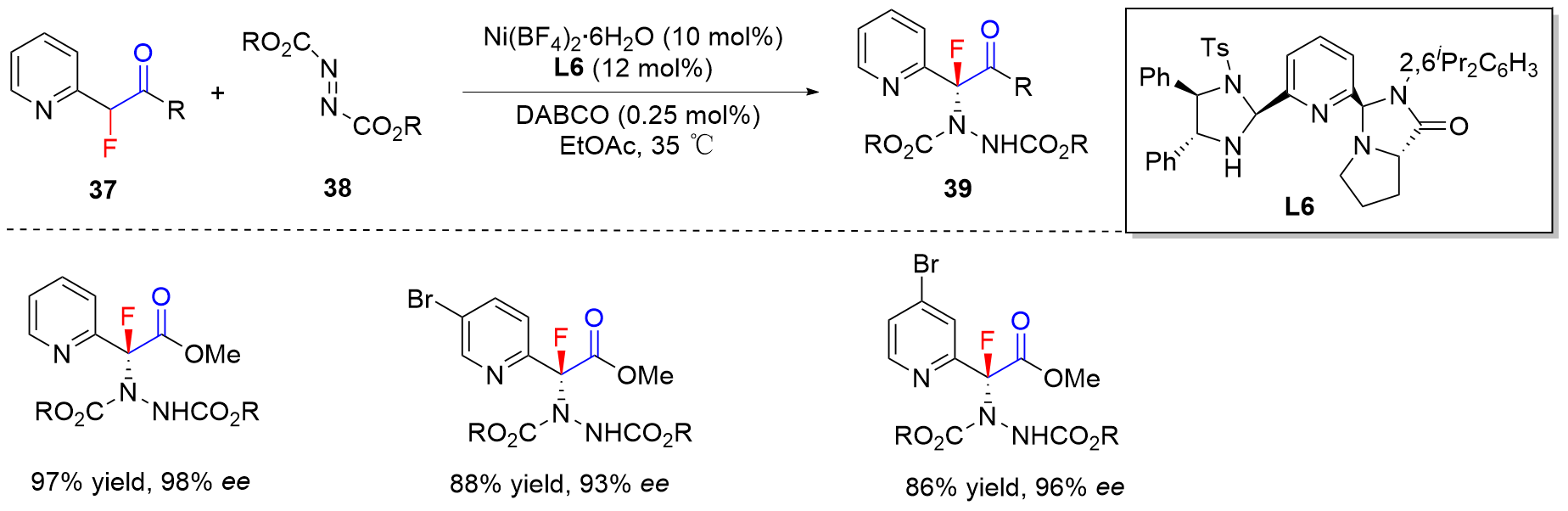
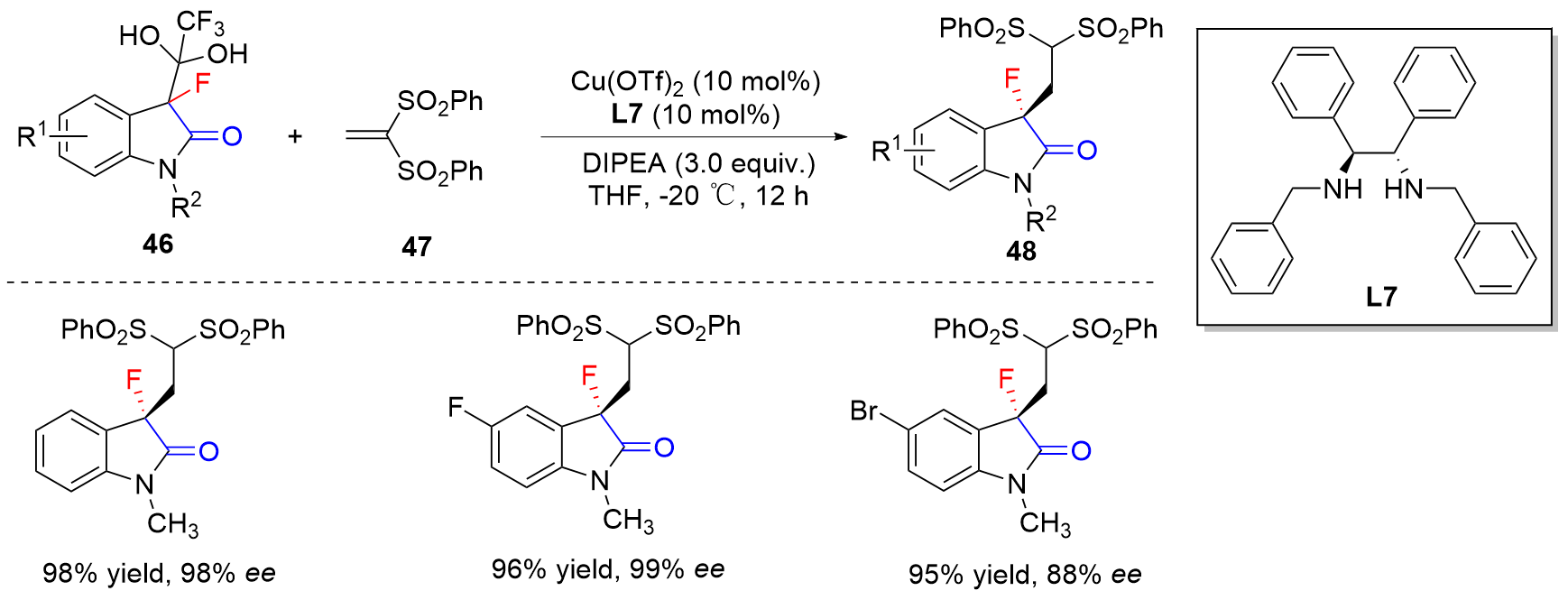
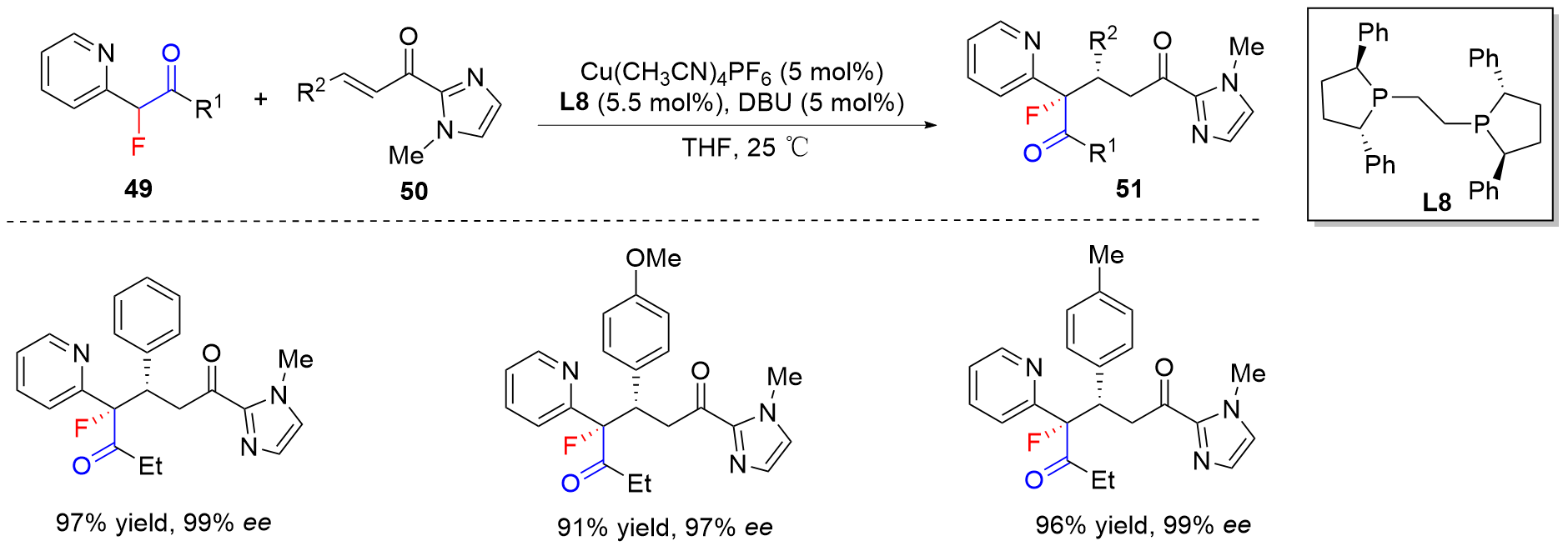
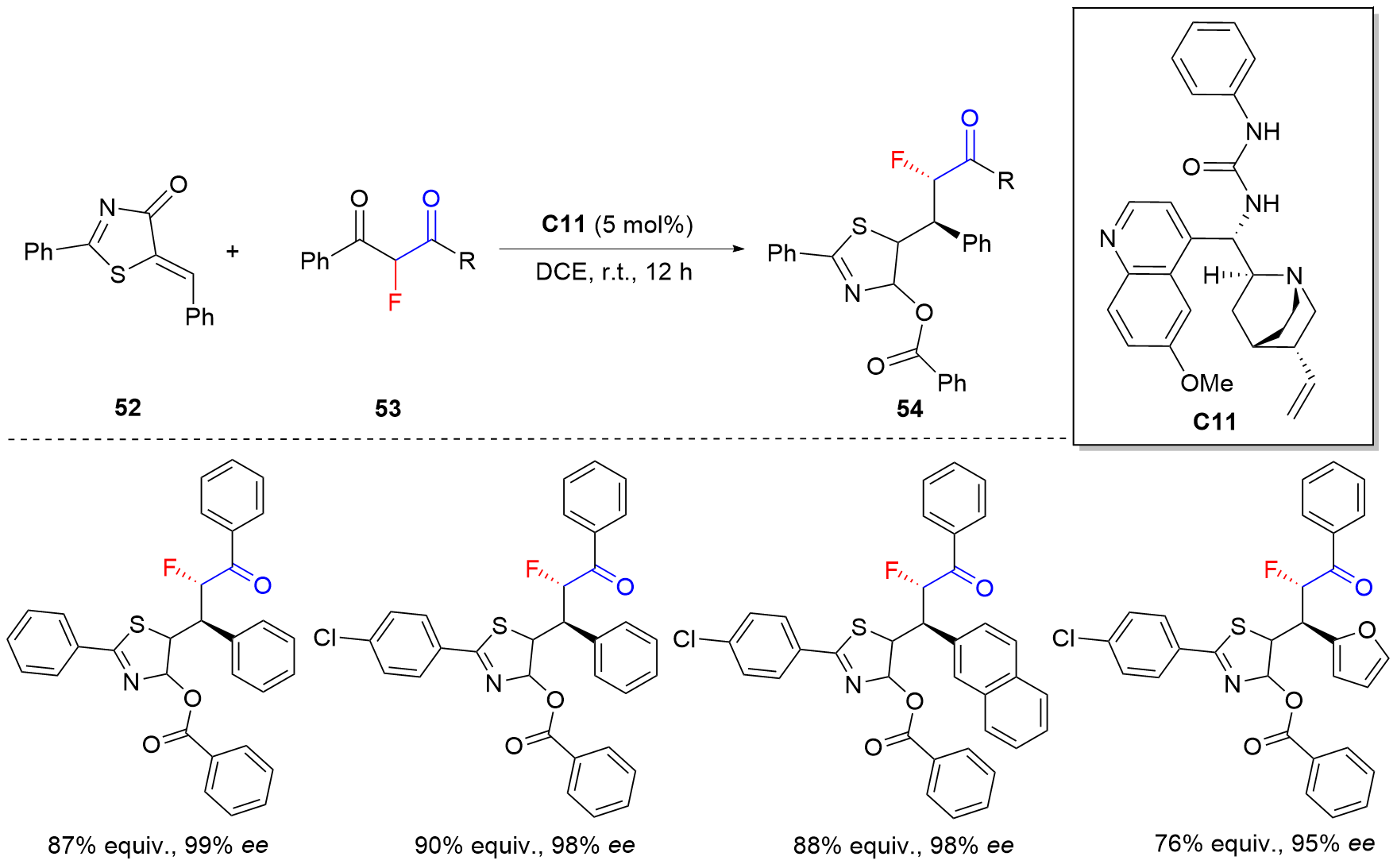
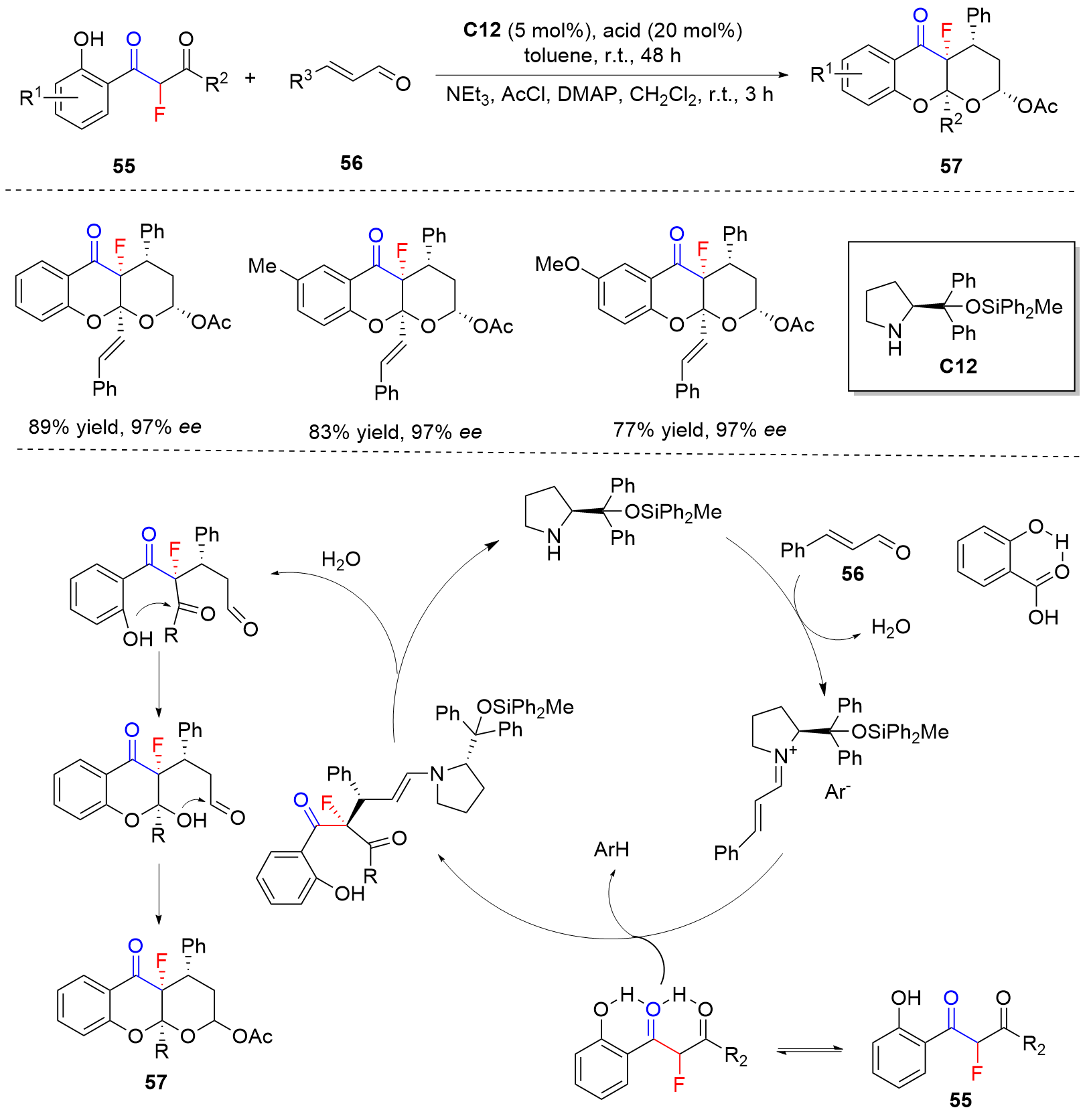
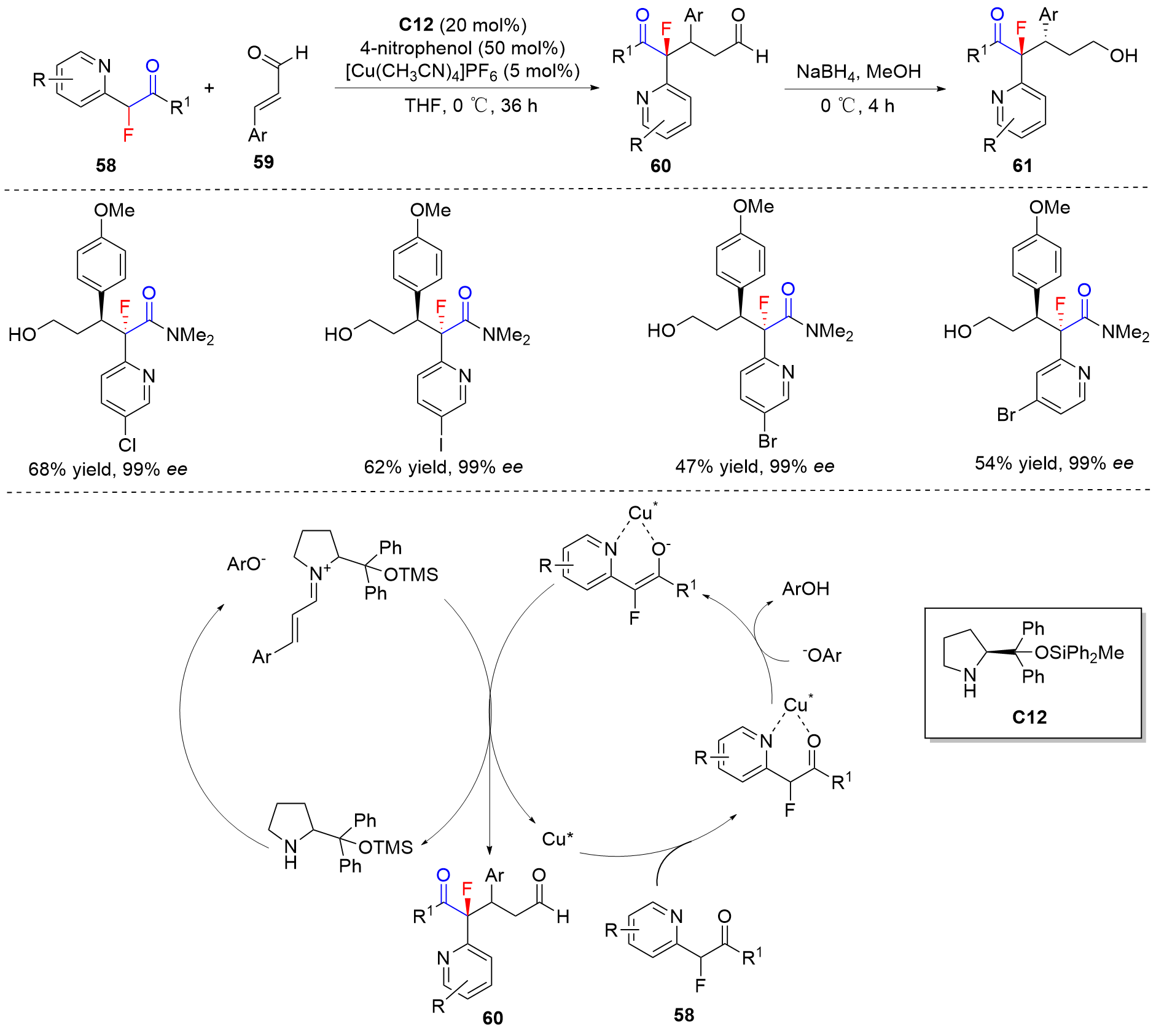
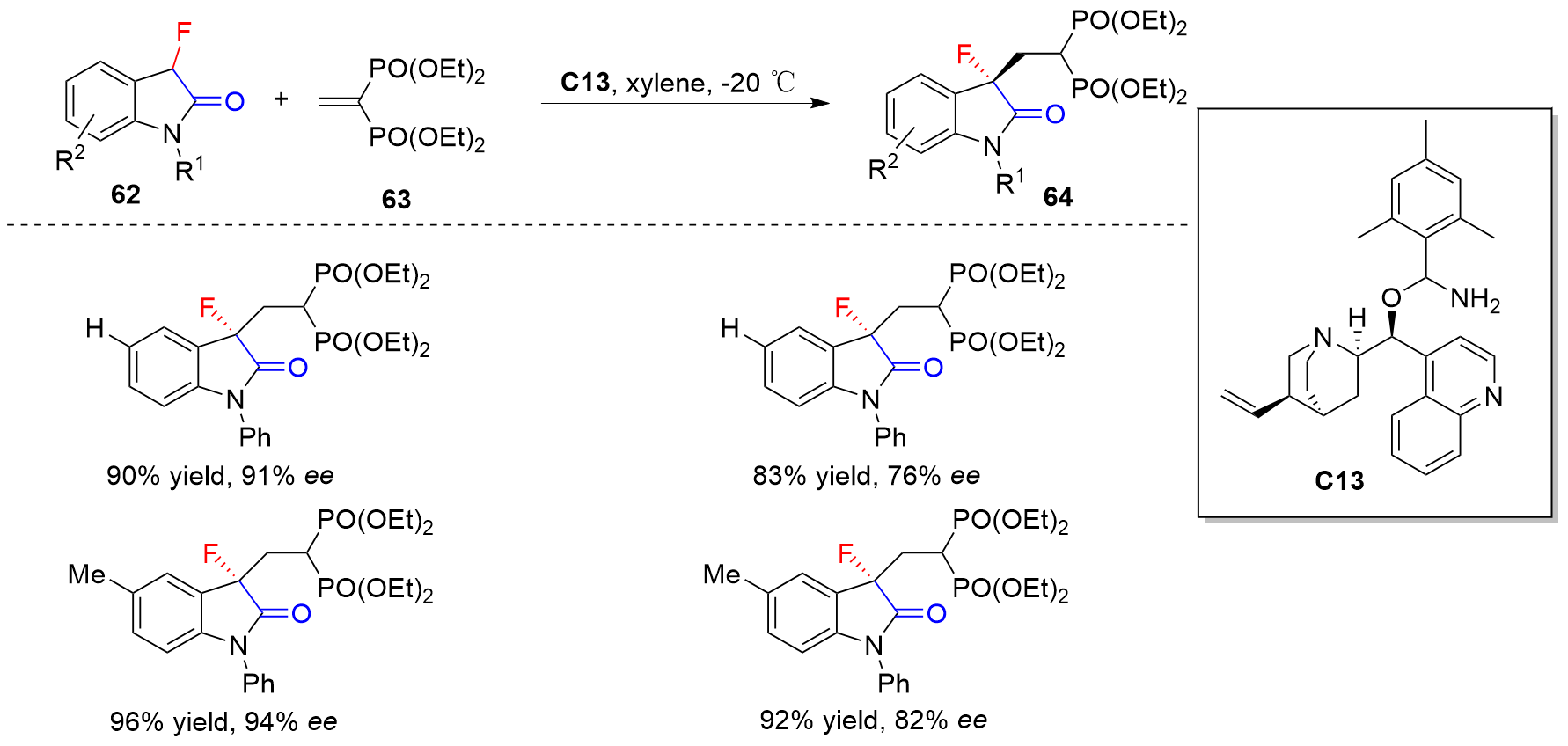
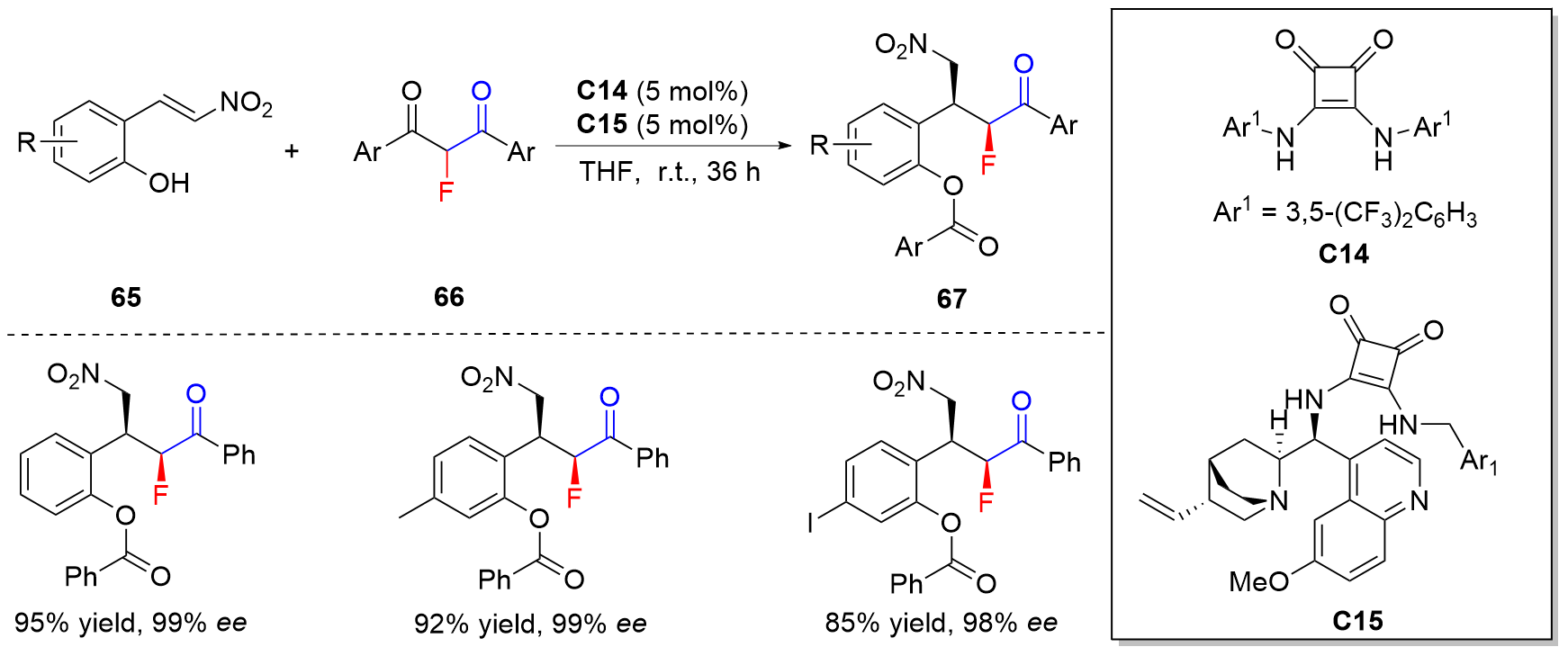
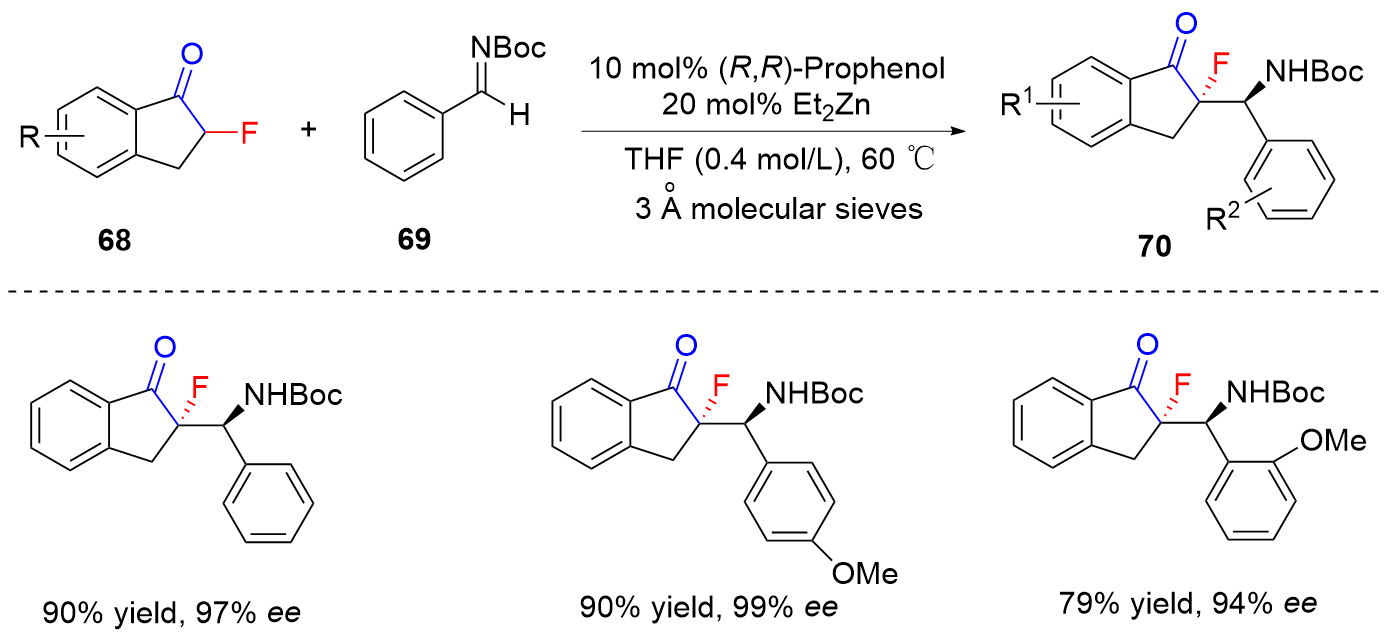
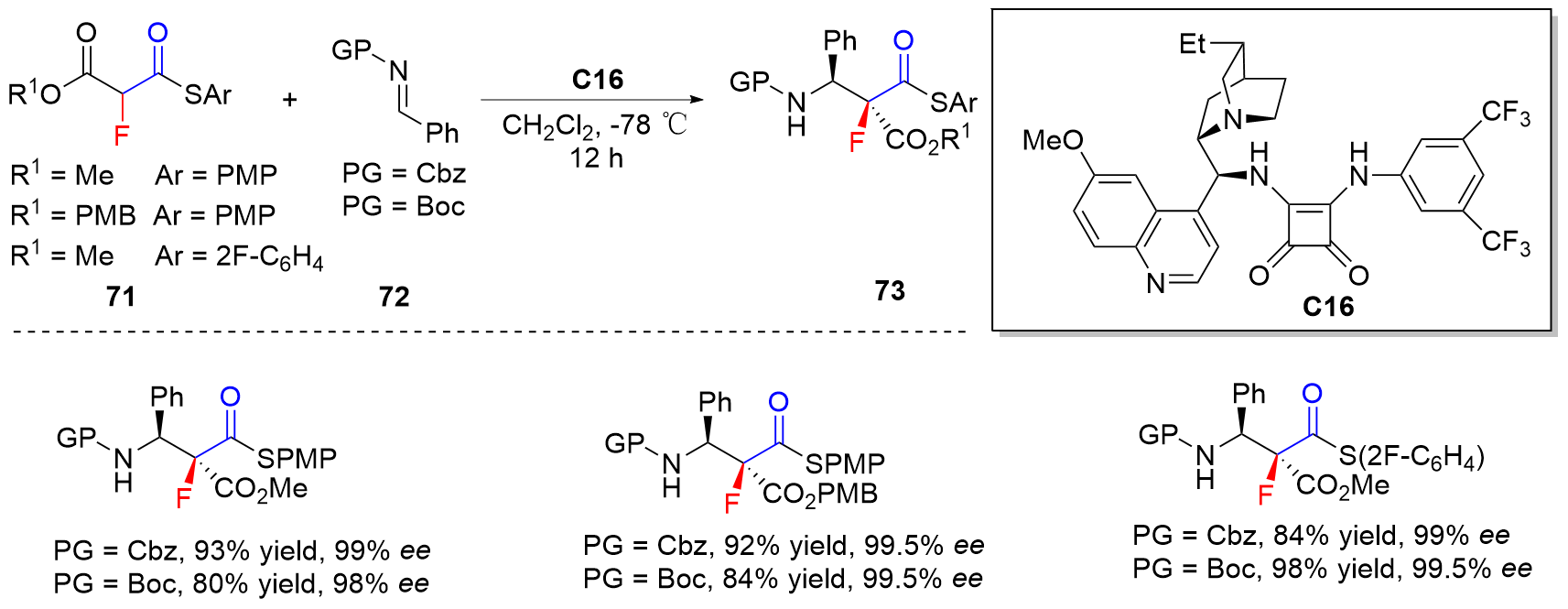
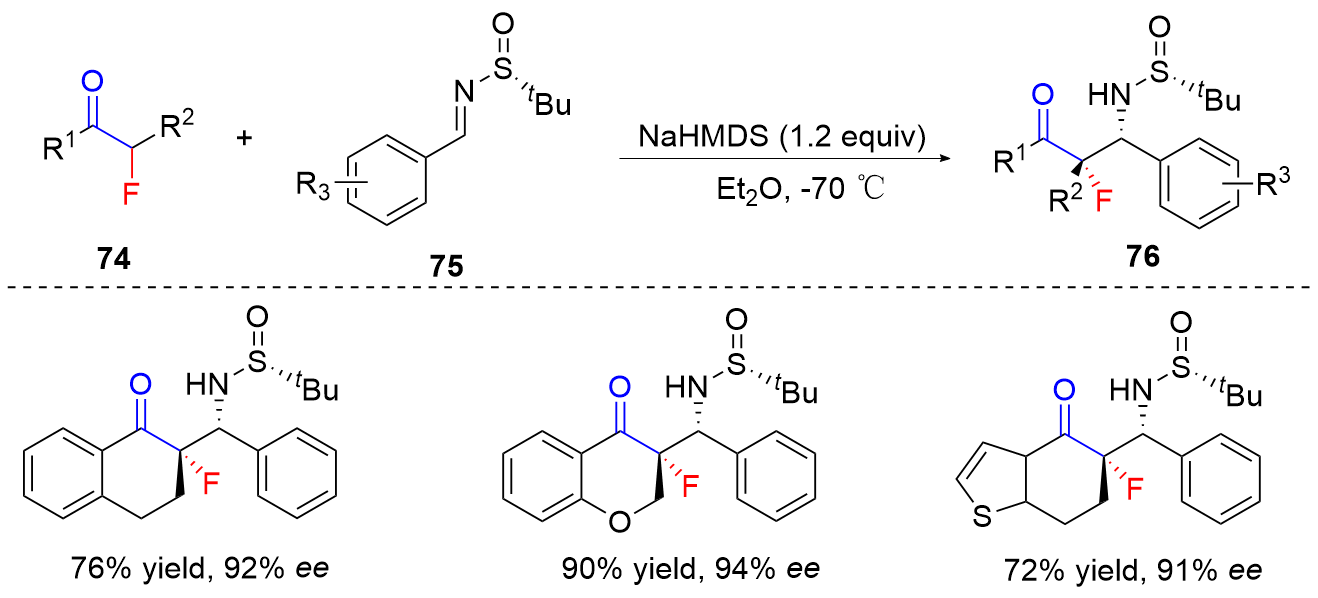
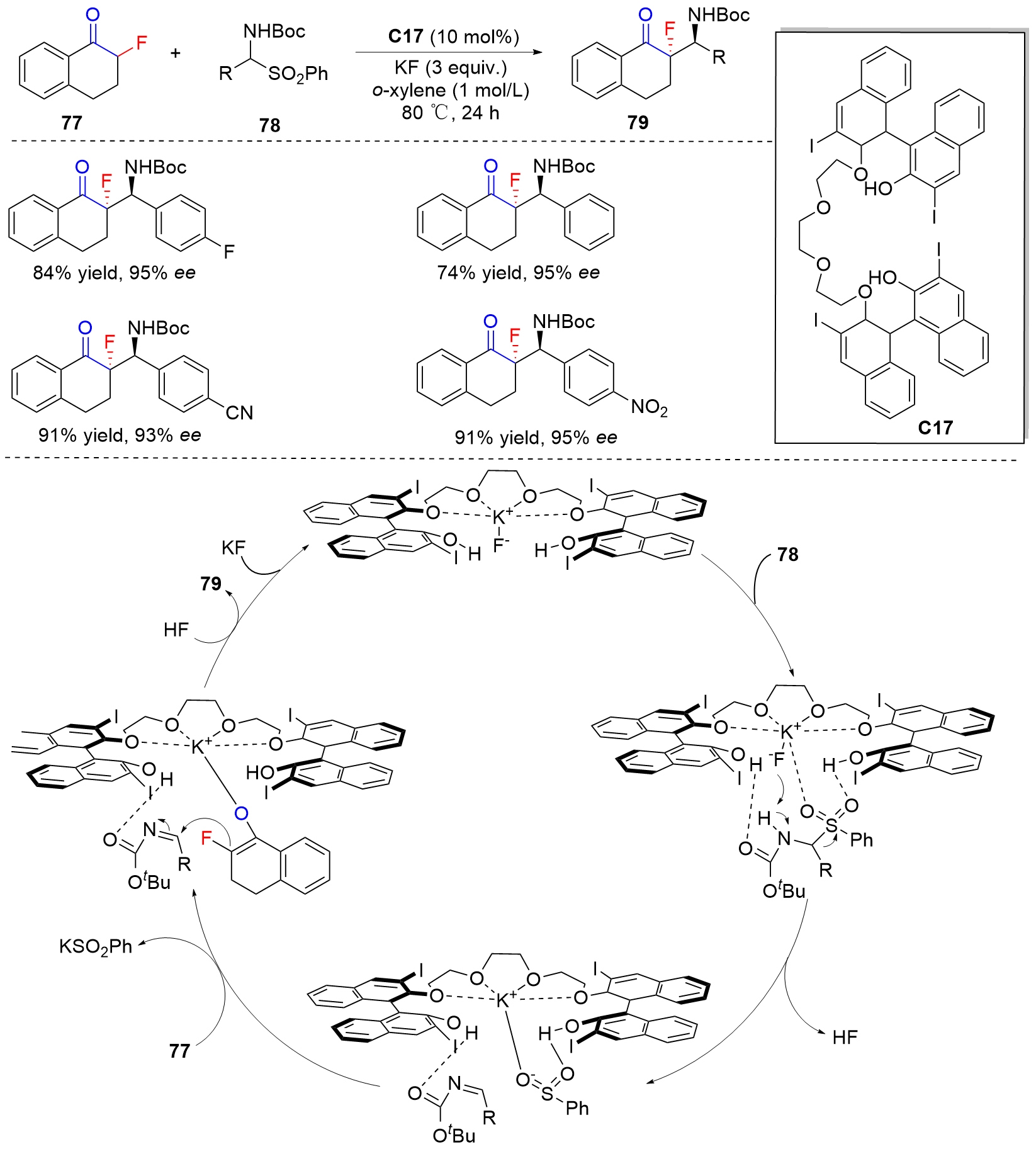
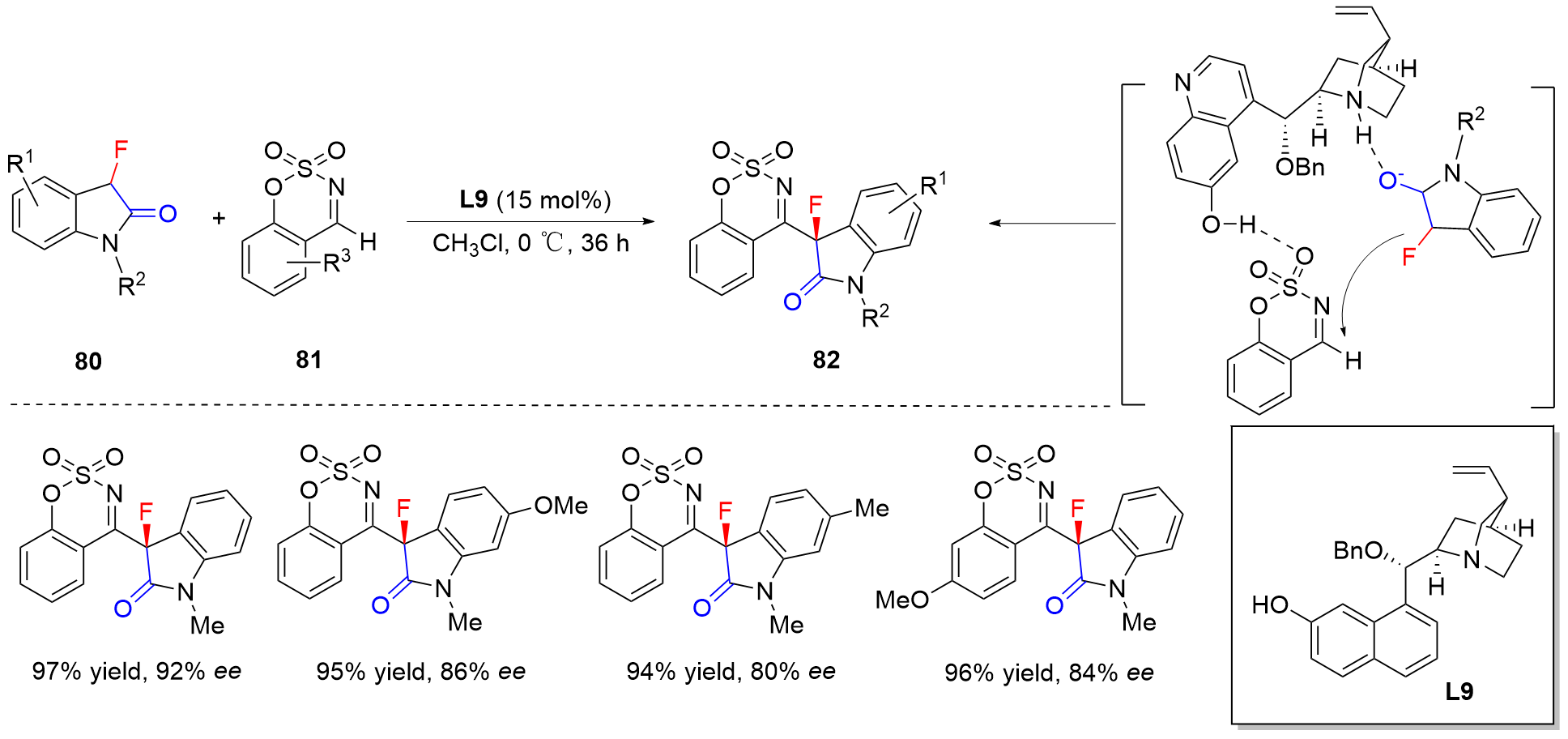
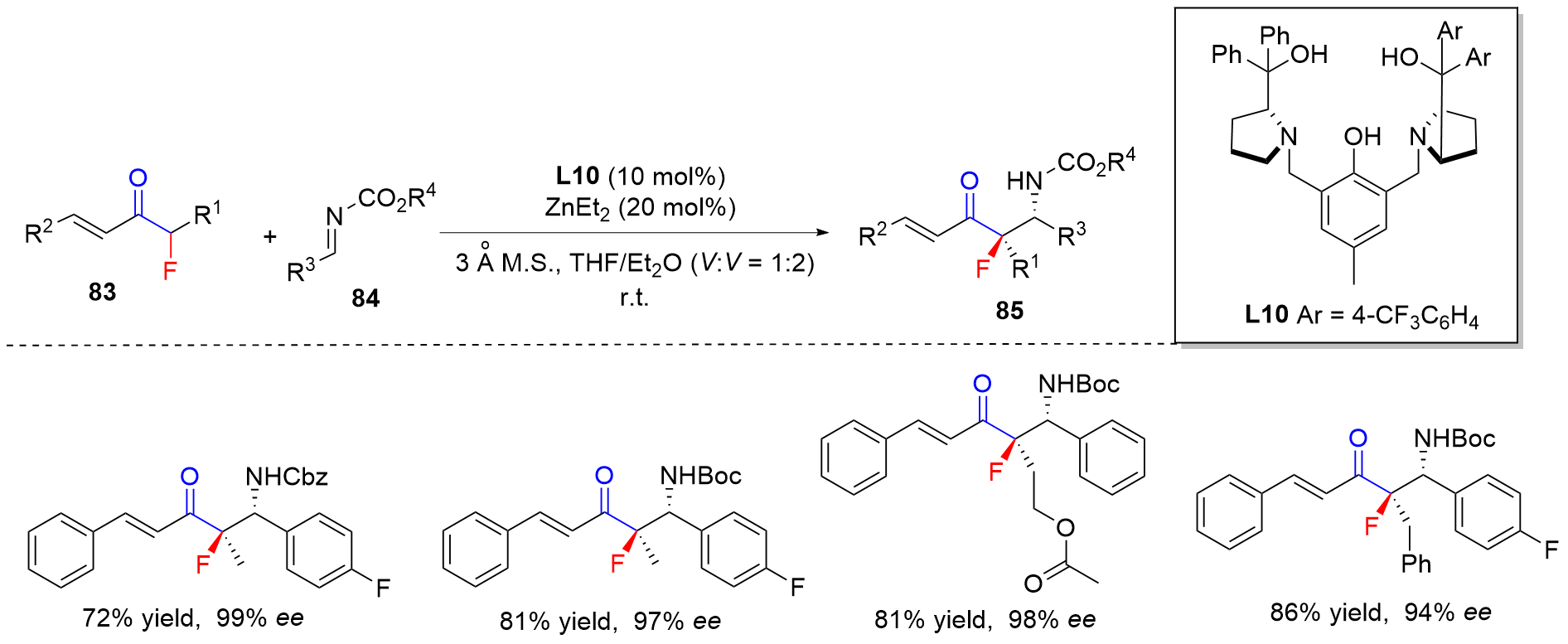
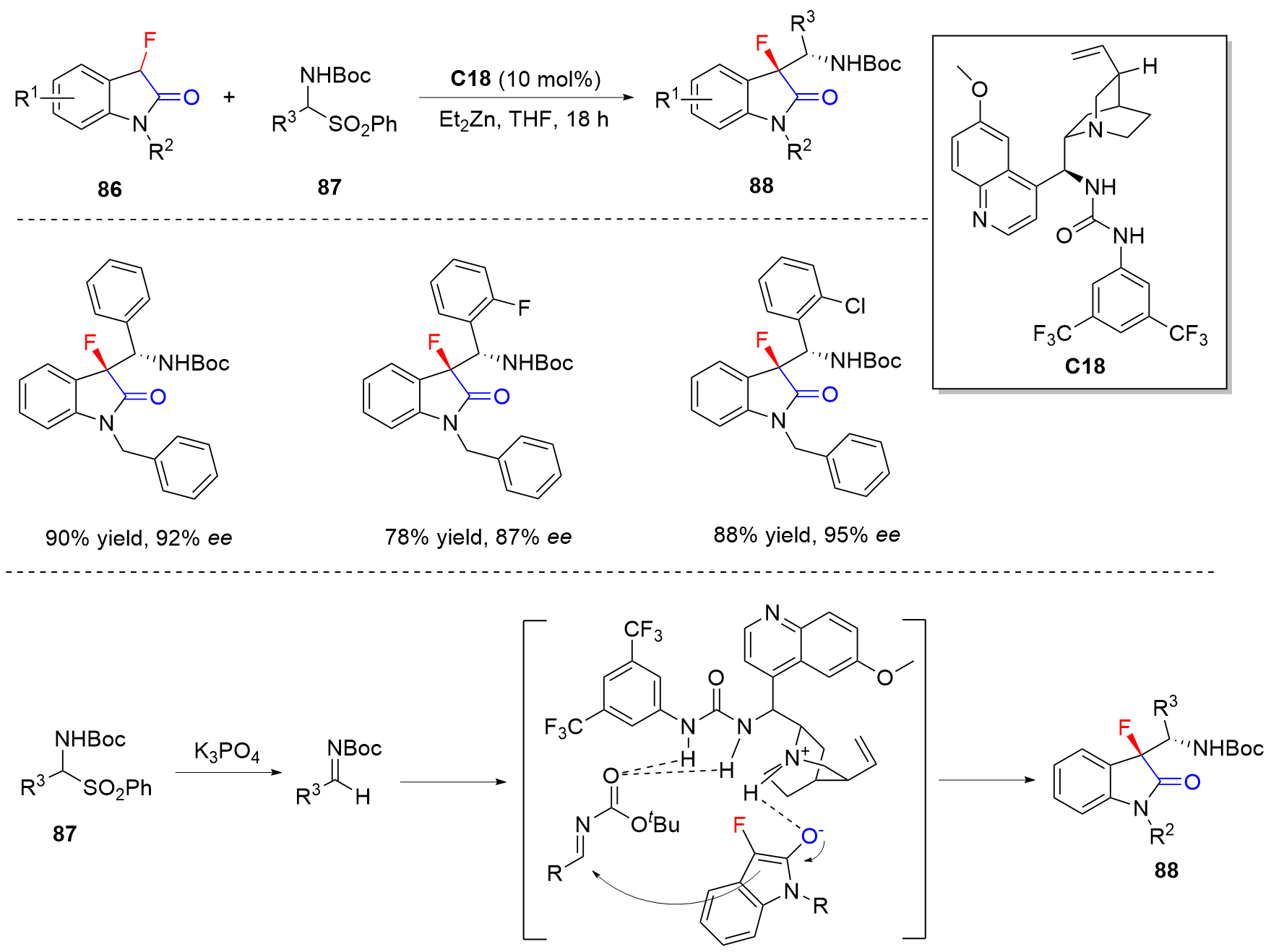
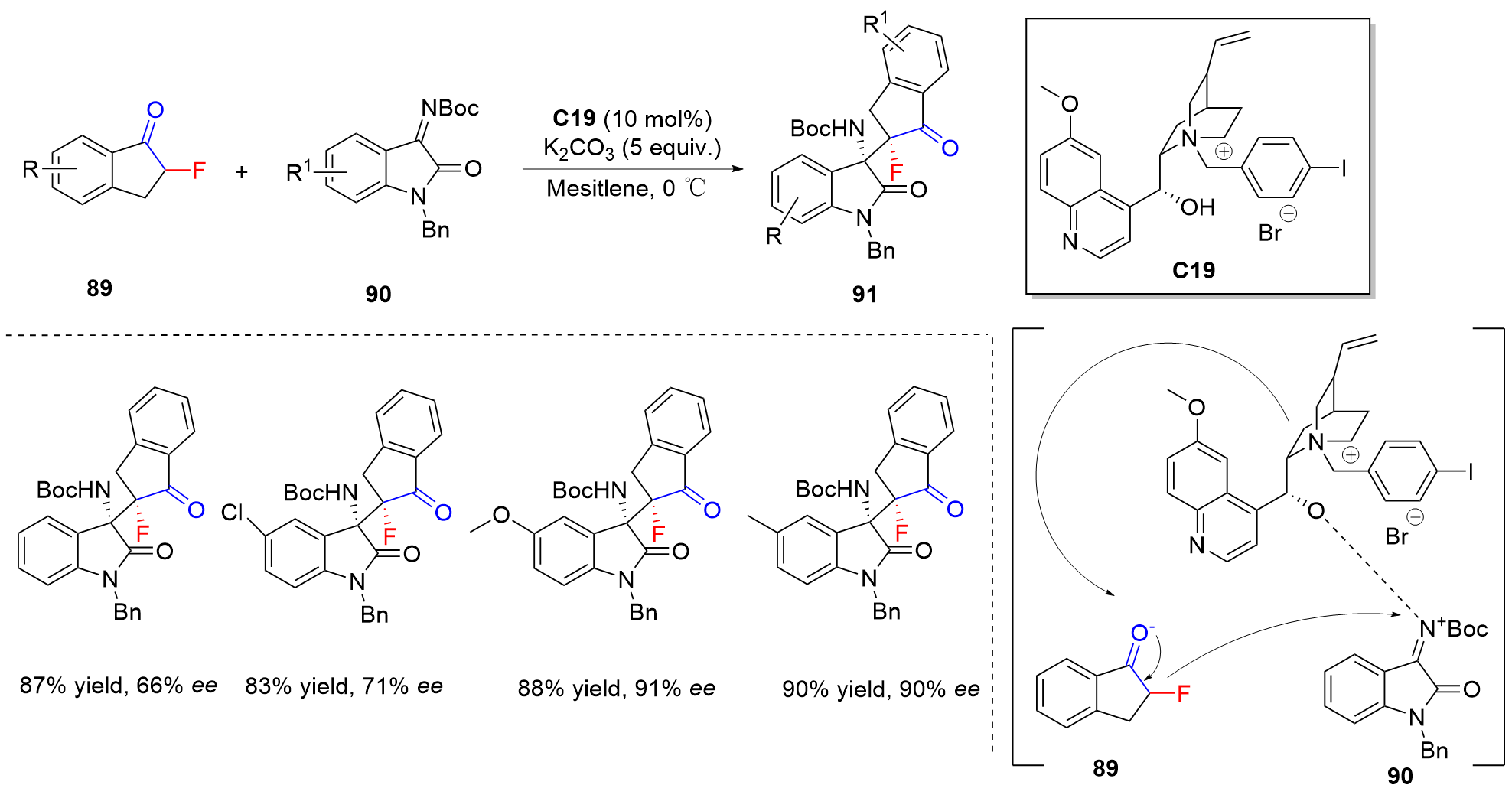
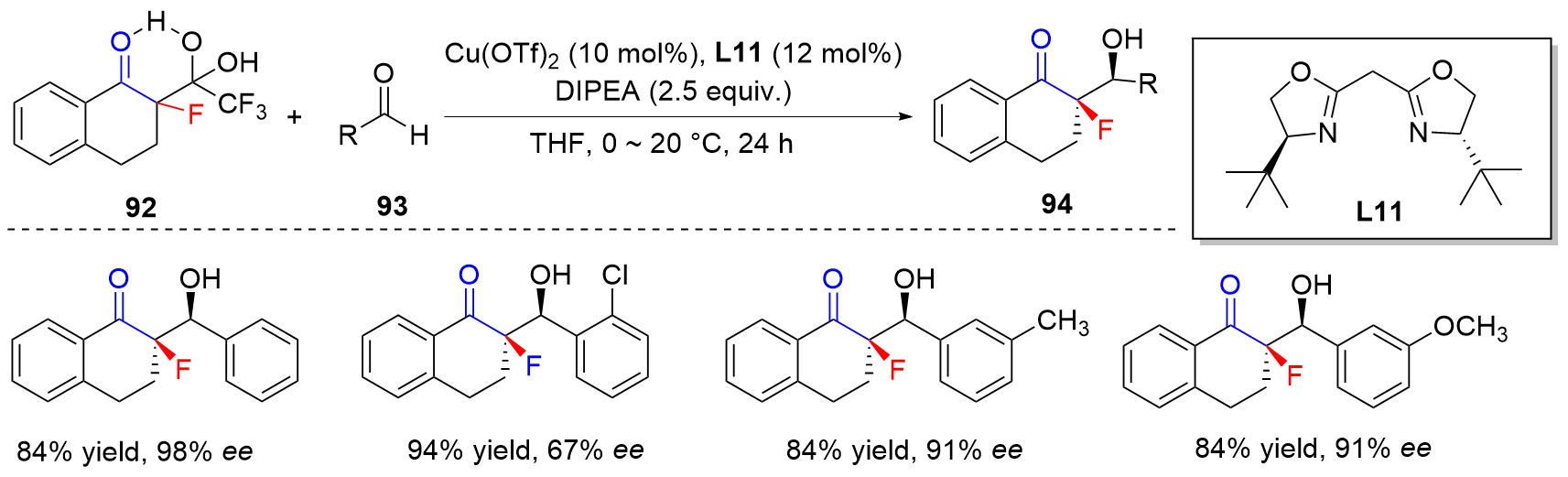
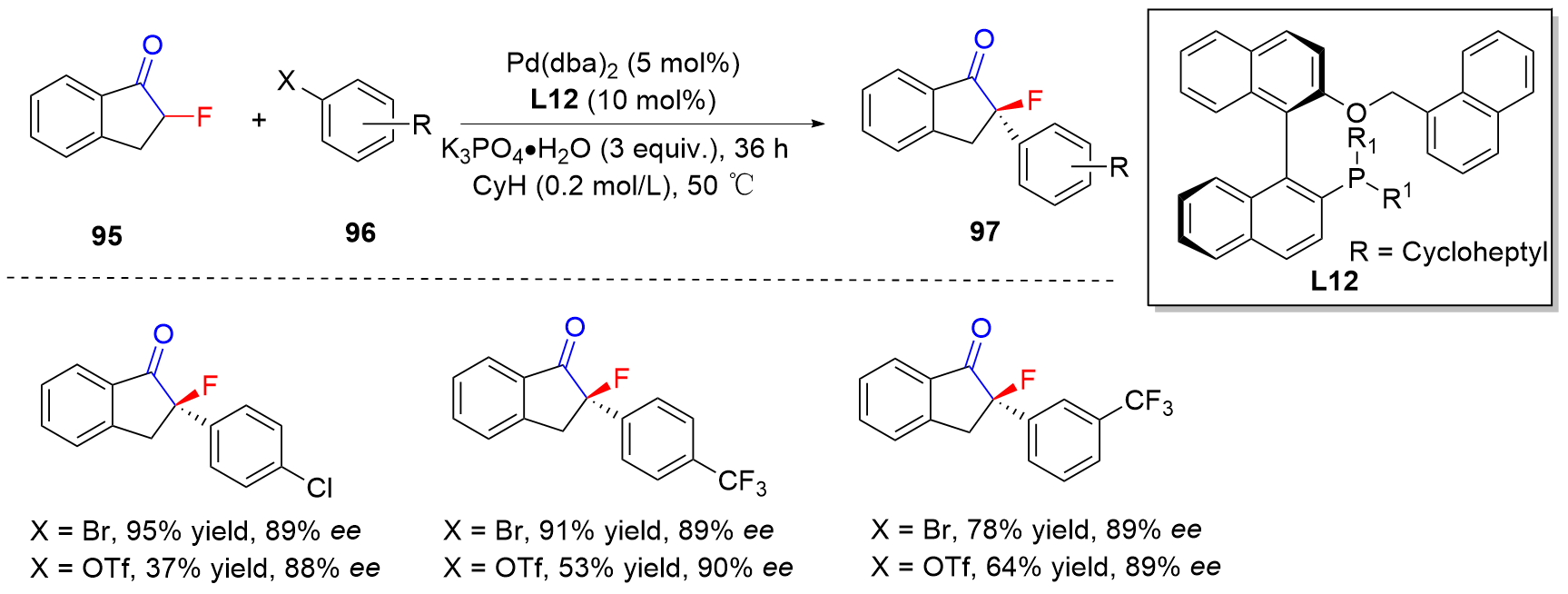
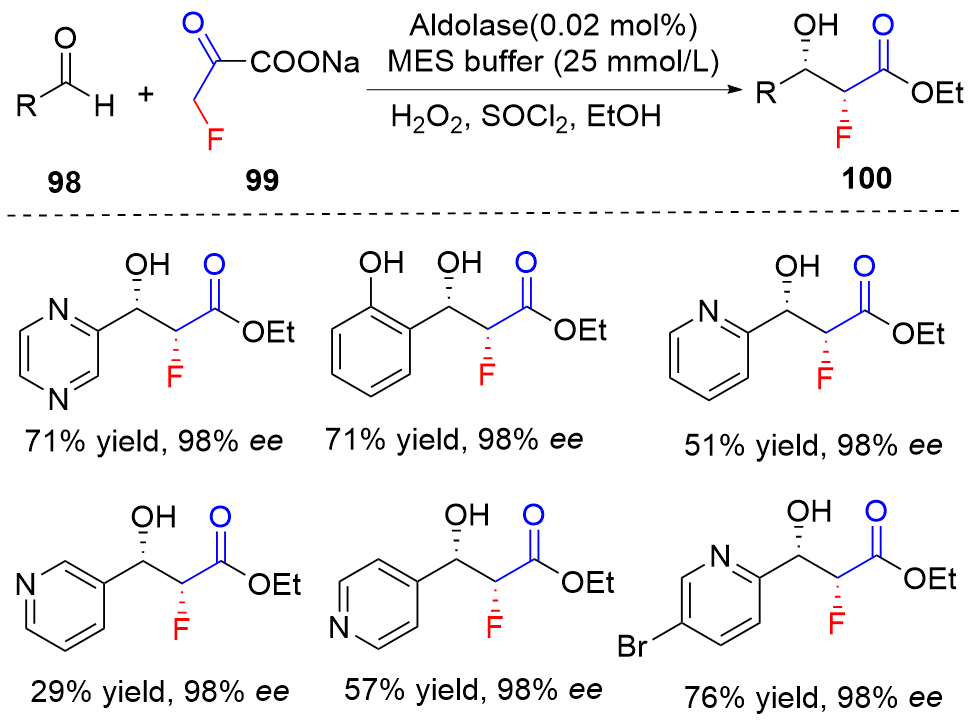
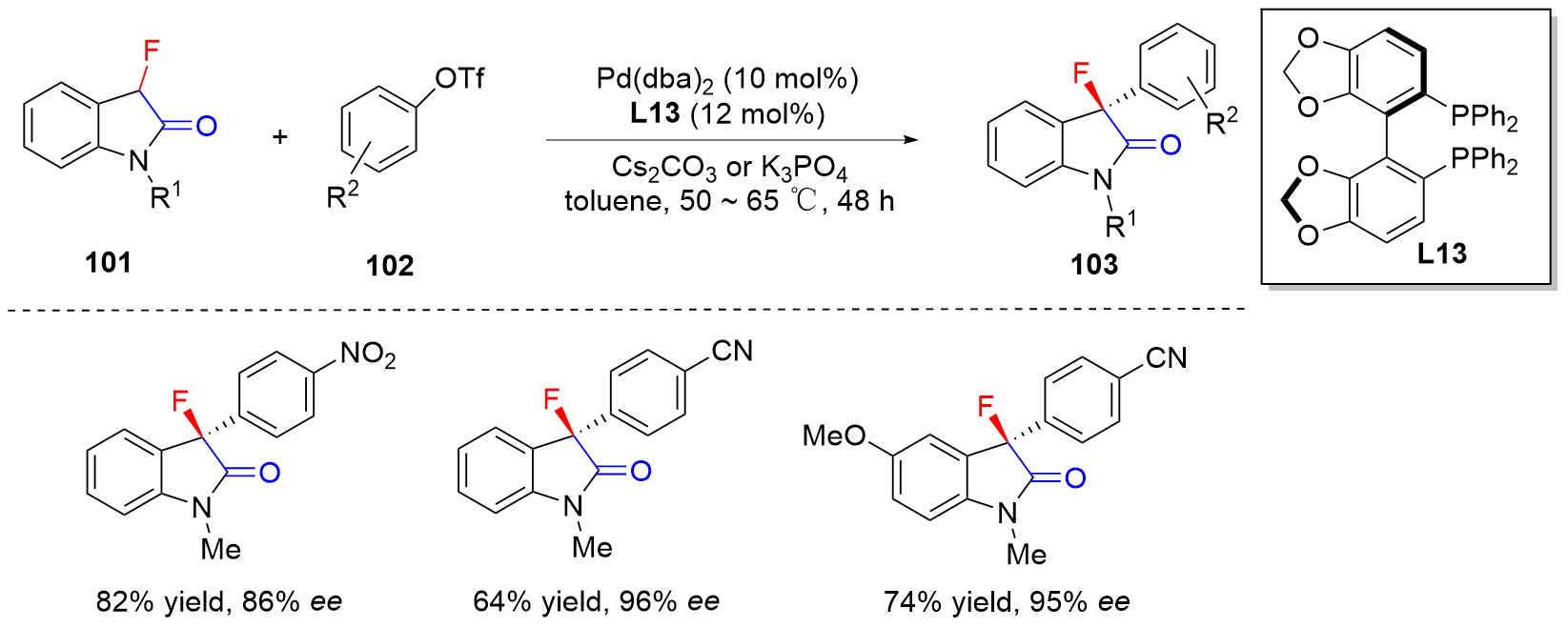
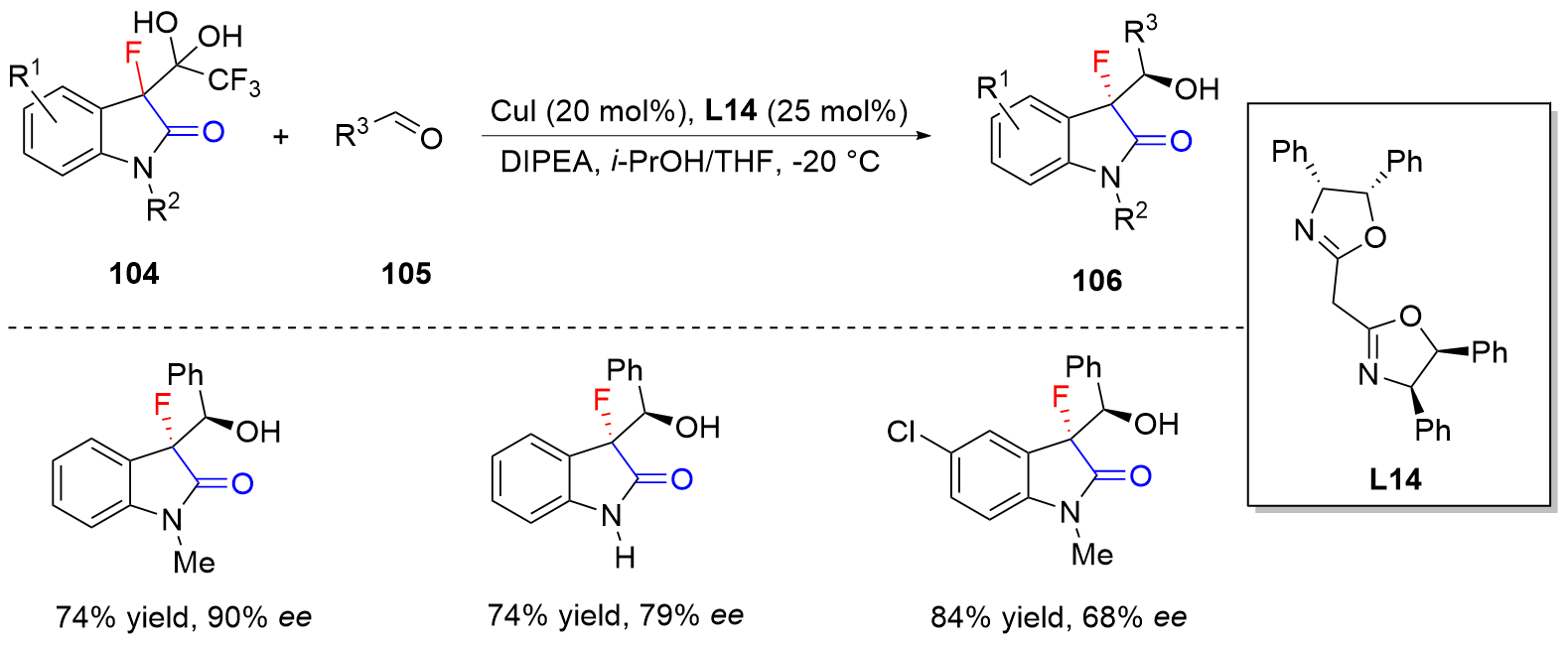
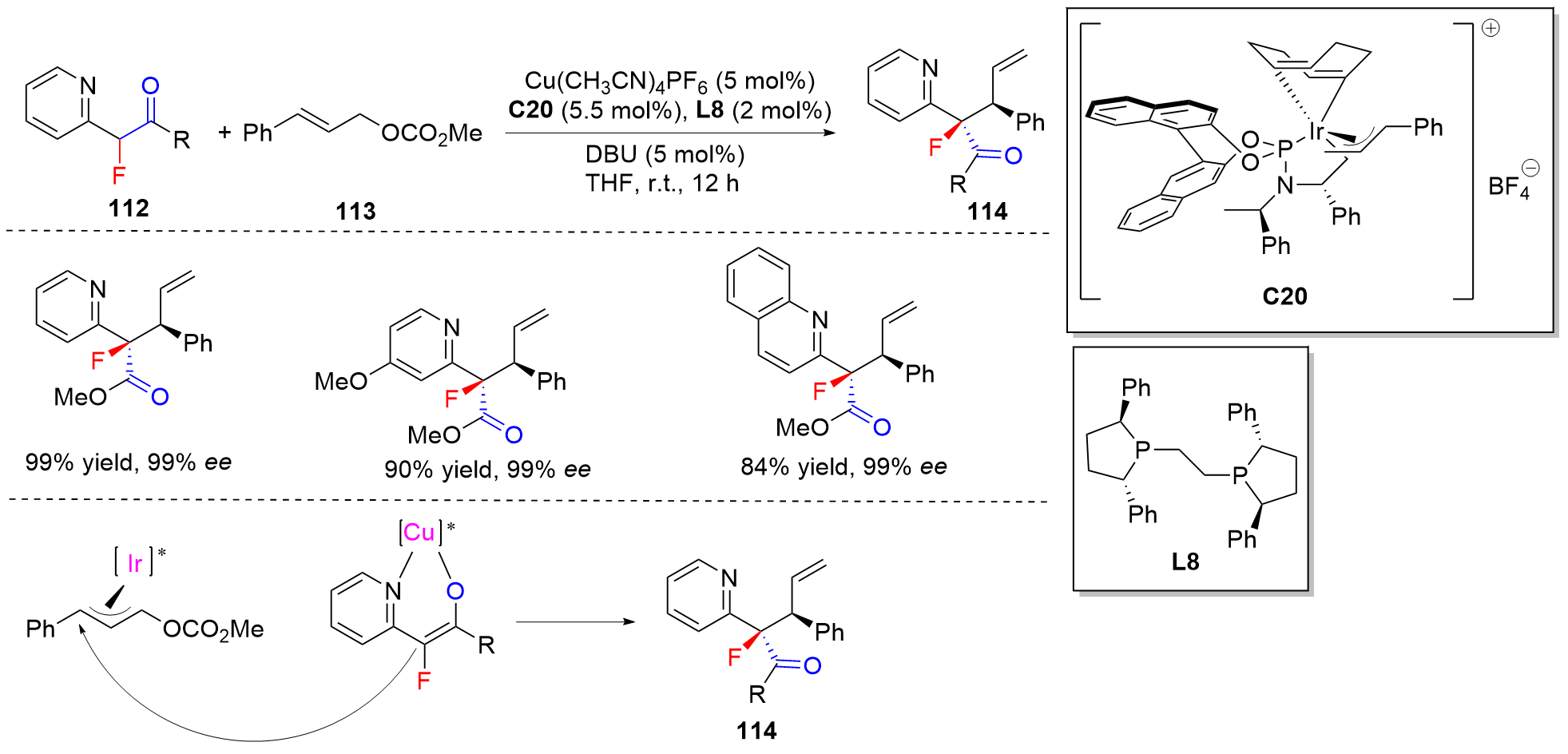
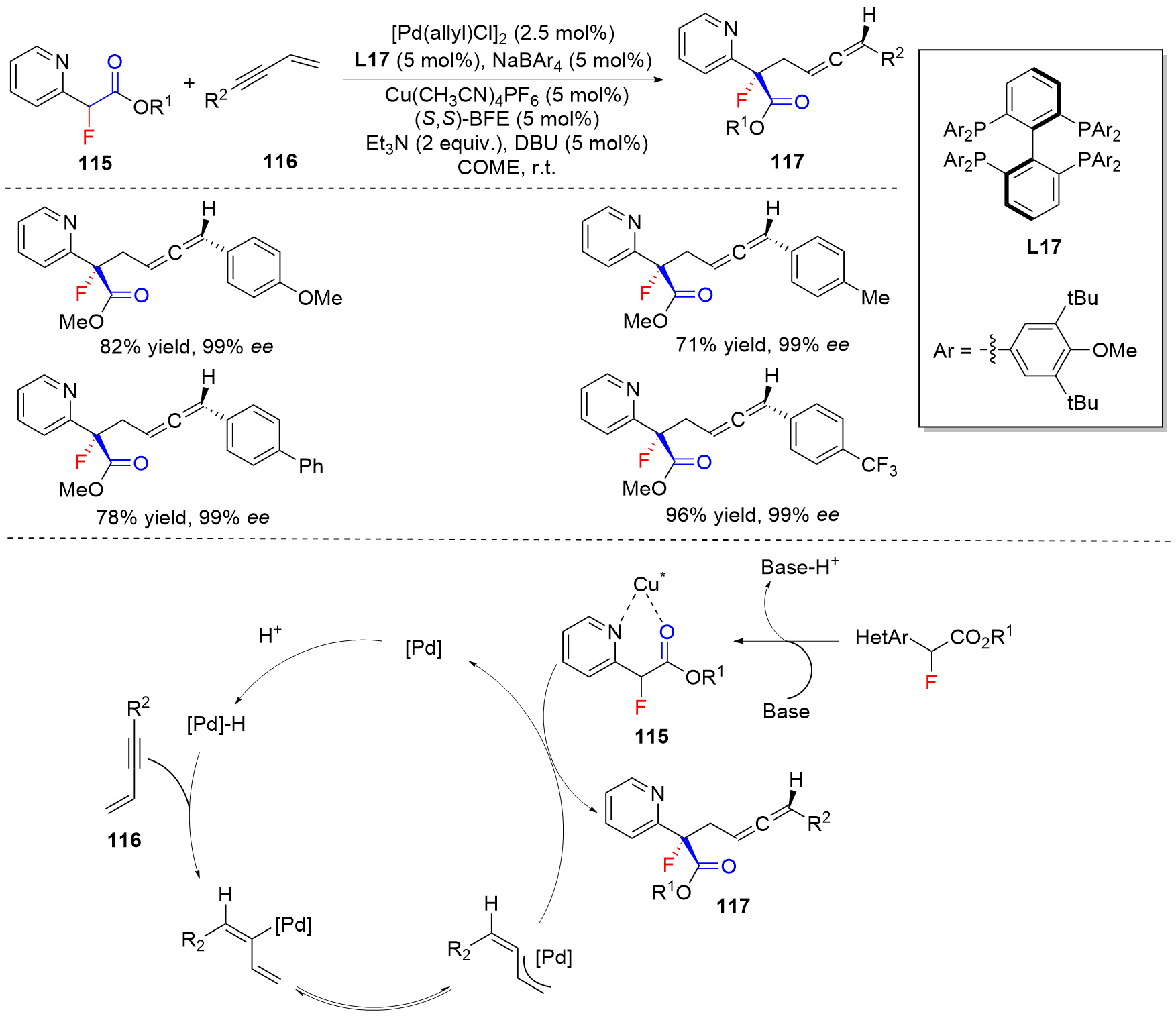
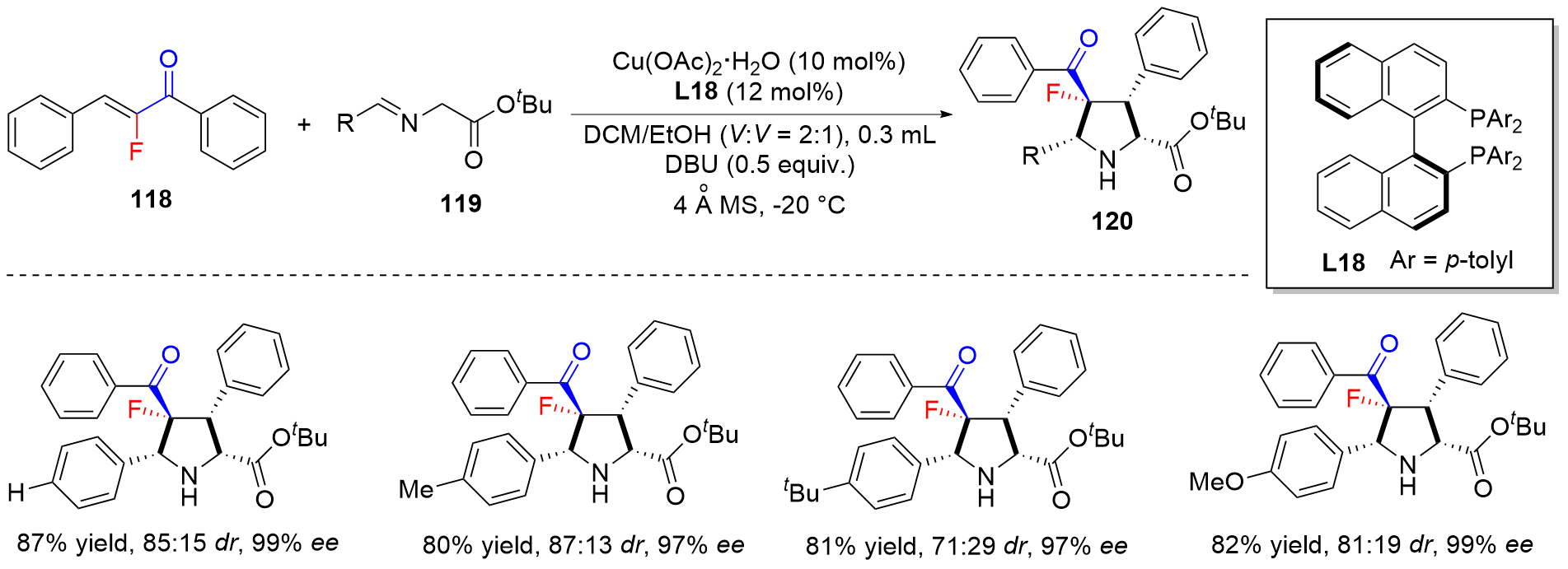
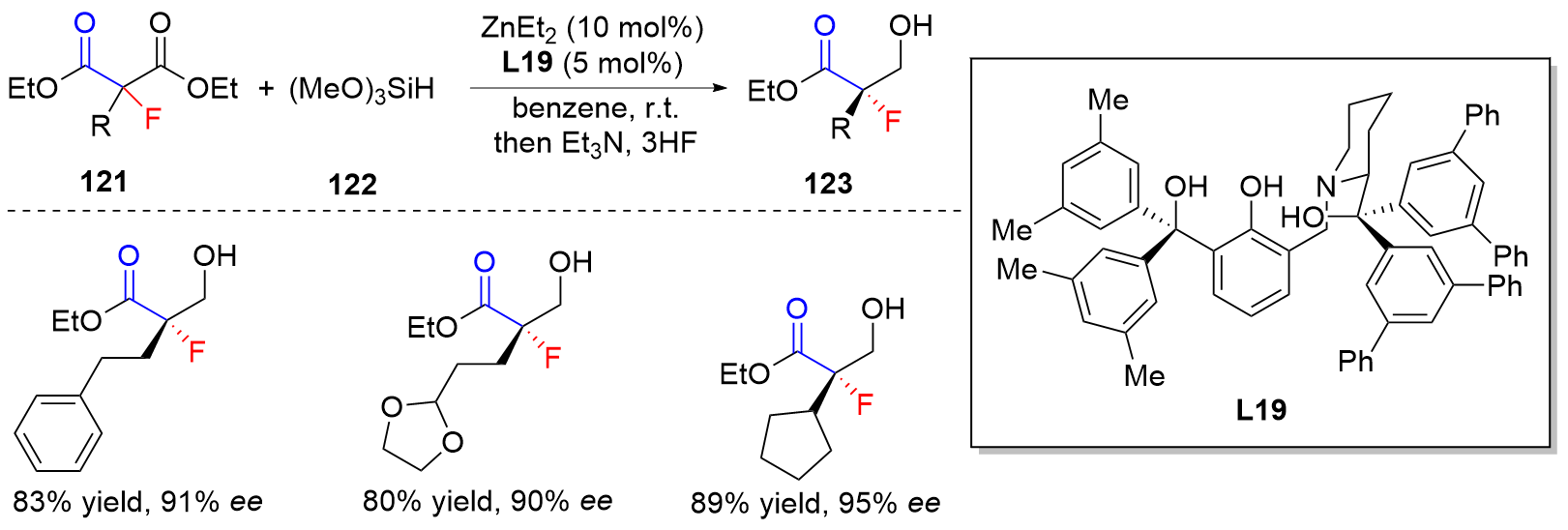
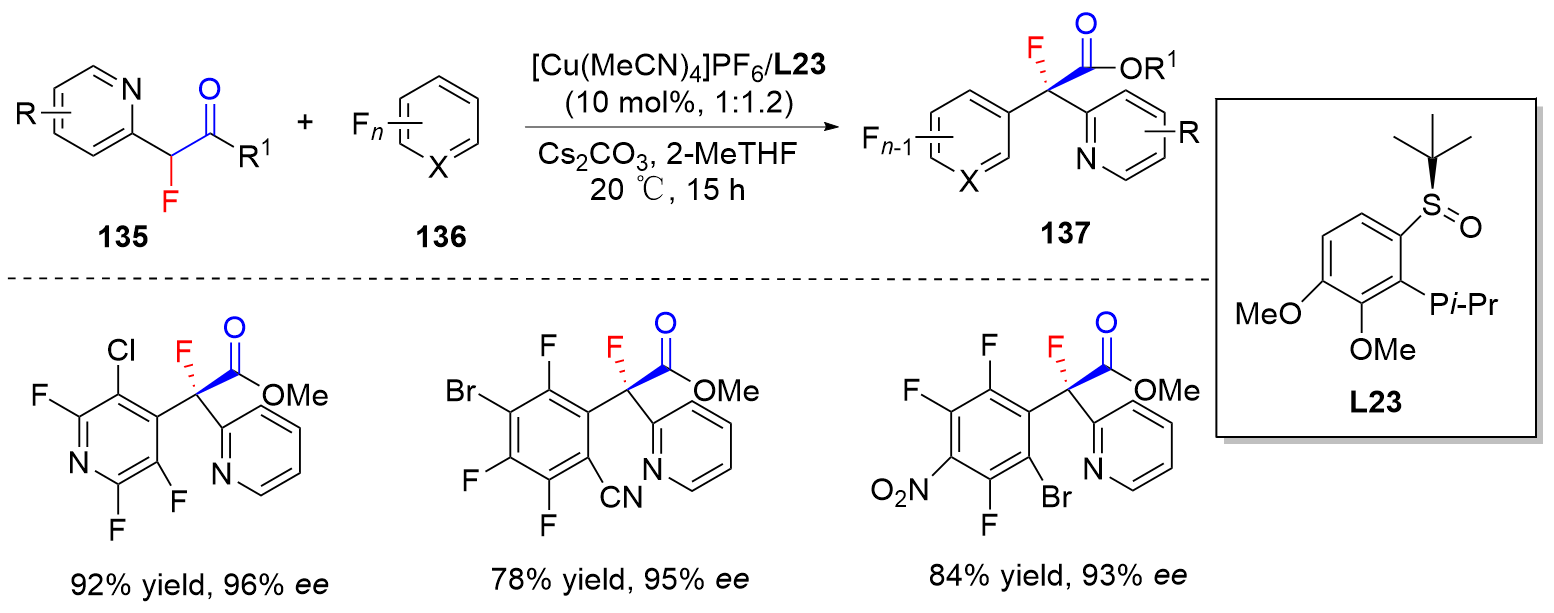
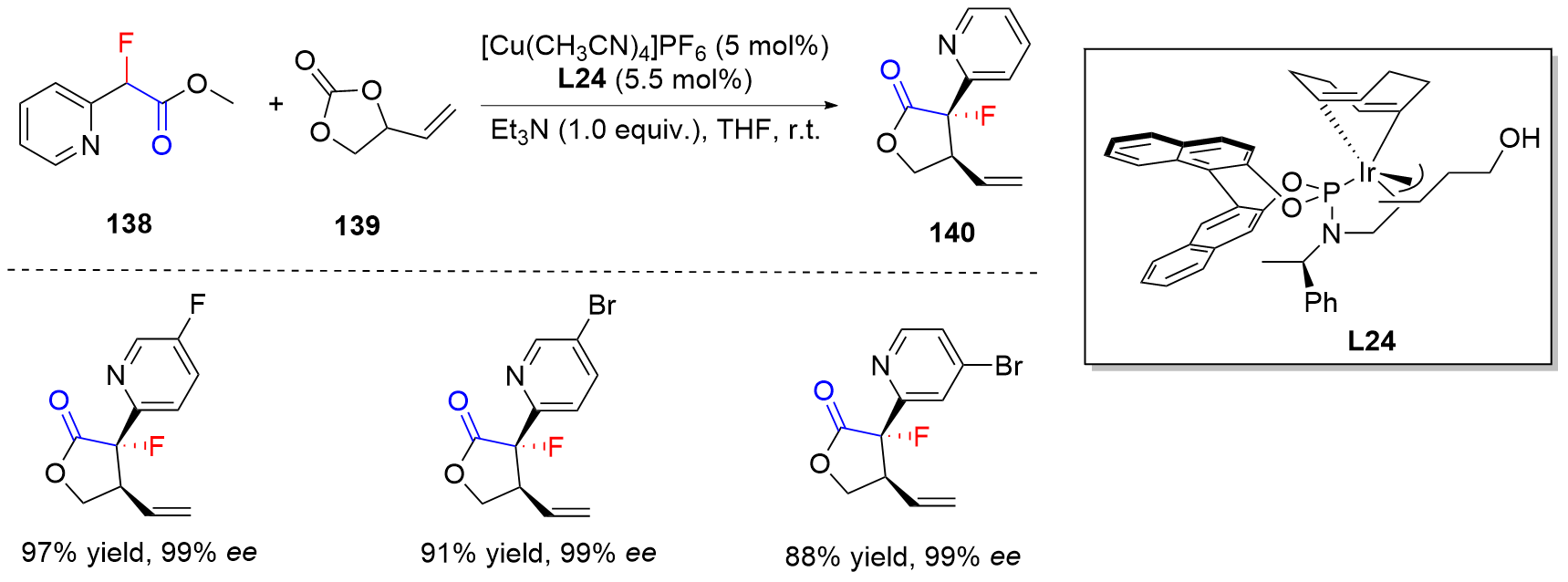
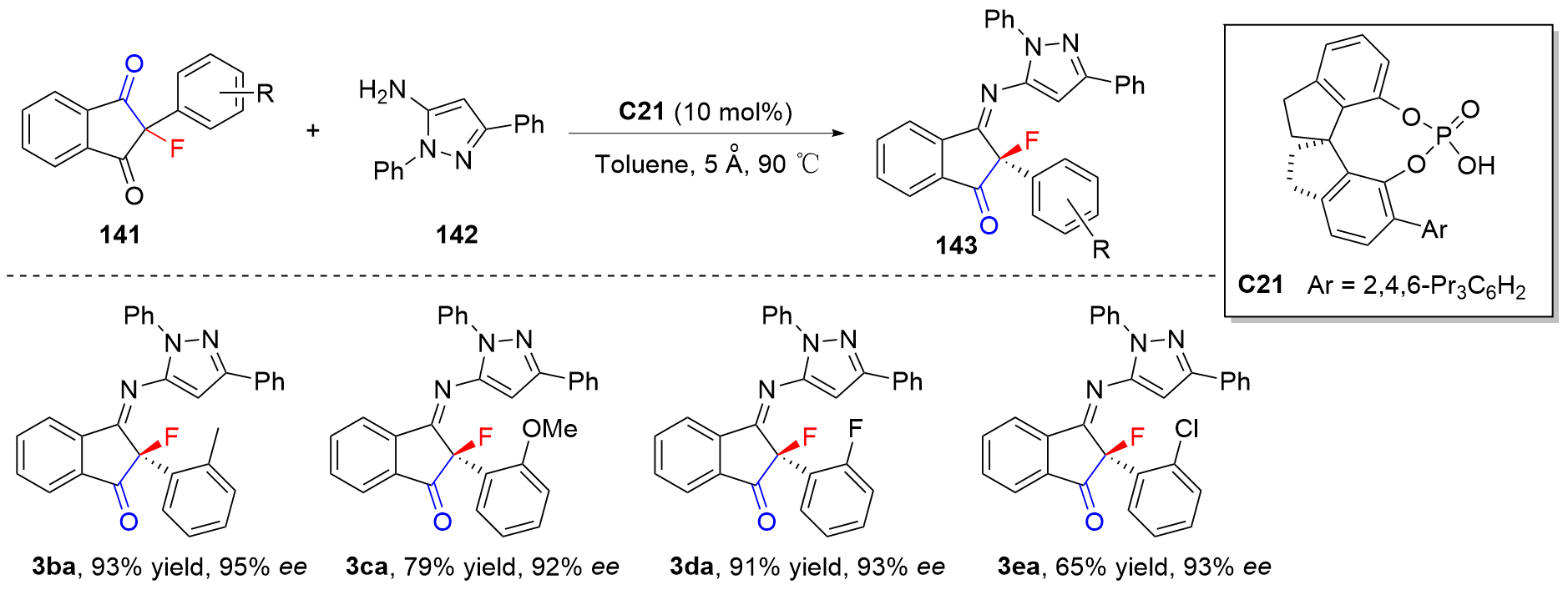
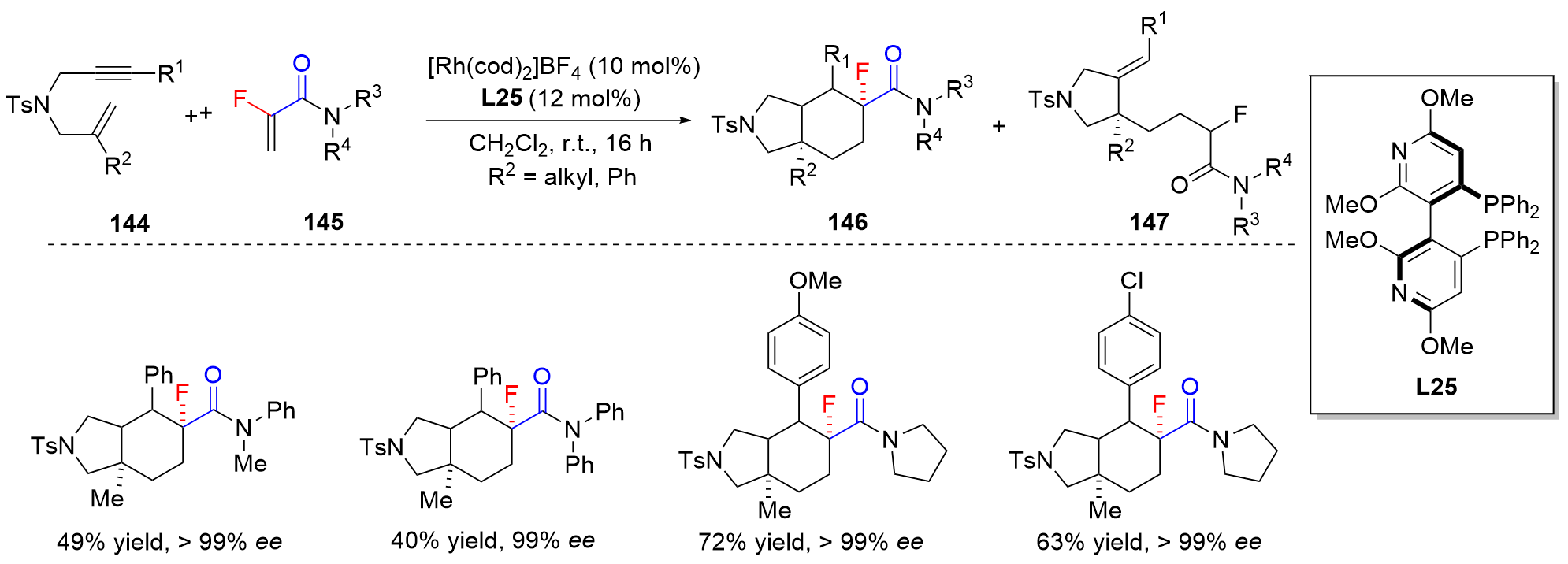
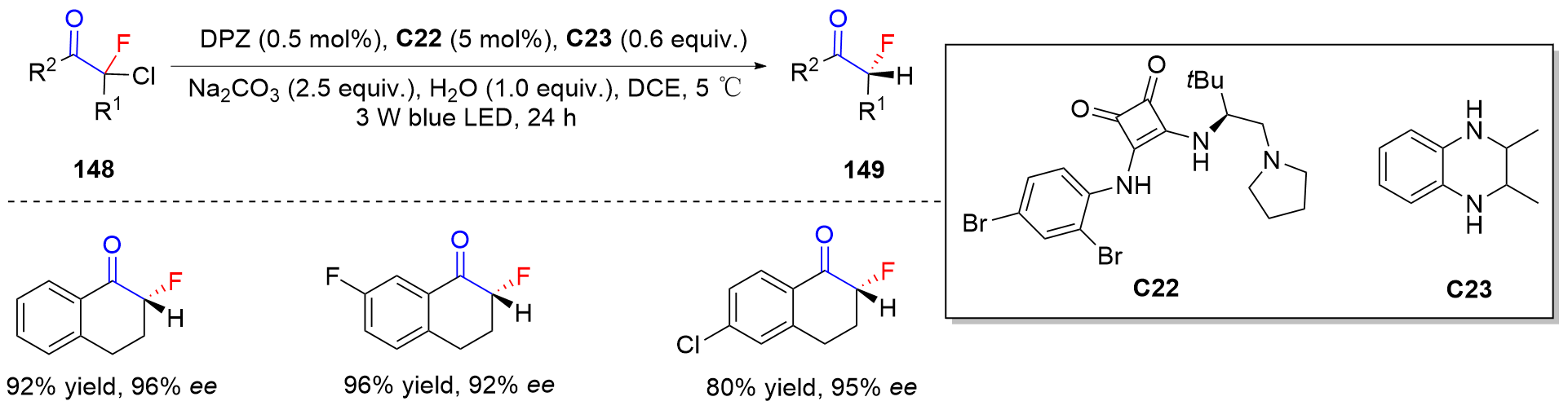
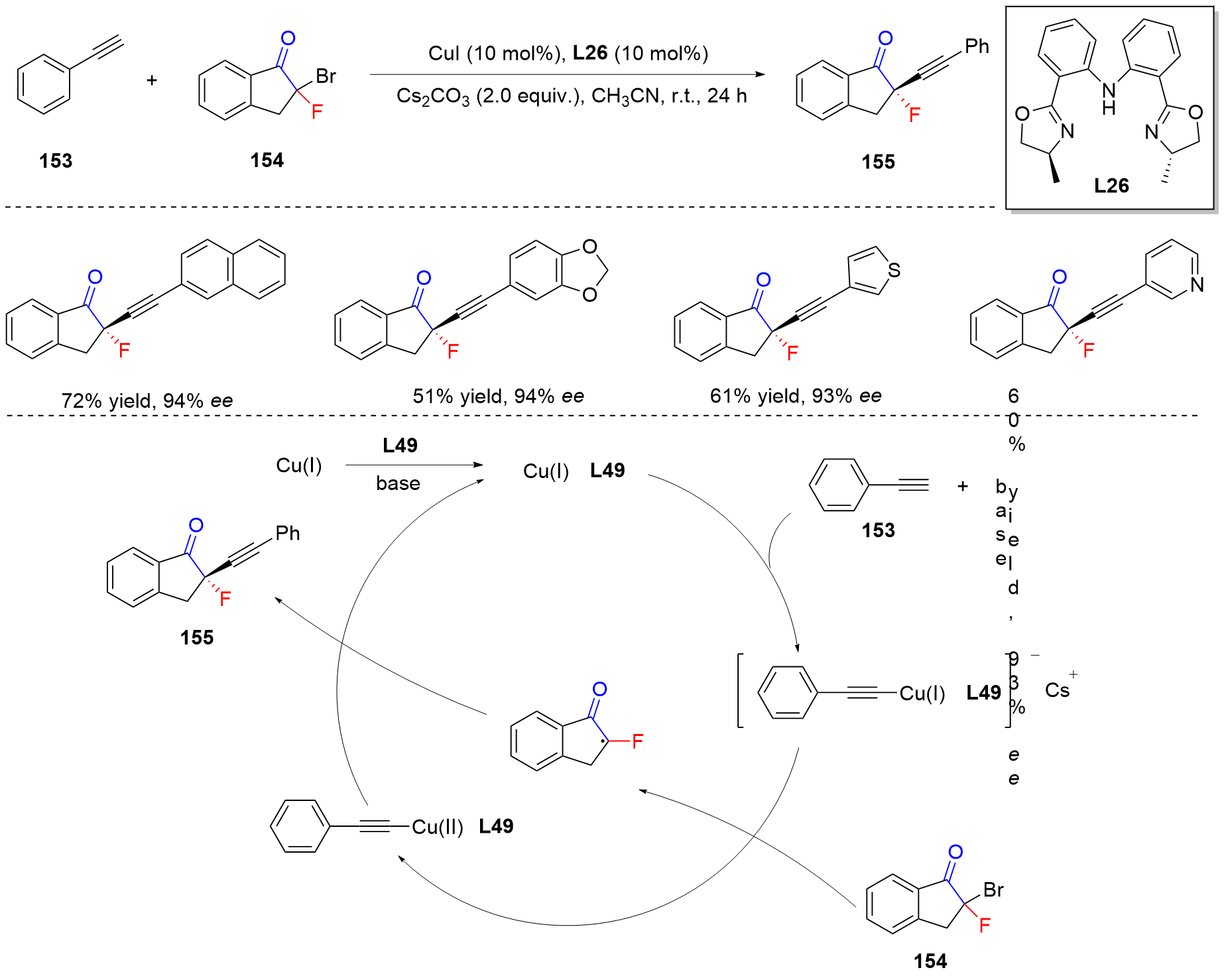
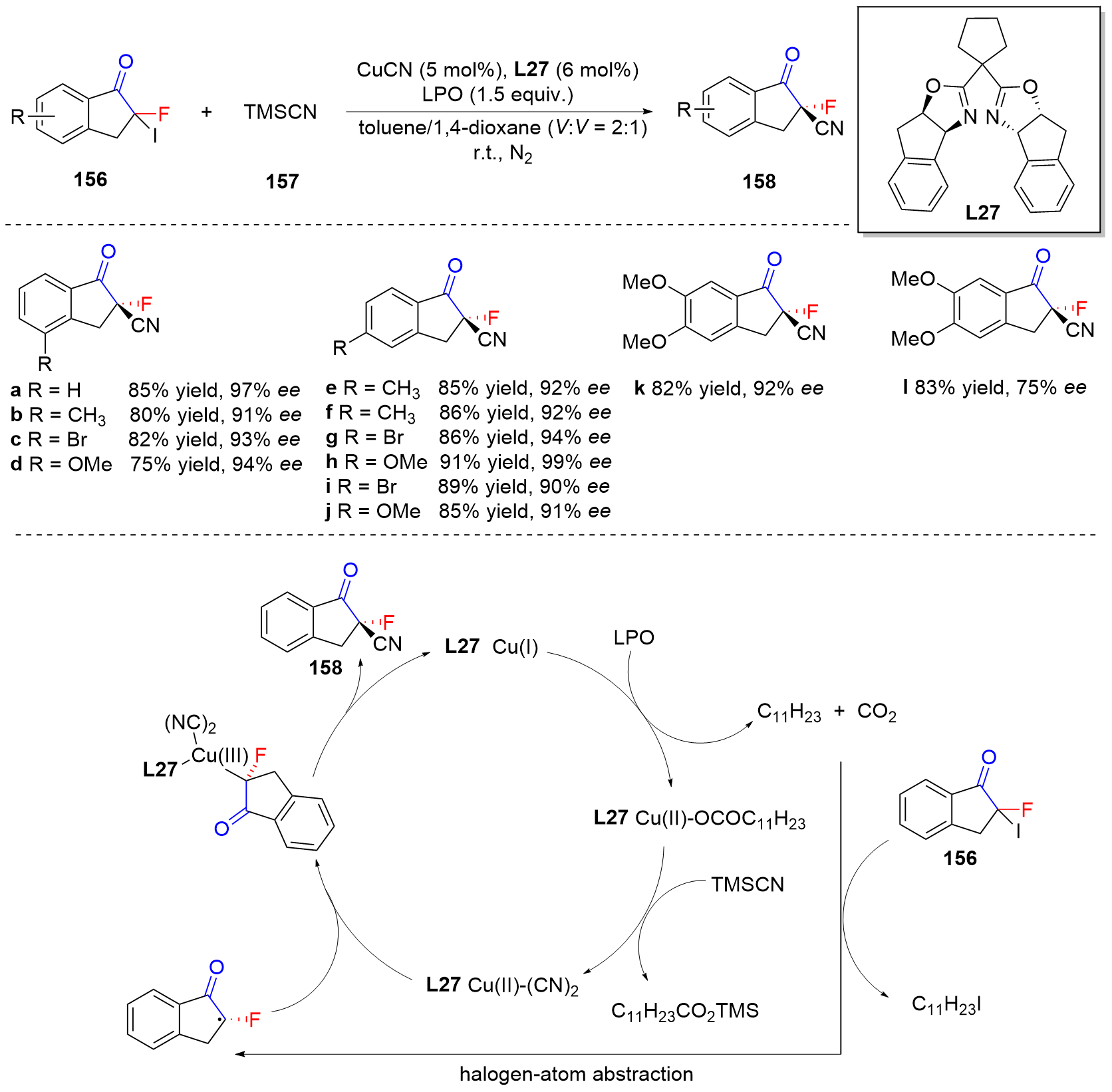
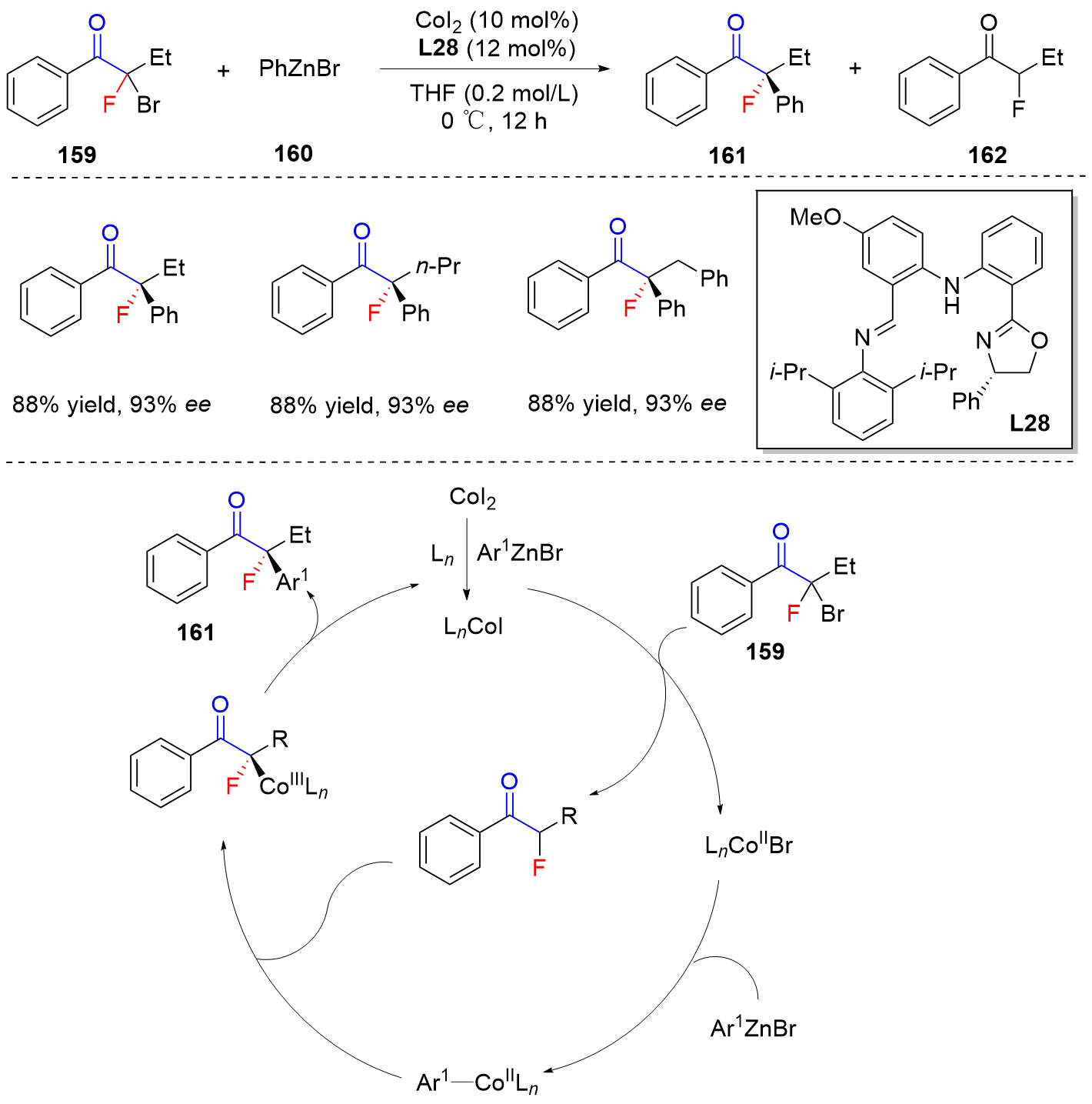
含氟有机化合物因其独特的理化性质, 在医药、农药及材料科学等领域具有广泛应用. 其中, 手性α-羰基单氟代化合物因其在调控生物活性与分子构型中的关键作用, 近年来在药物发现领域备受关注. 系统总结了近十年来构建此类结构的主要策略, 从以下三个方面进行阐述: (1)不对称亲电/亲核氟化(直接构建C—F键); (2)含氟砌块参与的不对称C—C键构筑; (3)新兴的自由基与协同催化模式. 此外, 通过深入探讨氟原子的电子效应与立体效应对反应活性及立体选择性的影响, 分析各类反应的底物适用范围与局限性, 以期为含单氟代手性中心化合物的构建提供理性设计思路.
金成, 祝鑫, 吴宪姚, 巫辅龙, 王长娟, 廉翔, 吴晶晶, 吴范宏. 光学纯α-羰基单氟代手性中心构建的研究进展[J]. 有机化学, 2026, 46(10): 3904-3932.
Cheng Jin, Xin Zhu, Xianyao Wu, Fulong Wu, Changjuan Wang, Xiang Lian, Jingjing Wu, Fanhong Wu. Research Progress on the Construction of Optically Pure α-Keto Monofluoro Chiral Centers[J]. Chinese Journal of Organic Chemistry, 2026, 46(10): 3904-3932.




| [1] |
doi: 10.1039/b603163c |
| [2] |
doi: 10.1039/C3CS60193E |
| [3] |
|
| [4] |
|
| [5] |
doi: 10.3389/froh.2022.873157 |
| [6] |
doi: 10.1021/acs.chemrev.0c01263 |
| [7] |
doi: 10.1007/s11164-012-0841-1 |
| [8] |
|
| [9] |
doi: 10.1016/j.lfs.2011.06.017 |
| [10] |
doi: 10.1124/jpet.105.083923 |
| [11] |
doi: 10.1128/AAC.02316-12 pmid: 23318809 |
| [12] |
doi: 10.1021/cr030143e |
| [13] |
|
| [14] |
doi: 10.1021/cr500277b |
| [15] |
doi: 10.1021/acs.chemrev.7b00778 pmid: 29608052 |
| [16] |
|
| [17] |
doi: 10.1080/10426507.2023.2249184 |
| [18] |
doi: 10.1021/acs.chemrev.4c00661 |
| [19] |
doi: 10.1021/acs.chemrev.5c00177 |
| [20] |
doi: 10.1016/S0924-8579(00)00315-0 |
| [21] |
doi: 10.1021/acsomega.0c00830 |
| [22] |
doi: 10.1021/acs.orglett.6b00293 pmid: 26902535 |
| [23] |
doi: 10.1016/j.tetasy.2016.03.013 |
| [24] |
|
| [25] |
doi: 10.1021/acs.orglett.8b01597 pmid: 29923736 |
| [26] |
doi: 10.1038/s41467-017-02801-9 |
| [27] |
doi: 10.1002/adsc.v360.24 |
| [28] |
doi: 10.1021/acs.orglett.8b00711 |
| [29] |
doi: 10.1002/anie.v59.33 |
| [30] |
|
| [31] |
doi: 10.1021/acscatal.1c02901 |
| [32] |
|
| [33] |
doi: 10.1021/jacs.4c18752 |
| [34] |
doi: 10.1021/ja501815p |
| [35] |
doi: 10.1002/anie.v58.27 |
| [36] |
doi: 10.1039/D4QO02418D |
| [37] |
doi: 10.1039/C5CC03289J |
| [38] |
doi: 10.1021/acs.orglett.6b02795 |
| [39] |
doi: 10.1016/j.jfluchem.2018.12.009 |
| [40] |
doi: 10.1021/acs.orglett.1c03626 |
| [41] |
doi: 10.1021/acs.orglett.1c02313 |
| [42] |
doi: 10.1039/D1CC01187A |
| [43] |
doi: 10.1021/acscatal.3c03121 |
| [44] |
doi: 10.1021/acs.joc.3c02512 |
| [45] |
doi: 10.1021/acs.joc.4c00289 |
| [46] |
doi: 10.1002/anie.v55.2 |
| [47] |
doi: 10.1002/anie.v55.42 |
| [48] |
doi: 10.1021/acs.joc.6b01979 |
| [49] |
doi: 10.1002/chem.201605637 pmid: 27921333 |
| [50] |
doi: 10.1002/anie.v58.9 |
| [51] |
doi: 10.1002/anie.v59.6 |
| [52] |
doi: 10.1055/a-1747-2724 |
| [53] |
doi: 10.1021/acs.joc.3c02668 |
| [54] |
doi: 10.1021/jacs.6b09580 |
| [55] |
doi: 10.1002/anie.v54.20 |
| [56] |
doi: 10.1002/anie.v55.23 |
| [57] |
doi: 10.1021/acs.orglett.7b00294 |
| [58] |
doi: 10.1039/C6OB02454H |
| [59] |
doi: 10.1002/anie.v56.5 |
| [60] |
doi: 10.1021/acs.orglett.8b02369 |
| [61] |
doi: 10.1021/jacs.9b04440 |
| [62] |
doi: 10.1021/jacs.1c03157 |
| [63] |
doi: 10.1021/acs.joc.1c00509 |
| [64] |
doi: 10.1021/jacs.1c12404 |
| [65] |
doi: 10.1021/acs.orglett.2c00518 |
| [66] |
|
| [67] |
doi: 10.1021/acs.orglett.3c01276 |
| [68] |
|
| [69] |
doi: 10.1021/acs.orglett.3c00948 |
| [70] |
doi: 10.1016/j.fmre.2022.07.008 |
| [71] |
doi: 10.1021/acs.orglett.5c02566 |
| [72] |
doi: 10.1021/acs.orglett.5c03987 |
| [73] |
doi: 10.1039/C9SC02000D |
| [74] |
doi: 10.1002/chem.v26.58 |
| [75] |
doi: 10.1021/acscatal.2c01973 |
| [76] |
doi: 10.1021/acs.orglett.4c03914 pmid: 39656094 |
| [77] |
doi: 10.1021/jacs.5c03944 |
| [1] | 郭振广, 高登元, 葛洛, 邓卫平. 不对称Smiles重排反应研究进展[J]. 有机化学, 2026, 46(9): 3523-3545. |
| [2] | 郑浩宇, 李传莹, 周友运. 过渡金属不对称催化通过C—O键形成合成手性叔烷基醚的研究进展[J]. 有机化学, 2026, 46(8): 2892-2925. |
| [3] | 林恩泽, 李必杰. 基于碳氢键断裂的金属催化的内烯烃不对称氢芳基化进展[J]. 有机化学, 2025, 45(2): 546-558. |
| [4] | 吴利城, 伍贤青, 曲景平, 陈宜峰. Quinim配体的探索及其在镍催化烯烃的不对称胺甲酰基-烷基化反应的应用[J]. 有机化学, 2023, 43(12): 4239-4250. |
| [5] | 郭檬檬, 于子伦, 陈玉兰, 葛丹华, 马猛涛, 沈志良, 褚雪强. 二氟烯醇硅醚作为含氟砌块在构建有机氟化物中的研究进展[J]. 有机化学, 2022, 42(11): 3562-3587. |
| [6] | 程步清, 葛丹华, 汪欣, 褚雪强. 全氟烷基卤化物作为含氟砌块在构建氟烷基取代杂环化合物中的研究进展[J]. 有机化学, 2021, 41(5): 1925-1938. |
| [7] | 朱文庆, 许婷怡, 韩文勇. 二氟甲基重氮甲烷作为含氟砌块的应用研究进展[J]. 有机化学, 2021, 41(4): 1275-1287. |
| [8] | 吴琼友, 张锐, 潘金环, John Clough, 顾玉成, 杨光富. 基于天然产物Mevalocidin手性中心的结构类似物的设计与合成[J]. 有机化学, 2018, 38(4): 840-845. |
| [9] | 谭越河, 汪朝阳, 郝志峰, 李建晓. (5S)-5-烷氧基-3,4-二卤-2(5H)-呋喃酮与氨基酸的串联反应[J]. 有机化学, 2011, 31(08): 1222-1229. |
| [10] | 宋秀美, 谭越河, 李建晓, 汪朝阳. 无保护α-氨基酸合成多手性中心2(5H)-呋喃酮化合物[J]. 有机化学, 2010, 30(12): 1890-1897. |
| [11] | 熊英, 琚振华, 王晓光, 方向, 吴范宏. 含氟内酯化合物的合成方法研究进展[J]. 有机化学, 2009, 29(11): 1728-1743. |
| [12] | 陈 阳a; 水声霞a ; 方 向a ; 吴范宏*,a,b. β-烷氧乙烯基三氟甲基酮类化合物在有机合成中的应用[J]. 有机化学, 2008, 28(12): 2023-2038. |
| [13] | 曾卓, 廖子英,唐天声,陈超森. 含氟卟啉的研究进展[J]. 有机化学, 2007, 27(01): 24-33. |
| 阅读次数 | ||||||
|
全文 |
|
|||||
|
摘要 |
|
|||||