有机化学 ›› 2025, Vol. 45 ›› Issue (9): 3163-3174.DOI: 10.6023/cjoc202506025 上一篇 下一篇
综述与进展
吕亚, 何贵含, 刘剑剑, 陈永正*( )
)
收稿日期:2025-06-18
修回日期:2025-09-03
发布日期:2025-09-11
基金资助:
LüYa, Guihan He, Jianjian Liu, Yongzheng Chen*()
Received:2025-06-18
Revised:2025-09-03
Published:2025-09-11
Contact:
E-mail: About author:★ Academic Papers of the 27th Annual Meeting of the China Association for Science and Technology.
Supported by:文章分享

不对称催化是合成手性化合物的一种直接且高效的方法, 其核心在于开发高效的手性催化剂, 以实现对底物的前手性面或前手性中心进行精准的手性识别. 尽管该领域在过去几十年中已取得显著进展, 但目前大多数工作都集中在含有芳基和烷基的底物上, 当取代基具有非常相似的空间和电性时, 却难以实现高对映选择性. 对仅有微小差异的取代基团进行精确的手性识别仍然是一个重大挑战. 传统方法中手性催化剂主要利用催化剂和底物之间的空间相互作用来控制立体选择性, 自然界中的酶则是利用有限的活性位点对有机转化进行精确控制. 综述了近年来基于细微差别取代化合物的精准识别及不对称催化反应研究进展, 涵盖金属催化、有机小分子催化和生物催化等内容.
吕亚, 何贵含, 刘剑剑, 陈永正. 细微差别取代化合物的手性识别及不对称催化反应研究进展★[J]. 有机化学, 2025, 45(9): 3163-3174.
LüYa, Guihan He, Jianjian Liu, Yongzheng Chen. Advances in Chiral Recognition and Asymmetric Catalysis of Minimal Structural Differences Compounds★[J]. Chinese Journal of Organic Chemistry, 2025, 45(9): 3163-3174.





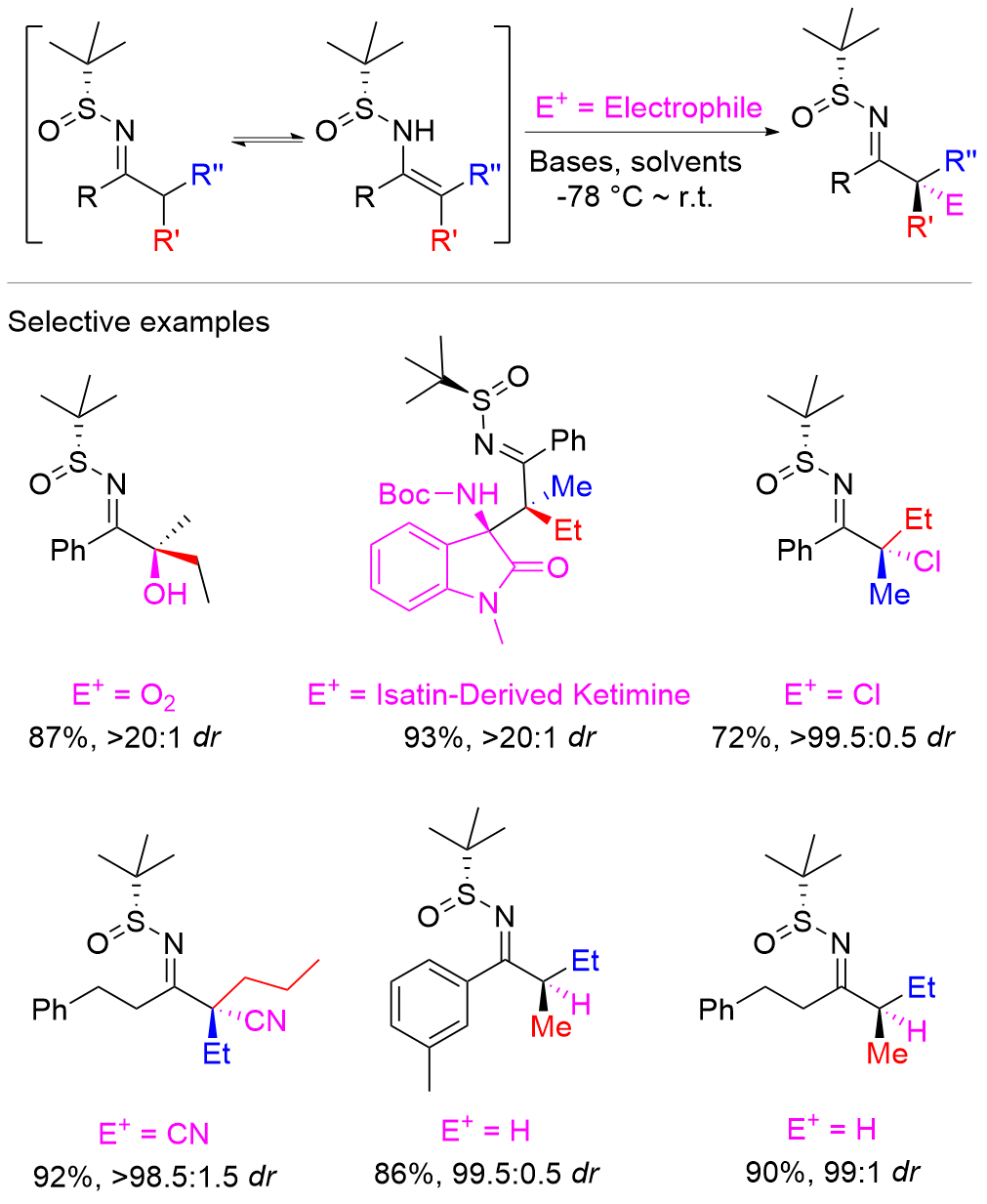


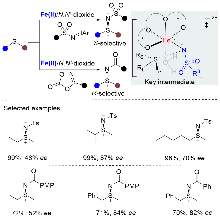


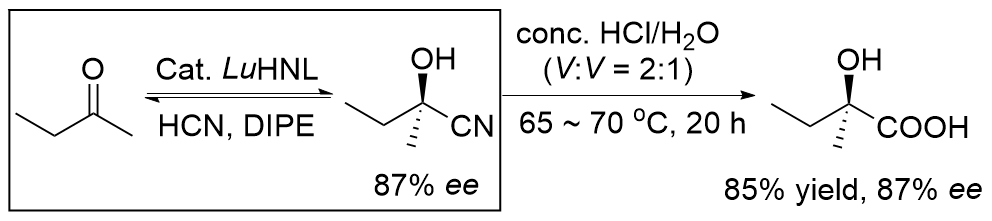


| [1] |
(a)
|
|
(b)
|
|
|
(方家恒, 田润妍, 陈继君, 刘心元, 有机化学, 2025, 45, 22.)
doi: 10.6023/cjoc202406040 |
|
| [2] |
(a)
|
|
(b)
|
|
|
(c)
|
|
| [3] |
(a)
|
|
(b)
|
|
|
(c)
|
|
| [4] |
(a)
|
|
(b)
|
|
|
(c)
|
|
| [5] |
(a)
|
|
(b)
|
|
|
(c)
|
|
| [6] |
|
| [7] |
pmid: 16390133 |
| [8] |
doi: 10.1021/ja209187a pmid: 22074559 |
| [9] |
|
| [10] |
|
| [11] |
(a)
pmid: 27282284 |
|
(b) North, M.; Usanov, D. L.; Young, C. Chem. Rev. 2008, 108, 5146.
pmid: 27282284 |
|
|
(c)
pmid: 27282284 |
|
|
(d)
doi: 10.1039/c6ob00934d pmid: 27282284 |
|
| [12] |
|
| [13] |
(a)
|
|
(b)
|
|
| [14] |
|
| [15] |
|
|
(王东, 侯传金, 陈丽凤, 刘小宁, 安庆大, 胡向平, 有机化学, 2013, 33, 1355.)
doi: 10.6023/cjoc201211036 |
|
| [16] |
(a)
|
|
(b)
|
|
|
(c)
|
|
| [17] |
|
| [18] |
|
| [19] |
|
| [20] |
|
| [21] |
|
| [22] |
|
| [23] |
|
| [24] |
pmid: 17221983 |
| [25] |
|
| [26] |
|
| [27] |
|
| [28] |
|
| [29] |
|
| [30] |
|
| [31] |
|
| [32] |
|
| [33] |
|
| [34] |
|
| [35] |
|
| [36] |
|
| [37] |
|
| [38] |
|
| [39] |
(a)
|
|
(b)
|
|
|
(c)
|
|
| [40] |
|
| [41] |
|
| [42] |
(a)
doi: 10.1021/jacsau.2c00626 pmid: 37006767 |
|
(b)
pmid: 37006767 |
|
|
(c)
pmid: 37006767 |
|
| [43] |
|
| [44] |
|
| [45] |
|
|
(b)
|
|
|
(c)
|
|
| [46] |
|
| [47] |
|
| [1] | 夏颖, 朱辰龙, 孙炳峰. 抗乙肝病毒药物恩替卡韦的全合成研究进展★[J]. 有机化学, 2025, 45(9): 3186-3202. |
| [2] | 高峰, 张万斌. 贝达喹啉类抗结核药物的合成进展★[J]. 有机化学, 2025, 45(9): 3113-3127. |
| [3] | 武烨, 陈春霞, 彭进松. C—H键不对称羟基化反应的研究进展[J]. 有机化学, 2025, 45(8): 2726-2745. |
| [4] | 蒋晨阳, 尹艳丽, 江智勇. 光酶催化不对称自由基加成反应研究进展[J]. 有机化学, 2025, 45(5): 1614-1633. |
| [5] | 张经明, 何智涛. 过渡金属催化远程二烯的不对称迁移烯丙位碳氢键官能团化[J]. 有机化学, 2025, 45(2): 592-601. |
| [6] | 曾涛, 张曙盛, 付建国, 冯陈国. 防风中亥茅酚及亥茅酚苷的不对称合成[J]. 有机化学, 2024, 44(9): 2862-2868. |
| [7] | 梁蕾蕾, 姚家灿, 丁凡, 徐畅, 刘丹丹. 水鬼蕉碱Pancratistatin的合成方法研究进展[J]. 有机化学, 2024, 44(6): 1793-1810. |
| [8] | 陈远航, 何劲宇, 张博, 王延钊, 孔令轩, 钱伟烽, 王娜娜, 段闻喜, 欧阳妍妍, 朱翠菊, 徐浩. 不对称电化学有机合成[J]. 有机化学, 2024, 44(3): 748-779. |
| [9] | 于士航, 刘嘉威, 安碧玉, 边庆花, 王敏, 钟江春. 黑腹尼虎天牛接触性信息素的不对称合成[J]. 有机化学, 2024, 44(1): 301-308. |
| [10] | 王化坤, 任晓龙, 宣宜宁. 卤盐催化的α,β-环氧羧酸酯与异氰酸酯[3+2]环加成反应研究[J]. 有机化学, 2024, 44(1): 251-258. |
| [11] | 王玉超, 刘晋彪, 何智涛. 钯催化共轭二烯的不对称氢官能团化[J]. 有机化学, 2023, 43(8): 2614-2627. |
| [12] | 宋亭谕, 李冉, 黄利华, 贾世琨, 梅光建. N—N单键阻转异构体的催化不对称合成[J]. 有机化学, 2023, 43(6): 1977-1990. |
| [13] | 罗诚, 尹艳丽, 江智勇. P-手性膦氧化物的不对称合成研究进展[J]. 有机化学, 2023, 43(6): 1963-1976. |
| [14] | 蒙玲, 汪君. 硫代黄烷酮类衍生物的合成研究进展[J]. 有机化学, 2023, 43(3): 873-891. |
| [15] | 张怀远, 许诺, 唐蓉萍, 石星丽. 手性高价碘试剂诱导的不对称去芳构化反应研究进展[J]. 有机化学, 2023, 43(11): 3784-3805. |
| 阅读次数 | ||||||
|
全文 |
|
|||||
|
摘要 |
|
|||||


