有机化学 ›› 2025, Vol. 45 ›› Issue (11): 3937-3952.DOI: 10.6023/cjoc202506036J 上一篇 下一篇
综述与进展
朱文慧, 杨金东*( )
)
收稿日期:2025-06-30
修回日期:2025-07-31
发布日期:2025-08-26
基金资助:
Wenhui Zhu, Jin-Dong Yang*()
Received:2025-06-30
Revised:2025-07-31
Published:2025-08-26
Contact:
*E-mail: jdyang@mail.tsinghua.edu.cn
Supported by:文章分享

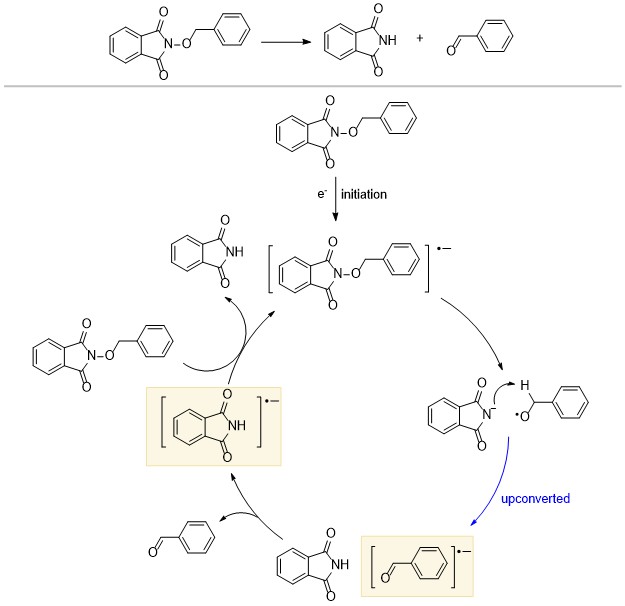
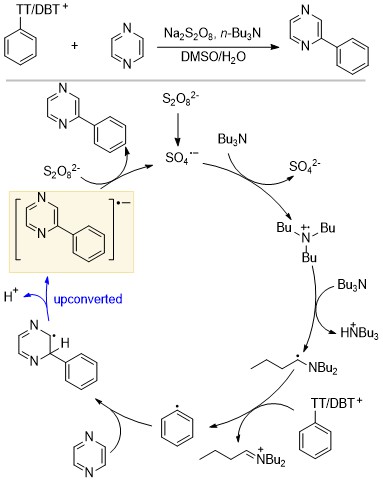
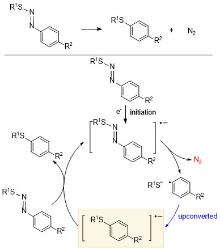
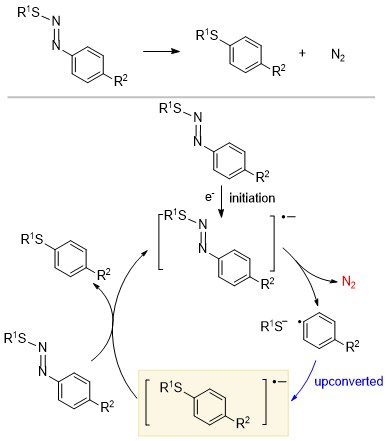
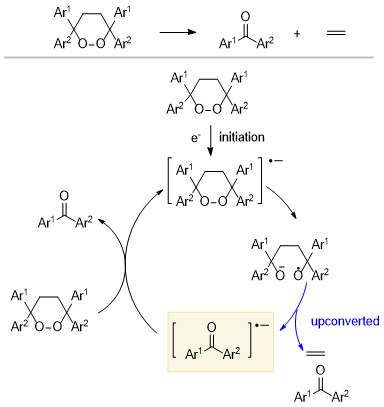
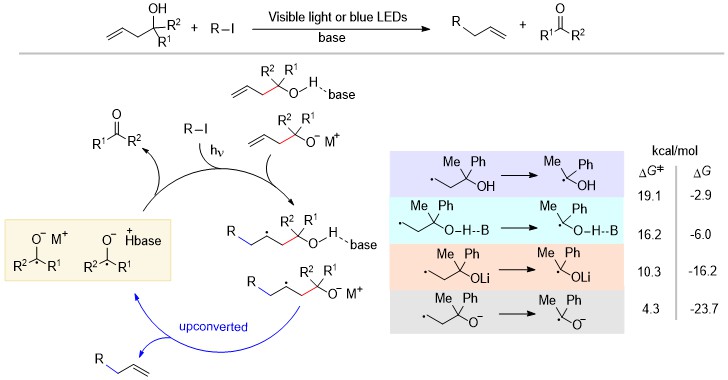
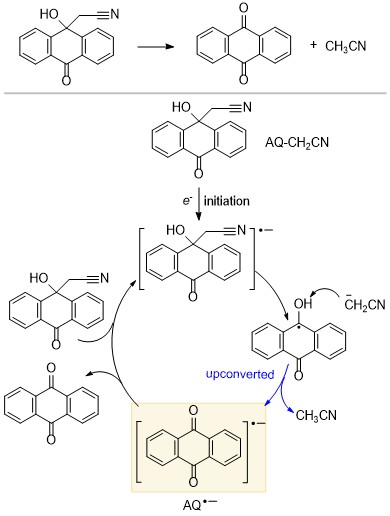
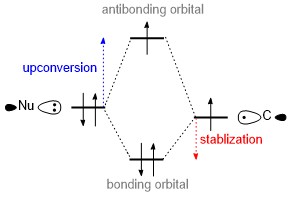
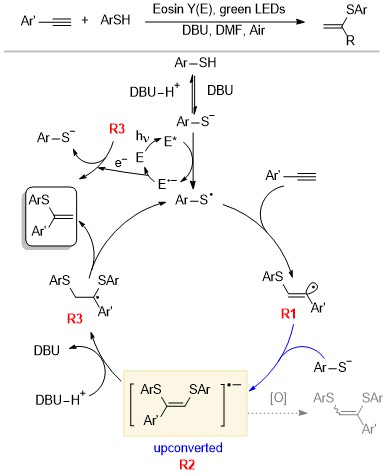
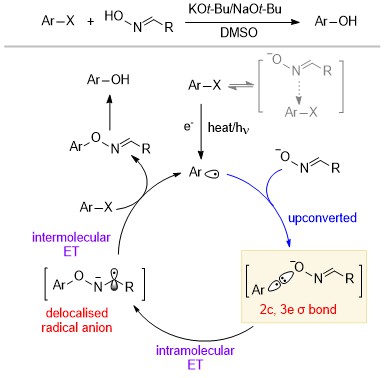
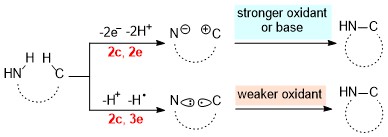
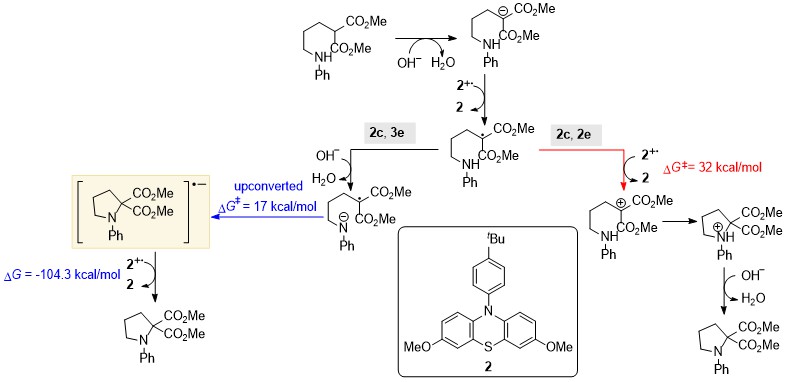
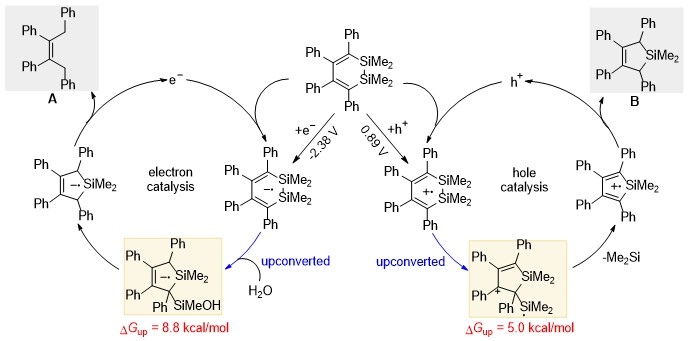
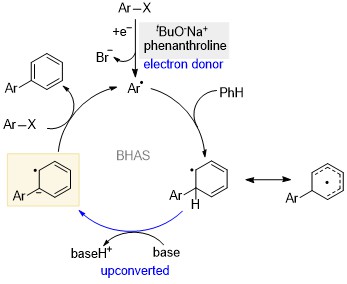
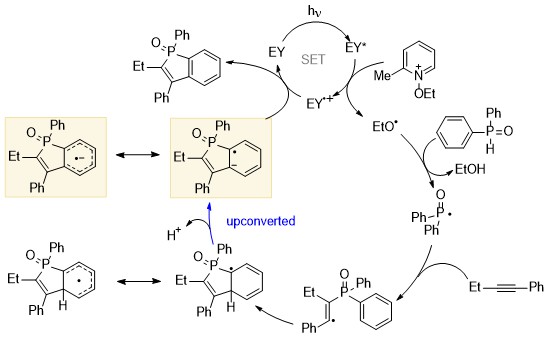
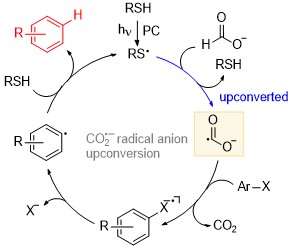
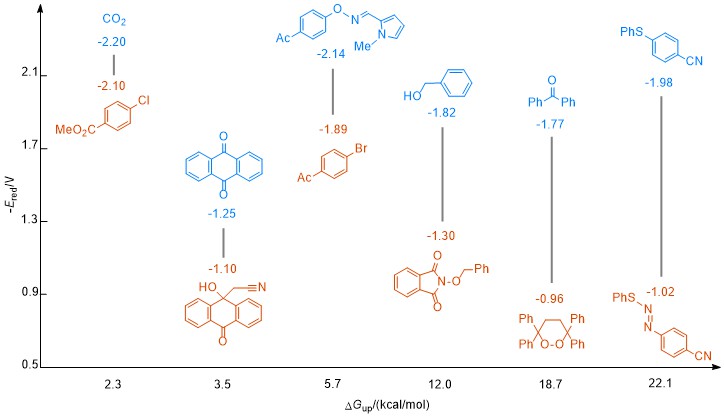
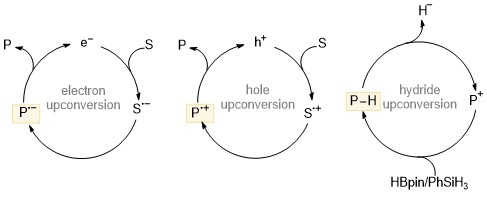
光子上转换(Photon upconversion)作为一种突破斯托克斯限制的光子能量增益技术, 已在发光材料与器件领域展现出重要应用价值. 受此物理过程的启发, 化学家近年来将其核心概念拓展至有机催化领域, 由此衍生出电子上转换(Electron upconversion)这一创新催化范式. 该策略通过电子作为催化媒介, 实现反应物向产物的高效转化. 相较于基态转化过程, 自由基转化过程的放能更小, 速率更快; 反应过程中产生的上转换中间体通过将电子传递给原料来完成催化循环. 目前发展的电子上转换策略主要包括: 分子解离型(如单分子均裂过程, 分子缔合型(如形成双分子三电子键), 超级电子供体体系等. 这些策略已成功应用于C—N偶联, Si—Si键活化等重要有机反应中, 为绿色催化提供了新思路. 此文详细介绍了其理论机制(包括热力学和动力学基础), 反应类型以及在催化合成中的应用, 概述了相关领域的发展前沿.
朱文慧, 杨金东. 电子上转换的基本原理及其在有机催化中的应用[J]. 有机化学, 2025, 45(11): 3937-3952.
Wenhui Zhu, Jin-Dong Yang. Fundamentals of Electron Upconversion and Its Applications in Organocatalysis[J]. Chinese Journal of Organic Chemistry, 2025, 45(11): 3937-3952.








| [1] |
(a)
doi: 10.1039/c4cs00188e pmid: 25242465 |
|
(b)
doi: 10.1039/C5NR08477F pmid: 25242465 |
|
|
(c)
doi: 10.1038/s41566-020-00714-6 pmid: 25242465 |
|
|
(d)
doi: 10.1038/s41566-023-01156-6 pmid: 25242465 |
|
| [2] |
doi: 10.1143/JJAP.35.4401 |
| [3] |
(a)
doi: 10.1039/C4EE02481H pmid: 38514833 |
|
(b)
doi: 10.1039/d0cs00257g pmid: 38514833 |
|
|
(c)
doi: 10.1002/adma.v33.45 pmid: 38514833 |
|
|
(d)
doi: 10.3390/ijms23148041 pmid: 38514833 |
|
|
(e)
doi: 10.1038/s41570-024-00585-3 pmid: 38514833 |
|
| [4] |
(a)
doi: 10.6023/cjoc202211048 |
|
(侯虹宇, 程元元, 陈彬, 佟振合, 吴骊珠, 有机化学, 2023, 43, 1012.)
doi: 10.6023/cjoc202211048 |
|
|
(b)
doi: 10.6023/cjoc202311004 |
|
|
(陈远航, 何劲宇, 张博, 王延钊, 孔令轩, 钱伟烽, 王娜娜, 段闻喜, 欧阳妍妍, 朱翠菊, 徐浩, 有机化学, 2024, 44, 748.)
doi: 10.6023/cjoc202311004 |
|
|
(c)
doi: 10.6023/cjoc202310034 |
|
|
(叶增辉, 刘华清, 张逢质, 有机化学, 2024, 44, 840.)
doi: 10.6023/cjoc202310034 |
|
|
(d)
doi: 10.6023/cjoc202402005 |
|
|
(高淳, 刘欣, 王明慧, 刘淑贤, 朱婷婷, 张怡康, 郝二军, 杨启亮, 有机化学, 2024, 44, 673.)
doi: 10.6023/cjoc202402005 |
|
| [5] |
doi: 10.1021/jacs.4c10422 |
| [6] |
(a)
doi: 10.1038/nchem.2031 |
|
(b)
doi: 10.1002/celc.201900432 |
|
| [7] |
(a)
doi: 10.1016/S0022-0728(81)80411-1 pmid: 30489089 |
|
(b)
doi: 10.1021/jo801199s pmid: 30489089 |
|
|
(c)
doi: 10.1021/acs.joc.8b01800 pmid: 30489089 |
|
|
(d)
doi: 10.1021/acs.orglett.8b03257 pmid: 30489089 |
|
| [8] |
(a)
doi: 10.1039/C6SC02117D |
|
(b)
doi: 10.3762/bjoc.14.51 |
|
| [9] |
doi: 10.1021/ja00367a028 |
| [10] |
doi: 10.1002/anie.201807247 pmid: 30063285 |
| [11] |
doi: 10.6023/cjoc202305014 |
|
(吴宇恒, 颜岩, 寮渭巍, 有机化学, 2023, 43, 3713.)
doi: 10.6023/cjoc202305014 |
|
| [12] |
doi: 10.1002/poc.v30.9 |
| [13] |
doi: 10.1002/anie.v60.24 |
| [14] |
doi: 10.1021/jo00062a007 |
| [15] |
doi: 10.1021/acs.chemrev.7b00649 |
| [16] |
doi: 10.1002/chem.200902023 pmid: 19946905 |
| [17] |
doi: 10.1021/jacs.9b12343 pmid: 31941267 |
| [18] |
doi: 10.1039/D2SC01342H |
| [19] |
doi: 10.1039/d0sc01939a pmid: 34094267 |
| [20] |
doi: 10.1039/d1sc04748e pmid: 34881017 |
| [21] |
(a)
|
|
(b)
doi: 10.1021/jo980201+ |
|
| [22] |
(a)
doi: 10.1002/anie.v44:9 pmid: 24273111 |
|
(b)
doi: 10.1002/anie.v46:27 pmid: 24273111 |
|
|
(c)
doi: 10.1039/C3CC48969H pmid: 24273111 |
|
|
(d)
doi: 10.1002/anie.201209060 pmid: 24273111 |
|
|
(e)
doi: 10.1002/anie.v54.38 pmid: 24273111 |
|
| [23] |
doi: 10.1002/anie.201905814 pmid: 31222953 |
| [24] |
doi: 10.1039/D4SC04011B |
| [25] |
doi: 10.1039/c8sc00008e pmid: 29732055 |
| [26] |
doi: 10.1016/j.chempr.2023.06.023 |
| [27] |
(a)
doi: 10.1002/chem.v24.65 pmid: 32434333 |
|
(b)
doi: 10.1021/acs.orglett.0c01409 pmid: 32434333 |
|
| [28] |
doi: 10.1002/anie.v57.43 |
| [29] |
|
| [30] |
(a)
doi: 10.1021/jacs.7b07519 |
|
(b)
doi: 10.1039/C9SC06511C |
|
| [31] |
doi: 10.1021/acs.jpcc.4c00538 |
| [32] |
(a)
doi: 10.1021/ol3034687 pmid: 25536028 |
|
(b)
doi: 10.1021/ol402995e pmid: 25536028 |
|
|
(c)
doi: 10.1021/ol4000857 pmid: 25536028 |
|
|
(d)
doi: 10.1021/ol503574k pmid: 25536028 |
|
|
(e)
doi: 10.1039/C4CC10063H pmid: 25536028 |
|
|
(f)
doi: 10.1360/N032015-00217 pmid: 25536028 |
|
|
(徐婷, 戚孝天, 蓝宇, 中国科学: 化学, 2016, 46, 616.)
pmid: 25536028 |
|
| [33] |
doi: 10.1021/ol8019764 pmid: 18816127 |
| [34] |
doi: 10.1007/s11426-019-9611-x |
| [35] |
doi: 10.1039/C9CC00035F |
| [36] |
doi: 10.1021/jacs.1c04427 |
| [37] |
(a)
doi: 10.6023/cjoc202404039 |
|
(侯静, 黄燕, 李浩, 万远翠, 邵雨, 詹乐武, 王定海, 李斌栋, 有机化学, 2024, 44, 3117.)
doi: 10.6023/cjoc202404039 |
|
|
(b)
doi: 10.6023/cjoc202405025 |
|
|
(徐辉, 蒋慧娴, 阚磊, 徐佩, 朱旭, 有机化学, 2024, 44, 3241.)
doi: 10.6023/cjoc202405025 |
|
| [38] |
(a)
doi: 10.1039/c9sc04846d pmid: 33209246 |
|
(b)
doi: 10.1021/jacs.3c06106 pmid: 33209246 |
|
| [39] |
(a)
doi: 10.1002/anie.v58.18 |
|
(b)
doi: 10.1039/C9SC05883D |
|
|
(c)
doi: 10.1039/D0SC03220D |
|
|
(d)
doi: 10.1021/acs.joc.1c02360 |
| [1] | 刘俊杰, 赵红平, 胡媛媛, 汪恒昕, 袁伟明. 可见光诱导镍催化烯烃还原Heck反应[J]. 有机化学, 2025, 45(5): 1691-1697. |
| [2] | 孙静, 樊志杰, 杜纪宽, 李硕, 苗艳勤, 赵波, 董海亮, 王华. 一种Y型噻吨酮-咔唑分子的设计、合成及其蓝光和黄光有机发光二极管应用[J]. 有机化学, 2024, 44(4): 1210-1217. |
| [3] | 肖晶, 谢毓翔, 韩立彪. 亚磷酸作为还原剂参与的有机反应研究进展[J]. 有机化学, 2024, 44(12): 3702-3712. |
| [4] | Yasir Mumtaz, 刘杰, 黄鑫. 铜促进的苯胺类化合物与CF3SO2Na的三氟甲硫基化反应[J]. 有机化学, 2023, 43(2): 679-685. |
| [5] | 祁连山, 王涛, 魏永梅, 田恒水. 共还原剂醛类对金属卟啉催化丙烯环氧化的作用研究[J]. 有机化学, 2020, 40(5): 1305-1309. |
| [6] | 王万军, 李欢, 潘仁明, 朱卫华. 双(3,4,5-取代吡唑基)甲烷衍生物高能量密度材料的分子设计[J]. 有机化学, 2019, 39(5): 1362-1371. |
| [7] | 何煦, 肖燏萍, 袁鑫磊, 叶尚辉, 姜鸿基. 基于2,4,6-三苯基-1,3,5-三嗪和芴单元的激基缔合物主体材料的制备与应用[J]. 有机化学, 2019, 39(3): 761-770. |
| [8] | 毛国梁, 贾冰, 王从洋. 铼催化的醇脱羟基反应研究进展[J]. 有机化学, 2015, 35(2): 284-293. |
| [9] | 张鹏, 张有明, 林奇, 姚虹, 魏太保. 金属离子响应型荧光传感分子的设计原理及研究进展[J]. 有机化学, 2014, 34(7): 1300-1321. |
| [10] | 徐勤超, 金灿, 朱雪慧, 邢国文. 基于有机小分子的焦磷酸根荧光探针研究进展[J]. 有机化学, 2014, 34(4): 647-661. |
| [11] | 郑文锐,傅尧,王华静,郭庆祥. 烃类化合物碳氢键解离焓的密度泛函理论研究[J]. 有机化学, 2008, 28(03): 459-466. |
| [12] | 李国平,江焕峰,李金恒. 金属锌在有机合成反应中的应用[J]. 有机化学, 2002, 22(11): 801-806. |
| [13] | 张红雨,陈德展. 表征O-H解离能参数的AM1计算[J]. 有机化学, 2001, 21(1): 66-70. |
| [14] | 顾尚香,姚卡玲,候自杰,吴集贵. 二氧化硫脲对有机化合物的还原作用研究[J]. 有机化学, 1998, 18(2): 157-161. |
| [15] | 宋凤瑞,徐锐锋,刘淑莹,包明. 某些西佛碱类化合物的质谱重排反应[J]. 有机化学, 1998, 18(2): 146-150. |
| 阅读次数 | ||||||
|
全文 |
|
|||||
|
摘要 |
|
|||||


