有机化学 ›› 2026, Vol. 46 ›› Issue (9): 3328-3337.DOI: 10.6023/cjoc202605016 上一篇 下一篇
综述与进展
张鹛媚, 王璐, 陈世贵*( )
)
收稿日期:2026-05-15
修回日期:2026-07-27
发布日期:2026-08-03
基金资助:
Meimei Zhang, Lu Wang, Shigui Chen*()
Received:2026-05-15
Revised:2026-07-27
Published:2026-08-03
Contact:
About author:Dedicated to the 100th anniversary of the birth of Professor Xikui Jiang.
Supported by:文章分享
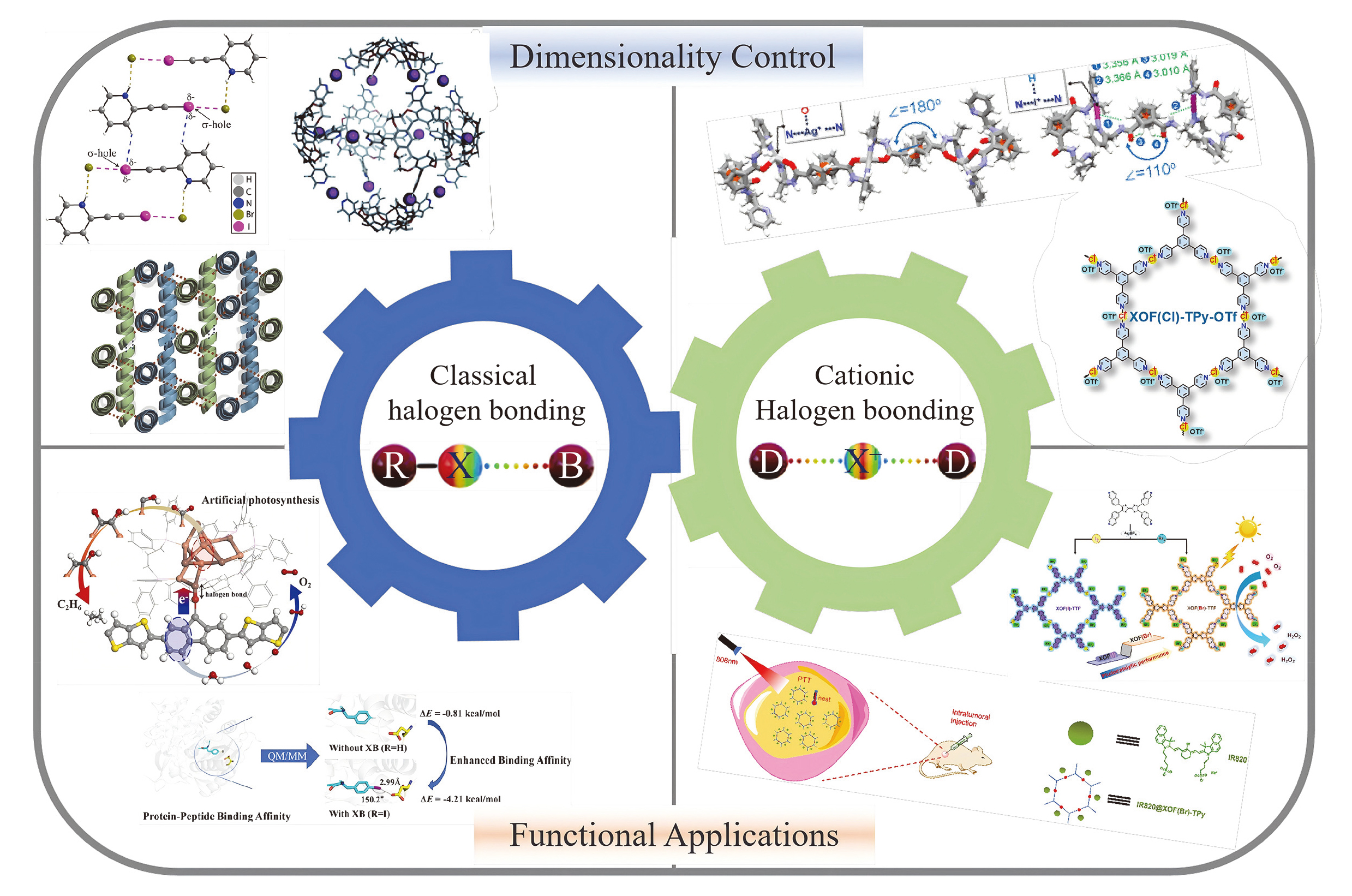
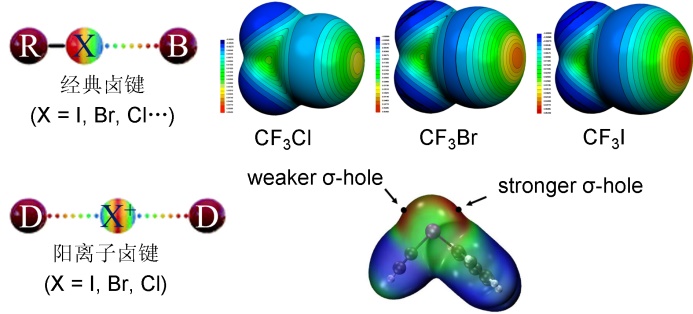
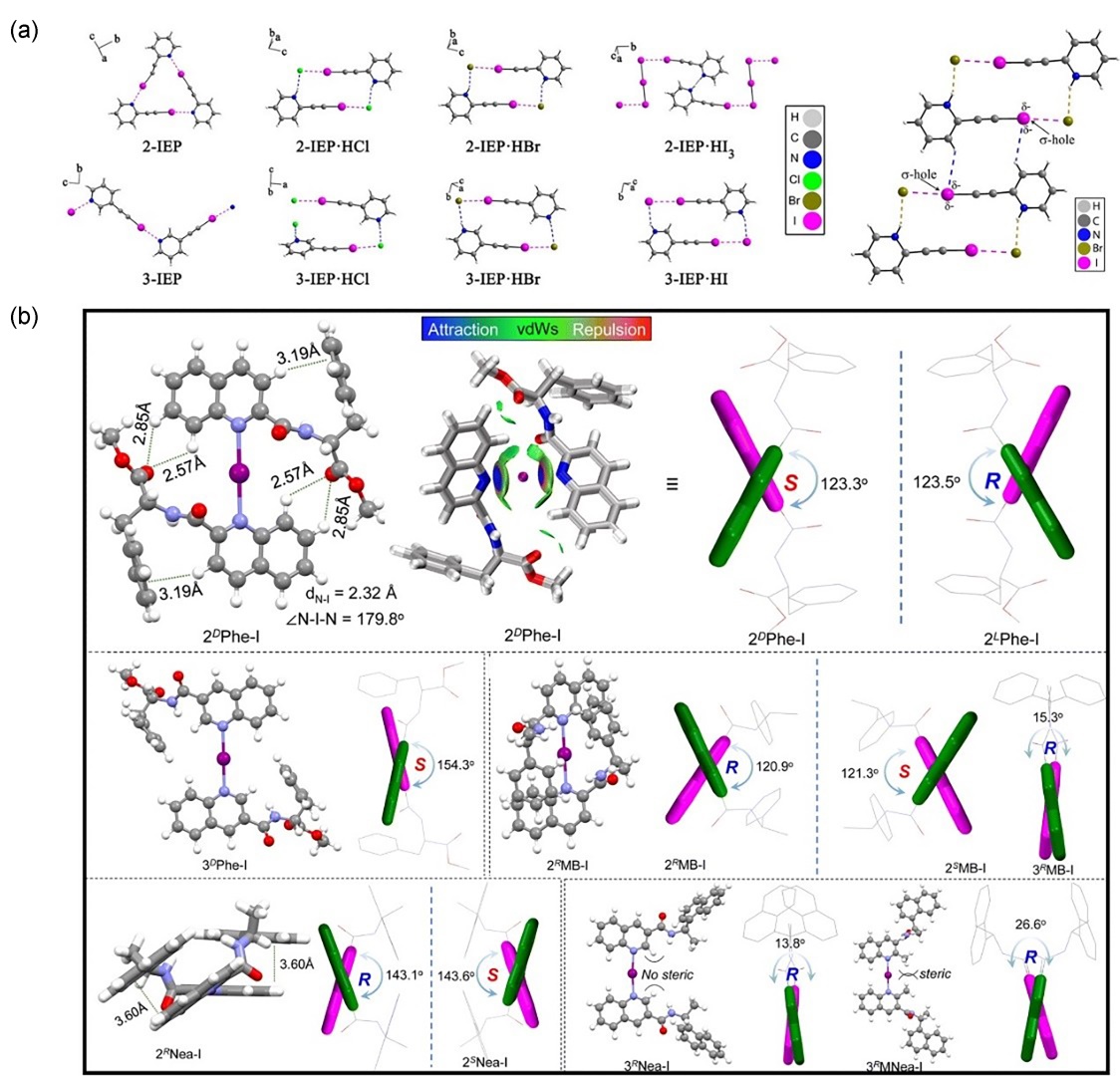
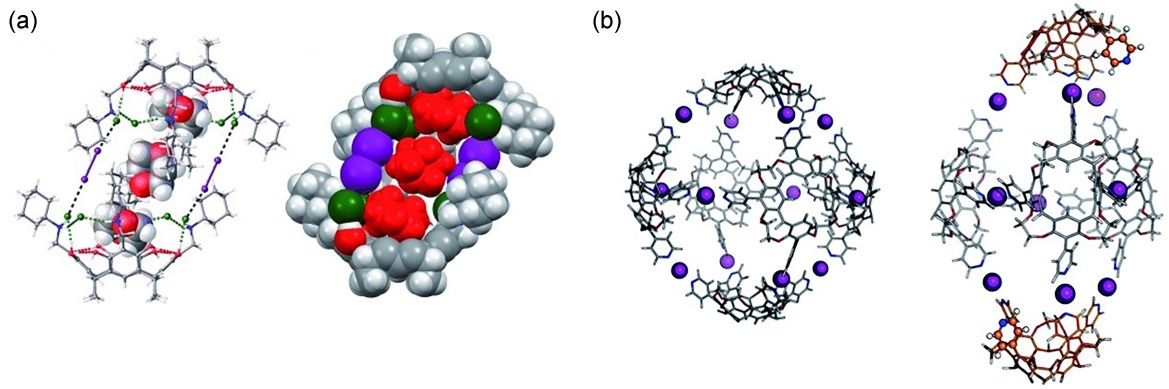
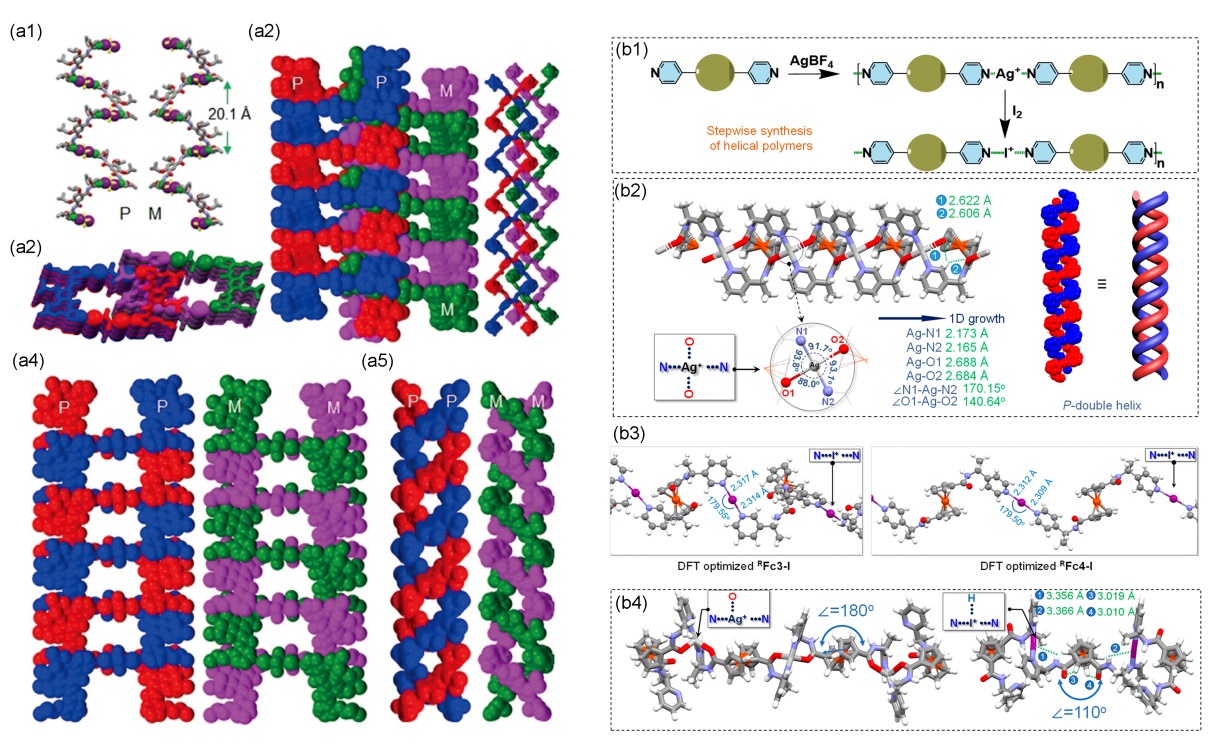
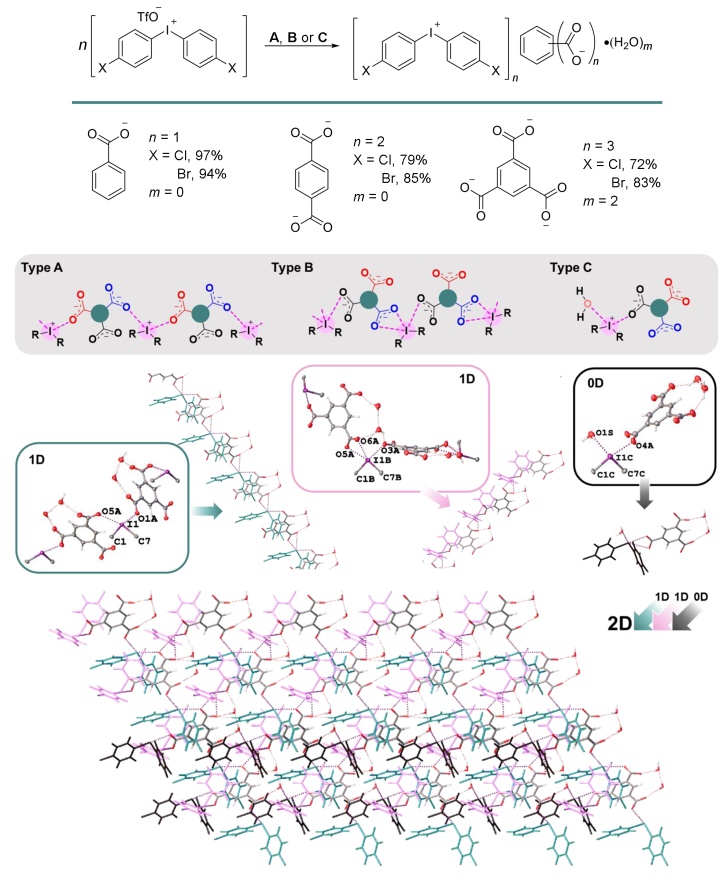
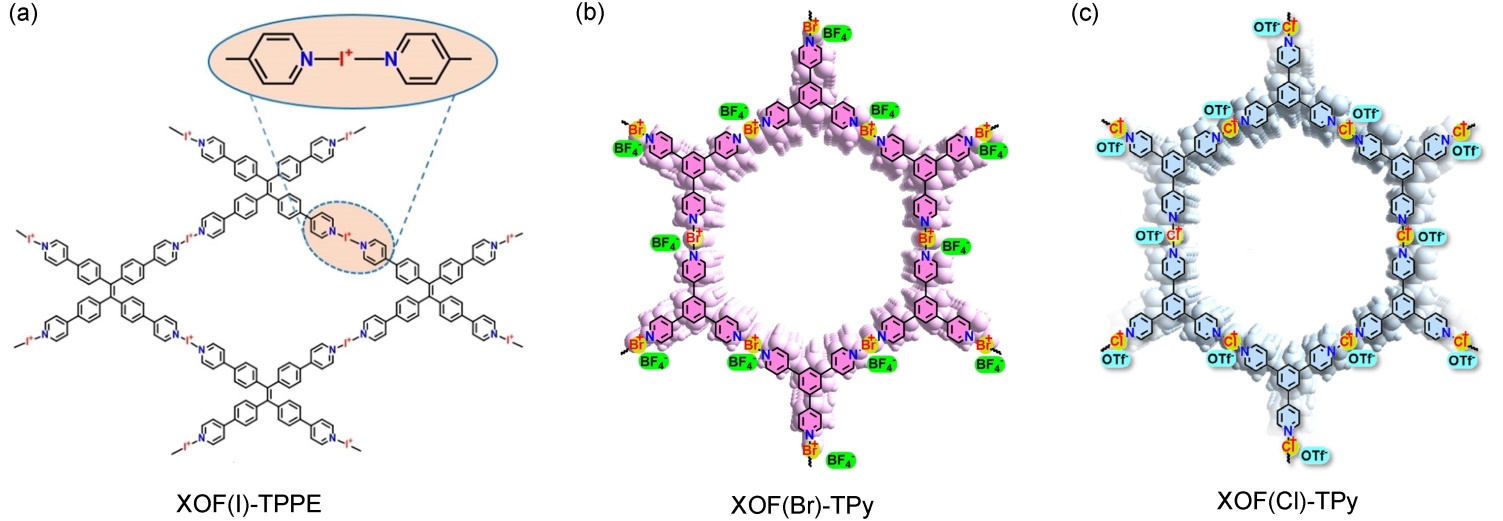
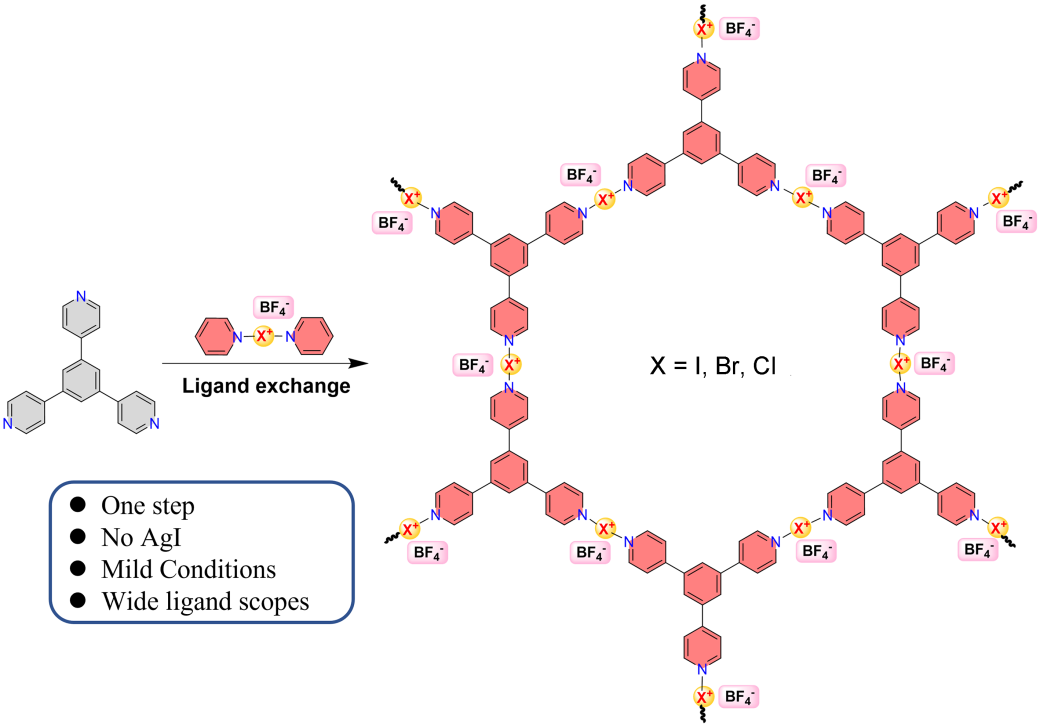
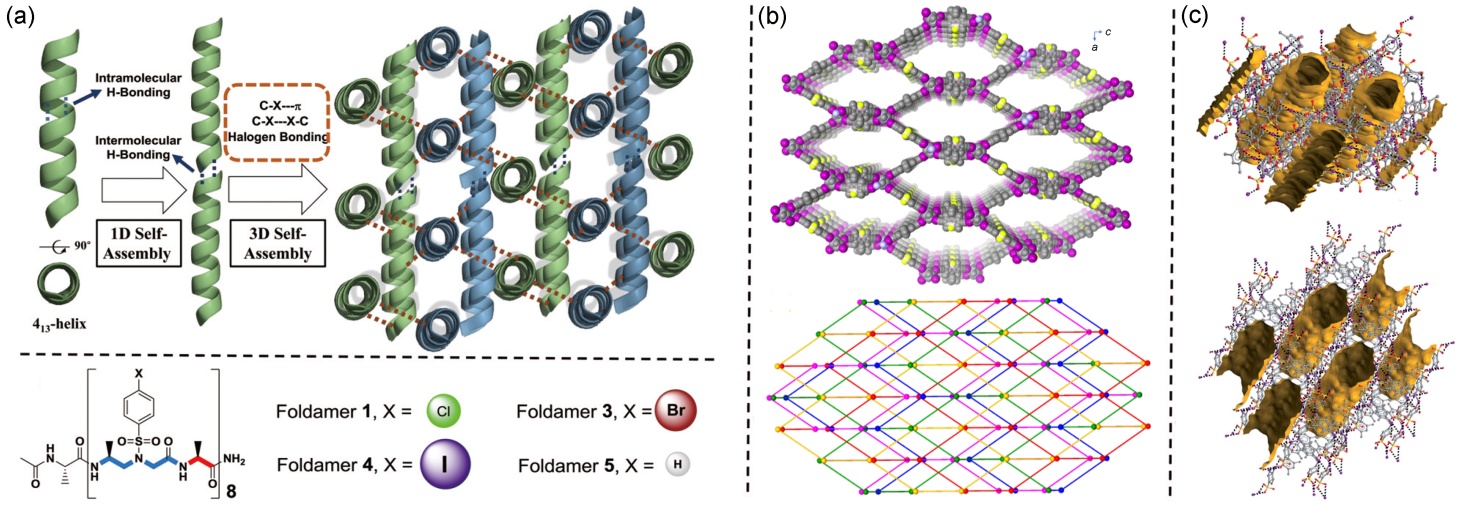
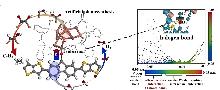
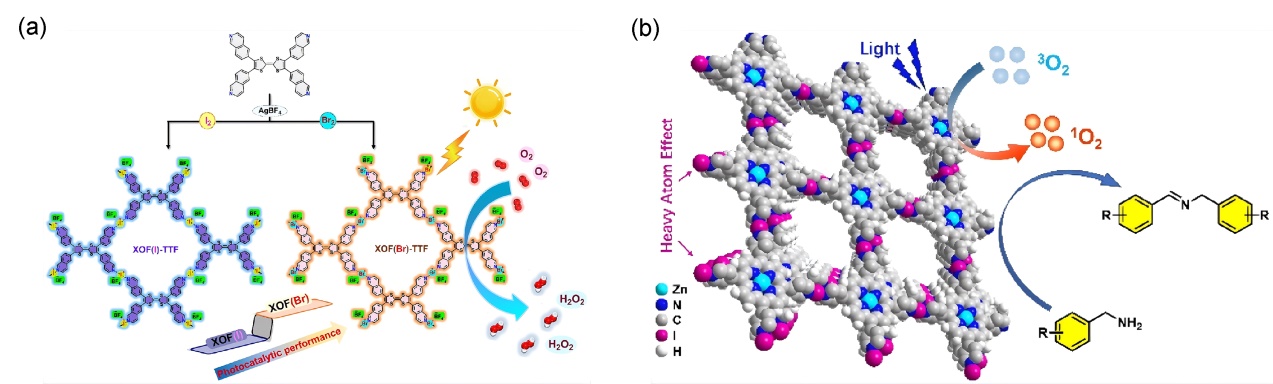
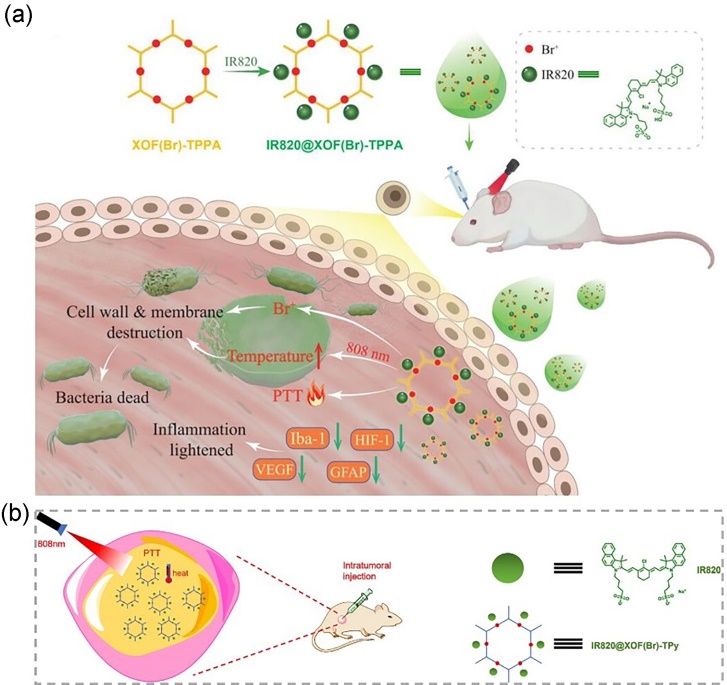
卤键是一类由卤原子σ-空穴与亲核体之间形成的定向非共价相互作用. 经典卤键源于电中性卤素原子(I、Br或Cl)与吸电子取代基共价连接后沿键轴方向产生的σ-空穴, 具有方向性强和键能可调的特点, 适于构筑开放型可扩展的超分子网络. 阳离子卤键则由卤鎓离子(X+)通过其p轨道空穴, 同时与两个路易斯碱配位, 形成三中心四电子的[D…X…D]+特征单元, 键能可达180 kJ•mol-1, 兼具共价性与静电性, 展现出卓越的热力学稳定性和双齿桥连能力. 基于上述差异, 系统综述了两类卤键在超分子自组装中的结构构筑逻辑与维度调控策略, 从零维到三维依次涵盖二聚体、胶囊、螺旋聚合物、二维卤键有机框架(XOFs)及三维晶体架构, 重点分析了各维度下经典卤键的“单齿线性连接”与阳离子卤键的“双齿桥连节点”对组装拓扑和稳定性的不同贡献, 并进一步总结了两类卤键驱动组装体在光催化、气体分离及医药等领域的功能应用. 两类卤键在方向性、强度与组装行为上的互补特征, 为晶体工程与功能材料设计提供了丰富的设计空间.
张鹛媚, 王璐, 陈世贵. 卤键驱动超分子自组装: 从维度调控到功能应用[J]. 有机化学, 2026, 46(9): 3328-3337.
Meimei Zhang, Lu Wang, Shigui Chen. Halogen Bonding Driven Supramolecular Self-Assembly: From Dimensionality Control to Functional Applications[J]. Chinese Journal of Organic Chemistry, 2026, 46(9): 3328-3337.
| [1] |
(a)
doi: 10.1021/acs.jpca.3c06363 |
|
(b)
doi: 10.1126/science.aap7459 |
|
|
(c)
doi: 10.6023/cjoc202207007 |
|
|
(李芬, 刘传志, 户志远, 罗盼盼, 崔蓉铮, 黄彦珂, 刘新明, 刘澜涛, 吴玮, 有机化学, 2023, 43, 705.)
doi: 10.6023/cjoc202207007 |
|
|
(d)
|
|
|
(e)
doi: 10.1021/acs.cgd.3c00958 |
|
|
(f)
|
|
|
(许艳艳, 刘传志, 王辉, 张丹维, 黎占亭, 有机化学, 2021, 41, 2848.)
doi: 10.6023/cjoc202102012 |
|
|
(g)
doi: 10.1039/D3SC02348F |
|
|
(h)
doi: 10.1016/j.comptc.2021.113398 |
|
|
(i)
doi: 10.1039/D2TA00628F |
|
|
(j)
|
|
|
(田震南, 赵佳豪, 巩冠斐, 白旭冠, 李浩虎, 王纪科, 王璐, 蔡强, 陈世贵, 中国科学: 化学, 2023, 53, 2367.)
|
|
|
(k)
|
|
|
(蒋志武, 袁振东, 化学通报, 2023, 86, 761.)
|
|
|
(l)
doi: 10.1021/acs.chemrev.5b00484 |
|
|
(m)
|
|
| [2] |
doi: 10.1039/JS8631600239 |
| [3] |
(a)
doi: 10.1021/j100165a007 |
|
(b)
doi: 10.6023/A22080368 |
|
|
(刘传志, 李芬, 王静静, 赵晓璐, 张婷美, 黄鑫, 邬梦丽, 户志远, 刘新明, 黎占亭, 化学学报, 2022, 80, 1365.)
doi: 10.6023/A22080368 |
|
| [4] |
(a)
doi: 10.1351/PAC-REC-12-05-10 |
|
(b)
doi: 10.1021/ar5001555 |
|
| [5] |
(a)
|
|
(b)
doi: 10.1039/C1CC15839B |
|
|
(c)
doi: 10.1021/ja301341h |
|
|
(d)
doi: 10.1093/nsr/nwaa170 |
|
| [6] |
(a)
pmid: 31638284 |
|
(b)
doi: 10.1021/cg200991v pmid: 31638284 |
|
|
(c)
doi: 10.1002/anie.201707986 pmid: 31638284 |
|
|
(d)
doi: 10.1021/acs.jcim.0c00032 pmid: 31638284 |
|
|
(e)
pmid: 31638284 |
|
|
(f)
doi: 10.1021/acsnano.2c11833 pmid: 31638284 |
|
|
(g)
doi: 10.1016/j.cclet.2019.02.010 pmid: 31638284 |
|
|
(h)
doi: 10.1002/chem.201904322 pmid: 31638284 |
|
| [7] |
(a)
doi: 10.1039/C5SC01053E pmid: 32211673 |
|
(b)
doi: 10.1039/C4SC01175A pmid: 32211673 |
|
|
(c)
doi: 10.1021/acs.chemrev.5b00527 pmid: 32211673 |
|
|
(d)
pmid: 32211673 |
|
|
(e)
doi: 10.1021/jacs.8b09467 pmid: 32211673 |
|
|
(f)
doi: 10.1039/d0cs00034e pmid: 32211673 |
|
| [8] |
(a)
doi: 10.1007/s00894-006-0130-2 |
|
(b)
|
|
| [9] |
(a)
doi: 10.1039/c3cp00054k pmid: 17799698 |
|
(b)
pmid: 17799698 |
|
| [10] |
(a)
doi: 10.1039/d0sc02076a pmid: 34094166 |
|
(b)
doi: 10.1002/poc.v28.3 pmid: 34094166 |
|
| [11] |
(a)
doi: 10.1021/jacs.6b03842 |
|
(b)
doi: 10.1039/D4QM00735B |
|
|
(c)
doi: 10.1007/s11426-024-2204-8 |
|
|
(d)
doi: 10.1021/acsami.2c11598 |
|
| [12] |
doi: 10.1039/c2cs15292d pmid: 22334193 |
| [13] |
(a)
|
|
(b)
doi: 10.1021/acschembio.5b00151 |
|
| [14] |
doi: 10.1016/j.molstruc.2020.129239 |
| [15] |
doi: 10.1016/j.molstruc.2015.12.016 |
| [16] |
|
| [17] |
doi: 10.1002/chem.v32.11 |
| [18] |
(a)
doi: 10.1007/s11224-016-0784-z pmid: 33942573 |
|
(b)
doi: 10.1002/cplu.202100104 pmid: 33942573 |
|
| [19] |
doi: 10.1039/D2SC03792K |
| [20] |
doi: 10.1002/anie.v58.23 |
| [21] |
doi: 10.1002/anie.v58.27 |
| [22] |
(a)
doi: 10.1002/chem.202102575 pmid: 34339075 |
|
(b)
doi: 10.1002/cjoc.v43.15 pmid: 34339075 |
|
|
(c)
doi: 10.1016/j.cej.2025.162529 pmid: 34339075 |
|
|
(d)
doi: 10.1002/adfm.v35.20 pmid: 34339075 |
|
|
(e)
doi: 10.1016/j.cclet.2024.110730 pmid: 34339075 |
|
|
(f)
doi: 10.1002/cjoc.v44.12 pmid: 34339075 |
|
| [23] |
(a)
doi: 10.1039/D0CC04013D |
|
(b)
doi: 10.1016/j.tet.2026.135287 |
|
| [24] |
(a)
doi: 10.1002/anie.201607789 pmid: 28631856 |
|
(b)
doi: 10.1002/chem.201702655 pmid: 28631856 |
|
|
(c)
doi: 10.1016/j.chempr.2017.10.011 pmid: 28631856 |
|
| [25] |
doi: 10.1002/chem.v24.44 |
| [26] |
doi: 10.1039/D3SC03170E |
| [27] |
doi: 10.1002/ange.v127.25 |
| [28] |
doi: 10.1039/C8SC03040E |
| [29] |
doi: 10.1002/anie.v58.1 |
| [30] |
doi: 10.1021/acs.cgd.9b00952 |
| [31] |
doi: 10.1021/acsnano.2c08506 |
| [32] |
doi: 10.3390/ijms241914642 |
| [33] |
doi: 10.1016/j.ccr.2026.217585 |
| [34] |
(a)
doi: 10.1002/anie.v60.27 |
|
(b)
|
|
|
(c)
doi: 10.1002/anie.v63.35 |
|
|
(d)
doi: 10.31635/ccschem.025.202506172 |
|
| [35] |
doi: 10.1021/acs.cgd.3c00663 |
| [36] |
doi: 10.1039/d2sc00892k pmid: 35694330 |
| [37] |
(a)
doi: 10.1007/s11426-025-2953-7 |
|
(b)
doi: 10.1016/j.jechem.2025.04.056 |
|
| [38] |
doi: 10.1016/j.apcatb.2026.126572 |
| [39] |
doi: 10.1002/adfm.v36.29 |
| [40] |
doi: 10.1039/D3TA06144B |
| [41] |
doi: 10.1002/anie.v64.51 |
| [42] |
doi: 10.1002/agt2.v6.6 |
| [43] |
doi: 10.1016/j.cclet.2025.111425 |
| [1] | 吕明, 赵博迪, 徐铭昊, 戚孝天. 非共价相互作用对噁唑酮与烯烃分步[2+2]环加成反应非对映选择性的调控效果研究[J]. 有机化学, 2026, 46(9): 3731-3736. |
| [2] | 梁家瑞, 李金兰, 蒋云, 姚秋丽, 徐应淑, 王安俊. 可见光驱动下卤键诱导的α-碘甲基膦酸二乙酯与香豆素/喹啉酮的直接偶联反应[J]. 有机化学, 2026, 46(1): 135-145. |
| [3] | 温吉林, 郭鹏, 蒲国良, 满雪玉, 贺春阳. 卤键促进的2-溴丙腈衍生物与香豆素/喹啉酮的交叉偶联反应: 合成与转化[J]. 有机化学, 2025, 45(12): 4405-4416. |
| [4] | 曹巧红, 肖咏梅, 刘国星. 刚性二苯代乙烯光响应动态超分子组装与调控[J]. 有机化学, 2024, 44(7): 2124-2135. |
| [5] | 李芬, 刘传志, 户志远, 罗盼盼, 崔蓉铮, 黄彦珂, 刘新明, 刘澜涛, 吴玮. 分子间卤键和氢键控制的网络结构的组装[J]. 有机化学, 2023, 43(2): 705-711. |
| [6] | 钱鸿宇, 何品, 张璐, 陈珂, 徐彬彬, 林绍梁. 含偶氮苯侧链分子刷聚合物的合成及其光响应自组装[J]. 有机化学, 2021, 41(7): 2891-2897. |
| [7] | 许艳艳, 刘传志, 王辉, 张丹维, 黎占亭. 分子间卤键控制的氢键芳香酰胺折叠体组装[J]. 有机化学, 2021, 41(7): 2848-2860. |
| [8] | 裴强, 丁爱祥, 吴晋晋. 基于分子内三中心氢键的超分子组装体系及其应用[J]. 有机化学, 2021, 41(1): 105-125. |
| [9] | 杨阳, 李若梅, 王炜, 许子文, 谢光辉, 鲁郑全, 李靖靖, 宋力平, 李维实. 聚合物对单壁碳纳米管增溶及选择性分离的机理研究进展[J]. 有机化学, 2020, 40(10): 3249-3261. |
| [10] | 刘传志, 王辉, 张丹维, 赵新, 黎占亭. 中国有机氟化合物卤键研究[J]. 有机化学, 2019, 39(1): 28-37. |
| [11] | 李文婷, 曲文娟, 张海丽, 李翔, 林奇, 姚虹, 张有明, 魏太保. 吩嗪衍生物在分子识别与自组装中的应用进展[J]. 有机化学, 2017, 37(10): 2619-2639. |
| [12] | 肖昕, 吴明强, 薛赛凤, 祝黔江, 张建新, 陶朱. 七、八元瓜环与二溴化1,n-亚烷基-二-2-甲基吡啶的超分子自组装[J]. 有机化学, 2012, 32(01): 68-74. |
| [13] | 李 昊; 许曦晨; 陈嘉伟; 杨楚罗*; 秦金贵. 分子机器的研究进展[J]. 有机化学, 2008, 28(12): 2057-2071. |
| [14] | 侯昭升*,a ; 许 静b; 陈云深a ; 谭业邦c; 阚成友a. 端基含活性烯基的准轮烷的合成及表征——葫芦[6]脲与端烯基紫精的超分子自组装[J]. 有机化学, 2008, 28(11): 1937-1942. |
| [15] | 李明轩, 柳利, 柳士忠. 对叔丁基杯[8]芳烃/12-钨(钼)磷(硅)杂多酸超分子包合物的合成与性质[J]. 有机化学, 2004, 24(9): 1086-1090. |
| 阅读次数 | ||||||
|
全文 |
|
|||||
|
摘要 |
|
|||||


