

化学学报 ›› 2026, Vol. 84 ›› Issue (9): 1464-1474.DOI: 10.6023/A26040110 上一篇 下一篇
研究论文
张宇明, 孙世涛, 周诗嘉, 李珺卿, 贺雷*( ), 王东琪*()
投稿日期:2026-04-06
发布日期:2026-06-18
通讯作者:
贺雷, 王东琪
基金资助:
Yuming Zhang, Shitao Sun, Shijia Zhou, Junqing Li, Lei He*(), Dongqi Wang*()
Received:2026-04-06
Published:2026-06-18
Contact:
Lei He, Dongqi Wang
Supported by:文章分享
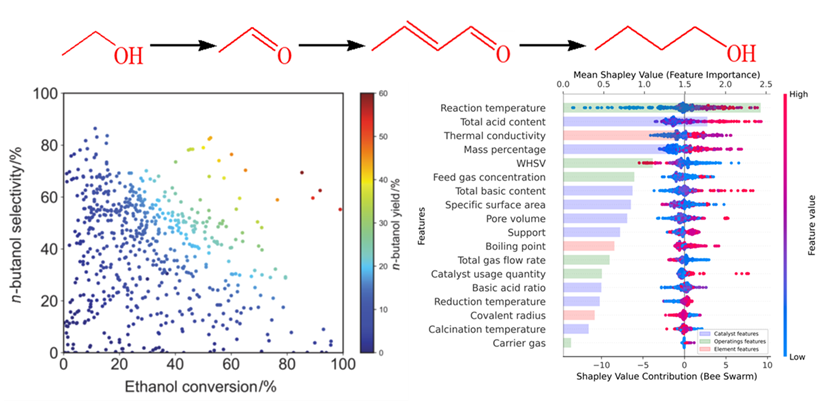
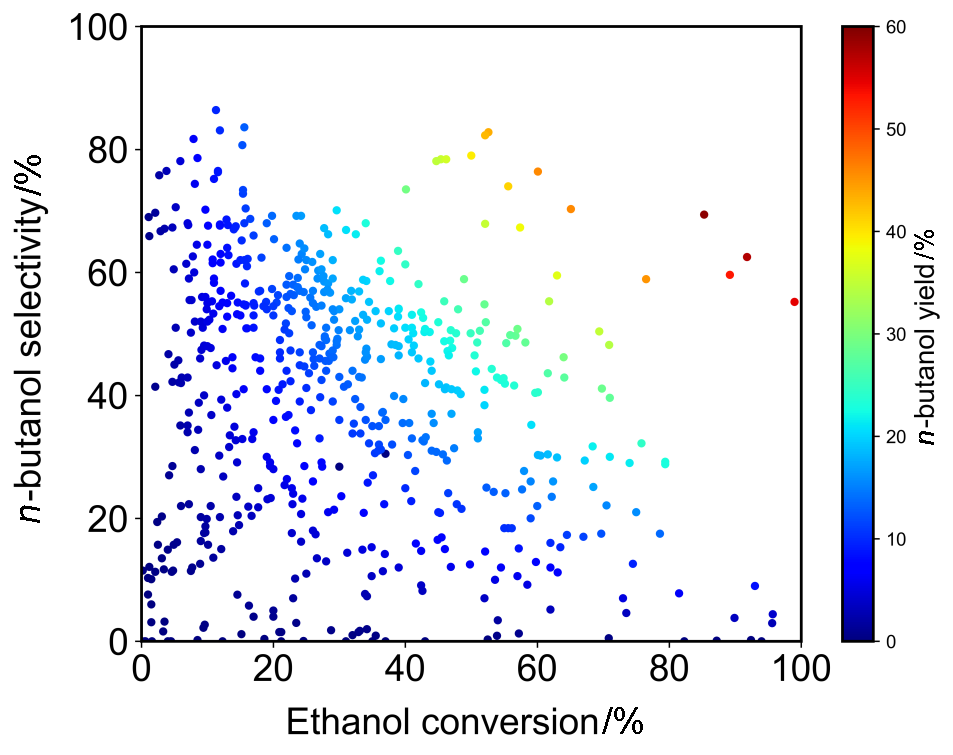
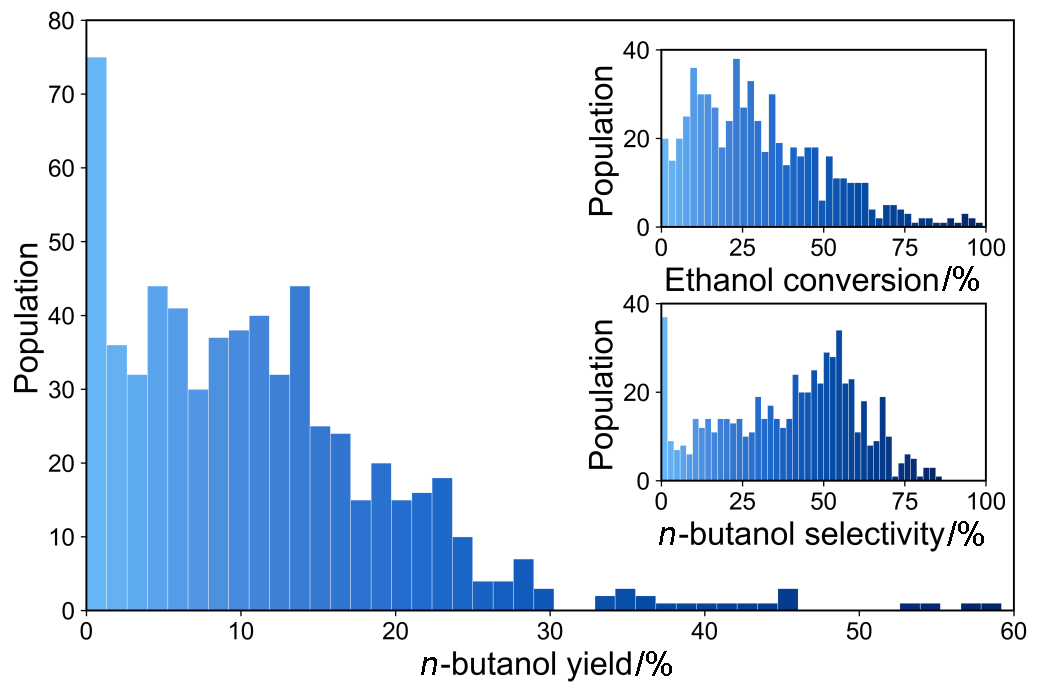
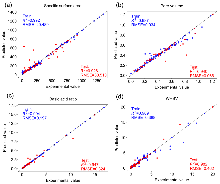
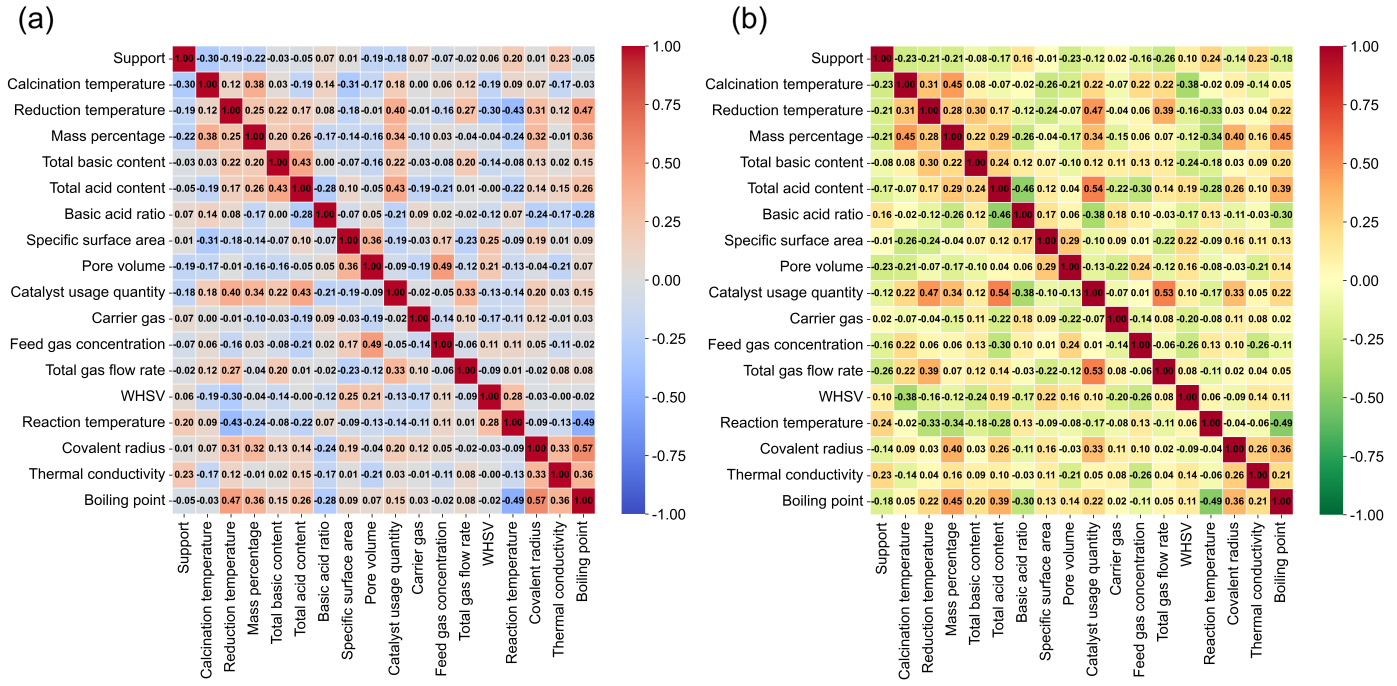
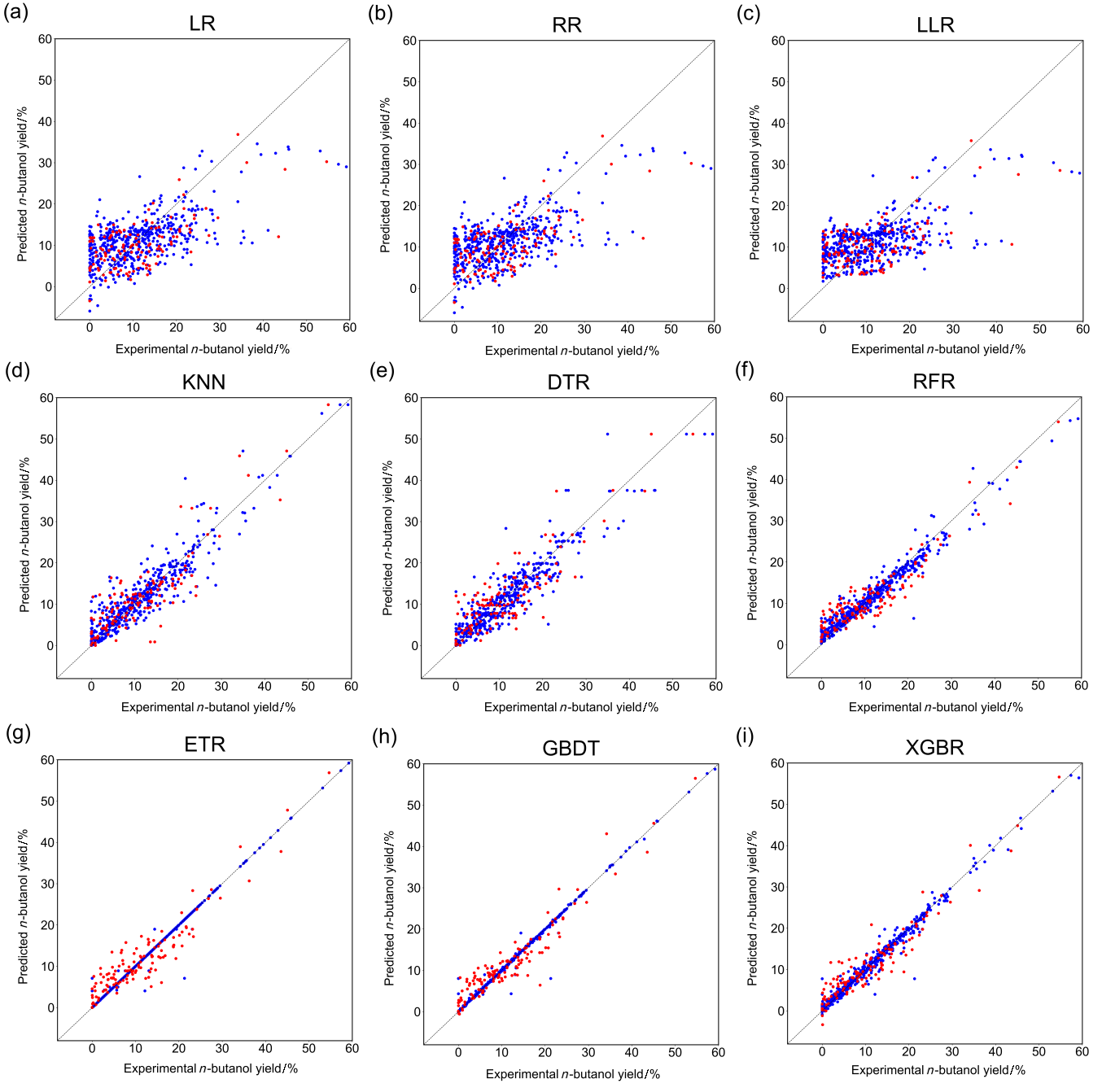
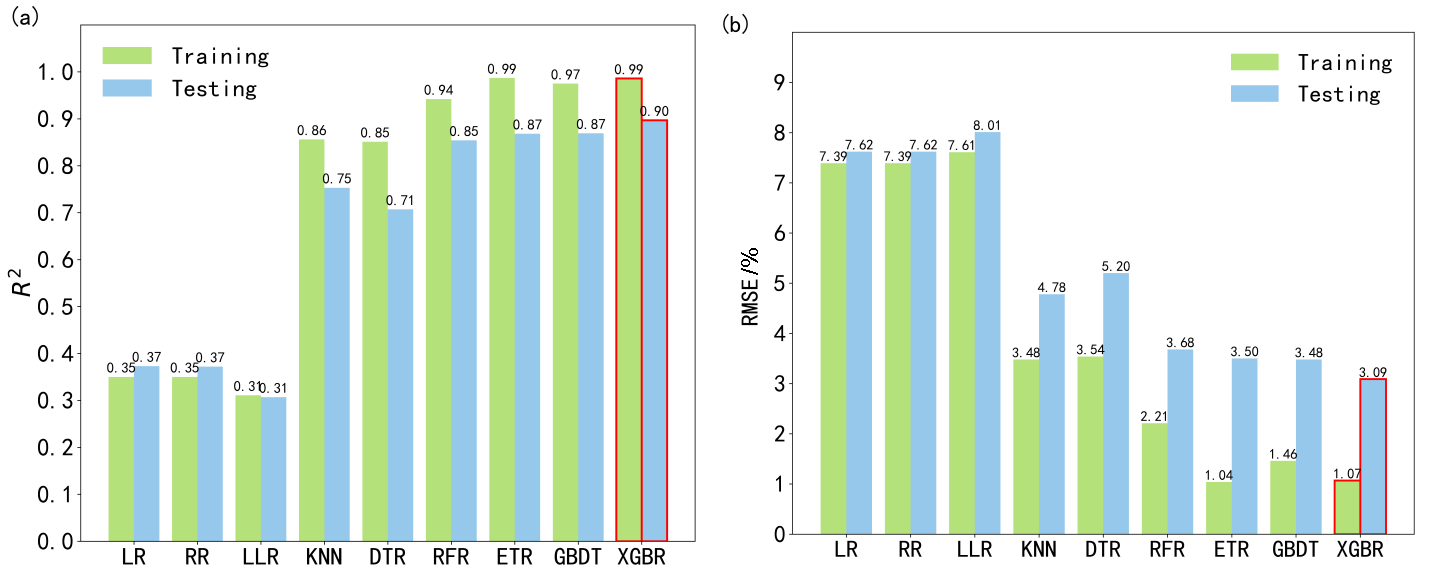
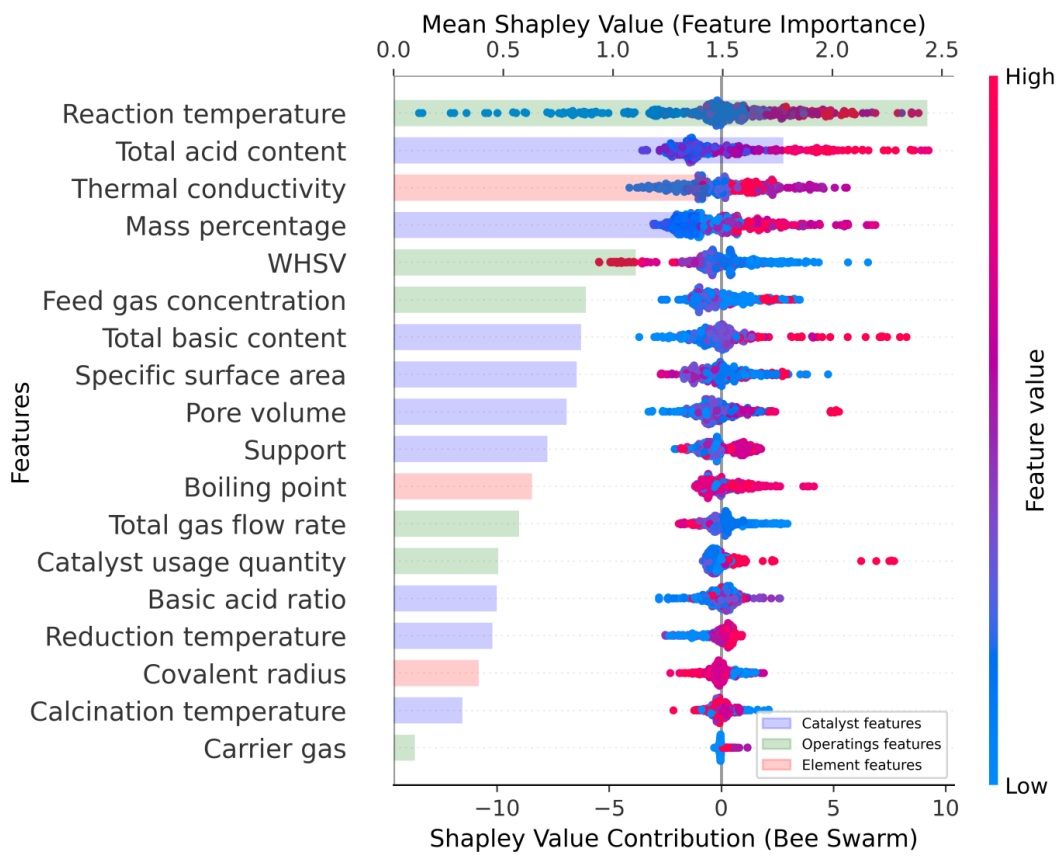
将生物乙醇转化为正丁醇是实现可再生能源长期储存和高值化利用的重要路径. 从庞大的合成空间中获得高效正丁醇合成催化剂的传统试错方法耗时耗力, 效率低, 且难以涵盖大量的材料组合. 基于此, 本研究引入机器学习工作方法, 旨在探索以提高正丁醇收率为目标的催化剂筛选和设计的数据驱动研究范式. 本研究收集了2000年以来的乙醇催化转化制正丁醇反应的非均相催化研究文献数据, 构建了一个包含催化剂组成、制备方法、结构特性、反应条件及其相应催化性能的乙醇转化制正丁醇的催化剂数据集. 基于该数据集, 评估了九种重要的回归算法, 其中, 极端梯度提升回归(XGBR, eXtreme Gradient Boosting)模型的训练集的决定系数(R2)为0.986, 测试集为0.897, 展现出超越其他模型的预测性能和泛化能力. 结合贝叶斯优化算法, 在正丁醇合成催化剂参数空间中高效筛选出5组高性能候选催化剂, 为乙醇催化转化制正丁醇反应催化剂的高效筛选与理性设计提供了新的思路, 为乙醇高值高效利用开辟了数据驱动新途径.
张宇明, 孙世涛, 周诗嘉, 李珺卿, 贺雷, 王东琪. 乙醇高值转化制正丁醇的机器学习研究[J]. 化学学报, 2026, 84(9): 1464-1474.
Yuming Zhang, Shitao Sun, Shijia Zhou, Junqing Li, Lei He, Dongqi Wang. Value-added Transformation of Ethanol to n-Butanol: a Machine Learning Study[J]. Acta Chimica Sinica, 2026, 84(9): 1464-1474.
| ML model | R2-train | R2-test | RMSE(%)-train | RMSE(%)-test |
|---|---|---|---|---|
| LR | 0.350 | 0.373 | 7.39 | 7.62 |
| RR | 0.350 | 0.372 | 7.39 | 7.62 |
| LLR | 0.311 | 0.307 | 7.61 | 8.01 |
| KNN | 0.856 | 0.753 | 3.48 | 4.78 |
| DTR | 0.851 | 0.707 | 3.54 | 5.20 |
| RFR | 0.942 | 0.854 | 2.21 | 3.68 |
| ETR | 0.987 | 0.868 | 1.04 | 3.50 |
| GBDT | 0.975 | 0.869 | 1.46 | 3.48 |
| XGBR | 0.986 | 0.897 | 1.07 | 3.09 |
| ML model | R2-train | R2-test | RMSE(%)-train | RMSE(%)-test |
|---|---|---|---|---|
| LR | 0.350 | 0.373 | 7.39 | 7.62 |
| RR | 0.350 | 0.372 | 7.39 | 7.62 |
| LLR | 0.311 | 0.307 | 7.61 | 8.01 |
| KNN | 0.856 | 0.753 | 3.48 | 4.78 |
| DTR | 0.851 | 0.707 | 3.54 | 5.20 |
| RFR | 0.942 | 0.854 | 2.21 | 3.68 |
| ETR | 0.987 | 0.868 | 1.04 | 3.50 |
| GBDT | 0.975 | 0.869 | 1.46 | 3.48 |
| XGBR | 0.986 | 0.897 | 1.07 | 3.09 |
| No. | Metal | Support | Reaction temperature/℃ | Butanol yield/% |
|---|---|---|---|---|
| 1 | Au | MgAlOx | 334 | 57.1 |
| 2 | Ag | NaX | 322 | 53.9 |
| 3 | Cu | NC | 344 | 51.1 |
| 4 | Ca | NC | 332 | 48.7 |
| 5 | Be | NC | 327 | 46.9 |
| No. | Metal | Support | Reaction temperature/℃ | Butanol yield/% |
|---|---|---|---|---|
| 1 | Au | MgAlOx | 334 | 57.1 |
| 2 | Ag | NaX | 322 | 53.9 |
| 3 | Cu | NC | 344 | 51.1 |
| 4 | Ca | NC | 332 | 48.7 |
| 5 | Be | NC | 327 | 46.9 |
| [1] |
|
|
(李洪言, 郑一鸣, 季银利, 于淼, 沈奕天, 张胜然, 刘永煜, 王海洋, 陈子文, 代晓东, 天然气与石油, 2025, 43, 129.)
|
|
| [2] |
doi: 10.1021/ie50493a017 |
|
(王敬, 孔令凯, 吴亚冉, 顾明龙, 陈翔宇, 化学工业, 2025, 43, 33.)
|
|
| [3] |
doi: 10.1021/acssuschemeng.8b03622 |
| [4] |
|
|
(杨铮, 刘思明, 邢磊, 化学工业, 2025, 43, 1.)
|
|
| [5] |
doi: 10.1021/acscatal.3c01481 |
| [6] |
doi: 10.1016/j.rser.2023.114240 |
| [7] |
doi: 10.1038/s41570-019-0084-4 |
| [8] |
doi: 10.1016/j.seppur.2022.120655 |
| [9] |
doi: 10.1002/ese3.v13.6 |
| [10] |
doi: 10.1016/j.jclepro.2020.124902 |
| [11] |
|
| [12] |
doi: 10.1021/jacs.3c13092 |
| [13] |
|
| [14] |
doi: 10.1021/acs.inorgchem.3c04142 |
| [15] |
doi: 10.1021/jacs.5b10257 pmid: 26526779 |
| [16] |
doi: 10.1246/cl.2009.838 |
| [17] |
doi: 10.1002/anie.v52.34 |
| [18] |
doi: 10.1021/acscatal.5b01327 |
| [19] |
doi: 10.1021/jacs.7b05939 |
| [20] |
doi: 10.1021/jacs.9b08968 |
| [21] |
doi: 10.1021/acscatal.7b03653 |
| [22] |
doi: 10.1006/jcat.1999.2734 |
| [23] |
|
| [24] |
doi: 10.1039/C9CC05454E |
| [25] |
doi: 10.1016/j.jcat.2008.08.005 |
| [26] |
|
| [27] |
doi: 10.3390/catal2010068 |
| [28] |
doi: 10.1021/acs.iecr.9b06778 |
| [29] |
doi: 10.1016/j.jcat.2016.08.024 |
| [30] |
doi: 10.1021/acssuschemeng.1c04305 |
| [31] |
doi: 10.1039/D3GC00078H |
| [32] |
doi: 10.1016/j.jechem.2022.04.049 |
| [33] |
doi: 10.1002/cctc.v10.16 |
| [34] |
doi: 10.1021/acscatal.2c02440 |
| [35] |
doi: 10.1021/acs.iecr.5b02409 |
| [36] |
doi: 10.1016/j.renene.2014.08.052 |
| [37] |
doi: 10.1039/D2CY01554D |
| [38] |
doi: 10.1039/C4GC00219A |
| [39] |
doi: 10.1021/acs.iecr.0c04649 |
| [40] |
|
| [41] |
doi: 10.1021/acscatal.2c06213 |
| [42] |
doi: 10.1039/C0CC03038D |
| [43] |
doi: 10.1021/acscatal.8b04014 |
| [44] |
doi: 10.1039/D1SE01002F |
| [45] |
doi: 10.1016/j.catcom.2017.06.016 |
| [46] |
doi: 10.1039/C6CC05860D |
| [47] |
doi: 10.1360/SSC-2025-0066 |
|
(胡建钰, 杨峻毅, 胡素磊, 刘进勋, 李微雪, 中国科学(化学), 2025, 55, 1704.)
|
|
| [48] |
doi: 10.6023/A23100473 |
|
(李珺卿, 宋千禧, 刘子义, 王东琪, 化学学报, 2024, 82, 387.)
doi: 10.6023/A23100473 |
|
| [49] |
doi: 10.1021/acsestengg.3c00617 |
| [50] |
doi: 10.1021/acscatal.9b04186 |
| [51] |
doi: 10.1039/D2CC05938J |
| [52] |
|
| [53] |
doi: 10.1016/j.apcata.2023.119427 |
| [54] |
doi: 10.1002/adsu.v7.3 |
| [55] |
doi: 10.1021/acs.jpclett.0c00665 |
| [56] |
doi: 10.1039/D1TA06772A |
| [57] |
|
| [58] |
doi: 10.1016/j.jechem.2024.12.056 |
| [59] |
doi: 10.1038/s42256-019-0138-9 pmid: 32607472 |
| [60] |
doi: 10.1016/j.jclepro.2018.08.207 |
| [1] | 孙士博, 王胜, 王翰洋, 蓝晨栝, 马静, 王其召, 孙振丽, 王祥科. 机器学习辅助解析共价有机框架材料吸附铀酰的结构-机制关系★[J]. 化学学报, 2026, 84(9): 1418-1427. |
| [2] | 翁惠琼, 黄河, 王雯菲, 李和国, 李晓鹏, 张守鑫, 李树华, 赵越, 吴玉芳, 乔智威. 基于MOFid赋能下的AI大数据挖掘高性能化学战剂吸附材料[J]. 化学学报, 2026, 84(1): 8-19. |
| [3] | 墨云鹤, 曹卫刚, 赵乐泉, 唐振强, 郑珑, 蔡宗英. 基于机器学习与第一性原理筛选锂离子电池钒基电极材料[J]. 化学学报, 2025, 83(5): 518-526. |
| [4] | 李珺卿, 宋千禧, 刘子义, 王东琪. 机器学习方法预测含硼材料能隙[J]. 化学学报, 2024, 82(4): 387-395. |
| [5] | 戚兴怡, 胡耀峰, 王若愚, 杨雅清, 赵宇飞. 机器学习在新材料筛选方面的应用进展[J]. 化学学报, 2023, 81(2): 158-174. |
| [6] | 韩逸之, 蓝建慧, 刘学, 石伟群. 基于机器学习势函数的熔盐体系分子动力学研究进展[J]. 化学学报, 2023, 81(11): 1663-1672. |
| [7] | 程敏, 王诗慧, 罗磊, 周利, 毕可鑫, 戴一阳, 吉旭. 面向乙烷/乙烯分离的金属有机框架膜的大规模计算筛选[J]. 化学学报, 2022, 80(9): 1277-1288. |
| [8] | 刘雨泽, 李昆华, 黄佳兴, 于曦, 胡文平. 多组件学习器实现有机分子沸点的精准预测[J]. 化学学报, 2022, 80(6): 714-723. |
| [9] | 王诗慧, 薛小雨, 程敏, 陈少臣, 刘冲, 周利, 毕可鑫, 吉旭. 机器学习与分子模拟协同的CH4/H2分离金属有机框架高通量计算筛选[J]. 化学学报, 2022, 80(5): 614-624. |
| [10] | 蔡铖智, 李丽凤, 邓小梅, 李树华, 梁红, 乔智威. 基于机器学习和高通量计算筛选金属有机框架的甲烷/乙烷/丙烷分离性能[J]. 化学学报, 2020, 78(5): 427-436. |
| [11] | 朱博阳, 吴睿龙, 于曦. 人工智能助力当代化学研究[J]. 化学学报, 2020, 78(12): 1366-1382. |
| [12] | 刘治鲁, 李炜, 刘昊, 庄旭东, 李松. 金属有机骨架的高通量计算筛选研究进展[J]. 化学学报, 2019, 77(4): 323-339. |
| [13] | 彭旭红, 方建, 王宏奎, 赵继华, 沈伟国. 水/Triton X-100/正丁醇/环己烷反相微乳液体系中水结构的FT-IR研究[J]. 化学学报, 2011, 69(19): 2253-2258. |
| [14] | 饶含兵, 李泽荣, 陈晓梅, 李象远. 基于支持向量学习机的HIV-1蛋白酶抑制剂的活性预测[J]. 化学学报, 2007, 65(3): 197-202. |
| [15] | 徐金光,腾飞,田志坚,曲秀华, 张培青,徐云鹏,熊国兴,林励吾. 新型反相微乳液制备纳米结构甲烷催化燃烧催化剂La0.95Ba0.05MnAl11O19-α的研究[J]. 化学学报, 2005, 63(24): 2205-2210. |
| 阅读次数 | ||||||
|
全文 |
|
|||||
|
摘要 |
|
|||||
