

化学学报 ›› 2026, Vol. 84 ›› Issue (1): 8-19.DOI: 10.6023/A25080275 上一篇 下一篇
研究论文
翁惠琼a,†, 黄河a,†, 王雯菲a, 李和国b, 李晓鹏b, 张守鑫b, 李树华a, 赵越b,*( ), 吴玉芳a,*(), 乔智威a,*()
投稿日期:2025-08-08
发布日期:2025-10-23
基金资助:
Huiqiong Wenga, He Huanga, Wenfei Wanga, Heguo Lib, Xiaopeng Lib, Shouxin Zhangb, Shuhua Lia, Yue Zhaob,*(), Yufang Wua,*(), Zhiwei Qiaoa,*()
Received:2025-08-08
Published:2025-10-23
Contact:
* E-mail: zy291857261@126.com;yufang.wu@gzhu.edu.cn;zqiao@gzhu.edu.cn
About author:Supported by:文章分享
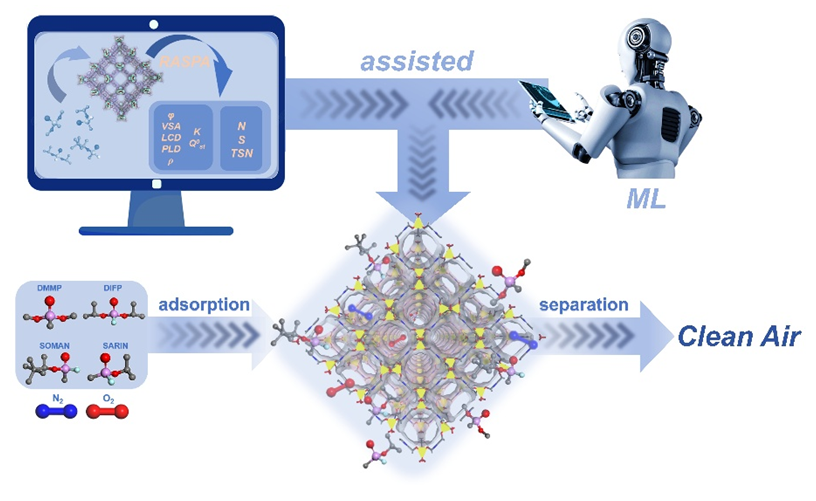
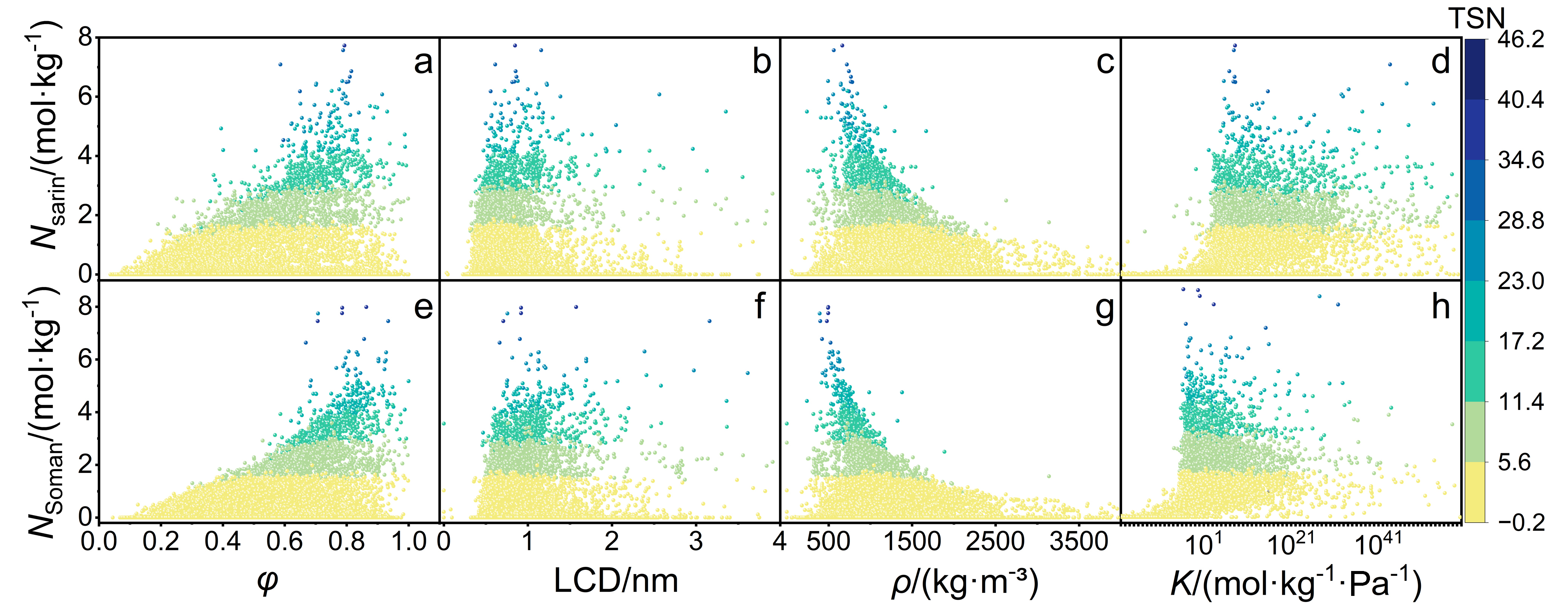
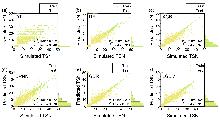
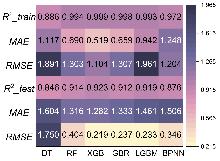
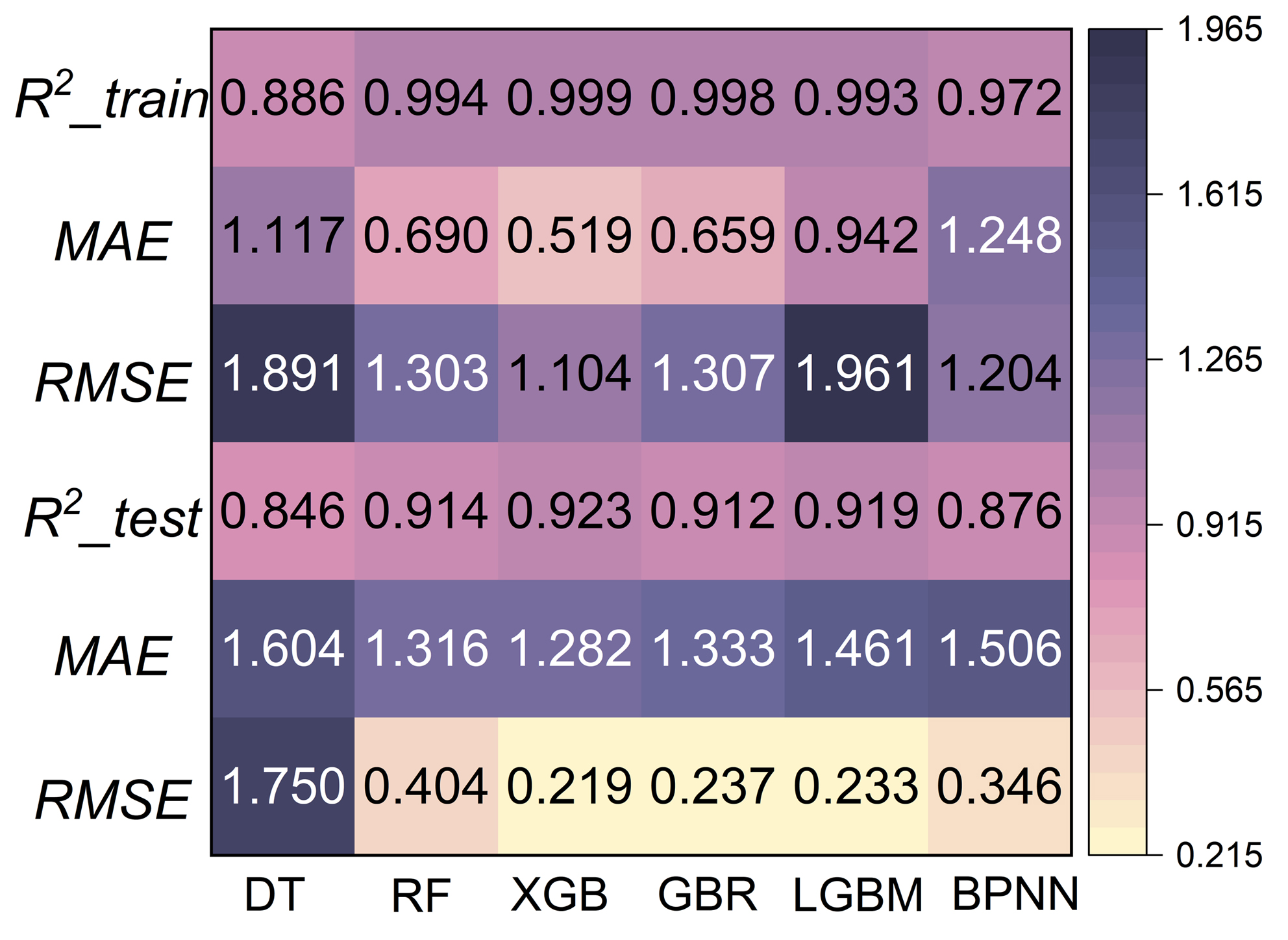
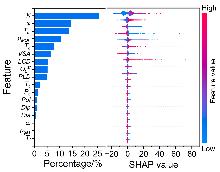
为高效捕获对人类健康与环境构成严重威胁的低浓度化学战剂及模拟物, 本研究依托AI大数据驱动的高通量计算筛选策略, 针对数万种金属有机框架(Metal-organic Framework, MOF)吸附材料数据库进行系统分析, 精准评估低浓度化学战剂在空气中的捕获性能. 引入选择性与吸附容量的权衡值(TSN)作为综合指标, 结合六种算法(决策树、随机森林、梯度提升回归树、极端梯度提升(Extreme Gradient Boosting, XGB)、反向传播神经网络和轻梯度提升机)构建预测模型, 结果表明XGB算法的预测效果最佳(R2可达0.923). 随后, 将XGB算法与MOFid标准化标识符相结合, 采用大数据筛选挖掘方法对TOP1%高性能MOFs进行结构共性解析, 发现开放过渡金属位点与刚性有机配体的协同作用有助于增强化学战剂的吸附亲和力; 同时, 特定拓扑的高出现频率证明了可通过形成有效的孔隙结构来增益吸附作用. 本研究通过MOFid赋能下的AI大数据挖掘技术为优化MOF吸附性能和筛选高效材料提供了关键指导, 助力空气中痕量化学战剂的高效捕获.
翁惠琼, 黄河, 王雯菲, 李和国, 李晓鹏, 张守鑫, 李树华, 赵越, 吴玉芳, 乔智威. 基于MOFid赋能下的AI大数据挖掘高性能化学战剂吸附材料[J]. 化学学报, 2026, 84(1): 8-19.
Huiqiong Weng, He Huang, Wenfei Wang, Heguo Li, Xiaopeng Li, Shouxin Zhang, Shuhua Li, Yue Zhao, Yufang Wu, Zhiwei Qiao. AI Big-Data Mining Empowered by MOFid for High-Performance Chemical Warfare Agent Adsorbents[J]. Acta Chimica Sinica, 2026, 84(1): 8-19.

| 气体 | 描述符 | 吸附量N/(mol•kg-1) | 选择性S |
|---|---|---|---|
| 梭曼、沙林 | φ | 0.71~0.78 | 0.22~0.90 |
| VSA/(m2•cm-3) | 2446~2647 | 328~1160 | |
| LCD/nm | 0.664~0.918 | 0.496~0.755 | |
| PLD/nm | 0.542~0.868 | 0.262~0.589 | |
| ρ/(kg•m-3) | 421~635 | 915~1953 | |
| K/(mol•kg-1•Pa-1) | 0.18×10⁻²~1.5×10⁷ | 1.73×10⁻³~1.13×10³ | |
| Q0st/(kJ•mol-1) | 19.37~86.02 | 24.52~68.22 | |
| DIFP | φ | 0.67~1.02 | 0.14~0.73 |
| VSA/(m2•cm-3) | 1065~3290 | 334.3~1099.7 | |
| LCD/nm | 0.665~1.336 | 0.504~1.164 | |
| PLD/nm | 0.493~1.362 | 0.219~1.164 | |
| ρ/(kg•m-3) | 392.7~690.9 | 1125.3~3260.5 | |
| K/(mol•kg-1•Pa-1) | 0.0001~5.33×10⁶ | 0.12~5.8×10¹¹ | |
| Q0st/(kJ•mol-1) | 24.19~85.41 | 45.20~105.73 | |
| DMMP | φ | 0.67~1.14 | 0.13~0.64 |
| VSA/(m2•cm-3) | 1065 ~3290 | 309.4~2383.7 | |
| LCD/nm | 0.664~0.930 | 0.433~0.787 | |
| PLD/nm | 0.493~1.092 | 0.242~0.659 | |
| ρ/(kg•m-3) | 392.72~808.97 | 728.76~3370.18 | |
| K/(mol•kg-1•Pa-1) | 0.62~9.41×10⁶ | 0.003~2.28×10⁹ | |
| Q0st/(kJ•mol-1) | 55.69~228.24 | 46.63~203.89 |
| 气体 | 描述符 | 吸附量N/(mol•kg-1) | 选择性S |
|---|---|---|---|
| 梭曼、沙林 | φ | 0.71~0.78 | 0.22~0.90 |
| VSA/(m2•cm-3) | 2446~2647 | 328~1160 | |
| LCD/nm | 0.664~0.918 | 0.496~0.755 | |
| PLD/nm | 0.542~0.868 | 0.262~0.589 | |
| ρ/(kg•m-3) | 421~635 | 915~1953 | |
| K/(mol•kg-1•Pa-1) | 0.18×10⁻²~1.5×10⁷ | 1.73×10⁻³~1.13×10³ | |
| Q0st/(kJ•mol-1) | 19.37~86.02 | 24.52~68.22 | |
| DIFP | φ | 0.67~1.02 | 0.14~0.73 |
| VSA/(m2•cm-3) | 1065~3290 | 334.3~1099.7 | |
| LCD/nm | 0.665~1.336 | 0.504~1.164 | |
| PLD/nm | 0.493~1.362 | 0.219~1.164 | |
| ρ/(kg•m-3) | 392.7~690.9 | 1125.3~3260.5 | |
| K/(mol•kg-1•Pa-1) | 0.0001~5.33×10⁶ | 0.12~5.8×10¹¹ | |
| Q0st/(kJ•mol-1) | 24.19~85.41 | 45.20~105.73 | |
| DMMP | φ | 0.67~1.14 | 0.13~0.64 |
| VSA/(m2•cm-3) | 1065 ~3290 | 309.4~2383.7 | |
| LCD/nm | 0.664~0.930 | 0.433~0.787 | |
| PLD/nm | 0.493~1.092 | 0.242~0.659 | |
| ρ/(kg•m-3) | 392.72~808.97 | 728.76~3370.18 | |
| K/(mol•kg-1•Pa-1) | 0.62~9.41×10⁶ | 0.003~2.28×10⁹ | |
| Q0st/(kJ•mol-1) | 55.69~228.24 | 46.63~203.89 |

| 毒剂 | Linker | 相应 次数 | Topology | 次数 | ||
|---|---|---|---|---|---|---|
| sarin | QMKYBPDZANOJGF C9H6O6 | OYFRNYNHAZOYNF C8H6O6 | LSHYAWDVBASRBW PO4 | 8/5/4 | srs | 13 |
| DIFP | GZJYHAYPVZNUJX C8H6O4 | SATWKVZGMWCXOJ C27H18O6 | QMKYBPDZANOJGF C9H6O6 | 8/5/4 | sql | 14 |
| soman | GZJYHAYPVZNUJX C8H6O4 | QMKYBPDZANOJGF C9H6O6 | KKEYFWRCBNTPAC C8H6O4 | 16/5/3 | kgm | 12 |
| DMMP | GZJYHAYPVZNUJX C8H6O4 | QMKYBPDZANOJGF C9H6O6 | KKEYFWRCBNTPAC C8H6O4 | 15/8/3 | sql | 15 |
| 毒剂 | Linker | 相应 次数 | Topology | 次数 | ||
|---|---|---|---|---|---|---|
| sarin | QMKYBPDZANOJGF C9H6O6 | OYFRNYNHAZOYNF C8H6O6 | LSHYAWDVBASRBW PO4 | 8/5/4 | srs | 13 |
| DIFP | GZJYHAYPVZNUJX C8H6O4 | SATWKVZGMWCXOJ C27H18O6 | QMKYBPDZANOJGF C9H6O6 | 8/5/4 | sql | 14 |
| soman | GZJYHAYPVZNUJX C8H6O4 | QMKYBPDZANOJGF C9H6O6 | KKEYFWRCBNTPAC C8H6O4 | 16/5/3 | kgm | 12 |
| DMMP | GZJYHAYPVZNUJX C8H6O4 | QMKYBPDZANOJGF C9H6O6 | KKEYFWRCBNTPAC C8H6O4 | 15/8/3 | sql | 15 |
| [1] |
doi: 10.1021/cr500567r pmid: 25651137 |
| [2] |
doi: 10.1017/S1816383118000450 |
| [3] |
|
|
(崔根源, 李欣庭, 何洪源, 贾镇, 何伟文, 李玉静, 环境化学, 2025, 44, 85.)
|
|
| [4] |
|
| [5] |
doi: 10.1021/acs.chemrev.9b00828 pmid: 32207607 |
| [6] |
doi: 10.1002/slct.v10.6 |
| [7] |
doi: 10.1016/j.diamond.2023.109884 |
| [8] |
|
| [9] |
doi: 10.1021/acssensors.3c00744 |
| [10] |
|
| [11] |
doi: 10.3390/gels9100815 |
| [12] |
doi: 10.1140/epjp/s13360-024-05582-5 |
| [13] |
doi: 10.1016/j.ccr.2023.215289 |
| [14] |
|
|
(刘克清, 崔燕, 于琼, 陈立坤, 郑永超, 乔智威, 郑禾, 化工学报, 2024, 75, 616.)
doi: 10.11949/0438-1157.20231210 |
|
| [15] |
doi: 10.1038/s41560-023-01417-2 |
| [16] |
|
| [17] |
doi: 10.1016/j.actphy.2025.100046 |
|
(何世央, 储丹丹, 庞志鑫, 杜雨航, 王嘉怡, 陈雨鸿, 苏雨蒙, 秦建华, 潘湘蓉, 周战, 李景果, 马录芳, 谭超良, 物理化学学报, 2025, 41, 100046.)
|
|
| [18] |
doi: 10.6023/A24110333 |
|
(王跃, 邹莹, 张元, 郑舒婕, 王恒宇, 刘天赋, 李仁富, 化学学报, 2025, 83, 45.)
doi: 10.6023/A24110333 |
|
| [19] |
|
|
(王宗兴, 张月, 赵鹏程, 王逸飞, 南策, 张祉悦, 化学进展, 2025, 37, 612.)
doi: 10.7536/PC240526 |
|
| [20] |
doi: 10.1016/j.actphy.2025.100074 |
|
(杨雪琦, 赵俊涛, 叶家伟, 周德森, 狄廷敏, 张军, 物理化学学报, 2025, 41, 100074.)
|
|
| [21] |
doi: 10.6023/A23010001 |
|
(张慧颖, 于淑艳, 李从举, 化学学报, 2023, 81, 420.)
doi: 10.6023/A23010001 |
|
| [22] |
|
|
(张珂, 屈小虎, 朱元军, 林建英, 赵志换, 樊惠玲, 化工进展, 2022, 41, 5465.)
doi: 10.16085/j.issn.1000-6613.2021-2561 |
|
| [23] |
doi: 10.1039/D2RA01505F |
| [24] |
doi: 10.3866/PKU.WHXB201810059 |
|
(程龙, 刘公平, 金万勤, 物理化学学报, 2019, 35, 1090.)
|
|
| [25] |
|
|
(杨强, 王仁娟, 黄博文, 鲁浩, 范绎蒙, 孔赟, 材料研究与应用, 2024, 18, 309.)
|
|
| [26] |
|
|
(冯丽, 邵兰兴, 李思骏, 全文选, 庄金亮, 高等学校化学学报, 2022, 43, 57.)
|
|
| [27] |
|
|
(吴遥, 张秀玲, 习海玲, 李从举, 化工新型材料, 2021, 49, 209.)
doi: 10.19817/j.cnki.issn 1006-3536.2021.01.046 |
|
| [28] |
|
| [29] |
doi: 10.1021/acsanm.4c02149 |
| [30] |
doi: 10.26599/NR.2025.94907196 |
| [31] |
|
|
(张诗雨, 姚依婷, 董晨珊, 张如全, 杨红军, 顾绍金, 黄菁菁, 杜杰毫, 纺织学报, 2024, 45, 134.)
doi: 10.13475/j.fzxb.20230703201 |
|
| [32] |
doi: 10.1016/j.snb.2024.136722 |
| [33] |
doi: 10.1021/acsomega.4c04872 |
| [34] |
doi: 10.1021/acs.chemmater.0c00986 |
| [35] |
|
|
(周印洁, 吉思蓓, 何松阳, 吉旭, 贺革, 化工学报, 2025, 76, 1093.)
|
|
| [36] |
doi: 10.6023/A22010031 |
|
(王诗慧, 薛小雨, 程敏, 陈少臣, 刘冲, 周利, 毕可鑫, 吉旭, 化学学报, 2022, 80, 614.)
doi: 10.6023/A22010031 |
|
| [37] |
|
| [38] |
|
| [39] |
doi: 10.1021/acs.cgd.9b01050 |
| [40] |
|
| [41] |
doi: 10.1021/acs.chemmater.4c00762 |
| [42] |
|
|
(胡嘉朗, 姜明源, 金律铭, 张永刚, 胡鹏, 纪红兵, 化工学报, 2025, 76, 1973.)
|
|
| [43] |
doi: 10.6023/A24010040 |
|
(王南南, 陈玉贞, 化学学报, 2024, 82, 621.)
doi: 10.6023/A24010040 |
|
| [44] |
|
| [45] |
doi: 10.1016/j.seppur.2023.124546 |
| [46] |
doi: 10.1016/j.isci.2024.110042 |
| [47] |
doi: 10.1016/j.cej.2022.136651 |
| [48] |
doi: 10.1021/jacs.5c01399 |
| [49] |
doi: 10.1016/j.chroma.2015.07.077 pmid: 26239699 |
| [50] |
doi: 10.1039/D1RE00090J |
| [51] |
doi: 10.1021/acs.chemmater.8b00843 |
| [52] |
doi: 10.1021/acsami.3c02713 |
| [53] |
|
| [54] |
doi: 10.1002/aic.v67.10 |
| [55] |
doi: 10.1021/ja00051a040 |
| [56] |
doi: 10.1016/j.micromeso.2011.08.020 |
| [57] |
|
| [58] |
doi: 10.1002/anie.201408464 pmid: 25319881 |
| [59] |
doi: 10.1021/acs.iecr.8b04084 |
| [60] |
doi: 10.1016/j.cej.2021.131604 |
| [61] |
doi: 10.1039/C5TA06472D |
| [62] |
doi: 10.1016/j.cej.2021.129653 |
| [63] |
|
| [64] |
|
| [65] |
doi: 10.1016/j.jclepro.2024.142634 |
| [66] |
doi: 10.6023/A22040186 |
|
(程敏, 王诗慧, 罗磊, 周利, 毕可鑫, 戴一阳, 吉旭, 化学学报, 2022, 80, 1277.)
doi: 10.6023/A22040186 |
|
| [67] |
doi: 10.1016/j.jtice.2022.104479 |
| [68] |
doi: 10.1016/j.memsci.2018.01.020 |
| [69] |
doi: 10.3390/nano15030183 |
| [70] |
|
| [71] |
doi: 10.1007/s10462-011-9272-4 |
| [72] |
doi: 10.1023/A:1010933404324 |
| [73] |
|
| [74] |
|
| [75] |
doi: 10.1021/acs.jpcc.0c10773 |
| [76] |
doi: 10.1016/j.energy.2020.118874 |
| [1] | 叶舣, 黄正义, 赵兴雷, 赵娅俐, 刘龙杰, 吴武凤, 魏嫣莹. 垂直排列金属有机框架纳米片膜实现高效H2传输[J]. 化学学报, 2026, 84(1): 129-134. |
| [2] | 税子怡, 尹书睿, 邓锦涛, 许留云, 郭莉. 聚乙烯吡咯烷酮辅助金属有机框架衍生分级多孔碳材料的制备及其双功能催化性能研究[J]. 化学学报, 2026, 84(1): 53-63. |
| [3] | 江惠星, 郑丽彬, 陈小丰, 张珍珍, 陈秋水, 杨黄浩. 基于钛基金属有机框架的孔径调控策略及其在海水提铀中的应用★[J]. 化学学报, 2025, 83(9): 987-992. |
| [4] | 朱永朝, 刘冰洁, 梁文杰, 徐海. 多功能MOFs隔离膜用于锂硫电池的研究[J]. 化学学报, 2025, 83(8): 861-867. |
| [5] | 高春, 张松涛, 庞欢. 金属有机框架复合材料★[J]. 化学学报, 2025, 83(8): 962-980. |
| [6] | 吴子林, 张璐, 陈杨, 李晋平, 李立博. 乙烷选择性金属有机框架材料的结构设计与分离应用★[J]. 化学学报, 2025, 83(8): 917-936. |
| [7] | 墨云鹤, 曹卫刚, 赵乐泉, 唐振强, 郑珑, 蔡宗英. 基于机器学习与第一性原理筛选锂离子电池钒基电极材料[J]. 化学学报, 2025, 83(5): 518-526. |
| [8] | 李澄秋, 余嘉俊, 冯霄. 共价有机框架作为质子导体的研究进展★[J]. 化学学报, 2025, 83(10): 1223-1236. |
| [9] | 王跃, 邹莹, 张元, 郑舒婕, 王恒宇, 刘天赋, 李仁富. 锆基金属有机框架材料在氧传感器上的应用[J]. 化学学报, 2025, 83(1): 45-51. |
| [10] | 王南南, 陈玉贞. CoNi-MOF-74/泡沫镍衍生的CoNi@C/NF复合物用于高效有机电合成[J]. 化学学报, 2024, 82(6): 621-628. |
| [11] | 周何鑫, 崔青云, 胡雪敏, 杨文秀, 田肖, 王硕. 金属有机框架衍生氮掺杂碳限域钴原子簇催化硝基化合物转移加氢[J]. 化学学报, 2024, 82(5): 503-510. |
| [12] | 李珺卿, 宋千禧, 刘子义, 王东琪. 机器学习方法预测含硼材料能隙[J]. 化学学报, 2024, 82(4): 387-395. |
| [13] | 刘洋, 高丰琴, 马占营, 张引莉, 李午戊, 侯磊, 张小娟, 王尧宇. 一例钴基金属有机框架化合物活化过氧单硫酸盐高效降解水中亚甲基蓝研究[J]. 化学学报, 2024, 82(2): 152-159. |
| [14] | 孙博, 琚雯雯, 王涛, 孙晓军, 赵婷, 卢晓梅, 陆峰, 范曲立. 高分散共轭聚合物-金属有机框架纳米立方体的制备及抗肿瘤应用[J]. 化学学报, 2023, 81(7): 757-762. |
| [15] | 齐学平, 王飞, 张健. 后合成法构筑钛基金属有机框架及其应用[J]. 化学学报, 2023, 81(5): 548-558. |
| 阅读次数 | ||||||
|
全文 |
|
|||||
|
摘要 |
|
|||||
