

化学学报 ›› 2026, Vol. 84 ›› Issue (7): 1077-1086.DOI: 10.6023/A26040141 上一篇 下一篇
研究论文
黄洋, 马海燕*( )
)
投稿日期:2026-04-28
发布日期:2026-06-11
基金资助:
Yang Huang, Haiyan Ma*()
Received:2026-04-28
Published:2026-06-11
Contact:
* E-mail: haiyanma@ecust.edu.cn; Tel.: 021-64253519
Supported by:文章分享
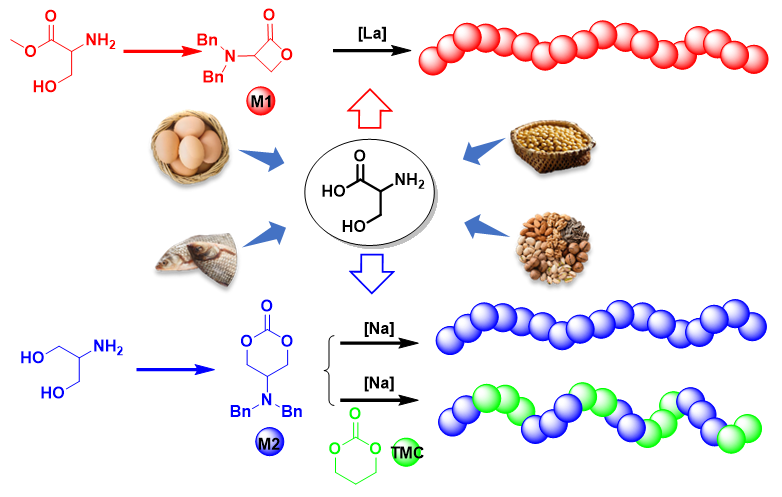
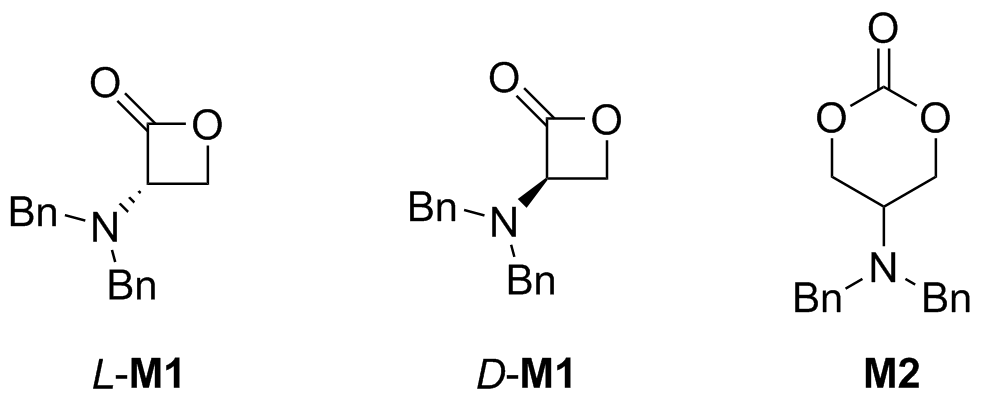
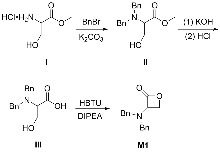
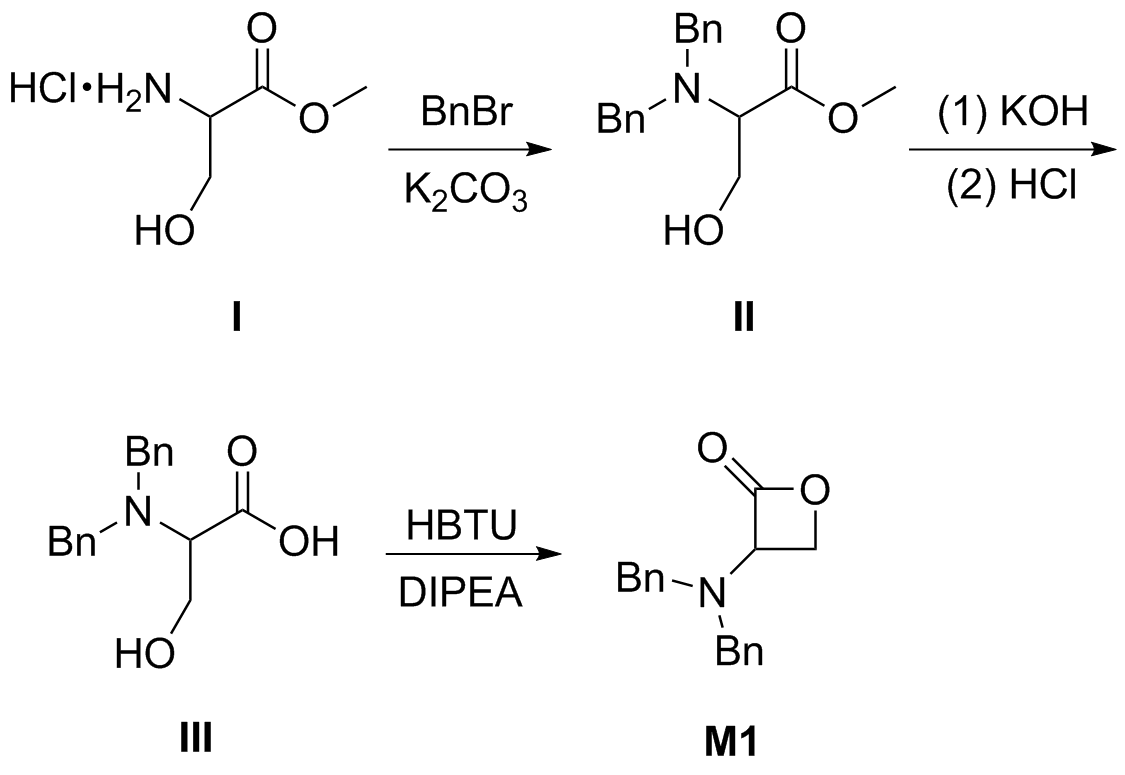
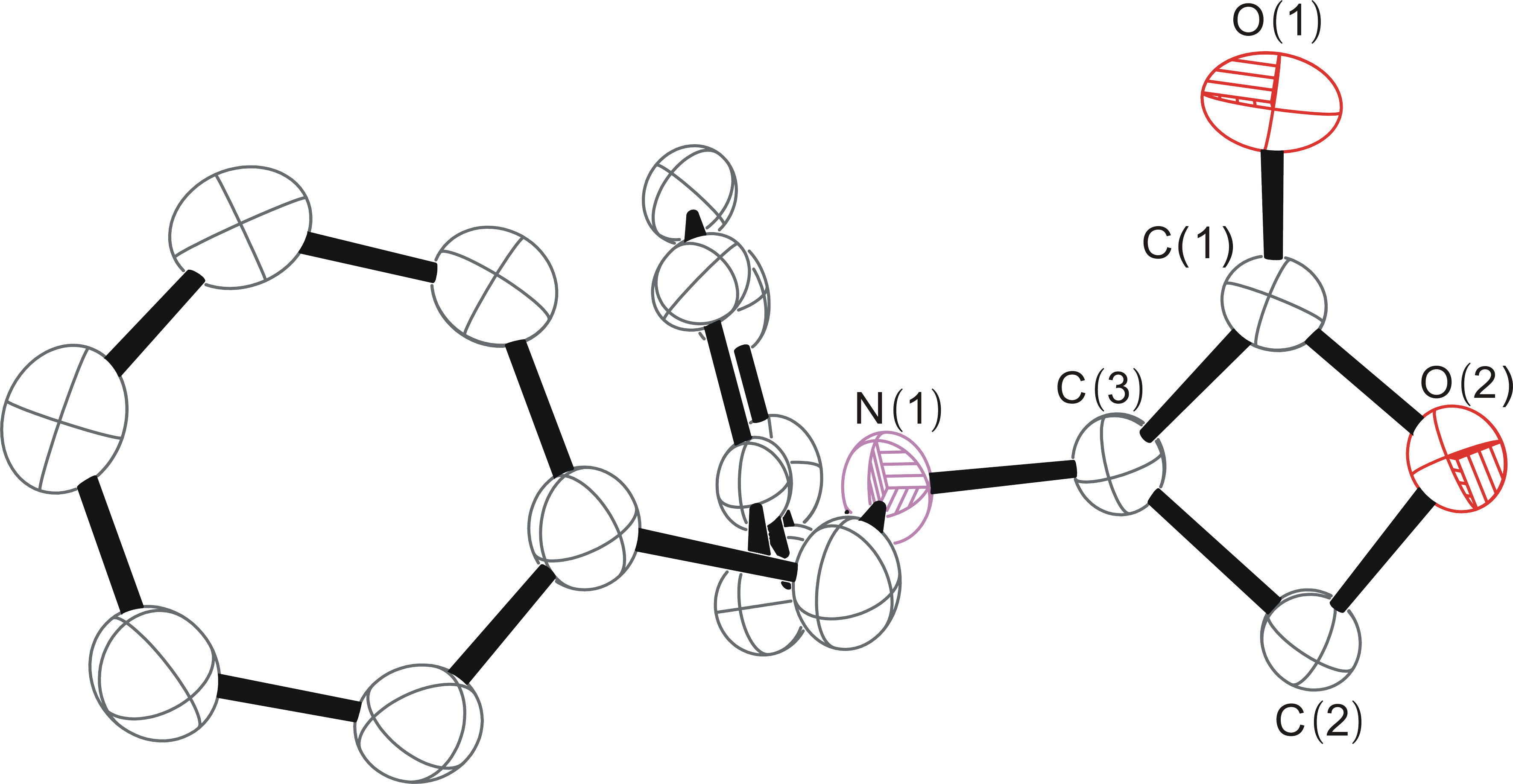
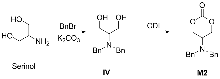
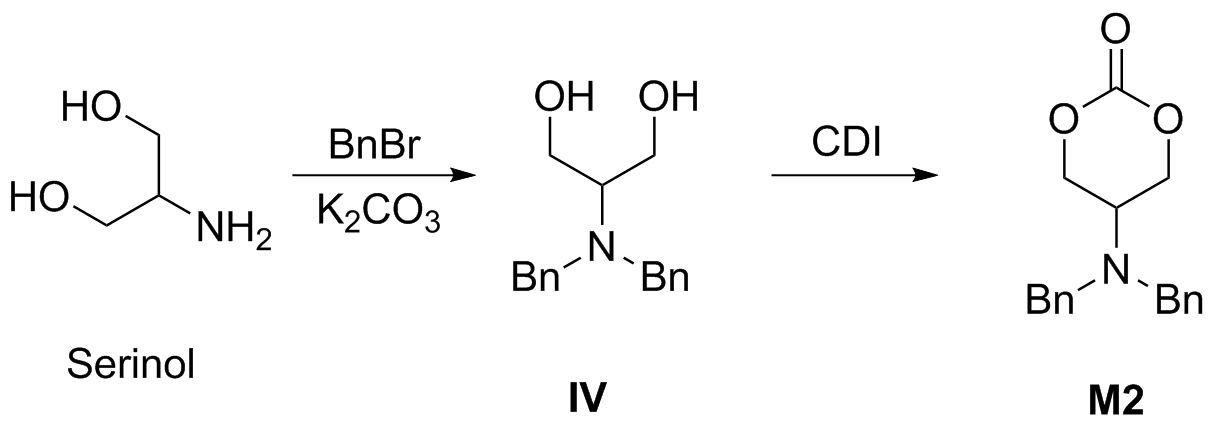
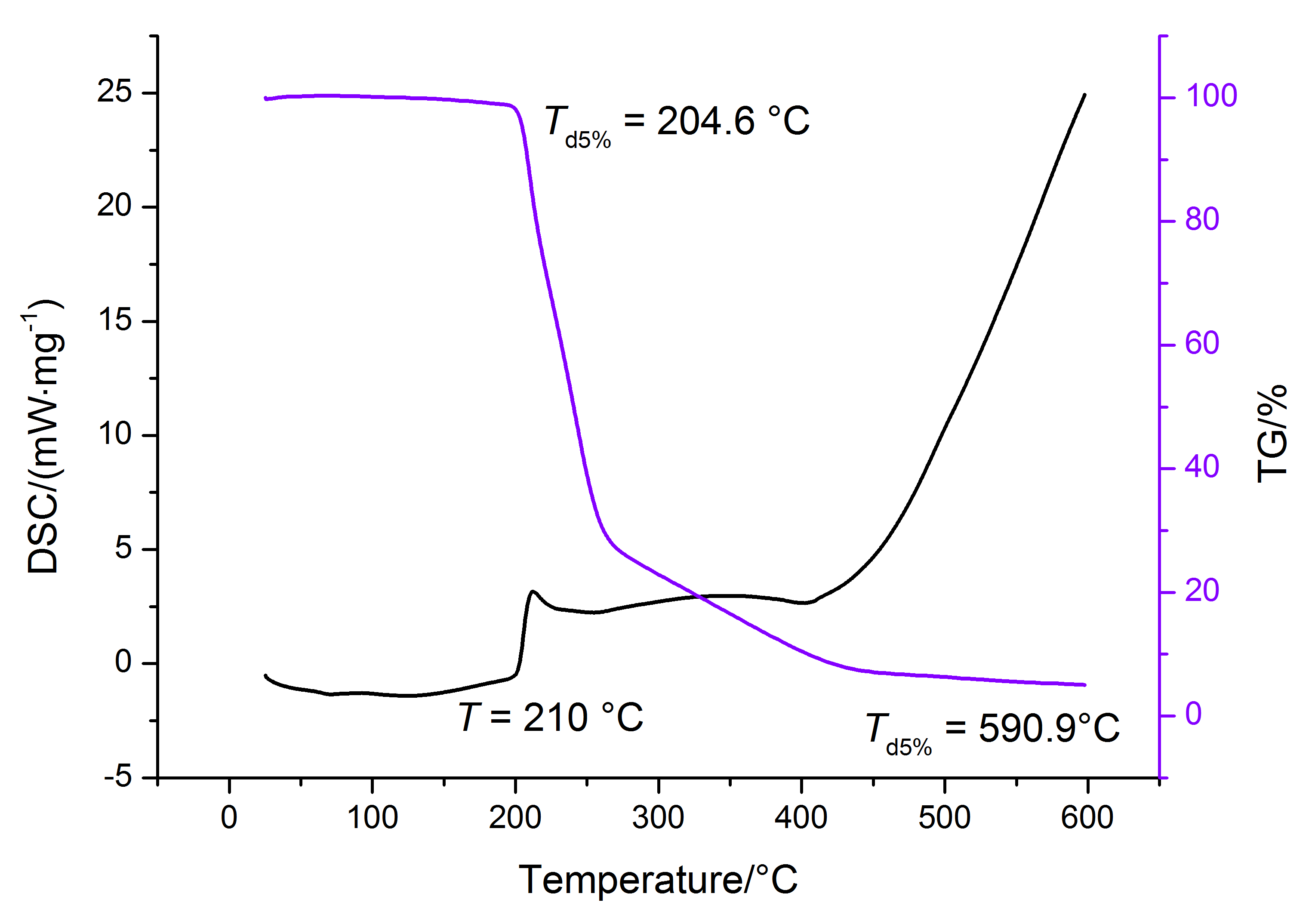
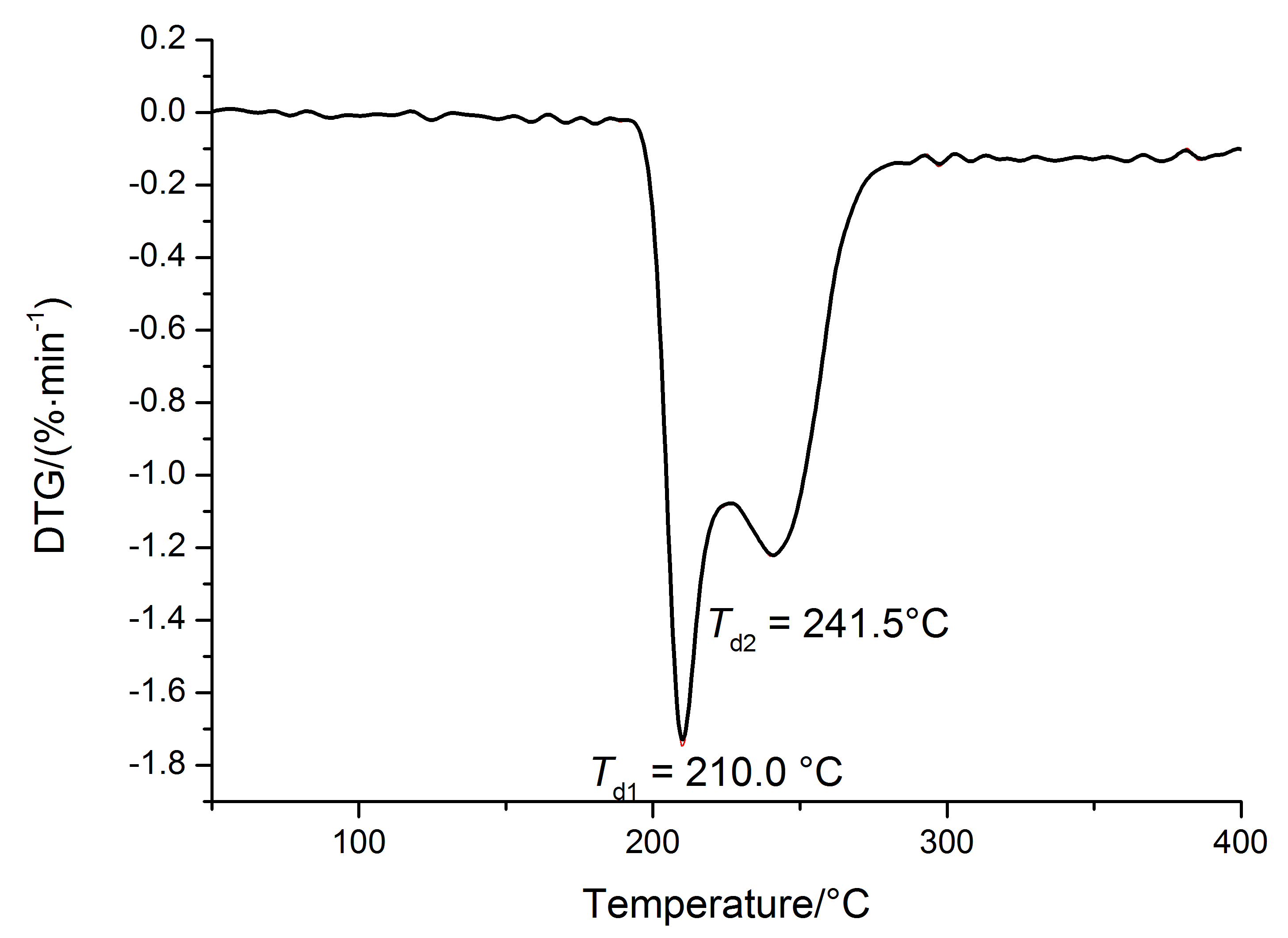
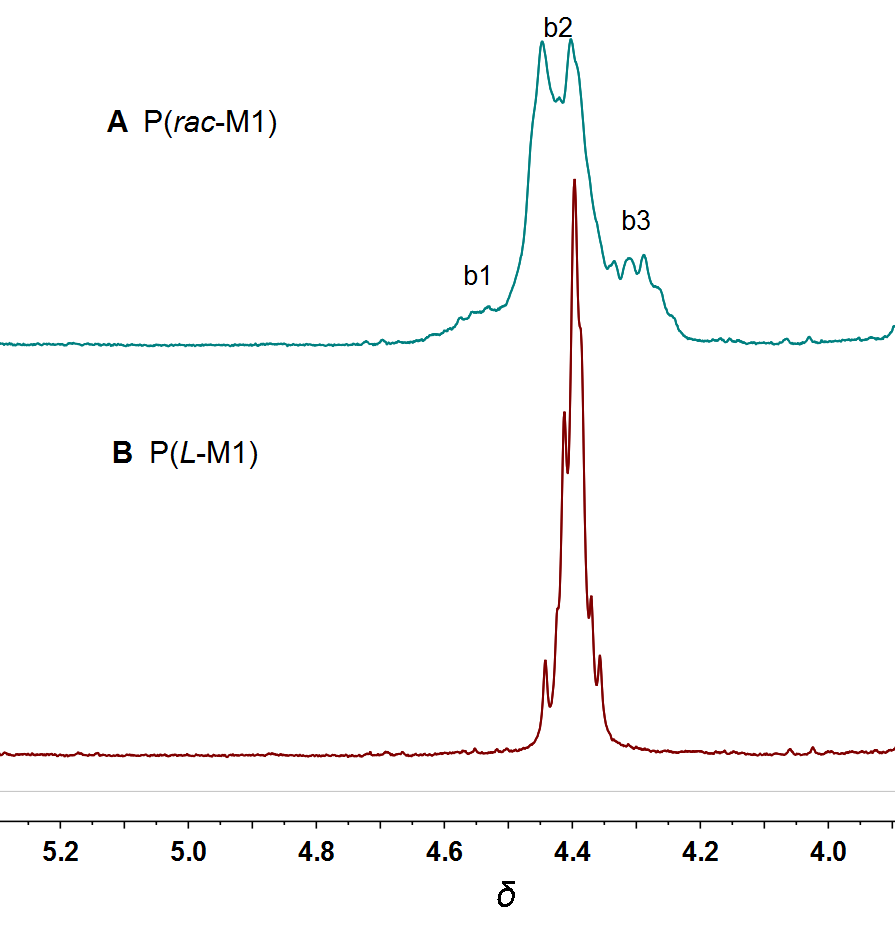
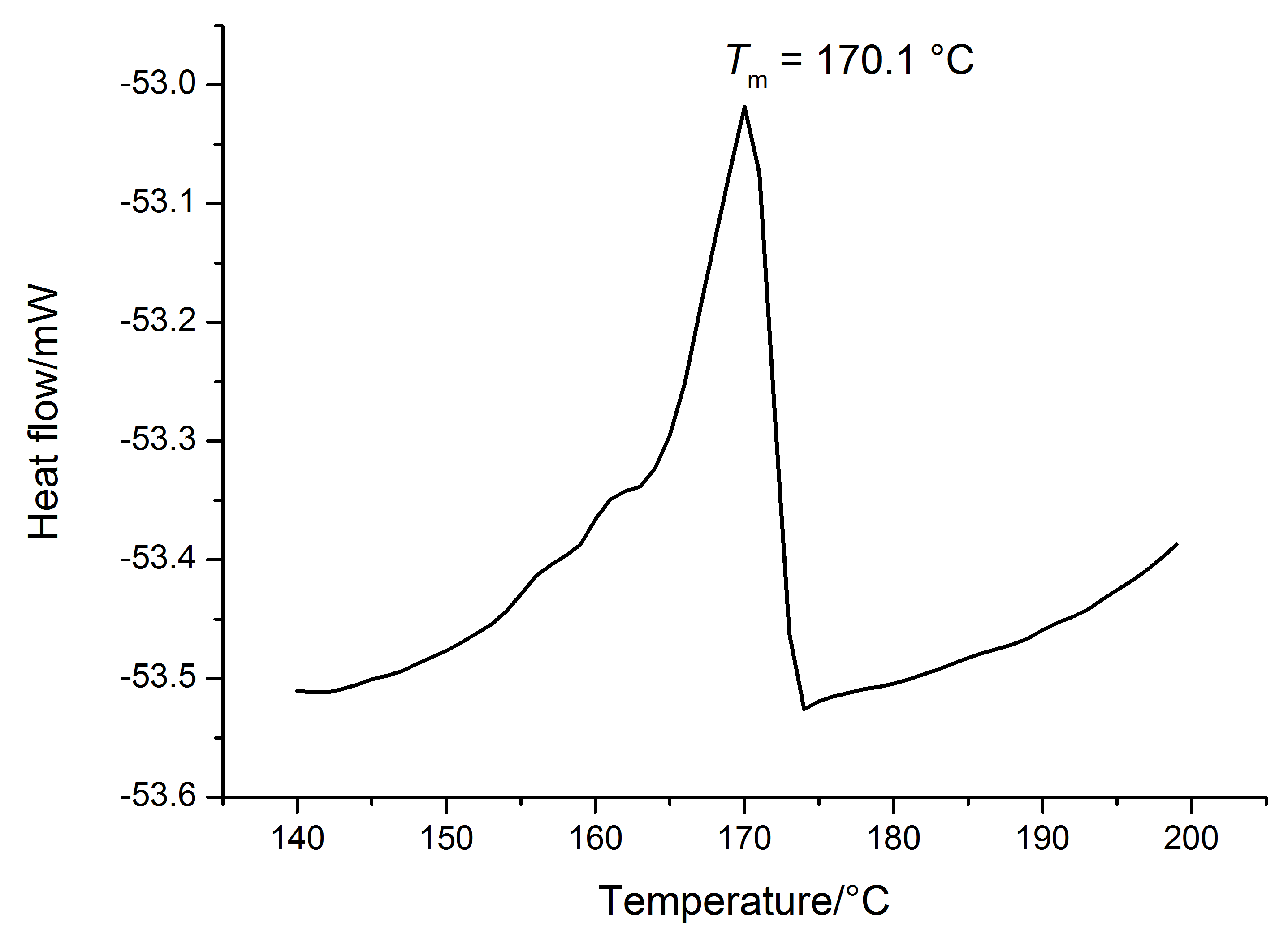
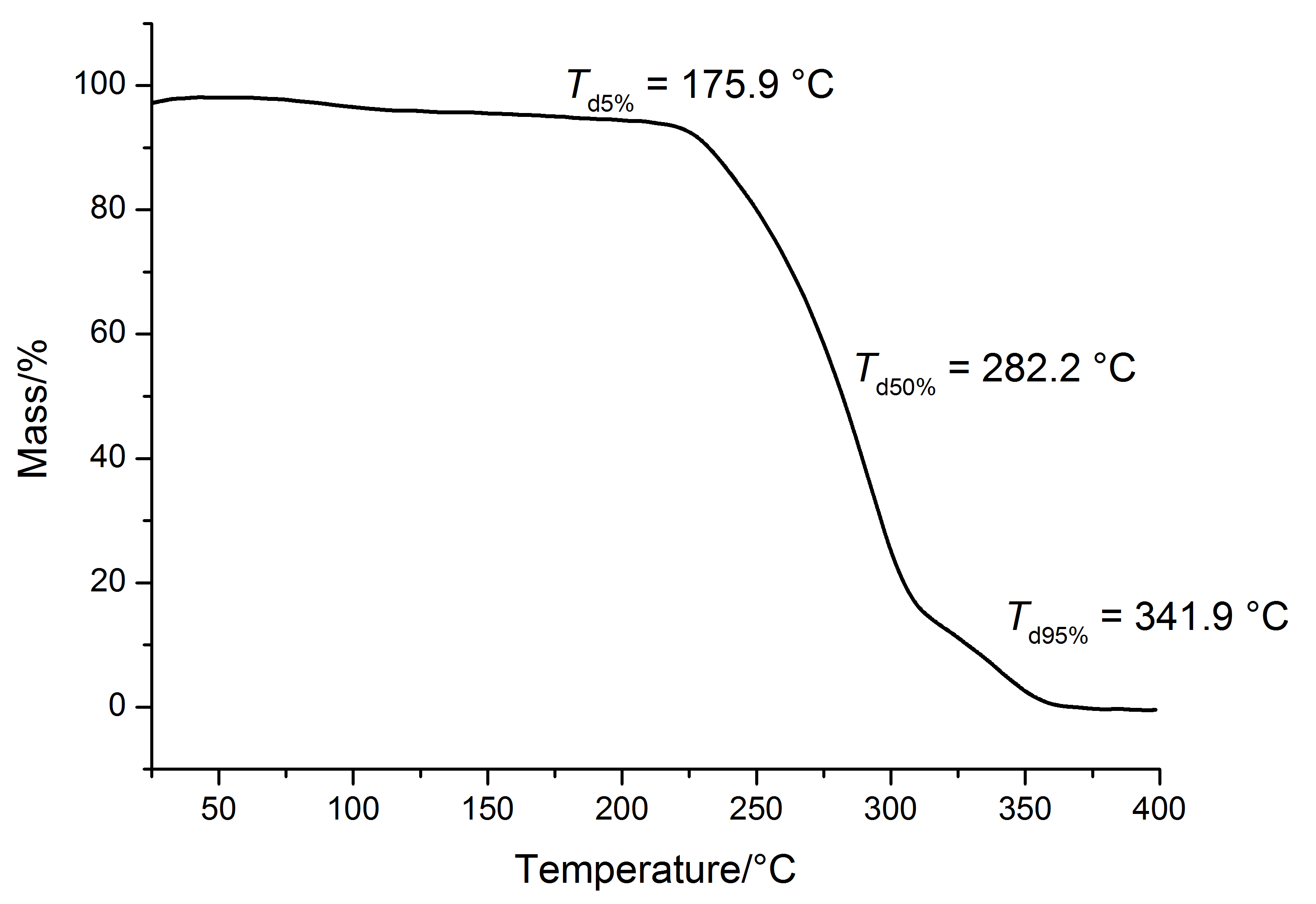
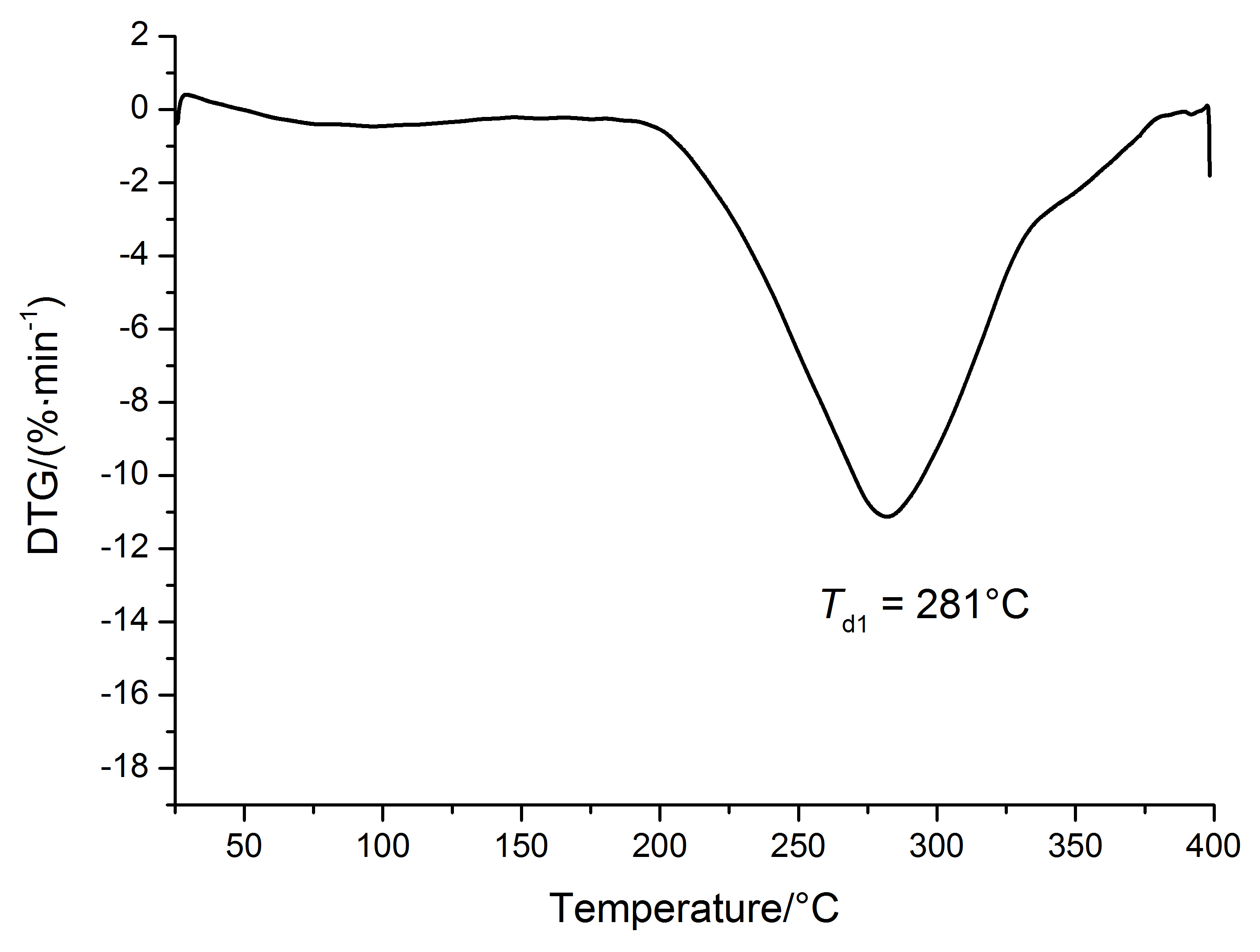
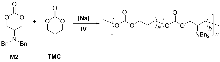
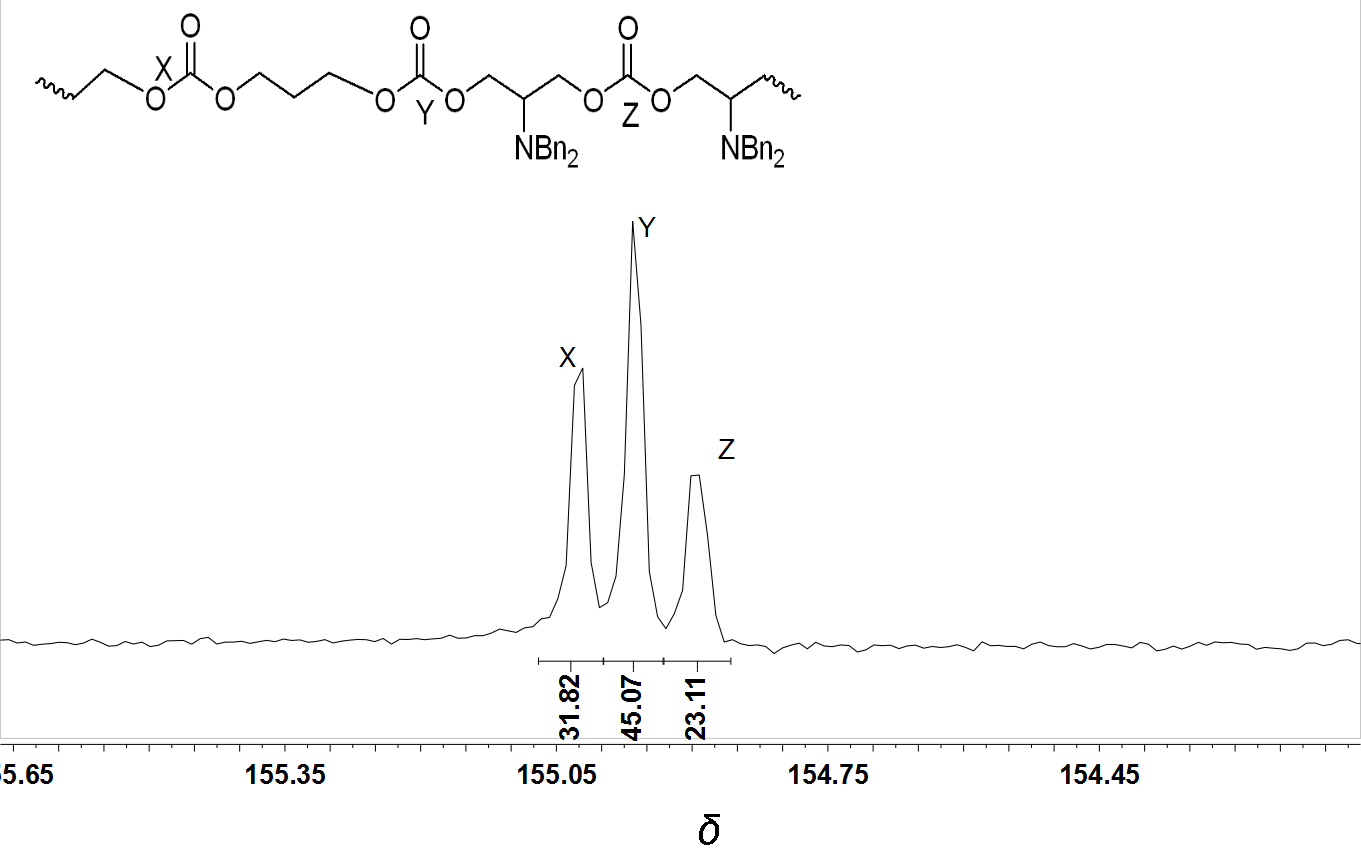
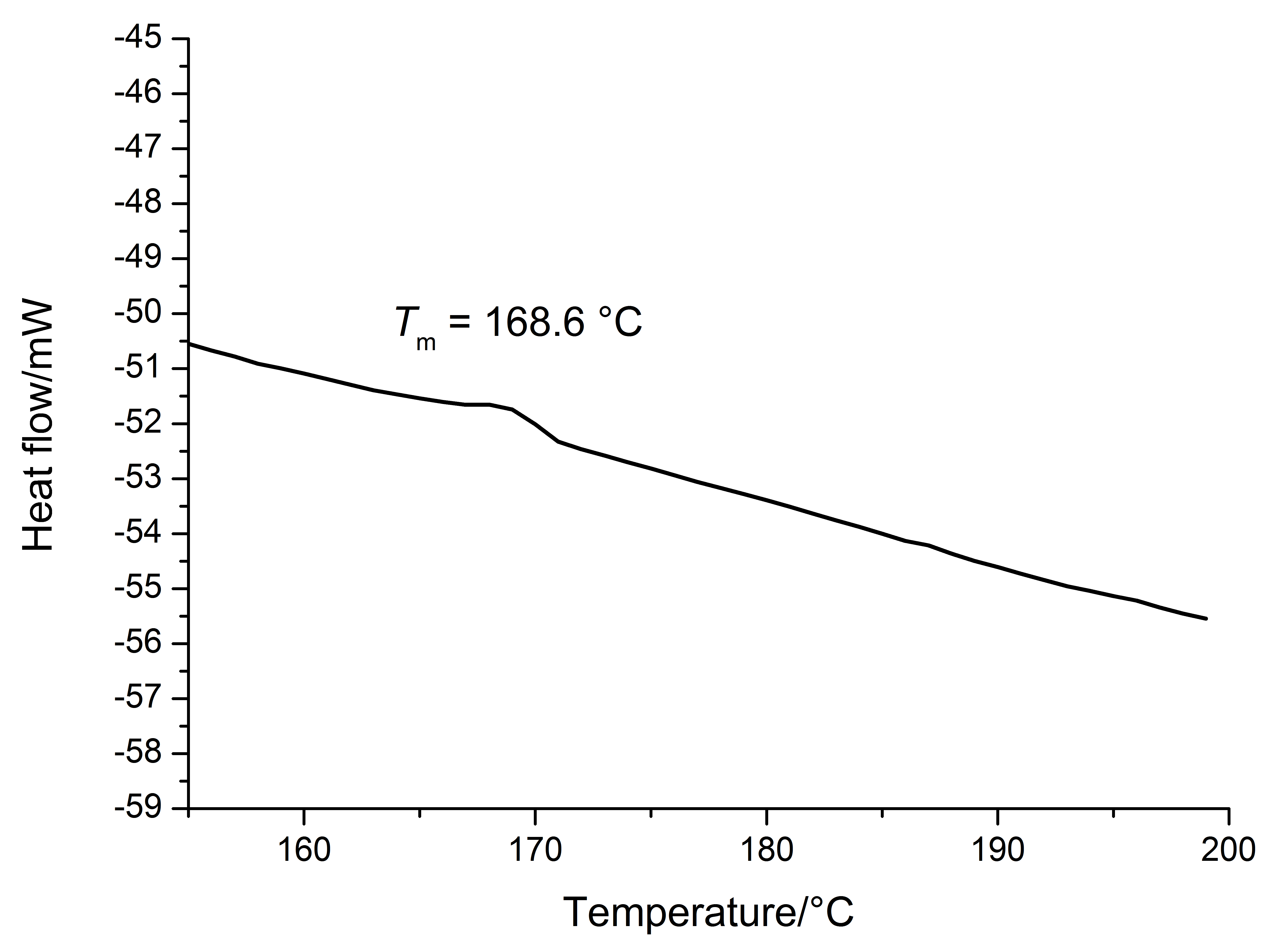
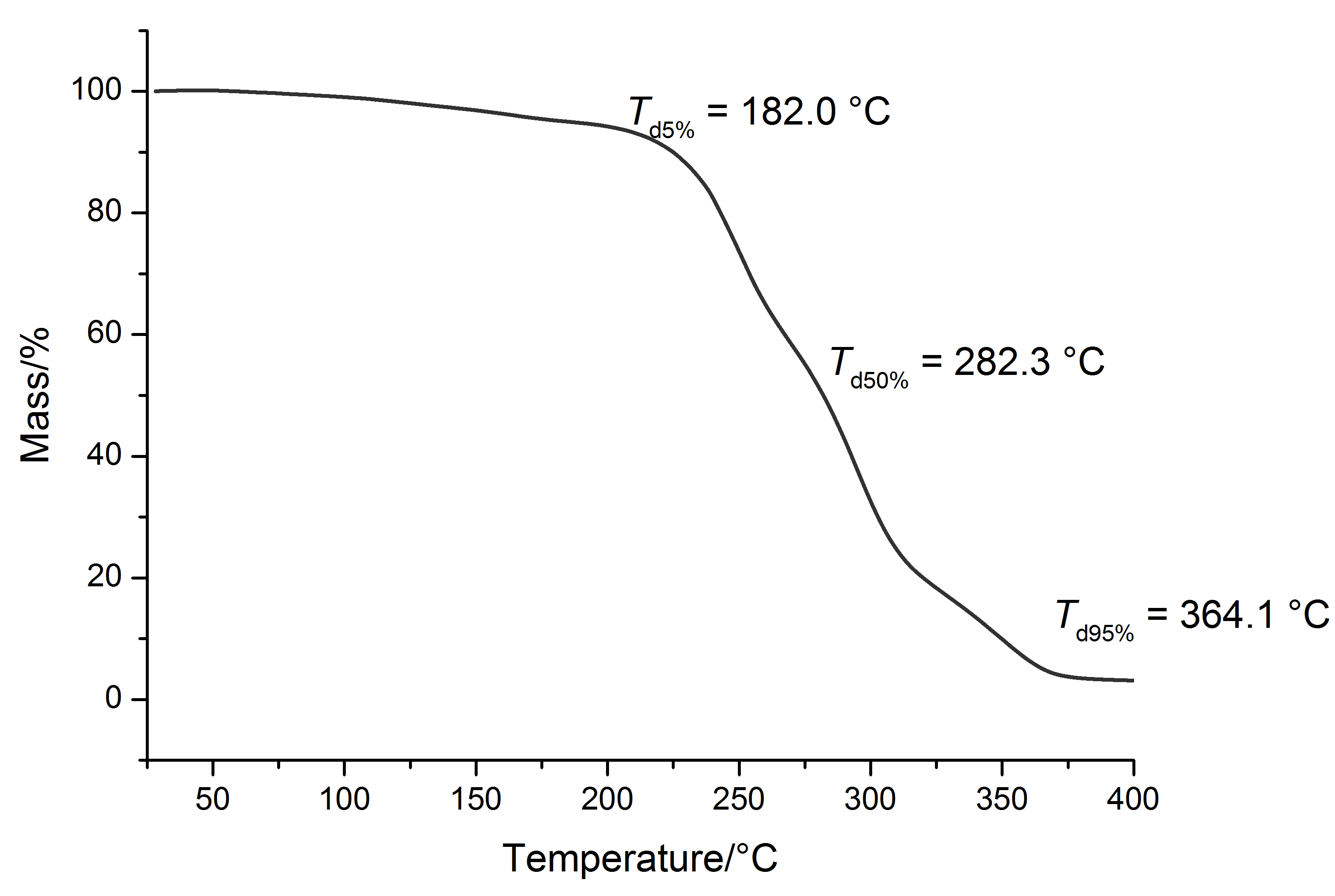
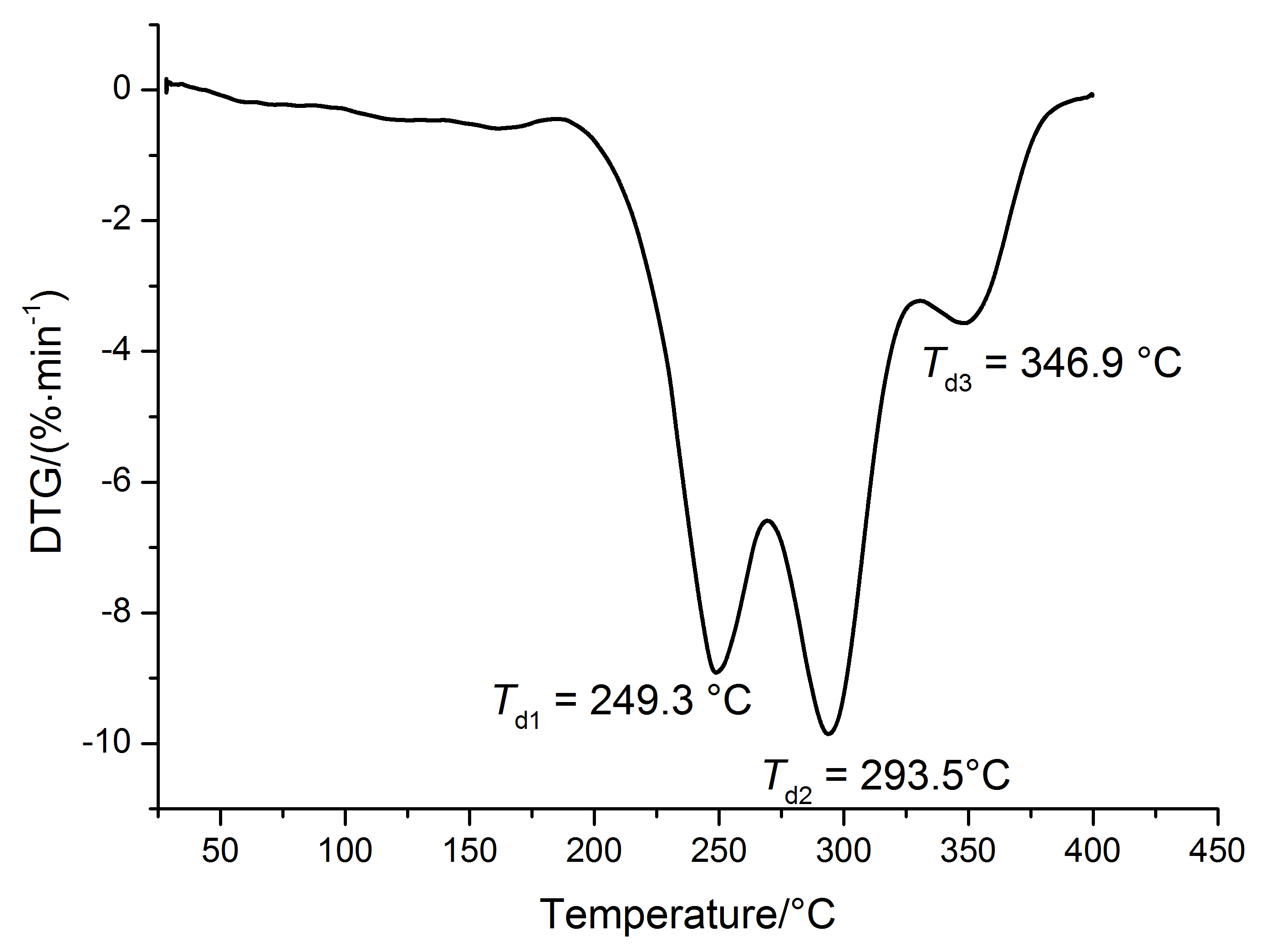
丝氨酸是一种天然氨基酸, 其衍生的聚酯高分子兼具可再生性与可降解性, 是一种环境友好型高分子. 本工作分别以丝氨酸甲酯盐酸盐与丝氨醇为原料, 合成了新型环内酯单体L-和D-3-(二苄基氨基)丙内酯(L-M1、D-M1)以及环碳酸酯单体5-(二苄基氨基)-1,3-二氧杂环己烷-2-酮(M2), 单体合成步骤短、总产率较高(40%~53%). 通过核磁对两类单体进行了鉴定, 并通过X-Ray单晶衍射确定了D-M1的绝对构型. 以稀土配合物La1为催化剂, 成功实现单体M1开环聚合(ROP), 所得聚合物数均分子量接近其理论值、且分子量分布窄(PDI=1.02~1.08), 分子量最高可达1.28×10⁵ g/mol. 热分析实验表明P(D-M1)熔点为210 ℃, 但熔融过程伴随着分解, 且存在两个分解阶段. 以外消旋M1 (rac-M1)为单体时, 得到全同序列为主的聚合物P(rac-M1). 以碱金属配合物Na1为催化剂、N,N-二苄基丝氨醇(IV)为引发剂, 成功实现单体M2开环聚合, 所得聚合物P(M2)熔点最高可达Tm=170.1 ℃, 热失重过程仅呈现一个分解阶段. 碱金属配合物Na1~Na3均能有效催化1,3-二氧杂环己烷-2-酮(TMC)与M2共聚, 并最终得到无规共聚物, 其热分解分三个阶段进行. 以单体M2为原料所得均聚物以及M2与TMC的共聚物的数均分子量均接近相应理论值, 但分子量分布较宽(PDI=1.11~1.74).
黄洋, 马海燕. 丝氨酸衍生环酯的合成及其开环聚合/共聚研究[J]. 化学学报, 2026, 84(7): 1077-1086.
Yang Huang, Haiyan Ma. Synthesis and Ring-Opening Polymerization/Copolymerization of Serine-Derived Cyclic Esters[J]. Acta Chimica Sinica, 2026, 84(7): 1077-1086.
| Run | Monomer | [M1]0/[La]0 | Time /min | Conv.b | Mn,cacldc /(×104) | Mnd /(×104) | PDId |
|---|---|---|---|---|---|---|---|
| /% | |||||||
| 1 | D-M1 | 50/1 | 20 | >99 | 1.34 | 1.16 | 1.08 |
| 2 | D-M1 | 500/1 | 55 | >99 | 13.3 | 12.8 | 1.02 |
| 3 | L-M1 | 500/1 | 53 | >99 | 13.3 | 12.4 | 1.03 |
| 4 | rac-M1 | 500/1 | 60 | >99 | 13.3 | 9.40 | 1.03 |
| 5 | rac-M1 | 1000/1 | 240 | 38 | 10.2 | 6.39 | 1.08 |
| 6e | L-M1+ D-M1 | 500/1 | 32+31 | >99 | 13.3 | 8.33 | 1.03 |
| 7f | D-M1 | 50/1 | 4 | >99 | 1.34 | 8.90 | 2.43 |
| 8f | D-M1 | 500/1 | 20 | >99 | 13.3 | 20.5 | 2.06 |
| Run | Monomer | [M1]0/[La]0 | Time /min | Conv.b | Mn,cacldc /(×104) | Mnd /(×104) | PDId |
|---|---|---|---|---|---|---|---|
| /% | |||||||
| 1 | D-M1 | 50/1 | 20 | >99 | 1.34 | 1.16 | 1.08 |
| 2 | D-M1 | 500/1 | 55 | >99 | 13.3 | 12.8 | 1.02 |
| 3 | L-M1 | 500/1 | 53 | >99 | 13.3 | 12.4 | 1.03 |
| 4 | rac-M1 | 500/1 | 60 | >99 | 13.3 | 9.40 | 1.03 |
| 5 | rac-M1 | 1000/1 | 240 | 38 | 10.2 | 6.39 | 1.08 |
| 6e | L-M1+ D-M1 | 500/1 | 32+31 | >99 | 13.3 | 8.33 | 1.03 |
| 7f | D-M1 | 50/1 | 4 | >99 | 1.34 | 8.90 | 2.43 |
| 8f | D-M1 | 500/1 | 20 | >99 | 13.3 | 20.5 | 2.06 |
| Run | [M2]0/[Na1]0 | Time | Conv.b | Mn,cacldc | Mnd | PDId |
|---|---|---|---|---|---|---|
| /[IV]0 | /s | /% | /(×104) | /(×104) | ||
| 1 | 250/1/2 | 90 | >99 | 3.71 | 3.40 | 1.61 |
| 2e | 250/1/2 | 90 | 96 | 3.56 | 1.45 | 1.35 |
| 3 | 500/1/2 | 40 | 59 | 4.38 | 3.17 | 1.45 |
| 4 | 500/1/2 | 61 | >99 | 7.42 | 6.69 | 1.69 |
| 5f | 500/1/2 | 55 | 95 | 7.05 | 4.45 | 1.59 |
| Run | [M2]0/[Na1]0 | Time | Conv.b | Mn,cacldc | Mnd | PDId |
|---|---|---|---|---|---|---|
| /[IV]0 | /s | /% | /(×104) | /(×104) | ||
| 1 | 250/1/2 | 90 | >99 | 3.71 | 3.40 | 1.61 |
| 2e | 250/1/2 | 90 | 96 | 3.56 | 1.45 | 1.35 |
| 3 | 500/1/2 | 40 | 59 | 4.38 | 3.17 | 1.45 |
| 4 | 500/1/2 | 61 | >99 | 7.42 | 6.69 | 1.69 |
| 5f | 500/1/2 | 55 | 95 | 7.05 | 4.45 | 1.59 |
| Run | Cat. | [M2]0/[TMC]0 | Time | Conv./%b | Mn,cacldc | Mnd | PDId |
|---|---|---|---|---|---|---|---|
| /[Cat.]0/[IV]0 | /s | M2, TMC | /(×104 ) | /(×104 ) | |||
| 1 | Na1 | 250/250/1/2 | 10 | 45, 67 | 2.52 | 3.37 | 1.41 |
| 2 | Na1 | 250/250/1/2 | 25 | 95, >99 | 4.79 | 3.43 | 1.74 |
| 3 | Na1 | 250/250/1/2 | 61 | >99, >99 | 4.99 | 3.61 | 1.76 |
| 4 | Na1 | 375/125/1/2 | 30 | 83, >99 | 5.25 | 4.55 | 1.47 |
| 5 | Na1 | 125/375/1/2 | 20 | 96, 98 | 3.66 | 3.37 | 1.40 |
| 6 | Na2 | 250/250/1/2 | 26 | 95, >99 | 4.79 | 3.88 | 1.49 |
| 7 | Na3 | 250/250/1/2 | 21 | 78, 87 | 3.82 | 2.18 | 1.11 |
| Run | Cat. | [M2]0/[TMC]0 | Time | Conv./%b | Mn,cacldc | Mnd | PDId |
|---|---|---|---|---|---|---|---|
| /[Cat.]0/[IV]0 | /s | M2, TMC | /(×104 ) | /(×104 ) | |||
| 1 | Na1 | 250/250/1/2 | 10 | 45, 67 | 2.52 | 3.37 | 1.41 |
| 2 | Na1 | 250/250/1/2 | 25 | 95, >99 | 4.79 | 3.43 | 1.74 |
| 3 | Na1 | 250/250/1/2 | 61 | >99, >99 | 4.99 | 3.61 | 1.76 |
| 4 | Na1 | 375/125/1/2 | 30 | 83, >99 | 5.25 | 4.55 | 1.47 |
| 5 | Na1 | 125/375/1/2 | 20 | 96, 98 | 3.66 | 3.37 | 1.40 |
| 6 | Na2 | 250/250/1/2 | 26 | 95, >99 | 4.79 | 3.88 | 1.49 |
| 7 | Na3 | 250/250/1/2 | 21 | 78, 87 | 3.82 | 2.18 | 1.11 |
| [1] |
doi: 10.1021/ja9930519 |
| [2] |
doi: 10.1021/ar500121d |
| [3] |
doi: 10.1039/C3GC42604A |
| [4] |
doi: 10.1002/pat.v25.5 |
| [5] |
doi: 10.1039/b820162p |
| [6] |
doi: 10.1016/j.compositesb.2016.09.013 |
| [7] |
doi: 10.1002/pi.v55:6 |
| [8] |
doi: 10.1021/ma951144e |
| [9] |
doi: 10.1021/bm034247a |
| [10] |
doi: 10.1021/acs.macromol.3c01912 |
| [11] |
doi: 10.6023/A22050235 |
|
(蔡中正, 刘野, 陶友华, 朱剑波, 化学学报, 2022, 80, 1165.)
doi: 10.6023/A22050235 |
|
| [12] |
doi: 10.1002/marc.v39.12 |
| [13] |
doi: 10.1021/acs.macromol.0c00940 |
| [14] |
doi: 10.1021/jacs.1c00902 |
| [15] |
doi: 10.1021/acs.macromol.0c00787 |
| [16] |
doi: 10.1021/acs.macromol.0c00212 pmid: 34334815 |
| [17] |
doi: 10.1039/D1PY00561H |
| [18] |
doi: 10.1021/jacs.1c10162 |
| [19] |
doi: 10.1039/D1PY01441B |
| [20] |
doi: 10.1002/anie.v61.16 |
| [21] |
doi: 10.1002/asia.v18.7 |
| [22] |
doi: 10.1039/D2CC01322C |
| [23] |
doi: 10.6023/A25050150 |
|
(黄皓毅, 谢敏, 黄玉婷, 崔嘉豪, 蔡中正, 朱剑波, 化学学报, 2025, 83, 810.)
doi: 10.6023/A25050150 |
|
| [24] |
doi: 10.1039/D5SC06353A |
| [25] |
doi: 10.1021/acsmacrolett.7b00362 |
| [26] |
doi: 10.1021/acs.macromol.3c01027 |
| [27] |
doi: 10.1021/jacs.5c16382 |
| [28] |
doi: 10.1007/s11426-024-2051-x |
| [29] |
doi: 10.1002/anie.v62.23 |
| [30] |
doi: 10.1002/anie.v65.8 |
| [31] |
doi: 10.1016/j.tibtech.2018.02.001 |
| [32] |
doi: 10.1021/acs.jafc.5c07884 |
| [33] |
doi: 10.1021/ol047761h |
| [34] |
doi: 10.1016/j.tet.2007.09.004 |
| [35] |
|
|
(马海燕, 黄洋, CN 116041375, 2023 [Chem. Abstr. 2023, 183, 231531 ]
|
|
| [36] |
doi: 10.1021/jacs.6c01637 |
| [37] |
|
|
(马海燕, 黄洋, 李和华, CN 116874414, 2023 [Chem. Abstr. 2023, 185, 30640 ]
|
|
| [38] |
doi: 10.1002/pola.v62.13 |
| [39] |
doi: 10.1039/c2cc31716h |
| [40] |
doi: 10.1039/C6RA07374C |
| [41] |
doi: 10.1021/acsapm.2c01056 |
| [1] | 李牧舟, 徐婷婷, 胡欣, 孙冰, 朱宁. 连续流聚合诱导自组装[J]. 化学学报, 2026, 84(7): 1153-1164. |
| [2] | 黄皓毅, 谢敏, 黄玉婷, 崔嘉豪, 蔡中正, 朱剑波. 螺环-salen配合物催化开环聚合制备立构规整、功能化聚羟基脂肪酸酯★[J]. 化学学报, 2025, 83(8): 810-815. |
| [3] | 石力双, 戴雅男, 伍伟豪, 李世辉, 牟泽怀. 苯并己内酯的开环聚合及其与环氧化合物共聚合研究[J]. 化学学报, 2025, 83(12): 1488-1497. |
| [4] | 王玉娜, 王超, 马海燕. 苯并噁唑取代氨基酚氧基锌氯化物催化外消旋丙交酯开环聚合研究[J]. 化学学报, 2025, 83(1): 25-35. |
| [5] | 王海成, 马海燕. 爪形氨基酚氧基锌氯化物催化环氧化物和酸酐共聚研究[J]. 化学学报, 2024, 82(6): 577-588. |
| [6] | 易敬霖, 陈茂. 三氟氯乙烯与甲基异丙烯基醚的光诱导共聚反应★[J]. 化学学报, 2024, 82(2): 126-131. |
| [7] | 王镜焱, 马海燕. 2,6-二亚甲基吡啶桥联双(氨基酚氧基)钠、钾配合物的合成及催化外消旋丙交酯开环聚合研究[J]. 化学学报, 2024, 82(10): 1058-1068. |
| [8] | 李西安, 李孝坤. 基于温度诱导相转变共聚物和导电聚合物的自隔断超级电容器[J]. 化学学报, 2023, 81(5): 511-519. |
| [9] | 杨贯文, 伍广朋. 模块化双功能有机硼氮和硼磷催化体系的设计及其催化转化★[J]. 化学学报, 2023, 81(11): 1551-1565. |
| [10] | 汪洋, 向焌钧, 葛从伍, 高希珂. 2,6-薁和3,4-丙撑二氧噻吩共聚物的主链结构调控及性质研究★[J]. 化学学报, 2023, 81(10): 1341-1349. |
| [11] | 龚政, 张意, 吕华, 崔树勋. 脯氨酸聚酯的单链力学性质[J]. 化学学报, 2022, 80(1): 7-10. |
| [12] | 李卫华. 桥连对嵌段共聚物自组装的调控[J]. 化学学报, 2021, 79(2): 133-138. |
| [13] | 江金辉, 朱云卿, 杜建忠. 开环聚合诱导自组装的挑战与展望[J]. 化学学报, 2020, 78(8): 719-724. |
| [14] | 李荣烨, Khiman Mehul, 盛力, 孙静. 两亲性聚氨基酸三嵌段共聚物构筑pH/溶剂可控多级纳米结构[J]. 化学学报, 2020, 78(11): 1235-1239. |
| [15] | 崔惠娜, 邱枫, 彭娟. 一种基于聚噻吩-聚硒吩全共轭嵌段共聚物的合成及性质研究[J]. 化学学报, 2018, 76(9): 691-700. |
| 阅读次数 | ||||||
|
全文 |
|
|||||
|
摘要 |
|
|||||
