

化学学报 ›› 2026, Vol. 84 ›› Issue (9): 1442-1451.DOI: 10.6023/A26040099 上一篇 下一篇
研究论文
张恩泽, 田济华, 沈一诺, 曾绍红, 王叶梅*( ), 郑芬芬*()
投稿日期:2026-07-10
发布日期:2026-08-17
通讯作者:
王叶梅, 郑芬芬
基金资助:
Enze Zhang, Jihua Tian, Yinuo Shen, Shaohong Zeng, Yemei Wang*(), Fenfen Zheng*()
Received:2026-07-10
Published:2026-08-17
Contact:
Yemei Wang, Fenfen Zheng
Supported by:文章分享
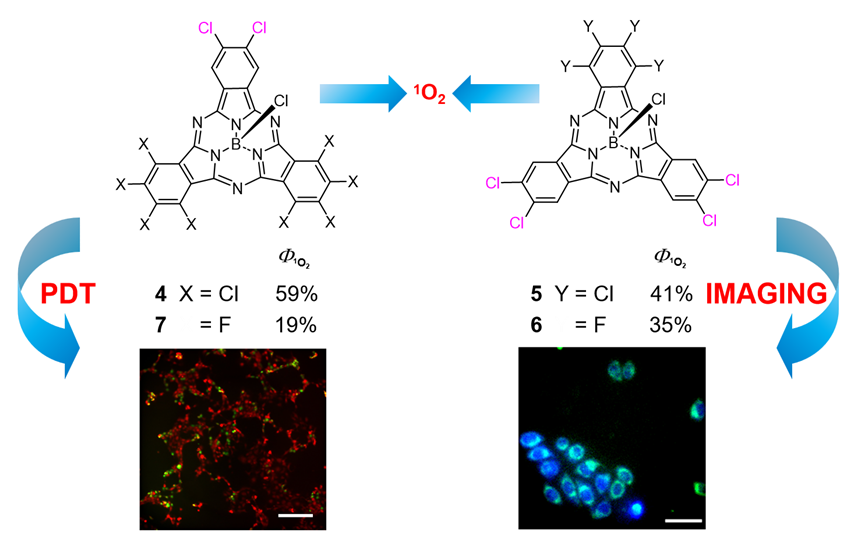
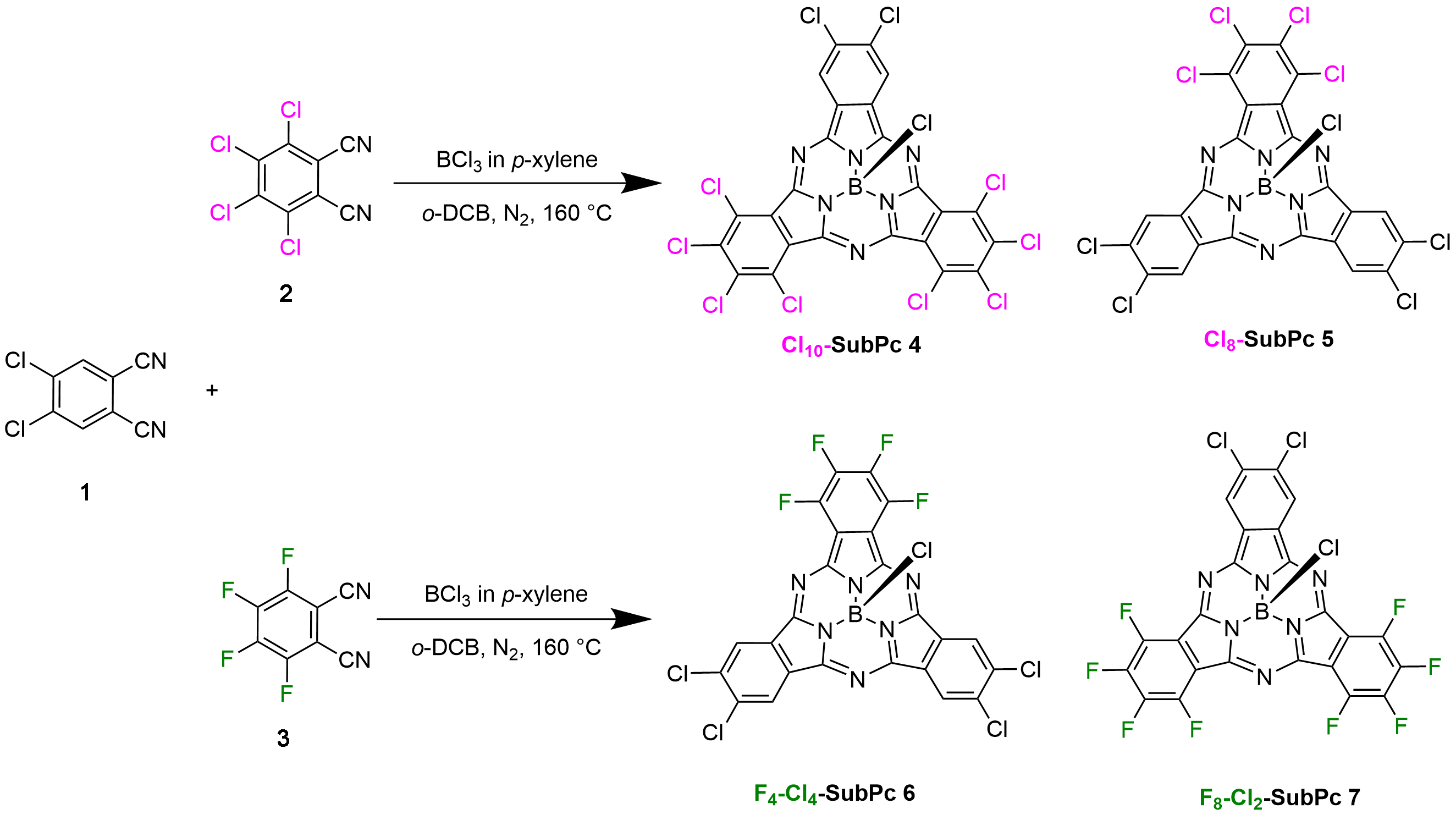
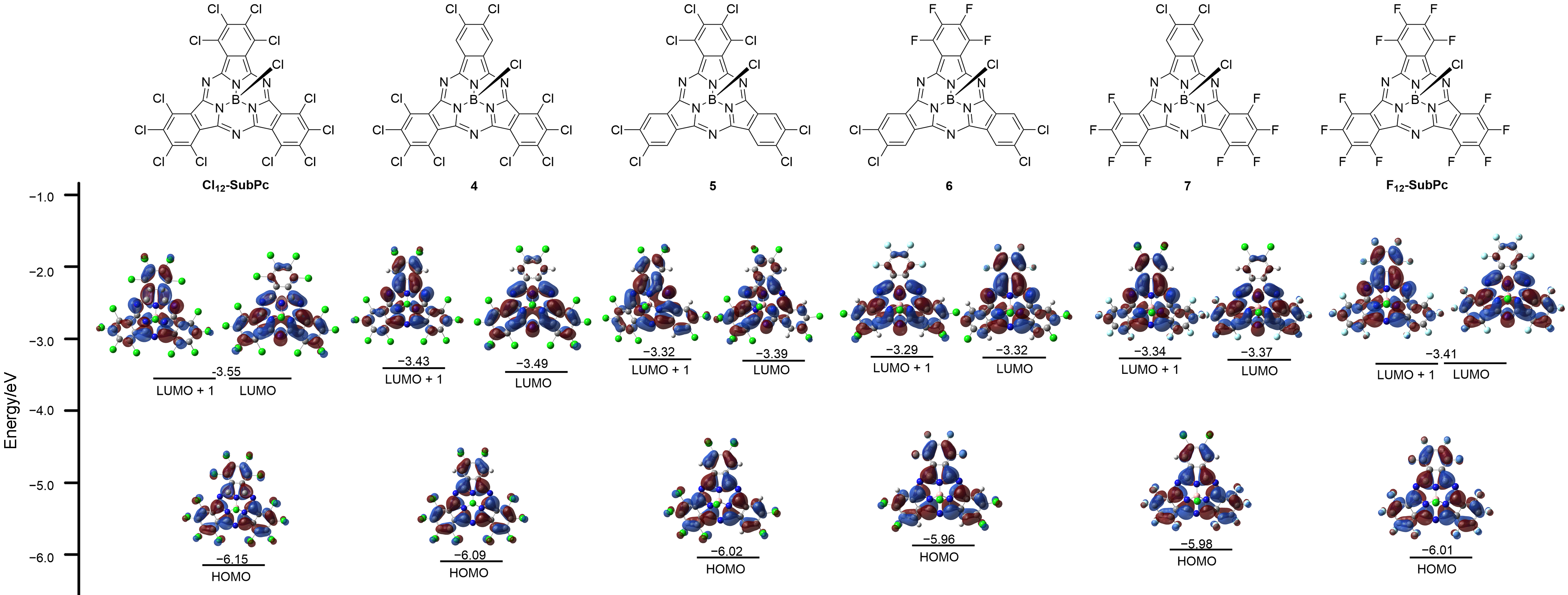
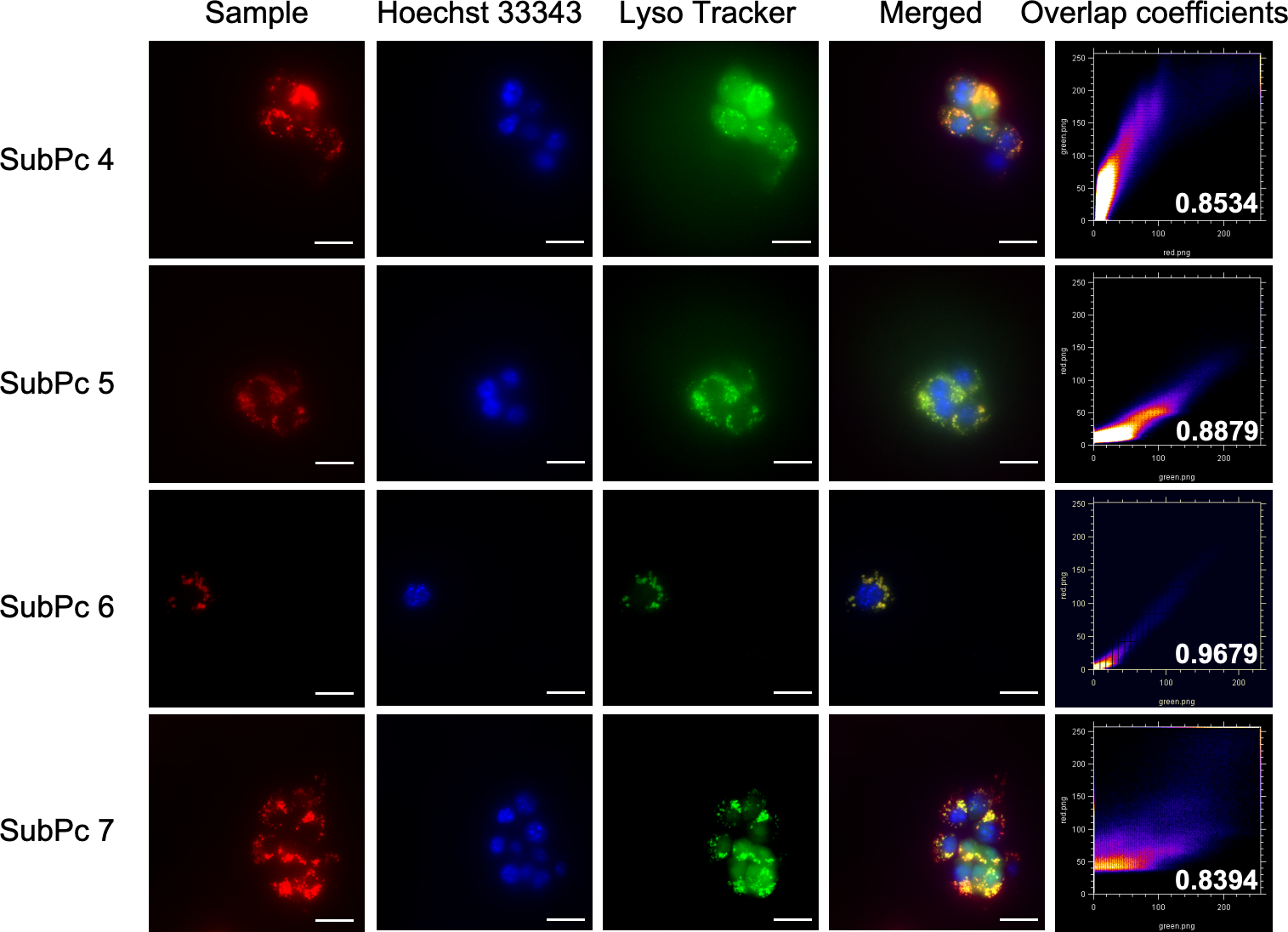
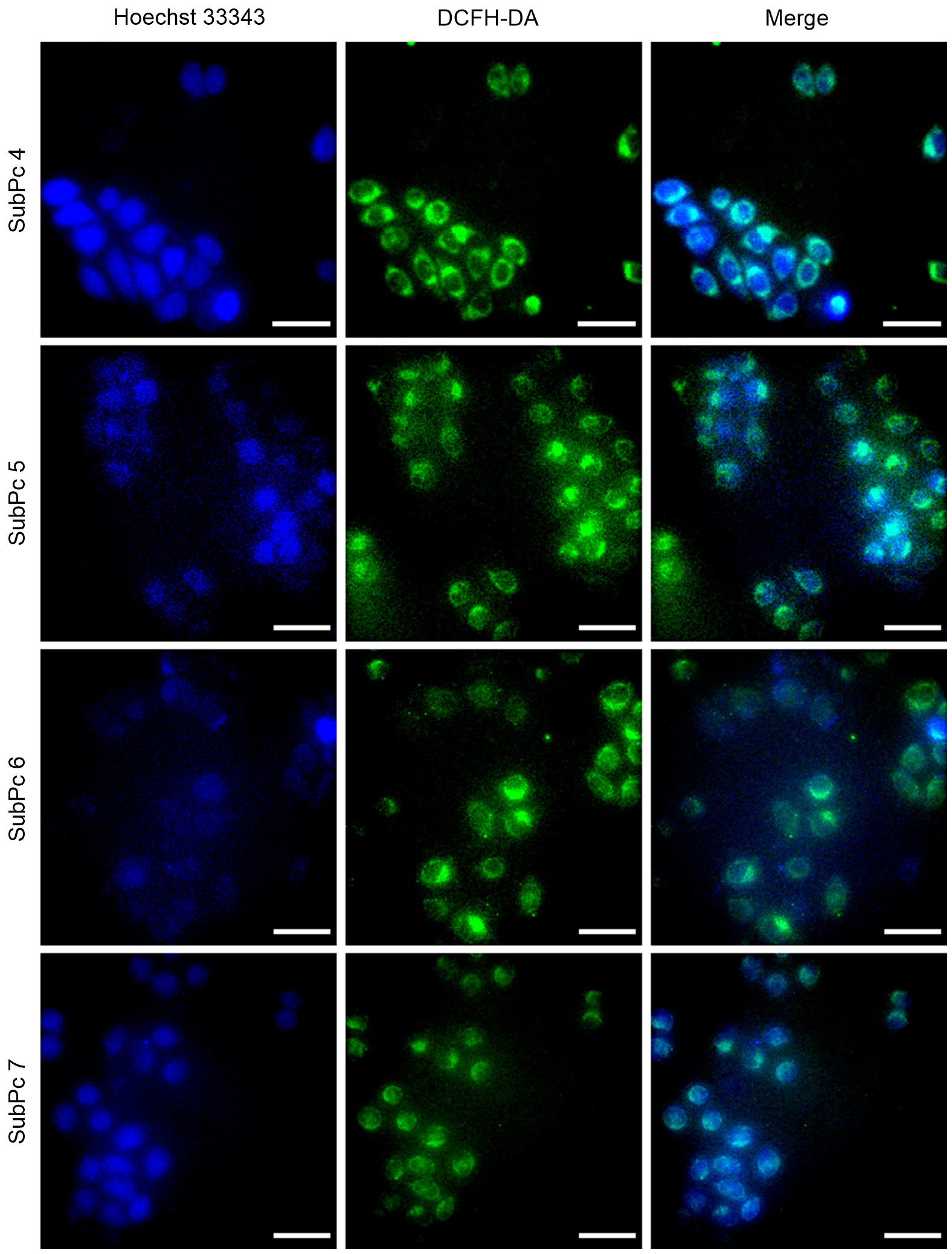
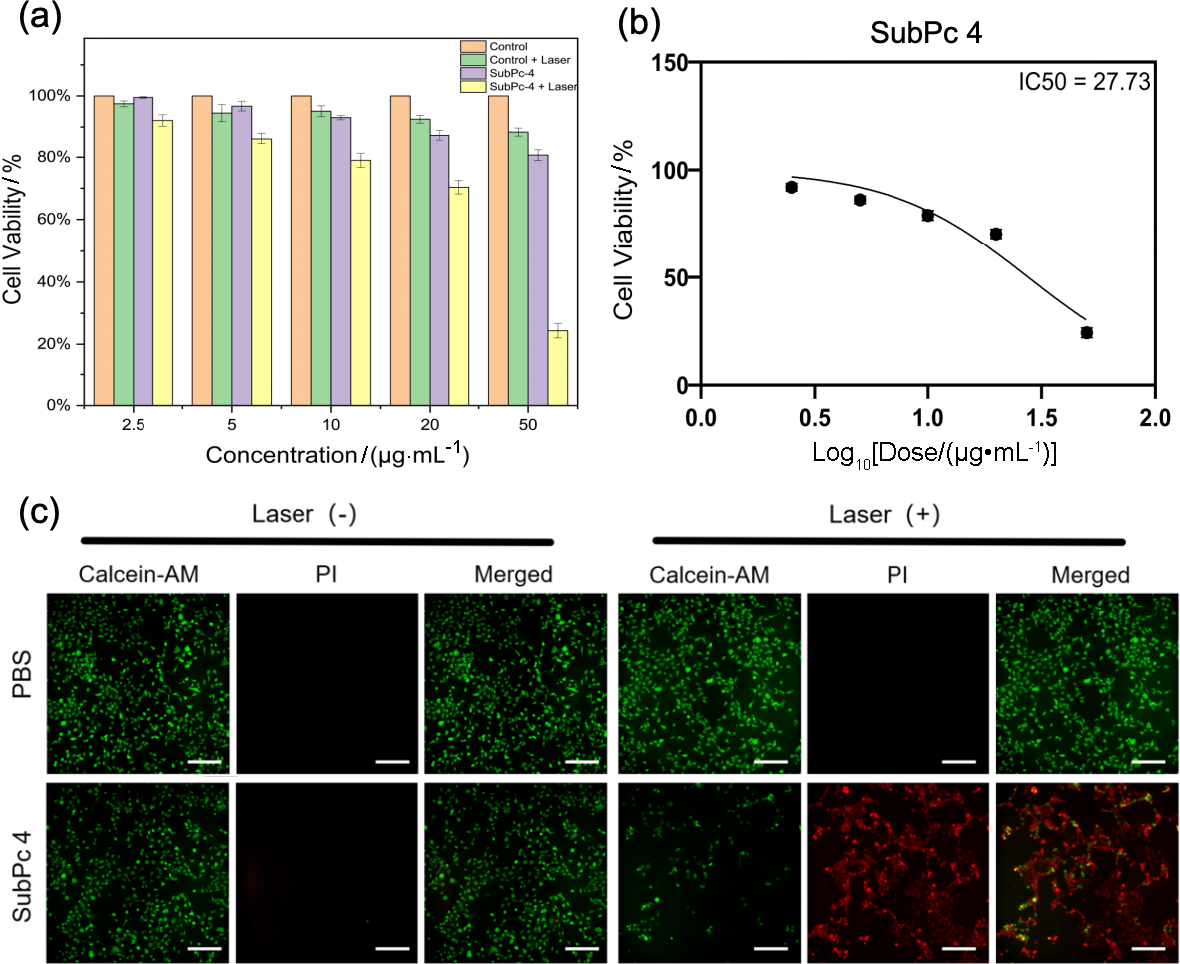
光动力疗法(PDT)是前景广阔的肿瘤靶向治疗技术, 开发高性能光敏染料是其发展的核心关键. 亚酞菁(SubPc)作为性能优异的大环光敏染料, 在肿瘤PDT治疗中极具应用价值. 本研究通过一锅法制备四种氟氯梯度取代低对称亚酞菁(SubPc 4~7), 结合理论计算系统探究卤素取代对其光物理及抗肿瘤性能的调控规律. 结果表明, 随氯取代比例升高, 分子吸收与荧光波长持续红移; 荧光量子产率与单线态氧产率呈负相关, 多氯累加重原子效应可有效促进系间窜越, 提升光敏能力. 该系列分子具有良好水相光学稳定性, 可靶向肿瘤细胞溶酶体并产生活性氧. 体外实验证实SubPc 4肿瘤细胞杀伤率达82%, 小鼠模型及组织切片实验进一步验证其优异的体内PDT抑瘤效果. 本研究为亚酞菁靶向光动力抗肿瘤应用提供了重要实验依据.
张恩泽, 田济华, 沈一诺, 曾绍红, 王叶梅, 郑芬芬. 混合卤代亚酞菁的设计合成及其溶酶体靶向光动力治疗研究[J]. 化学学报, 2026, 84(9): 1442-1451.
Enze Zhang, Jihua Tian, Yinuo Shen, Shaohong Zeng, Yemei Wang, Fenfen Zheng. Design and Synthesis of Mixed Halogenated Subphthalocyanines for Lysosome-Targeted Photodynamic Therapy[J]. Acta Chimica Sinica, 2026, 84(9): 1442-1451.
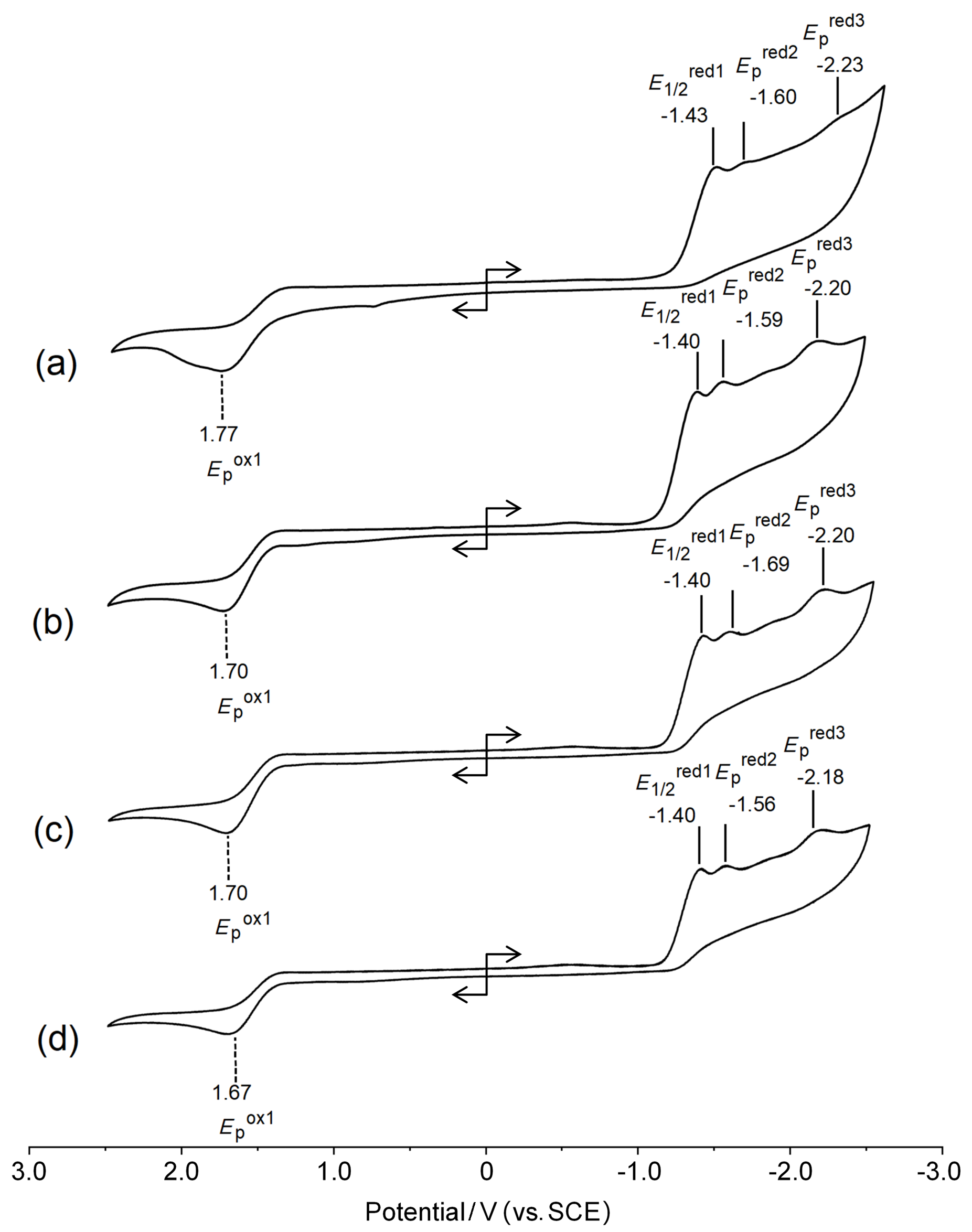
| Eox/V | Ered/V | ERa | H-L (V)b | |||
|---|---|---|---|---|---|---|
| 1st | 2nd | 3rd | ||||
| 4 | 1.77 | -1.43 | -1.60 | -2.23 | 0.17 | 3.20 |
| 5 | 1.70 | -1.40 | -1.59 | -2.20 | 0.19 | 3.10 |
| 6 | 1.70 | -1.40 | -1.69 | -2.20 | 0.29 | 3.10 |
| 7 | 1.67 | -1.40 | -1.56 | -2.18 | 0.16 | 3.07 |
| Eox/V | Ered/V | ERa | H-L (V)b | |||
|---|---|---|---|---|---|---|
| 1st | 2nd | 3rd | ||||
| 4 | 1.77 | -1.43 | -1.60 | -2.23 | 0.17 | 3.20 |
| 5 | 1.70 | -1.40 | -1.59 | -2.20 | 0.19 | 3.10 |
| 6 | 1.70 | -1.40 | -1.69 | -2.20 | 0.29 | 3.10 |
| 7 | 1.67 | -1.40 | -1.56 | -2.18 | 0.16 | 3.07 |
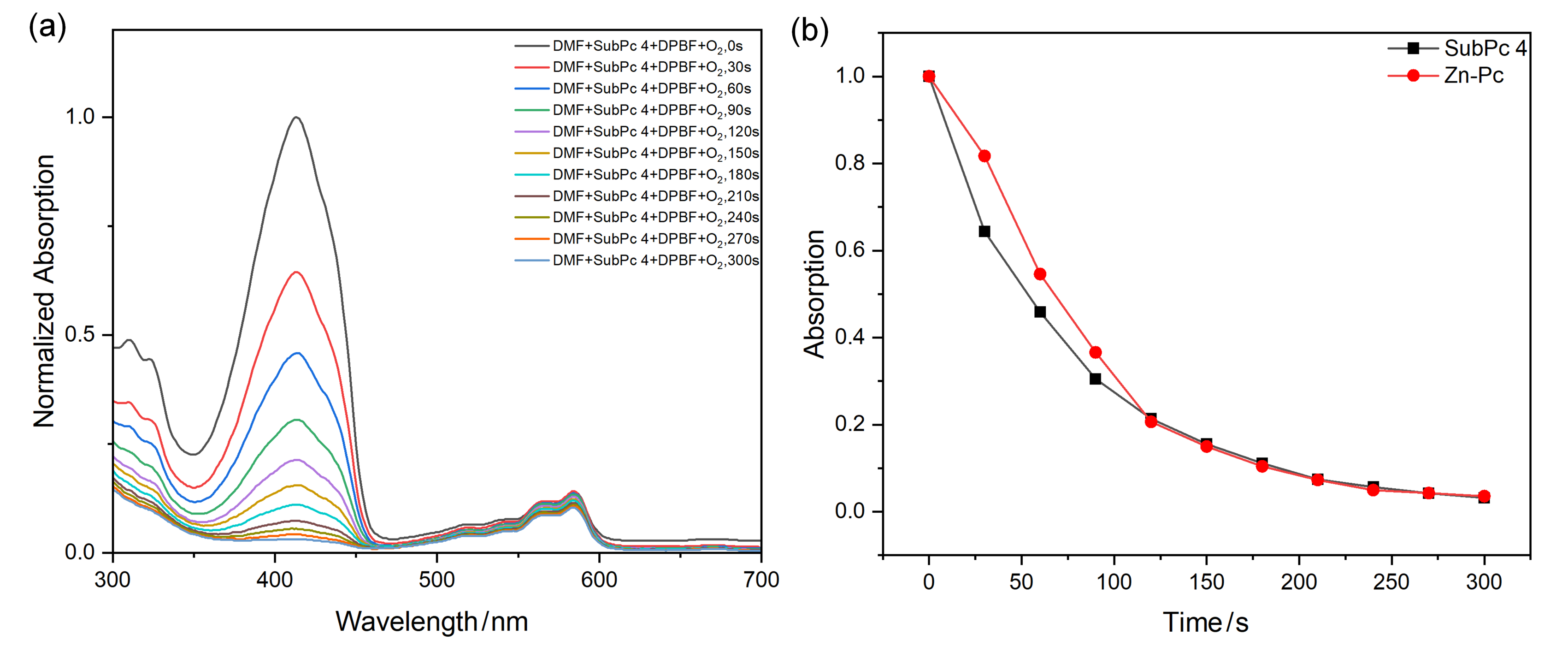
| 氟原子数 | 氯原子数 | Φ△/% | ΦF/% | ||
|---|---|---|---|---|---|
| 4 | Cl10SubPc | — | 10 | 59.29 | 17.25 |
| 5 | Cl8SubPc | — | 8 | 41.56 | 19.99 |
| 6 | F4Cl4SubPc | 4 | 4 | 35.81 | 28.45 |
| 7 | F8Cl2SubPc | 8 | 2 | 19.73 | 32.59 |
| 氟原子数 | 氯原子数 | Φ△/% | ΦF/% | ||
|---|---|---|---|---|---|
| 4 | Cl10SubPc | — | 10 | 59.29 | 17.25 |
| 5 | Cl8SubPc | — | 8 | 41.56 | 19.99 |
| 6 | F4Cl4SubPc | 4 | 4 | 35.81 | 28.45 |
| 7 | F8Cl2SubPc | 8 | 2 | 19.73 | 32.59 |

| [1] |
|
| [2] |
doi: 10.1038/s41392-025-02140-y |
| [3] |
|
| [4] |
doi: 10.1001/archderm.1960.01580040026005 |
| [5] |
doi: 10.1002/adma.v26.31 |
| [6] |
doi: 10.6023/A24120380 |
|
(于千水, 戚聪, 顾顺心, 杨欣达, 姜琴, 魏荣斌, 施鹏飞, 化学学报, 2025, 83, 579.)
doi: 10.6023/A24120380 |
|
| [7] |
doi: 10.6023/A25050141 |
|
(李佳启, 黄艳琴, 丁桂第, 张瑞, 刘兴奋, 范曲立, 黄维, 化学学报, 2025, 83, 1324.)
doi: 10.6023/A25050141 |
|
| [8] |
doi: 10.6023/A24090286 |
|
(张雨琦, 占辰, 贡祎, 陆峰, 范曲立, 化学学报, 2024, 82, 1226.)
doi: 10.6023/A24090286 |
|
| [9] |
doi: 10.6023/A23100472 |
|
(黄艳琴, 罗集文, 李佳启, 张瑞, 刘兴奋, 范曲立, 黄维, 化学学报, 2024, 82, 1.)
|
|
| [10] |
doi: 10.6023/A24010035 |
|
(李燕, 王玮, 张毓婷, 肖述章, 兰海闯, 耿鹏, 化学学报, 2024, 82, 443.)
doi: 10.6023/A24010035 |
|
| [11] |
|
| [12] |
doi: 10.1021/jacs.4c16907 |
| [13] |
doi: 10.3390/ph15020156 |
| [14] |
doi: 10.1016/j.cclet.2023.108974 |
| [15] |
doi: 10.1016/j.trechm.2023.02.003 |
| [16] |
doi: 10.1039/d2cs00280a pmid: 36354343 |
| [17] |
doi: 10.1021/acs.jmedchem.1c01584 pmid: 34813305 |
| [18] |
doi: 10.1039/D3CP05476D |
| [19] |
doi: 10.1039/D1CC05977G |
| [20] |
doi: 10.1039/D5TC03743C |
| [21] |
doi: 10.1021/jacs.2c13353 |
| [22] |
doi: 10.1002/anie.v58.8 |
| [23] |
doi: 10.1016/j.dyepig.2022.110282 |
| [24] |
|
| [25] |
doi: 10.1142/S1088424623500542 |
| [26] |
doi: 10.3390/molecules28020725 |
| [27] |
doi: 10.1039/D1TC02600C |
| [28] |
|
| [29] |
|
| [30] |
|
| [31] |
doi: 10.1016/j.dyepig.2016.03.001 |
| [1] | 张辉, 陈玉贞. PtCu/PCN-224异质结光热催化苯甲醇选择性氧化[J]. 化学学报, 2026, 84(7): 1096-1104. |
| [2] | 赵玉强, 那迪, 和晓波, 朱立平, 周莹, 曾广智, 樊保敏. 无需催化剂的光介导生物正交荧光探针实例[J]. 化学学报, 2025, 83(8): 816-826. |
| [3] | 李小娟, 叶梓瑜, 谢书涵, 王永净, 王永好, 吕源财, 林春香. 氮氯共掺杂多孔碳活化过一硫酸盐降解苯酚的性能及机理研究[J]. 化学学报, 2022, 80(9): 1238-1249. |
| [4] | 李嫣然, 王子贵, 汤朝晖. 水溶性IR-780聚合物用于线粒体靶向的光动力治疗※[J]. 化学学报, 2022, 80(3): 291-296. |
| [5] | 李明乐, 彭孝军. 靶标性酞菁类光敏剂的光动力疗法研究进展[J]. 化学学报, 2016, 74(12): 959-968. |
| [6] | 吴铁一,屠铁城,赵红卫,陈志龙,姚思德. 焦脱镁叶绿酸-a作为光活化农药的光活化机理研究[J]. 化学学报, 2006, 64(1): 17-21. |
| [7] | 陈沛全abcd,孙宏伟ad,陈兰,沈荣欣bcd. β-卤素取代对杯[4]吡咯构象及主-客体相互作用的影响II. 密度泛函理论研究[J]. 化学学报, 2005, 63(13): 1175-1181. |
| [8] | 王进军, 纪建业, 韩光范, 邬旭然, 王鲁敏, 沈荣基. 焦脱镁叶绿酸-a甲酯衍生物的合成及其结构与光谱性能关系研究[J]. 化学学报, 2004, 62(3): 302-311. |
| [9] | 尚志远, 石焕文, 刘渊声, 耿森林, 王公正, 张坤. 有机化合物血卟啉及其衍生物被物理因素——超声激活机理研究[J]. 化学学报, 2004, 62(14): 1277-1280. |
| [10] | 周维善,许杏祥. 抗疟倍半萜过氧化物青蒿素和鹰爪素A的全合成[J]. 化学学报, 2000, 58(2): 135-143. |
| [11] | 江致勤,王延. 光氧化反应的研究VII. 赤霉酸甲酯的单线态氧反应[J]. 化学学报, 1991, 49(2): 205-208. |
| [12] | 刘新厚,刘若庄. 烯烃光敏氧化反应机理 II: 丙烯与单线态氧[2+2]环加成反应途径的解析[J]. 化学学报, 1989, 47(3): 308-311. |
| [13] | 江致勤,曾代迅,刘有成. 荧光黄素敏化胆固醇的单重态氧反应[J]. 化学学报, 1989, 47(2): 194-198. |
| [14] | 陈东立,王夺元,萧绪玲. 单重态氧化物 IV: 6-取代-1,4-环辛二烯的光敏氧化反应[J]. 化学学报, 1989, 47(2): 147-151. |
| [15] | 陈东立,何慧珠,李琼瑶,萧绪玲,王夺元. 顺, 顺-1,5-环辛二烯的单重态氧反应及其产物的重排[J]. 化学学报, 1988, 46(8): 791-795. |
| 阅读次数 | ||||||
|
全文 |
|
|||||
|
摘要 |
|
|||||
