

Chinese Journal of Organic Chemistry ›› 2025, Vol. 45 ›› Issue (12): 4271-4289.DOI: 10.6023/cjoc202505019 Previous Articles Next Articles
REVIEWS
钟国, 白萌冉, 崔斌*( ), 孙慧*()
收稿日期:2025-05-16
修回日期:2025-07-01
发布日期:2025-08-18
通讯作者:
崔斌, 孙慧
基金资助:
Guo Zhong, Mengran Bai, Bin Cui*(), Hui Sun*()
Received:2025-05-16
Revised:2025-07-01
Published:2025-08-18
Contact:
Bin Cui, Hui Sun
Supported by:Share
Guo Zhong, Mengran Bai, Bin Cui, Hui Sun. Advances in Stereoselective Haloamination of Alkenes[J]. Chinese Journal of Organic Chemistry, 2025, 45(12): 4271-4289.














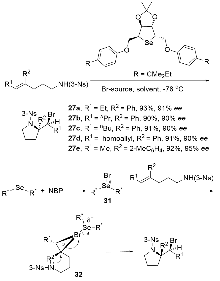

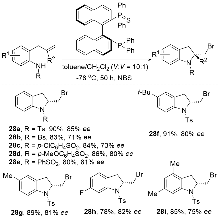
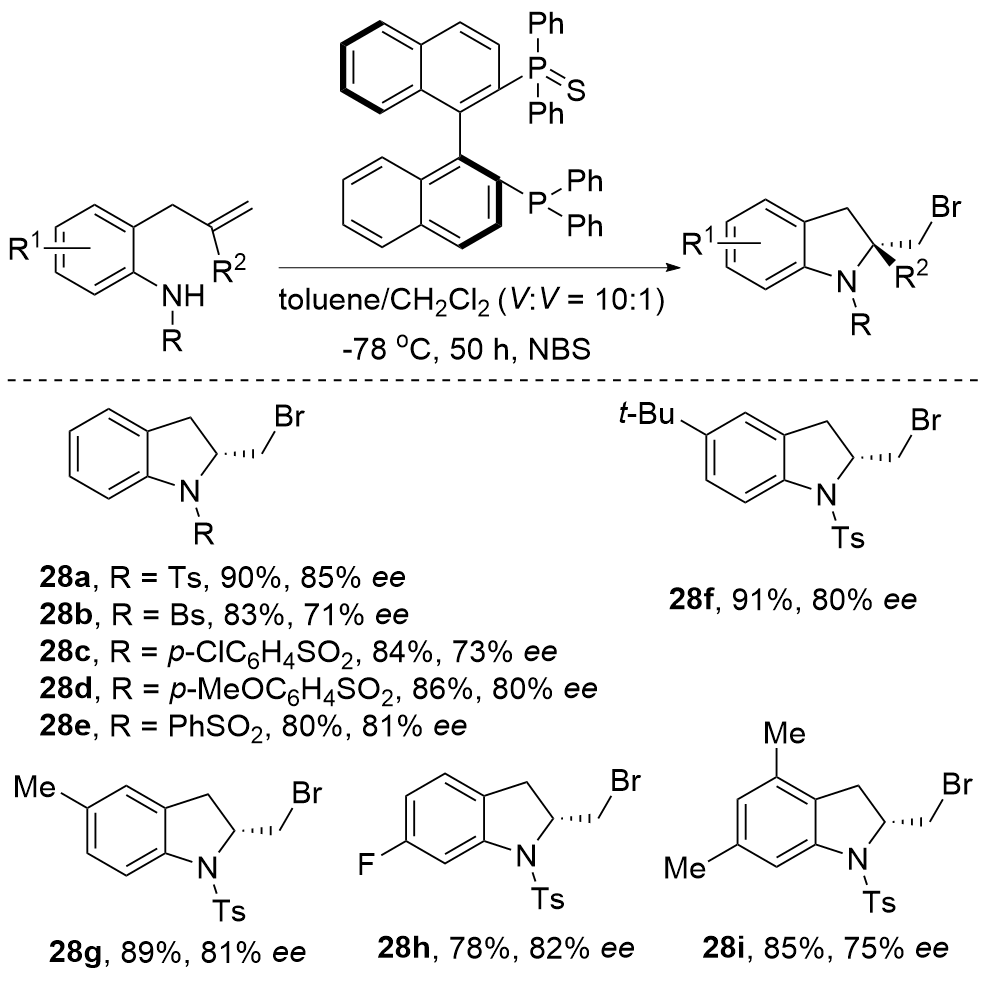
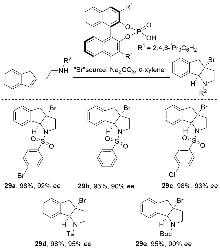
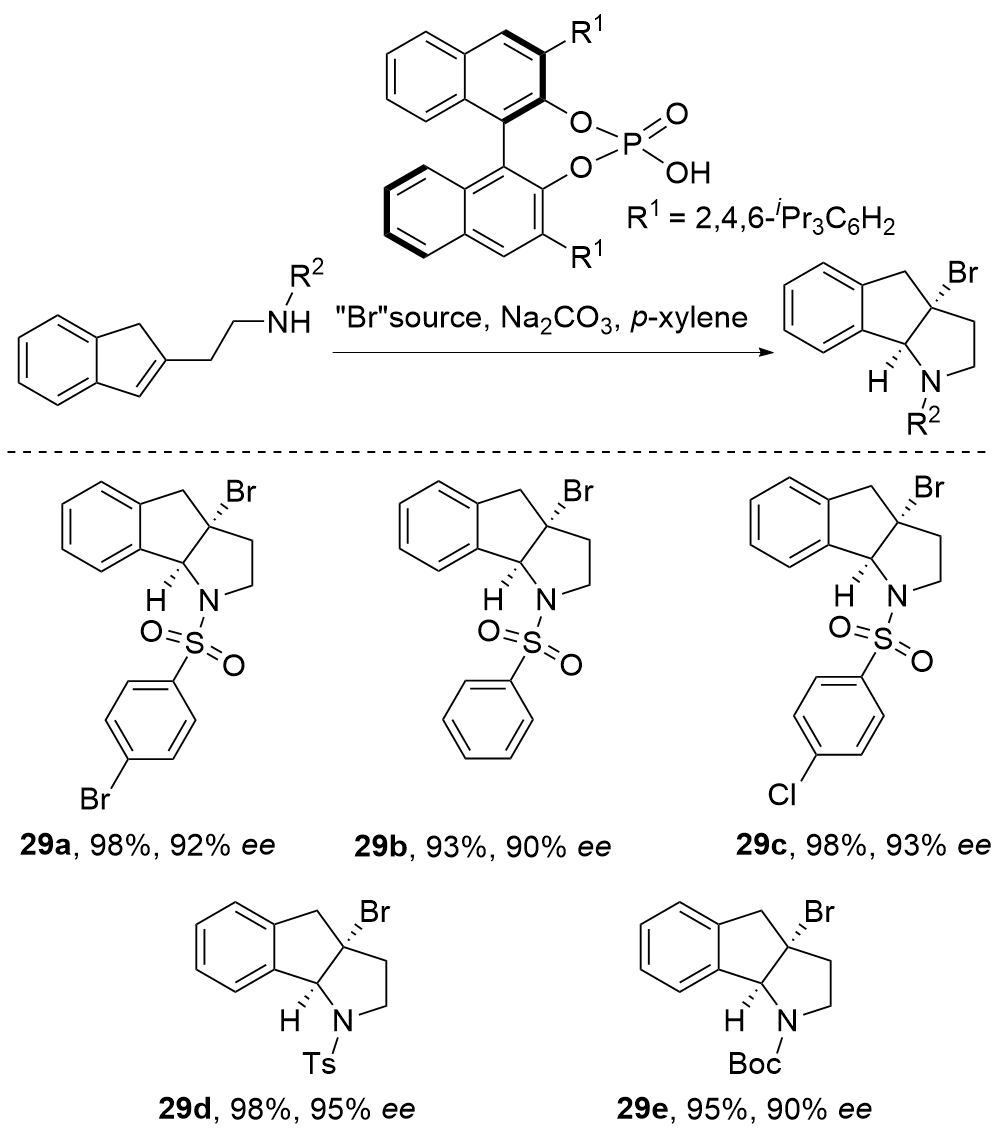

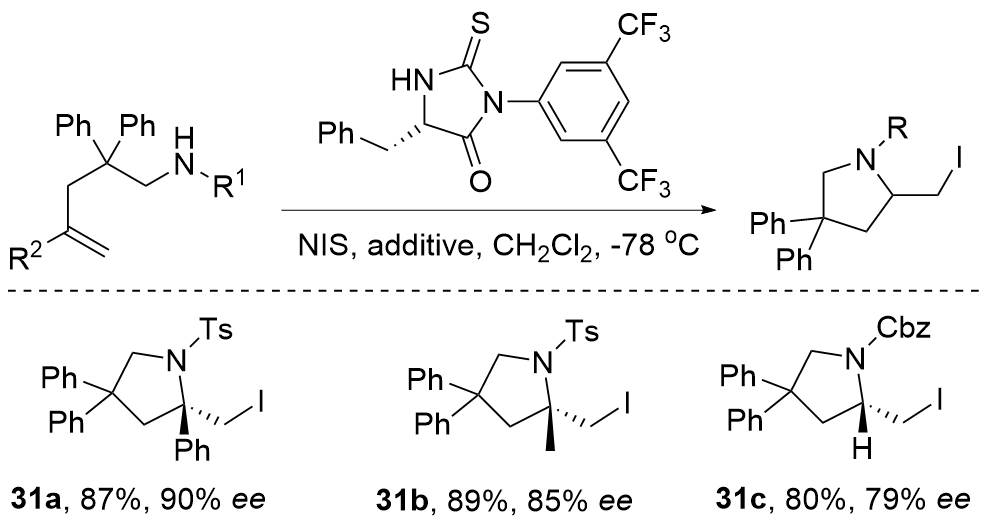
| [1] |
doi: 10.1002/ejoc.v2007:17 |
| [2] |
pmid: 23828735 |
| [3] |
pmid: 8609080 |
| [4] |
doi: 10.1021/np960602p |
| [5] |
|
| [6] |
doi: 10.1248/cpb.57.1142 |
| [7] |
doi: 10.1002/cber.v14:1 |
| [8] |
doi: 10.1002/cber.v17:2 |
| [9] |
doi: 10.1021/ja0304188 |
| [10] |
doi: 10.1002/1521-3773(20011119)40:22<>1.0.CO;2-D |
| [11] |
pmid: 12968342 |
| [12] |
doi: 10.1021/jo0200769 |
| [13] |
doi: 10.1021/jo030098a |
| [14] |
|
| [15] |
doi: 10.1021/ja00015a051 |
| [16] |
doi: 10.1139/v78-019 |
| [17] |
|
| [18] |
|
| [19] |
doi: 10.1055/s-2004-831203 |
| [20] |
doi: 10.1016/j.tetlet.2006.07.143 |
| [21] |
doi: 10.1021/ol050002u |
| [22] |
pmid: 11465449 |
| [23] |
|
| [24] |
doi: 10.1021/ol201895s |
| [25] |
doi: 10.1002/anie.v51.16 |
| [26] |
doi: 10.1016/j.tet.2013.05.022 |
| [27] |
doi: 10.1021/om049432z |
| [28] |
doi: 10.1021/ja9076588 |
| [29] |
doi: 10.1016/S0040-4020(01)90388-6 |
| [30] |
|
| [31] |
doi: 10.1248/cpb.15.1193 |
| [32] |
|
| [33] |
doi: 10.1021/jo01276a006 |
| [34] |
doi: 10.1055/s-2001-14910 |
| [35] |
doi: 10.1002/ejoc.v2004:14 |
| [36] |
|
| [37] |
doi: 10.1016/j.tet.2012.05.066 |
| [38] |
doi: 10.1021/ja00838a036 |
| [39] |
doi: 10.1016/j.tet.2016.09.038 |
| [40] |
doi: 10.1021/acs.orglett.1c02035 |
| [41] |
doi: 10.1021/acs.joc.2c01963 |
| [42] |
doi: 10.1021/ja00065a068 |
| [43] |
doi: 10.1021/ja00214a053 |
| [44] |
doi: 10.1021/cr00032a009 |
| [45] |
doi: 10.1021/ja00163a052 |
| [46] |
doi: 10.1021/ja981419g |
| [47] |
doi: 10.1021/ja00065a067 |
| [48] |
|
| [49] |
doi: 10.3891/acta.chem.scand.50-0649 |
| [50] |
doi: 10.1021/ol990059e |
| [51] |
pmid: 10930255 |
| [52] |
doi: 10.1016/S0040-4020(01)00228-9 |
| [53] |
doi: 10.1016/S0040-4020(01)00847-X |
| [54] |
doi: 10.1021/ol048045i |
| [55] |
doi: 10.1016/j.tetlet.2007.08.099 |
| [56] |
pmid: 11735517 |
| [57] |
doi: 10.1016/S0040-4039(01)02168-2 |
| [58] |
doi: 10.1016/j.tetlet.2003.11.049 |
| [59] |
doi: 10.1016/j.tetlet.2003.12.051 |
| [60] |
doi: 10.1002/ejoc.v2007:8 |
| [61] |
doi: 10.1021/ja110668c |
| [62] |
doi: 10.1039/c3cc44421j |
| [63] |
doi: 10.1021/acs.orglett.1c01642 |
| [64] |
doi: 10.1021/acs.orglett.3c00771 |
| [65] |
pmid: 12633091 |
| [66] |
doi: 10.1021/jo8023768 |
| [67] |
doi: 10.1016/j.tetlet.2013.02.113 |
| [68] |
doi: 10.1039/C7CC00470B |
| [69] |
|
| [70] |
|
| [71] |
doi: 10.1021/acs.joc.8b01951 |
| [72] |
doi: 10.1016/j.tetlet.2003.12.109 |
| [73] |
doi: 10.1021/acscatal.2c02223 |
| [74] |
doi: 10.1055/s-00000083 |
| [75] |
doi: 10.1021/ol101167z |
| [76] |
doi: 10.1021/jacs.8b02143 |
| [77] |
doi: 10.1002/anie.v61.32 |
| [78] |
doi: 10.3389/fchem.2020.00523 pmid: 32733847 |
| [79] |
doi: 10.1016/j.tet.2009.08.069 |
| [80] |
doi: 10.1021/ja201627h |
| [81] |
doi: 10.1039/C4CC05772D |
| [82] |
doi: 10.1039/c2ob25327e pmid: 22437158 |
| [83] |
doi: 10.1021/ja311202e |
| [84] |
|
| [85] |
|
| [86] |
doi: 10.3389/fchem.2021.742399 |
| [87] |
doi: 10.1002/chem.v20.41 |
| [88] |
doi: 10.1021/acscatal.8b03708 pmid: 31131150 |
| [89] |
doi: 10.1021/acs.orglett.0c03158 |
| [90] |
doi: 10.1021/acs.oprd.4c00489 |
| [1] | Xu Cheng, Peng Tao, Zhou Mengyuan, Liu Minglin, Huang Xiaoqing, Wang Yongfeng, Liu Zheng, Yin Guodong. Synthesis of α,β-Disubstituted Acrylates via PPh3-Catalyzed Ring-Opening Addition Reaction of Cyclopropenones with Alkyl Bromides at Room Temperature [J]. Chinese Journal of Organic Chemistry, 2026, 46(1): 279-288. |
| [2] | Gao Shan, Xie Xin, Liu Yuanhong. Nickel/Visible Light Dual-Catalyzed C—O Bond Coupling Reactions of Aryl Bromides with Alcohols [J]. Chinese Journal of Organic Chemistry, 2026, 46(1): 266-278. |
| [3] | Liang Yuan, Gui Chao, Wang Wenwen, Chu Xueqiang, Xu Hao, Shen Zhiliang. Nickel-Catalyzed Borylation of Aryl Nonaflates for the Efficient Synthesis of Arylboronates via C—O Bond Functionalization [J]. Chinese Journal of Organic Chemistry, 2026, 46(1): 207-214. |
| [4] | Mengya Xu, Yifan Li, Yue Wang, Ruiping Han, Er-Qing Li. Silver/Ganphos-Catalyzed Enantioselective [3+2] Cycloadditions of Azomethine Ylides: Access to the Spirocyclic Scaffolds [J]. Chinese Journal of Organic Chemistry, 2025, 45(9): 3458-3468. |
| [5] | Wei Yang, Bingbing Wang, Xiaohui Xu, Zhong Sun, Cuiman Tang, Jiaqi Liu. Recent Progress in the Application of Biomimetic Material Polydopamine in Organic Conversion [J]. Chinese Journal of Organic Chemistry, 2025, 45(9): 3314-3325. |
| [6] | Hui Zhu, Peng Wu, Chenming Zhong, Shuming Li, Gang Lin, Xuefen Liu, Shuping Luo. Design and Synthesis of Donor-Acceptor-Donor (D-A-D) Type Aromatic Ketones for Photocatalytic C(sp3)—H Coupling Reactions [J]. Chinese Journal of Organic Chemistry, 2025, 45(9): 3441-3449. |
| [7] | Zhiqi Yu, Canyuan Chen, Jiayi Han, Jianhu Zhou, Linxuan Wang, Meie Yue, Xiaofei Jia. A Multifunctional Porous Organic Polymer Supported Pd Nanoparticle Catalyst for Hydrocarboxylation of Alkynes [J]. Chinese Journal of Organic Chemistry, 2025, 45(9): 3450-3457. |
| [8] | Liping Guan, Zhiqi Lin, Chaohua Fang, Qiushi Wang, Zhiyang Fu, Bin Zhang. Advances in Synthesis Methods of Quinoline and Isoquinoline Derivatives [J]. Chinese Journal of Organic Chemistry, 2025, 45(9): 3255-3288. |
| [9] | Wen Xu, Meiming Luo, Xiaoming Zeng. Cr-Catalyzed Reductive Cross-Coupling of Trifluoromethyl Alkenes [J]. Chinese Journal of Organic Chemistry, 2025, 45(9): 3401-3411. |
| [10] | Youxue Zhao, Xiruo Li, Luobing Meng, Chunxiu Li, Guisheng Fan, Jianhe Xu. Advances in Understanding the Substrate Promiscuity of Alcohol Dehydrogenases/Carbonyl Reductases★ [J]. Chinese Journal of Organic Chemistry, 2025, 45(9): 3175-3185. |
| [11] | LüYa, Guihan He, Jianjian Liu, Yongzheng Chen. Advances in Chiral Recognition and Asymmetric Catalysis of Minimal Structural Differences Compounds★ [J]. Chinese Journal of Organic Chemistry, 2025, 45(9): 3163-3174. |
| [12] | Daming Yong, Guangshu Yuan, Yonghong Liu, Xu Zhang. Progress in Selenium Catalyzed Oxidation of Cyclohexene to Produce 1,2-Cyclohexanediol [J]. Chinese Journal of Organic Chemistry, 2025, 45(8): 2767-2772. |
| [13] | Ye Wu, Chunxia Chen, Jinsong Peng. Research Progress of C—H Bond Asymmetric Hydroxylation [J]. Chinese Journal of Organic Chemistry, 2025, 45(8): 2726-2745. |
| [14] | Pengze Yan, Shuli Gao, Tianrui Li, Jinling Miao, Xuchuan Jiang, Yong Nie. Progress in the Synthesis of Carborane Compounds with Aggregation-Induced Emission [J]. Chinese Journal of Organic Chemistry, 2025, 45(8): 2677-2697. |
| [15] | Yinsheng Miao, Lei Zhang, Jianqi Chen, Lili Wang, Zheng Duan. Synthesis of Pyrazolo(iso)quinoline Derivatives from Aryl Alkynes and N-Imine(iso)quinoline Ylides Catalyzed by Bisphosphonium Salt [J]. Chinese Journal of Organic Chemistry, 2025, 45(8): 2876-2884. |
| Viewed | ||||||
|
Full text |
|
|||||
|
Abstract |
|
|||||
