

化学学报 ›› 2026, Vol. 84 ›› Issue (7): 1114-1120.DOI: 10.6023/A26030081 上一篇 下一篇
研究论文
余溪, 张晨杰, 徐敏敏, 袁亚仙*( ), 姚建林*()
投稿日期:2026-03-23
发布日期:2026-05-28
基金资助:
Xi Yu, Chenjie Zhang, Minmin Xu, Yaxian Yuan*(), Jianlin Yao*()
Received:2026-03-23
Published:2026-05-28
Contact:
* E-mail: yuanyaxian@suda.edu.cn;
jlyao@suda.edu.cn; Tel.: 0512-65880359; Fax: 0512-65880089
Supported by:文章分享
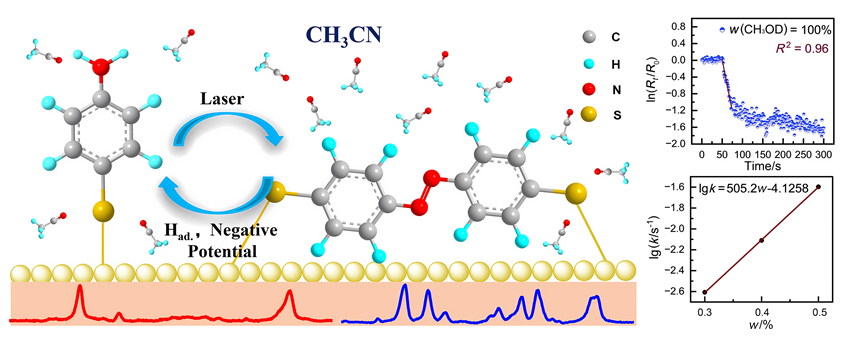
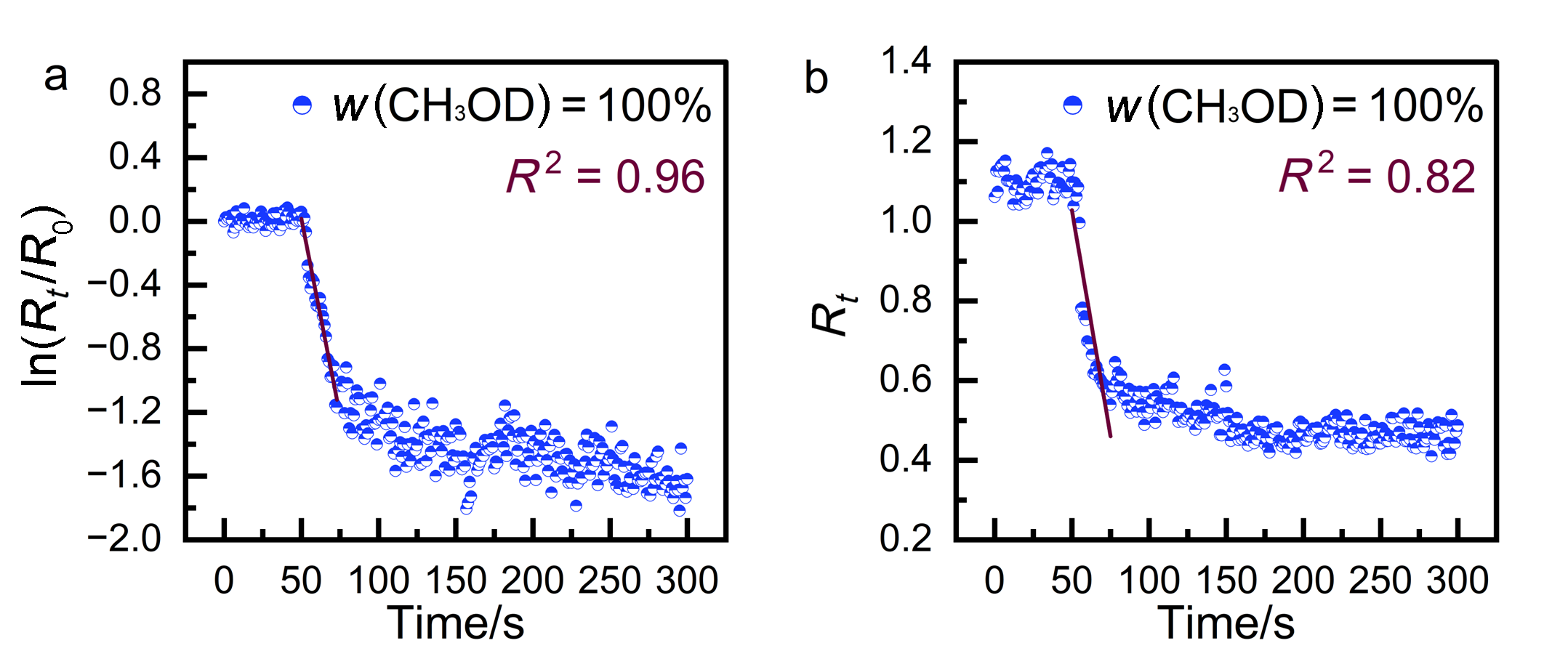
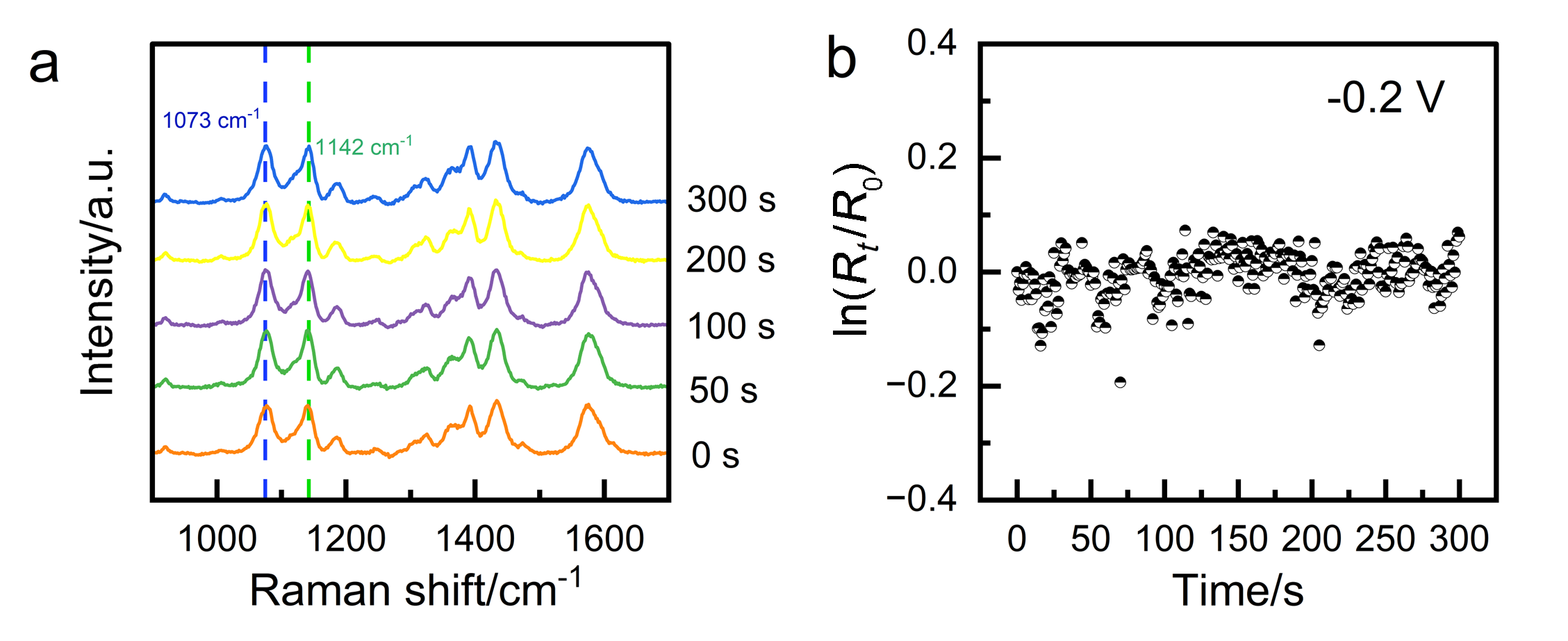
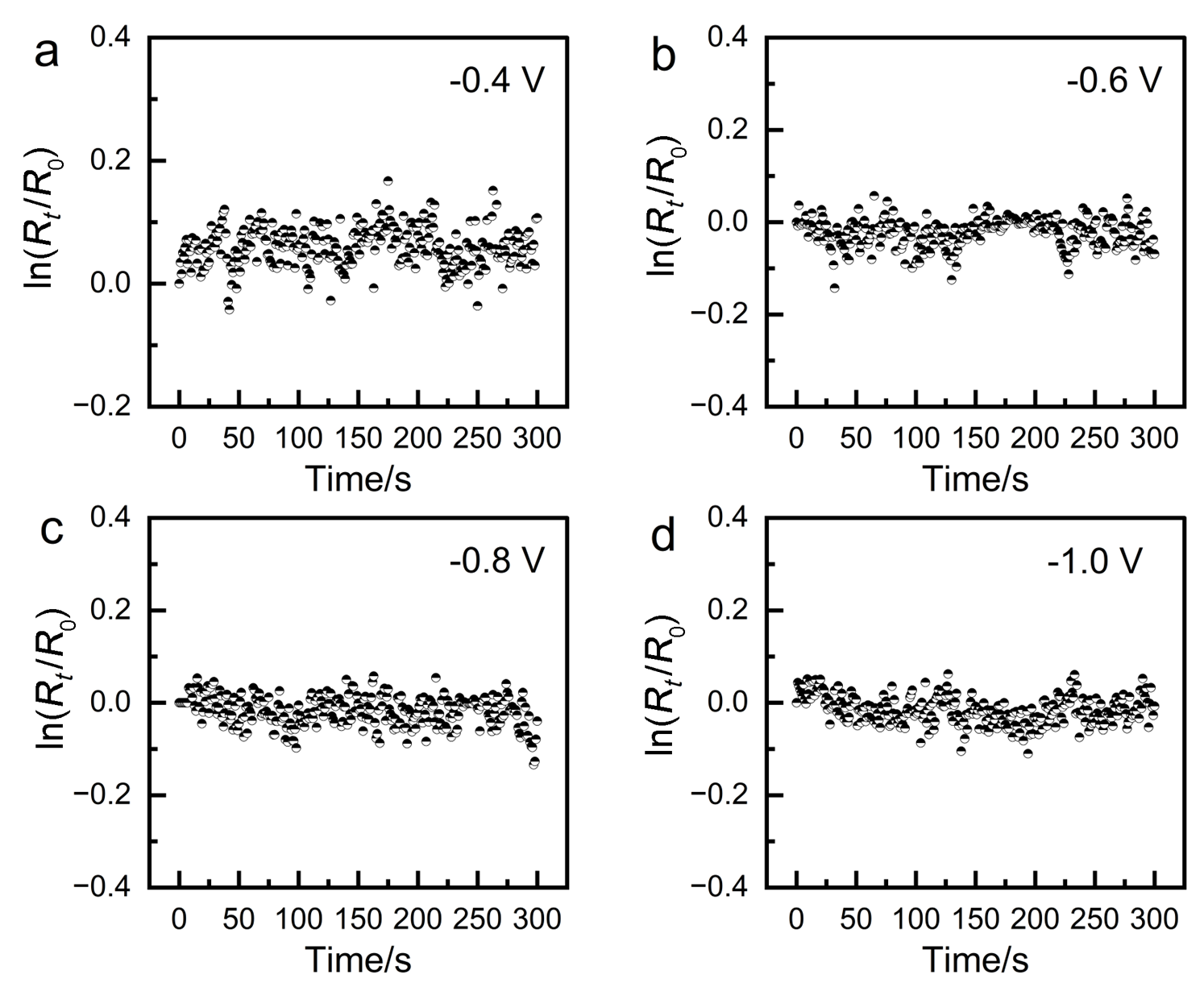
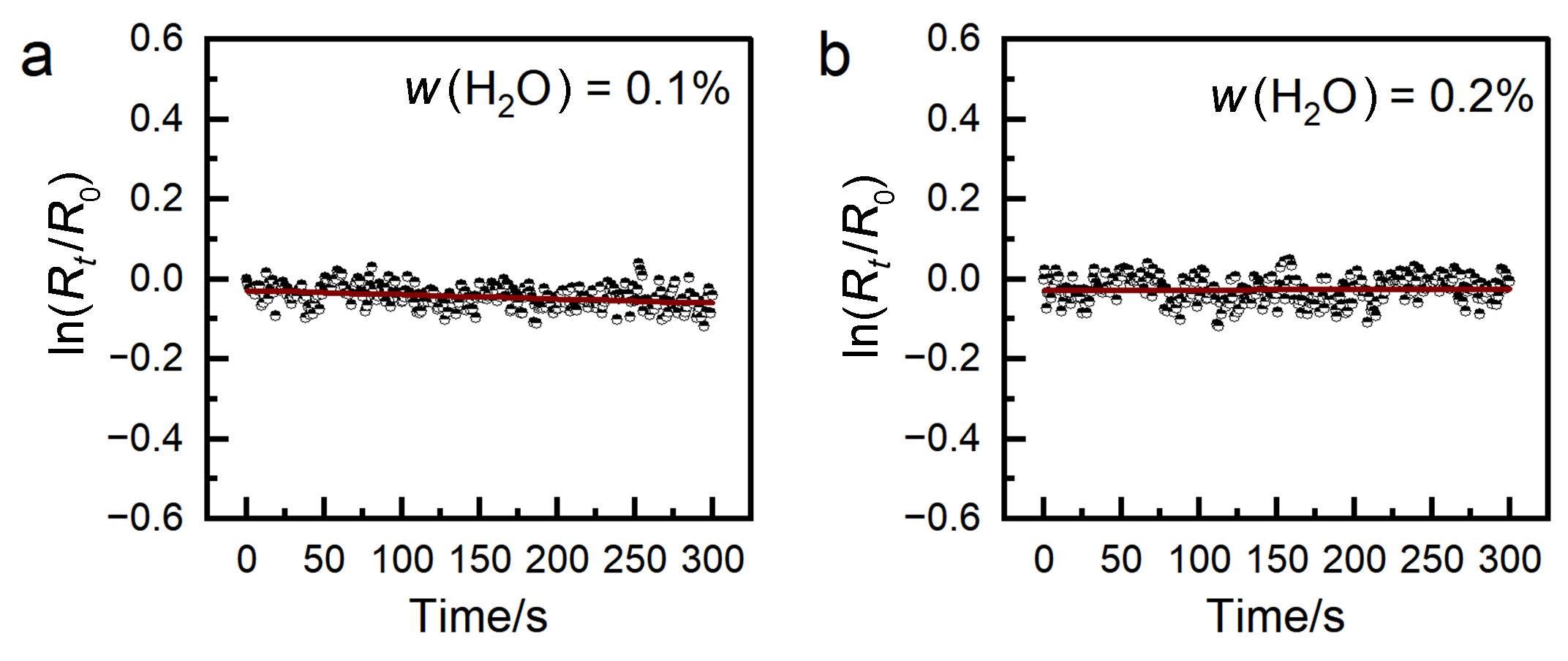
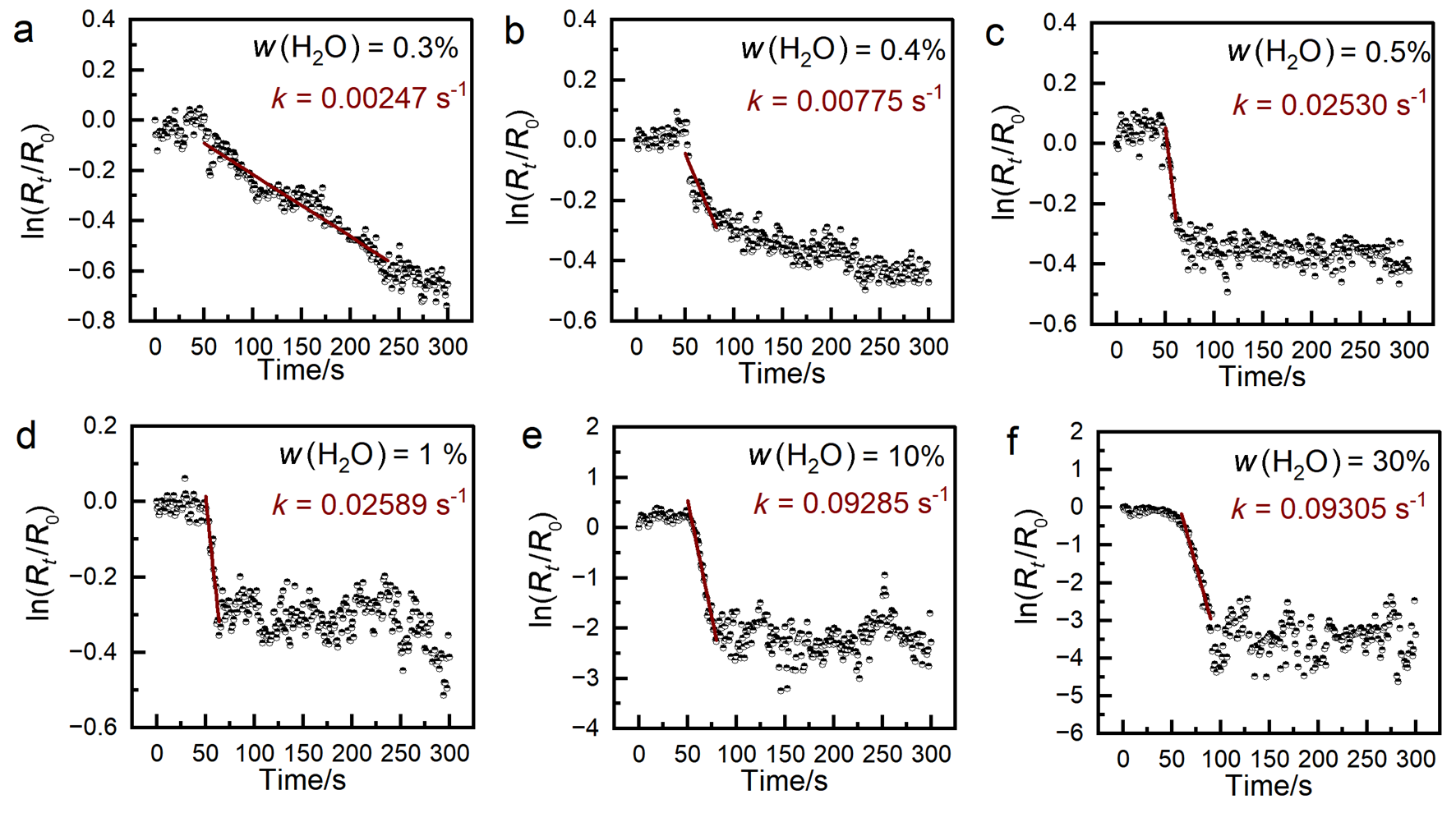
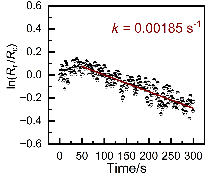
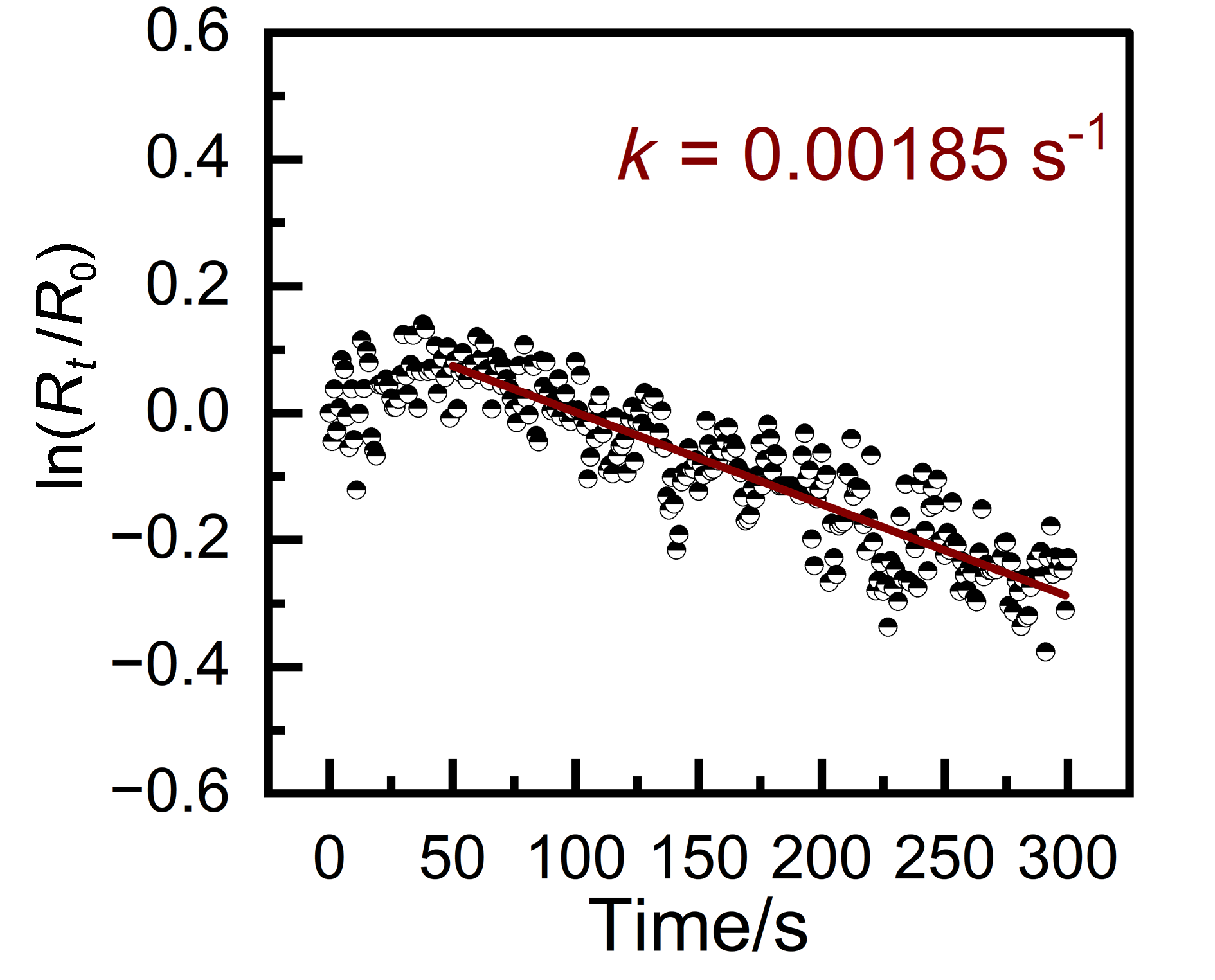
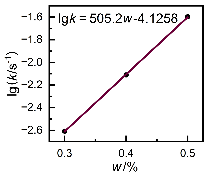
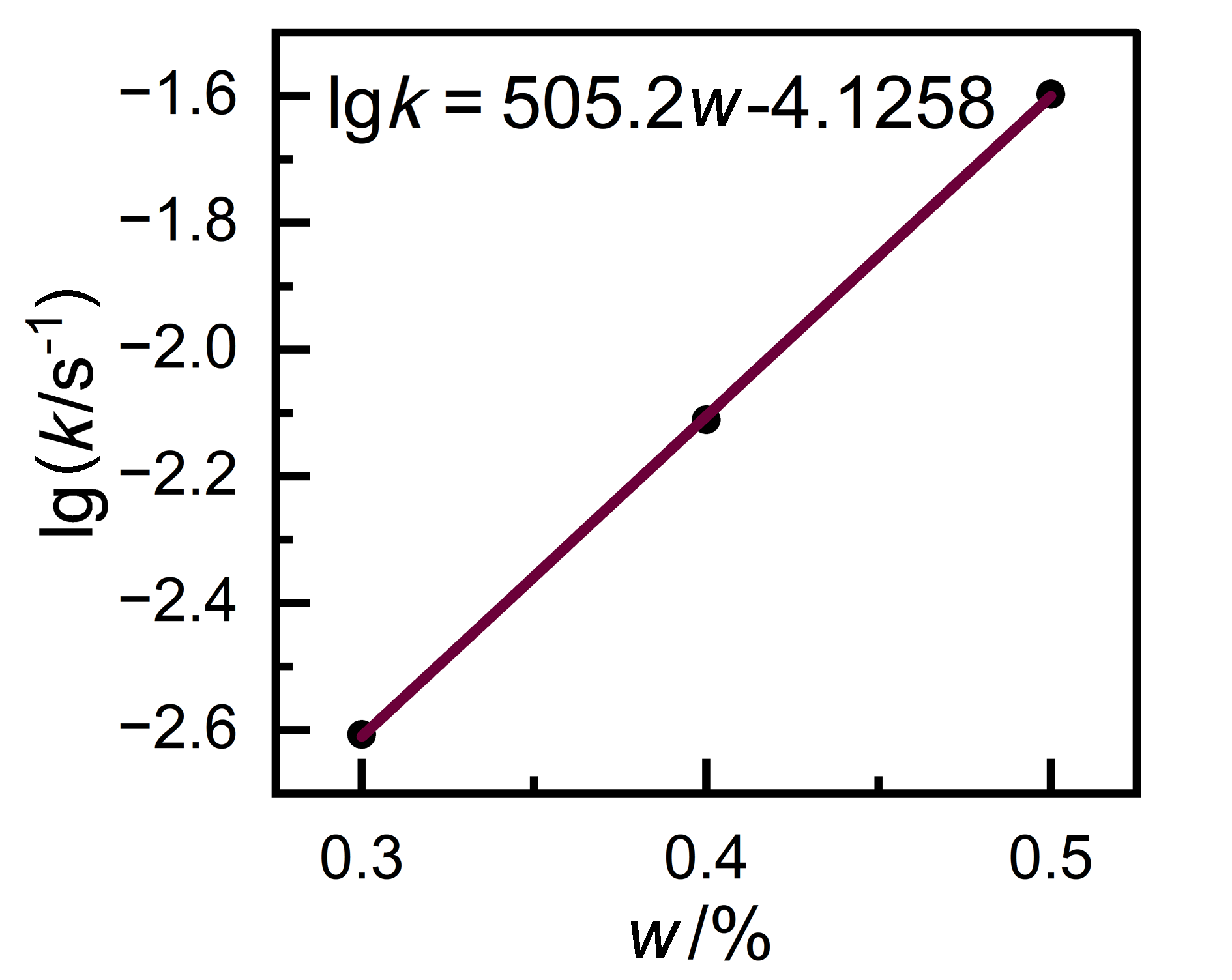
乙腈作为电化学合成与储能领域的重要非质子极性溶剂而得到广泛应用, 但微量水分的引入会显著改变电极界面微环境, 进而改变界面反应动力学过程, 因此亟待从动力学行为角度理解水的行为. 通常水分子拉曼散射截面小及在贵金属基底吸附弱的特点而导致采用表面增强拉曼光谱(SERS)研究仍存在一定的困难. 本研究以对界面水或质子性物种浓度高度敏感的对二巯基偶氮苯(DMAB)电化学还原反应为探针, 将均匀性与稳定性优异的Au纳米粒子单层膜(Au MLF)转移至玻碳电极表面获得SERS活性基底, 系统探究乙腈体系中不同水含量对DMAB还原反应动力学的影响规律. 研究表明, DMAB在乙腈体系中的还原反应强烈依赖于水或质子性物种, 且符合准一级动力学特征. 无水乙腈体系中, 在-0.4至-1.0 V电位区间内, DMAB仍无法发生还原反应, 当水质量分数达到0.3%时可观察到还原反应发生, 速率常数随水含量升高逐渐增大, 水质量分数≥10.0%时, 反应速率常数增速缓慢, 反应速率趋于饱和. 基于水含量与反应速率常数的定量关联, 发展了乙腈体系微量水含量的检测新方法, 所得结果与常规标准方法测定结果一致, 且该方法适用于水含量低于0.5%时的体系. 本研究可望为非水体系中水或质子性物种对界面过程的影响的研究提供一种新途径, 为非电化学相关器件溶剂的选择和体系优化提供实验基础.
余溪, 张晨杰, 徐敏敏, 袁亚仙, 姚建林. 水依赖界面对二巯基偶氮苯电化学还原反应动力学研究及水含量测定[J]. 化学学报, 2026, 84(7): 1114-1120.
Xi Yu, Chenjie Zhang, Minmin Xu, Yaxian Yuan, Jianlin Yao. Investigation on the Kinetics of Water-Dependent Electrochemical Reduction Reaction of p-dimercaptoazobenzene and Detection on Water Content[J]. Acta Chimica Sinica, 2026, 84(7): 1114-1120.
| [1] |
doi: 10.1021/acs.chemrev.9b00609 |
| [2] |
doi: 10.1021/cr0680843 |
| [3] |
doi: 10.1021/acs.chemrev.7b00397 |
| [4] |
doi: 10.6023/A24090260 |
|
(贺乾军, 张晨杰, 徐敏敏, 袁亚仙, 姚建林, 化学学报, 2024, 82, 1202.)
doi: 10.6023/A24090260 |
|
| [5] |
doi: 10.1007/s10008-025-06305-1 |
| [6] |
doi: 10.1039/D5OB00647C |
| [7] |
doi: 10.1016/S0378-7753(96)02417-2 |
| [8] |
doi: 10.1002/celc.v2.10 |
| [9] |
doi: 10.1016/j.electacta.2009.01.047 |
| [10] |
doi: 10.1016/S0022-0728(72)80153-0 |
| [11] |
doi: 10.1021/ac00275a038 |
| [12] |
doi: 10.1016/S0022-0728(96)04839-5 |
| [13] |
doi: 10.1039/c9cp00499h pmid: 30816395 |
| [14] |
doi: 10.1021/acs.jpclett.9b00756 |
| [15] |
|
|
(顾仁敖, 孙玉华, 曹佩根, 姚建林, 任斌, 田中群, 高等学校化学学报, 2002, 23, 1960.)
|
|
| [16] |
doi: 10.1007/s11426-010-4184-8 |
| [17] |
doi: 10.1039/b707872m |
| [18] |
doi: 10.6023/A14080602 |
|
(赵刘斌, 黄逸凡, 吴德印, 任斌, 化学学报, 2014, 72, 1125.)
doi: 10.6023/A14080602 |
|
| [19] |
doi: 10.1016/0167-5729(87)90001-X |
| [20] |
doi: 10.6023/A17050198 |
|
(张晨杰, 张婧, 林洁茹, 金琦, 徐敏敏, 姚建林, 化学学报, 2017, 75, 860.)
doi: 10.6023/A17050198 |
|
| [21] |
doi: 10.1039/C7CC07951F |
| [22] |
doi: 10.1002/cctc.v14.5 |
| [23] |
doi: 10.1016/j.apsusc.2017.10.155 |
| [24] |
doi: 10.1039/C5NR05718C |
| [25] |
doi: 10.1039/C4NR01939C |
| [26] |
doi: 10.1021/acscatal.8b00101 |
| [27] |
doi: 10.1021/jp201002v |
| [28] |
doi: 10.1021/acs.jpclett.0c03732 |
| [29] |
doi: 10.1021/jp709869f |
| [30] |
doi: 10.1007/BF00647064 |
| [31] |
doi: 10.1016/S0039-6028(03)00543-0 |
| [32] |
doi: 10.1016/S0022-0728(02)00898-7 |
| [33] |
doi: 10.1038/physci241020a0 |
| [34] |
doi: 10.1002/jrs.v39:11 |
| [35] |
doi: 10.1021/acs.langmuir.5b04393 |
| [36] |
doi: 10.1021/ja101107z |
| [1] | 陈慧滢, 黄宁宇, 廖培钦. 基于银−碳键的新型金属有机框架用于高效光催化合成过氧化氢★[J]. 化学学报, 2026, 84(5): 626-630. |
| [2] | 张亚, 周功兵, 孙为银. 基于含氮杂环配体的金属有机框架材料在电催化CO2还原中的应用与前景展望★[J]. 化学学报, 2026, 84(5): 755-774. |
| [3] | 税子怡, 尹书睿, 邓锦涛, 许留云, 郭莉. 聚乙烯吡咯烷酮辅助金属有机框架衍生分级多孔碳材料的制备及其双功能催化性能研究[J]. 化学学报, 2026, 84(1): 53-63. |
| [4] | 夏文卓, 刘恒, 王思浓, 唐颐. 酸碱度对纸张降解趋势的影响及脱酸理论碱用量研究——以20世纪90年代机制纸为例[J]. 化学学报, 2025, 83(5): 527-534. |
| [5] | 王佳雨, 赵文娟, 贾宏宇, 刘永博, 张敏, 董龙龙, 张安杰, 王锐. 铜配位三维共价有机框架提升电催化硝酸盐还原制氨[J]. 化学学报, 2025, 83(12): 1507-1513. |
| [6] | 税子怡, 于思乐, 陆伟, 许留云, 刘庆叶, 赵炜, 刘益伦. Mn掺杂Co3O4双功能电催化剂在碱性介质下氧还原和析氧反应中的应用[J]. 化学学报, 2024, 82(10): 1039-1049. |
| [7] | 李萍, 杨琪玉, 曾婧, 张然, 陈秋燕, 闫飞. 氟掺杂对可逆固体氧化物电池性能的影响及相关动力学研究[J]. 化学学报, 2024, 82(1): 36-45. |
| [8] | 闫绍兵, 焦龙, 何传新, 江海龙. ZIF-67/石墨烯复合物衍生的氮掺杂碳限域Co纳米颗粒用于高效电催化氧还原[J]. 化学学报, 2022, 80(8): 1084-1090. |
| [9] | 王振华, 马聪, 方萍, 徐海超, 梅天胜. 有机电化学合成的研究进展[J]. 化学学报, 2022, 80(8): 1115-1134. |
| [10] | 耿元昊, 林小秋, 孙亚昕, 李惠雨, 秦悦, 李从举. 双金属导电金属有机框架材料Ni/Co-CAT的制备及其氧还原催化性能研究[J]. 化学学报, 2022, 80(6): 748-755. |
| [11] | 王丹, 封波, 张晓昕, 刘亚楠, 裴燕, 乔明华, 宗保宁. 基于热解ZIF-8的氮掺杂碳电化学氧还原合成过氧化氢催化剂[J]. 化学学报, 2022, 80(6): 772-780. |
| [12] | 鲁效庆, 曹守福, 魏晓飞, 李邵仁, 魏淑贤. S掺杂Fe-NC单原子催化剂氧还原机理研究[J]. 化学学报, 2020, 78(9): 1001-1006. |
| [13] | 税子怡, 何娜娜, 陈黎, 赵炜, 陈曦. 多孔钙钛矿型氧还原催化剂在柔性铝空气电池中的应用研究[J]. 化学学报, 2020, 78(6): 557-564. |
| [14] | 陈芳芳, 孙晓慧, 姚倩, 李泽荣, 王静波, 李象远. 烷基过氧化氢中氢提取反应类大分子体系的反应能垒与速率常数的精确计算[J]. 化学学报, 2018, 76(4): 311-318. |
| [15] | 张露文, 温志国, Borzov Maxim, 聂万丽. 芳香胺盐酸盐/硼烷体系催化的氢胺化/还原反应研究[J]. 化学学报, 2017, 75(8): 819-823. |
| 阅读次数 | ||||||
|
全文 |
|
|||||
|
摘要 |
|
|||||
