有机化学 ›› 2026, Vol. 46 ›› Issue (6): 2415-2422.DOI: 10.6023/cjoc202601001 上一篇 下一篇
研究论文
孙晓娟a, 张明b,*( ), 田云飞a, 王志强a,*(), 郑才俊c,*()
收稿日期:2026-01-02
修回日期:2026-02-09
发布日期:2026-04-02
基金资助:
Xiaojuan Suna, Ming Zhangb,*(), Yunfei Tiana, Zhiqiang Wanga,*(), Caijun Zhengc,*()
Received:2026-01-02
Revised:2026-02-09
Published:2026-04-02
Contact:
* E-mail: wzq197811@lynu.edu.cn;982938670@qq.com;zhengcaijun@uestc.edu.cn
Supported by:文章分享
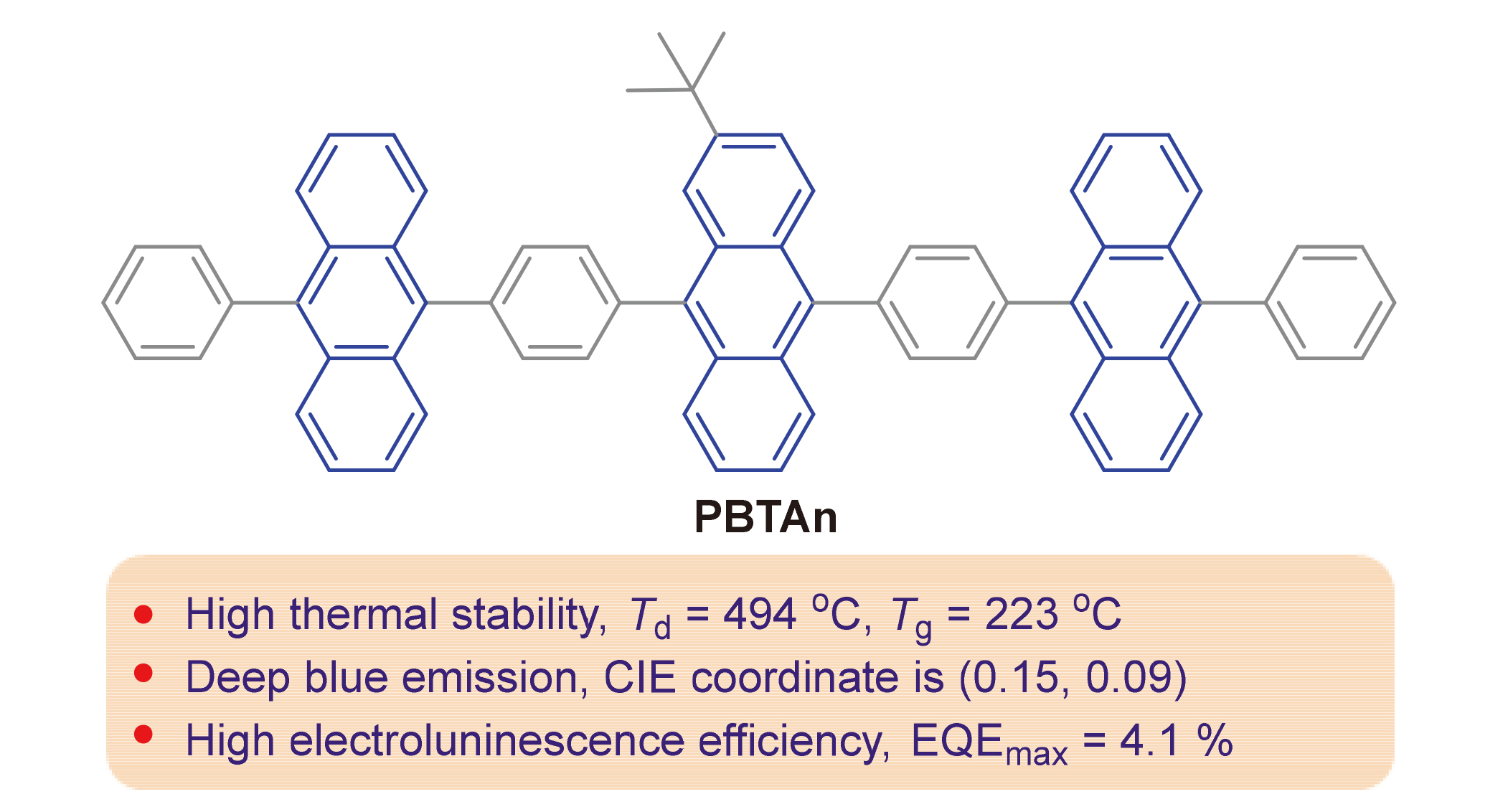
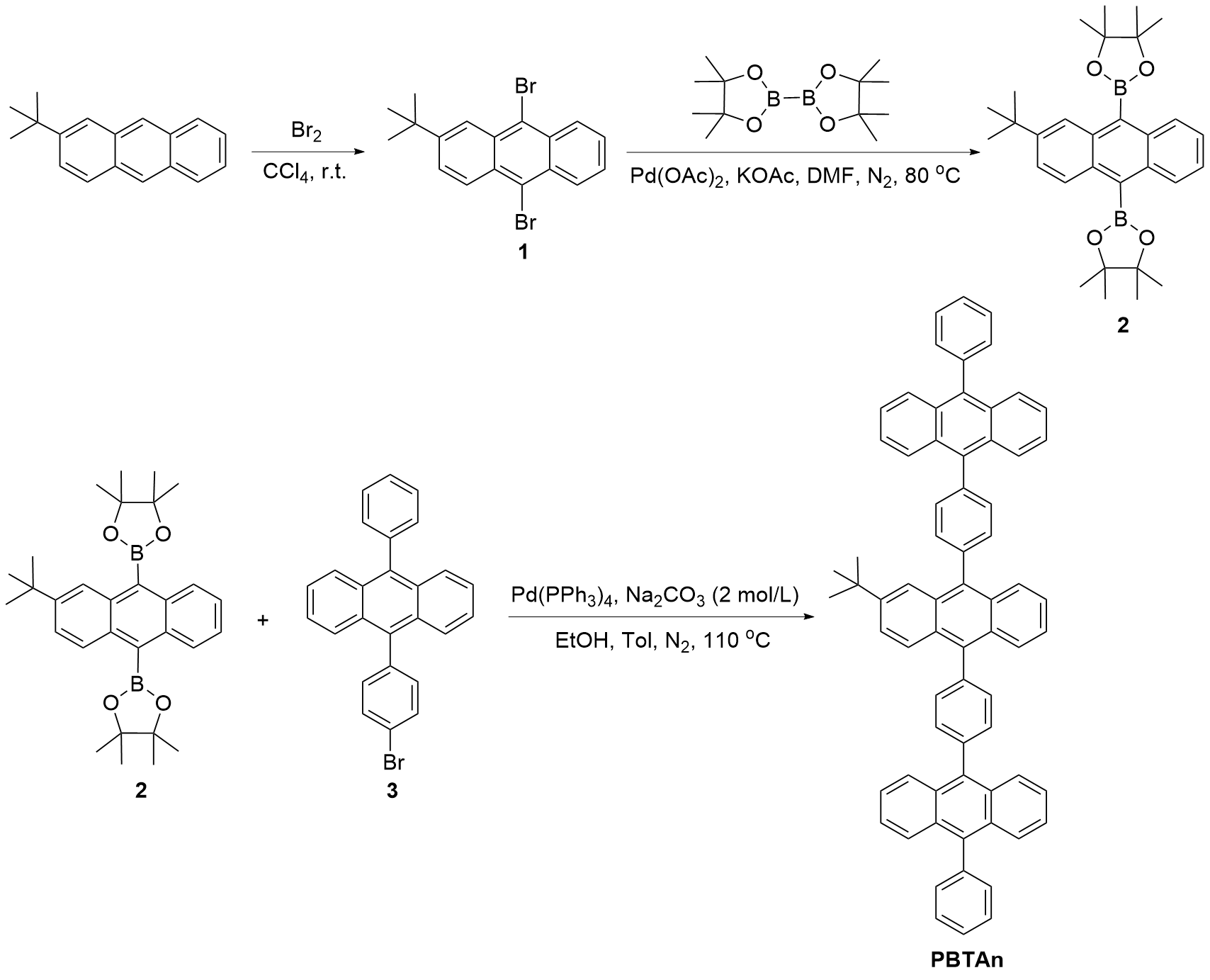
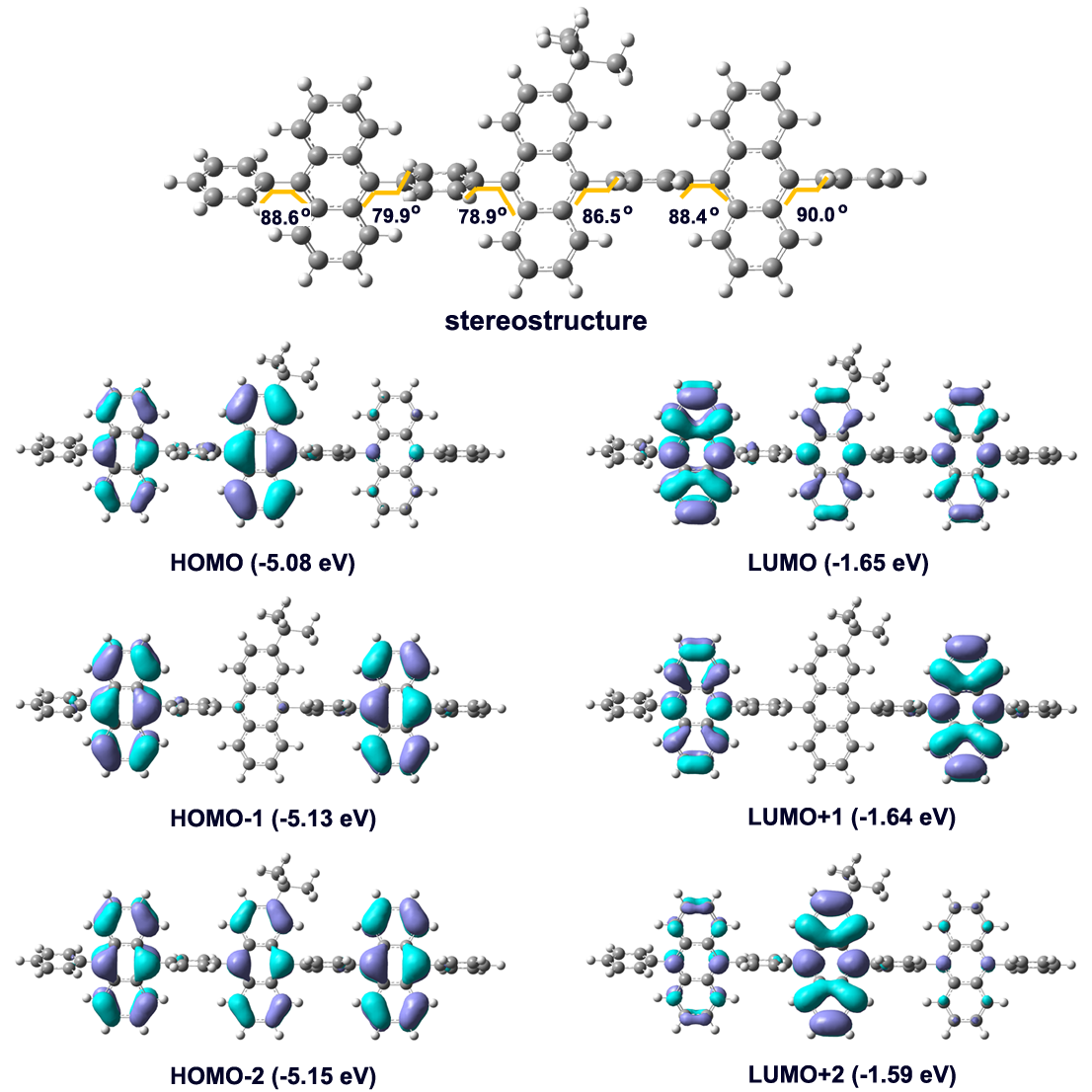
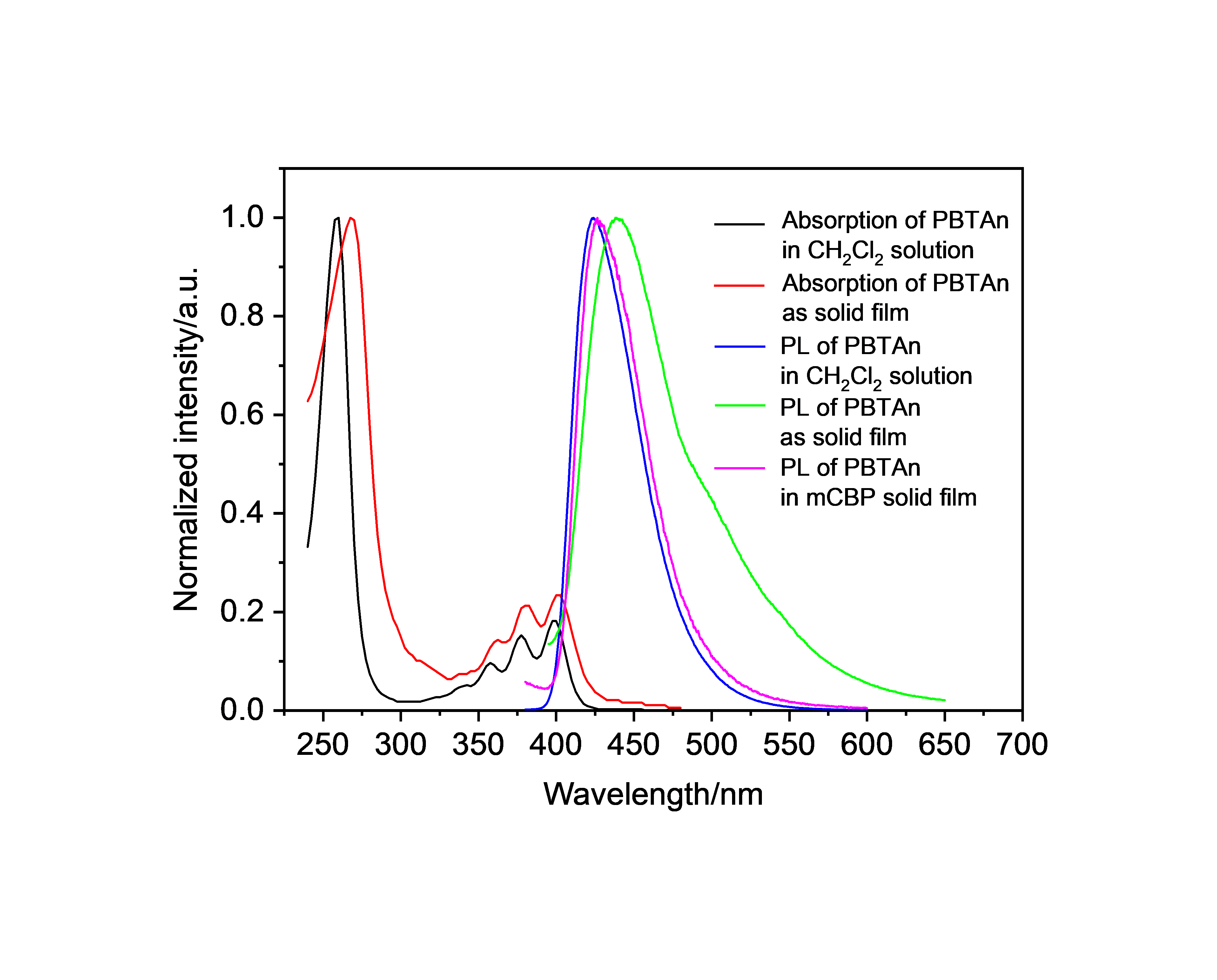
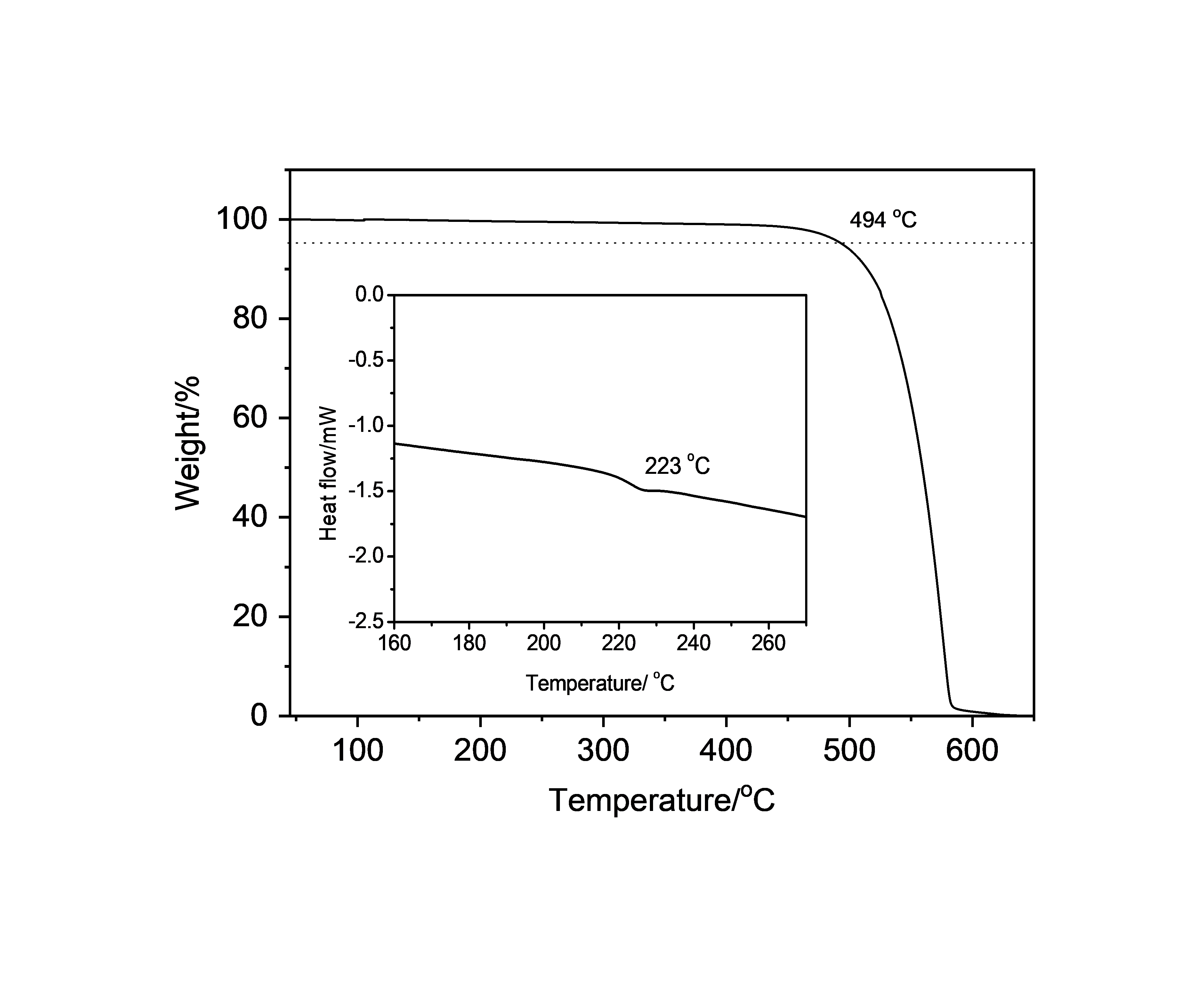
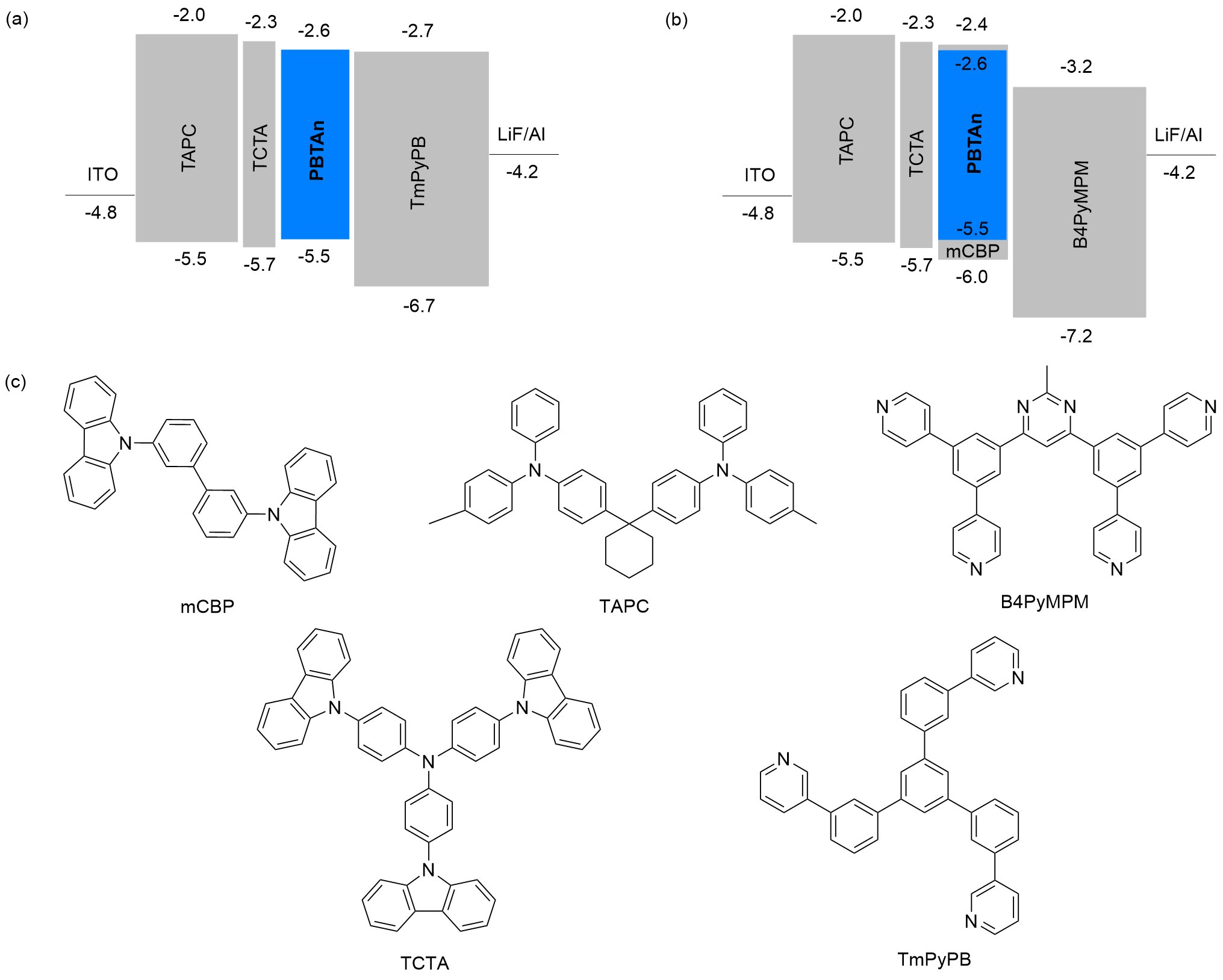
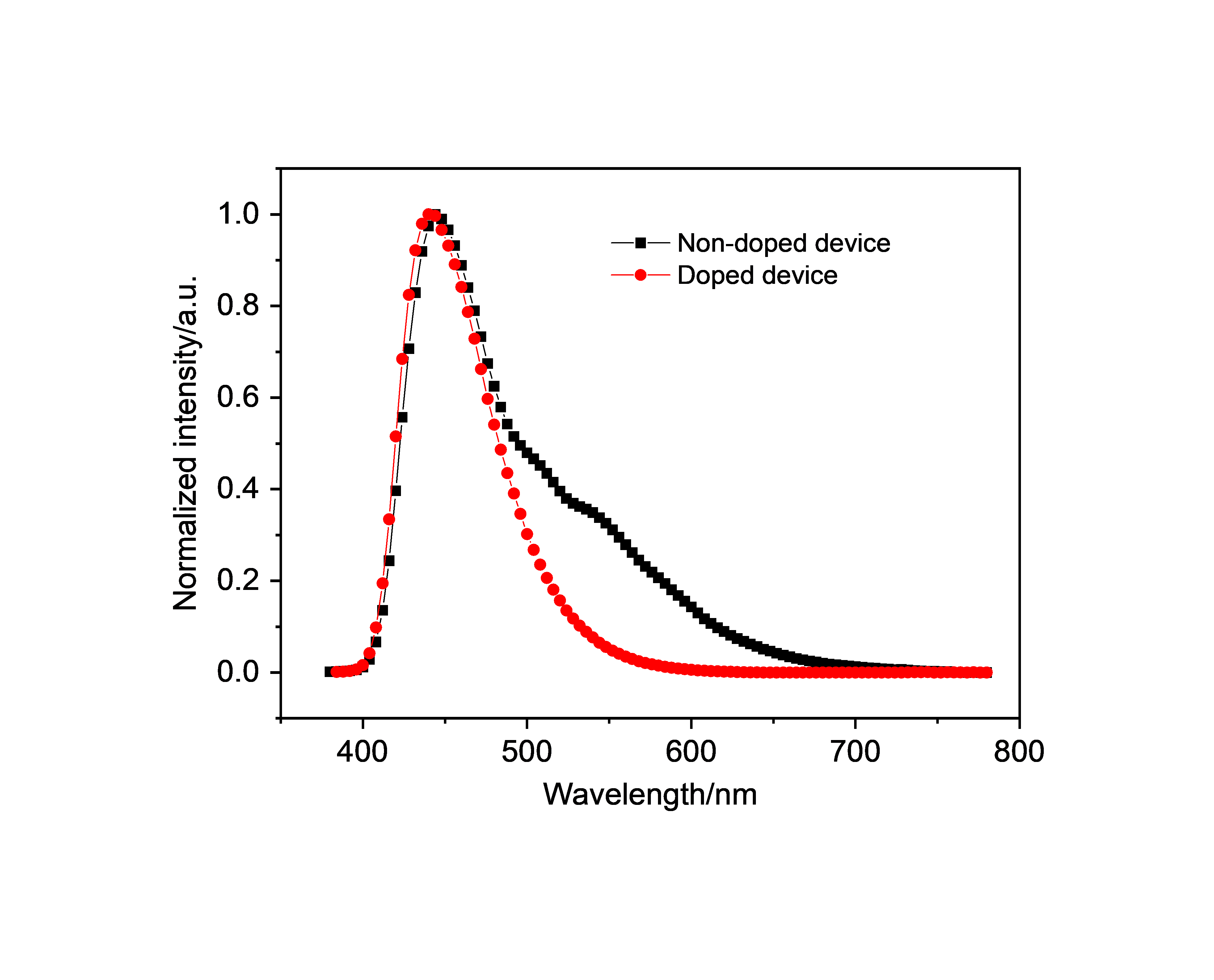
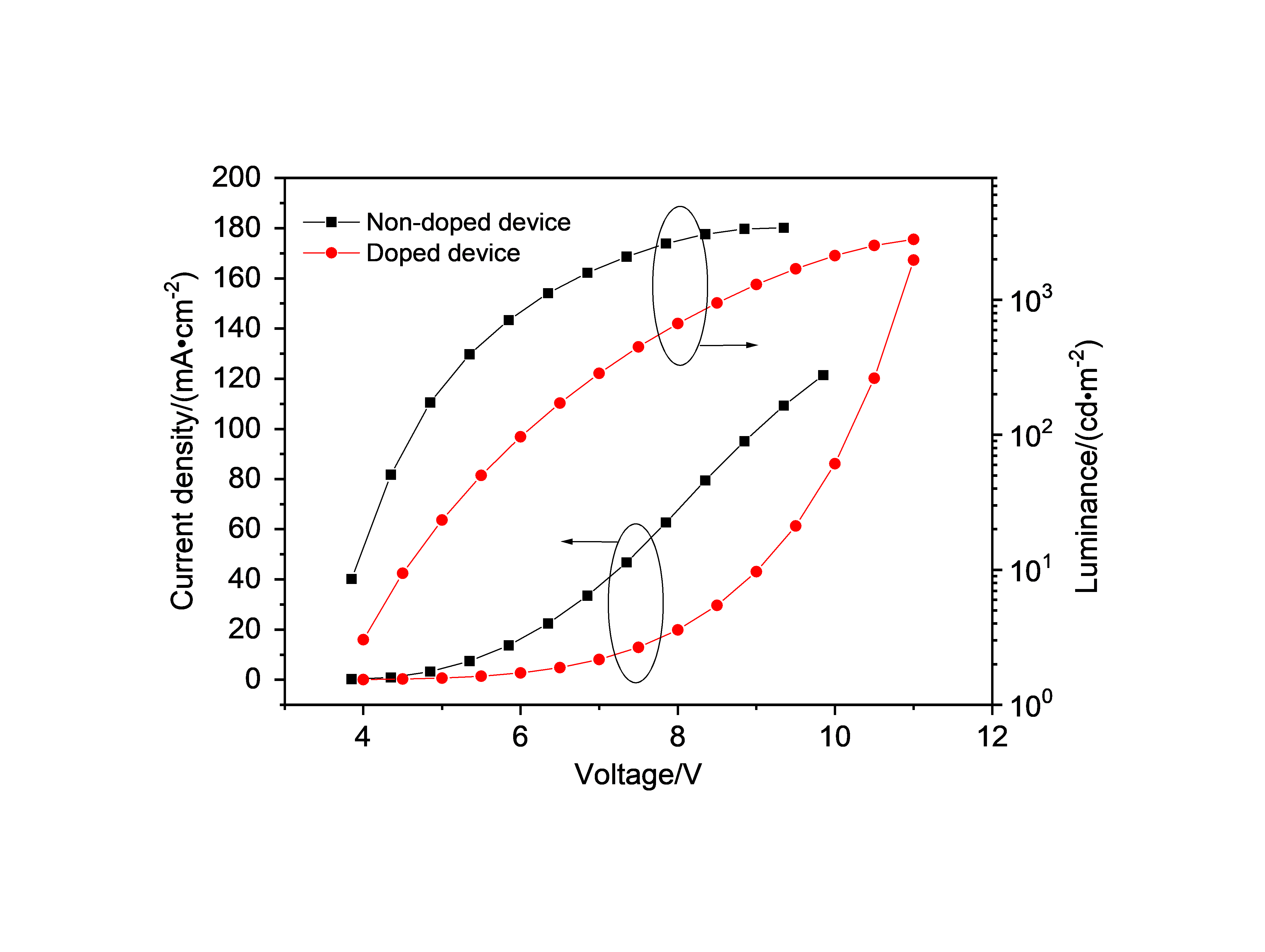
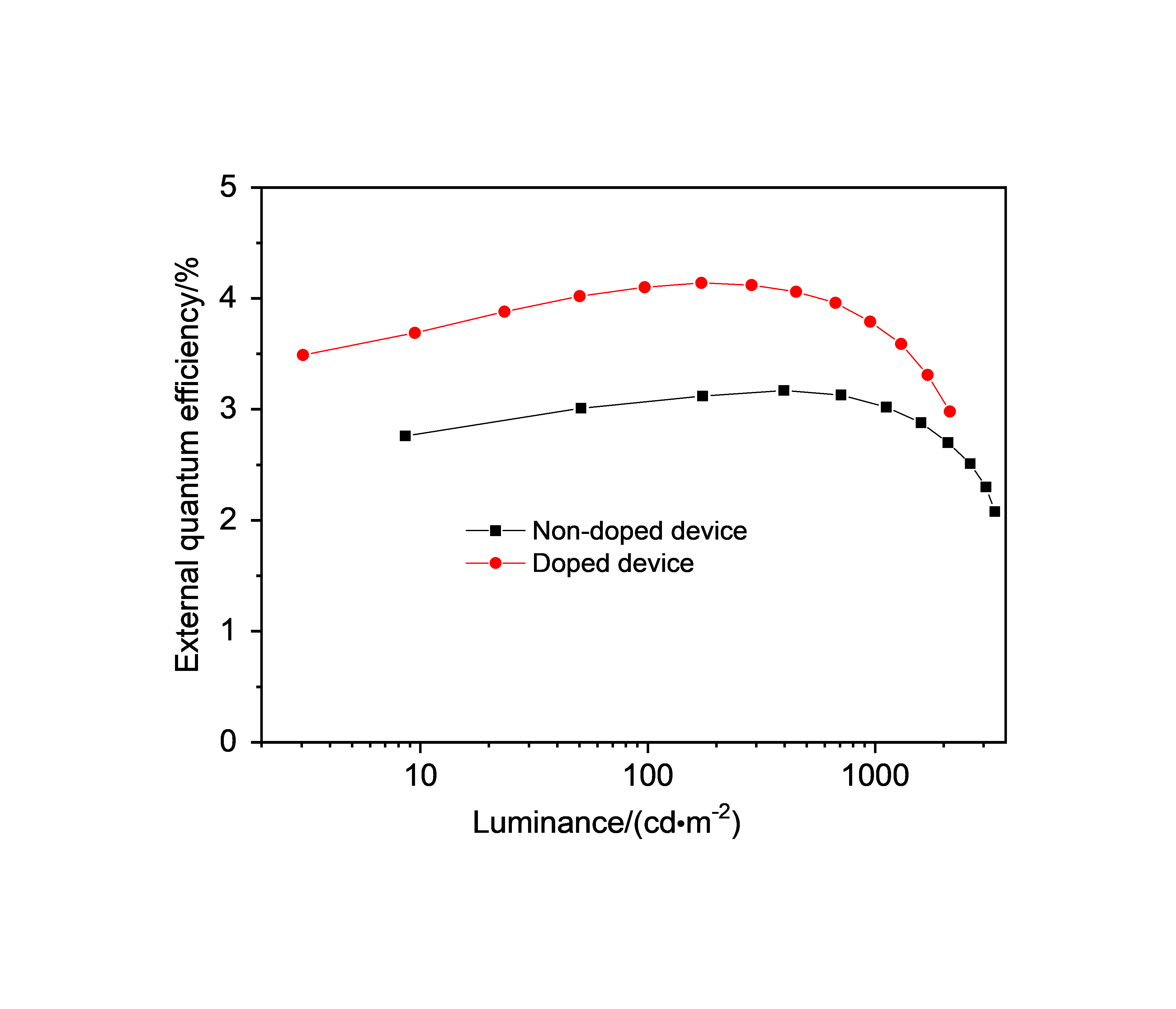
设计、合成了一种π-桥三联蒽型深蓝光电致发光材料2-叔丁基-9,10-二[4-(10-苯基蒽-9-基)苯基]蒽(PBTAn), 利用核磁共振氢谱和碳谱(1H NMR和13C NMR)、高分辨质谱(HRMS)表征了材料结构. 理论计算显示, 该材料具有非平面的分子结构, 接近简并的电子占据轨道(HOMO, HOMO–1, HOMO–2)和电子未占轨道(LUMO, LUMO+1, LUMO+2)主要分布在三个蒽结构单元上. 材料PBTAn可发射高效率深蓝光, 在二氯甲烷溶液和掺杂薄膜中的绝对荧光量子产率分别为0.79和0.83. 该材料具有优异的热稳定性, 热分解温度和玻璃化转变温度分别达到了494和223 ℃. 利用PBTAn作为发光层材料制备了掺杂和非掺杂电致发光器件. 其中, 掺杂器件表现出了高效率的深蓝发射光, 发光峰位于440 nm, 国际照明委员会(CIE)色坐标为(0.15, 0.09), 最大外量子效率达到了4.1%. 而且, 器件效率滚降不明显, 在1000 cd•m–2发光亮度下, 仍能保持3.8%的外量子效率.
孙晓娟, 张明, 田云飞, 王志强, 郑才俊. 一种π-桥三联蒽型深蓝光材料的合成与性能研究[J]. 有机化学, 2026, 46(6): 2415-2422.
Xiaojuan Sun, Ming Zhang, Yunfei Tian, Zhiqiang Wang, Caijun Zheng. Synthesis and Properties of a Deep Blue Emitting Material Based on π-Bridged Teranthracene Derivative[J]. Chinese Journal of Organic Chemistry, 2026, 46(6): 2415-2422.


| Device | Vona/V | λmaxb/nm | FWHMb/nm | CIE (x, y)b | Lmaxc/(cd•m–2) | EQE d/% Max/1000 | CE d/(cd•A–1) Max/1000 | PE d/(lm•W–1) Max/1000 |
|---|---|---|---|---|---|---|---|---|
| Non-doped | 3.6 | 444 | 71 | 0.20, 0.21 | 3500 | 3.2/3.0 | 5.3/5.0 | 3.1/2.5 |
| Doped | 3.9 | 440 | 62 | 0.15, 0.09 | 2810 | 4.1/3.8 | 3.6/3.2 | 2.4/1.2 |
| Device | Vona/V | λmaxb/nm | FWHMb/nm | CIE (x, y)b | Lmaxc/(cd•m–2) | EQE d/% Max/1000 | CE d/(cd•A–1) Max/1000 | PE d/(lm•W–1) Max/1000 |
|---|---|---|---|---|---|---|---|---|
| Non-doped | 3.6 | 444 | 71 | 0.20, 0.21 | 3500 | 3.2/3.0 | 5.3/5.0 | 3.1/2.5 |
| Doped | 3.9 | 440 | 62 | 0.15, 0.09 | 2810 | 4.1/3.8 | 3.6/3.2 | 2.4/1.2 |
| [1] |
doi: 10.1021/acsami.5c05420 |
| [2] |
doi: 10.6023/cjoc202501017 |
|
(江小妹, 谭海军, 平力文, 胡振光, 有机化学, 2025, 45, 2896.)
doi: 10.6023/cjoc202501017 |
|
| [3] |
doi: 10.1038/nature08003 |
| [4] |
doi: 10.1002/adfm.v31.25 |
| [5] |
doi: 10.1039/c3cs35440g |
| [6] |
doi: 10.1039/C7NJ02806G |
| [7] |
doi: 10.1039/C9TC06441A |
| [8] |
|
|
(何俊初, 伍俊琪, 王江辉, 徐静文, 唐本忠, 赵祖金, 有机化学, 2024, 44, 2513.)
doi: 10.6023/cjoc202403047 |
|
| [9] |
doi: 10.1021/acsami.4c05510 |
| [10] |
doi: 10.1039/d0ra03463k pmid: 35517441 |
| [11] |
|
|
(李治, 李祯龙, 刘俊杰, 憨卫国, 游劲松, 宾正杨, 有机化学, 2024, 44, 2006.)
doi: 10.6023/cjoc202312006 |
|
| [12] |
doi: 10.1039/D2SC01543A |
| [13] |
doi: 10.1039/D4TC01533A |
| [14] |
doi: 10.1039/C6CC05076J |
| [15] |
doi: 10.1039/C9TC05040J |
| [16] |
doi: 10.1021/acsami.9b21143 |
| [17] |
doi: 10.1021/acsami.9b03177 |
| [18] |
doi: 10.1016/j.cej.2020.124694 |
| [19] |
doi: 10.1039/D1TC00432H |
| [20] |
doi: 10.1039/D0TC01964J |
| [21] |
doi: 10.1039/c2jm16855c |
| [22] |
doi: 10.1021/acsami.0c12722 |
| [23] |
doi: 10.1021/acsaelm.0c00960 |
| [24] |
doi: 10.1039/C2TC00185C |
| [25] |
doi: 10.1039/C7RA11773F |
| [26] |
doi: 10.1039/C6TC05308D |
| [27] |
doi: 10.1039/C9TC04603H |
| [28] |
doi: 10.1039/D4SC06232A |
| [29] |
|
| [30] |
doi: 10.1039/D3TC00594A |
| [31] |
doi: 10.1016/j.orgel.2020.105897 |
| [32] |
|
| [33] |
doi: 10.1021/acsami.9b10823 |
| [34] |
|
| [35] |
doi: 10.1039/D0TC01811B |
| [36] |
|
| [37] |
|
|
(朱澳伟, 李战峰, 郭坤平, 苗艳勤, 刘宝友, 岳刚, 化学进展, 2025, 37, 317.)
doi: 10.7536/PC240520 |
|
| [38] |
doi: 10.1039/D3TC04056A |
| [39] |
doi: 10.1016/j.dyepig.2020.108874 |
| [40] |
doi: 10.1002/adfm.v24.14 |
| [41] |
doi: 10.1021/acs.jpcc.9b07098 |
| [42] |
doi: 10.1021/acs.jpclett.5c00606 |
| [43] |
doi: 10.1016/j.orgel.2018.12.010 |
| [44] |
doi: 10.1039/c3tc31743a |
| [45] |
doi: 10.1016/j.dyepig.2017.09.027 |
| [46] |
doi: 10.1016/j.dyepig.2024.112017 |
| [47] |
doi: 10.1039/C2NJ20809A |
| [48] |
doi: 10.1007/s13738-023-02803-z |
| [49] |
|
| [50] |
|
|
(王志强, 白美丹, 张明, 张智强, 冯勋, 郑才俊, 化学学报, 2020, 78, 140.)
doi: 10.6023/A19100372 |
|
| [51] |
doi: 10.1039/D0TC02961K |
| [52] |
doi: 10.1039/D2TC03875G |
| [1] | 朱俊宇, 廖金龙, 戴雷, 陈文铖, 霍延平. 基于间三联苯修饰的热活化延迟荧光主体材料的设计、合成及电致发光性能研究[J]. 有机化学, 2025, 45(9): 3390-3400. |
| [2] | 江小妹, 谭海军, 平力文, 胡振光. 苯并咪唑类受体(A)-π-供体(D)型小分子蓝紫色传统荧光材料[J]. 有机化学, 2025, 45(8): 2896-2906. |
| [3] | 任志明, 谢立娟, 晋静, 吴玉洁, 刘迪, 李久艳. 基于吲哚并[3,2,1-jk]咔唑的多重共振型发光分子研究进展[J]. 有机化学, 2025, 45(11): 4108-4127. |
| [4] | 吴建荣, 宋敏, 刘釜铭, 周东营, 廖良生, 蒋佐权. 双功能修饰策略构建蓝光发射的硼基多重共振热激活延迟荧光材料[J]. 有机化学, 2025, 45(11): 4152-4162. |
| [5] | 何俊初, 伍俊琪, 王江辉, 徐静文, 唐本忠, 赵祖金. 以二苯基硅杂吖啶为电子给体的蓝色聚集诱导延迟荧光材料[J]. 有机化学, 2024, 44(8): 2513-2522. |
| [6] | 陈姿仪, 刘思琪, 冯钊, 钟道昆, 杨晓龙, 孙源慧, 徐先彬, 冯震, 岳岭, 周桂江. 非对称双极性Ir(III)配合物磷光分子及其聚集诱导磷光和电致发光性能研究[J]. 有机化学, 2024, 44(8): 2563-2570. |
| [7] | 李治, 李祯龙, 刘俊杰, 憨卫国, 游劲松, 宾正杨. 基于七元环三芳胺给体的蓝光热活化延迟荧光材料的构筑[J]. 有机化学, 2024, 44(6): 2006-2013. |
| [8] | 孙静, 樊志杰, 杜纪宽, 李硕, 苗艳勤, 赵波, 董海亮, 王华. 一种Y型噻吨酮-咔唑分子的设计、合成及其蓝光和黄光有机发光二极管应用[J]. 有机化学, 2024, 44(4): 1210-1217. |
| [9] | 曾崇洋, 胡平, 汪必琴, 方文彦, 赵可清. 氰基二苯乙烯桥联苯并菲二联体刺激响应盘状液晶: 合成、性质与应用[J]. 有机化学, 2023, 43(9): 3287-3296. |
| [10] | 张祎, 杜呈卓, 李继坤, 王小野. 基于硼氮杂稠环芳烃的多重共振热活化延迟荧光材料研究进展[J]. 有机化学, 2023, 43(5): 1645-1690. |
| [11] | 杨晓东, 郑小康, 董海亮, 孙静, 王华. 圆偏振热活化延迟荧光材料及其器件的研究进展[J]. 有机化学, 2023, 43(4): 1292-1309. |
| [12] | 连铭槟, 叶泽聪, 穆英啸, 胡德华, 刘源, 张浩力, 籍少敏, 霍延平. 蓝光热激子材料的研究进展[J]. 有机化学, 2023, 43(2): 573-601. |
| [13] | 曹丽琴, 杨小琴, 李茂秋, 刘琳, 于俊婷, 谭华. 双极传输供体-受体(D-A)型铱(III)配合物近红外发光材料的合成及其电致发光性能[J]. 有机化学, 2022, 42(6): 1831-1838. |
| [14] | 郑琦, 文亚, 屈扬坤, 朱元皓, 冯敏强, 蒋佐权. 基于9,9'-螺二芴和萘的纯碳氢主体材料[J]. 有机化学, 2022, 42(2): 572-579. |
| [15] | 黄酬, 邱志鹏, 高杨, 陈文铖, 籍少敏, 霍延平. 聚集诱导延迟荧光材料及器件研究进展[J]. 有机化学, 2021, 41(8): 3050-3072. |
| 阅读次数 | ||||||
|
全文 |
|
|||||
|
摘要 |
|
|||||