有机化学 ›› 2025, Vol. 45 ›› Issue (11): 4026-4036.DOI: 10.6023/cjoc202505030 上一篇 下一篇
综述与进展
夏阳, 任凯茵, 王小野*( )
)
收稿日期:2025-05-27
修回日期:2025-08-04
发布日期:2025-08-26
基金资助:
Yang Xia, Kai-Yin Ren, Xiao-Ye Wang*()
Received:2025-05-27
Revised:2025-08-04
Published:2025-08-26
Contact:
*E-mail: xiaoye.wang@nankai.edu.cn
Supported by:文章分享

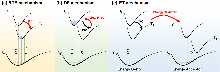
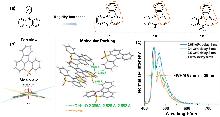
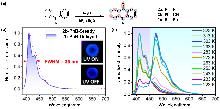
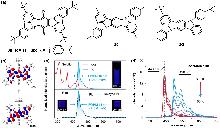
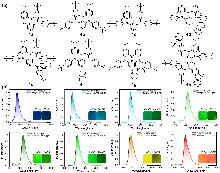
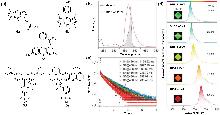
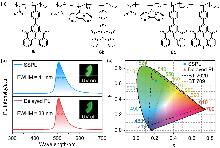
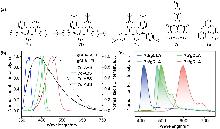
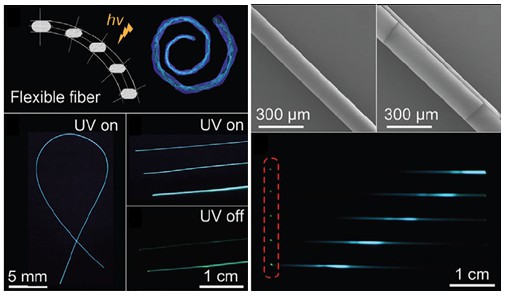
有机长余辉材料在高分辨显示、信息加密、生物成像等领域展现出广泛的应用潜力. 然而, 传统有机长余辉材料的发光光谱半峰宽(Full Width at Half Maximum, FWHM)通常较大(70~100 nm), 普遍存在色纯度低的问题, 难以满足高分辨光学应用需求. 近年来, 研究者通过材料设计创新和光物理过程调控, 成功实现了长寿命激发态与窄谱带(FWHM<50 nm)发射的结合, 显著提高了有机长余辉材料的色纯度. 窄谱带有机长余辉材料近年来得到了快速发展, 但目前尚缺乏系统的总结. 综述了窄谱带有机长余辉材料的设计策略, 从室温磷光机理(Room Temperature Phosphorescence, RTP)、延迟荧光机理(Delayed Fluorescence, DF)和能量转移机理(Energy Transfer, ET)三个方面, 详细总结了最新的研究进展, 并展望了未来的发展方向.
夏阳, 任凯茵, 王小野. 窄谱带有机长余辉材料的研究进展[J]. 有机化学, 2025, 45(11): 4026-4036.
Yang Xia, Kai-Yin Ren, Xiao-Ye Wang. Recent Advances in Narrowband Organic Afterglow Materials[J]. Chinese Journal of Organic Chemistry, 2025, 45(11): 4026-4036.








| [1] |
|
| [2] |
doi: 10.1002/adma.v28.45 |
| [3] |
doi: 10.1149/2.F06094IF |
| [4] |
doi: 10.1149/1.1837067 |
| [5] |
doi: 10.1023/A:1017930630889 |
| [6] |
doi: 10.1002/bio.v28.5 |
| [7] |
doi: 10.1016/S1002-0721(08)60358-0 |
| [8] |
doi: 10.1002/advs.v9.14 |
| [9] |
doi: 10.1038/s41467-025-59367-0 |
| [10] |
doi: 10.6023/cjoc202404003 |
|
(张惟, 李庚辰, 苏昊, 戴文博, 孙鹏, 石建兵, 佟斌, 蔡政旭, 董宇平, 有机化学, 2024, 44, 2523.)
doi: 10.6023/cjoc202404003 |
|
| [11] |
doi: 10.1038/s41467-020-16412-4 |
| [12] |
|
| [13] |
doi: 10.6023/cjoc201909012 |
|
(张亮, 李猛, 高庆宇, 陈传峰, 有机化学, 2020, 40, 516.)
doi: 10.6023/cjoc201909012 |
|
| [14] |
|
| [15] |
doi: 10.1021/ja01240a030 |
| [16] |
doi: 10.1038/s41570-023-00555-1 |
| [17] |
doi: 10.1016/j.pmatsci.2021.100914 |
| [18] |
|
| [19] |
doi: 10.6023/cjoc202004003 |
|
(严子昂, 邹雷, 马骧, 有机化学, 2020, 40, 1814.)
doi: 10.6023/cjoc202004003 |
|
| [20] |
doi: 10.1039/D2CS00993E |
| [21] |
doi: 10.1038/s41578-020-0223-z |
| [22] |
doi: 10.1002/adma.v36.18 |
| [23] |
doi: 10.1038/s41467-024-48856-3 |
| [24] |
doi: 10.1002/adma.v36.49 |
| [25] |
doi: 10.1039/d1sc03800a pmid: 34880986 |
| [26] |
doi: 10.1039/d3sc00838j pmid: 37234907 |
| [27] |
doi: 10.3389/fchem.2021.812593 |
| [28] |
doi: 10.1039/D0CC01949F |
| [29] |
doi: 10.1039/D4SC02841D |
| [30] |
doi: 10.1039/C9TC04176A |
| [31] |
doi: 10.2116/analsci.21.303 |
| [32] |
doi: 10.1021/acs.jpca.9b11943 pmid: 32172561 |
| [33] |
doi: 10.1002/adom.v9.6 |
| [34] |
doi: 10.1016/0022-2852(64)90126-2 |
| [35] |
|
| [36] |
doi: 10.1021/acs.accounts.2c00307 |
| [37] |
doi: 10.1002/smtd.v9.3 |
| [38] |
doi: 10.1039/D4CP04641B |
| [39] |
doi: 10.1021/acsanm.3c02770 |
| [40] |
doi: 10.1021/acs.chemrev.3c00755 |
| [41] |
doi: 10.1038/nature11687 |
| [42] |
doi: 10.1002/adma.v28.14 |
| [43] |
doi: 10.6023/cjoc202212037 |
|
(张祎, 杜呈卓, 李继坤, 王小野, 有机化学, 2023, 43, 1645.)
doi: 10.6023/cjoc202212037 |
|
| [44] |
|
| [45] |
doi: 10.1016/j.cej.2021.134197 |
| [46] |
doi: 10.1002/anie.v60.31 |
| [47] |
doi: 10.1021/acs.chemmater.4c00161 |
| [48] |
doi: 10.1039/D3CC04012G |
| [49] |
doi: 10.1038/s41467-025-61513-7 |
| [50] |
doi: 10.1039/D5MH00980D |
| [51] |
doi: 10.1002/anie.v60.52 |
| [52] |
doi: 10.1002/adfm.v33.1 |
| [53] |
doi: 10.3390/molecules29102343 |
| [54] |
doi: 10.1021/acsami.4c22254 |
| [55] |
doi: 10.1002/andp.v437:1/2 |
| [56] |
doi: 10.1063/1.1725670 |
| [57] |
doi: 10.1063/1.1725671 |
| [58] |
doi: 10.1002/adma.v35.36 |
| [59] |
doi: 10.1038/s41467-023-36105-y pmid: 36710271 |
| [60] |
doi: 10.1002/adma.v36.41 |
| [61] |
doi: 10.1002/adma.v37.14 |
| [62] |
doi: 10.1002/adma.v28.4 |
| [1] | 张念双, 秦玉静, 王硕博, 梁于, 杨文君, 孙其坤, 薛善锋. 键锁N-苯基咔唑分子内旋转制备超长室温磷光聚合物[J]. 有机化学, 2025, 45(11): 4178-4184. |
| [2] | 吴家杰, 朱宸, 王毅朴, 杨永珍, 张浩可. 多芳基烷烃中的空间共轭[J]. 有机化学, 2025, 45(11): 4037-4047. |
| [3] | 张祎, 杜呈卓, 李继坤, 王小野. 基于硼氮杂稠环芳烃的多重共振热活化延迟荧光材料研究进展[J]. 有机化学, 2023, 43(5): 1645-1690. |
| [4] | 杨晓东, 郑小康, 董海亮, 孙静, 王华. 圆偏振热活化延迟荧光材料及其器件的研究进展[J]. 有机化学, 2023, 43(4): 1292-1309. |
| [5] | 陈兆华, 曹西颖, 陈思鸿, 宇世伟, 林燕兰, 林舒婷, 汪朝阳. 三取代烯烃型聚集诱导发光分子的设计、合成与应用[J]. 有机化学, 2022, 42(8): 2355-2363. |
| [6] | 秦成远, 刘威, 聂永, 高迎, 苗金玲, 李天瑞, 蒋绪川. 聚集诱导发光有机氟化合物的研究进展[J]. 有机化学, 2020, 40(8): 2232-2253. |
| [7] | 张亮, 李猛, 高庆宇, 陈传峰. 基于卤素取代邻苯二甲酰亚胺新型有机发光材料的合成及其性能研究[J]. 有机化学, 2020, 40(2): 516-520. |
| [8] | 郑月游, 谢琼琳, 王炳喜. 10-甲基-10H-吩噻嗪-5,5-二氧化物衍生物的合成及其光物理和电化学性质[J]. 有机化学, 2016, 36(4): 803-811. |
| [9] | 霍延平, 方小明, 黄宝华, 张焜, 聂晓李, 曾和平. 芴类化合物的研究新进展[J]. 有机化学, 2012, 32(07): 1169-1185. |
| 阅读次数 | ||||||
|
全文 |
|
|||||
|
摘要 |
|
|||||


