有机化学 ›› 2026, Vol. 46 ›› Issue (9): 3722-3730.DOI: 10.6023/cjoc202601042 上一篇 下一篇
研究论文
张丹维a,*( ), 高睿a, 冯科b, 余尚博b, 王辉a, 周伟a,*(), 黎占亭a,b,*()
收稿日期:2026-01-26
修回日期:2026-04-06
发布日期:2026-05-07
基金资助:
Dan-Wei Zhanga,*(), Rui Gaoa, Ke Fengb, Shangbo Yub, Hui Wanga, Wei Zhoua,*(), Zhan-Ting Lia,b,*()
Received:2026-01-26
Revised:2026-04-06
Published:2026-05-07
Contact:
About author:Dedicated to the 100th anniversary of the birth of Professor Xikui Jiang.
Supported by:文章分享
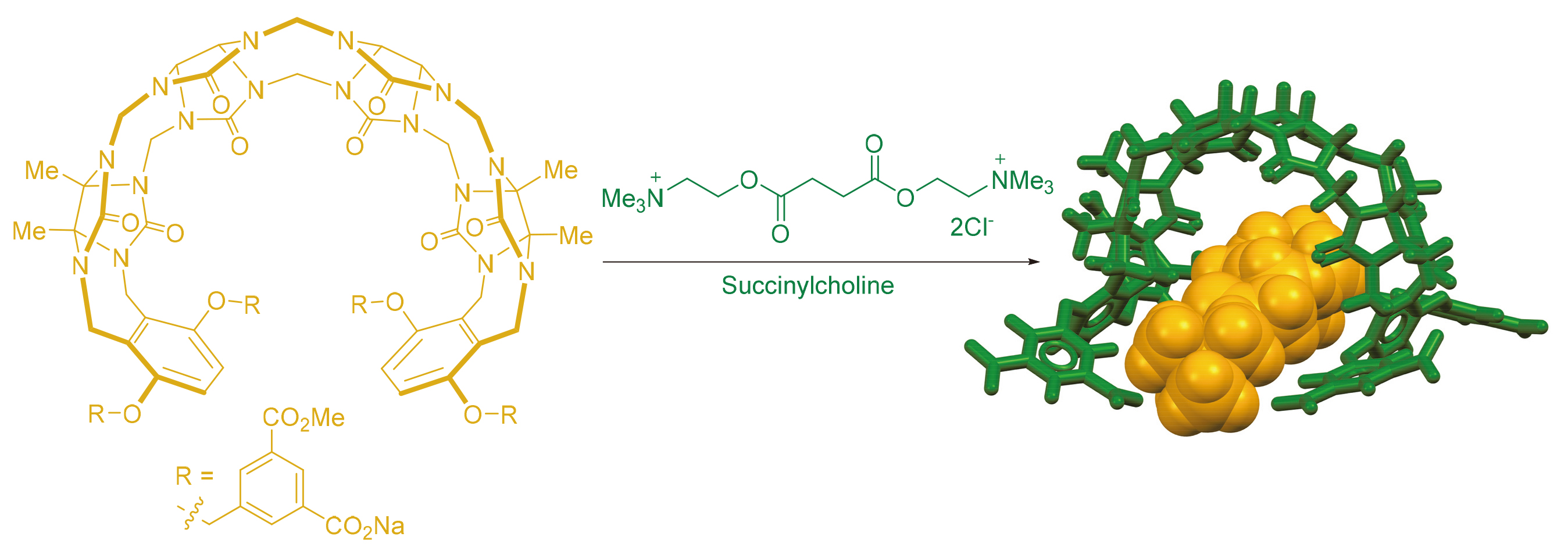
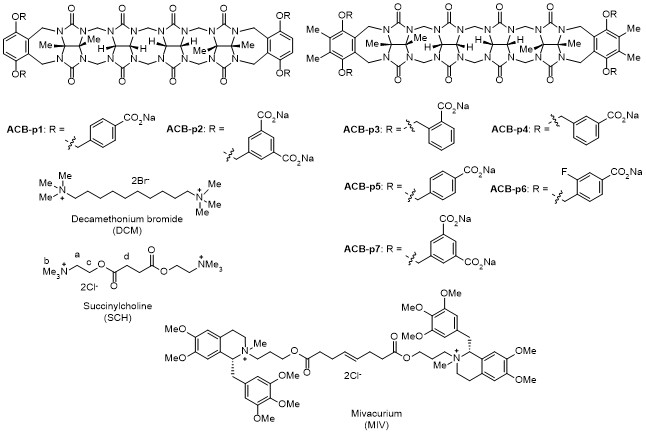
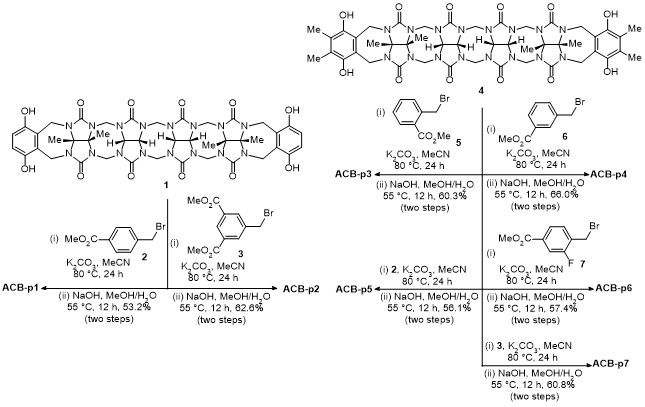
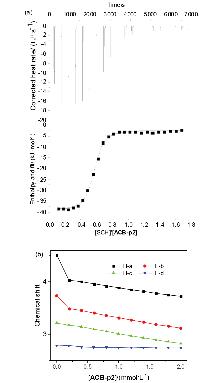
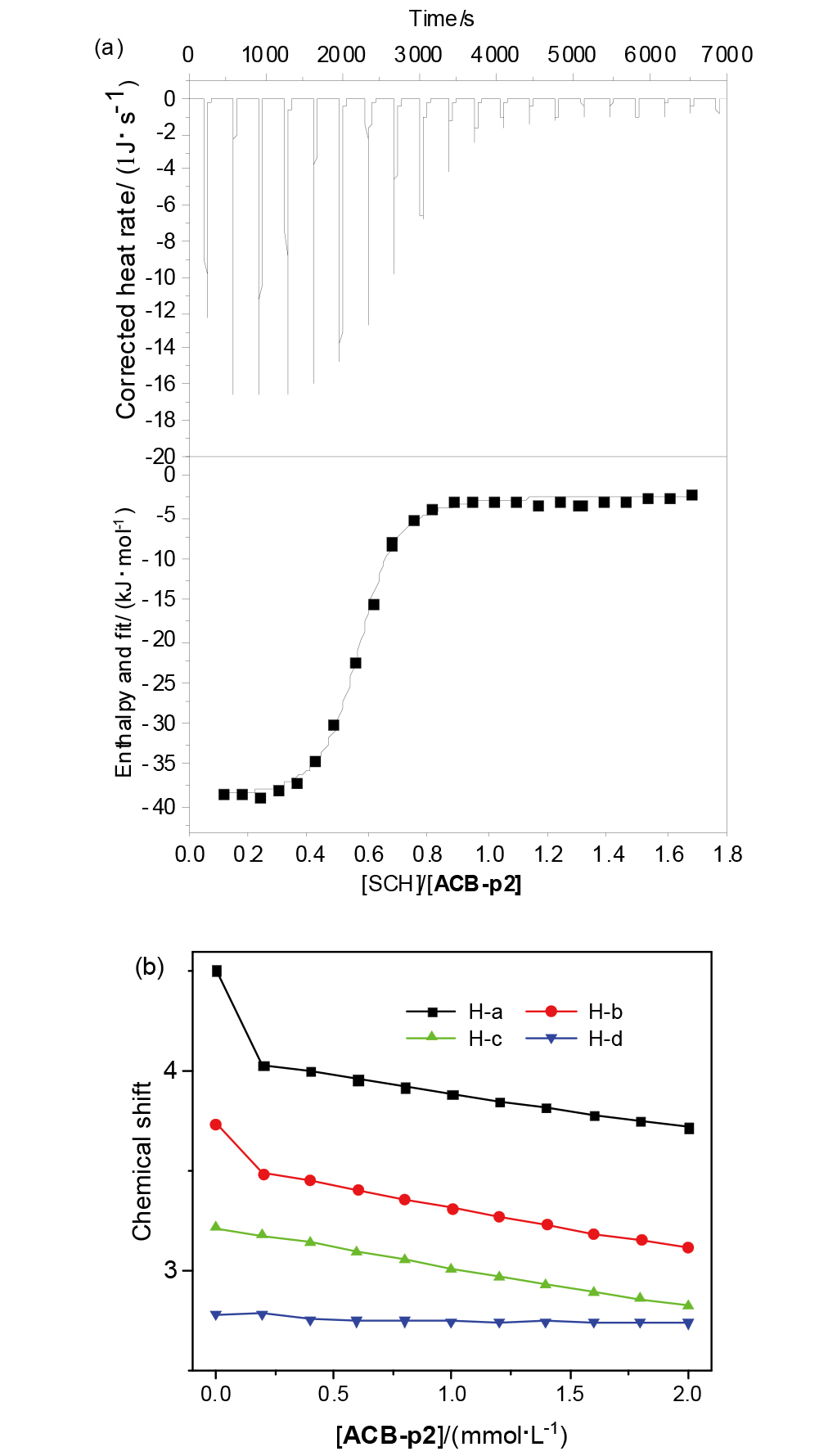
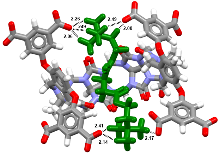
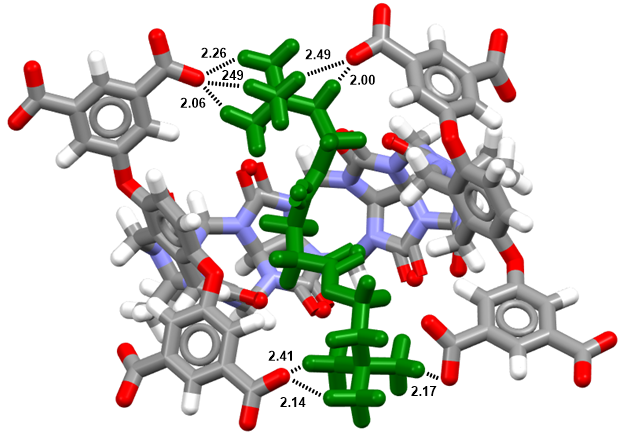
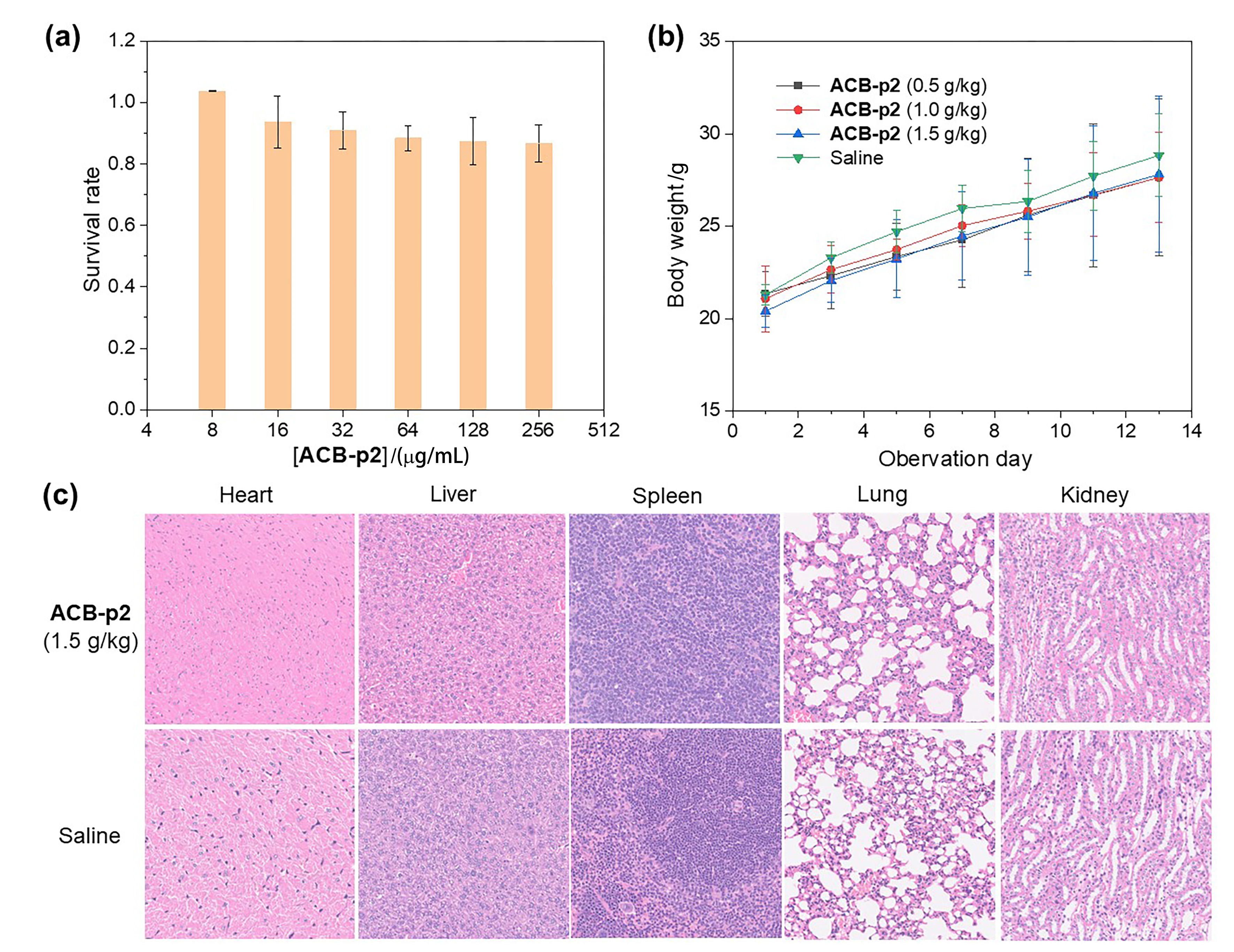
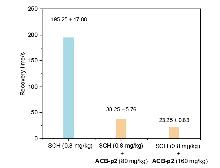
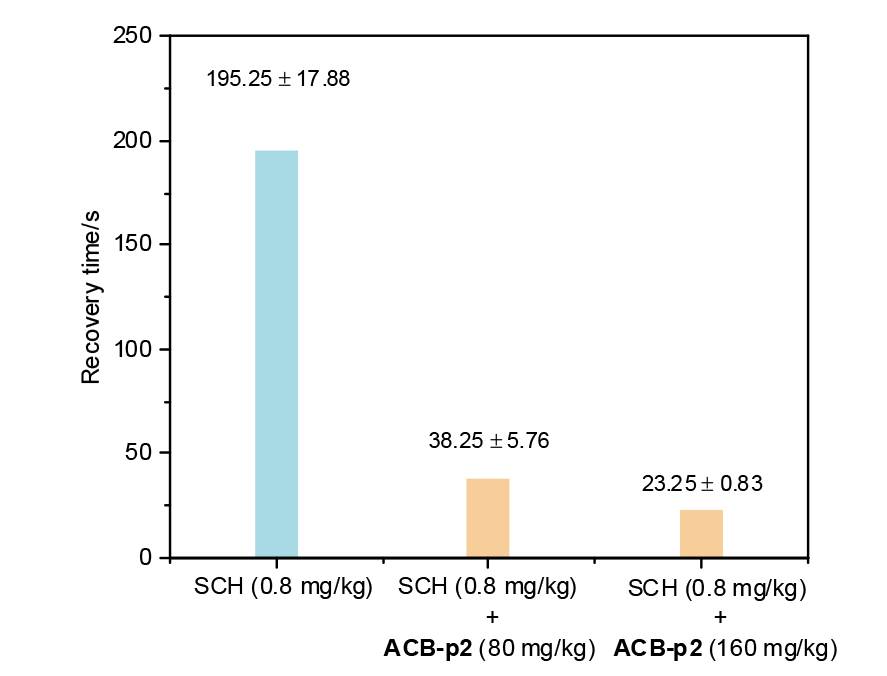
设计合成了7个新的开环葫芦脲化合物, 用于研究其通过主客体结合拮抗琥珀胆碱肌肉松弛活性的功能. 研究发现, 化合物ACB-p2具有高水溶性和生物相容性, 对小鼠的最大耐受剂量高达1500 mg/kg. 化合物ACB-p2对临床唯一的短效神经肌肉阻滞剂琥珀胆碱(SCH)具有高结合亲和力(结合常数Ka=1.7×10⁵ L•mol-1). 1H NMR实验和密度泛函理论计算研究表明, ACB-p2主要通过其疏水空腔包结琥珀胆碱的胆碱片段实现高效结合, 并进一步通过多重分子间 C—H…O氢键作用稳定. 大鼠试验模型揭示, 80和160 mg/kg剂量的ACB-p2可快速拮抗琥珀胆碱引发的神经肌肉阻滞作用, 能将大鼠自主呼吸恢复时间从平均195 s显著缩短至38和23 s, 分别对应于11.8和5.9倍的治疗指数, 显示出开环葫芦脲快速拮抗琥珀胆碱的潜力.
张丹维, 高睿, 冯科, 余尚博, 王辉, 周伟, 黎占亭. 主客体络合驱动的开环葫芦脲对琥珀胆碱神经肌肉阻滞的快速拮抗[J]. 有机化学, 2026, 46(9): 3722-3730.
Dan-Wei Zhang, Rui Gao, Ke Feng, Shangbo Yu, Hui Wang, Wei Zhou, Zhan-Ting Li. Acyclic Cucurbit[n]uril as Supramolecular Antagonist for Rapidly Reversing the Neuromuscular Blockade of Succinylcholine through Host-Guest Complexation[J]. Chinese Journal of Organic Chemistry, 2026, 46(9): 3722-3730.
| Solubility/ (mg•mL-1) | Kab/(×103 L•mol-1) | |||
|---|---|---|---|---|
| SCH | DCM | MIV | ||
| ACB-p1 ACB-p2 ACB-p3 ACB-p4 ACB-p5 ACB-p6 ACB-p7 | 65 225 62 75 78 124 216 | 230±9.1 150±7.7 12±0.98 1.0±0.099 130±5.1 67±2.6 79±12 | 210±8.7 170±6.6 —c —c 160±6.1 139±8.2 170±7.9 | 1.7±0.71 15±0.95 9.1±1.4 7.2±1.7 8.9±0.57 2.9±0.60 8.3±0.22 |
| Solubility/ (mg•mL-1) | Kab/(×103 L•mol-1) | |||
|---|---|---|---|---|
| SCH | DCM | MIV | ||
| ACB-p1 ACB-p2 ACB-p3 ACB-p4 ACB-p5 ACB-p6 ACB-p7 | 65 225 62 75 78 124 216 | 230±9.1 150±7.7 12±0.98 1.0±0.099 130±5.1 67±2.6 79±12 | 210±8.7 170±6.6 —c —c 160±6.1 139±8.2 170±7.9 | 1.7±0.71 15±0.95 9.1±1.4 7.2±1.7 8.9±0.57 2.9±0.60 8.3±0.22 |
| [1] |
doi: 10.1186/s12893-025-02763-6 |
| [2] |
doi: 10.1177/014107680209500713 |
| [3] |
(a)
pmid: 10597098 |
|
(b)
doi: 10.1111/acem.v27.1 pmid: 10597098 |
|
| [4] |
doi: 10.1002/phar.v45.9 |
| [5] |
doi: 10.7150/thno.34947 |
| [6] |
doi: 10.1039/D5CC00728C |
| [7] |
doi: 10.1016/j.chempr.2022.11.019 pmid: 37346394 |
| [8] |
doi: 10.1007/s11426-024-1971-4 |
| [9] |
(a)
doi: 10.1002/cjoc.v43.16 |
|
(b)
doi: 10.6023/A24110357 |
|
|
(郭煜静, 张梦盼, 巩子彤, 赵云莉, 石康琦, 何磊良, 化学学报, 2025, 83, 309.)
doi: 10.6023/A24110357 |
|
|
(c)
doi: 10.6023/cjoc202407038 |
|
|
(张文博, 苏思铭, 杨鹏, 有机化学, 2025, 45, 1395.)
doi: 10.6023/cjoc202407038 |
|
|
(d)
doi: 10.6023/cjoc202502040 |
|
|
(黄胜兰, 杨留攀, 王力立, 姚欢, 有机化学, 2025, 45, 3624.)
|
|
| [10] |
(a)
doi: 10.1016/j.cclet.2024.109854 |
|
(b)
doi: 10.1021/acs.jmedchem.5c02487 |
|
| [11] |
doi: 10.1007/s11426-023-1857-2 |
| [12] |
doi: 10.1016/j.cclet.2024.109666 |
| [13] |
(a)
doi: 10.1007/s11426-024-2231-1 |
|
(b)
doi: 10.1007/s11426-024-2065-2 |
|
|
(c)
doi: 10.1007/s11426-024-2301-3 |
|
|
(d)
doi: 10.1021/acs.jmedchem.5c00094 |
|
| [14] |
(a)
doi: 10.1021/jm900811z pmid: 19827835 |
|
(b)
doi: 10.1016/j.cclet.2023.109119 pmid: 19827835 |
|
|
(c)
doi: 10.1016/j.cclet.2023.109161 pmid: 19827835 |
|
|
(d)
doi: 10.7150/thno.53459 pmid: 19827835 |
|
|
(e)
doi: 10.1039/D0CS00454E pmid: 19827835 |
|
| [15] |
(a)
doi: 10.1016/j.biomaterials.2025.123378 |
|
(b)
doi: 10.1002/adhm.v14.26 |
|
|
(c)
doi: 10.1021/acs.jmedchem.4c02475 |
|
| [16] |
doi: 10.1016/j.cclet.2023.108645 |
| [17] |
(a)
doi: 10.1002/cjoc.v43.9 |
|
(b)
doi: 10.1016/j.cclet.2025.110831 |
|
| [18] |
(a)
doi: 10.1002/cjoc.v42.20 |
|
(b)
doi: 10.1002/cjoc.v43.10 |
|
|
(c)
doi: 10.1002/cjoc.v43.14 |
|
|
(d)
doi: 10.1016/j.cclet.2025.110937 |
|
|
(e)
doi: 10.3390/toxins17030104 |
|
|
(f)
doi: 10.6023/cjoc202505001 |
|
|
(赵晨阳, 任静晓, 欧阳光辉, 刘鸣华, 有机化学, 2025, 45, 4171.)
|
|
| [19] |
(a)
doi: 10.1007/s40265-016-0604-1 |
|
(b)
doi: 10.7150/thno.93654 |
|
|
(c)
doi: 10.6023/cjoc202412027 |
|
|
尹烨, 王惠, 吴建芳, 王力立, 杨留攀, 赵承达, 姚欢, 有机化学, 2025, 45, 2953).
doi: 10.6023/cjoc202412027 |
|
| [20] |
(a)
doi: 10.31635/ccschem.025.202505711 |
|
(b)
doi: 10.1016/j.cclet.2024.110651 |
|
|
(c)
doi: 10.1039/D1CS00821H |
|
|
(d)
doi: 10.1021/acs.accounts.2c00462 |
|
| [21] |
doi: 10.1021/acs.accounts.2c00335 |
| [22] |
(a)
doi: 10.1021/acsapm.4c00571 |
|
(b)
|
|
|
(c)
doi: 10.1039/C4TX00082J |
|
|
(d)
doi: 10.1016/j.cclet.2025.111353 |
|
|
(e)
doi: 10.1016/j.cclet.2023.109363 |
|
| [23] |
(a)
doi: 10.1021/acs.jmedchem.2c01677 |
|
(b)
doi: 10.1016/j.preme.2025.100034 |
|
| [24] |
doi: 10.1038/nchem.1326 |
| [25] |
doi: 10.1002/anie.v51.45 |
| [26] |
doi: 10.1021/acs.jmedchem.4c01960 |
| [27] |
doi: 10.1021/acs.jmedchem.3c02110 |
| [28] |
|
| [29] |
doi: 10.1007/s11426-025-3291-y |
| [30] |
doi: 10.1002/ddr.v79.8 |
| [31] |
|
|
(徐叔云, 卞如濂, 陈修, 药理实验方法学, 人民卫生出版社, 北京, 2002, p. 214.)
|
|
| [32] |
doi: 10.5493/wjem.v14.i1.87202 pmid: 38590305 |
| [1] | 黄胜兰, 杨留攀, 王力立, 姚欢. 手性大环化合物在超分子催化中的研究进展及应用[J]. 有机化学, 2025, 45(10): 3624-3643. |
| [2] | 胡健灵, 张超, 朱文达, 何业谱, 彭姝羚, 陈振强, 李明月, 刘志军, 陈河如. 新型1,2-二取代肼的设计合成及抗癌活性初步研究[J]. 有机化学, 2024, 44(6): 1870-1883. |
| [3] | 许芹芳, 胡健灵, 刘园林, 张超, 李明月, 彭姝羚, 刘志军, 陈河如. 具更佳成药性的新型三氮烯化合物的设计、合成及抗癌活性研究[J]. 有机化学, 2024, 44(5): 1606-1619. |
| [4] | 钟玉梅, 邹小颖, 卓小丫, 王逸涵, 申佳奕, 郑绿茵, 郭维. 4-氧代-2-亚胺基噻唑烷-5-亚基乙酸乙酯类化合物的设计、合成及抗癌活性[J]. 有机化学, 2023, 43(4): 1452-1461. |
| [5] | 程璐, 曾飞, 王小峰. 均苯四甲酸二酰亚胺拓展柱[6]芳烃与羧酸盐客体分子的络合性能研究[J]. 有机化学, 2023, 43(1): 352-356. |
| [6] | 王泽坤, 徐子悦, 李娟娟, 余尚博, 王辉, 郭东升, 张丹维, 黎占亭. 超分子有机框架对分子容器的水相增溶的梯度增强效应[J]. 有机化学, 2022, 42(7): 2236-2242. |
| [7] | 刘旭波, 林佳乐, 王辉, 张丹维, 黎占亭. 开环葫芦脲在水中对芳烃和芳醛的增溶和对腙大环形成的促进作用[J]. 有机化学, 2020, 40(3): 663-668. |
| [8] | 张潮, 刘志军, 李艳冰, 何业谱, 林晓洪, 陈河如. 靶向抗肿瘤药N-(N'-苄氧羰基甘氨酰脯氨酰)丙卡巴肼(Z-GP-Pcb)的环境友好合成及其透过血脑屏障活性评价[J]. 有机化学, 2020, 40(2): 536-540. |
| [9] | 李晶, 韩莹, 陈传峰. 新型大环芳烃的研究进展[J]. 有机化学, 2020, 40(11): 3714-3737. |
| [10] | 董浩然, 苏比丁·塔依尔, 王鑫, 雷晓光. 共价抑制剂的研究进展[J]. 有机化学, 2018, 38(9): 2296-2306. |
| [11] | 师海雄, 程晓斌, 林奇, 姚虹, 张有明, 魏太保. 甲氧基柱[5]芳烃对苯并唑类杂环化合物的主客体作用研究[J]. 有机化学, 2018, 38(7): 1718-1724. |
| [12] | 张馨怡, 袁盛, 赵家强, 张磊, 张潮, 王日康, 陈河如. 栀子酰胺A-他克林杂合体的设计合成及其对6-羟多巴胺诱导的PC12细胞损伤的保护作用[J]. 有机化学, 2017, 37(4): 873-880. |
| [13] | 姚欢, 孙娇囡, 柯华, 杨留攀, 李加荣, 蒋伟. 桥联双萘及其衍生物的合成以及对有机阳离子的络合作用[J]. 有机化学, 2017, 37(3): 603-607. |
| [14] | 赵飞, 王江, 丁晓, 舒双杰, 柳红. 磺酰基在药物分子设计中的应用[J]. 有机化学, 2016, 36(3): 490-501. |
| [15] | 陈木娟, 韩淑娟, 廖振华, 黄丹, 李颖, 蒋腊生. 吡啶氮氧化衍生物与酰胺大环化合物络合性能与结构的关系[J]. 有机化学, 2015, 35(11): 2358-2365. |
| 阅读次数 | ||||||
|
全文 |
|
|||||
|
摘要 |
|
|||||