有机化学 ›› 2026, Vol. 46 ›› Issue (9): 3697-3703.DOI: 10.6023/cjoc202604043 上一篇 下一篇
研究论文
沈义函a,†, 张瑞影a,b,†, 高捷龙a, 李明港a, 李远明a,b,*( ), 叶克印a,*()
收稿日期:2026-04-28
修回日期:2026-06-07
发布日期:2026-07-14
作者简介:† 共同第一作者
基金资助:
Yihan Shena, Ruiying Zhanga,b, Jielong Gaoa, Minggang Lia, Yuanming Lia,b,*(), Keyin Yea,*()
Received:2026-04-28
Revised:2026-06-07
Published:2026-07-14
Contact:
About author:Dedicated to the 100th anniversary of the birth of Professor Xikui Jiang.
† These authors contributed equally to this work
Supported by:文章分享
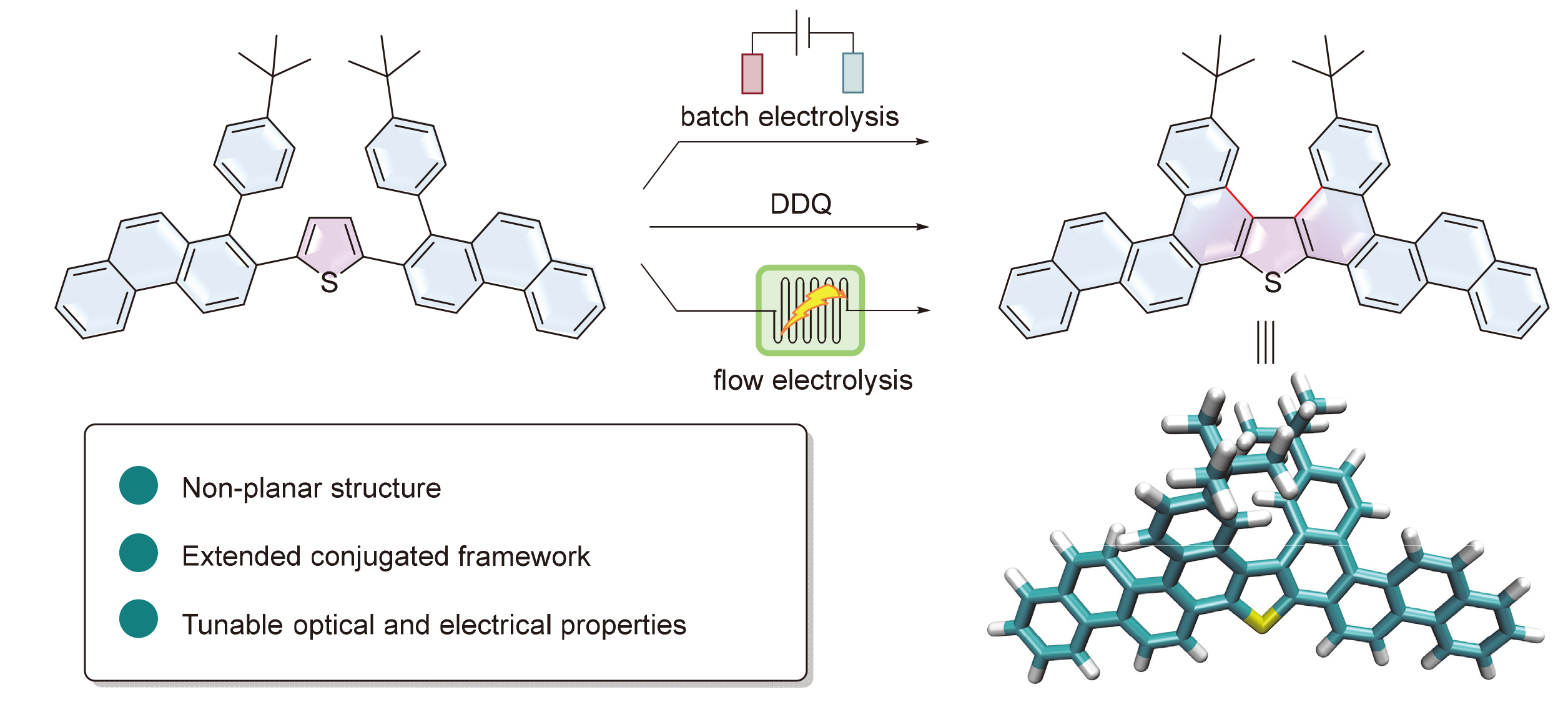
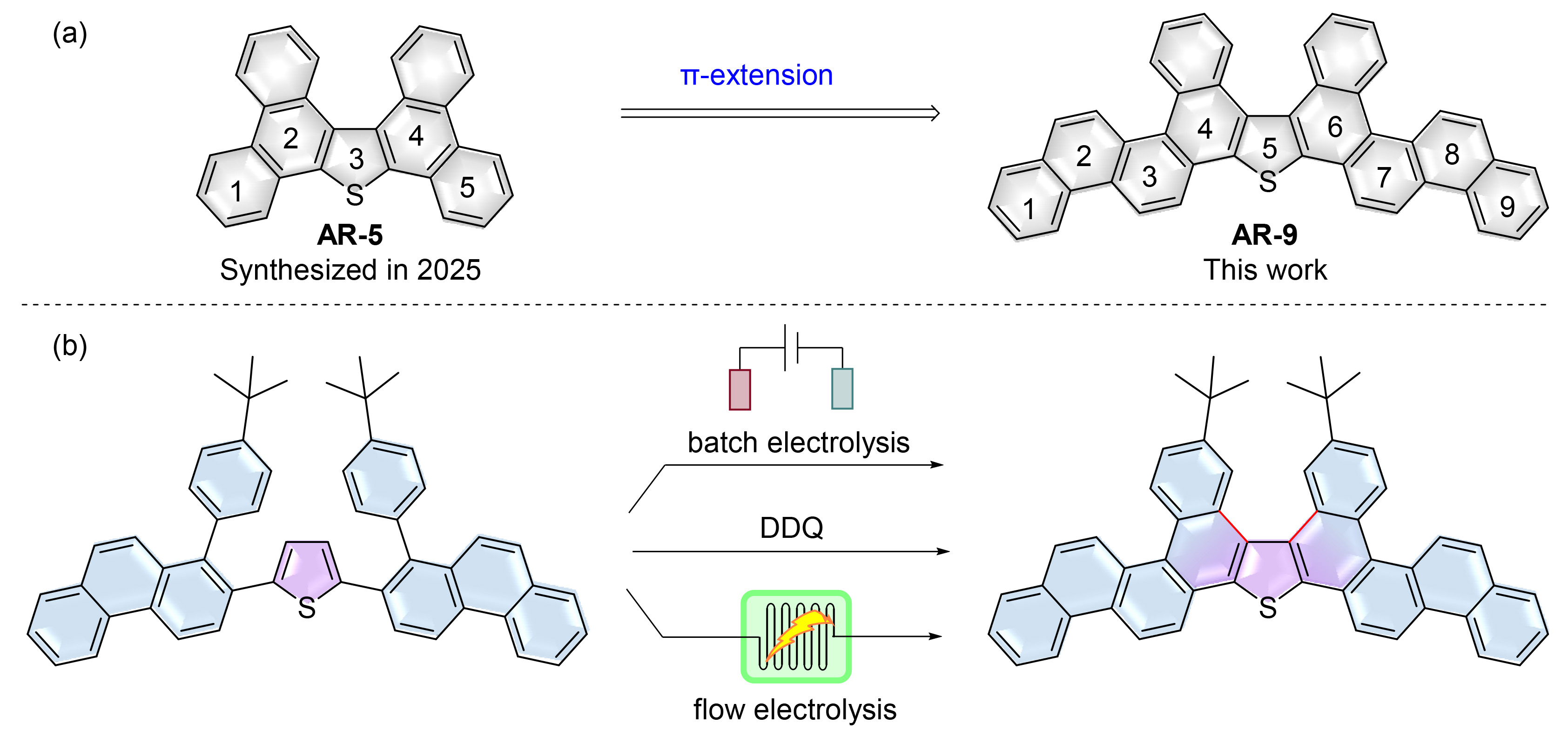
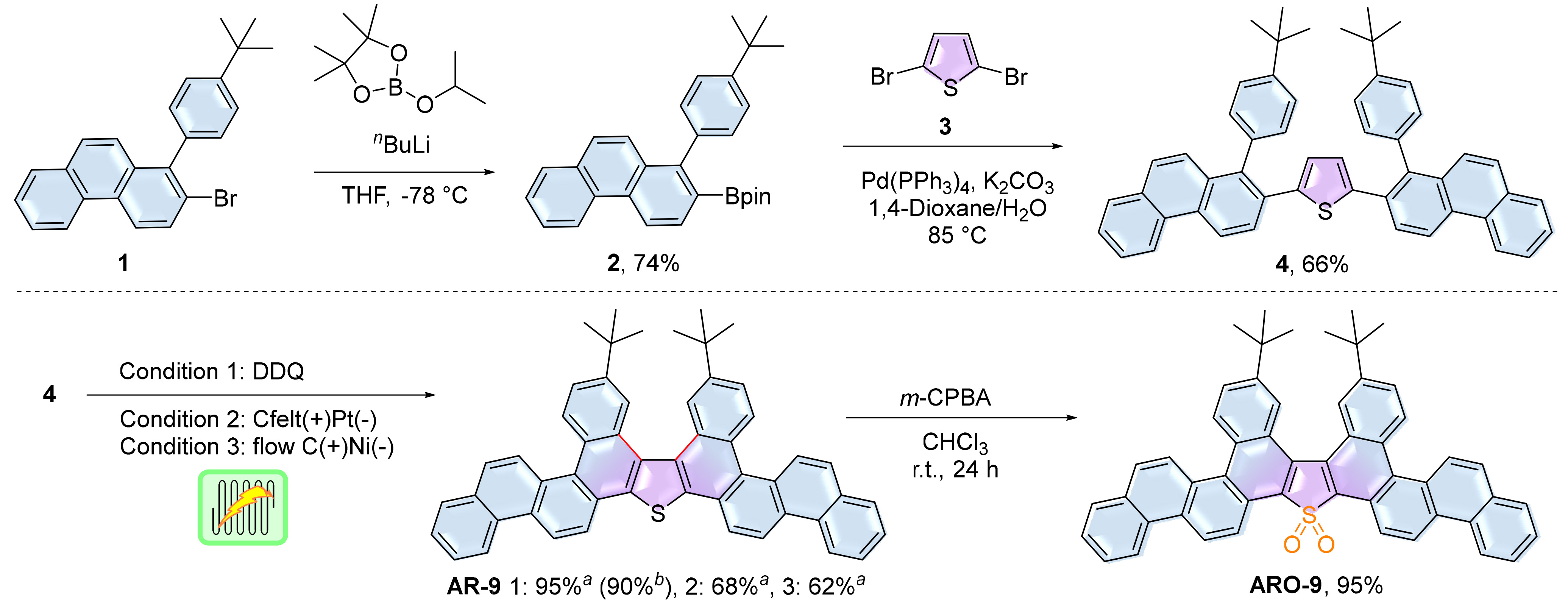
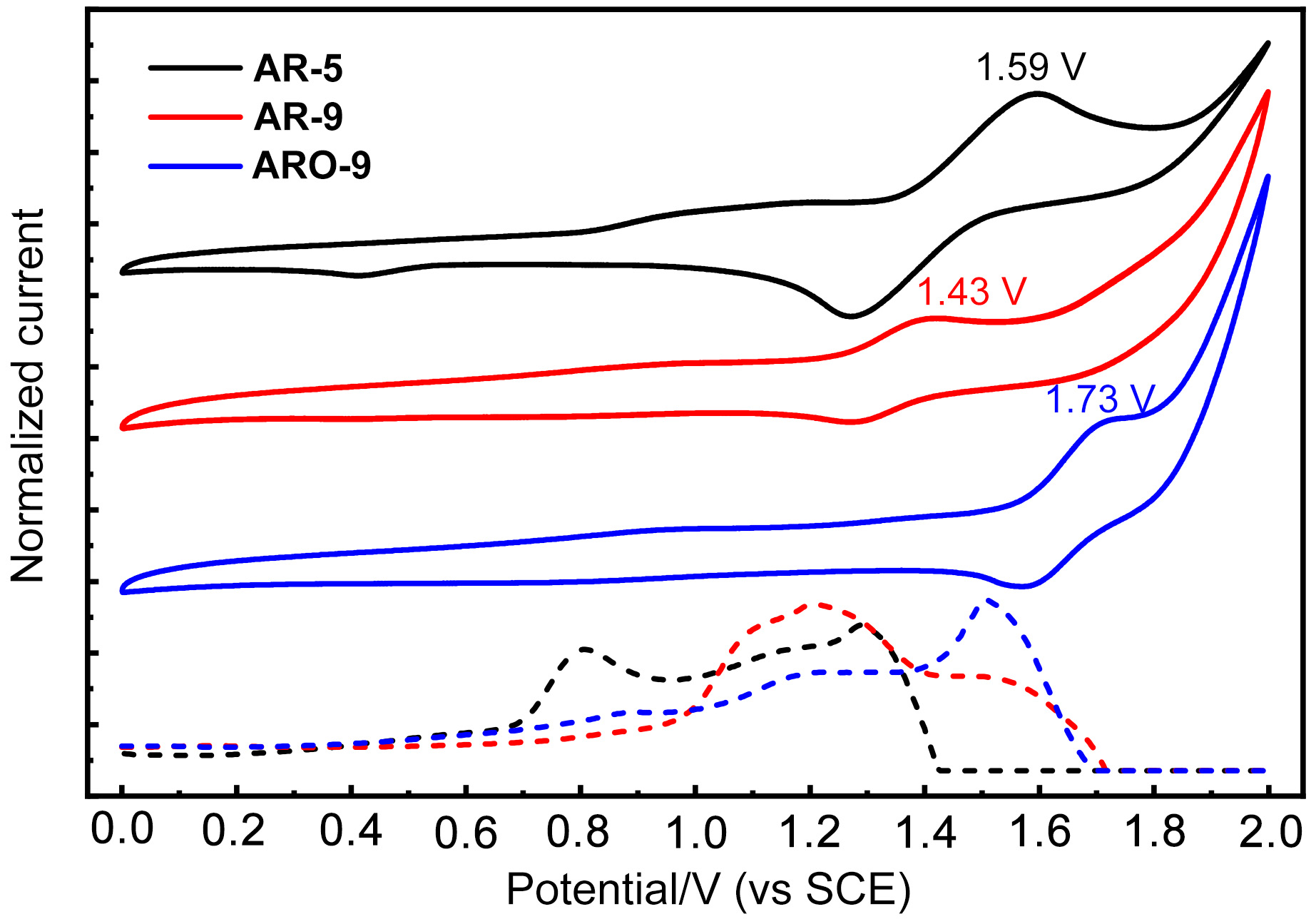
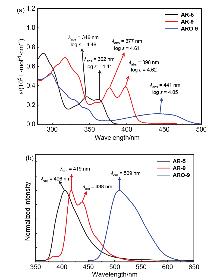
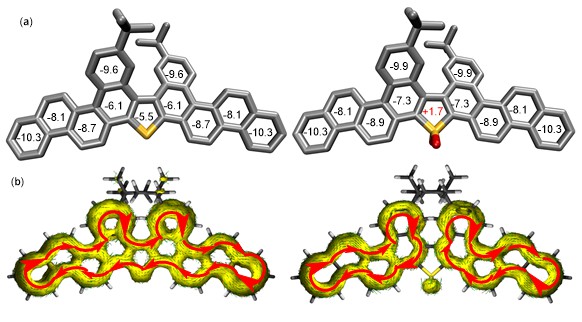
通过铃木-宫浦偶联和肖尔反应, 成功合成了一种具有扭曲结构的硫杂石墨烯纳米条带分子. 将噻吩单元选择性地氧化为砜基团, 能够显著调控该分子的光物理和电化学性质. 进一步采用密度泛函理论计算, 阐明了硫杂石墨烯纳米条带分子及其氧化物的电子激发机制与芳香性特征. 本工作为制备具有可调电子性质的硫掺杂石墨烯纳米带提供了一条简洁高效的合成路线.
沈义函, 张瑞影, 高捷龙, 李明港, 李远明, 叶克印. 硫杂石墨烯纳米条带的合成与性质研究[J]. 有机化学, 2026, 46(9): 3697-3703.
Yihan Shen, Ruiying Zhang, Jielong Gao, Minggang Li, Yuanming Li, Keyin Ye. Synthesis and Properties of Sulfur-Containing Graphene Nanoribbons[J]. Chinese Journal of Organic Chemistry, 2026, 46(9): 3697-3703.
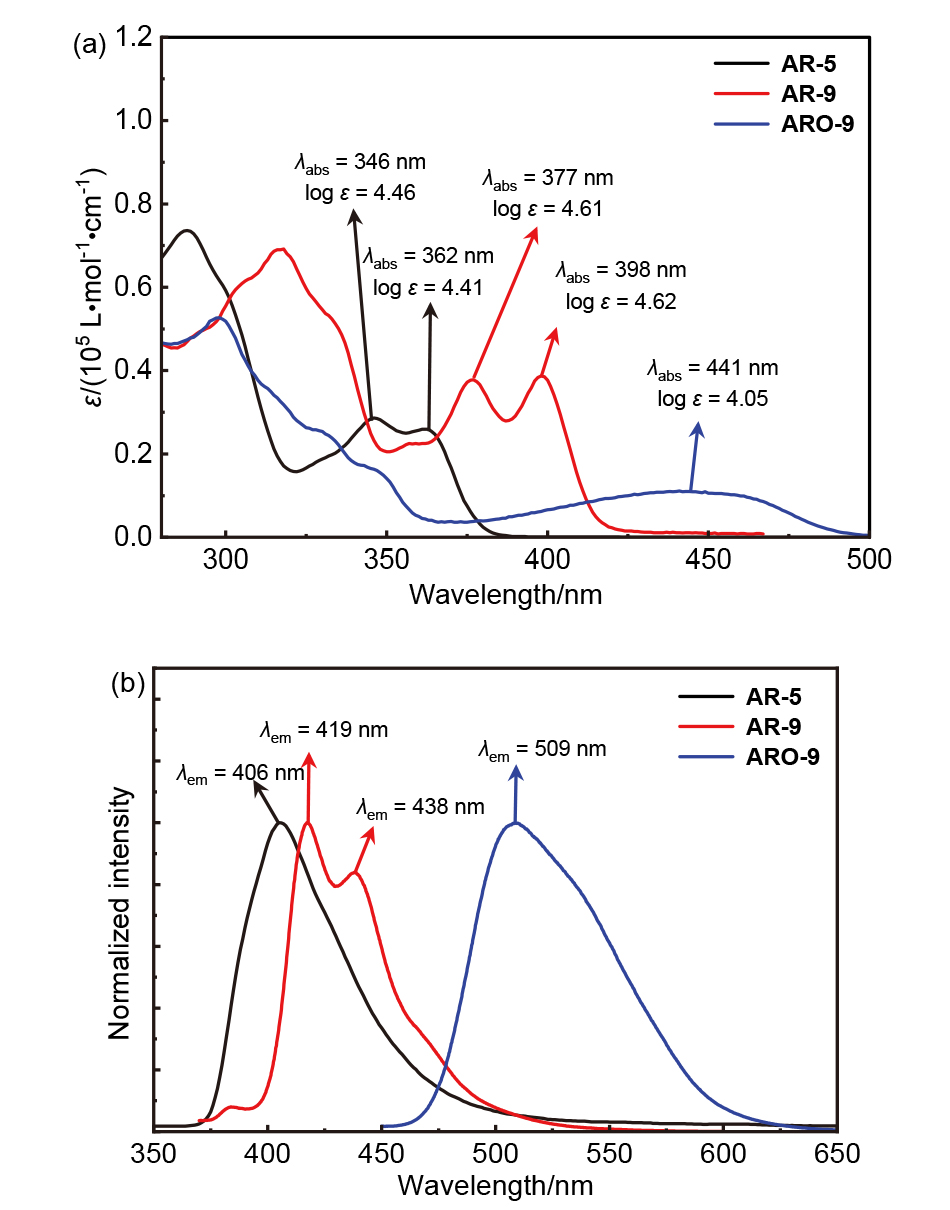
| Compd. | λabsa/nm | λema/nm | EHOMOb/eV | ELUMOb/eV | Egb/eV |
|---|---|---|---|---|---|
| AR-5 | 288/346/362 | 386 | -5.26 | -1.26 | 4.00 |
| AR-9 | 318/377/398 | 419/438 | -5.21 | -1.58 | 3.64 |
| ARO-9 | 298/441 | 509 | -5.51 | -2.24 | 3.27 |
| Compd. | λabsa/nm | λema/nm | EHOMOb/eV | ELUMOb/eV | Egb/eV |
|---|---|---|---|---|---|
| AR-5 | 288/346/362 | 386 | -5.26 | -1.26 | 4.00 |
| AR-9 | 318/377/398 | 419/438 | -5.21 | -1.58 | 3.64 |
| ARO-9 | 298/441 | 509 | -5.51 | -2.24 | 3.27 |
| [1] |
doi: 10.1021/acs.chemrev.1c00449 |
| [2] |
doi: 10.1021/acsnano.3c07970 |
| [3] |
doi: 10.1021/cr068010r |
| [4] |
doi: 10.1039/C5CS00051C |
| [5] |
doi: 10.1016/j.cclet.2016.03.011 |
| [6] |
doi: 10.1021/acs.accounts.9b00322 |
| [7] |
doi: 10.1021/jacs.2c02645 |
| [8] |
doi: 10.1039/D4SC08353A |
| [9] |
doi: 10.1002/anie.v65.21 |
| [10] |
doi: 10.1021/jp410501u |
| [11] |
doi: 10.1016/j.cej.2016.11.130 |
| [12] |
doi: 10.1039/D1TB00871D |
| [13] |
doi: 10.1007/s12274-017-1550-2 |
| [14] |
doi: 10.1002/anie.201210238 pmid: 23852649 |
| [15] |
doi: 10.1038/s41570-021-00308-y |
| [16] |
doi: 10.1016/j.cclet.2025.110939 |
| [17] |
doi: 10.6023/cjoc202107063 |
|
(陈星宇, 李继坤, 王小野, 有机化学, 2021, 41, 4105.)
doi: 10.6023/cjoc202107063 |
|
| [18] |
doi: 10.1021/acs.chemrev.2c00186 |
| [19] |
doi: 10.1002/adsc.v359.8 |
| [20] |
|
| [21] |
doi: 10.1021/acs.chemrev.7b00397 |
| [22] |
doi: 10.1021/acs.accounts.9b00539 |
| [23] |
|
| [24] |
doi: 10.1021/acs.cgd.5c00966 |
| [25] |
doi: 10.1021/jacsau.5c00653 |
| [26] |
doi: 10.1021/acs.orglett.4c00445 |
| [27] |
|
| [28] |
doi: 10.1039/C9SC00334G |
| [29] |
|
| [30] |
doi: 10.1063/1.4952647 |
| [31] |
pmid: 12964878 |
| [32] |
doi: 10.1021/cr030088+ |
| [33] |
pmid: 16218566 |
| [34] |
doi: 10.1038/s44160-022-00197-z |
| [1] | 马超, 徐晓玲, 骆翔, 鲁瑞娟, 虞国棋, 蔡涛. 电化学促进邻炔基苯甲酸酯与硫酚的自由基串联环化反应合成4-硫代异香豆素[J]. 有机化学, 2026, 46(3): 1039-1049. |
| [2] | 何卫保, 易荣楠, 杨梓, 伍智林, 何卫民. Langlois试剂在电化学三氟甲基化反应中的应用进展[J]. 有机化学, 2025, 45(10): 3534-3545. |
| [3] | 杨帆, 方婷, 杨桂春, 高梦. 亚硝基苯参与的电化学串联环化反应构建喹啉/吡咯[J]. 有机化学, 2024, 44(3): 1021-1030. |
| [4] | 何蔺恒, 夏稳, 周玉祥, 于贤勇. 电催化N-芳基甘氨酸和苯并[e][1,2,3]噁噻嗪-2,2-二氧化物的串联脱羧环化反应[J]. 有机化学, 2024, 44(3): 997-1004. |
| [5] | 叶增辉, 刘华清, 张逢质. 有机光电催化合成研究进展[J]. 有机化学, 2024, 44(3): 840-870. |
| [6] | 陈远航, 何劲宇, 张博, 王延钊, 孔令轩, 钱伟烽, 王娜娜, 段闻喜, 欧阳妍妍, 朱翠菊, 徐浩. 不对称电化学有机合成[J]. 有机化学, 2024, 44(3): 748-779. |
| [7] | 岁丹丹, 岑南楠, 龚若蕖, 陈阳, 陈文博. 无支持电解质条件下连续流电化学合成三氟甲基化氧化吲哚[J]. 有机化学, 2023, 43(9): 3239-3245. |
| [8] | 张俊颖, 赵晓静, 李干鹏, 何永辉. 室温下电化学合成保护型有机硼酸RB(dan)[J]. 有机化学, 2023, 43(5): 1815-1823. |
| [9] | 潘永周, 蒙秀金, 王迎春, 何慕雪. 电化学固定CO2构建羧酸衍生物的研究进展[J]. 有机化学, 2023, 43(4): 1416-1434. |
| [10] | 黄嘉为, 李潇漫, 徐亮, 韦玉. α-酮酸与硫酚的电化学脱羧偶联: 一种合成硫代酸酯的新方法[J]. 有机化学, 2023, 43(2): 756-762. |
| [11] | 李海琼, 尹梦云, 谢芬芬, 张正兵, 韩盼, 敬林海. 通过电化学Appel反应合成腈[J]. 有机化学, 2022, 42(7): 2229-2235. |
| [12] | 锅小龙, 王玉贤, 赵志强, 王庆, 左剑, 王陆瑶. 电化学氧化下喹喔啉-2(1H)-酮的三氟甲基化及电描述符对反应性能的评价[J]. 有机化学, 2022, 42(2): 641-649. |
| [13] | 付拯江, 杨振江, 孙丽, 尹健, 伊学政, 蔡琥, 雷爱文. 无金属条件下亚磺酸钠与酚类化合物形成芳基磺酸酯的电化学合成反应[J]. 有机化学, 2022, 42(2): 600-606. |
| [14] | 李红霞, 陈棚, 伍智林, 陆雨函, 彭俊梅, 陈锦杨, 何卫民. 电化学促进的五元芳香杂环与硫氰酸铵氧化交叉脱氢偶联反应[J]. 有机化学, 2022, 42(10): 3398-3404. |
| [15] | 赵志恒, 李鸣, 周娅琴, 何永辉, 张丽珠, 李干鹏, 谷利军. 电化学脱氢[3+2]环化反应合成取代的1,2,4-三氮唑衍生物[J]. 有机化学, 2021, 41(6): 2476-2484. |
| 阅读次数 | ||||||
|
全文 |
|
|||||
|
摘要 |
|
|||||