

Chinese Journal of Organic Chemistry ›› 2026, Vol. 46 ›› Issue (9): 3495-3505.DOI: 10.6023/cjoc202603025 Previous Articles Next Articles
REVIEW
杨爽a, 房新强a,b,*( )
)
收稿日期:2026-03-18
修回日期:2026-04-20
发布日期:2026-06-17
通讯作者:
房新强
基金资助:
Shuang Yanga, Xinqiang Fanga,b,*()
Received:2026-03-18
Revised:2026-04-20
Published:2026-06-17
Contact:
Xinqiang Fang
About author:Dedicated to the 100th anniversary of the birth of Professor Xikui Jiang.
Supported by:Share
Shuang Yang, Xinqiang Fang. Research Progress in Asymmetric Hydrogenation of Small-Ring Compounds[J]. Chinese Journal of Organic Chemistry, 2026, 46(9): 3495-3505.
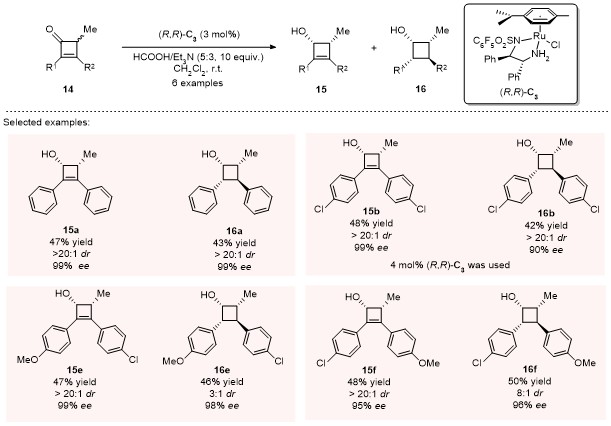
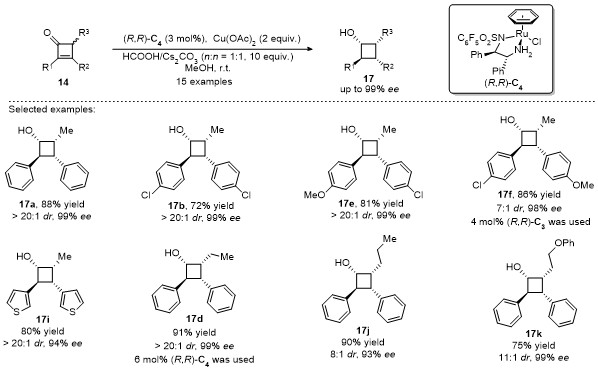
| [1] |
(a)
doi: 10.2174/1381612805666230112195534 pmid: 28815732 |
|
(b)
pmid: 28815732 |
|
|
(c)
doi: 10.1039/c1cs15119c pmid: 28815732 |
|
|
(d)
doi: 10.1039/c5np00159e pmid: 28815732 |
|
|
(e)
doi: 10.1007/s11426-016-0233-1 pmid: 28815732 |
|
|
(f)
doi: 10.1021/acs.jmedchem.6b00472 pmid: 28815732 |
|
|
(g)
doi: 10.1021/acs.chemrev.6b00274 pmid: 28815732 |
|
|
(h)
doi: 10.1002/med.21443 pmid: 28815732 |
|
|
(i)
doi: 10.1039/D0MD00370K pmid: 28815732 |
|
|
(j)
doi: 10.1002/chem.v27.2 pmid: 28815732 |
|
|
(k)
doi: 10.1016/j.trechm.2022.04.006 pmid: 28815732 |
|
|
(l)
pmid: 28815732 |
|
|
(m)
doi: 10.1039/D2SC03948F pmid: 28815732 |
|
|
(n)
doi: 10.1039/D2NP00034B pmid: 28815732 |
|
| [2] |
(a)
doi: 10.1021/ar00067a001 pmid: 17649981 |
|
(b)
pmid: 17649981 |
|
|
(c)
doi: 10.1021/cr010023b pmid: 17649981 |
|
|
(d)
pmid: 17649981 |
|
|
(e)
pmid: 17649981 |
|
|
(f)
pmid: 17649981 |
|
|
(g)
doi: 10.1021/cr0307300 pmid: 17649981 |
|
|
(h)
doi: 10.1002/anie.v50.34 pmid: 17649981 |
|
|
(i)
pmid: 17649981 |
|
|
(j)
pmid: 17649981 |
|
|
(k)
doi: 10.1016/j.tetlet.2017.03.058 pmid: 17649981 |
|
|
(l)
doi: 10.2174/1570193X15666180914165303 pmid: 17649981 |
|
|
(m)
doi: 10.1021/acs.chemrev.0c00167 pmid: 17649981 |
|
|
(n)
doi: 10.1021/acs.chemrev.0c00569 pmid: 17649981 |
|
|
(o)
doi: 10.1021/acscatal.2c02667 pmid: 17649981 |
|
| [3] |
(a)
doi: 10.3390/molecules181215541 pmid: 33564335 |
|
(b)
doi: 10.1021/cr4005549 pmid: 33564335 |
|
|
(c)
doi: 10.1021/cr500127b pmid: 33564335 |
|
|
(d)
doi: 10.1002/anie.v54.41 pmid: 33564335 |
|
|
(e)
doi: 10.1021/acs.chemrev.5b00723 pmid: 33564335 |
|
|
(f)
doi: 10.1039/C7QO00668C pmid: 33564335 |
|
|
(g)
doi: 10.1039/C9QO01178A pmid: 33564335 |
|
|
(h)
doi: 10.1039/D0QO00685H pmid: 33564335 |
|
|
(i)
pmid: 33564335 |
|
|
(j)
doi: 10.3762/bjoc.17.25 pmid: 33564335 |
|
|
(k)
doi: 10.1055/a-1493-9489 pmid: 33564335 |
|
|
(l)
doi: 10.1021/acs.chemrev.1c00467 pmid: 33564335 |
|
|
(m)
doi: 10.1021/acs.chemrev.1c00272 pmid: 33564335 |
|
|
(n)
doi: 10.1002/cjoc.v40.11 pmid: 33564335 |
|
|
(o)
doi: 10.1039/D1CS01080H pmid: 33564335 |
|
|
(p)
pmid: 33564335 |
|
|
(q)
pmid: 33564335 |
|
| [4] |
(a)
doi: 10.1246/bcsj.68.36 pmid: 24568181 |
|
(b)
doi: 10.1021/cr020049i pmid: 24568181 |
|
|
(c)
doi: 10.1039/B513396C pmid: 24568181 |
|
|
(d)
doi: 10.1021/ar700134q pmid: 24568181 |
|
|
(e)
doi: 10.1021/ar7001107 pmid: 24568181 |
|
|
(f)
doi: 10.1021/ar700141v pmid: 24568181 |
|
|
(g)
doi: 10.1021/ar700101x pmid: 24568181 |
|
|
(h)
pmid: 24568181 |
|
|
(i)
doi: 10.1021/cr100218m pmid: 24568181 |
|
|
(j)
doi: 10.1021/cr200328h pmid: 24568181 |
|
|
(k)
doi: 10.1002/chem.v19.23 pmid: 24568181 |
|
|
(l)
doi: 10.1021/cr400037u pmid: 24568181 |
|
|
(m)
doi: 10.6023/cjoc201502017 pmid: 24568181 |
|
|
(王英杰, 张振锋, 张万斌, 有机化学 2015, 35, 528.)
doi: 10.6023/cjoc201502017 pmid: 24568181 |
|
|
(n)
doi: 10.1021/acscatal.6b01736 pmid: 24568181 |
|
|
(o)
doi: 10.1021/acs.chemrev.6b00564 pmid: 24568181 |
|
|
(p)
doi: 10.6023/cjoc201512009 pmid: 24568181 |
|
|
(王志惠, 张振锋, 刘燕刚, 张万斌, 有机化学 2016, 36, 447.)
doi: 10.6023/cjoc201512009 pmid: 24568181 |
|
|
(q)
doi: 10.6023/cjoc201509016 pmid: 24568181 |
|
|
(袁乾家, 张万斌, 有机化学 2016, 36, 274.)
doi: 10.6023/cjoc201509016 pmid: 24568181 |
|
|
(r)
doi: 10.6023/cjoc201601045 pmid: 24568181 |
|
|
(王沁婷, 赵帅, 金雷, 陈新, 有机化学 2016, 36, 2242.)
doi: 10.6023/cjoc201601045 pmid: 24568181 |
|
|
(s)
doi: 10.6023/A17040181 pmid: 24568181 |
|
|
(于月娜, 徐明华, 有机化学 2017, 75, 655.)
pmid: 24568181 |
|
|
(t)
doi: 10.1016/j.tetasy.2015.06.016 pmid: 24568181 |
|
|
(u)
doi: 10.1021/acs.chemrev.5b00203 pmid: 24568181 |
|
|
(v)
doi: 10.1055/s-0035-1561648 pmid: 24568181 |
|
|
(w)
doi: 10.1002/tcr.v16.6 pmid: 24568181 |
|
|
(x)
doi: 10.1021/acs.accounts.7b00263 pmid: 24568181 |
|
|
(y)
doi: 10.1021/acs.organomet.8b00774 pmid: 24568181 |
|
|
(z)
doi: 10.1007/3418_2019_27 pmid: 24568181 |
|
|
(aa)
doi: 10.1055/s-0040-1705918 pmid: 24568181 |
|
|
(ab)
doi: 10.1002/chem.v27.1 pmid: 24568181 |
|
|
(ac)
pmid: 24568181 |
|
|
(ad)
doi: 10.1002/ijch.v61.7-8 pmid: 24568181 |
|
|
(ae)
doi: 10.1055/s-0040-1719914 pmid: 24568181 |
|
|
(af)
doi: 10.1039/D1QO01503F pmid: 24568181 |
|
|
(ag)
doi: 10.1016/j.tet.2023.133609 pmid: 24568181 |
|
|
(ah)
doi: 10.1016/j.tet.2023.133781 pmid: 24568181 |
|
| [5] |
doi: 10.1002/cjoc.v36.7 |
| [6] |
doi: 10.1039/D0CC05599A |
| [7] |
|
| [8] |
|
| [9] |
|
| [10] |
doi: 10.1021/acs.orglett.5c05218 |
| [11] |
doi: 10.1002/anie.v59.42 |
| [12] |
doi: 10.1021/acs.joc.4c01497 |
| [13] |
|
| [1] | Pin-Ke Yu, Hai-Yang Liu, Fan Xiao, Xiu-Qin Dong. Recent Progress on Iron-Group Metal-Catalyzed Asymmetric Hydrogenation of Alkenes [J]. Chinese Journal of Organic Chemistry, 2026, 46(7): 2622-2643. |
| [2] | Guanbao Qin, Menglong Zhao, Zhaobin Han, Kuiling Ding. Advances in Asymmetric Double (Transfer) Hydrogenation of Conjugated Enones [J]. Chinese Journal of Organic Chemistry, 2026, 46(6): 2163-2176. |
| [3] | Wenjie Zhang, Zhengchao Duan, Xiangping Hu. Chiral P-N-O Ligands for Iridium-Catalyzed Asymmetric Hydrogenation of Aromatic Ketones [J]. Chinese Journal of Organic Chemistry, 2026, 46(5): 2129-2137. |
| [4] | Qishu Chen, Bo Yang, Qiwei Lang, Xiaobing Ding, Xiuxiu Li, Xumu Zhang. Ir/f-Amphox-Catalyzed Asymmetric Hydrogenation of 1-(Pyridin-2-yl)ketones to Chiral Pyridyl Alcohols★ [J]. Chinese Journal of Organic Chemistry, 2025, 45(9): 3326-3334. |
| [5] | Ye Wu, Chunxia Chen, Jinsong Peng. Research Progress of C—H Bond Asymmetric Hydroxylation [J]. Chinese Journal of Organic Chemistry, 2025, 45(8): 2726-2745. |
| [6] | Lanxing Ren, A'na Xu, Xilin Xiao, Hengzhi You, Lijuan Song. Theoretical Study on the Solvent Effect on the Enantioselectivity of Iridium-Catalyzed Asymmetric Hydrogenation Reactions [J]. Chinese Journal of Organic Chemistry, 2025, 45(8): 2904-2912. |
| [7] | Minhao Li, Zeming Wang, Qing Huang, Weiwei Zuo. Cobalt(II)-Catalyzed Asymmetric Hydrogen Transfer Reactions of Ketones [J]. Chinese Journal of Organic Chemistry, 2025, 45(7): 2451-2460. |
| [8] | Leiyang Bai, Bei Fu, Haiping Liu, Xiang Chun, Xuefeng Jiang. Total Synthesis of Praeruptorin E [J]. Chinese Journal of Organic Chemistry, 2025, 45(3): 1009-1020. |
| [9] | Chen-Hui Yuan, Lei Jiao. Chiral Ligands for Palladium-Catalyzed Coordination-Assisted Enantioselective C(sp3)—H Functionalization Reactions [J]. Chinese Journal of Organic Chemistry, 2025, 45(2): 602-619. |
| [10] | Tianpeng Ling, Haitao Qin, Feng Liu. Recent Advances in Enantioselective Radical Reactions of C(sp3)—H Bond [J]. Chinese Journal of Organic Chemistry, 2025, 45(2): 498-515. |
| [11] | Xixian Cao, Jun You, Qiye Liu, Bo Liu, Yanchao Yu, Wenju Wu. (4S,4'S)-2,2'-(4,6-Dibenzofurandiyl)bis[4,5-dihydro-4-phenyloxazole]-Ni(II) Complexes Catalyzed Highly Enantioselective Nitrile Imine Cycloaddition Reactions [J]. Chinese Journal of Organic Chemistry, 2024, 44(7): 2315-2332. |
| [12] | Qian Chen, Zhaobin Han, Kuiling Ding. Transition Metal Catalyzed Carbocycle-Selective Asymmetric Hydrogenation of Aromatic Rings [J]. Chinese Journal of Organic Chemistry, 2024, 44(7): 2063-2076. |
| [13] | Feifan Li, Kang Yu, Chuanzhi Ni, Yuanyuan Zhu, Jie Zeng, Shuangxi Gu. Chiral Fluorescent Probes for Determination of Both Concentration and Enantiomeric Composition of Amino Acids [J]. Chinese Journal of Organic Chemistry, 2024, 44(6): 1862-1869. |
| [14] | Chun Gao, Xin Liu, Minghui Wang, Shuxian Liu, Tingting Zhu, Yikang Zhang, Erjun Hao, Qiliang Yang. Advances in Asymmetric Electrochemical Synthesis [J]. Chinese Journal of Organic Chemistry, 2024, 44(3): 673-727. |
| [15] | Yiwen Lü, Haihua Liao, Wenjun Tang. Synthesis of a Sitagliptin Intermediate via Ruthenium-Catalyzed Asymmetric Hydrogenation of Enamine Ester [J]. Chinese Journal of Organic Chemistry, 2024, 44(12): 3720-3726. |
| Viewed | ||||||
|
Full text |
|
|||||
|
Abstract |
|
|||||
