

化学学报 ›› 2026, Vol. 84 ›› Issue (6): 879-887.DOI: 10.6023/A26020041 上一篇 下一篇
研究论文
曾子杰a, 彭子凌b, 王晨a, 谈发堂a, 王新云a, 王保强c, 王维a,*( )
)
投稿日期:2026-02-02
发布日期:2026-05-12
Zijie Zenga, Ziling Pengb, Chen Wanga, Fatang Tana, Xinyun Wanga, Po Keung Wongc, Wei Wanga,*()
Received:2026-02-02
Published:2026-05-12
Contact:
E-mail: 文章分享
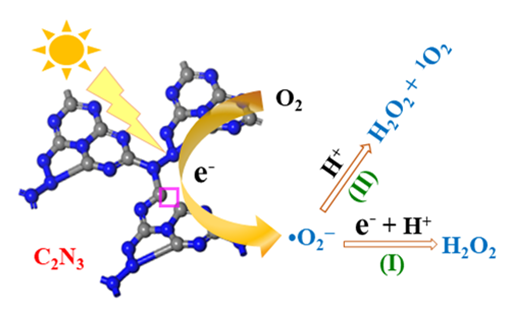
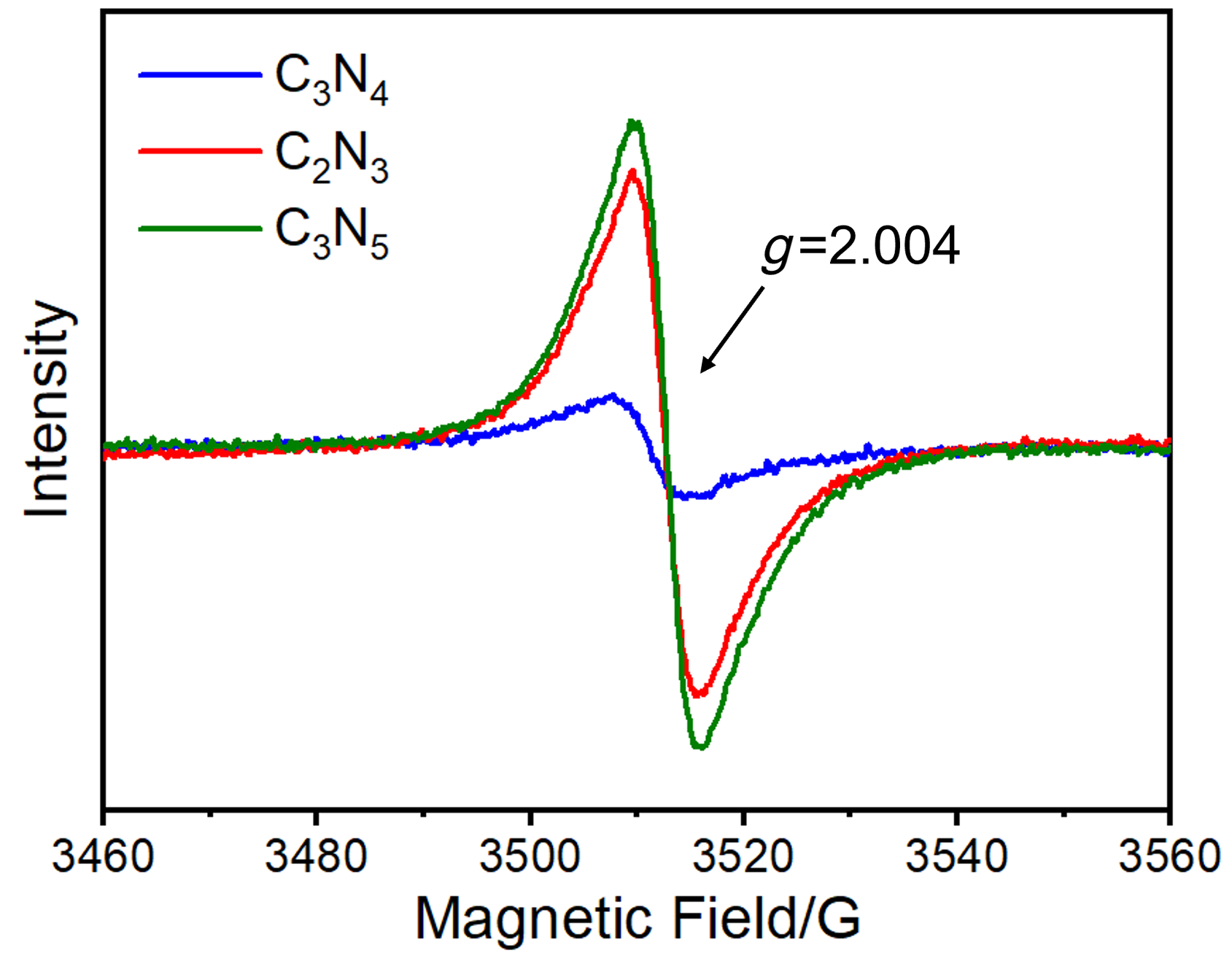
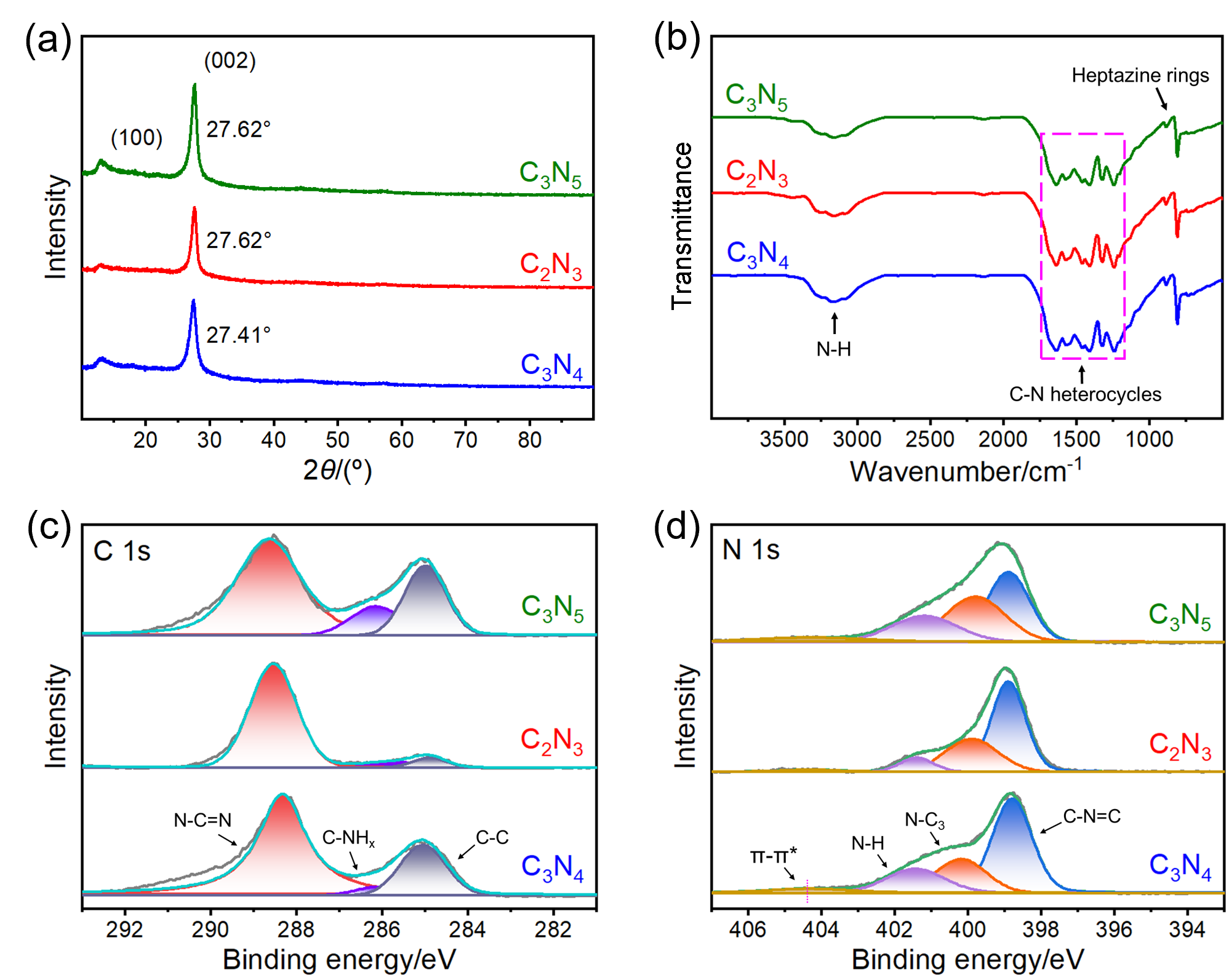
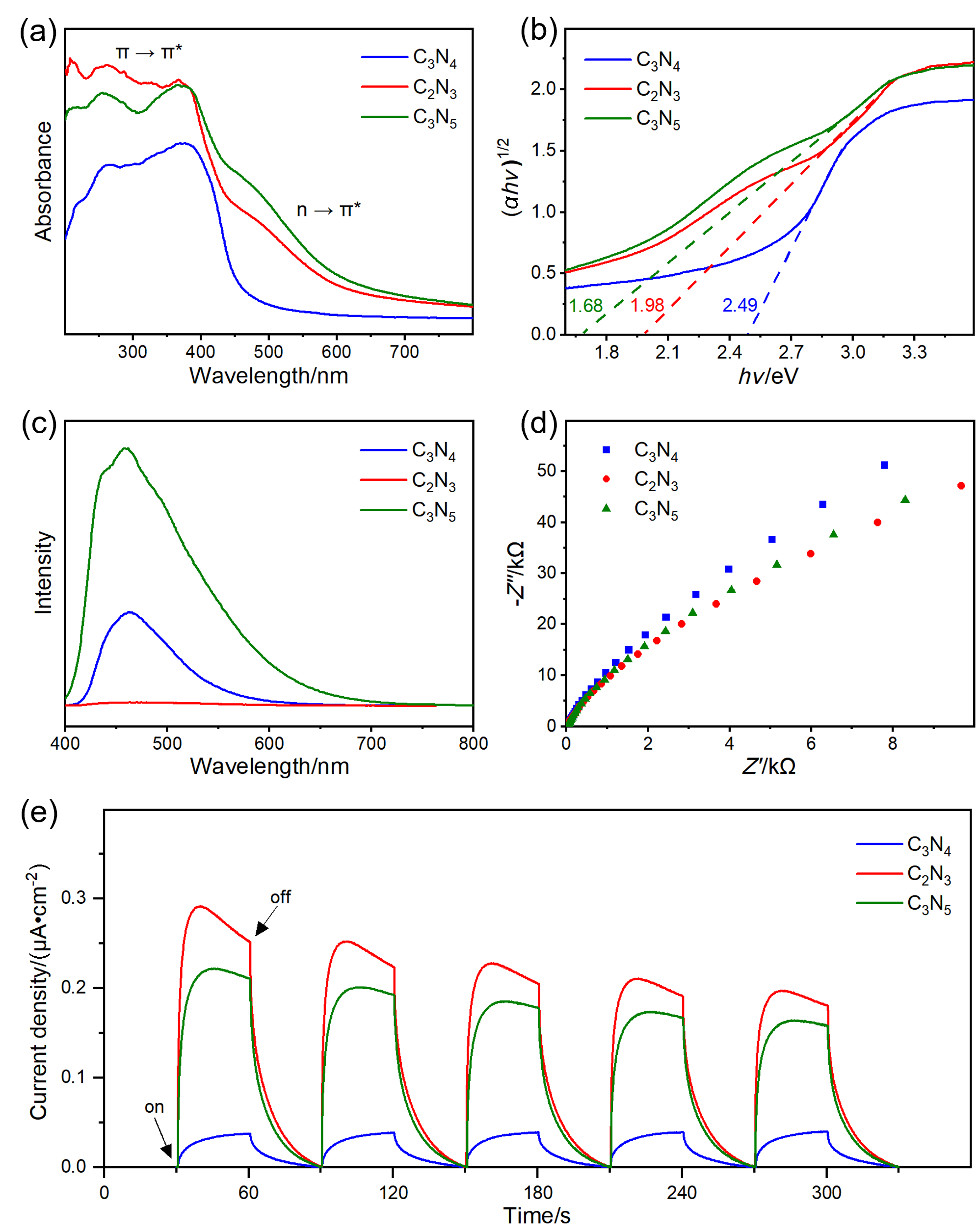
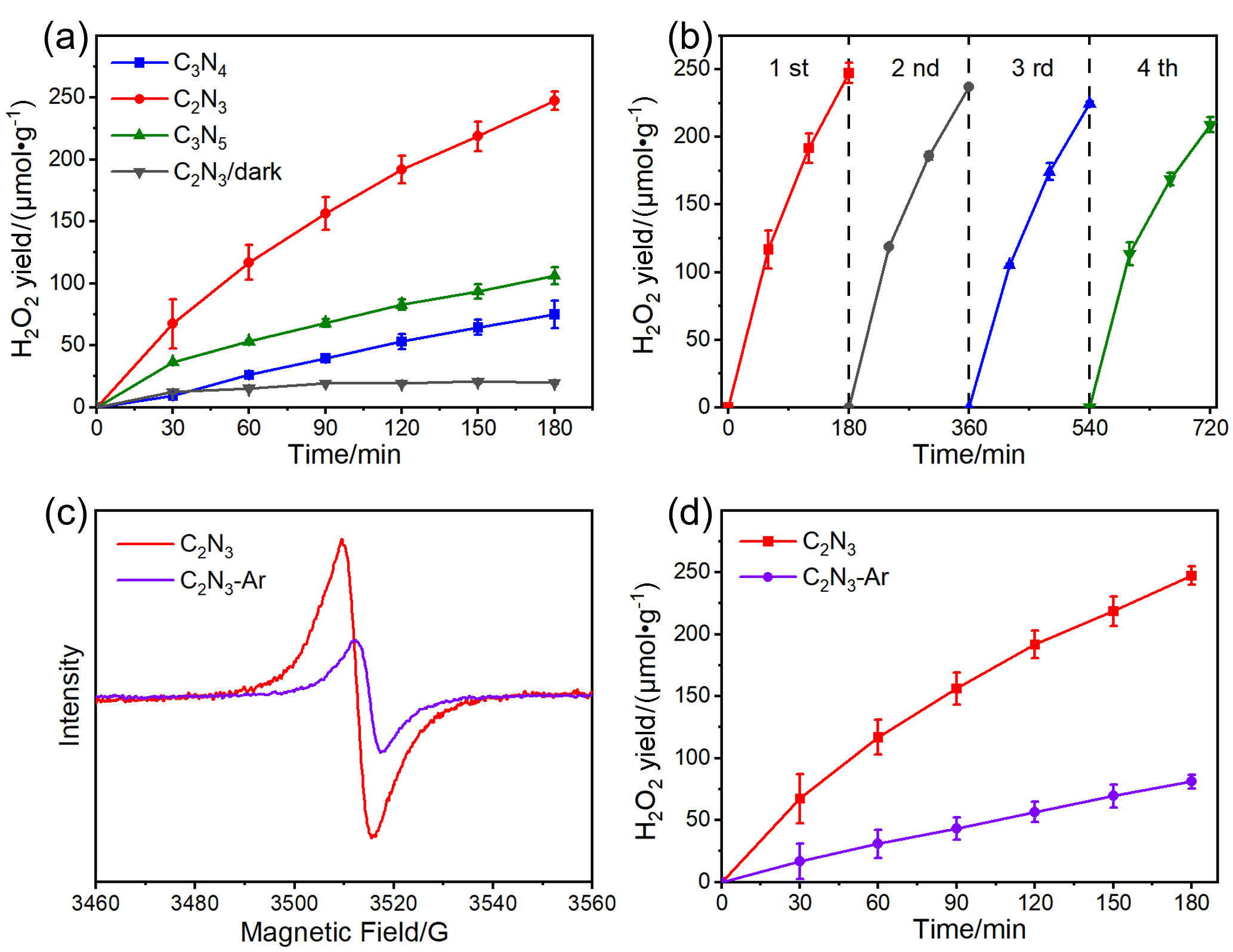
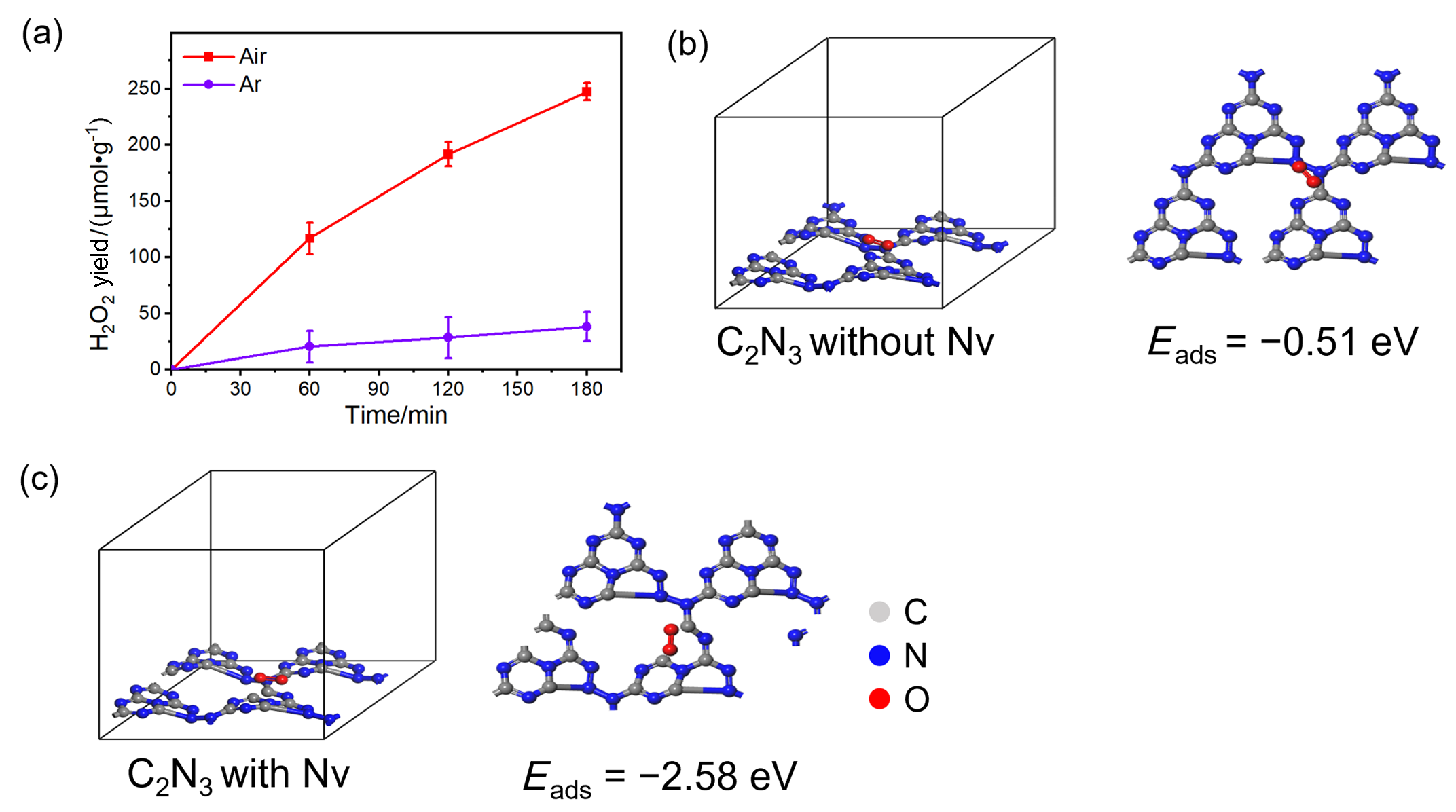
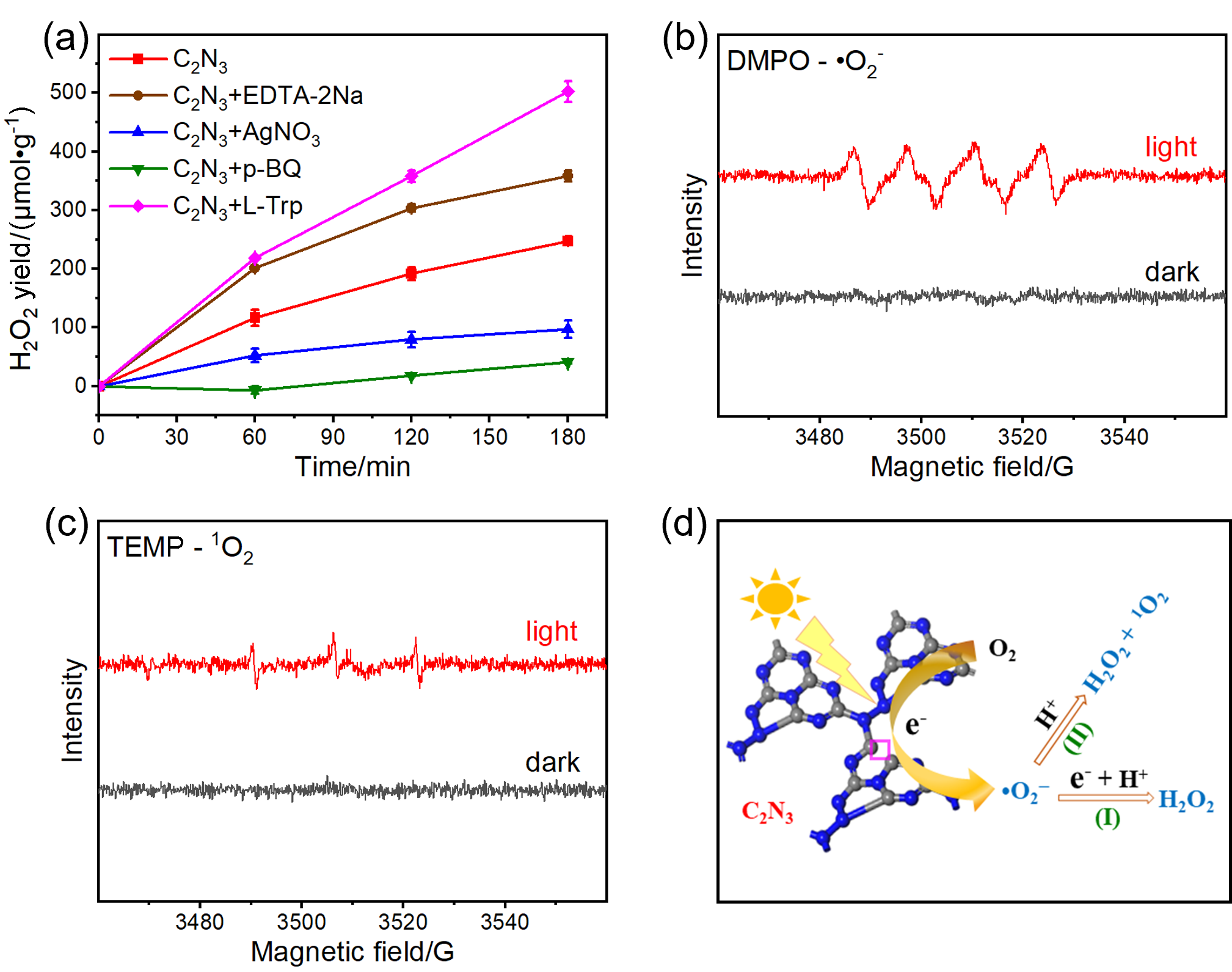
光催化产H2O2是一种绿色安全、高效低成本的合成过程, 氮化碳被认为是最有应用潜力的光催化材料之一. 但是, 其光生电子-空穴对的复合几率高以及对氧气吸附能力弱的缺点, 导致光催化产H2O2性能不佳. 本研究采用不同前驱体、不同煅烧工艺, 一步法制备出三种不同的氮化碳(C3N4、C2N3和C3N5), 其中C2N3呈现出优异的光催化产H2O2能力, 在环境氧气氛和可见光(λ>420 nm)照射3 h, H2O2的产量可达到247.31 μmol•g−1, 是C3N4的3.29倍、C3N5的2.33倍. 实验表明, C2N3拥有较大比表面积并富含氮空位, 理论计算显示氮空位可作为活性位点, 提高催化剂对O2的吸附能力, 从而促进光催化产H2O2. 同时, C2N3合适的带隙宽度, 既有利于可见光的吸收, 又有效抑制了光生载流子的复合, 从而提高可见光催化反应的效率. 机理分析表明, 吸附的O2经光生电子还原成•O2−, 进而可由两种不同通道转变成H2O2.
曾子杰, 彭子凌, 王晨, 谈发堂, 王新云, 王保强, 王维. 氮化碳的氮空位与可见光催化产H2O2研究[J]. 化学学报, 2026, 84(6): 879-887.
Zijie Zeng, Ziling Peng, Chen Wang, Fatang Tan, Xinyun Wang, Po Keung Wong, Wei Wang. Study on the Nitrogen Vacancy in Carbon Nitride Photocatalysts for Visible-Light-Driven H2O2 Production[J]. Acta Chimica Sinica, 2026, 84(6): 879-887.
| [1] |
doi: 10.1002/adma.v36.9 |
| [2] |
doi: 10.6023/A25030077 |
|
(闫生荣, 刘文浩, 段芳, 陈明清, 东为富, 陆双龙, 杜明亮, 化学学报, 2025, 83, 685.)
doi: 10.6023/A25030077 |
|
| [3] |
doi: 10.1002/adma.v36.49 |
| [4] |
doi: 10.1016/j.apcatb.2025.125567 |
| [5] |
doi: 10.1021/jacs.4c07170 |
| [6] |
doi: 10.1016/j.cej.2024.151293 |
| [7] |
|
| [8] |
doi: 10.1002/smll.v21.21 |
| [9] |
doi: 10.1016/j.cej.2024.150581 |
| [10] |
doi: 10.1002/adma.v37.9 |
| [11] |
doi: 10.1002/adma.v36.18 |
| [12] |
doi: 10.1016/j.mattod.2023.10.005 |
| [13] |
doi: 10.1016/j.jmst.2025.03.005 |
| [14] |
doi: 10.1016/j.apcatb.2024.123872 |
| [15] |
doi: 10.1021/jacs.4c13290 |
| [16] |
doi: 10.1002/adma.v36.32 |
| [17] |
doi: 10.1016/j.mattod.2020.09.004 |
| [18] |
doi: 10.1016/j.ces.2024.120245 |
| [19] |
doi: 10.1002/anie.v58.46 |
| [20] |
doi: 10.1016/j.jmst.2025.02.027 |
| [21] |
doi: 10.1016/j.jmst.2024.02.048 |
| [22] |
doi: 10.1016/j.cej.2024.148844 |
| [23] |
doi: 10.1016/j.cej.2022.135999 |
| [24] |
doi: 10.1016/j.apcatb.2016.03.004 |
| [25] |
doi: 10.1016/j.cclet.2023.108784 |
| [26] |
|
| [27] |
doi: 10.1016/S1872-2067(21)63813-5 |
| [28] |
doi: 10.1021/acsnano.1c00477 |
| [29] |
doi: 10.1016/j.apcatb.2021.120929 |
| [30] |
doi: 10.1016/j.cej.2024.158655 |
| [31] |
doi: 10.1016/j.apcatb.2025.125073 |
| [32] |
doi: 10.1016/j.apcatb.2024.124879 |
| [33] |
doi: 10.1016/j.cej.2021.132531 |
| [34] |
doi: 10.1021/acscatal.5b02922 |
| [35] |
doi: 10.1016/j.apcatb.2017.01.034 |
| [36] |
doi: 10.6023/A23110484 |
|
(黄广峥, 李坤玮, 罗艳楠, 张强, 潘远龙, 高洪林, 化学学报, 2024, 82, 314.)
doi: 10.6023/A23110484 |
|
| [37] |
doi: 10.1016/j.apcatb.2024.124723 |
| [38] |
doi: 10.1016/j.cej.2025.164670 |
| [39] |
doi: 10.1016/j.cej.2025.165069 |
| [40] |
doi: 10.1016/j.catcom.2019.01.009 |
| [41] |
doi: 10.1016/j.apcatb.2016.10.014 |
| [42] |
doi: 10.1016/j.renene.2025.124741 |
| [43] |
doi: 10.1016/j.apcatb.2021.120845 |
| [44] |
doi: 10.1021/acscatal.1c03103 |
| [45] |
doi: 10.1021/acscatal.3c05360 |
| [46] |
doi: 10.1039/D1EE02369A |
| [47] |
doi: 10.1002/sus2.v2.5 |
| [48] |
doi: 10.1016/j.cclet.2024.110470 |
| [49] |
doi: 10.1016/j.cej.2025.163232 |
| [50] |
doi: 10.1016/j.cej.2022.138489 |
| [51] |
doi: 10.1002/aenm.v14.23 |
| [52] |
doi: 10.1016/j.jmst.2023.03.045 |
| [1] | 汪晨程, 欧阳班来, 钟品勇, 张莺瑢, 刘晋彪. 光催化2-氨基苯甲醇与异硫氰酸酯脱硫环化合成2-氨基-1,3-苯并噁嗪[J]. 化学学报, 2026, 84(1): 1-7. |
| [2] | 李文静, 杨黎燕, 关丽, 张雪娇, 尤静, 沈思语, 赵钰琦, 段琛. 可见光/硫酚催化烯烃C=C双键的氧化裂解反应[J]. 化学学报, 2025, 83(6): 596-601. |
| [3] | 曾玥, 唐笑, 周于芝, 李艳虹, 荆川, 凌发令, 杨红梅, 周贤菊. 富碳氮化碳全固态光超级电容器性能影响因素研究[J]. 化学学报, 2025, 83(5): 488-497. |
| [4] | 黄广峥, 李坤玮, 罗艳楠, 张强, 潘远龙, 高洪林. 水热后处理构建K掺杂和表面缺陷g-C3N4纳米片促进光催化制氢[J]. 化学学报, 2024, 82(3): 314-322. |
| [5] | 李飞, 丁汇丽, 李超忠. 基于氟仿衍生的三氟甲基硼络合物参与的烯烃氢三氟甲基化反应[J]. 化学学报, 2023, 81(6): 577-581. |
| [6] | 徐袁利, 潘辉, 杨义, 左智伟. 连续流条件下蒽-铈协同催化的苄位碳氢键选择性氧化反应★[J]. 化学学报, 2023, 81(5): 435-440. |
| [7] | 解众舒, 薛中鑫, 许子文, 李倩, 王洪宇, 李维实. 石墨相氮化碳的共轭交联修饰及其对可见光催化产氢性能的影响[J]. 化学学报, 2022, 80(9): 1231-1237. |
| [8] | 位亚茹, 马晶, 袁婷婷, 姜嘉伟, 段银利, 薛娟琴. 氯化锂插层氮化碳材料的可控制备及吸附性能[J]. 化学学报, 2022, 80(4): 494-502. |
| [9] | 杨民, 叶柏柏, 陈健强, 吴劼. 可见光催化烷基磺酰自由基启动芳酰肼的烷基磺酰化反应[J]. 化学学报, 2022, 80(1): 11-15. |
| [10] | 马智烨, 叶丽, 吴雨桓, 赵彤. B,N-SnO2/TiO2光催化剂的制备及其光催化性能研究[J]. 化学学报, 2021, 79(9): 1173-1179. |
| [11] | 王瑞兆, 邹云杰, 洪晟, 徐铭楷, 凌岚. Pt0.01Fe0.05-g-C3N4催化剂高效光热催化二氧化碳还原[J]. 化学学报, 2021, 79(7): 932-940. |
| [12] | 何利蓉, 唐笑, 张灵, 李艳虹, 相国涛, 周贤菊, 凌发令, 姚璐, 蒋浩. 液相合成彩色氮化碳及其光电化学特性研究[J]. 化学学报, 2021, 79(4): 506-512. |
| [13] | 董奎, 刘强, 吴骊珠. 放氢交叉偶联反应[J]. 化学学报, 2020, 78(4): 299-310. |
| [14] | 陈奕霖, 常亮, 左智伟. 可见光催化诱导的Smiles重排研究进展[J]. 化学学报, 2019, 77(9): 794-802. |
| [15] | 杨俊航, 傅晓波, 卢增辉, 朱钢国. 可见光催化烯烃砜基化启动的远程醛基碳-氢键直接硫化反应[J]. 化学学报, 2019, 77(9): 901-905. |
| 阅读次数 | ||||||
|
全文 |
|
|||||
|
摘要 |
|
|||||
