有机化学 ›› 2026, Vol. 46 ›› Issue (7): 2604-2621.DOI: 10.6023/cjoc202602020 上一篇 下一篇
综述与进展
程振东, 高亚飞*( )
)
收稿日期:2026-02-24
修回日期:2026-04-15
发布日期:2026-06-03
基金资助:
Zhendong Cheng, Yafei Gao*()
Received:2026-02-24
Revised:2026-04-15
Published:2026-06-03
Contact:
*E-mail: gaoyf@nju.edu.cn
Supported by:文章分享
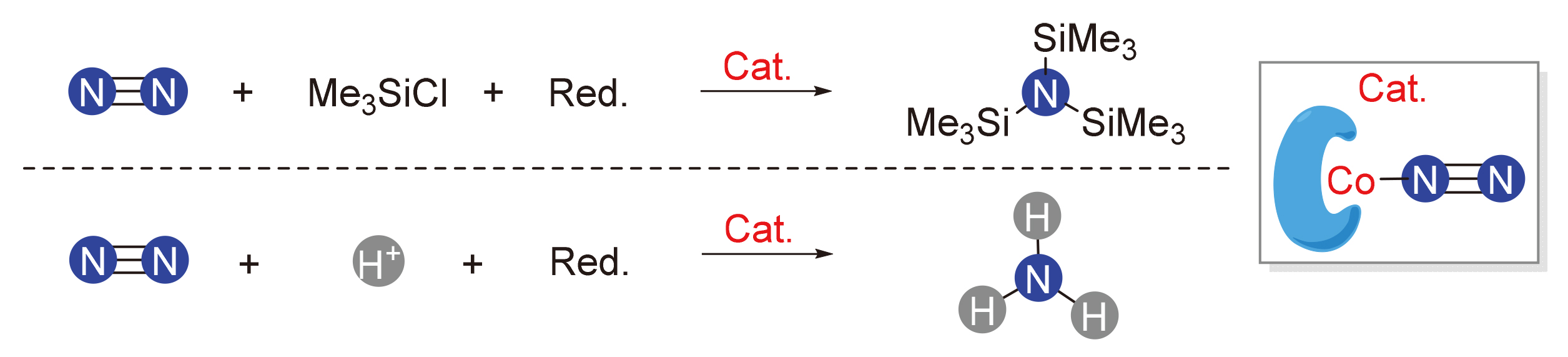
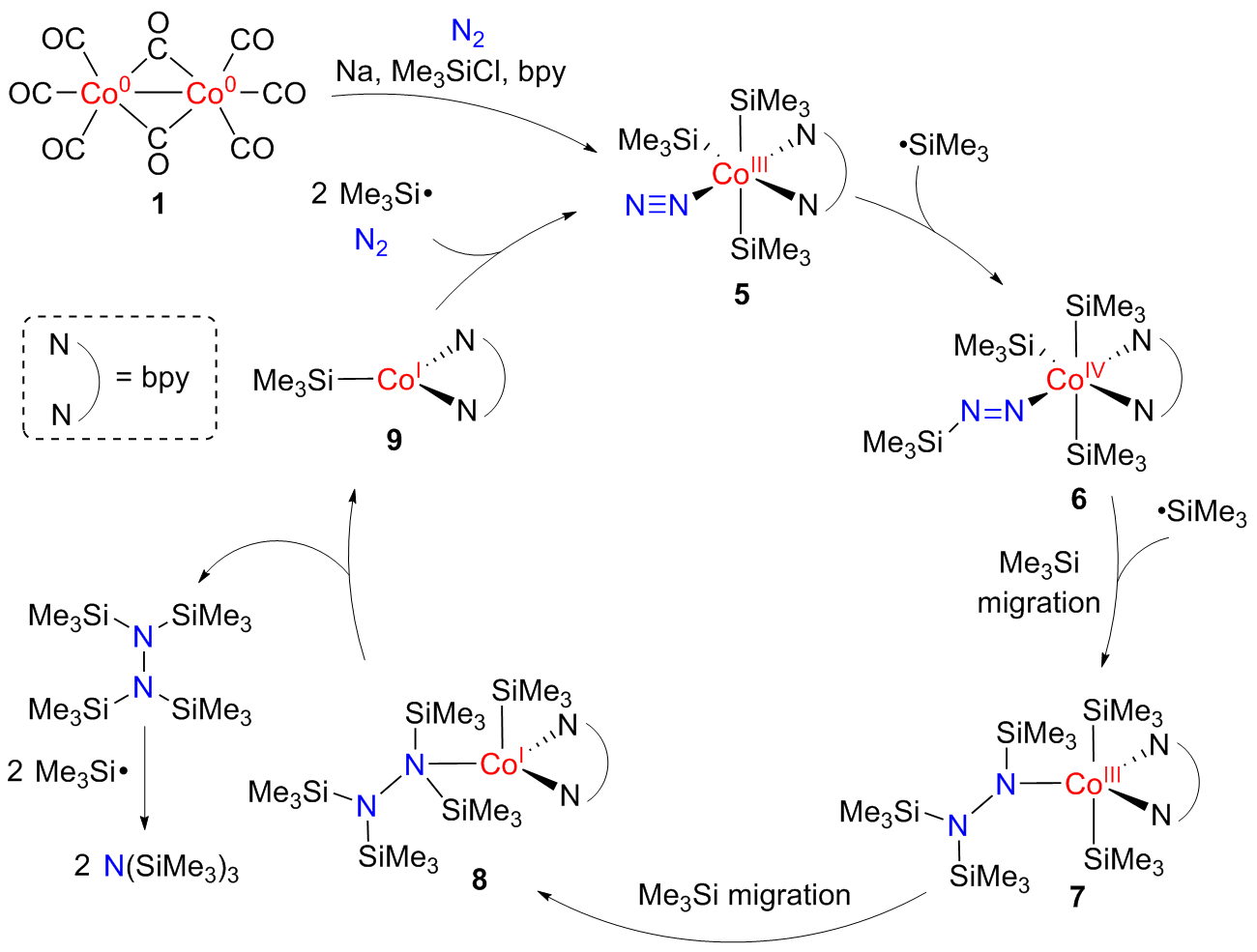
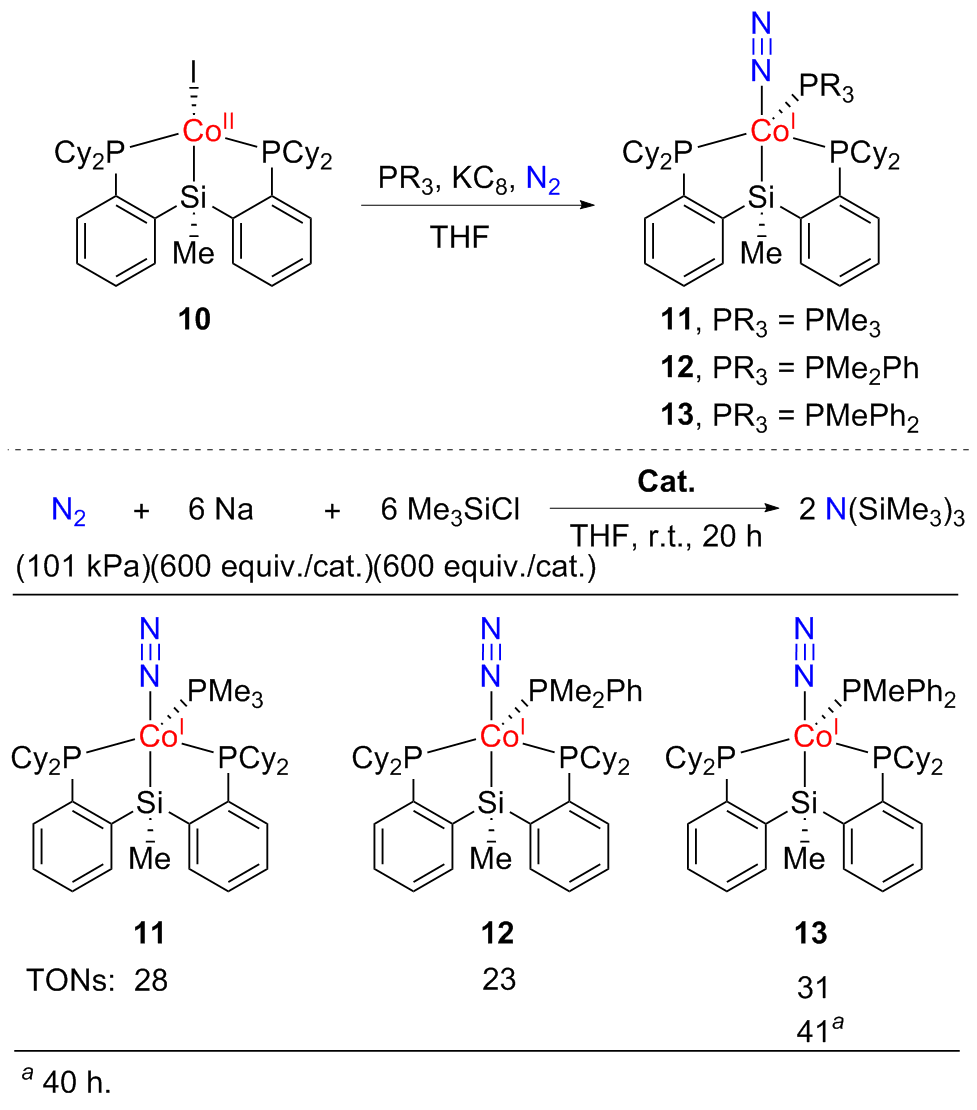
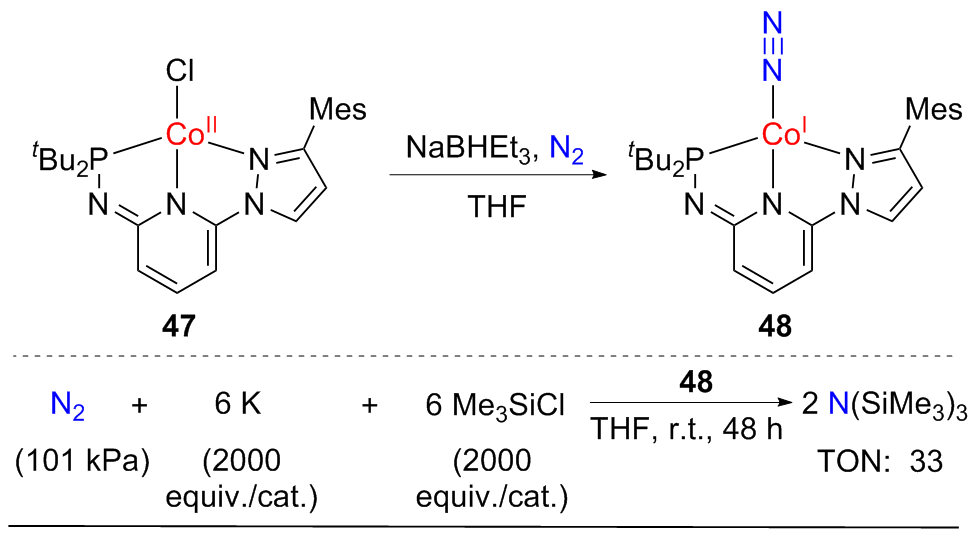
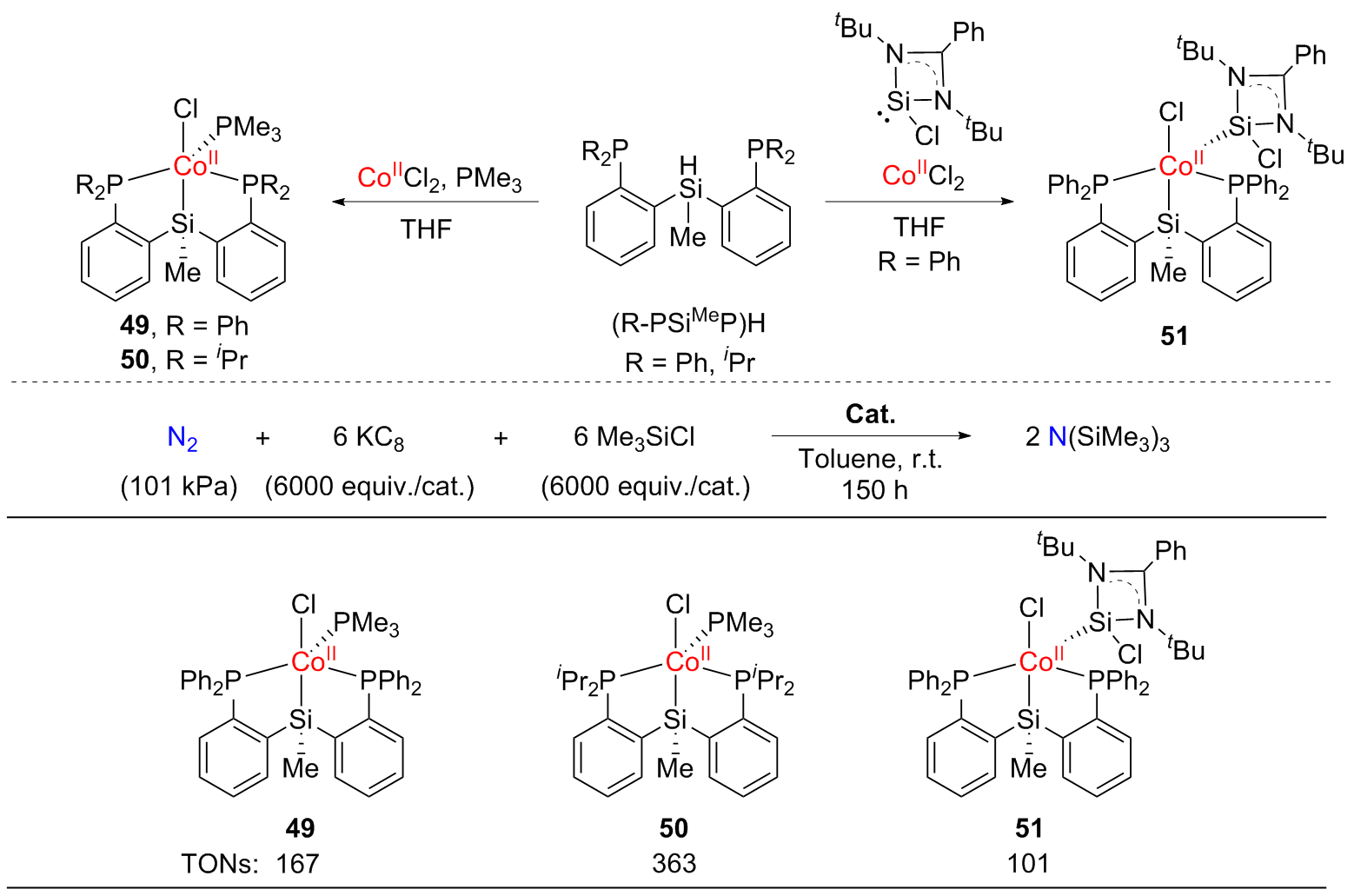
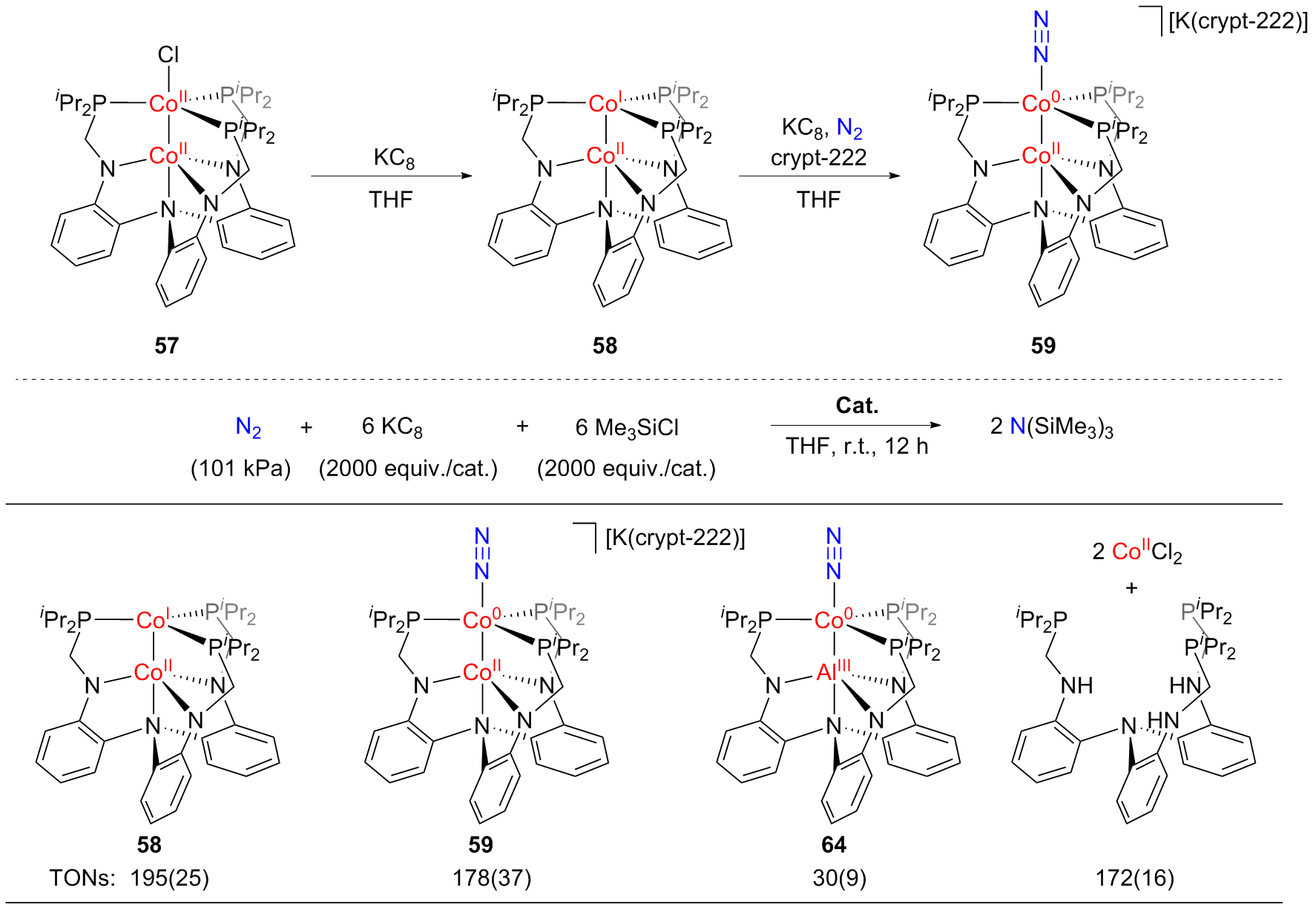
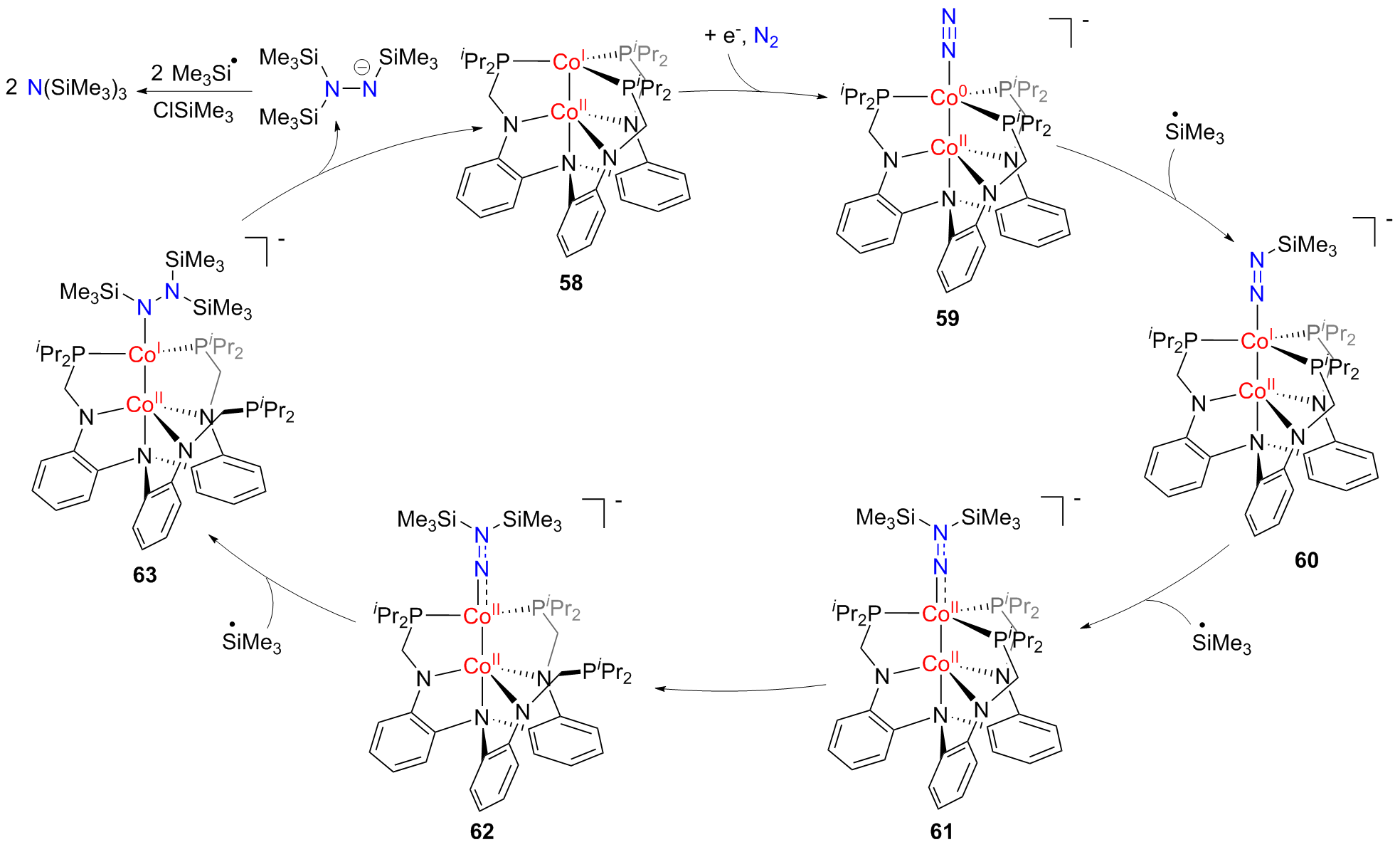
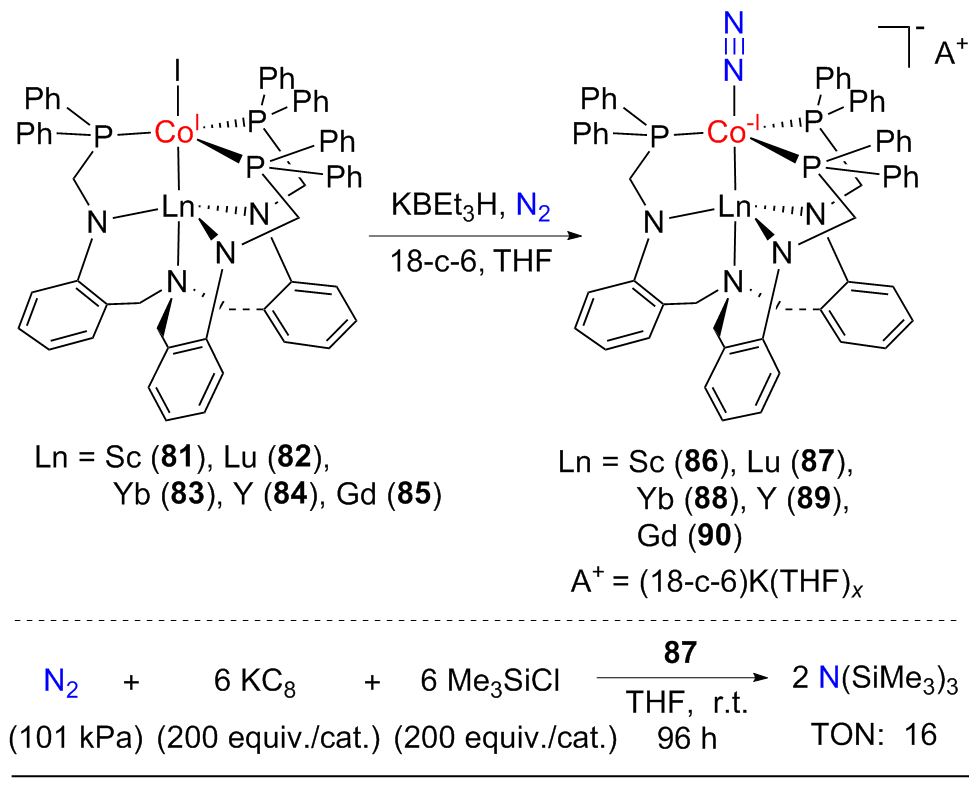
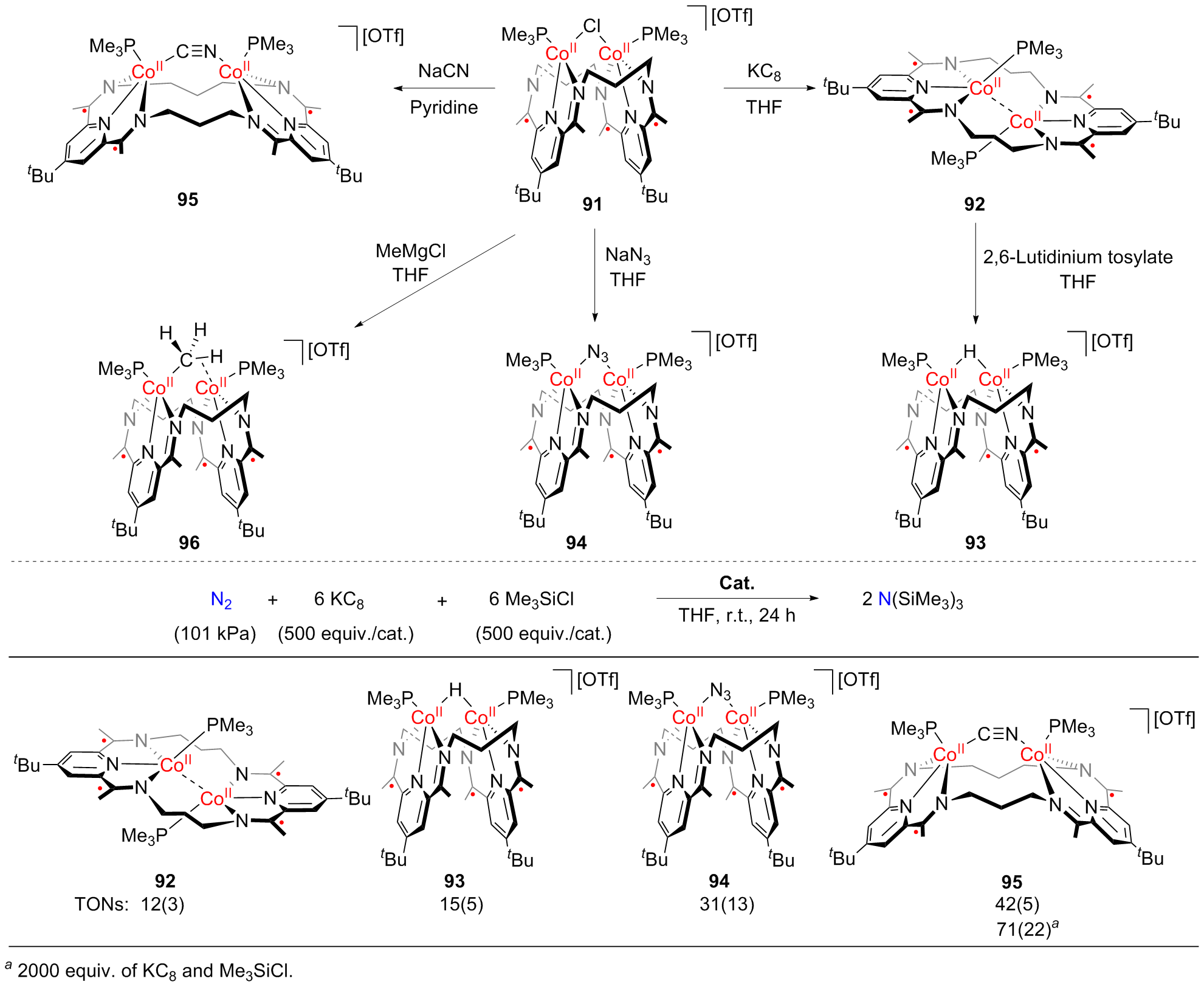
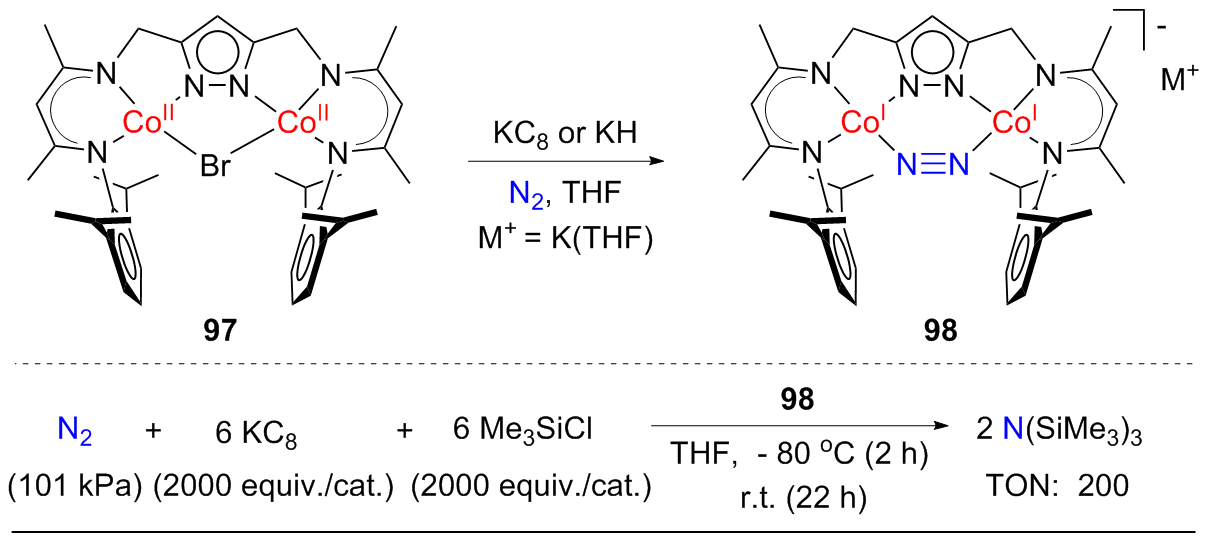
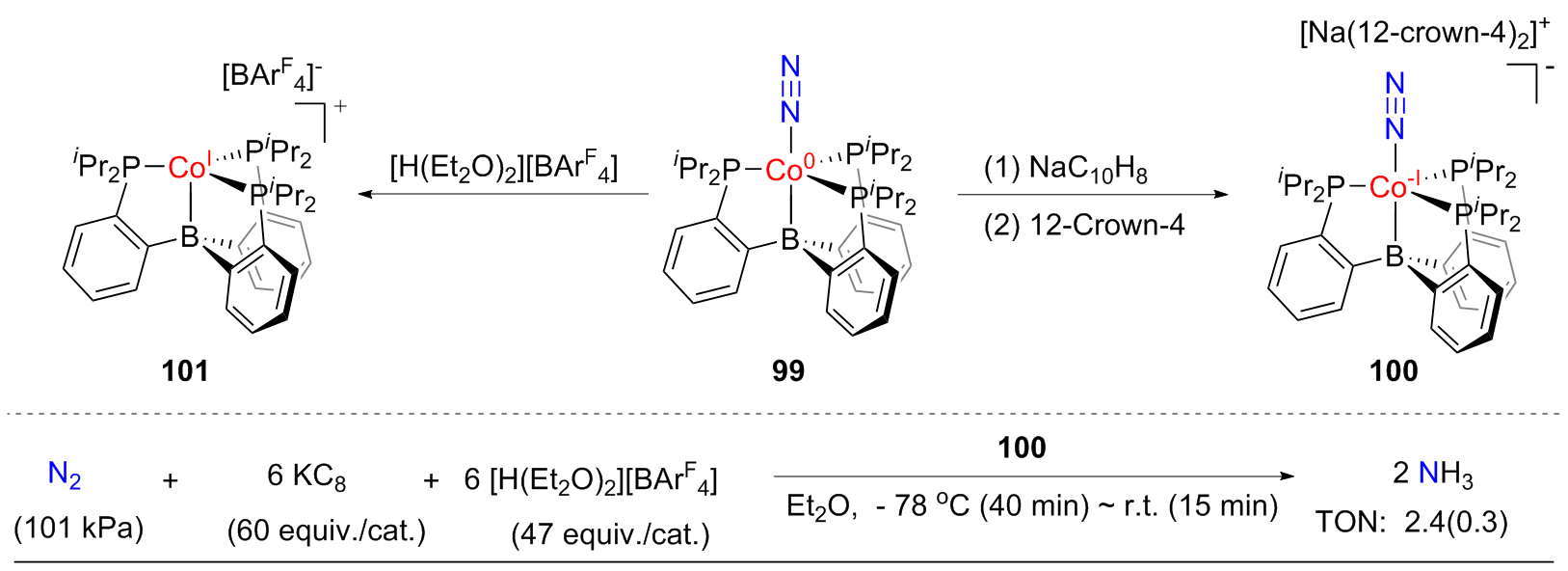
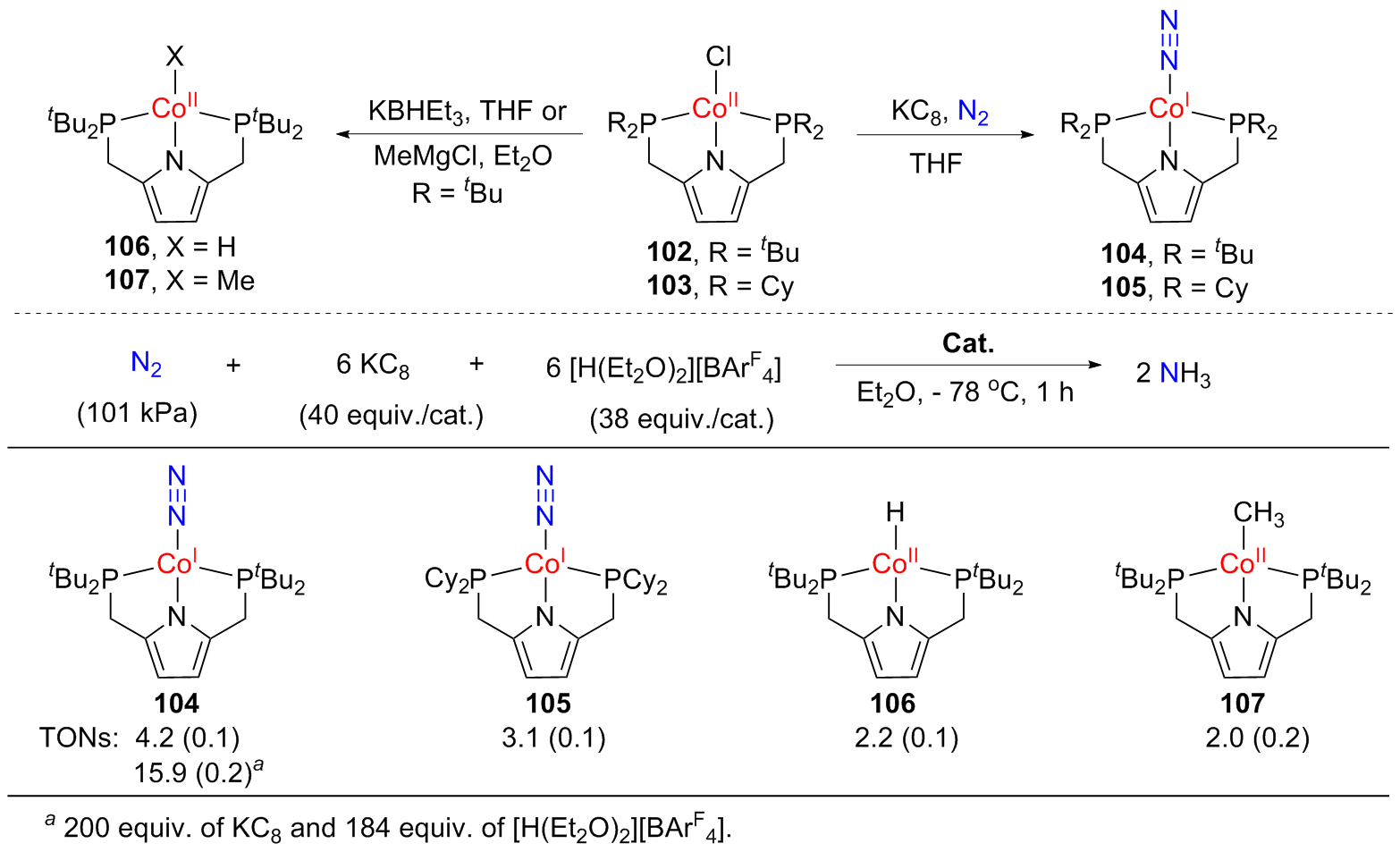
实现温和条件下氮气的活化转化具有重要意义. 由于氮气分子的高键能和非极性的特点, 其反应活性较低. 过渡金属配合物为氮气的活化转化提供了一种有效策略. 目前, 过渡金属促进的氮气活化转化研究主要集中在前过渡金属体系. 由于前过渡金属与氮原子结合能力相对较强, 不利于催化转化的发生, 而后过渡金属在实现氮气活化与含氮产物释放的平衡方面具有一定的优势. 系统总结了后过渡金属钴配合物在催化氮气活化转化方面的研究进展, 主要包括简单钴配合物、钳型配体钴配合物、氮杂环卡宾钴配合物、双齿膦配体钴配合物以及双/多核钴配合物等催化体系, 依据催化剂核数的不同(单核或双(多)核)以及氮气活化后产物的不同(三(三甲基硅基)胺或氨气), 对催化反应进行了归纳和总结, 并对相应的反应机理进行了探讨.
程振东, 高亚飞. 钴配合物催化氮气活化转化的研究进展[J]. 有机化学, 2026, 46(7): 2604-2621.
Zhendong Cheng, Yafei Gao. Research Progress on Catalytic Dinitrogen Activation and Functionalization Mediated by Cobalt Complexes[J]. Chinese Journal of Organic Chemistry, 2026, 46(7): 2604-2621.
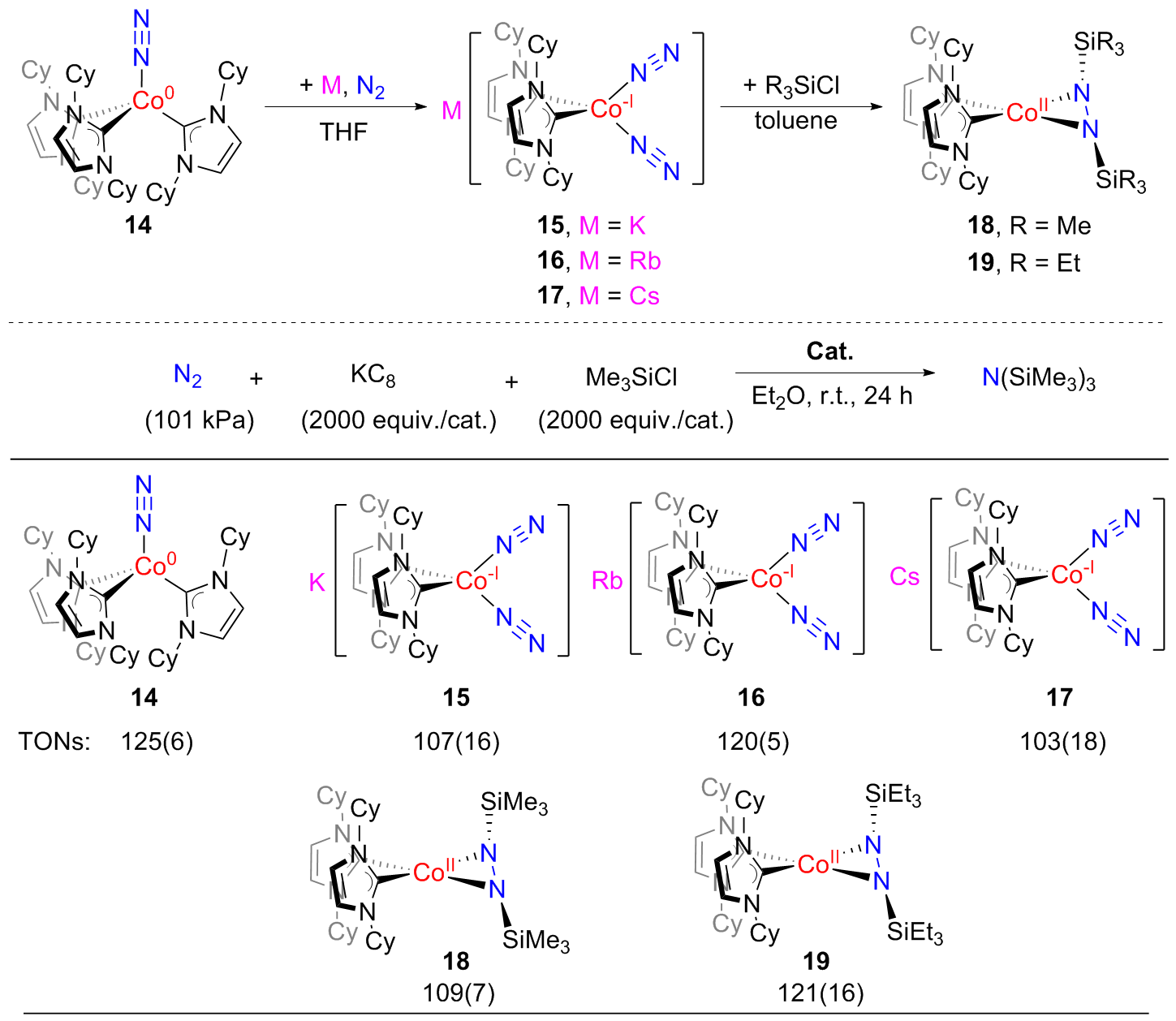
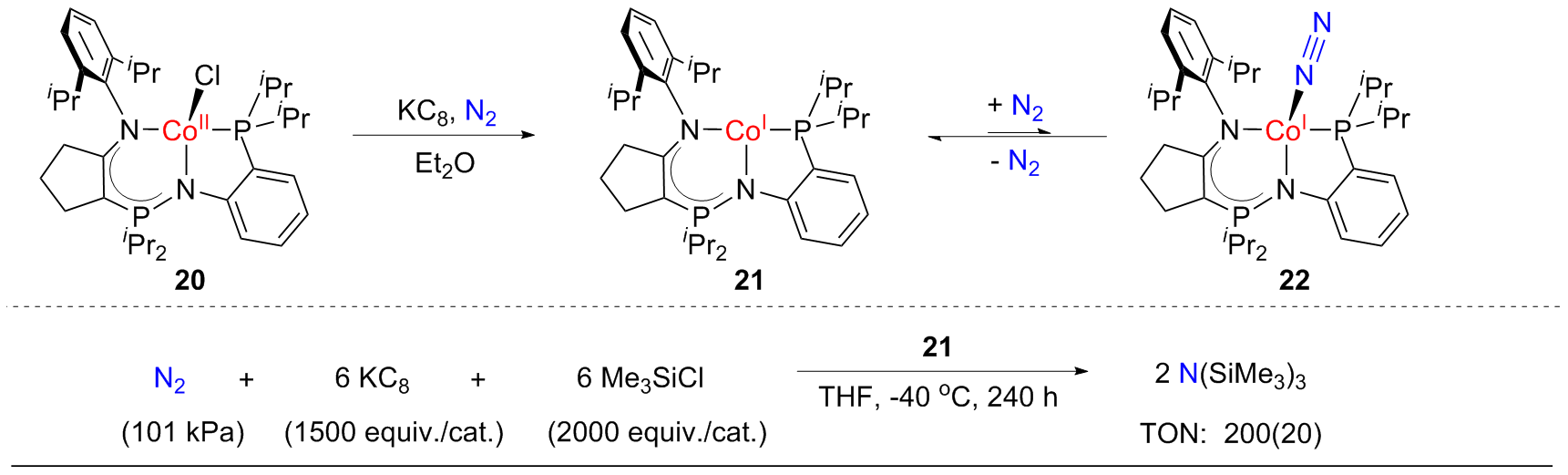
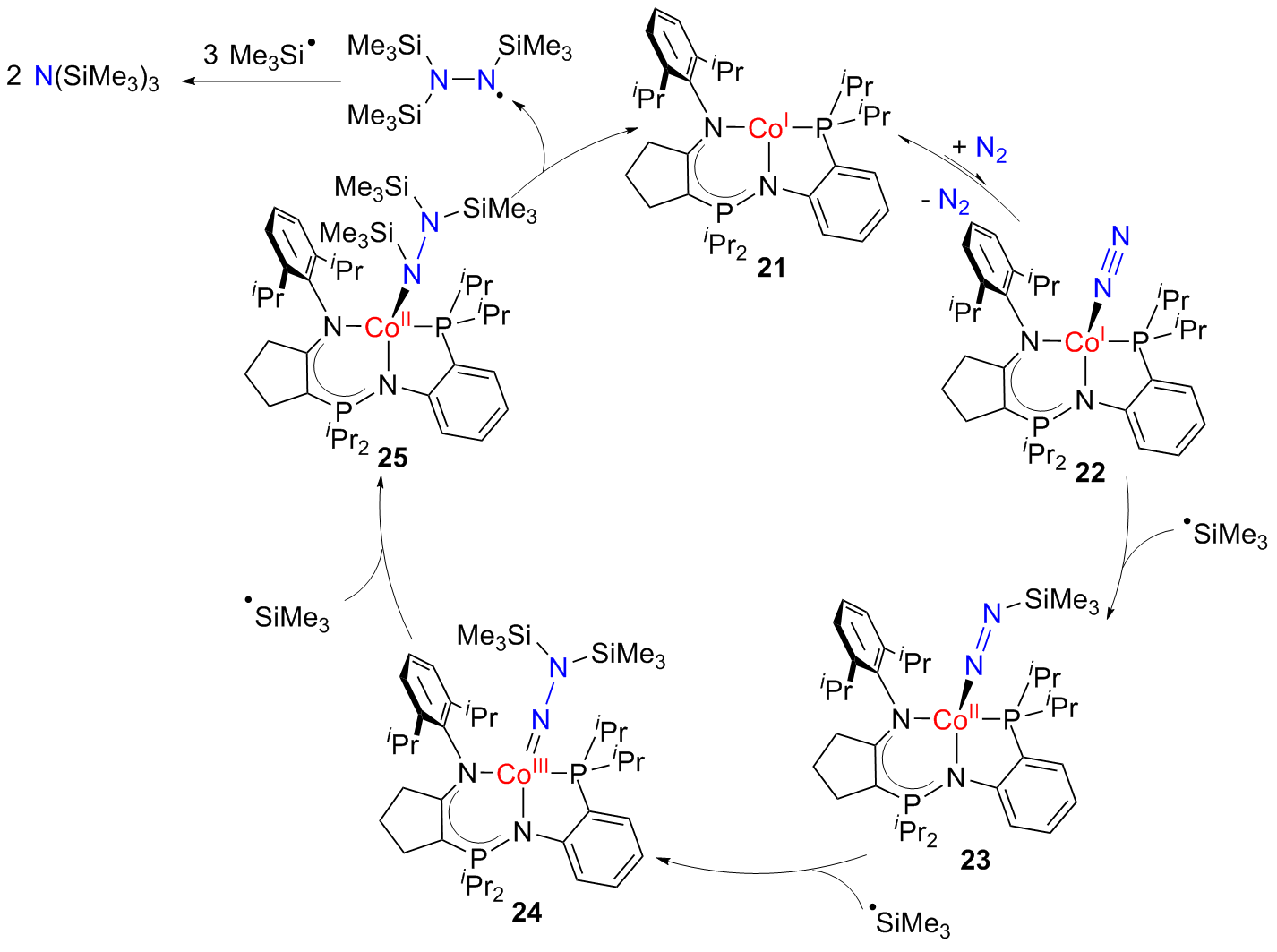
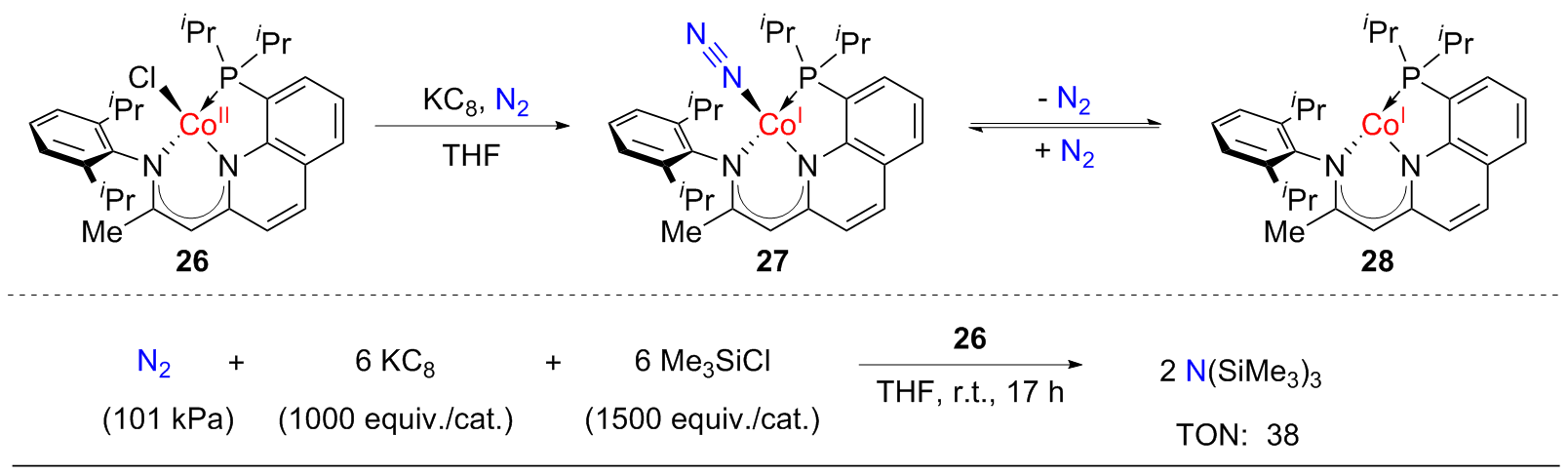
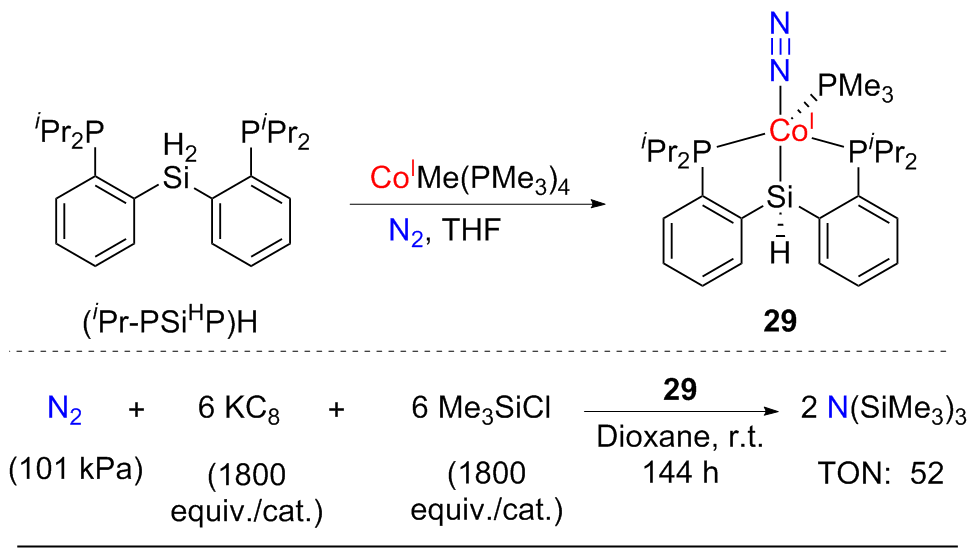
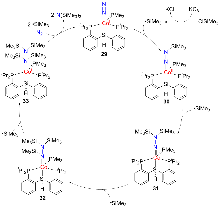
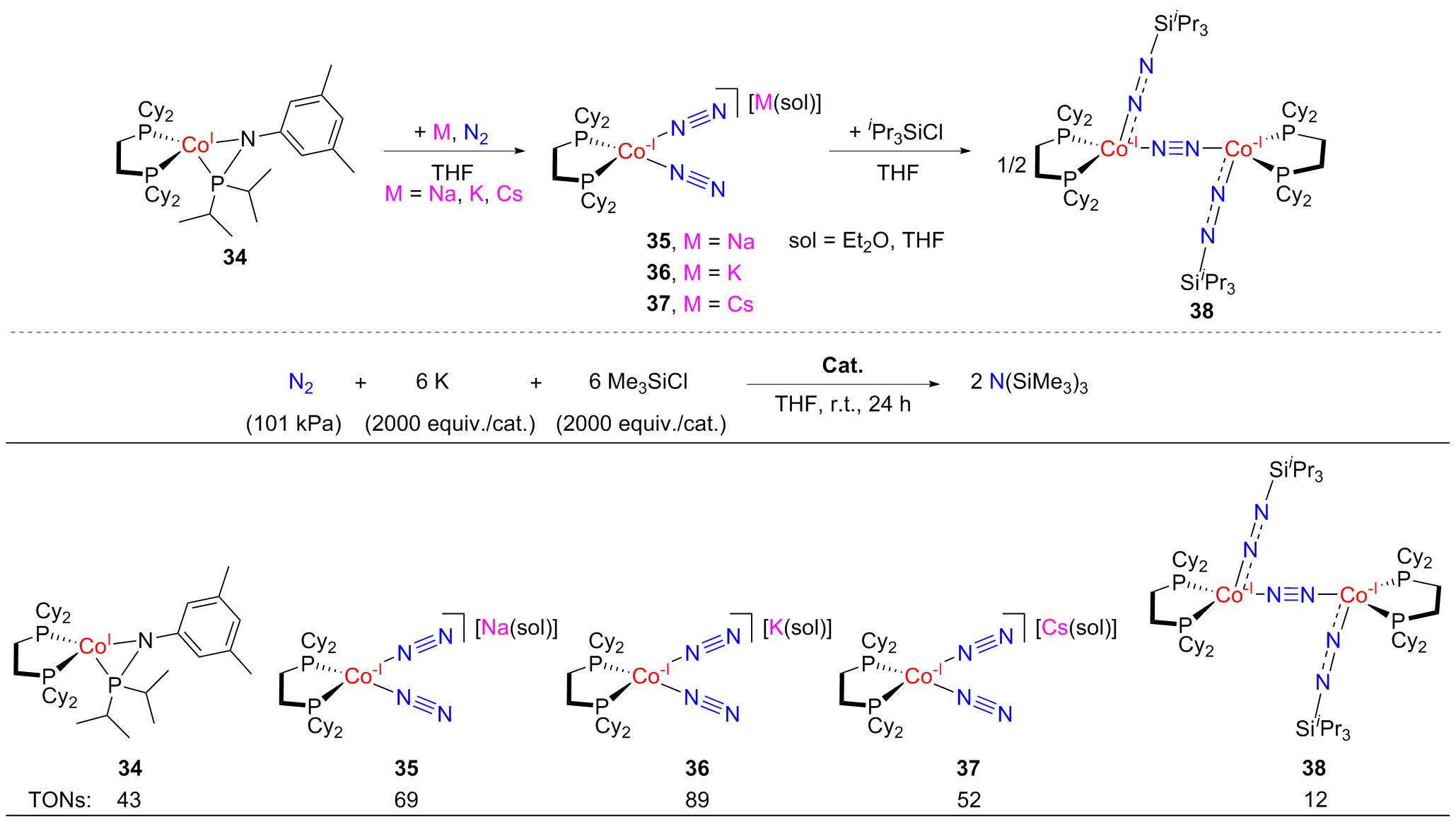
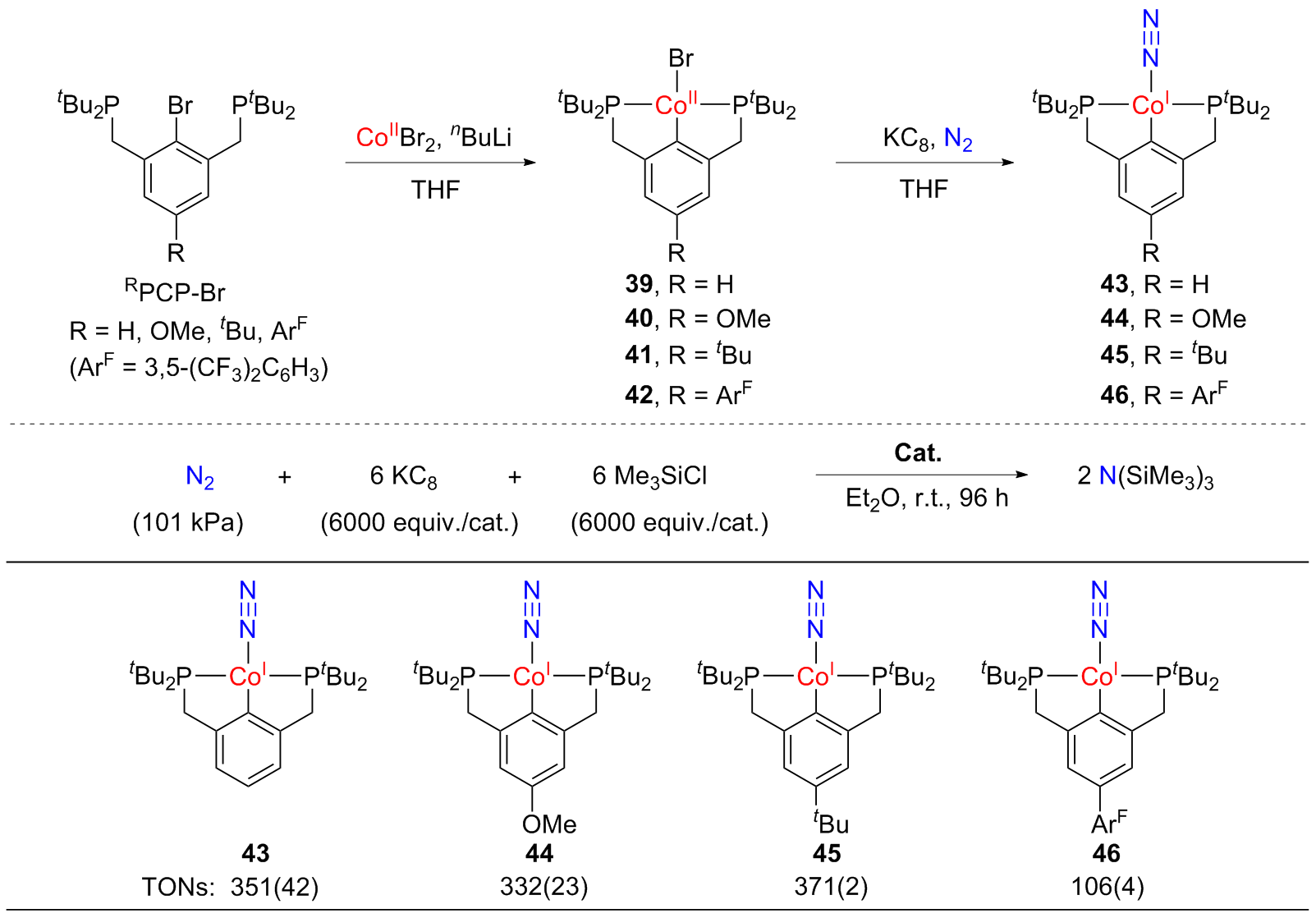
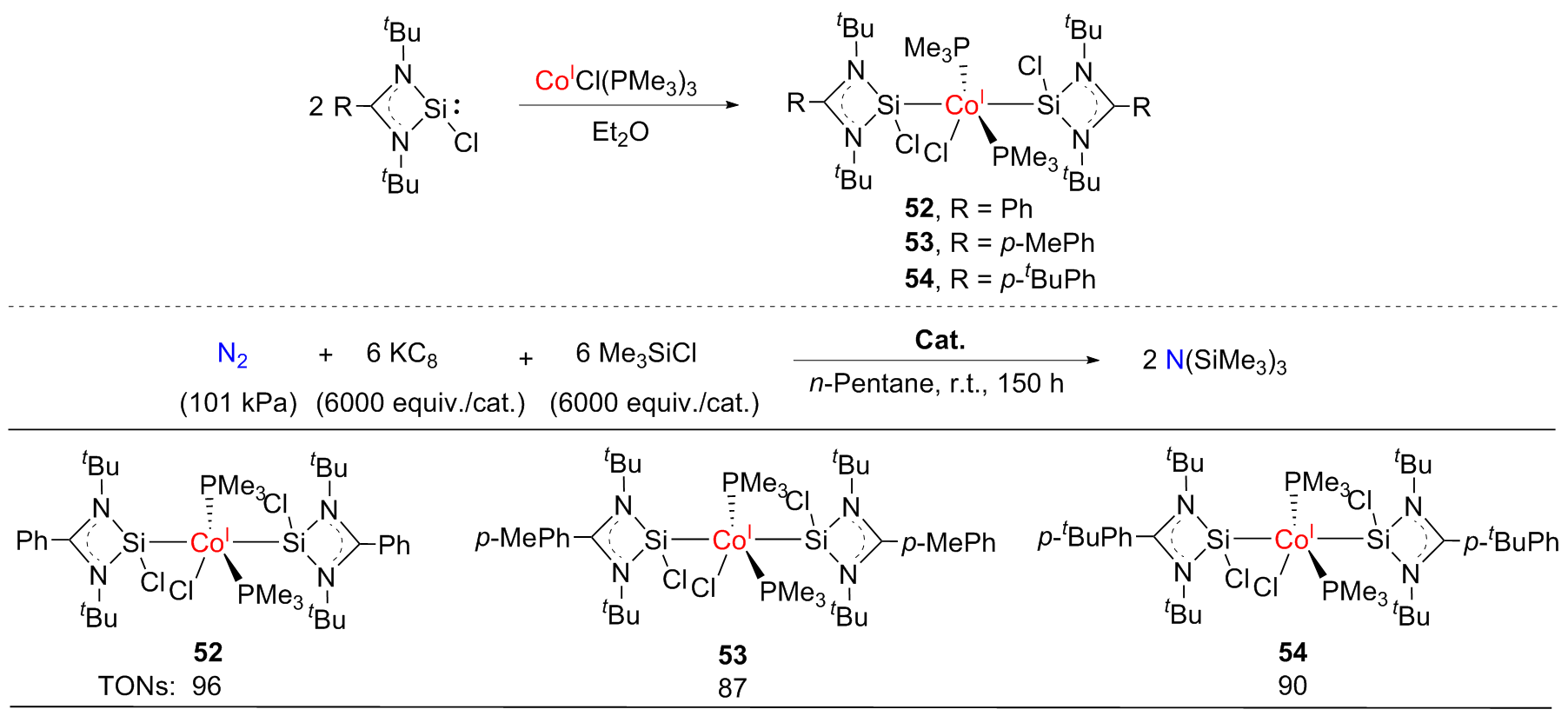
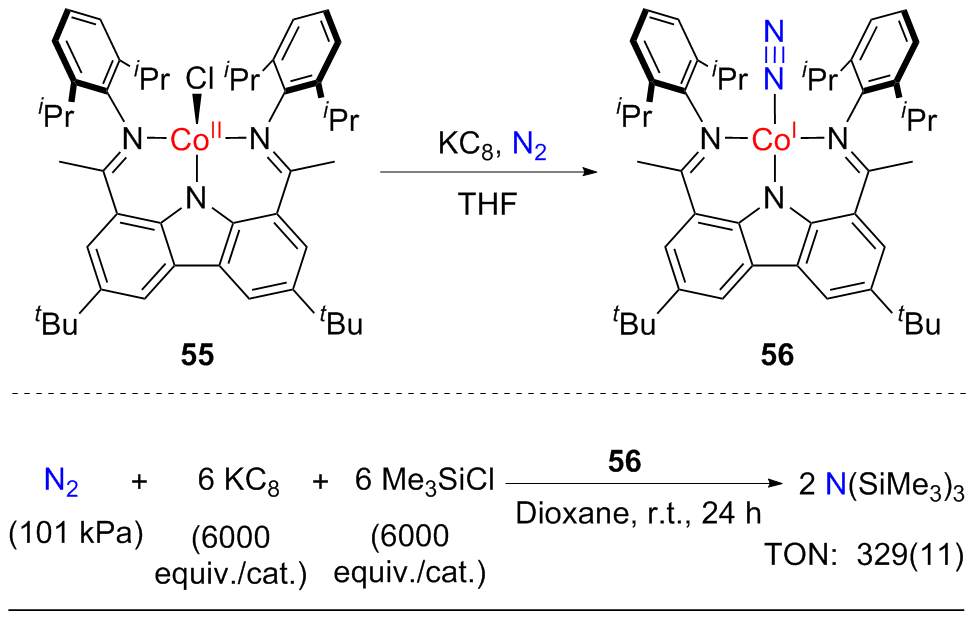
| Cobalt-N2 complex | Bond length d(N—N)/nm | IR ν(N—N)/cm-1 | TONa | Cobalt-N2 complex | Bond length d(N—N)/nm | IR ν(N—N)/cm-1 | TONa |
|---|---|---|---|---|---|---|---|
| | 0.1116(5) | 2062 | 41 | | 0.1128(3)~0.1150(3) | 1837 1931 | 89 |
| | 0.1154(2) 0.1159(3) | 1807 1881 | 107(16) | | 0.1115(9) | 2009 | 351(42) |
| | 0.1115(2) | 2061 | 52 | | 0.1121(3) | 2103 | 329(11) |
| Cobalt-N2 complex | Bond length d(N—N)/nm | IR ν(N—N)/cm-1 | TONa | Cobalt-N2 complex | Bond length d(N—N)/nm | IR ν(N—N)/cm-1 | TONa |
|---|---|---|---|---|---|---|---|
| | 0.1116(5) | 2062 | 41 | | 0.1128(3)~0.1150(3) | 1837 1931 | 89 |
| | 0.1154(2) 0.1159(3) | 1807 1881 | 107(16) | | 0.1115(9) | 2009 | 351(42) |
| | 0.1115(2) | 2061 | 52 | | 0.1121(3) | 2103 | 329(11) |
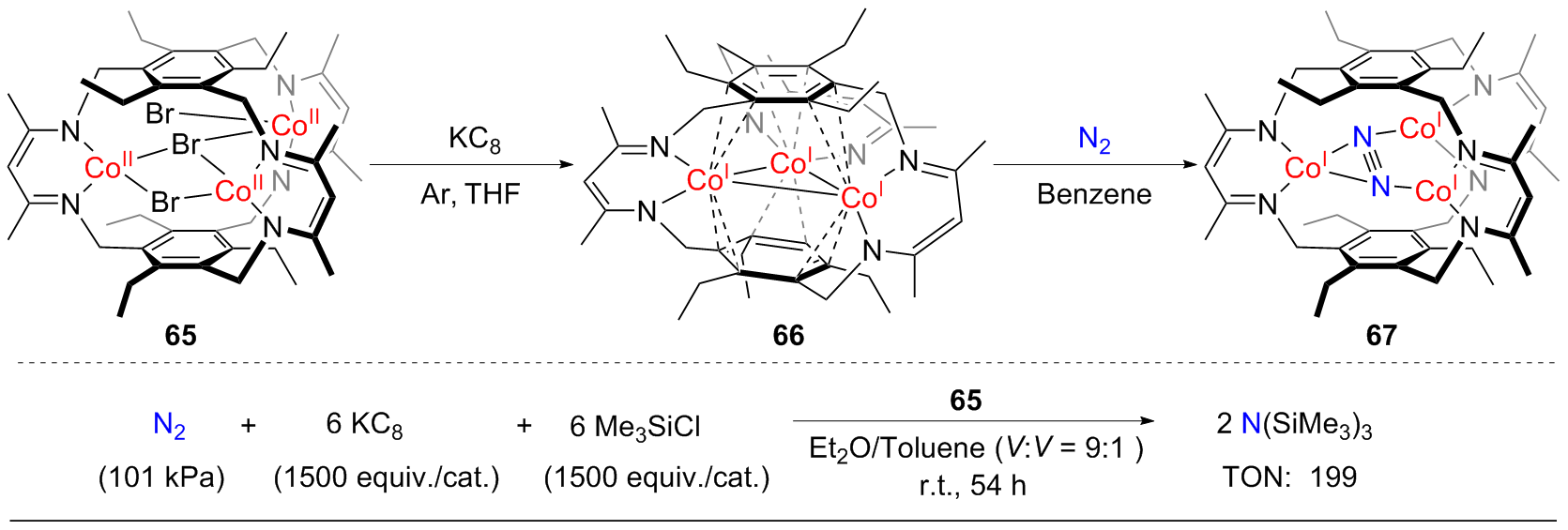
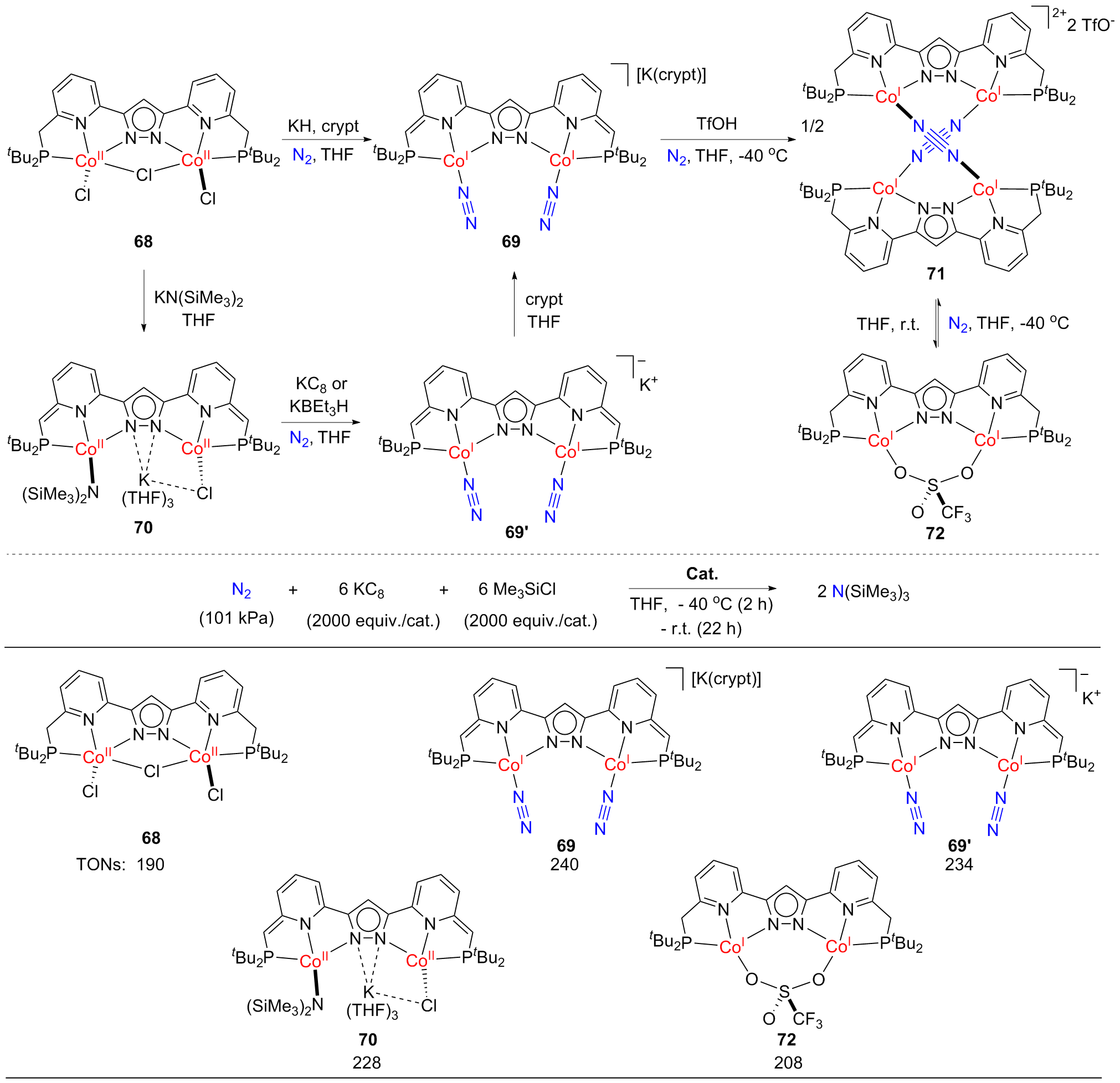
| Cobalt-N2 complex | Bond length d(N—N)/nm | IR ν(N—N)/cm-1 | TONa |
|---|---|---|---|
| | 0.1114(4) | 1994 | 178(37) |
| | 0.1124(3) 0.1125(3) | 2032 2009 | 240 |
| | 0.1138(3) | 2044 | 53 |
| | 0.1135(9) 0.1144(10) | 1901 | 200 |
| Cobalt-N2 complex | Bond length d(N—N)/nm | IR ν(N—N)/cm-1 | TONa |
|---|---|---|---|
| | 0.1114(4) | 1994 | 178(37) |
| | 0.1124(3) 0.1125(3) | 2032 2009 | 240 |
| | 0.1138(3) | 2044 | 53 |
| | 0.1135(9) 0.1144(10) | 1901 | 200 |
| [1] |
doi: 10.1038/nature06592 |
| [2] |
|
| [3] |
doi: 10.1007/BF01565394 |
| [4] |
|
| [5] |
|
| [6] |
doi: 10.1128/jb.27.4.325-340.1934 pmid: 16559703 |
| [7] |
doi: 10.1021/cr00106a002 |
| [8] |
doi: 10.1073/pnas.74.8.3249 |
| [9] |
pmid: 1529354 |
| [10] |
doi: 10.1021/ja805025w |
| [11] |
doi: 10.1038/nchem.1594 pmid: 23511421 |
| [12] |
|
| [13] |
doi: 10.1002/anie.v64.26 |
| [14] |
|
| [15] |
doi: 10.1021/acs.chemrev.9b00638 pmid: 32352271 |
| [16] |
doi: 10.1021/jacs.9b00822 |
| [17] |
doi: 10.1002/anie.v60.22 |
| [18] |
doi: 10.1021/jacs.1c11134 |
| [19] |
doi: 10.1021/jacs.2c01851 |
| [20] |
doi: 10.1021/jacs.2c01507 |
| [21] |
doi: 10.1021/jacs.2c08000 |
| [22] |
doi: 10.1021/jacs.2c13086 |
| [23] |
doi: 10.1021/jacs.3c00266 |
| [24] |
doi: 10.1021/jacs.3c08715 |
| [25] |
doi: 10.1021/jacs.4c02905 |
| [26] |
doi: 10.1021/acscatal.5c03731 |
| [27] |
doi: 10.1002/cjoc.v43.1 |
| [28] |
doi: 10.1021/jacs.5c15167 |
| [29] |
|
| [30] |
|
| [31] |
doi: 10.1002/chem.v21.24 |
| [32] |
|
| [33] |
doi: 10.1021/jacs.7b11660 |
| [34] |
doi: 10.1021/acscatal.7b04351 |
| [35] |
|
| [36] |
doi: 10.1021/acs.inorgchem.0c02332 |
| [37] |
doi: 10.31635/ccschem.021.202100945 |
| [38] |
doi: 10.1021/acs.inorgchem.2c00234 |
| [39] |
doi: 10.1016/j.cclet.2023.109292 |
| [40] |
doi: 10.1039/D4NJ00883A |
| [41] |
doi: 10.1039/D4DT02057J |
| [42] |
doi: 10.1021/acs.inorgchem.5c02069 |
| [43] |
doi: 10.1021/jacs.5b01445 pmid: 25799204 |
| [44] |
|
| [45] |
doi: 10.1021/jacs.1c01840 pmid: 33830763 |
| [46] |
doi: 10.1002/ange.v133.26 |
| [47] |
doi: 10.1002/chem.v28.67 |
| [48] |
doi: 10.1039/D2DT03320H |
| [49] |
doi: 10.1021/acs.inorgchem.2c04099 |
| [50] |
doi: 10.1021/acs.organomet.4c00156 pmid: 40726633 |
| [51] |
doi: 10.1021/jacsau.5c00129 |
| [52] |
doi: 10.1021/acs.inorgchem.5b00645 pmid: 26001022 |
| [53] |
doi: 10.1002/anie.v55.46 |
| [54] |
doi: 10.1002/anie.v64.25 |
| [55] |
doi: 10.1002/adsu.v9.9 |
| [56] |
doi: 10.1016/S1872-2067(21)63939-6 |
| [1] | 吴曼, 姚杰, 房玉阜, 周维友, 钱俊峰, 戴璇, 何明阳. 非均相CuMgMn层状双氢氧化物无添加剂条件下高效催化级联反应合成喹唑啉与喹唑啉酮[J]. 有机化学, 2026, 46(8): 3268-3275. |
| [2] | 唐磊, 赵刚. 银催化二氟甲基取代的乙烯吲哚与偶氮二甲酸酯的不对称环加成反应[J]. 有机化学, 2026, 46(8): 3255-3267. |
| [3] | 黄丰盛, 陈鹏飞, 冯裕发, 顾龙勤, 周维友, 何明阳, 戴璇. 一价铜掺杂TiO2催化含氮杂环的氧化脱氢[J]. 有机化学, 2026, 46(8): 3227-3236. |
| [4] | 刘小冬, 陈永乐, 蒙语薇, 王毛锐, 唐海涛. 芳基卤代物与苯乙烯的电化学还原偶联烷基化反应[J]. 有机化学, 2026, 46(8): 3246-3254. |
| [5] | 吴蕊, 武治权, 张娟, 高文超, 王英雄, 常宏宏. 乙二醇选择性催化氧化合成乙醇酸的研究进展[J]. 有机化学, 2026, 46(8): 2969-2987. |
| [6] | 韩银松, 王东炜, 肖佳怡, 冯若昆. 酰胺噁唑啉导向的铜催化[2.2]对环芳烷直接C—H酰氧基化反应[J]. 有机化学, 2026, 46(8): 3147-3157. |
| [7] | 朱晓宇, 罗宜铭, 孙墁, 李文泽. 铑和手性磷酸参与的卡宾不对称催化反应研究进展[J]. 有机化学, 2026, 46(8): 2926-2948. |
| [8] | 冯亚栋, 毕寺恒, 唐明清, 吴养洁, 皮超. 紫外光驱动的芳香醛与邻氨基苯甲酰胺构建喹唑啉酮化合物[J]. 有机化学, 2026, 46(8): 3114-3122. |
| [9] | 林艳如, 周倩, 秦景灏, 宋德威, 宋芳芳, 高媛媛, 包欢, 李飞, 姜恒, 刘澜涛. 钯催化非活化烯烃的分子内Heck/胺化反应合成螺吲哚啉[J]. 有机化学, 2026, 46(8): 3139-3146. |
| [10] | 易千禧, 梁宸伟, 程瑶航, 安光辉. 可见光介导钌催化苯胺衍生物对位酰基化和二氟烷基化[J]. 有机化学, 2026, 46(8): 3276-3287. |
| [11] | 郑浩宇, 李传莹, 周友运. 过渡金属不对称催化通过C—O键形成合成手性叔烷基醚的研究进展[J]. 有机化学, 2026, 46(8): 2892-2925. |
| [12] | 王力卓, 刘馨忆, 宋戈洋, 石晓莉, 薛东. 光激发丰产金属镍催化卤代芳烃与磺酰胺的C(sp2)—N偶联反应[J]. 有机化学, 2026, 46(7): 2835-2852. |
| [13] | 于丰恺, 朱先进, 徐紫涵, 石凌宇, 石永佳, 李旭锋, 杨道山. 铜催化三组分反应合成含硫醚片段的三氮唑类化合物[J]. 有机化学, 2026, 46(7): 2825-2834. |
| [14] | 任汝通, 卢诗超, 李洪爽. 丰产金属钴催化的烯烃氢酰化反应[J]. 有机化学, 2026, 46(7): 2701-2712. |
| [15] | 高鹰鹏, 张林军, 宋基懿, 钟品勇, 刘晋彪. 铜催化2-氨基苯甲酸与异硫氰酸酯脱硫环化合成2-氨基苯并-1,3-噁嗪-4-酮[J]. 有机化学, 2026, 46(7): 2808-2815. |
| 阅读次数 | ||||||
|
全文 |
|
|||||
|
摘要 |
|
|||||