有机化学 ›› 2026, Vol. 46 ›› Issue (10): 4034-4049.DOI: 10.6023/cjoc202601044 上一篇 下一篇
研究论文
吴越友a, 何丹丹a, 冯念林a, 张依a, 刘丹丹a, 周玥a, 李晨晨a,*( ), 王贞超a,b,*()
收稿日期:2026-03-24
修回日期:2026-05-26
发布日期:2026-06-26
基金资助:
Yueyou Wua, Dandan Hea, Nianlin Fenga, Yi Zhanga, Dandan Liua, Yue Zhoua, Chenchen Lia,*(), Zhenchao Wanga,b,*()
Received:2026-03-24
Revised:2026-05-26
Published:2026-06-26
Contact:
Supported by:文章分享
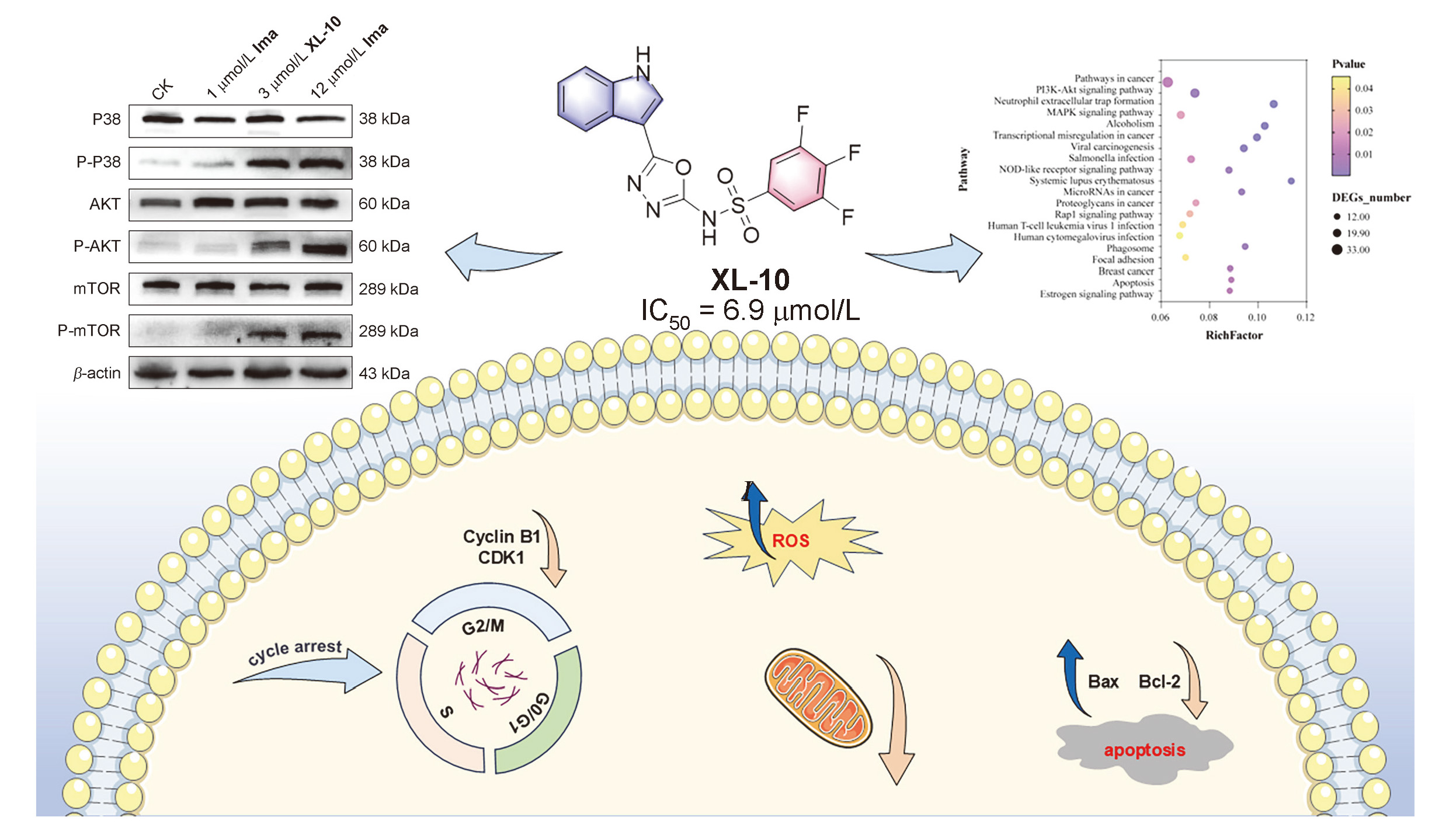
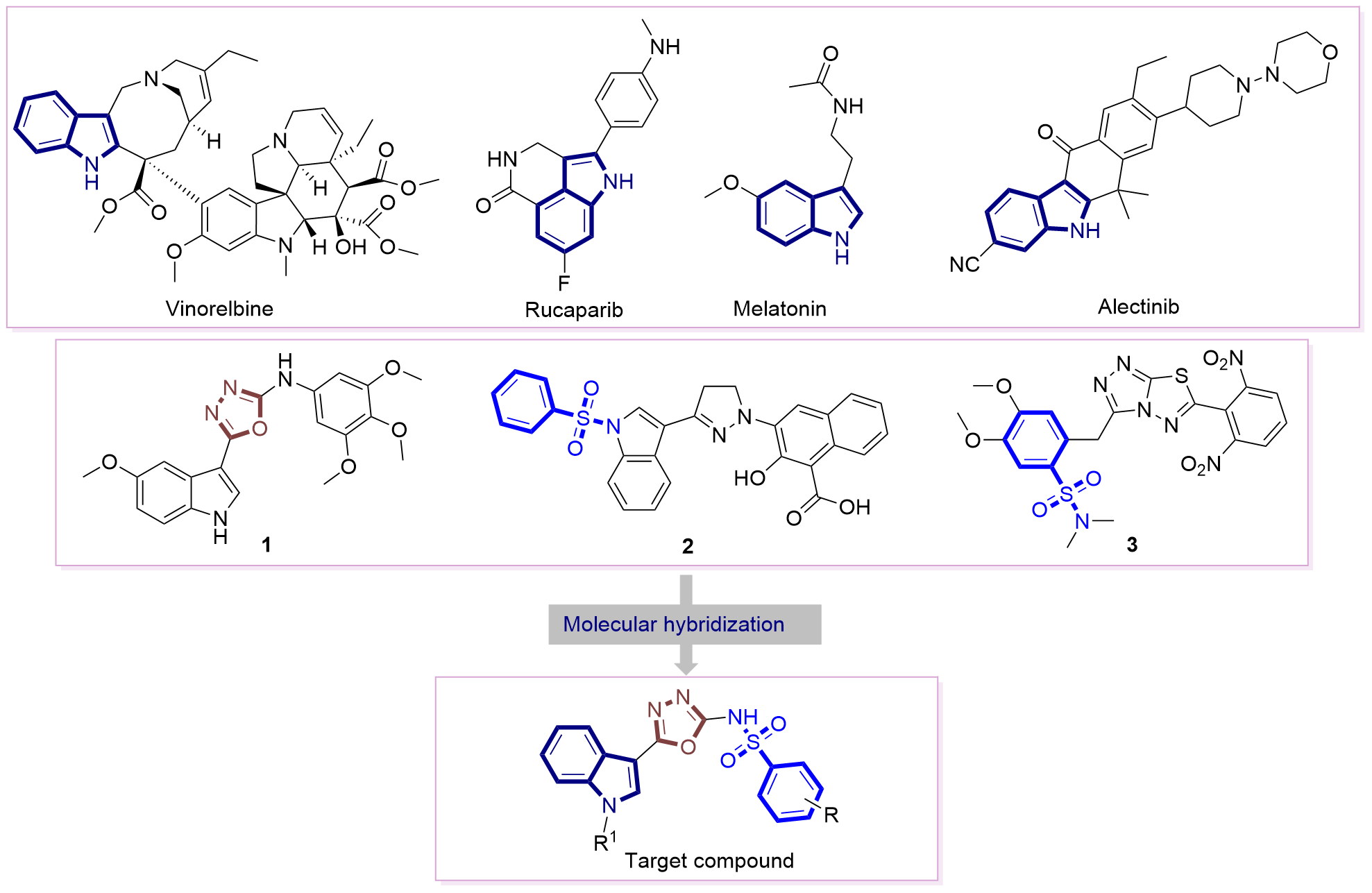
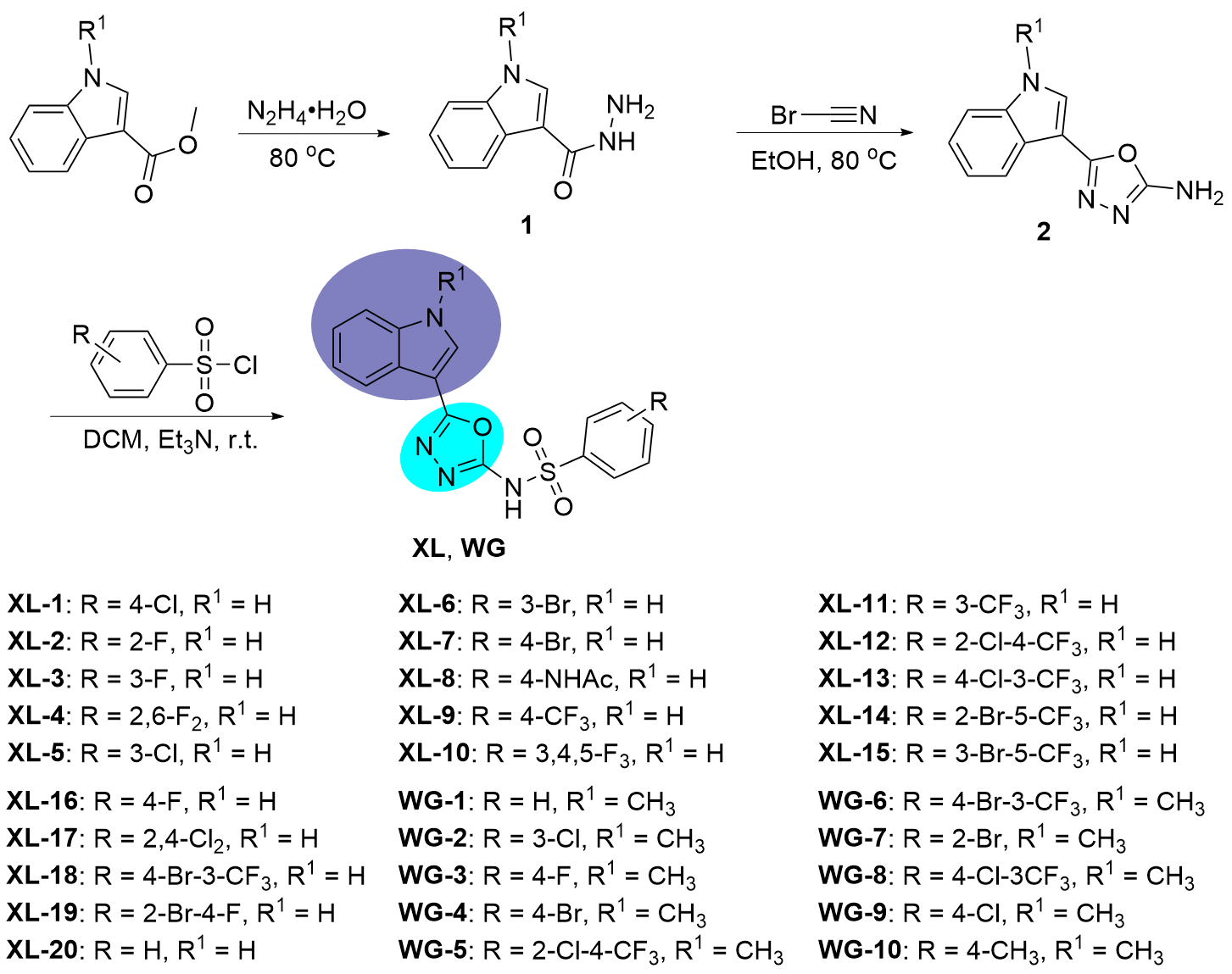
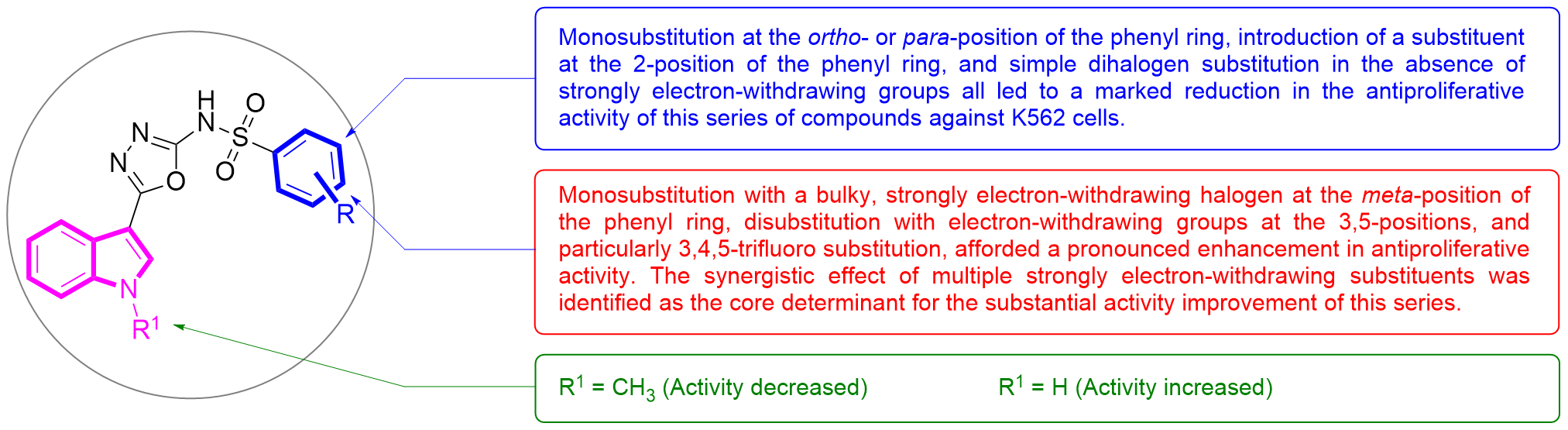
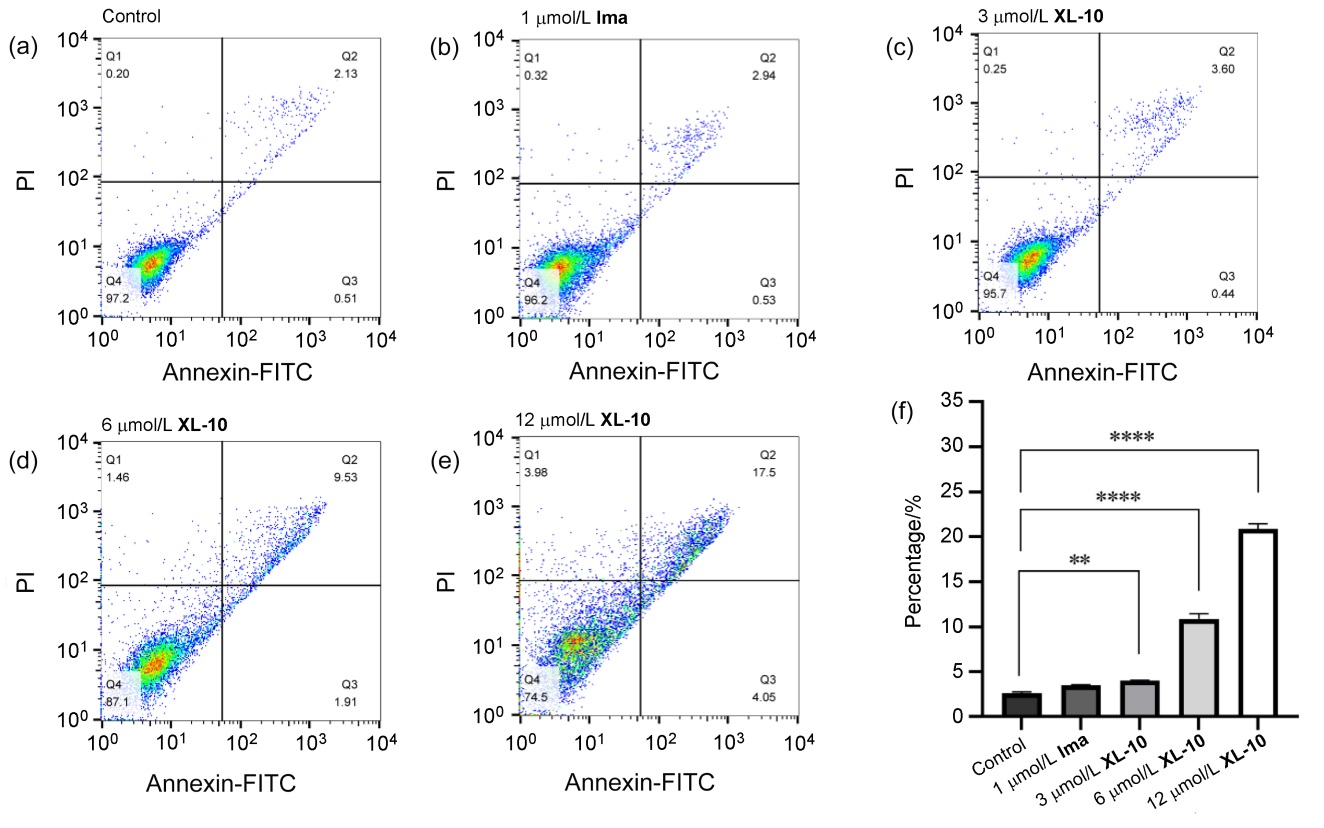
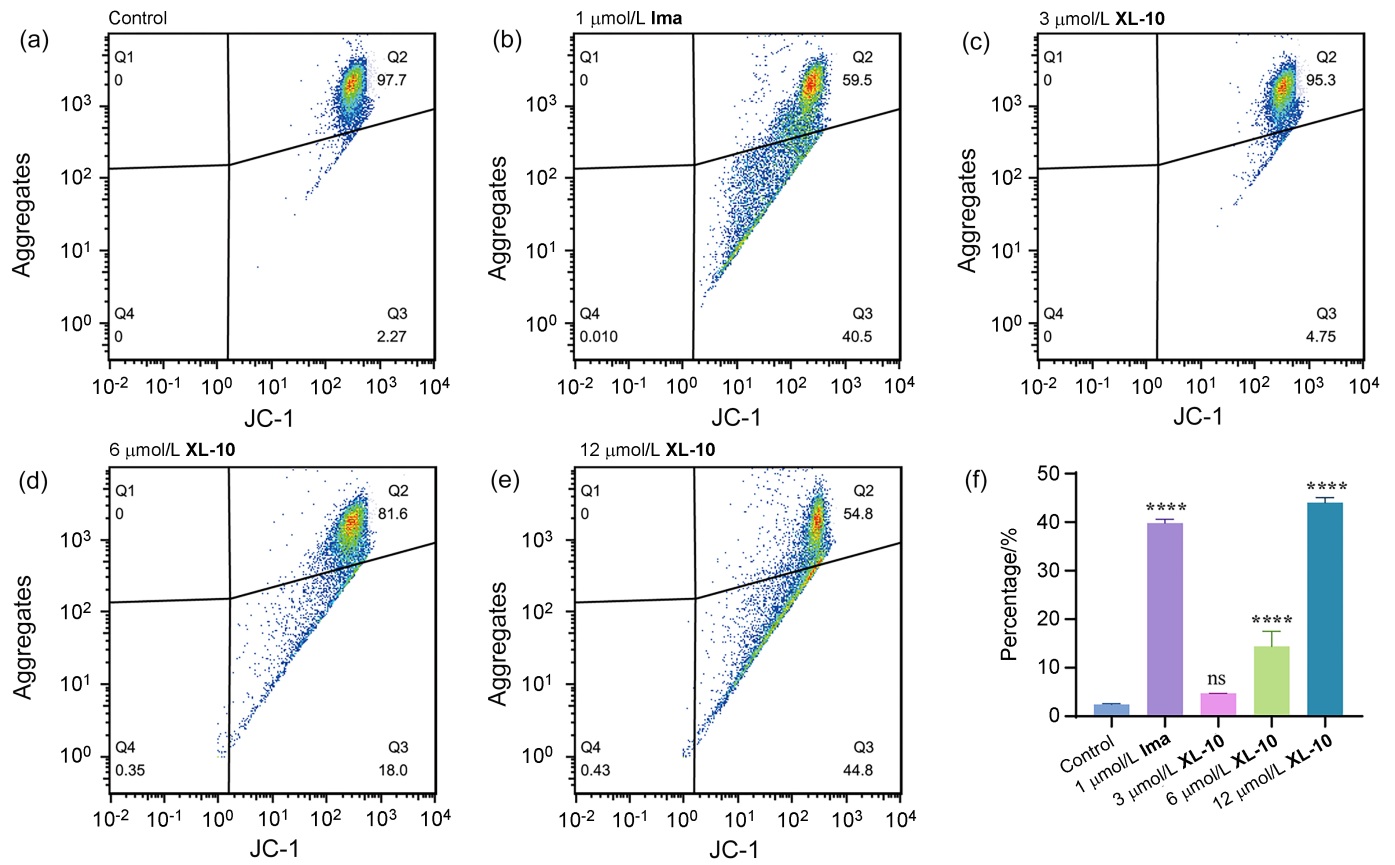
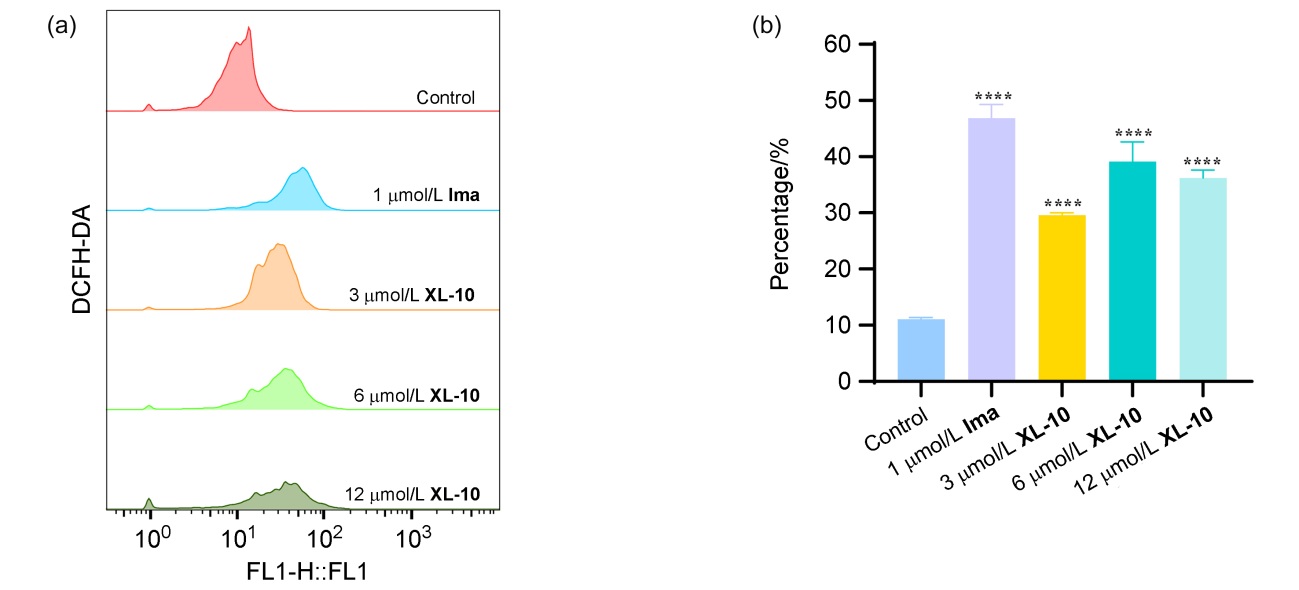
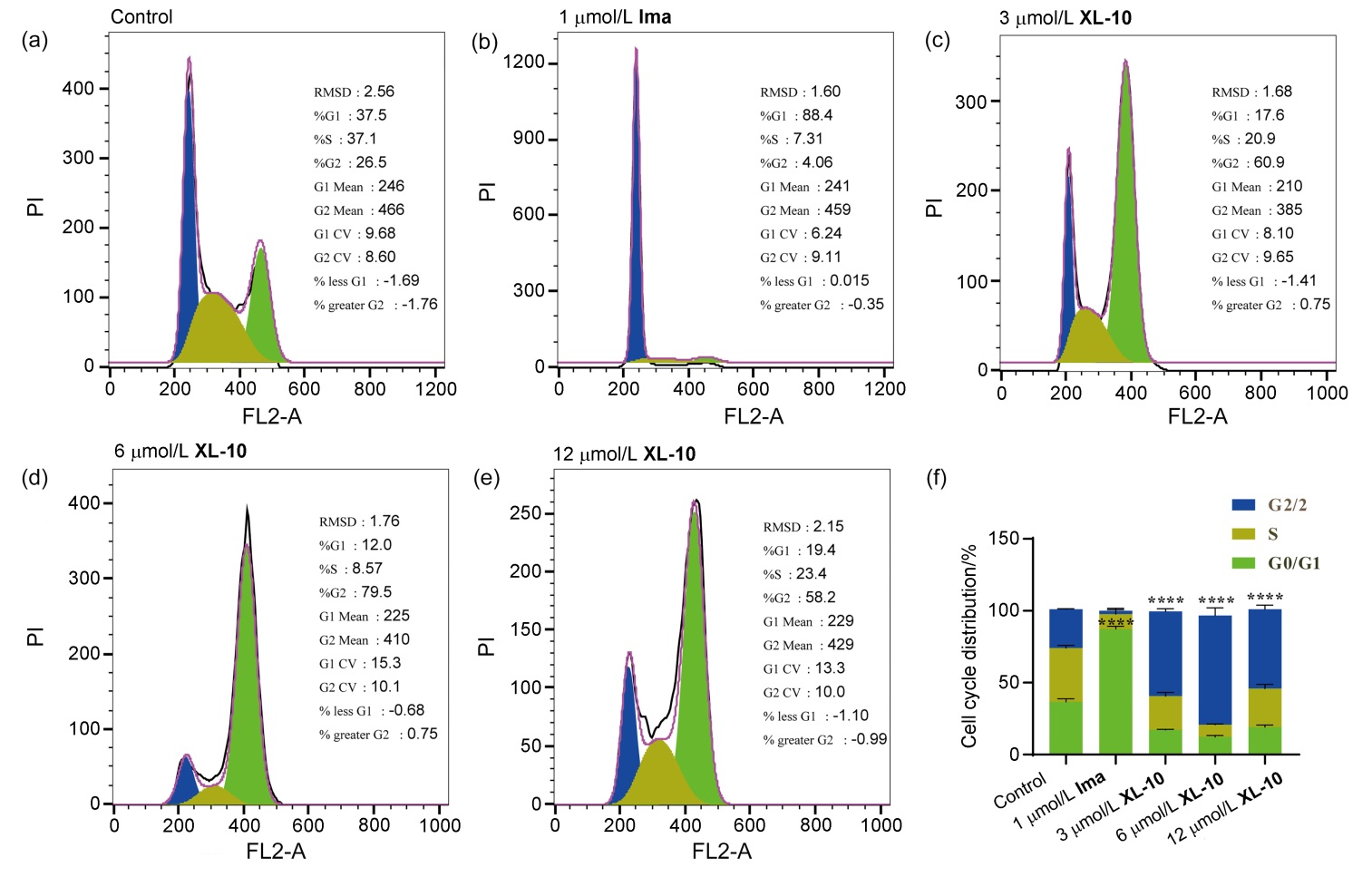
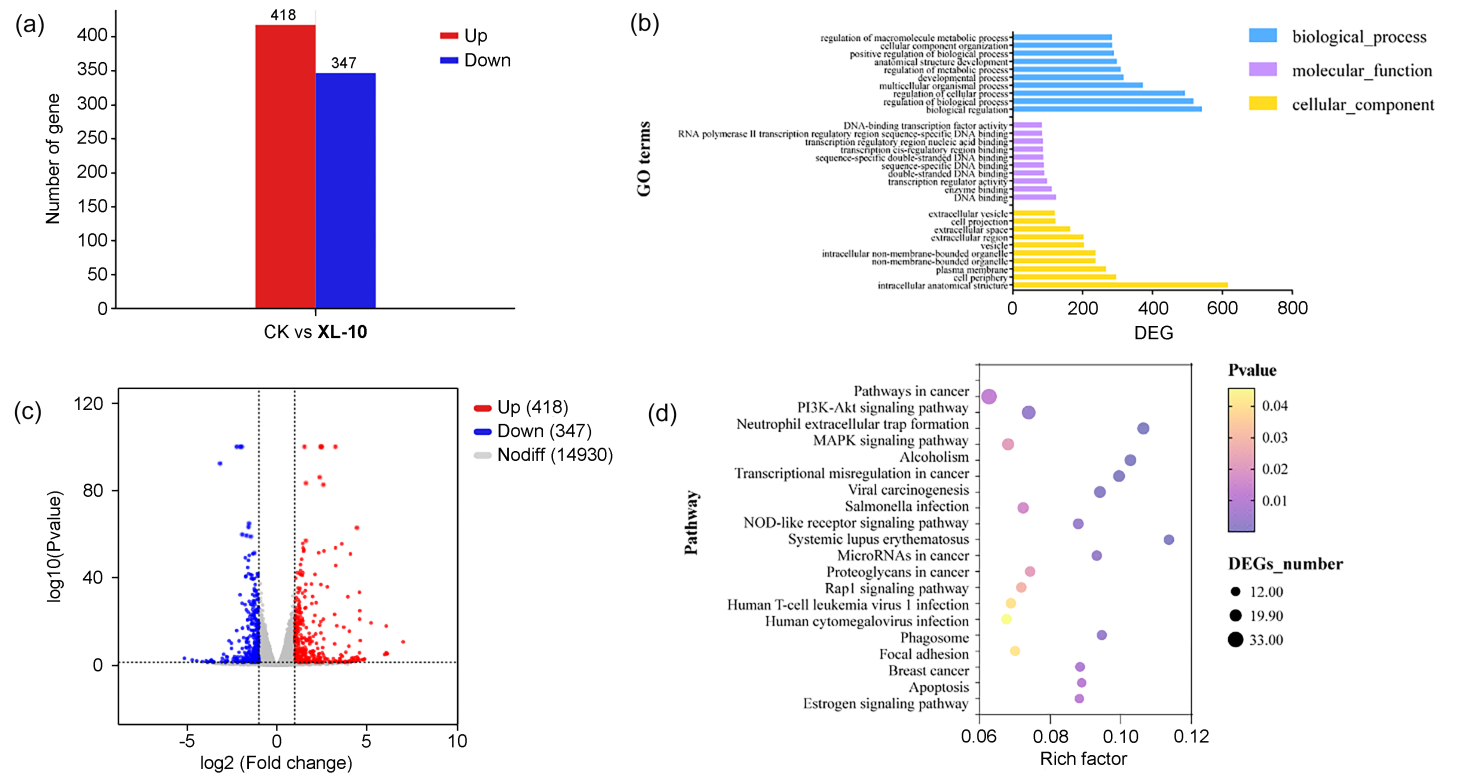
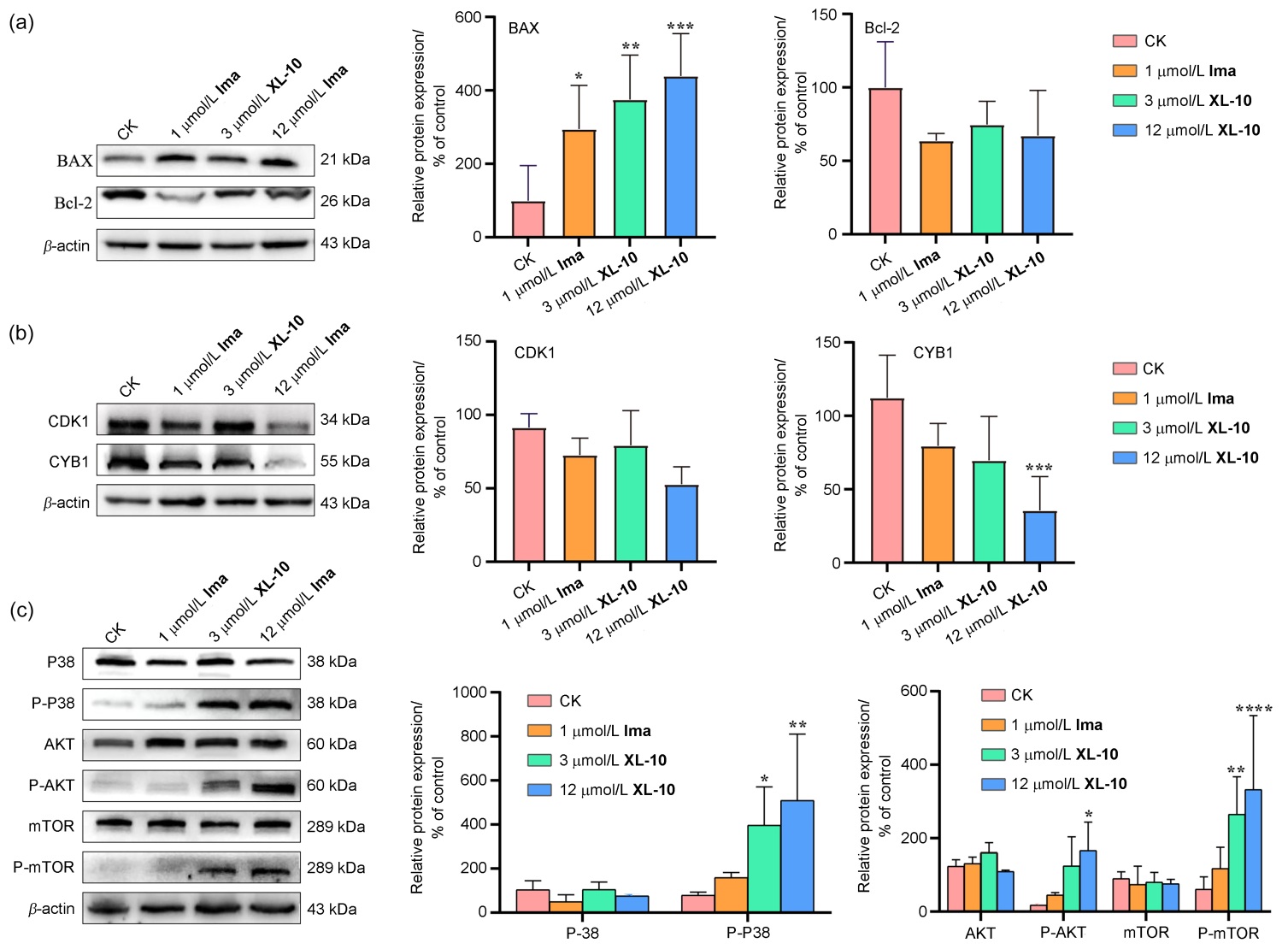
慢性粒细胞白血病(CML)是一种以髓系细胞异常增殖为特征的血液系统恶性肿瘤. 由于常规酪氨酸激酶抑制剂耐药性的出现, 开发新型抗肿瘤药物势在必行. 基于具有抗肿瘤潜力的吲哚、1,3,4-噁二唑和苯磺酰胺药效团, 设计合成了30个新型杂化衍生物, 旨在提升活性和选择性. 其中N-(5-(1H-吲哚-3-基)-1,3,4-噁二唑-2-基)-3,4,5-三氟苯磺酰胺(XL-10)对CML K562细胞展现出强效抗增殖作用[IC50=(6.69±0.35) μmol/L]. 机制研究表明, XL-10通过打破氧化还原稳态诱导K562细胞凋亡, 其主要表现为活性氧(ROS)水平升高和线粒体膜电位降低; 流式细胞分析显示, 该化合物通过调控细胞周期蛋白(Cyclin B1)及细胞周期蛋白依赖性激酶(CDK1)等关键周期蛋白, 将细胞阻滞于G2/M期; 蛋白质组学和Western blot实验证实了其对丝裂原活化蛋白激酶(MAPK)和磷脂酰肌醇3-激酶(PI3K)-蛋白激酶B (AKT)信号通路的调节作用. 该研究系统阐明了XL-10的抗肿瘤作用机制, 突显其作为靶向CML治疗先导化合物的开发潜力.
吴越友, 何丹丹, 冯念林, 张依, 刘丹丹, 周玥, 李晨晨, 王贞超. 靶向K562肿瘤细胞的1,3,4-噁二唑衍生物的合成、抗癌活性评价及初步作用机制研究[J]. 有机化学, 2026, 46(10): 4034-4049.
Yueyou Wu, Dandan He, Nianlin Feng, Yi Zhang, Dandan Liu, Yue Zhou, Chenchen Li, Zhenchao Wang. Synthesis, Anticancer Evaluation, and Preliminary Mechanism Study of 1,3,4-Oxadiazole Derivatives Targeting K562 Tumor Cells[J]. Chinese Journal of Organic Chemistry, 2026, 46(10): 4034-4049.
| Compd. | Inhibition ratea/% of 10 μmol/L | |||
|---|---|---|---|---|
| PC-3 | A549 | K562 | HEK | |
| XL-1 | — | 14.03±2.81 | 3.52±2.35 | 18.47±3.32 |
| XL-2 | — | 20.97±3.68 | 6.32±1.36 | 8.62±1.93 |
| XL-3 | 34.80±2.15 | 33.18±3.66 | 6.51±2.39 | 4.17±3.58 |
| XL-4 | 9.49±2.9 | 18.34±4.23 | 10.30±1.38 | 12.19±2.55 |
| XL-5 | 7.98±4.56 | 19.32±1.99 | 26.85±2.01 | 8.31±2.35 |
| XL-6 | 6.72±4.65 | 15.36±0.86 | 31.41±1.63 | -5.18±2.80 |
| XL-7 | 4.21±2.49 | 12.82±2.46 | 15.65±2.51 | 0.69±0.33 |
| XL-8 | 12.14±1.25 | 22.65±10.61 | 10.63±2.54 | 7.32±5.36 |
| XL-9 | 30.86±1.43 | 24.07±2.96 | 13.28±2.12 | 19.30±2.12 |
| XL-10 | 53.72±1.48 | 18.63±3.04 | 87.20±1.79 | 13.13±2.04 |
| XL-11 | — | 6.33±3.21 | 14.57±1.72 | 20.03±3.32 |
| XL-12 | — | 16.12±5.06 | 6.75±0.99 | 15.69±1.93 |
| XL-13 | — | 17.41±2.36 | 10.61±0.32 | -23.56±3.58 |
| XL-14 | — | 15.41±0.92 | 30.55±1.67 | 12.27±2.55 |
| XL-15 | — | 15.32±1.14 | 38.33±1.06 | 14.61±2.35 |
| XL-16 | — | 32.55±1.83 | 13.60±2.67 | -14.77±2.80 |
| XL-17 | — | 31.87±3.16 | 8.05±1.58 | 5.42±0.33 |
| XL-18 | 35.26±3.19 | 31.03±3.50 | 20.24±0.43 | 6.56±5.36 |
| XL-19 | — | 15.49±0.29 | 6.08±1.82 | 13.04±2.12 |
| XL-20 | — | — | 5.00±1.26 | 9.56±2.04 |
| WG-1 | 12.68±3.36 | 11.81±1.39 | — | 23.29±2.98 |
| WG-2 | — | 13.78±1.68 | — | 23.80±5.13 |
| WG-3 | — | 7.72±1.55 | — | 18.99±4.76 |
| WG-4 | — | 18.52±3.39 | 12.94±8.88 | 22.84±1.46 |
| WG-5 | 14.71±3.60 | 20.01±0.38 | 15.60±7.04 | 16.43±5.60 |
| WG-6 | — | 17.62±0.83 | 10.18±5.98 | 21.50±0.32 |
| WG-7 | 10.78±3.59 | 19.04±1.91 | 11.23±4.79 | 22.14±1.75 |
| WG-8 | 10.03±2.30 | 13.96±0.97 | 1.56±3.06 | 17.83±4.43 |
| WG-9 | 13.12±5.10 | 12.08±1.14 | 25.58±2.34 | 22.65±3.06 |
| WG-10 | 29.96±6.66 | 15.28±1.13 | 3.24±5.68 | 17.84±2.60 |
| 5-Fub | 62.46±2.79 | 54.52±1.31 | ||
| Imac | 97.58±0.51 | |||
| [1] |
doi: 10.1186/s12943-018-0780-6 pmid: 29455643 |
| [2] |
doi: 10.1016/S0140-6736(21)01204-6 pmid: 34425075 |
| [3] |
doi: 10.1016/j.ccell.2020.03.006 |
| [4] |
doi: 10.1056/NEJMoa1609324 |
| [5] |
doi: 10.1126/science.1099480 |
| [6] |
doi: 10.1001/jamaoncol.2020.5774 pmid: 33180106 |
| [7] |
doi: 10.1002/ajh.25792 pmid: 32239758 |
| [8] |
doi: 10.1016/j.blre.2021.100825 |
| [9] |
doi: 10.1016/j.ejmech.2010.05.047 |
| [10] |
doi: 10.1016/j.cbi.2025.111528 |
| [11] |
doi: 10.2174/0929867330666230626143911 |
| [12] |
pmid: 2711203 |
| [13] |
doi: 10.1016/j.nucmedbio.2016.08.007 |
| [14] |
doi: 10.18632/oncotarget.v8i49 |
| [15] |
doi: 10.1007/s40265-018-0952-0 |
| [16] |
doi: 10.3390/molecules23123361 |
| [17] |
doi: 10.2174/1389557521666210226145837 |
| [18] |
doi: 10.1080/17568919.2024.2347084 |
| [19] |
doi: 10.2174/1871520622666220607143040 |
| [20] |
doi: 10.3389/fonc.2019.00939 |
| [21] |
doi: 10.1002/cmdc.v8.9 |
| [22] |
doi: 10.2174/1871520619666190312125602 |
| [23] |
doi: 10.1016/j.bmcl.2019.126925 |
| [24] |
doi: 10.2147/OTT.S254856 pmid: 32801761 |
| [25] |
doi: 10.1016/j.ejmech.2023.115883 |
| [26] |
doi: 10.1021/acs.jmedchem.2c01612 |
| [27] |
doi: 10.1021/acs.jmedchem.0c01851 |
| [28] |
doi: 10.1016/j.ejmech.2019.07.016 |
| [29] |
pmid: 8515419 |
| [30] |
doi: 10.1016/j.cdc.2023.101031 |
| [31] |
doi: 10.1126/science.7878464 pmid: 7878464 |
| [32] |
doi: 10.1111/imr.v319.1 |
| [33] |
doi: 10.1038/sj.cdd.4401231 pmid: 12761579 |
| [34] |
|
| [35] |
doi: 10.1038/s41573-024-00979-4 |
| [36] |
doi: S0962-8924(20)30058-1 pmid: 32303435 |
| [37] |
doi: 10.1016/j.semcdb.2017.05.023 |
| [38] |
doi: 10.1038/s41580-021-00404-3 |
| [39] |
doi: 10.1186/s12964-022-00989-y |
| [40] |
doi: 10.1038/s41389-018-0081-3 pmid: 30237495 |
| [1] | 黄丰盛, 陈鹏飞, 冯裕发, 顾龙勤, 周维友, 何明阳, 戴璇. 一价铜掺杂TiO2催化含氮杂环的氧化脱氢[J]. 有机化学, 2026, 46(8): 3227-3236. |
| [2] | 胡冬燕, 卢雨彤, 韩广田, 余莎, 李喜安, 任华忠, 肖吉, 易东. 新型含反式双键哈尔碱衍生物的设计、合成及抗癌活性评价[J]. 有机化学, 2026, 46(8): 3189-3201. |
| [3] | 范玉兰, 邹小颖, 朱小青, 郑绿茵, 郭维. N-邻位C(sp3)—H键官能团化合成含氮杂环化合物研究进展[J]. 有机化学, 2025, 45(4): 1047-1096. |
| [4] | 田勋, 邓国刚, 羊晓东. 钴催化C(sp2)—H活化构建苯并含氮杂环骨架的研究进展[J]. 有机化学, 2025, 45(2): 655-667. |
| [5] | 刘艺琦, 陈文婕, 赵泽艳, 王苏棋, 唐圣松, 何卫民, 彭俊梅. 关于8种含氮杂环光催化合成的研究进展[J]. 有机化学, 2025, 45(10): 3546-3586. |
| [6] | 刘晨光. 含氮芳香性杂环化合物的不对称氢化反应研究进展[J]. 有机化学, 2024, 44(5): 1403-1422. |
| [7] | 钟玉梅, 邹小颖, 卓小丫, 王逸涵, 申佳奕, 郑绿茵, 郭维. 4-氧代-2-亚胺基噻唑烷-5-亚基乙酸乙酯类化合物的设计、合成及抗癌活性[J]. 有机化学, 2023, 43(4): 1452-1461. |
| [8] | 侯学会, 李议慧, 张庆玲, 刘俊桃, 陈亚静. 1,4-吡啶硫内鎓盐在有机合成中的研究与应用[J]. 有机化学, 2023, 43(11): 3844-3860. |
| [9] | 张建涛, 张聪, 郑梓栋, 周鹏, 刘卫兵. 亚砜叶立德参与构建五/六元氮杂环的反应研究进展[J]. 有机化学, 2022, 42(9): 2745-2759. |
| [10] | 赵静, 金辄, 王润, 张新庚, 韩英妹, 胡春, 刘晓平, 张传明, 金丽萍. 2-[(吡啶-2-基甲基)硫基]-1H-苯并咪唑类化合物的设计、合成和抗癌活性研究[J]. 有机化学, 2022, 42(7): 2172-2183. |
| [11] | 胡冬燕, 韩广田, 李喜安, 任华忠, 岳李荣, 郭力, 封家福. 新型哈尔碱衍生物的合成与体外抗肿瘤活性研究[J]. 有机化学, 2022, 42(6): 1863-1871. |
| [12] | 洪科苗, 黄晶晶, 姚铭瀚, 徐新芳. 氮宾/炔烃复分解串联反应研究进展[J]. 有机化学, 2022, 42(2): 344-352. |
| [13] | 赵晓伟, 夏紫琴, 张曼, 周能能. 自由基介导的串联环化反应构建七元含氮/氧杂环化合物[J]. 有机化学, 2022, 42(12): 3995-4023. |
| [14] | 陈睿嘉, 周聪, 逄锡文, 刘佳君, 顾玉诚, 刘建文, 李忠. 以环丙烷限制构象的新型双酰胺的设计、合成、抗癌活性及计算分析[J]. 有机化学, 2022, 42(1): 277-292. |
| [15] | 刘新, 许润梅, 王淋, 刘雅雪, 陈志豪, 秦巍, 田玉顺. 二氢噻吩并吡啶-查尔酮衍生物的合成及其体外抗肿瘤活性研究[J]. 有机化学, 2021, 41(9): 3550-3559. |
| 阅读次数 | ||||||
|
全文 |
|
|||||
|
摘要 |
|
|||||