

化学学报 ›› 2026, Vol. 84 ›› Issue (9): 1487-1496.DOI: 10.6023/A26040132 上一篇 下一篇
研究论文
郝子涵, 朱啟碧, 申凤娟, 耿丽君*( ), 余旭东*()
投稿日期:2026-04-22
发布日期:2026-07-13
通讯作者:
耿丽君, 余旭东
基金资助:
Zihan Hao, Qibi Zhu, Fengjuan Shen, Lijun Geng*(), Xudong Yu*()
Received:2026-04-22
Published:2026-07-13
Contact:
Lijun Geng, Xudong Yu
Supported by:文章分享
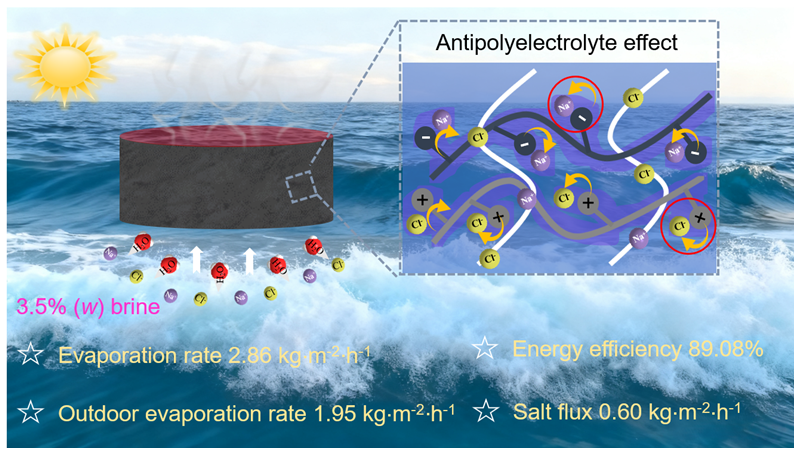
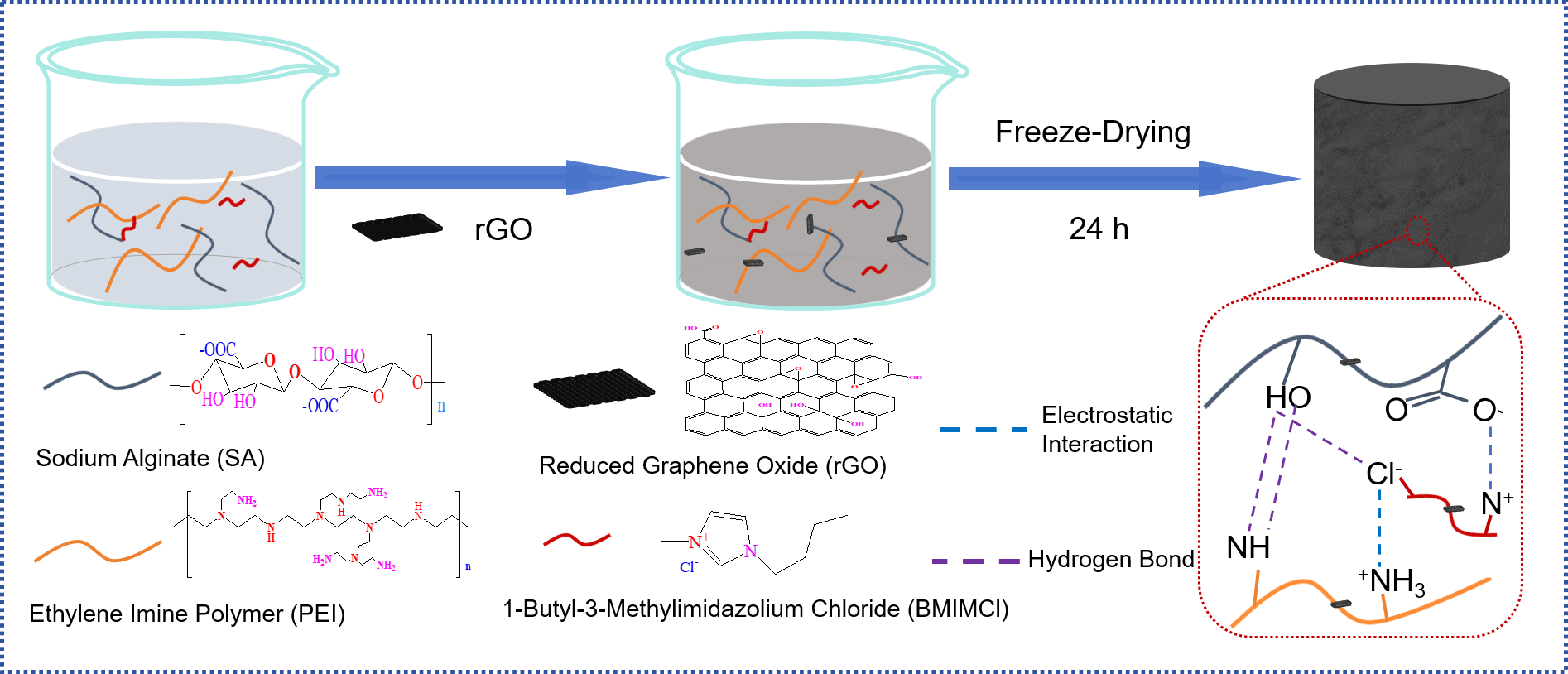
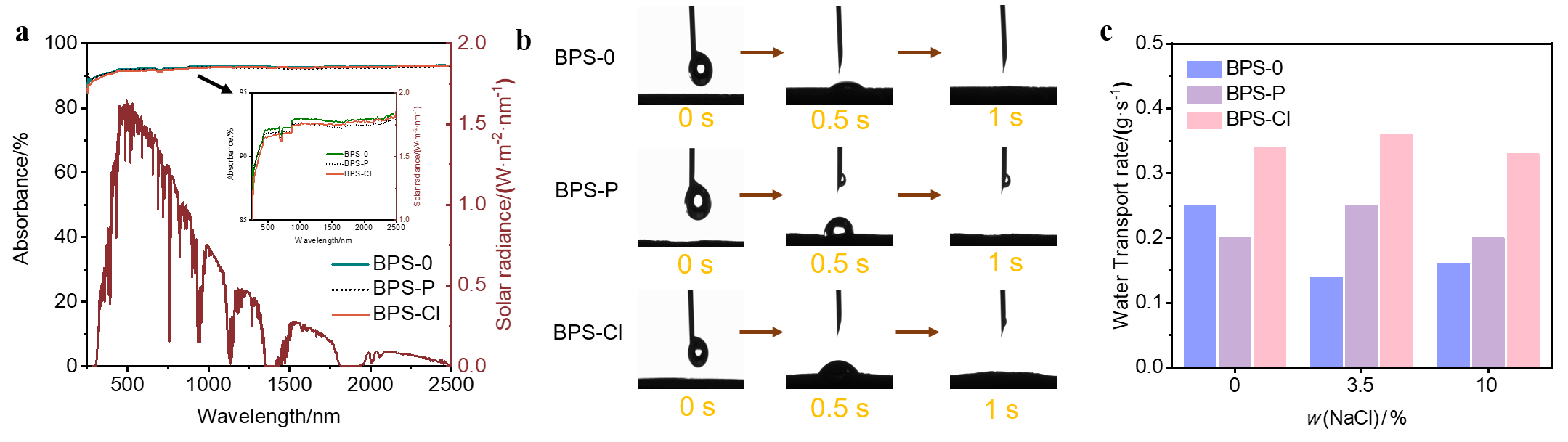
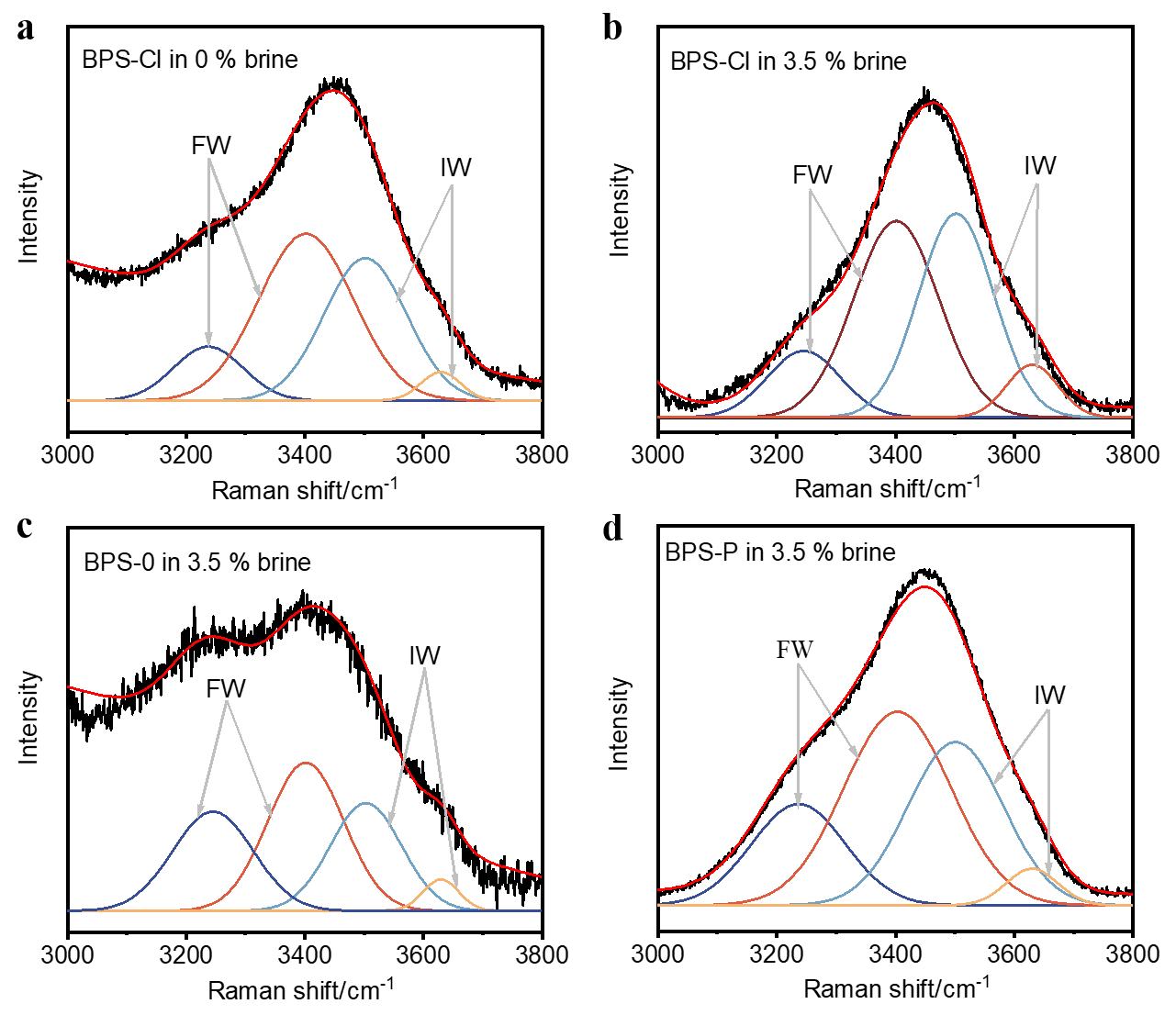
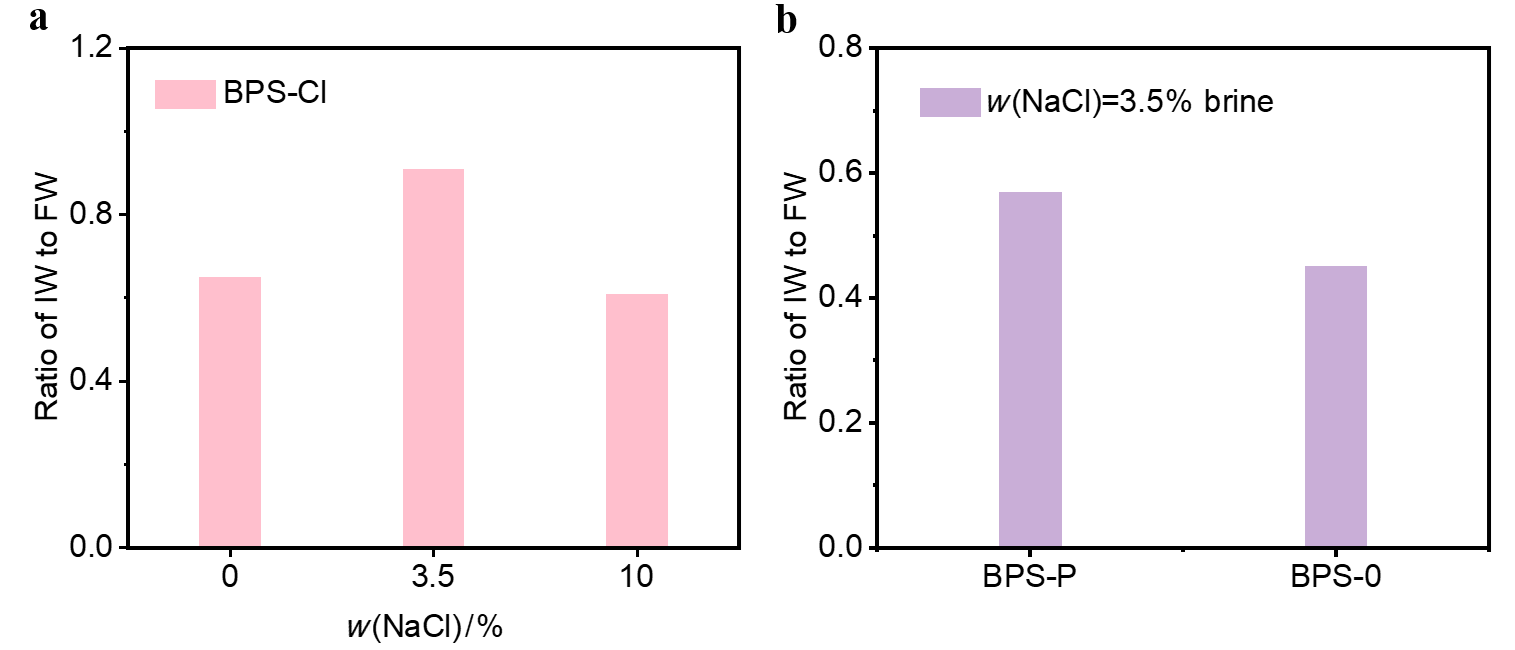
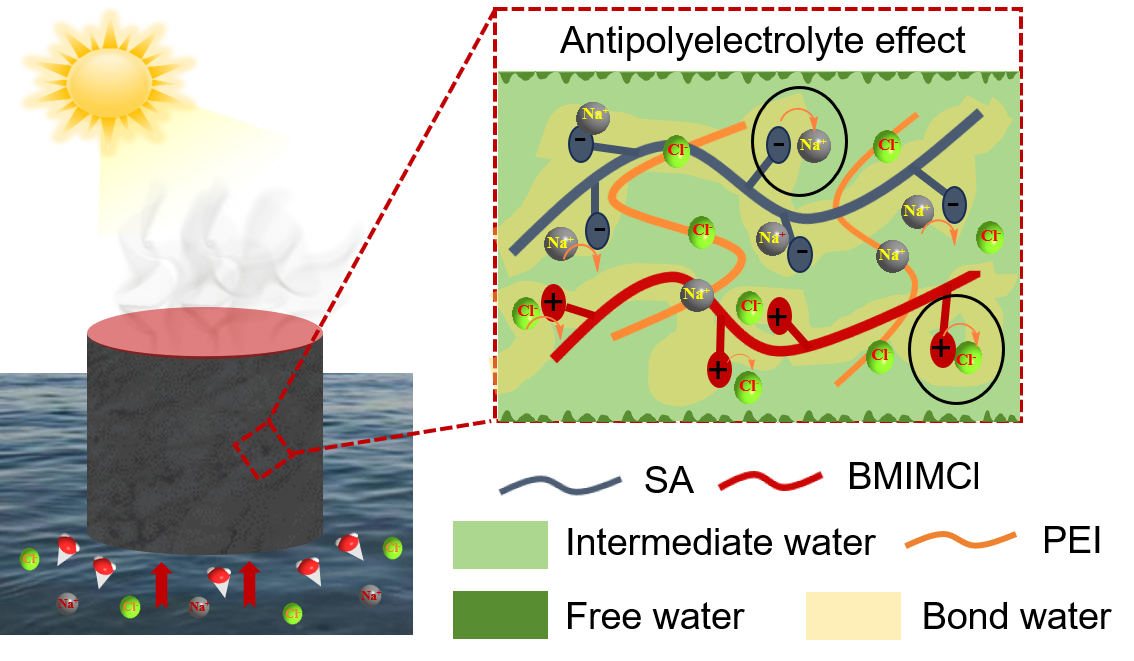
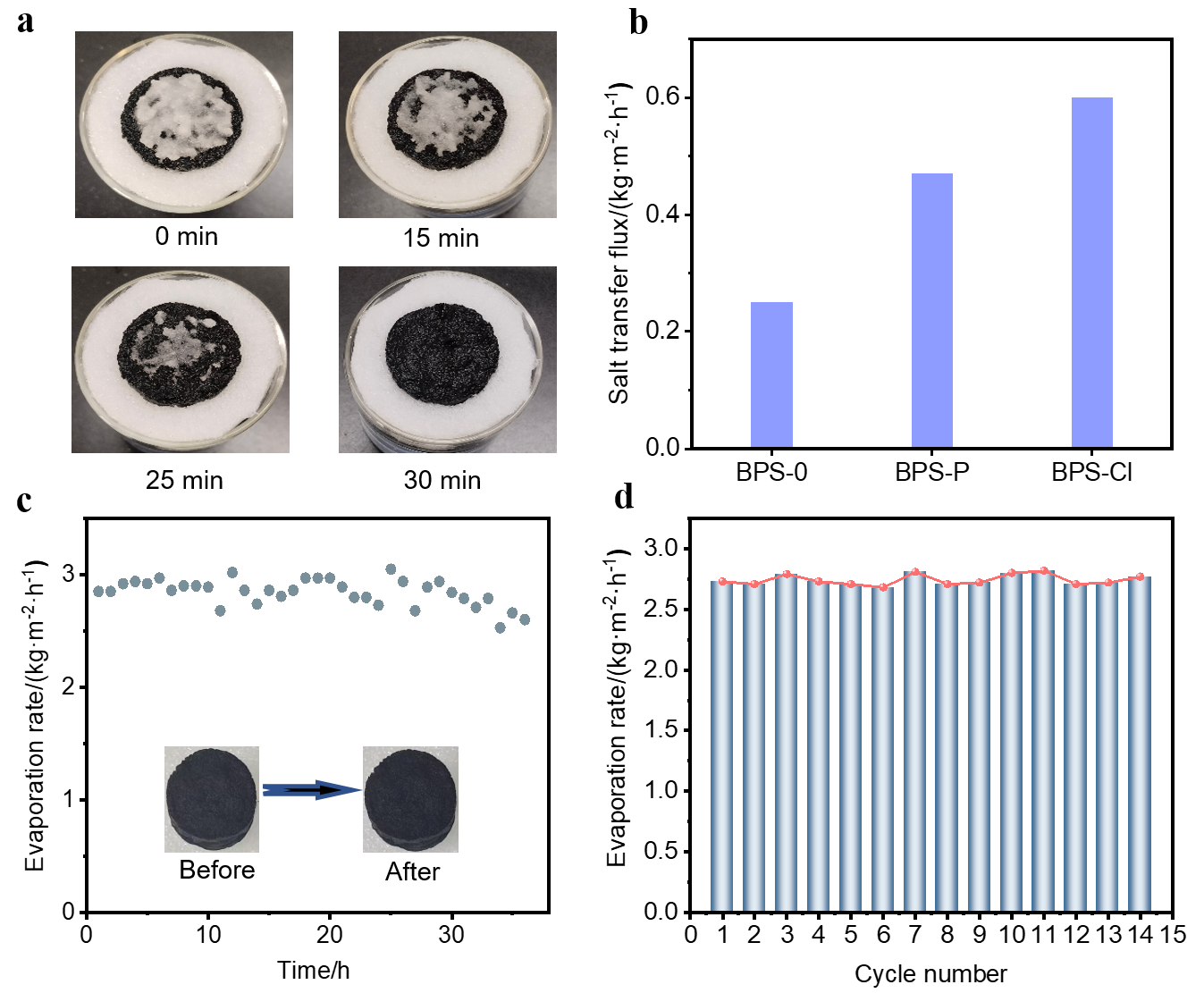
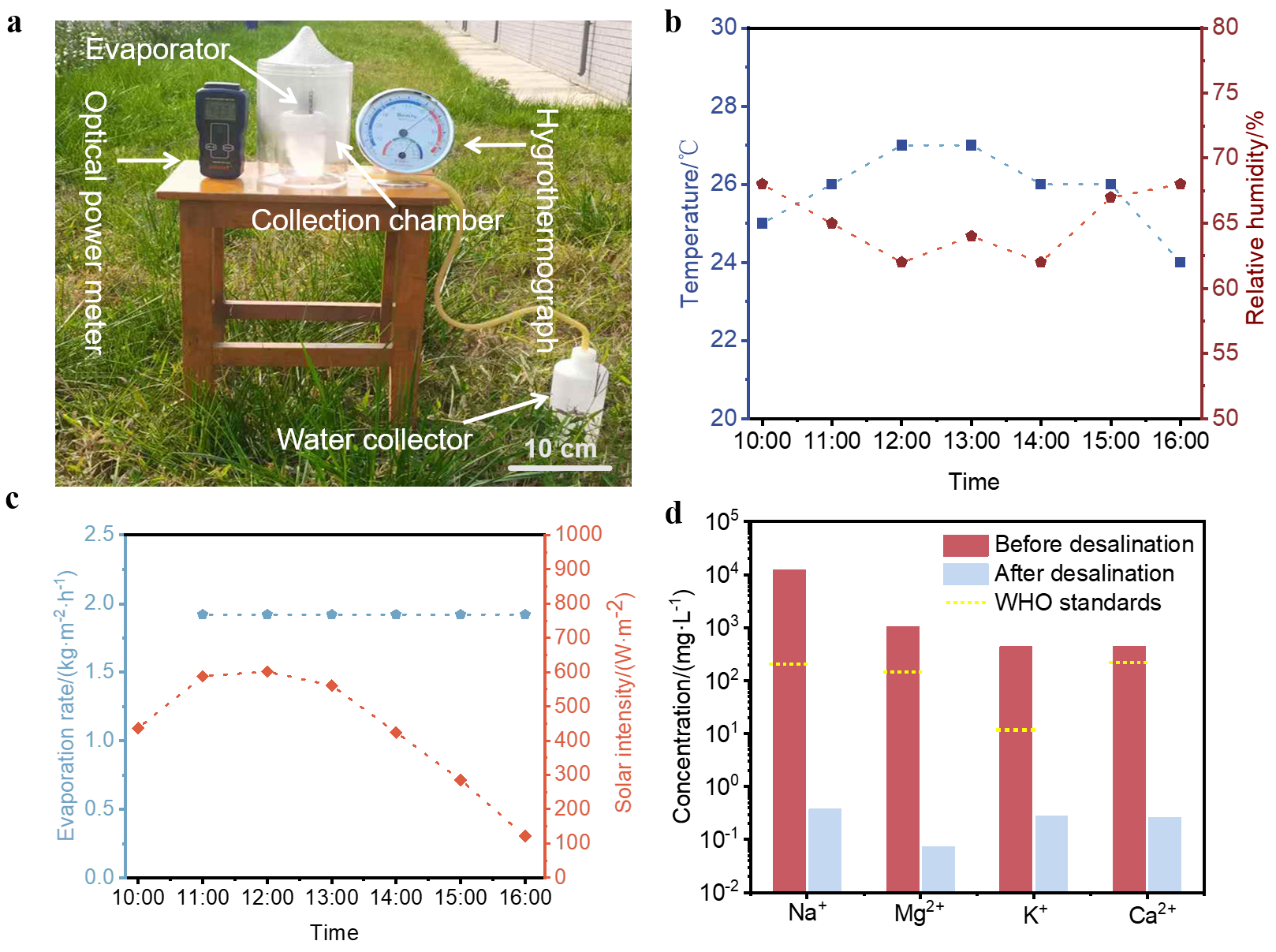
开发高效、耐盐的太阳能界面蒸发器, 以实现海水的高效淡化和长期稳定运行, 仍面临严峻挑战. 本工作构建了掺杂1-丁基-3-甲基咪唑氯盐的海藻酸盐复合凝胶蒸发器(BPS-Cl), 该咪唑类离子液体改性凝胶具有各向异性层状多孔结构与优异水分传输性能. 基于独特的抗聚电解质效应, 该蒸发器在一个太阳照射下, 在质量分数为3.5%的NaCl溶液中蒸发速率达2.86 kg•m⁻2•h⁻1, 较纯水条件下(2.54 kg•m⁻2•h⁻1)提升12.59%, 光热转换效率为89.25%; 即使在w(NaCl)=10%高盐浓度下, 蒸发速率仍可达2.32 kg•m⁻2•h⁻1, 显示出良好的高盐适应性. 此外, BPS-Cl蒸发器表现出优异的自排盐性能, 在w(NaCl)=3.5%的水溶液中连续运行36 h, 平均蒸发速率稳定在2.84 kg•m⁻2•h⁻1, 且表面无盐分析出. 户外实验进一步验证了其稳定的淡水生产能力. 本研究为发展高效、抗盐的太阳能驱动海水淡化系统提供了新策略.
郝子涵, 朱啟碧, 申凤娟, 耿丽君, 余旭东. 离子液体-海藻酸钠复合凝胶的制备及界面太阳能海水淡化性能[J]. 化学学报, 2026, 84(9): 1487-1496.
Zihan Hao, Qibi Zhu, Fengjuan Shen, Lijun Geng, Xudong Yu. Fabrication of Ionic Liquid-Sodium Alginate Composite Hydrogels for Interfacial Solar Seawater Desalination[J]. Acta Chimica Sinica, 2026, 84(9): 1487-1496.
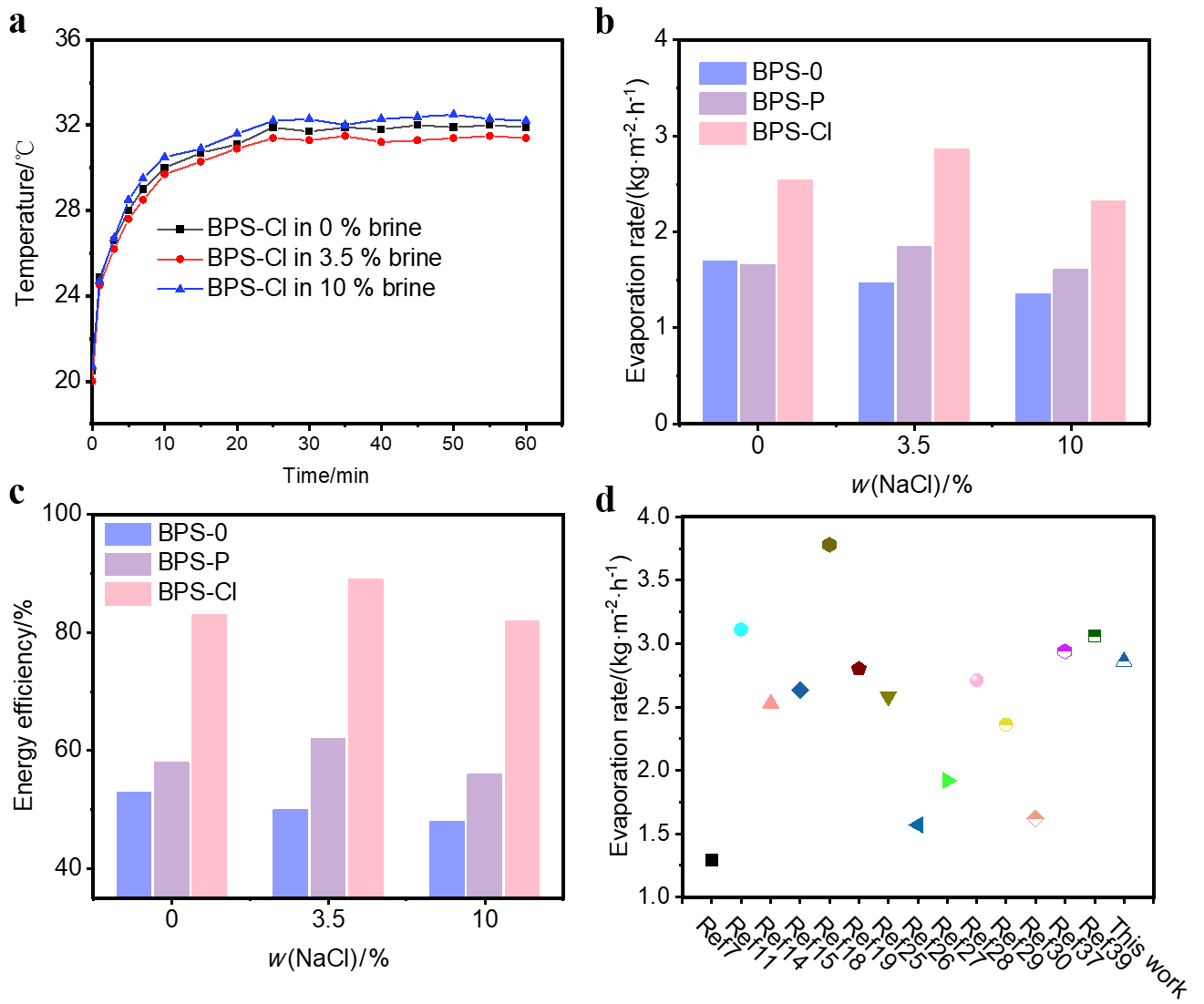
| Solution composition | Time for rapid heating /min | Upper surface temperature/℃ | Time to reach equilibrium/min | Upper surface temperature/℃ |
|---|---|---|---|---|
| pure water | 10 | 30.0 | 25 | 31.9 |
| w(NaCl)=3.5% | 10 | 29.7 | 25 | 31.4 |
| w(NaCl)=10% | 10 | 30.5 | 25 | 32.2 |
| Solution composition | Time for rapid heating /min | Upper surface temperature/℃ | Time to reach equilibrium/min | Upper surface temperature/℃ |
|---|---|---|---|---|
| pure water | 10 | 30.0 | 25 | 31.9 |
| w(NaCl)=3.5% | 10 | 29.7 | 25 | 31.4 |
| w(NaCl)=10% | 10 | 30.5 | 25 | 32.2 |
| [1] |
United Nations Educational,Scientific and Cultural Organization, The United Nations World Water Development Report 2024: Water for Prosperity and Peace. Paris: UNESCO 2024.
|
| [2] |
|
| [3] |
doi: 10.1038/nature06599 |
| [4] |
|
| [5] |
doi: 10.1038/s41893-024-01485-6 |
| [6] |
doi: 10.1038/s41893-024-01497-2 |
| [7] |
doi: 10.6023/A23040148 |
|
(杨地, 史潇凡, 张冀杰, 卜显和, 化学学报, 2023, 81, 1052.)
doi: 10.6023/A23040148 |
|
| [8] |
doi: 10.1038/s41467-022-32051-3 |
| [9] |
doi: 10.1002/adfm.v32.19 |
| [10] |
|
| [11] |
doi: 10.1016/j.cej.2023.146177 |
| [12] |
doi: 10.1002/adma.v35.1 |
| [13] |
doi: 10.1002/adfm.v31.34 |
| [14] |
doi: 10.1002/adfm.v33.24 |
| [15] |
doi: 10.1038/s41467-020-14366-1 |
| [16] |
|
| [17] |
doi: 10.1038/s41467-022-33592-3 |
| [18] |
doi: 10.1016/j.cej.2023.145484 |
| [19] |
doi: 10.1016/j.scib.2023.07.011 |
| [20] |
doi: 10.1002/marc.v29:2 |
| [21] |
doi: 10.1016/j.desal.2024.117292 |
| [22] |
|
| [23] |
|
| [24] |
doi: 10.1039/b601395c |
| [25] |
doi: 10.1016/j.carbpol.2025.123588 |
| [26] |
doi: 10.1016/j.scitotenv.2022.155757 |
| [27] |
doi: 10.1016/j.ijbiomac.2025.144704 |
| [28] |
doi: 10.1007/s40843-025-3437-6 |
|
(李叶燃, 刘星, 王一璠, 毕圣洁, 李静, 王京博, 朵永超, 朱正涛, 金欣, 王闻宇, 中国科学: 材料, 2025, 68, 2850.)
|
|
| [29] |
doi: 10.1007/s40843-022-2282-9 |
|
(刘文宁, 李鹏飞, 李湘勤, 何亚倩, 安丽, 曲丹, 汪夏燕, 孙再成, 中国科学: 材料, 2023, 66, 1607.)
|
|
| [30] |
|
|
(杨兆华, 成鸿静, 杨弋, 刘辉, 杜飞鹏, 张云飞, 高等学校化学学报, 2022, 43, 20220181.)
doi: 10.7503/cjcu20220181 |
|
| [31] |
doi: 10.1063/1.3058616 |
| [32] |
|
| [33] |
doi: 10.1039/D0MH01259A |
| [34] |
doi: 10.1021/acsnano.0c10431 |
| [35] |
doi: 10.1016/j.seppur.2025.133033 |
| [36] |
doi: 10.1021/acs.langmuir.4c00570 |
| [37] |
doi: 10.1016/j.desal.2023.116567 |
| [38] |
doi: 10.1002/adfm.v33.47 |
| [39] |
doi: 10.1021/acsnano.1c09124 |
| [1] | 赵馨雨, 韩燕楠, 徐吉磊, 安庆大, 肖作毅, 苏鑫, 黄家辉. 负载型离子液体催化生物基多元酸酯的制备[J]. 化学学报, 2026, 84(3): 341-352. |
| [2] | 李菲, 伊思静, 王姣, 刘晓霞, 高文梅, 李婧婧, 张海峰. 稀土超分子荧光有序聚集体在离子液体中聚集及荧光性能的研究[J]. 化学学报, 2025, 83(5): 453-462. |
| [3] | 刘珊珊, 董微微, 李珍珍, 张瑶瑶, 李超, 焦林郁. 离子液体调控的串联脱氢环化反应多样性合成生物质基氮杂环[J]. 化学学报, 2025, 83(5): 479-487. |
| [4] | 鞠嘉浩, 徐吉磊, 王康军, 黄家辉. 果糖一步法制备5-甲氧基甲基-2-呋喃甲醛及树脂催化剂再生方法探究[J]. 化学学报, 2024, 82(12): 1216-1225. |
| [5] | 贺乾军, 张晨杰, 徐敏敏, 袁亚仙, 姚建林. 电化学SERS研究离子液体/金属界面水吸附行为的阳离子亲水性效应[J]. 化学学报, 2024, 82(12): 1202-1208. |
| [6] | 杨地, 史潇凡, 张冀杰, 卜显和. 光热材料在海水淡化领域的近期研究进展与展望★[J]. 化学学报, 2023, 81(8): 1052-1063. |
| [7] | 曾少娟, 孙雪琦, 白银鸽, 白璐, 郑爽, 张香平, 张锁江. CO2捕集分离的功能离子液体及材料研究进展★[J]. 化学学报, 2023, 81(6): 627-645. |
| [8] | 刘稳, 王昱捷, 杨慧琴, 李成杰, 吴娜, 颜洋. 离子液体非共价诱导制备碳纳米管/石墨烯集流体用于钠金属负极[J]. 化学学报, 2023, 81(10): 1379-1386. |
| [9] | 李晓倩, 张靖, 苏芳芳, 王德超, 姚东东, 郑亚萍. 多孔离子液体的构筑及应用[J]. 化学学报, 2022, 80(6): 848-860. |
| [10] | 武文俊, 李玉婷, 冯茜, 丁文星. 钙钛矿双功能钝化剂: 室温离子液体的机械化学制备[J]. 化学学报, 2022, 80(11): 1469-1475. |
| [11] | 王赫男, 张安歌, 张仲, 田洪瑞, 岳倩, 赵雪, 鹿颖, 刘术侠. 基于稀土阳离子和多酸阴离子的系列纯无机离子液体的合成及性质[J]. 化学学报, 2021, 79(7): 920-924. |
| [12] | 吕玉苗, 陈伟, 王艳磊, 霍锋, 董依慧, 魏莉, 何宏艳. 离子液体二维结构制备及其特性研究进展[J]. 化学学报, 2021, 79(4): 443-458. |
| [13] | 蒋成浩, 冯霄, 王博. 共价有机框架膜的制备及其在海水淡化和水处理领域的研究进展[J]. 化学学报, 2020, 78(6): 466-477. |
| [14] | 王引航, 李伟, 罗沙, 刘守新, 马春慧, 李坚. 离子液体固载型功能材料的应用研究进展[J]. 化学学报, 2018, 76(2): 85-94. |
| [15] | 邱华玉, 赵井文, 周新红, 崔光磊. 离子液体-无机颗粒杂化电解质在二次电池中的研究进展[J]. 化学学报, 2018, 76(10): 749-756. |
| 阅读次数 | ||||||
|
全文 |
|
|||||
|
摘要 |
|
|||||
