有机化学 ›› 2025, Vol. 45 ›› Issue (6): 1819-1837.DOI: 10.6023/cjoc202409038 上一篇 下一篇
综述与进展
姚嫣, 付年凯a,b,*( )
)
收稿日期:2024-09-26
修回日期:2024-12-10
发布日期:2025-01-10
通讯作者:
付年凯
基金资助:
Yan Yao, Niankai Fua,b,*()
Received:2024-09-26
Revised:2024-12-10
Published:2025-01-10
Contact:
Niankai Fu
Supported by:文章分享

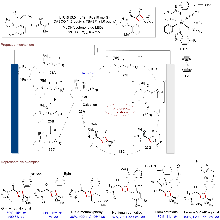
光电化学金属催化融合了光化学、电化学以及金属催化的特性, 为高活性自由基的可控产生及选择性转化提供了新的研究思路. 光催化剂可以在电极表面得失电子形成相应的光敏剂, 避免传统光化学合成中等物质的量的氧化还原试剂的使用; 体系中的金属催化剂既可以作为电化学催化剂在电极表面上传递电子, 还可以和反应底物相互作用, 控制反应的路径. 这种新型的催化策略同时利用光能和电能作为反应的驱动力, 极大地降低了反应的电极电势, 从而在温和的条件下完成常规方法难以实现的电子转移活化过程. 总结了过去几年光电化学金属催化领域取得的重要研究进展, 通过选取的典型示例以及相关的反应机理解读展示该方法的合成特点及优势.
姚嫣, 付年凯. 光电化学金属催化研究进展[J]. 有机化学, 2025, 45(6): 1819-1837.
Yan Yao, Niankai Fu. Recent Advances in Electrophotochemical Transition Metal Catalysis[J]. Chinese Journal of Organic Chemistry, 2025, 45(6): 1819-1837.






















| [1] |
|
| [2] |
|
| [3] |
(a)
|
|
(b)
|
|
|
(c)
|
|
|
(d)
|
|
|
(e)
|
|
|
(f)
|
|
| [4] |
(a)
|
|
(b)
|
|
|
(c)
|
|
|
(d)
|
|
| [5] |
(a)
|
|
(b)
|
|
|
(c)
|
|
|
(d)
|
|
|
(e)
|
|
|
(f)
|
|
|
(g)
|
|
|
(h)
|
|
|
(i)
|
|
|
(j)
|
|
|
(k)
|
|
| [6] |
|
| [7] |
|
| [8] |
|
| [9] |
|
| [10] |
|
| [11] |
|
| [12] |
|
| [13] |
|
| [14] |
|
| [15] |
|
| [16] |
|
| [17] |
|
| [18] |
|
| [19] |
|
| [20] |
|
| [21] |
|
| [22] |
|
| [23] |
|
| [24] |
|
| [25] |
(a)
|
|
(b)
|
|
| [26] |
|
| [27] |
(a)
|
|
(b)
|
|
|
(c)
|
|
|
(d)
|
|
|
(e)
|
|
|
(f)
|
|
| [28] |
|
| [29] |
|
| [30] |
|
| [31] |
|
| [32] |
|
| [33] |
|
| [34] |
|
| [35] |
|
| [36] |
(a)
|
|
(b)
|
|
| [37] |
(a)
|
|
(b)
|
|
| [38] |
(a)
|
|
(b)
|
|
| [39] |
(a)
|
|
(b)
|
|
| [40] |
|
| [41] |
|
| [42] |
|
| [43] |
|
| [44] |
|
| [45] |
(a)
|
|
(b)
|
|
|
(c)
|
|
| [46] |
|
| [47] |
|
| [48] |
|
| [49] |
|
| [50] |
|
| [51] |
|
| [52] |
|
|
杨光, 王衍伟, 仇友爱, 有机化学, 2021, 41, 3935.)
|
|
| [53] |
|
|
叶增辉, 刘华清, 张逢质, 有机化学, 2024, 44, 840.)
|
|
| [54] |
|
| [55] |
|
| [56] |
|
| [57] |
(a)
|
|
(b)
|
|
| [58] |
|
| [59] |
|
| [60] |
(a)
|
|
(b)
|
|
| [61] |
|
| [62] |
(a)
|
|
(b)
|
|
| [63] |
|
| [64] |
|
| [65] |
|
| [66] |
|
| [67] |
|
| [68] |
(a)
|
|
(b)
|
|
| [69] |
(a)
|
|
(b)
|
|
| [70] |
|
| [71] |
|
| [72] |
|
| [73] |
|
| [74] |
|
| [75] |
|
| [76] |
|
| [77] |
(a)
|
|
(b)
|
|
| [78] |
|
| [79] |
|
| [80] |
|
| [81] |
|
| [82] |
|
| [83] |
|
| [84] |
|
| [85] |
|
| [86] |
|
| [87] |
|
| [88] |
|
| [89] |
|
| [90] |
|
| [91] |
|
| [92] |
|
| [93] |
|
| [94] |
|
| [95] |
|
| [96] |
|
| [97] |
|
| [1] | 谭永波, 舒洪波, 黄华文. 光诱导N-芳基丙烯酰胺参与的吲哚酮合成研究进展[J]. 有机化学, 2025, 45(6): 2086-2108. |
| [2] | 高根伟, 李震, 李炎, 陆熹. 光/镍协同催化C(sp2)—C(sp3)键构建研究进展[J]. 有机化学, 2025, 45(6): 1905-1919. |
| [3] | 王霜, 毛羊杰, 娄绍杰, 许丹倩. 基于氧化型导向基团的不对称C—H键官能团化反应研究进展[J]. 有机化学, 2025, 45(6): 1961-1994. |
| [4] | 杜一鸣, 贾均松, 李玉龙, 舒伟. 手性α-芳基酮的催化合成研究进展[J]. 有机化学, 2025, 45(6): 1838-1870. |
| [5] | 苏雷, 杨熙, 闫捷, 蒋元力, 陈丽娟, 郑庆舒, 刘家旺. 不对称羰基化偶联反应研究进展[J]. 有机化学, 2025, 45(6): 2007-2047. |
| [6] | 高昂, 闫陆宇, 王光祖, 付明臣. 光诱导电子供体-受体复合物驱动的脱羧胺化[J]. 有机化学, 2025, 45(5): 1747-1754. |
| [7] | 李顺曦, 游力栩, 李玉龙, 舒伟. 光介导氨及其等价体参与的碳氮成键反应研究进展[J]. 有机化学, 2025, 45(5): 1460-1477. |
| [8] | 李慧, 阿布力米提•阿布都卡德尔, 周磊. 可见光条件下N-苄基苯并三氮唑自由基脱氮气开环合成6-取代菲啶[J]. 有机化学, 2025, 45(5): 1770-1777. |
| [9] | 陈旭欣, 张丹丹, 龙鸿新, 刘国凯. 无需光敏剂光诱导炔丙酸酯自由基二氟甲基化合成3-二氟甲基香豆素[J]. 有机化学, 2025, 45(5): 1739-1746. |
| [10] | 洪洋, 邓红平. 可见光催化的酸性C(sp3)—H键官能团化反应研究进展[J]. 有机化学, 2025, 45(5): 1569-1590. |
| [11] | 郭仕勋, 王卫, 张永强. 三线态能量转移促进的自由基链式烯烃氢芳基化反应研究[J]. 有机化学, 2025, 45(5): 1716-1728. |
| [12] | 李晨, 焦毅, 施笑然, 杨毅强, 俞寿云. 光氧化还原催化的C-糖基化反应[J]. 有机化学, 2025, 45(5): 1423-1459. |
| [13] | 蒋晨阳, 尹艳丽, 江智勇. 光酶催化不对称自由基加成反应研究进展[J]. 有机化学, 2025, 45(5): 1614-1633. |
| [14] | 吴昊岩, 赫明月, 马军安, 张发光. 三芳胺在光催化反应中的研究进展[J]. 有机化学, 2025, 45(5): 1634-1643. |
| [15] | 谭芳芳, 史孟欣, 张文敏, 李洋. 光催化生物质相关转化[J]. 有机化学, 2025, 45(5): 1523-1547. |
| 阅读次数 | ||||||
|
全文 |
|
|||||
|
摘要 |
|
|||||


