有机化学 ›› 2026, Vol. 46 ›› Issue (4): 1284-1302.DOI: 10.6023/cjoc202512041 上一篇 下一篇
综述与进展
赵丽玮, 张梁*( ), 胡鹏*()
收稿日期:2025-12-27
修回日期:2026-03-15
发布日期:2026-03-27
通讯作者:
张梁, 胡鹏
基金资助:
Liwei Zhao, Liang Zhang*(), Peng Hu*()
Received:2025-12-27
Revised:2026-03-15
Published:2026-03-27
Contact:
Liang Zhang, Peng Hu
Supported by:文章分享

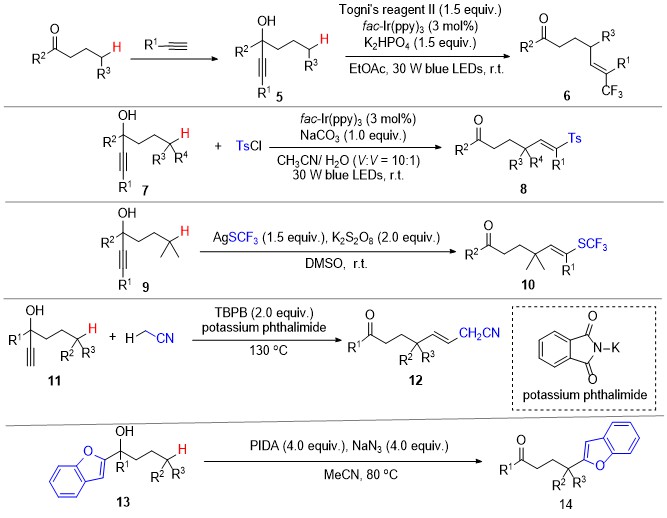
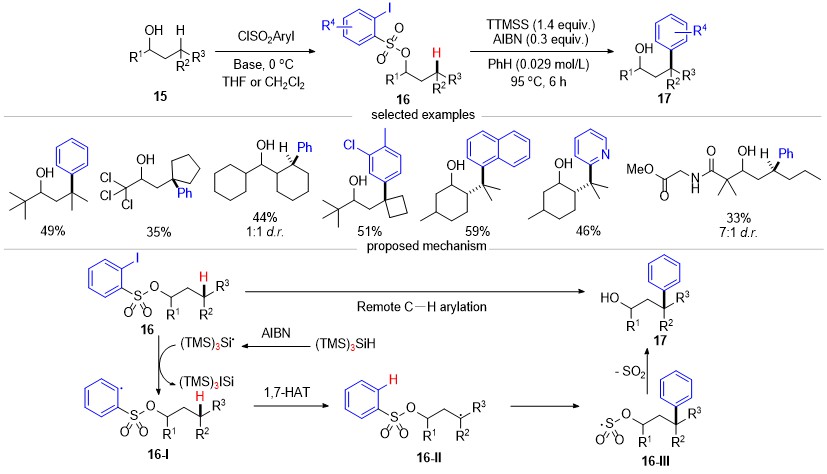
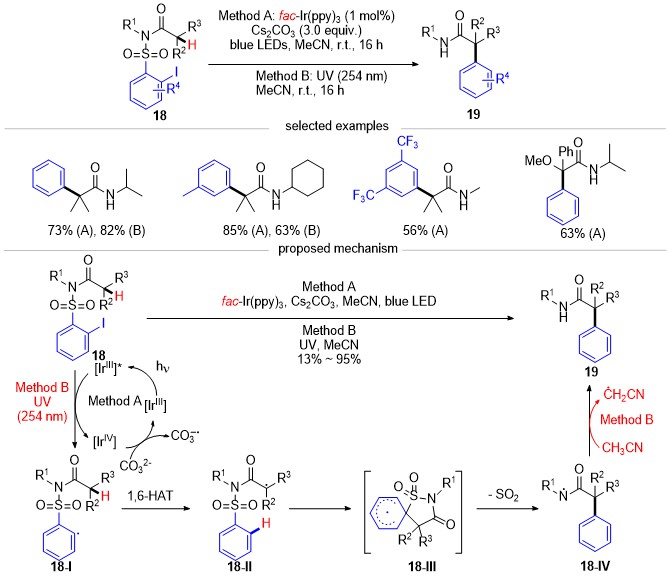
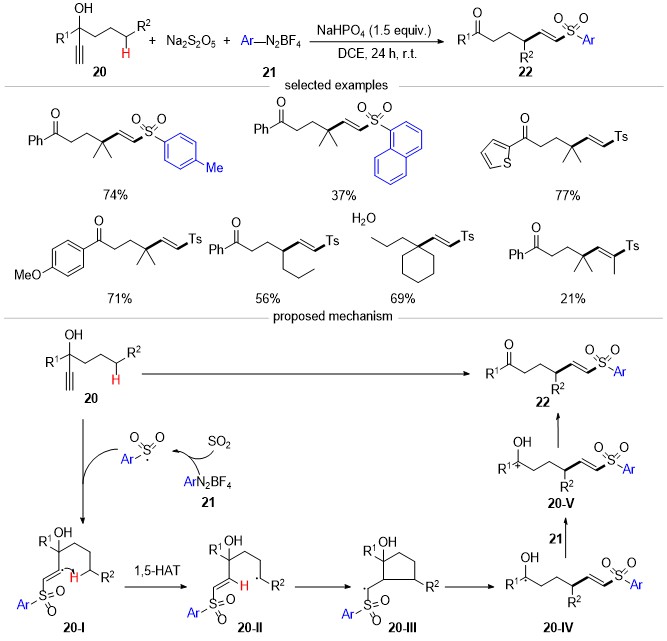
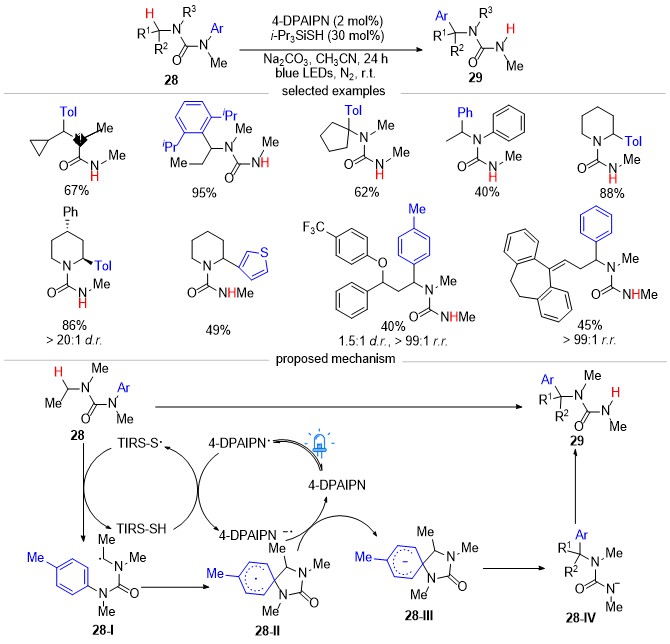
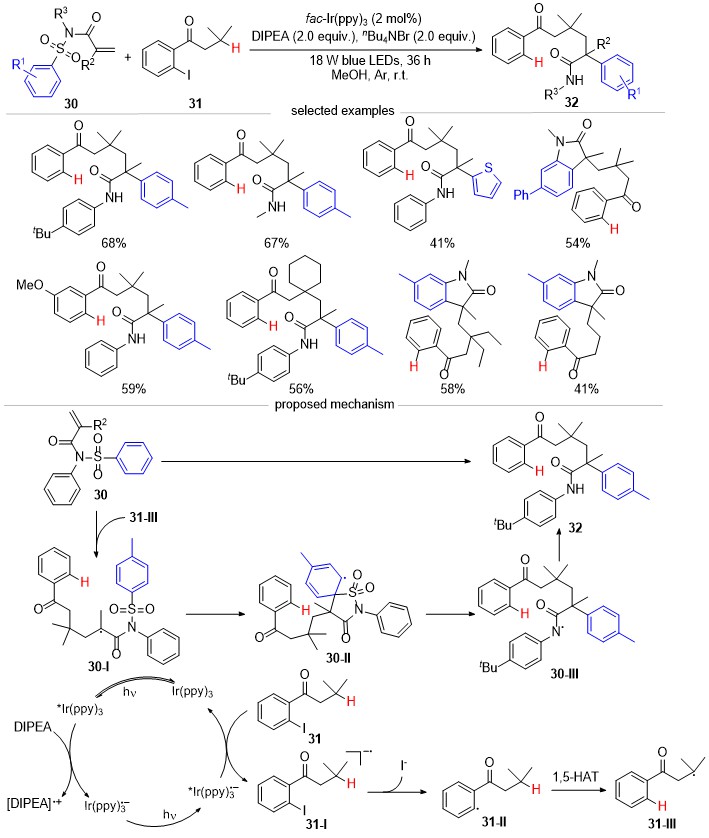
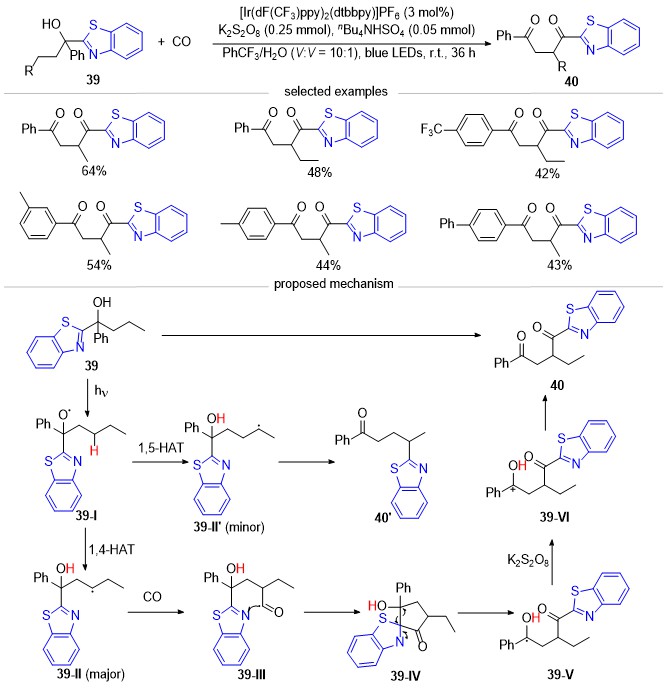
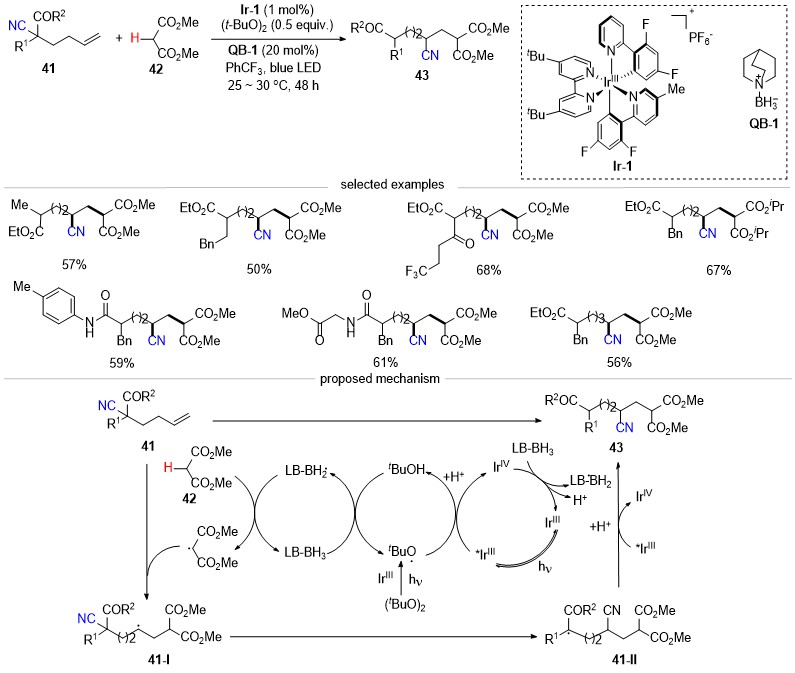
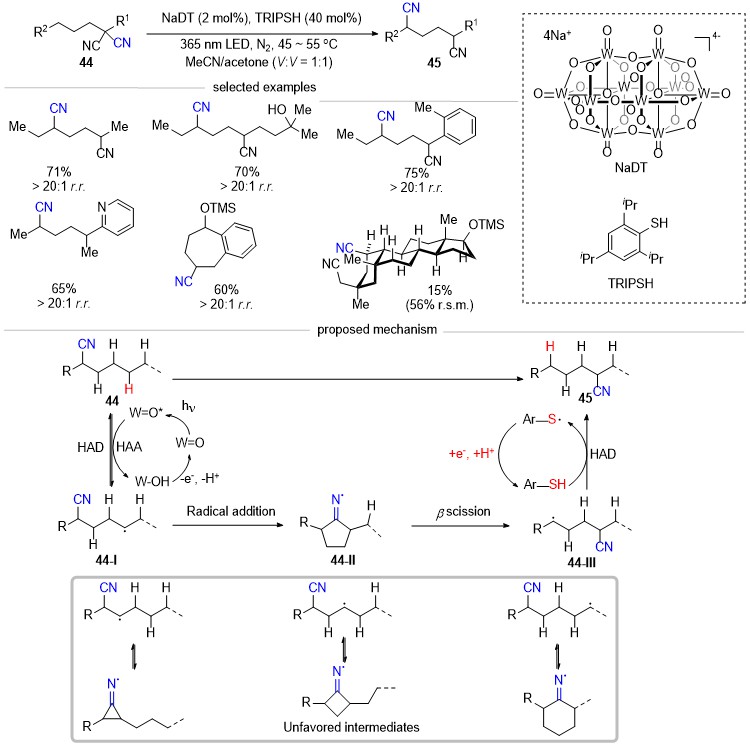
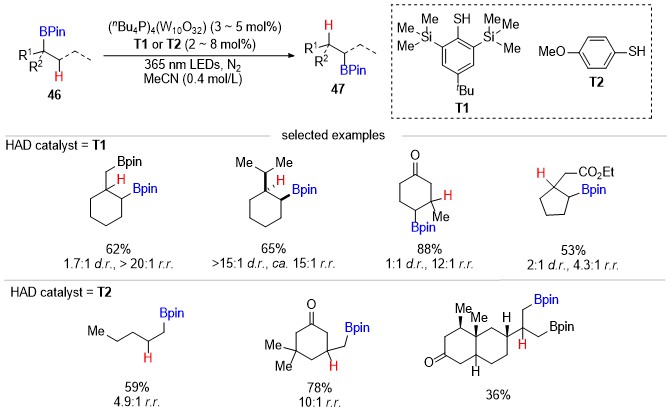
氢原子转移(HAT)介导的官能团迁移反应因其优异的原子经济性和步骤经济性, 为非活化C(sp3)—H键的选择性官能团化提供了高效策略, 能够实现烷烃及复杂分子的简便结构修饰, 近年来引起广泛关注. 然而, C(sp3)—H键固有的化学惰性以及不同位点间细微的键能差异, 使区域选择性的精准调控仍面临重大挑战. 重点综述了近期HAT介导的C(sp3)—H键选择性官能团迁移反应的研究进展, 系统介绍了各类反应的催化体系与反应机理, 涵盖芳基化、氰基迁移、硼基迁移和酰基迁移等典型官能团迁移过程及其在复杂分子后期修饰中的应用. 最后, 对当前HAT介导官能团化迁移方法的主要局限与技术瓶颈进行总结, 并展望了其在医药化学和材料科学等领域的潜在应用与未来发展方向.
赵丽玮, 张梁, 胡鹏. 氢原子迁移(HAT)介导的官能团迁移反应[J]. 有机化学, 2026, 46(4): 1284-1302.
Liwei Zhao, Liang Zhang, Peng Hu. Hydrogen Atom Transfer-Induced Functional Group Migration[J]. Chinese Journal of Organic Chemistry, 2026, 46(4): 1284-1302.
| [1] |
|
| [2] |
|
| [3] |
|
| [4] |
|
|
(罗江浩, 马浩文, 张杰豪, 周伟, 蔡倩, 化学学报, 2023, 81, 898.)
|
|
| [5] |
|
|
(杜云哲, 李曙懿, 程思柳, 贾慧劼, 王政, 韩利民, 竺宁, 化学学报, 2026, 84, 93.)
|
|
| [6] |
|
| [7] |
|
| [8] |
|
| [9] |
|
| [10] |
|
| [11] |
|
| [12] |
|
| [13] |
|
| [14] |
|
| [15] |
|
| [16] |
|
| [17] |
|
| [18] |
|
| [19] |
|
| [20] |
|
| [21] |
|
| [22] |
|
| [23] |
|
| [24] |
|
| [25] |
|
| [26] |
|
| [27] |
|
| [28] |
|
| [29] |
|
| [30] |
|
| [31] |
|
| [32] |
|
| [33] |
|
| [34] |
|
| [35] |
|
| [36] |
|
| [37] |
|
| [38] |
|
| [39] |
|
| [40] |
|
| [41] |
|
| [42] |
|
| [43] |
|
| [44] |
|
| [45] |
|
| [46] |
|
| [47] |
|
| [48] |
|
| [49] |
|
| [50] | |
| [51] |
|
| [52] |
|
| [1] | 杨珊, 陈亚苏, 朱晨. 自由基介导的官能团迁移-环化构建含氮稠杂芳烃[J]. 有机化学, 2026, 46(4): 1739-1749. |
| [2] | 叶富, 袁伟明. 光氧化还原催化炔烃的双碳官能团化反应进展[J]. 有机化学, 2026, 46(4): 1146-1165. |
| [3] | 韩天娇, 师迁迁, 符运栋, 梅光建. 三酮烯烃与硝酮的反常区域选择性[3+2]环加成反应研究[J]. 有机化学, 2026, 46(1): 146-155. |
| [4] | 李欢乐, 潘其, 娄绍杰, 毛羊杰, 许丹倩. 基于氢原子迁移(HAT)过程的胺类化合物选择性C—H键转化反应研究进展[J]. 有机化学, 2025, 45(9): 3213-3243. |
| [5] | 陈雨佳, 刘志林, 陈凯, 向皞月, 阳华. 无金属、光催化氧化苄基C—H键以获得羰基官能团[J]. 有机化学, 2025, 45(5): 1755-1762. |
| [6] | 贺重隆, 周有康, 段新华, 刘乐. 官能团迁移策略在光驱动不饱和烃双官能团化中的应用[J]. 有机化学, 2025, 45(5): 1478-1508. |
| [7] | 洪洋, 邓红平. 可见光催化的酸性C(sp3)—H键官能团化反应研究进展[J]. 有机化学, 2025, 45(5): 1569-1590. |
| [8] | 黄嘉浩, 黄雅豪, 胡鹏. 氢原子转移介导的光催化C(sp3)—H键氧化反应进展[J]. 有机化学, 2025, 45(5): 1509-1522. |
| [9] | 白磊阳, 付蓓, 刘海平, 淳享, 姜雪峰. 白花前胡素E的全合成研究[J]. 有机化学, 2025, 45(3): 1009-1020. |
| [10] | 王晓琴, 许盛, 平媛媛, 孔望清. 光/镍协同催化实现C(sp3)—H键选择性官能团化[J]. 有机化学, 2025, 45(2): 383-422. |
| [11] | 袁晨晖, 焦雷. 手性配体在钯催化配位辅助对映选择性C(sp3)—H键官能团化反应中的应用[J]. 有机化学, 2025, 45(2): 602-619. |
| [12] | 王淼, 黄雅豪, 胡鹏. 氢原子转移介导的烷烃C(sp3)—H选择性官能团化研究进展[J]. 有机化学, 2025, 45(2): 477-497. |
| [13] | 刘慧英, 吴中天, 李昊天, 吴新鑫. 铜催化砜基诱导的区域选择性C(sp3)—H键杂芳基化反应[J]. 有机化学, 2025, 45(1): 297-306. |
| [14] | 王君伟, 薛皓, 曲英瑜, 姜若楠, 闫法超, 刘会. 过渡金属催化联烯胺类化合物的碳氢化反应研究进展[J]. 有机化学, 2025, 45(1): 151-167. |
| [15] | 杜佳言, 刘俊涛, 刘桂霞, 黄正. 钴催化末端烯烃区域和立体选择性异构合成反式-2-烯烃[J]. 有机化学, 2024, 44(9): 2889-2897. |
| 阅读次数 | ||||||
|
全文 |
|
|||||
|
摘要 |
|
|||||


