有机化学 ›› 2026, Vol. 46 ›› Issue (9): 3666-3675.DOI: 10.6023/cjoc202604049 上一篇 下一篇
研究论文
石可添, 韦相宇, 海宇*( ), 刘丽娟, 占田广, 章康达*()
收稿日期:2026-04-29
修回日期:2026-06-26
发布日期:2026-07-23
基金资助:
Ketian Shi, Xiangyu Wei, Yu Hai*(), Lijuan Liu, Tianguang Zhan, Kangda Zhang*()
Received:2026-04-29
Revised:2026-06-26
Published:2026-07-23
Contact:
About author:Dedicated to the 100th anniversary of the birth of Professor Xikui Jiang.
Supported by:文章分享
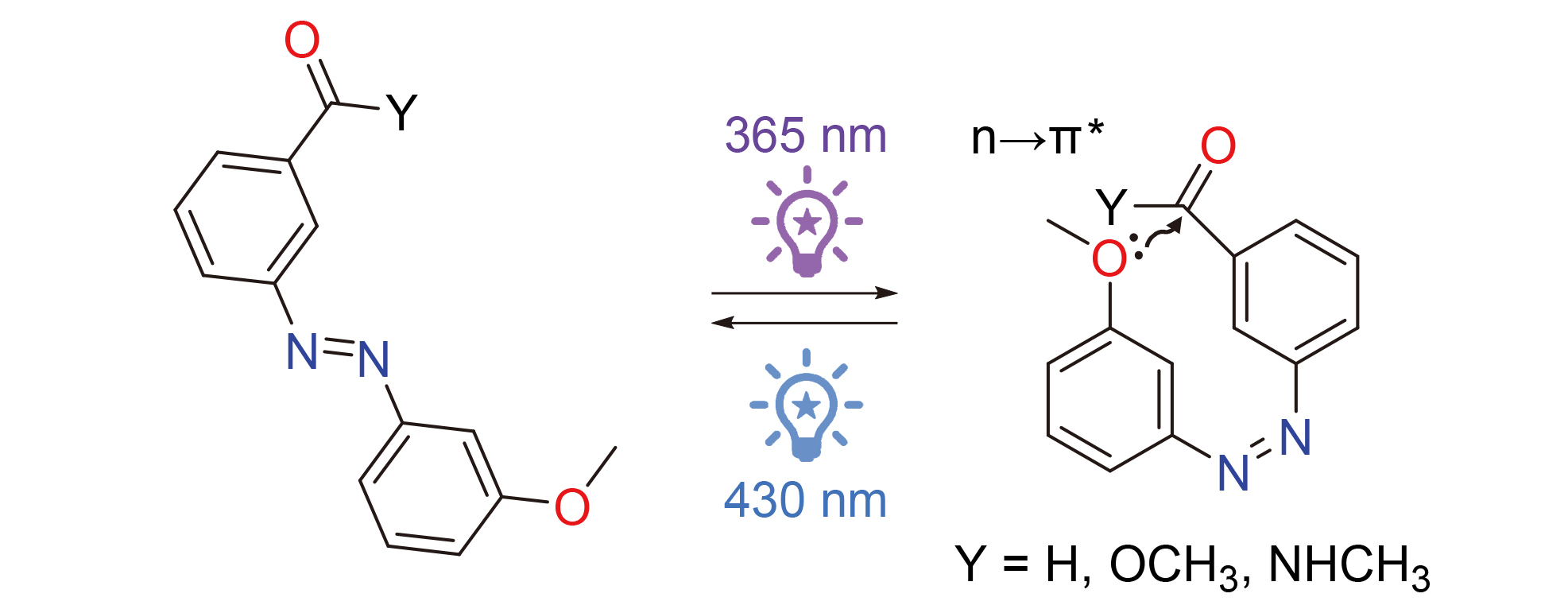
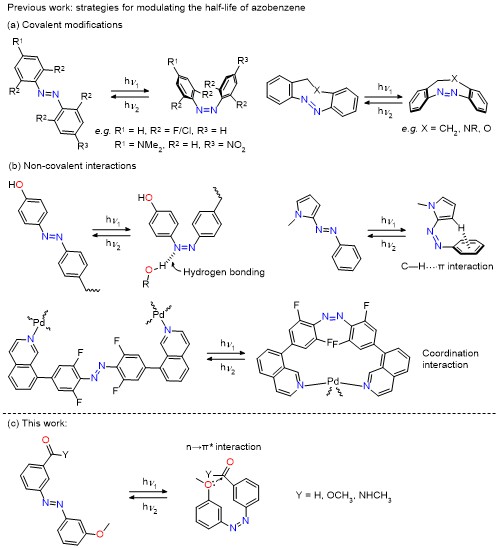
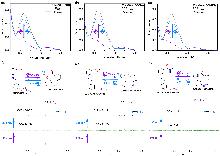
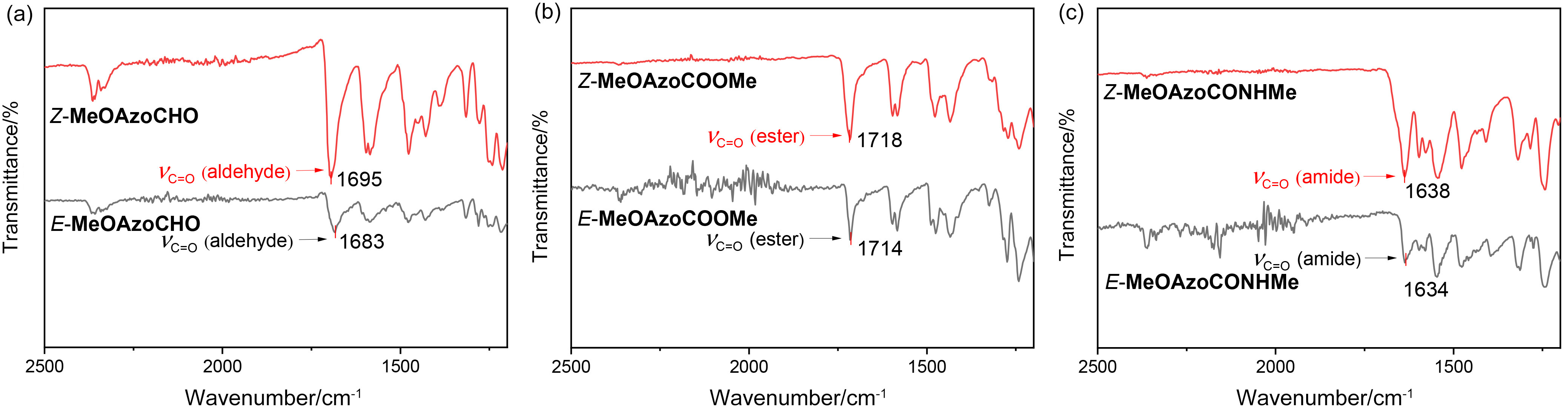
偶氮苯是一类在能量存储、超分子组装、生物医学等领域具有广泛应用的光开关分子, 然而, 其顺式异构体热稳定性往往难以在不影响吸收波长、异构化效率等关键性质的前提下实现有效调控. 针对这一挑战, 本研究提出了一种基于n→π*弱相互作用调控偶氮苯顺式异构体热稳定性的新策略, 设计合成了一类苯环间位分别引入甲氧基和不同类型羰基的偶氮苯衍生物, 通过其顺反异构化可以改变甲氧基n电子与羰基π*轨道之间的弱相互作用, 进而实现调控顺式异构体的热弛豫半衰期. UV-Vis、1H NMR实验研究表明, 这类光开关分子在365 nm紫外光和430 nm可见光照射下, 可进行E⇄Z光异构化, FT-IR实验证实其顺式异构体中存在明显的n→π*相互作用, 并且减弱羰基的电子云密度或者增加溶剂极性有利于增强该作用, 进而提高顺式异构体的热稳定性. 这些研究结果为设计具有可调控热稳定性的偶氮苯光开关提供了新思路.
石可添, 韦相宇, 海宇, 刘丽娟, 占田广, 章康达. 基于n→π*相互作用调控偶氮苯光开关顺式异构体的热稳定性[J]. 有机化学, 2026, 46(9): 3666-3675.
Ketian Shi, Xiangyu Wei, Yu Hai, Lijuan Liu, Tianguang Zhan, Kangda Zhang. Modulating the Thermal Stability of cis Isomers of Azobenzene Photoswitches via n→π* Interactions[J]. Chinese Journal of Organic Chemistry, 2026, 46(9): 3666-3675.
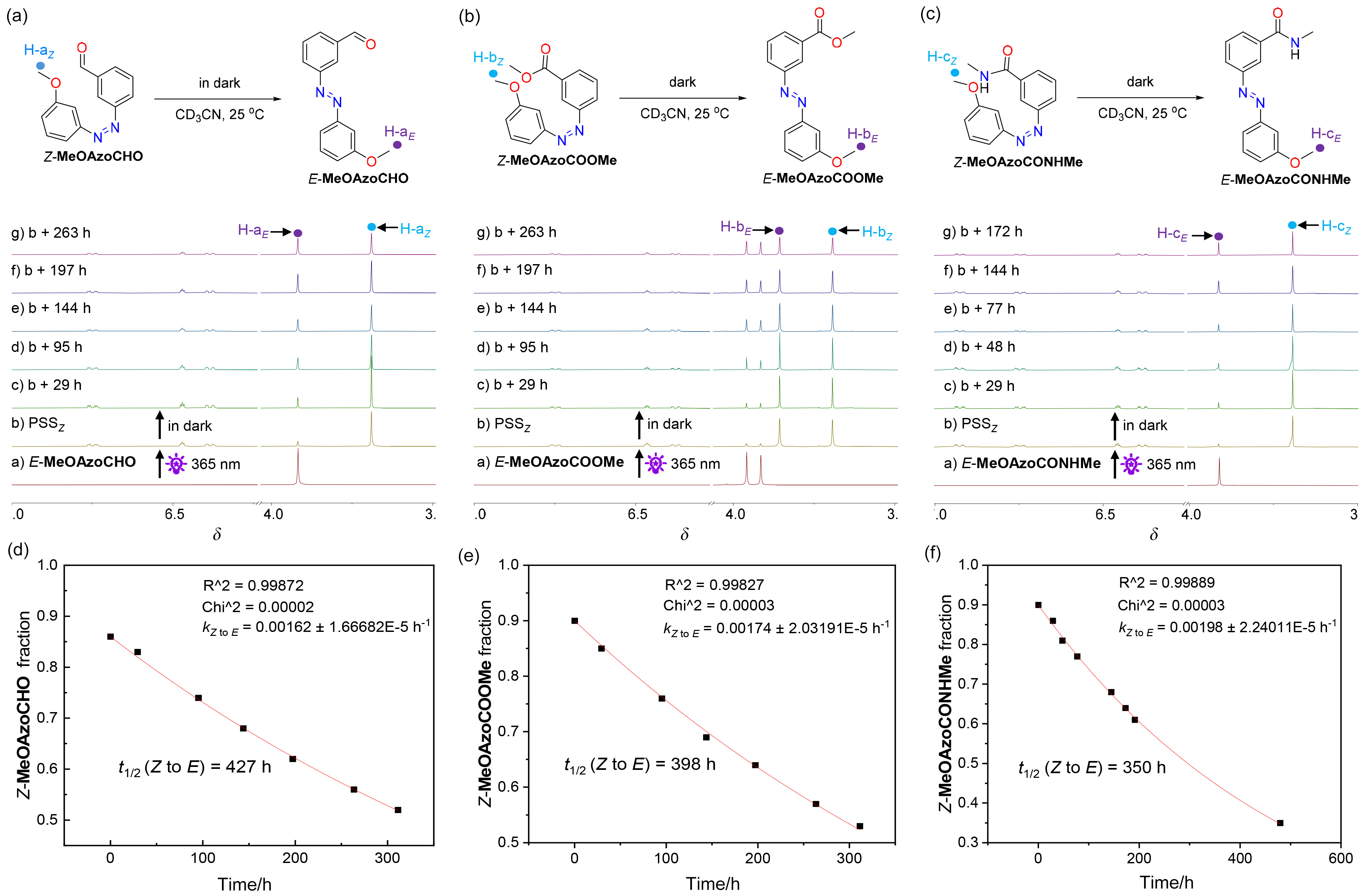

| t1/2(Z-to-E)a/h | ||||||
|---|---|---|---|---|---|---|
| MeOAzoCHO | MeOAzoCOOMe | MeOAzoCONHMe | AzoCHO | AzoCOOMe | AzoCONHMe | |
| CD3CN | 427 | 398 | 350 | 263 | 273 | 277 |
| DMSO-d6 | 322 | 306 | 264 | 251 | 270 | 266 |
| CDCl3 | 162 | 148 | 123 | 263 | 259 | 268 |
| Toluene-d8 | 140 | 125 | 99 | 261 | 260 | 255 |
| t1/2(Z-to-E)a/h | ||||||
|---|---|---|---|---|---|---|
| MeOAzoCHO | MeOAzoCOOMe | MeOAzoCONHMe | AzoCHO | AzoCOOMe | AzoCONHMe | |
| CD3CN | 427 | 398 | 350 | 263 | 273 | 277 |
| DMSO-d6 | 322 | 306 | 264 | 251 | 270 | 266 |
| CDCl3 | 162 | 148 | 123 | 263 | 259 | 268 |
| Toluene-d8 | 140 | 125 | 99 | 261 | 260 | 255 |
| [1] |
(a)
doi: 10.1021/cr980069d pmid: 31150035 |
|
(b)
doi: 10.1002/adma.v22:31 pmid: 31150035 |
|
|
(c)
doi: 10.1039/C1CS15179G pmid: 31150035 |
|
|
(d)
doi: 10.1039/c9cs00203k pmid: 31150035 |
|
|
(e)
doi: 10.1002/adma.v32.20 pmid: 31150035 |
|
| [2] |
(a)
doi: 10.1021/cr980073p |
|
(b)
doi: 10.1039/c2cs35015g |
|
|
(c)
doi: 10.1039/C5TC01939G |
|
|
(d)
|
|
|
(e)
doi: 10.1002/cjoc.v42.4 |
|
|
(丁伟, 程勃雯, 王萌, 窦清玉, 李思颖, 张鹏, 罗千福, 有机化学, 2022, 42, 363.)
|
|
|
(f)
doi: 10.1002/anie.v62.42 |
|
|
(g)
doi: 10.1021/accountsmr.2c00158 |
|
|
(h)
doi: 10.1002/adma.v36.32 |
|
|
(i)
doi: 10.6023/cjoc202312017 |
|
|
(杨素华, 刘箫音, 邹丽飞, 韩杰, 有机化学, 2024, 44, 1719.)
doi: 10.6023/cjoc202312017 |
|
| [3] |
(a)
doi: 10.3762/bjoc.8.119 |
|
(b)
doi: 10.1002/anie.v58.29 |
|
|
(c)
doi: 10.1002/ntls.v3.1 |
|
| [4] |
(a)
doi: 10.1038/nchem.2625 pmid: 37117294 |
|
(b)
doi: 10.1039/C9CC01891C pmid: 37117294 |
|
|
(c)
doi: 10.1038/s41570-021-00338-6 pmid: 37117294 |
|
|
(d)
doi: 10.1038/s41570-021-00334-w pmid: 37117294 |
|
|
(e)
doi: 10.1016/j.jcat.2022.03.015 pmid: 37117294 |
|
|
(f)
pmid: 37117294 |
|
|
(g)
doi: 10.1021/jacs.3c04103 pmid: 37117294 |
|
|
(h)
doi: 10.1016/j.cclet.2022.06.062 pmid: 37117294 |
|
|
(i)
pmid: 37117294 |
|
|
(j)
doi: 10.3390/molecules30122499 pmid: 37117294 |
|
|
(k)
doi: 10.1016/j.cclet.2025.110842 pmid: 37117294 |
|
|
(l)
pmid: 37117294 |
|
|
(m)
pmid: 37117294 |
|
|
(n)
doi: 10.1039/D5SC09696K pmid: 37117294 |
|
| [5] |
(a)
doi: 10.1002/anie.201500628 pmid: 26096635 |
|
(b)
doi: 10.1039/C8CS00470F pmid: 26096635 |
|
|
(c)
doi: 10.1016/j.joule.2021.11.001 pmid: 26096635 |
|
|
(d)
doi: 10.1039/D5CS00334B pmid: 26096635 |
|
| [6] |
(a)
doi: 10.1021/ja310323y pmid: 33462976 |
|
(b)
doi: 10.1002/anie.202008700 pmid: 33462976 |
|
|
(c)
doi: 10.1002/anie.v64.32 pmid: 33462976 |
|
| [7] |
(a)
doi: 10.1002/anie.v12:3 pmid: 24171511 |
|
(b)
doi: 10.1002/chem.v12:20 pmid: 24171511 |
|
|
(c)
doi: 10.1021/ja408104w pmid: 24171511 |
|
|
(d)
doi: 10.1002/adfm.v34.20 pmid: 24171511 |
|
| [8] |
(a)
doi: 10.1021/ja906547d pmid: 27685503 |
|
(b)
doi: 10.1021/jacs.6b05846 pmid: 27685503 |
|
|
(c)
pmid: 27685503 |
|
| [9] |
(a)
doi: 10.1021/acsmacrolett.8b00093 pmid: 29607244 |
|
(b)
doi: 10.1021/jacs.8b09638 pmid: 29607244 |
|
|
(c)
pmid: 29607244 |
|
|
(d)
doi: 10.1038/s42004-025-01750-5 pmid: 29607244 |
|
|
(e)
doi: 10.1021/jacs.6b11626 pmid: 29607244 |
|
|
(f)
pmid: 29607244 |
|
| [10] |
(a)
doi: 10.1039/C4CP05536E pmid: 31075197 |
|
(b)
doi: 10.1021/acs.accounts.7b00121 pmid: 31075197 |
|
|
(c)
doi: 10.1021/jacs.9b08542 pmid: 31075197 |
|
|
(d)
doi: 10.1021/jacs.9b01006 pmid: 31075197 |
|
|
(e)
doi: 10.1039/C9SC05698J pmid: 31075197 |
|
|
(f)
doi: 10.1039/D2CS00133K pmid: 31075197 |
|
|
(g)
pmid: 31075197 |
|
| [11] |
doi: 10.1039/c8ob00017d pmid: 29469910 |
| [12] |
|
| [13] |
(a)
doi: 10.1002/anie.v55.27 pmid: 30403347 |
|
(b)
doi: 10.1021/jacs.8b09701 pmid: 30403347 |
| [1] | 胡甲松, 李春娟, 徐斌, 田文晶. 固态荧光光开关分子研究进展[J]. 有机化学, 2024, 44(8): 2425-2440. |
| [2] | 张文杰, 李超, 王博超, 高慧, 李洪基. Rh(III)催化偶氮苯与碳酸亚乙烯基酯的环化反应[J]. 有机化学, 2022, 42(1): 172-180. |
| [3] | 钱鸿宇, 何品, 张璐, 陈珂, 徐彬彬, 林绍梁. 含偶氮苯侧链分子刷聚合物的合成及其光响应自组装[J]. 有机化学, 2021, 41(7): 2891-2897. |
| [4] | 姜鸿基, 何煦, 李雄. 基于1-(4-己氧)苯和2,4,6-三苯基-1,3,5-三嗪功能化芴单元的聚合物蓝光材料的合成与表征[J]. 有机化学, 2020, 40(3): 763-773. |
| [5] | 刘曼曼, 刘豪浩, 鄢道仁, 张智勇, 关金涛. 新型弯曲形双偶氮苯类液晶合成及光致异构性能研究[J]. 有机化学, 2020, 40(1): 125-132. |
| [6] | 郑天骄, 陈炫颖, 朱亮亮, 王道累, 邹祺, 曾涛, 陈文博. 一种新型二氰基乙烯修饰的二呋喃环戊烯光开关:荧光性质、传感性能和生物应用[J]. 有机化学, 2019, 39(9): 2492-2498. |
| [7] | 鄢剑锋, 张睿祺, 原野, 袁耀锋. 4,4'-二甲氧基三苯胺取代偶氮苯开关分子的设计合成、电化学及光化学性质研究[J]. 有机化学, 2019, 39(7): 2009-2017. |
| [8] | 宋玉婉, 冯韶静, 韩维, 肖亚平. 苯胺基于钛硅分子筛的选择性氧化合成氧化偶氮苯[J]. 有机化学, 2019, 39(4): 1181-1186. |
| [9] | 陈晓培, 马志伟, 王川川, 刘俊桃, 吴金松. 在水相中钯催化氧化偶氮苯的区域选择性邻位酰基化反应[J]. 有机化学, 2019, 39(11): 3176-3182. |
| [10] | 吴嘉诚, 刘争卉, 姚远, 林绍梁. 含偶氮苯侧链两亲性交替共聚物的合成及自组装[J]. 有机化学, 2019, 39(10): 2952-2957. |
| [11] | 徐悦莹, 王伟, 陈健壮, 林绍梁. 偶氮苯超分子聚合物有序多孔膜的制备与定向光调控[J]. 有机化学, 2018, 38(8): 2161-2166. |
| [12] | 王少凡, 赵启鹏, 王国栋, 王凯, 夏成才. 金属钯催化偶氮苯与Co(NO3)2·6H2O通过C-H活化邻位硝基化反应[J]. 有机化学, 2018, 38(7): 1849-1854. |
| [13] | 李雷, 朱芝田, 金凯凯, 王佳佳, 郑世军, 房强. 侧链含苯甲酰基的芳醚型苯并噁嗪树脂的合成、热稳定性和机械性能研究[J]. 有机化学, 2016, 36(4): 844-849. |
| [14] | 孙健, 金哲明, 王成云, 沈永嘉. 侧链含不饱和基团取代的硫代双烯型镍络合物的合成及其性能[J]. 有机化学, 2015, 35(9): 1948-1954. |
| [15] | 吴建平, 赖华, 刁屾, 金凯凯, 袁超, 房强. 新型侧链含氟苯并噁嗪的合成及其性能的研究[J]. 有机化学, 2013, 33(05): 1042-1046. |
| 阅读次数 | ||||||
|
全文 |
|
|||||
|
摘要 |
|
|||||


