

化学学报 ›› 2026, Vol. 84 ›› Issue (8): 1283-1293.DOI: 10.6023/A26060194 上一篇 下一篇
研究论文
刘聪, 王艺霈, 张天宇, 覃文武*( )
)
投稿日期:2026-06-10
发布日期:2026-08-22
作者简介:★“纪念兰州大学化学学科创建80周年”专辑.
基金资助:
Cong Liu, Yipei Wang, Tianyu Zhang, Wenwu Qin*()
Received:2026-06-10
Published:2026-08-22
Contact:
E-mail: About author:★For the VSI “Celebration of 80th Anniversary of Chemistry in Lanzhou University”.
Supported by:文章分享
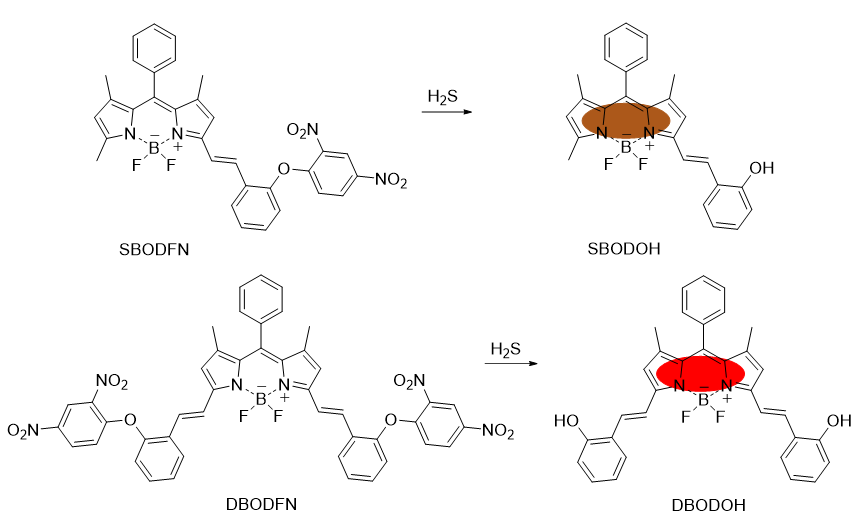
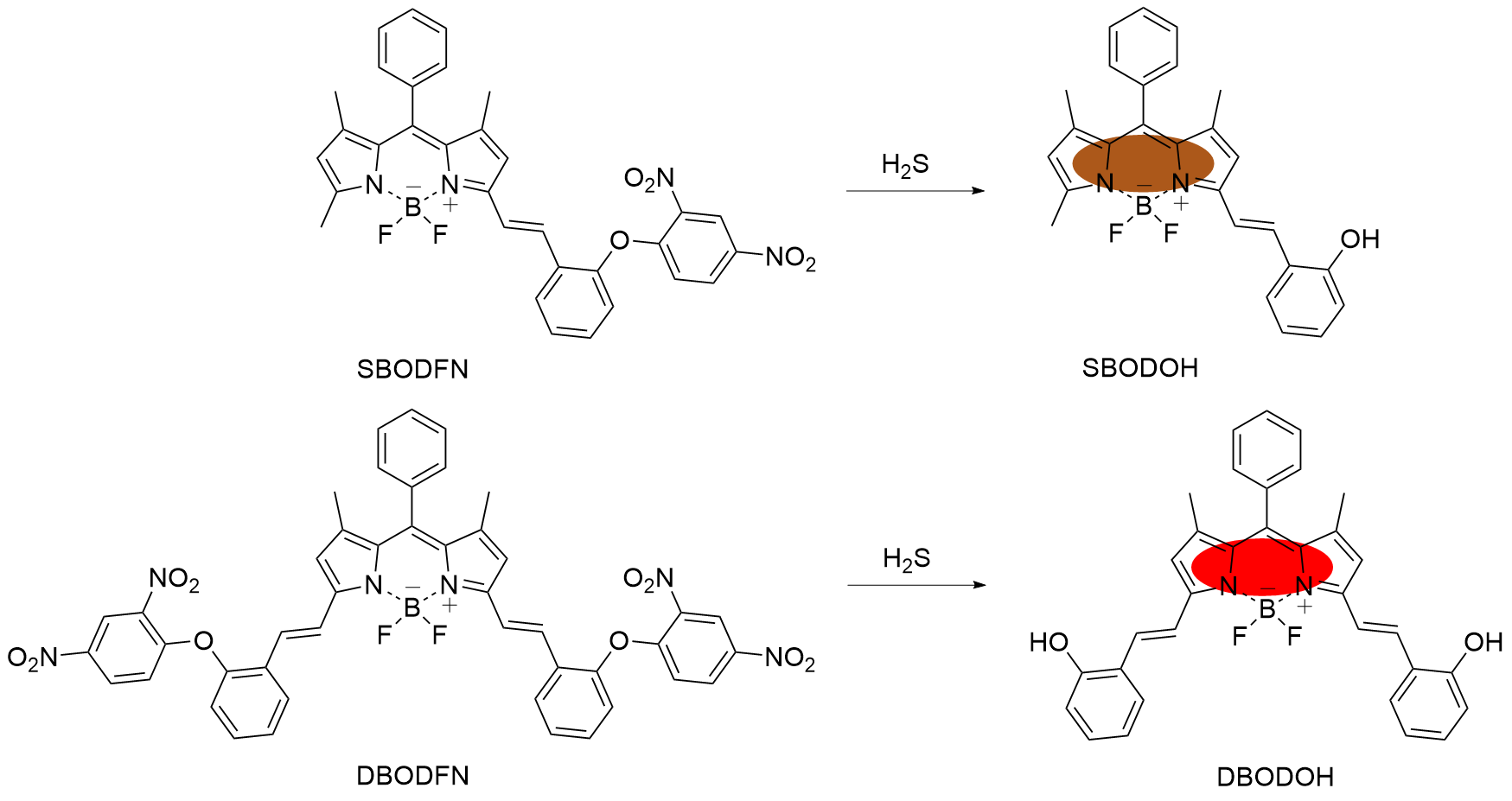
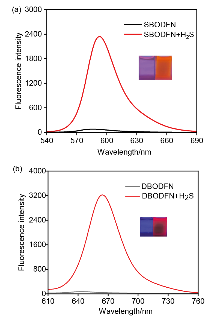
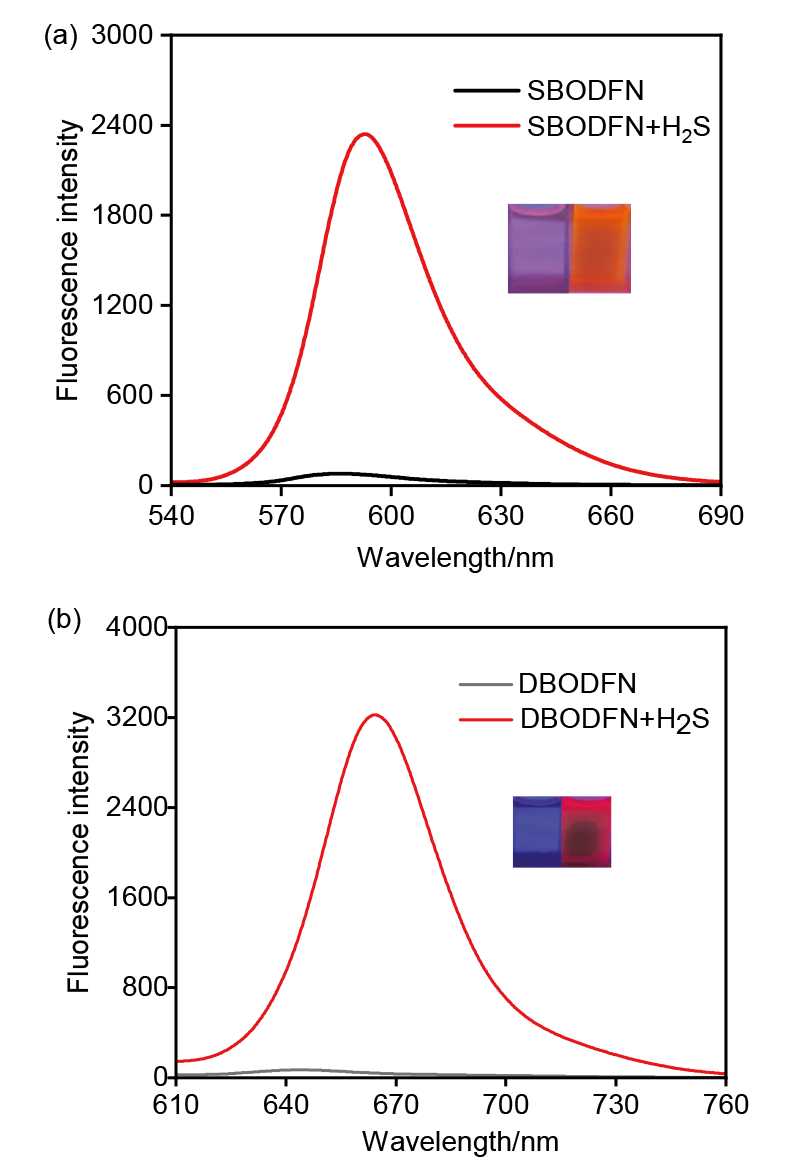
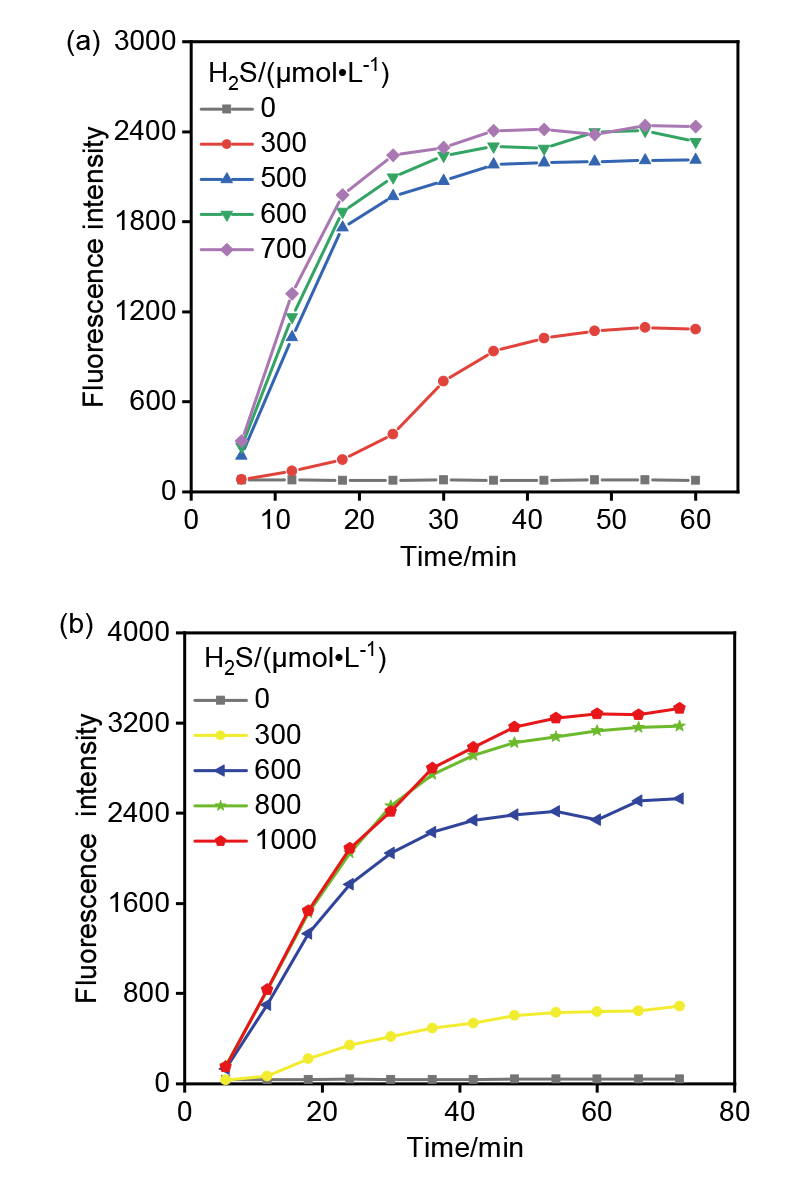
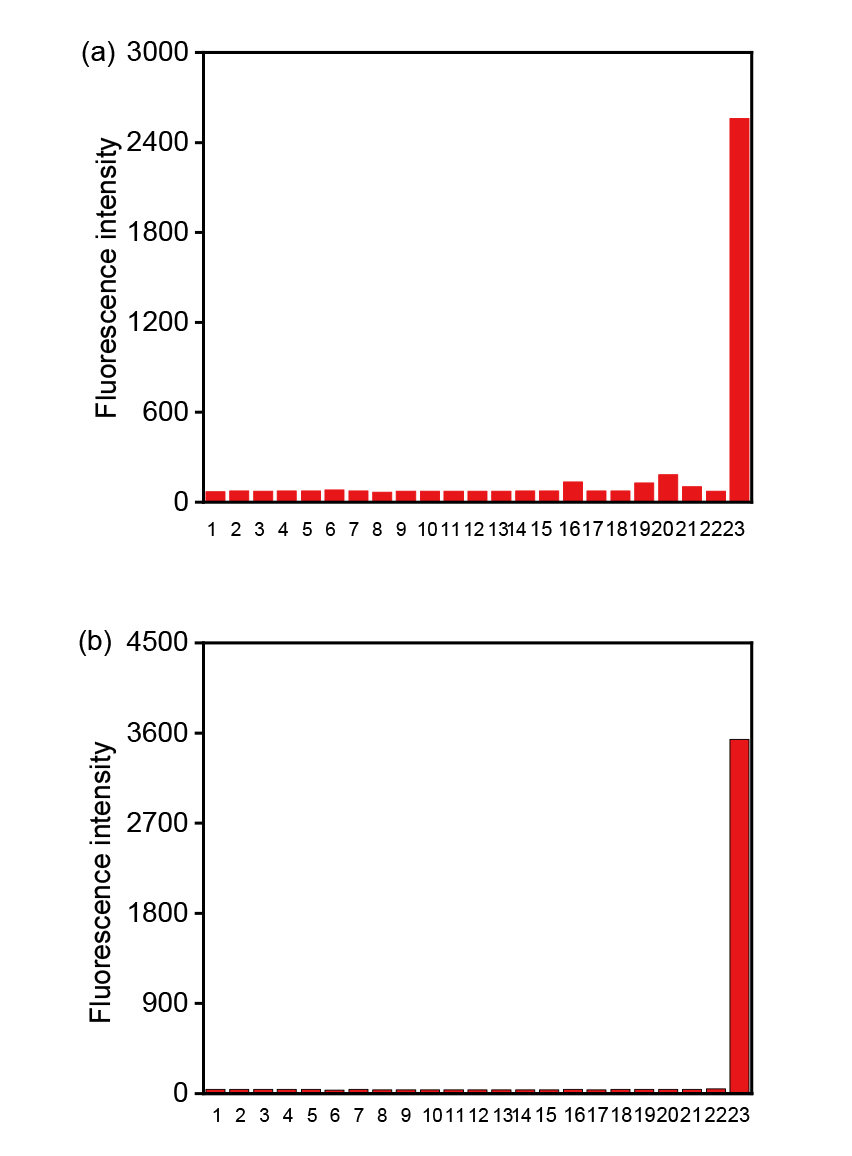
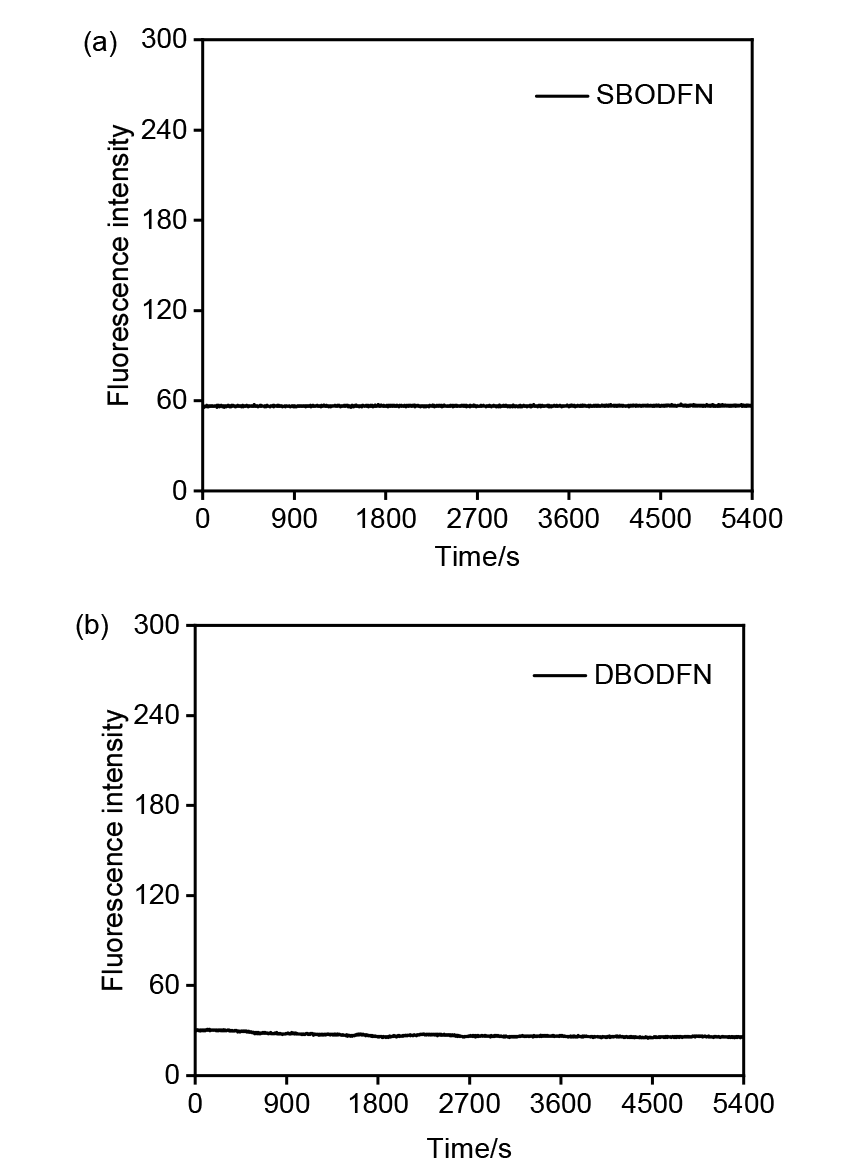
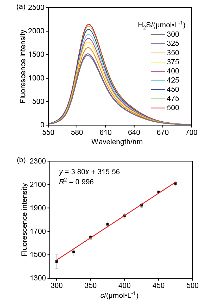
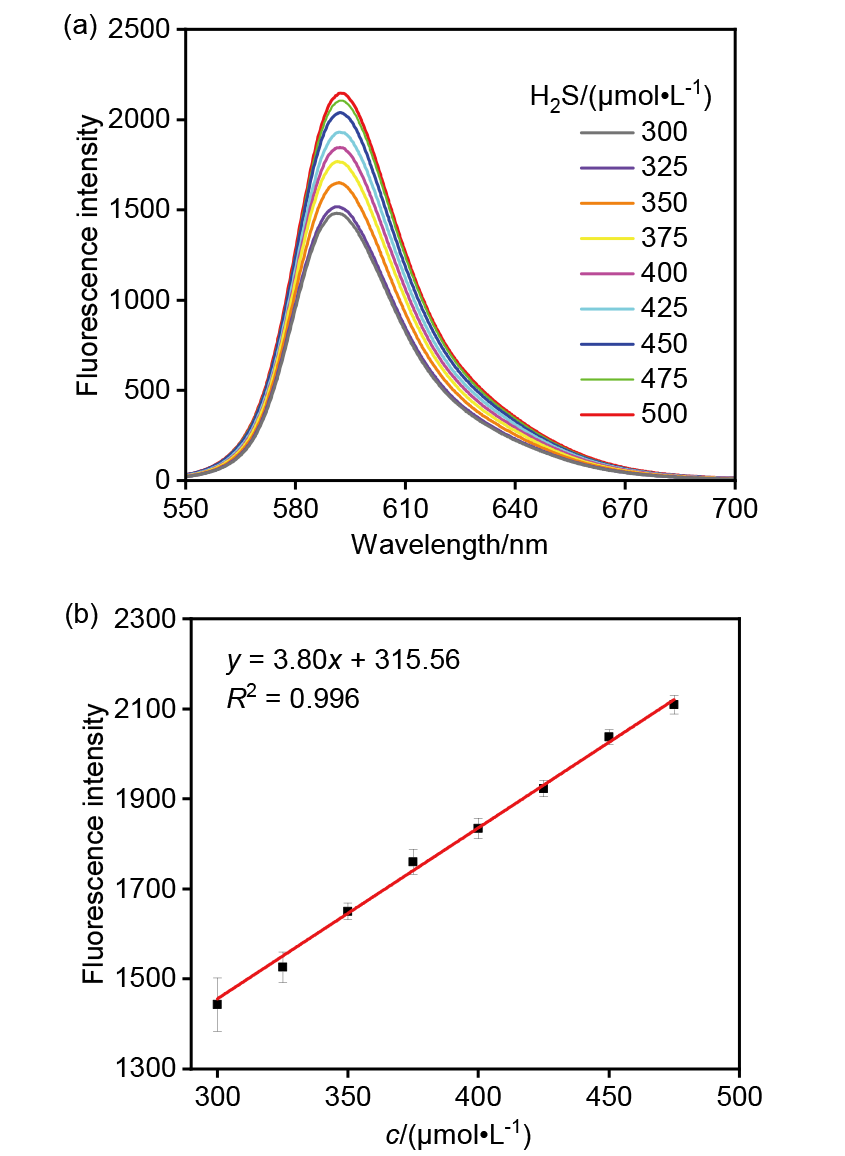
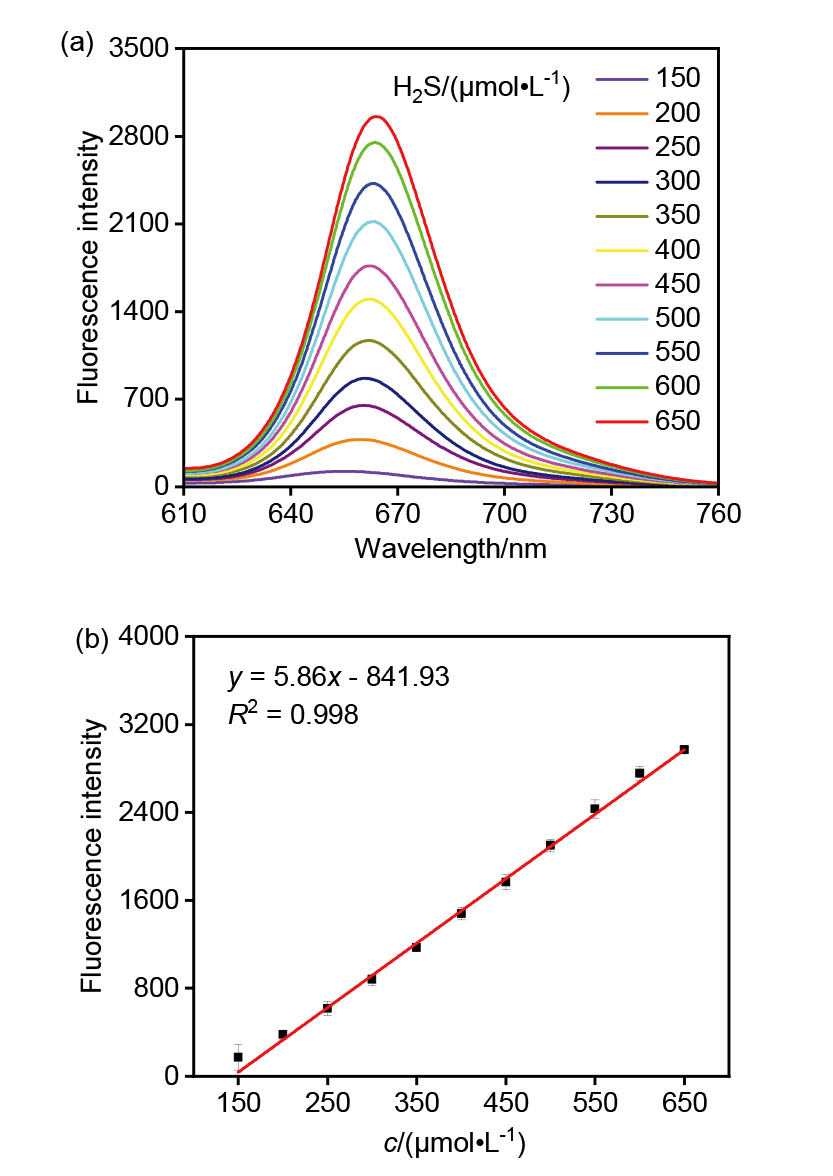
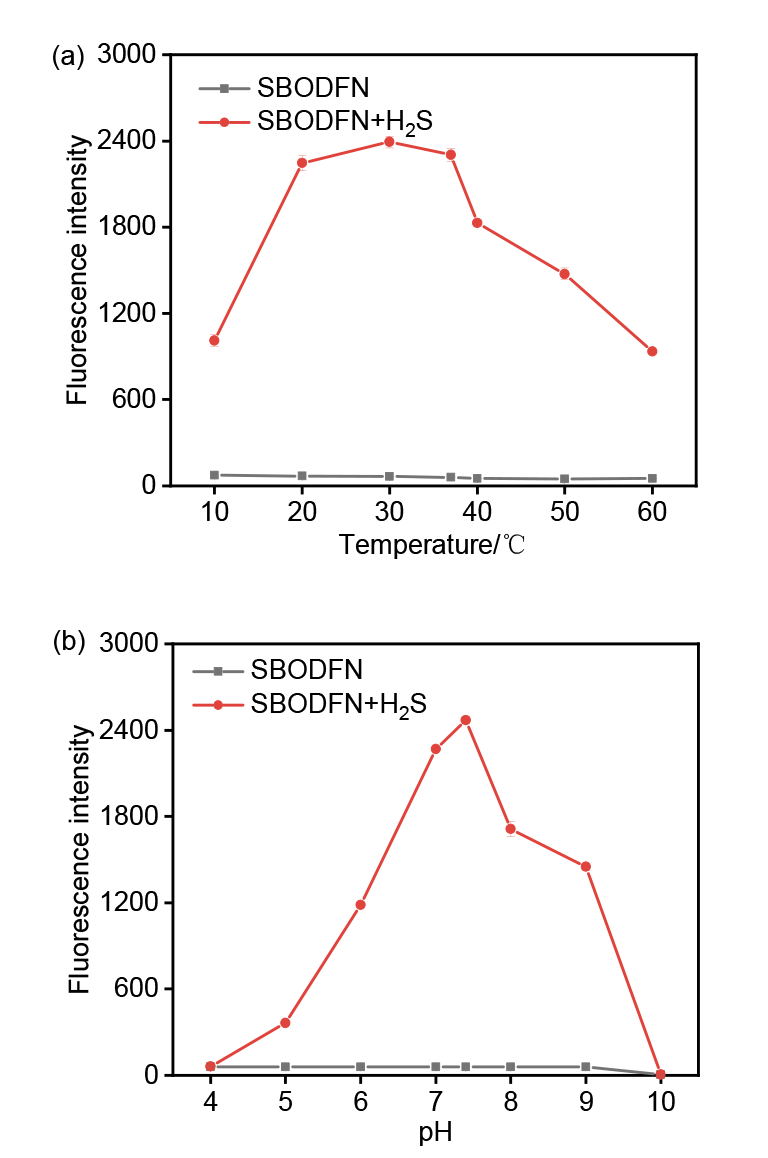
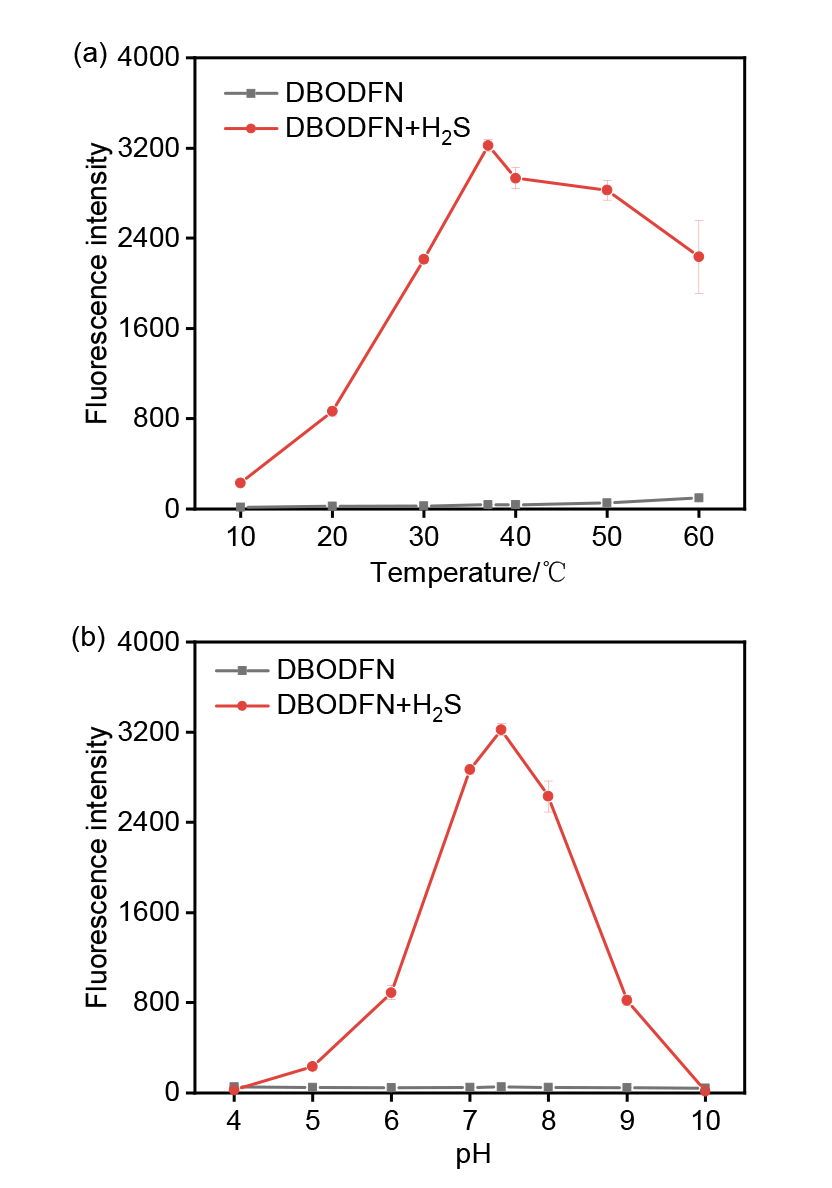
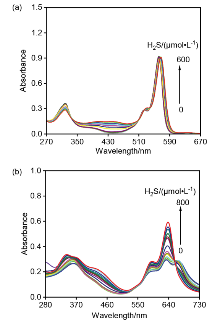
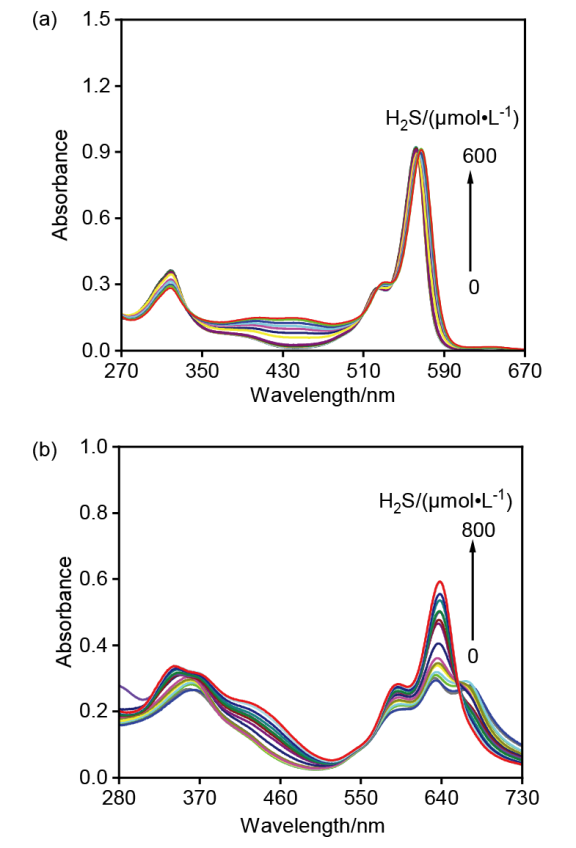
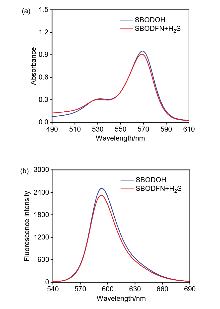
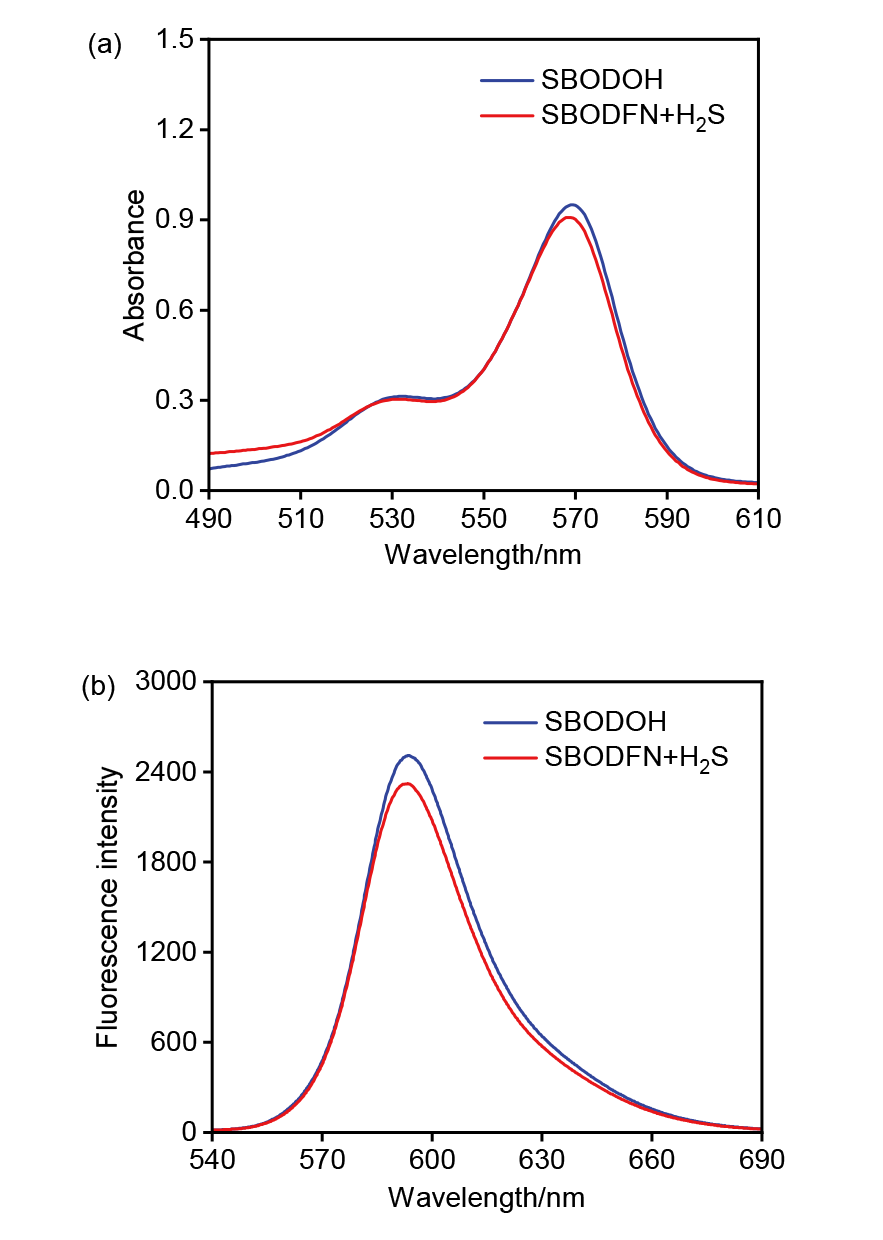
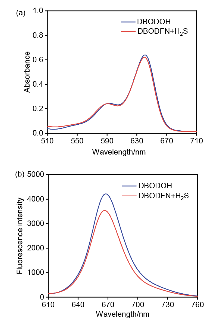
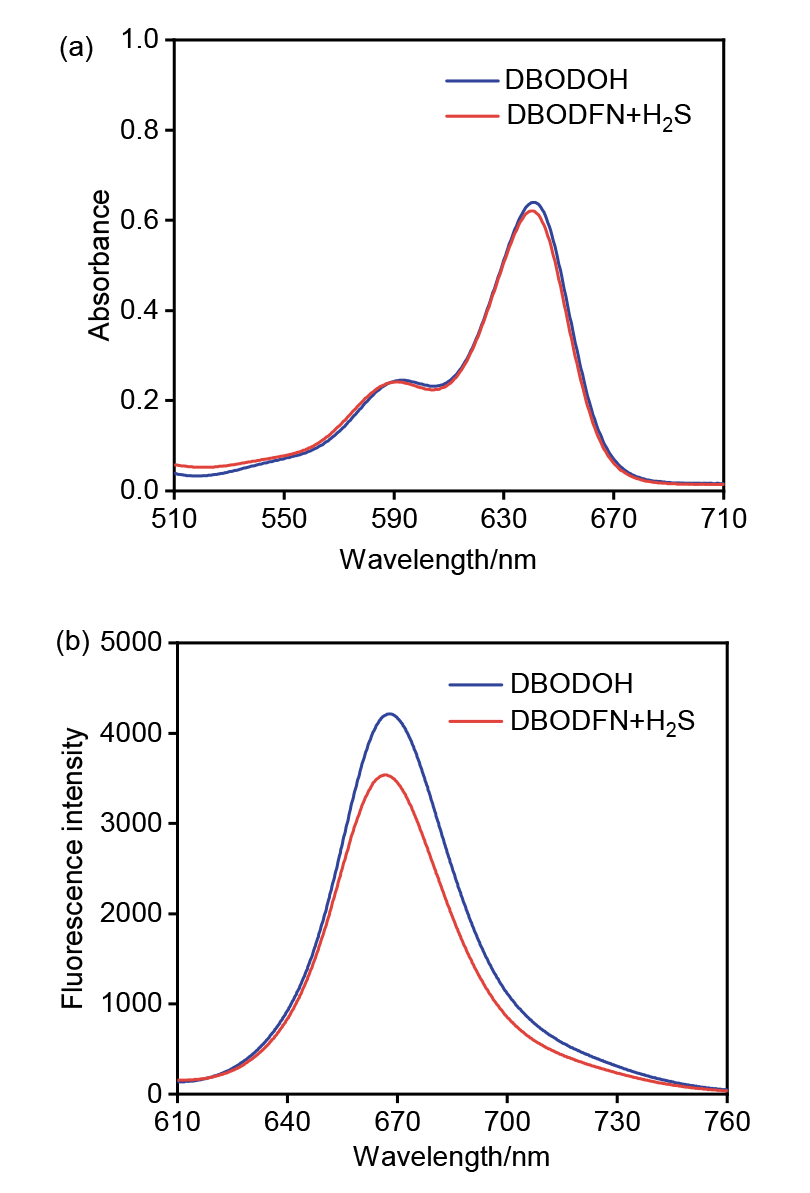
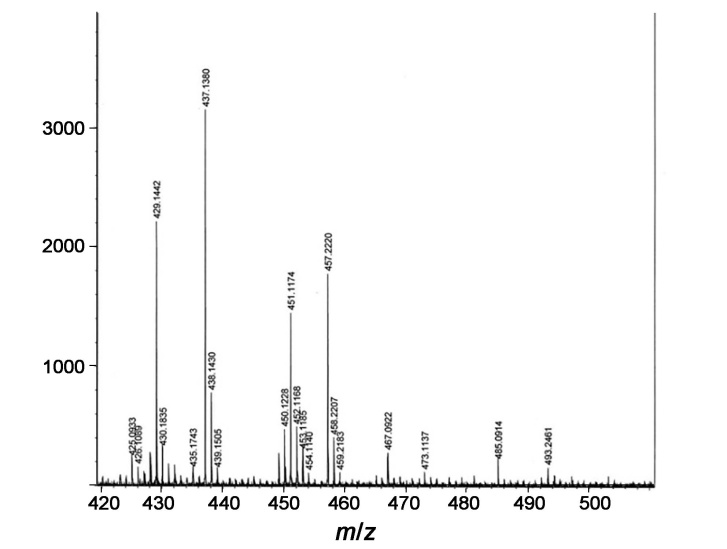
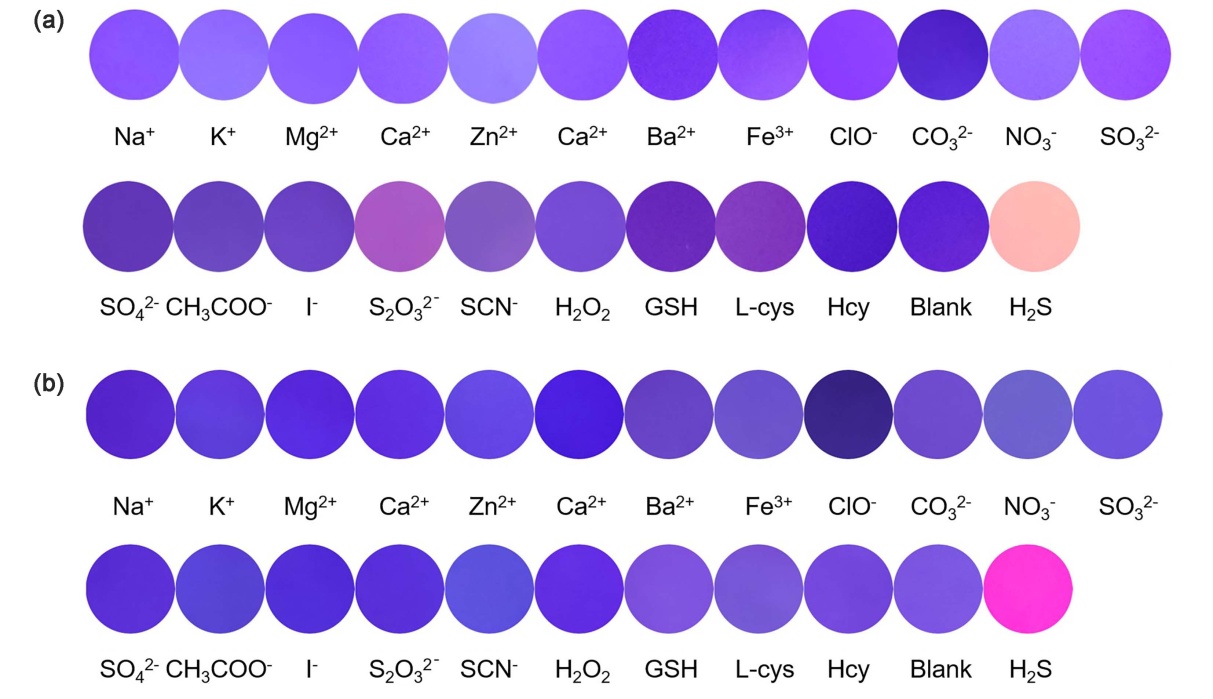
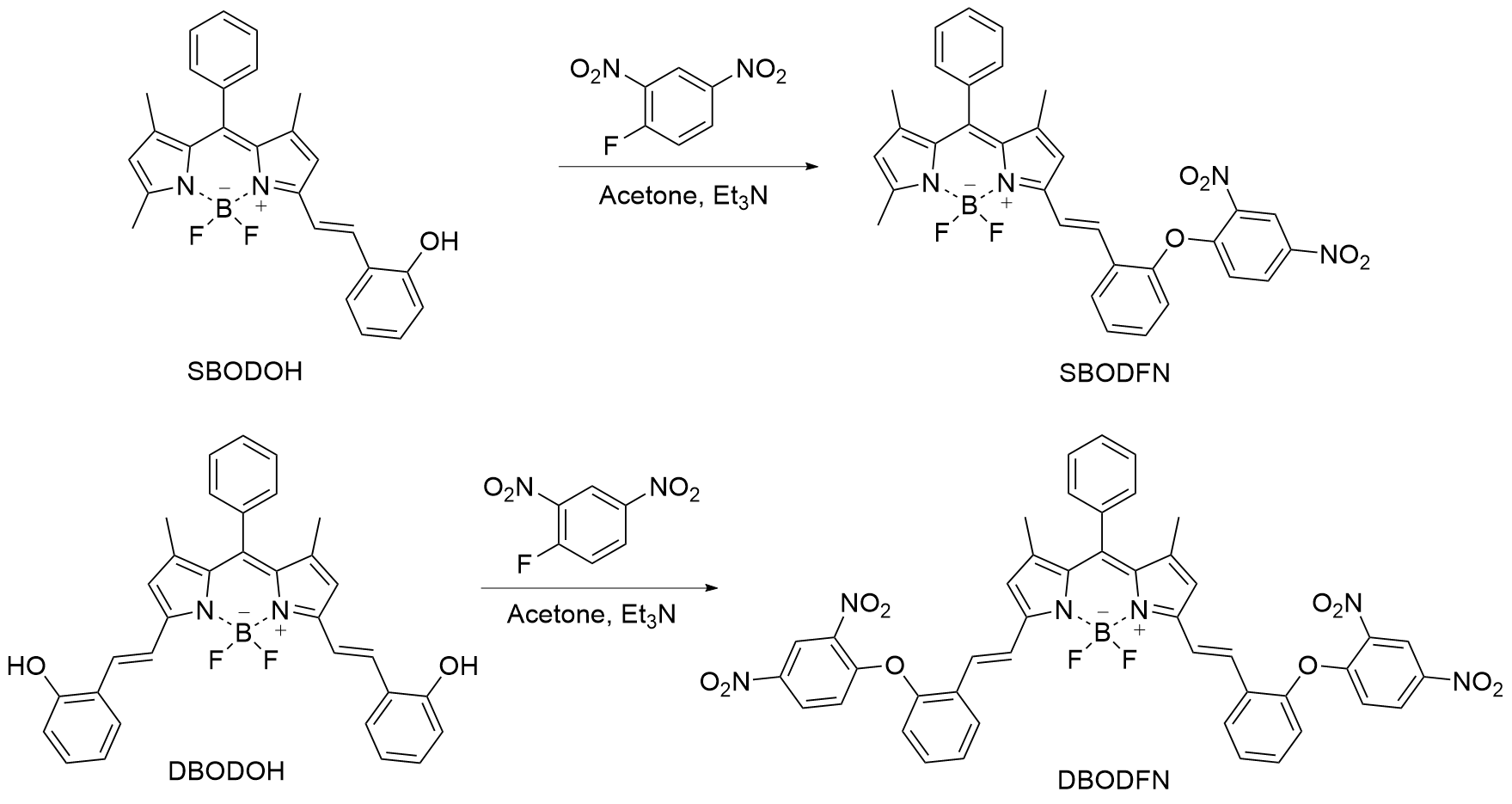
硫化氢(H2S)是一种高毒性气体污染物, 其精准检测在环境监测、工业安全及生物医学领域具有重要意义. 此研究设计合成了基于氟硼二吡咯(BODIPY)的单取代荧光探针SBODFN和双取代荧光探针DBODFN, 用于H2S的检测. 探针分子中2,4-二硝基苯基(DNP)通过强吸电子效应抑制分子内电荷转移(ICT), 导致初始荧光淬灭. H2S诱导醚键断裂释放羟基后, ICT效应恢复使荧光显著增强. DBODFN因扩展共轭结构表现出更强的ICT效应, 其荧光发射(663 nm, 红色)较SBODFN (593 nm, 橘黄色)明显红移. 定量分析表明, SBODFN在300~475 μmol/L范围内检测限为0.38 μmol/L, 而DBODFN在更宽的150~650 μmol/L范围内检测限达0.20 μmol/L. 两种探针均可作为固态荧光探针实现H2S可视化检测. 最后, 两种探针均在三种不同水样中完成了对H2S的定量检测, 为环境水样中 H2S的可视化定量检测提供了简便有效的分子传感策略.
刘聪, 王艺霈, 张天宇, 覃文武. 单双取代荧光探针的合成及其对硫化氢的检测★[J]. 化学学报, 2026, 84(8): 1283-1293.
Cong Liu, Yipei Wang, Tianyu Zhang, Wenwu Qin. Synthesis of Mono/Di-Substituted Fluorescent Probes for Detection of H2S★[J]. Acta Chimica Sinica, 2026, 84(8): 1283-1293.
| Sample | Added/(μmol•L-1) | Fluorescence Intensity | Measured Value /(μmol•L-1) | Recovery/% | RSD/% |
|---|---|---|---|---|---|
| Tap water | 380 | 1858 | 406 | 106.82 | 4.89 |
| 1720 | 370 | 97.26 | |||
| 1828 | 398 | 104.74 | |||
| lake water | 380 | 1817 | 395 | 103.98 | 6.33 |
| 1683 | 360 | 94.70 | |||
| 1862 | 407 | 107.09 | |||
| Yellow River water | 380 | 1689 | 361 | 95.11 | 2.94 |
| 1764 | 381 | 100.31 | |||
| 1697 | 364 | 95.67 |
| Sample | Added/(μmol•L-1) | Fluorescence Intensity | Measured Value /(μmol•L-1) | Recovery/% | RSD/% |
|---|---|---|---|---|---|
| Tap water | 380 | 1858 | 406 | 106.82 | 4.89 |
| 1720 | 370 | 97.26 | |||
| 1828 | 398 | 104.74 | |||
| lake water | 380 | 1817 | 395 | 103.98 | 6.33 |
| 1683 | 360 | 94.70 | |||
| 1862 | 407 | 107.09 | |||
| Yellow River water | 380 | 1689 | 361 | 95.11 | 2.94 |
| 1764 | 381 | 100.31 | |||
| 1697 | 364 | 95.67 |
| Sample | Added/(μmol•L-1) | Fluorescence Intensity | Measured Value /(μmol•L-1) | Recovery/% | RSD/% |
|---|---|---|---|---|---|
| Tap water | 440 | 1781 | 448 | 101.73 | 2.50 |
| 1734 | 440 | 99.90 | |||
| 1654 | 426 | 96.80 | |||
| lake water | 440 | 1761 | 444 | 100.95 | 0.85 |
| 1804 | 452 | 102.62 | |||
| 1773 | 446 | 101.42 | |||
| Yellow River water | 440 | 1823 | 455 | 103.36 | 3.83 |
| 1636 | 423 | 96.10 | |||
| 1787 | 449 | 101.96 |
| Sample | Added/(μmol•L-1) | Fluorescence Intensity | Measured Value /(μmol•L-1) | Recovery/% | RSD/% |
|---|---|---|---|---|---|
| Tap water | 440 | 1781 | 448 | 101.73 | 2.50 |
| 1734 | 440 | 99.90 | |||
| 1654 | 426 | 96.80 | |||
| lake water | 440 | 1761 | 444 | 100.95 | 0.85 |
| 1804 | 452 | 102.62 | |||
| 1773 | 446 | 101.42 | |||
| Yellow River water | 440 | 1823 | 455 | 103.36 | 3.83 |
| 1636 | 423 | 96.10 | |||
| 1787 | 449 | 101.96 |
| [1] |
|
| [2] |
doi: 10.1016/j.saa.2020.118959 |
| [3] |
doi: 10.1016/j.aca.2025.344792 |
| [4] |
doi: 10.1016/j.talanta.2024.126869 |
| [5] |
doi: 10.6023/A25060234 |
|
(杜云哲, 李曙懿, 程思柳, 贾慧劼, 王政, 韩利民, 竺宁, 化学学报, 2026, 84, 93.)
doi: 10.6023/A25060234 |
|
| [6] |
doi: 10.6023/A18070293 |
|
(杨文远, 梁红, 乔智威, 化学学报, 2018, 76, 785.)
doi: 10.6023/A18070293 |
|
| [7] |
doi: 10.1016/j.dyepig.2022.110740 |
| [8] |
doi: 10.1016/j.dyepig.2023.111418 |
| [9] |
doi: 10.1016/j.talanta.2018.05.076 |
| [10] |
doi: 10.1007/s12161-018-01421-3 |
| [11] |
doi: 10.1016/j.cej.2025.164230 |
| [12] |
doi: 10.1016/j.saa.2025.127006 |
| [13] |
doi: 10.1016/j.foodchem.2023.136701 |
| [14] |
doi: 10.1016/j.microc.2025.115252 |
| [15] |
doi: 10.1016/j.cclet.2016.07.008 |
| [16] |
doi: 10.1016/j.cbi.2022.110022 |
| [17] |
doi: 10.1016/j.snb.2020.128937 |
| [18] |
doi: 10.1016/j.microc.2025.115730 |
| [19] |
doi: 10.1016/j.aca.2022.339670 |
| [20] |
doi: 10.1016/j.bios.2024.116798 |
| [21] |
doi: 10.1016/j.talanta.2025.127808 |
| [22] |
doi: 10.1007/s42994-021-00035-4 |
| [23] |
doi: 10.1016/j.snb.2019.05.010 |
| [24] |
doi: 10.1016/j.saa.2026.127955 |
| [25] |
doi: 10.1016/j.aca.2024.343558 |
| [26] |
doi: 10.1021/acs.analchem.2c01850 |
| [27] |
doi: 10.1016/j.talanta.2019.01.042 |
| [28] |
doi: 10.1039/D5CC05198C |
| [29] |
doi: 10.1016/j.saa.2019.01.085 |
| [30] |
doi: 10.1016/j.saa.2020.118578 |
| [31] |
doi: 10.1039/C9CC10028H |
| [32] |
doi: 10.1021/acssensors.2c01402 |
| [33] |
doi: 10.1039/D5SD00201J |
| [34] |
doi: 10.1039/D0RA08802A |
| [35] |
doi: 10.6023/A15030158 |
|
(于海波, 李红玲, 张新富, 肖义, 方沛菊, 吕春娇, 侯伟, 化学学报, 2015, 73, 450.)
doi: 10.6023/A15030158 |
|
| [36] |
doi: 10.1016/j.niox.2014.11.008 pmid: 25461270 |
| [37] |
|
| [38] |
doi: 10.1021/acs.analchem.8b04811 pmid: 30585489 |
| [39] |
doi: 10.1016/j.saa.2025.126918 |
| [40] |
doi: 10.1002/anie.v55.34 |
| [41] |
doi: 10.6023/cjoc202402010 |
|
(何春, 刘姝祺, 成奋民, 郝远强, 陈述, 张培盛, 曾荣今, 有机化学, 2024, 44, 2869.)
doi: 10.6023/cjoc202402010 |
|
| [42] |
|
|
(王若曦, 张冬菊, 武剑, 刘成卜, 化学学报, 2007, 65, 107.)
|
|
| [43] |
doi: 10.1016/j.snb.2021.131202 |
| [44] |
doi: 10.1007/s10895-024-03949-6 |
| [45] |
doi: 10.1021/acsami.7b07688 |
| [46] |
doi: 10.1021/acs.orglett.3c01755 |
| [47] |
doi: 10.1021/acs.orglett.3c00173 |
| [1] | 杨广慧, 韩捷, 迟清水, 李佳轩, 王雨鹏, 田霞, 苏伟, 许应桩, 韩建荣. 基于柱[5]芳烃超分子聚合物的铜离子荧光检测薄膜[J]. 化学学报, 2026, 84(6): 812-819. |
| [2] | 张杨, 张金莉, 庞建东, 卜显和. 高灵敏Eu-MOF荧光探针用于尿液中1-羟基芘的检测★[J]. 化学学报, 2026, 84(5): 667-672. |
| [3] | 杜云哲, 李曙懿, 程思柳, 贾慧劼, 王政, 韩利民, 竺宁. H2S促使环脒开环与醛发生三组分串联反应高效构建硫代酰胺类衍生物[J]. 化学学报, 2026, 84(1): 93-100. |
| [4] | 赵玉强, 那迪, 和晓波, 朱立平, 周莹, 曾广智, 樊保敏. 无需催化剂的光介导生物正交荧光探针实例[J]. 化学学报, 2025, 83(8): 816-826. |
| [5] | 孟倩, 张琪伟. 用于神经递质检测与生物成像的有机小分子荧光探针★[J]. 化学学报, 2025, 83(10): 1252-1266. |
| [6] | 刘童, 皮慧慧, 陈冰昆, 张小玲. 近红外二区硫系银量子点制备方法及癌症诊疗应用研究进展[J]. 化学学报, 2024, 82(9): 1001-1012. |
| [7] | 蒋励, 陈子晗, 凡勇. 近红外二区荧光探针在活体多重成像中的研究进展[J]. 化学学报, 2024, 82(10): 1069-1085. |
| [8] | 武虹乐, 郭锐, 迟涵文, 唐永和, 宋思睿, 葛恩香, 林伟英. 喹啉基粘度荧光探针的合成及其检测应用[J]. 化学学报, 2023, 81(8): 905-911. |
| [9] | 贺晓梦, 袁方, 张素雅, 张健健. 基于尼罗红类ONOO–近红外荧光探针的开发及其成像应用[J]. 化学学报, 2023, 81(11): 1515-1521. |
| [10] | 孙丽, 王亚静, 李涛, 郭英姝, 张书圣. 金纳米笼探针用于线粒体成像和光热损伤细胞★[J]. 化学学报, 2023, 81(10): 1301-1310. |
| [11] | 宋思睿, 唐永和, 孙良广, 郭锐, 姜冠帆, 林伟英. 基于香豆素荧光团的新型极性检测荧光探针的开发及其成像应用[J]. 化学学报, 2022, 80(9): 1217-1222. |
| [12] | 吴志芬, 柯建熙, 刘永升, 孙蓬明, 洪茂椿. 稀土近红外二区纳米荧光影像探针及其生物医学应用※[J]. 化学学报, 2022, 80(4): 542-552. |
| [13] | 李勇, 王栩, 解希雷, 张建, 唐波. 一氧化碳有机荧光探针和光控释放剂研究进展[J]. 化学学报, 2021, 79(1): 36-44. |
| [14] | 罗兴蕊, 陈敏文, 杨晴来. 近红外二区活体成像技术及其应用研究进展[J]. 化学学报, 2020, 78(5): 373-381. |
| [15] | 贾伊祎, 王文杰, 梁玲, 袁荃. 核酸功能化稀土基纳米材料在生物检测中的应用[J]. 化学学报, 2020, 78(11): 1177-1184. |
| 阅读次数 | ||||||
|
全文 |
|
|||||
|
摘要 |
|
|||||
