有机化学 ›› 2026, Vol. 46 ›› Issue (4): 1481-1495.DOI: 10.6023/cjoc202512018 上一篇 下一篇
综述与进展
缪宇辰, 杞航, 黄焕明*( )
)
收稿日期:2025-12-15
修回日期:2026-01-18
发布日期:2026-03-06
通讯作者:
黄焕明
基金资助:
Yu-Chen Miao, Hang Qi, Huan-Ming Huang*()
Received:2025-12-15
Revised:2026-01-18
Published:2026-03-06
Contact:
Huan-Ming Huang
Supported by:文章分享
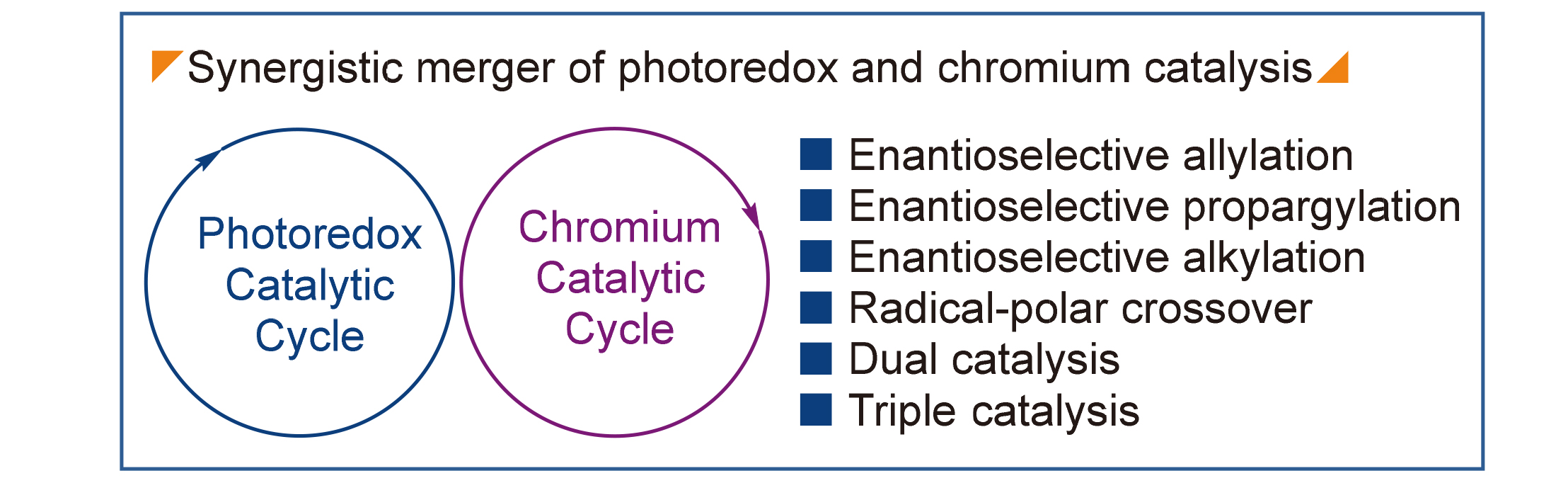
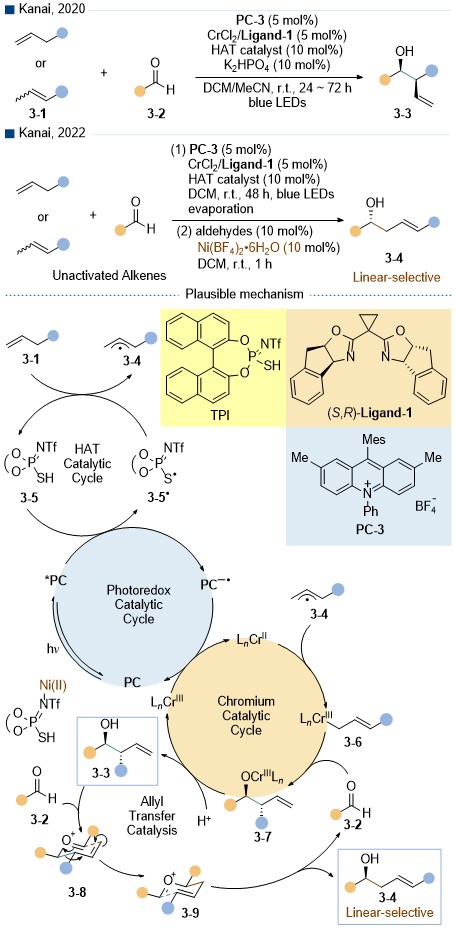
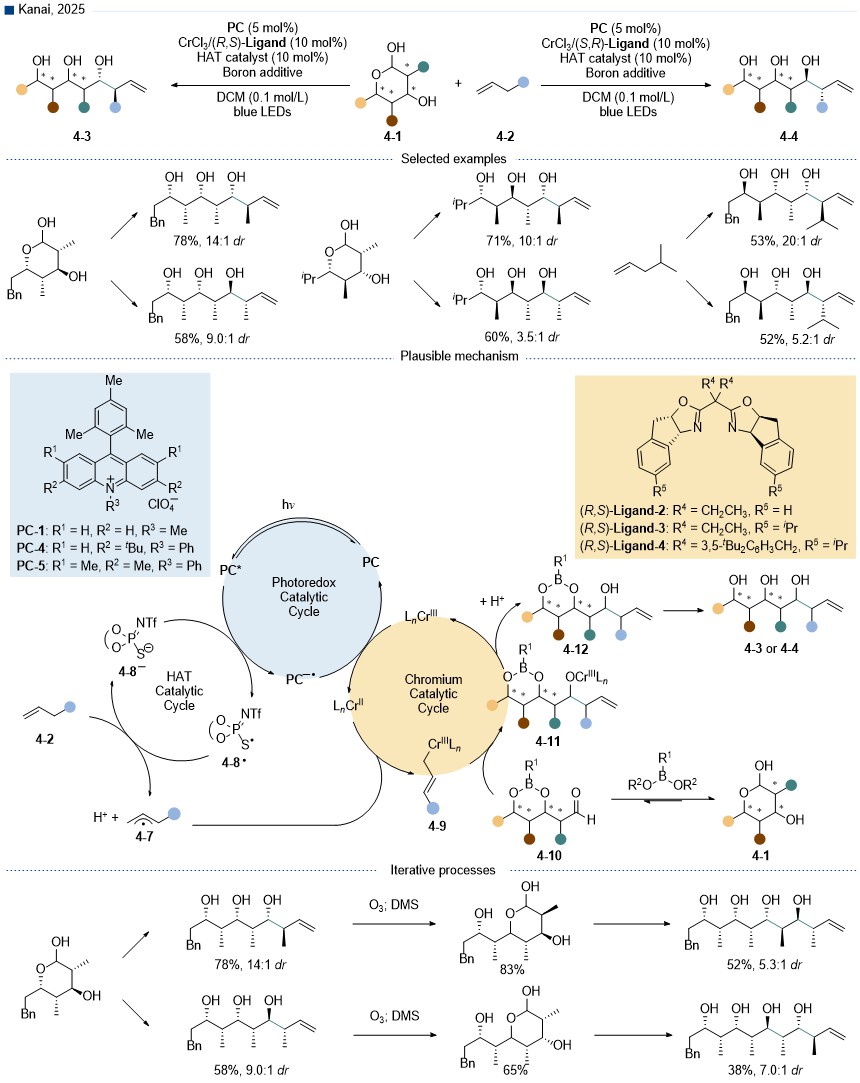
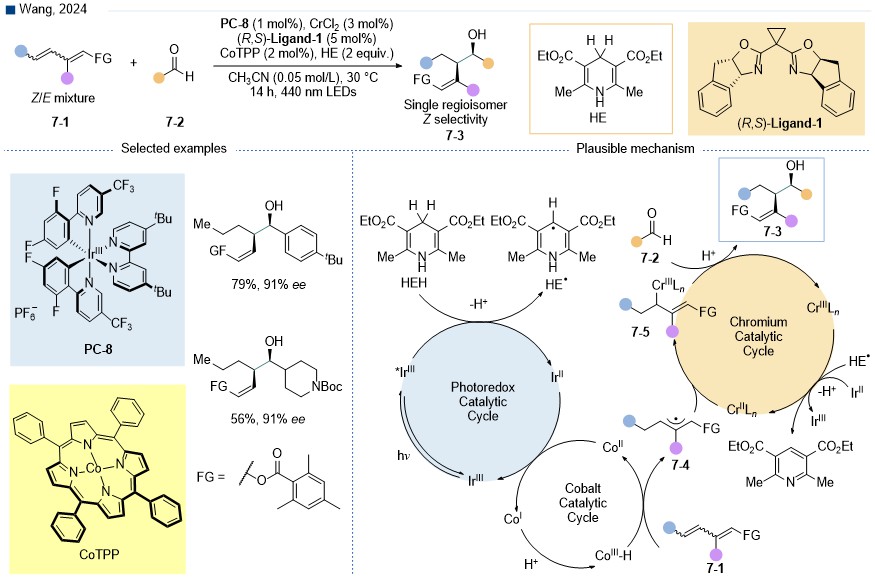
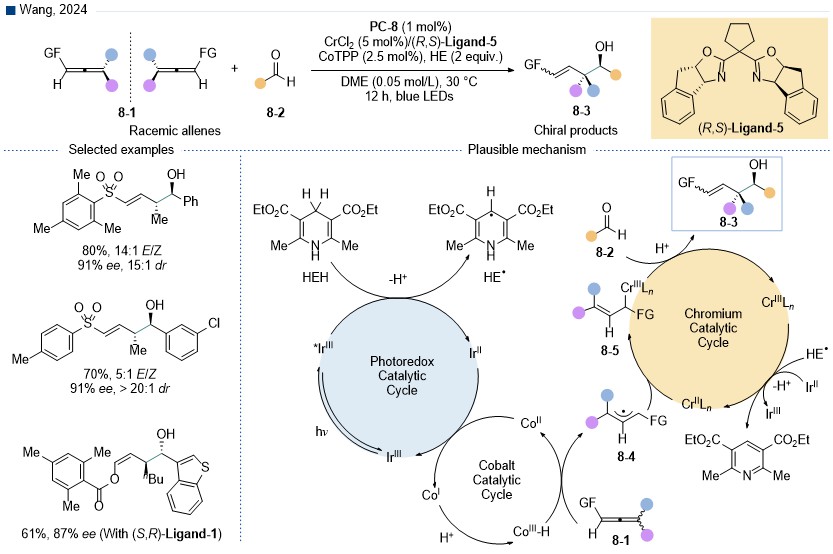
光氧化还原催化与第一过渡系金属催化的协同融合, 极大推动了可持续不对称合成领域的发展. 其中, 光氧化还原催化剂与铬催化剂的结合尤为引人注目. 铬作为一种储量丰富且具有丰富单/双电子氧化还原特性的金属, 可实现新颖的反应模式与立体控制策略. 评述了近年来通过可见光/铬协同催化实现的对映选择性转化的研究进展, 分析了各组分的独特作用、协同机制及手性活化模式, 涵盖了对映选择性自由基加成、C—H键官能团化、交叉偶联及多组分反应等关键转化. 最后, 总结了这一快速发展领域当前面临的挑战与未来机遇, 并着重阐述了其在推动药物及农用化学品更可持续生产方面的巨大潜力.
缪宇辰, 杞航, 黄焕明. 可见光/铬协同催化的对映选择性转化反应研究进展[J]. 有机化学, 2026, 46(4): 1481-1495.
Yu-Chen Miao, Hang Qi, Huan-Ming Huang. Recent Advances in Enantioselective Transformations Enabled by Synergistic Photoredox/Chromium Catalysis[J]. Chinese Journal of Organic Chemistry, 2026, 46(4): 1481-1495.
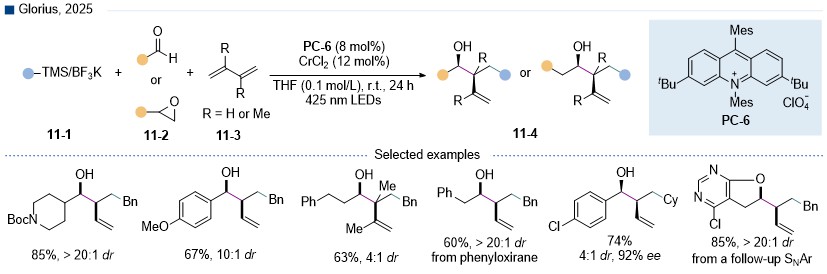
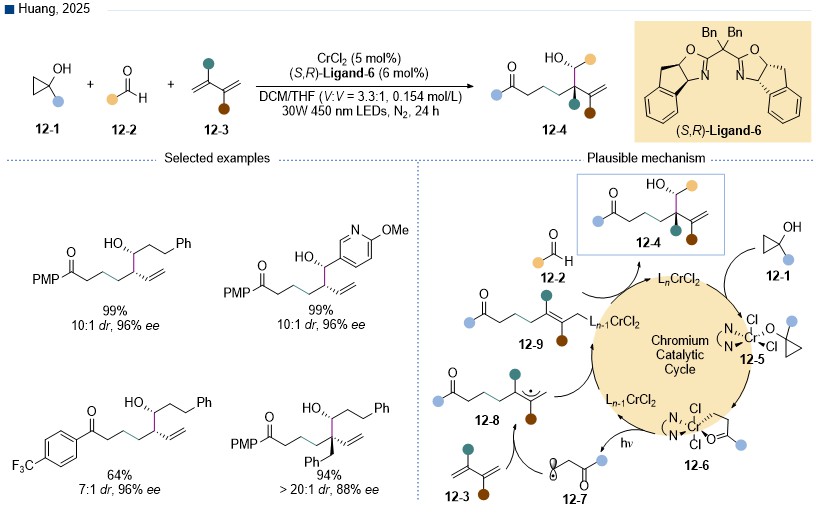
| [1] |
|
| [2] |
|
| [3] |
|
| [4] |
|
| [5] |
|
| [6] |
|
| [7] |
|
| [8] |
|
| [9] |
|
| [10] |
|
| [11] |
|
| [12] |
|
| [13] |
|
| [14] |
|
| [15] |
|
| [16] |
|
| [17] |
|
| [18] |
|
| [19] |
|
| [20] |
|
| [21] |
|
| [22] |
|
| [23] |
|
| [24] |
|
| [25] |
|
| [26] |
|
| [27] |
|
| [28] |
|
| [29] |
|
| [30] |
|
| [31] |
|
| [32] |
|
| [33] |
|
| [34] |
|
| [35] |
|
| [36] |
|
| [37] |
|
| [38] |
|
| [39] |
|
| [40] |
|
| [41] |
|
| [42] |
|
| [43] |
|
| [44] |
|
|
(高根伟, 李震, 李炎, 陆熹, 有机化学, 2025, 45, 1905.)
|
|
| [45] |
|
| [46] |
|
| [47] |
|
| [48] |
|
| [49] |
|
| [50] |
|
| [51] |
|
| [52] |
|
| [53] |
|
| [54] |
|
| [55] |
|
| [56] |
|
| [57] |
|
| [58] |
|
| [59] |
|
| [60] |
|
| [61] |
|
| [62] |
|
| [63] |
|
| [64] |
|
| [65] |
|
| [66] |
|
| [67] |
|
| [1] | 侯馨怡, 史同同, 李泽江, 董庆昊, 孙凯, 王薪. 可见光诱导的磷酰化环化合成磷酰基取代的吲哚并二氮䓬[J]. 有机化学, 2026, 46(4): 1776-1787. |
| [2] | 王光辉, 王冰辉, 班旭, 赵筱薇, 江智勇. 可见光驱动1,3-烯炔与4-酰基二氢吡啶的串联环化反应合成氮杂芳烃官能团化的多取代呋喃[J]. 有机化学, 2026, 46(4): 1763-1775. |
| [3] | 邹震雷, 李益凡, 陈晨, 陈王哲, 张为钢, 王毅. 关于亚磺酰基砌块法合成亚砜的研究进展[J]. 有机化学, 2026, 46(4): 1635-1658. |
| [4] | 王齐翔, 陈圣希, 王静, 陈栋, 鲍晓光, 吴新鑫. 无金属参与的多烯选择性氯代反应[J]. 有机化学, 2026, 46(4): 1750-1762. |
| [5] | 郑婧斐, 吕琪妍, 孙凯, 陈晓岚, 屈凌波, 王金泉, 於兵. 自由基介导的6-氮杂尿嘧啶官能团化研究进展[J]. 有机化学, 2026, 46(4): 1603-1620. |
| [6] | 刘世峥, 窦明煜, 崔玉, 窦建民, 魏文廷. 自由基硒磺酰化研究进展[J]. 有机化学, 2026, 46(4): 1621-1634. |
| [7] | 赵雨晴, 朱先进, 石凌宇, 魏鸣宇, 徐紫涵, 石永佳, 李旭锋, 杨道山. 环硫鎓盐开环官能化反应的研究进展[J]. 有机化学, 2026, 46(4): 1572-1602. |
| [8] | 张皓然, 贾均松, 俞琼, 吴宇, 李玉龙, 舒伟. 可见光催化烯烃的氢胺化和氢(磺)酰胺化反应[J]. 有机化学, 2026, 46(4): 1166-1180. |
| [9] | 杨珊, 陈亚苏, 朱晨. 自由基介导的官能团迁移-环化构建含氮稠杂芳烃[J]. 有机化学, 2026, 46(4): 1739-1749. |
| [10] | 陈嘉豪, 占贝贝, 张夏衡. 自由基介导的1,n-氮迁移反应研究进展[J]. 有机化学, 2026, 46(4): 1560-1571. |
| [11] | 叶富, 袁伟明. 光氧化还原催化炔烃的双碳官能团化反应进展[J]. 有机化学, 2026, 46(4): 1146-1165. |
| [12] | 卢琳玉, 亓雨彤, 张庭珲, 金胜男, 曹中艳, 张洪伟. 自由基介导烯烃的1,2,n-三官能团化反应研究进展[J]. 有机化学, 2026, 46(4): 1540-1559. |
| [13] | 唐玉青, 杨紫娴, 杨兵, 王毅, 杜炳南. 球磨条件下机械力驱动的自由基反应研究进展[J]. 有机化学, 2026, 46(4): 1111-1145. |
| [14] | 董建洋, 薛东. 自由基途径的[1.1.1]螺桨烷官能化研究进展[J]. 有机化学, 2026, 46(4): 1464-1480. |
| [15] | 王小曼, 王泽, 吴劼, 胡燚, 叶盛青. 水相中的自由基反应研究进展[J]. 有机化学, 2026, 46(4): 1496-1512. |
| 阅读次数 | ||||||
|
全文 |
|
|||||
|
摘要 |
|
|||||


