有机化学 ›› 2026, Vol. 46 ›› Issue (10): 3804-3837.DOI: 10.6023/cjoc202604030 上一篇 下一篇
综述与进展
张令红a,b,*( ), 孔慢慢b, 张曌霞b, 江智勇b,*()
收稿日期:2026-04-21
修回日期:2026-06-10
发布日期:2026-07-23
基金资助:
Linghong Zhanga,b,*(), Manman Kongb, Zhaoxia Zhangb, Zhiyong Jiangb,*()
Received:2026-04-21
Revised:2026-06-10
Published:2026-07-23
Contact:
Supported by:文章分享
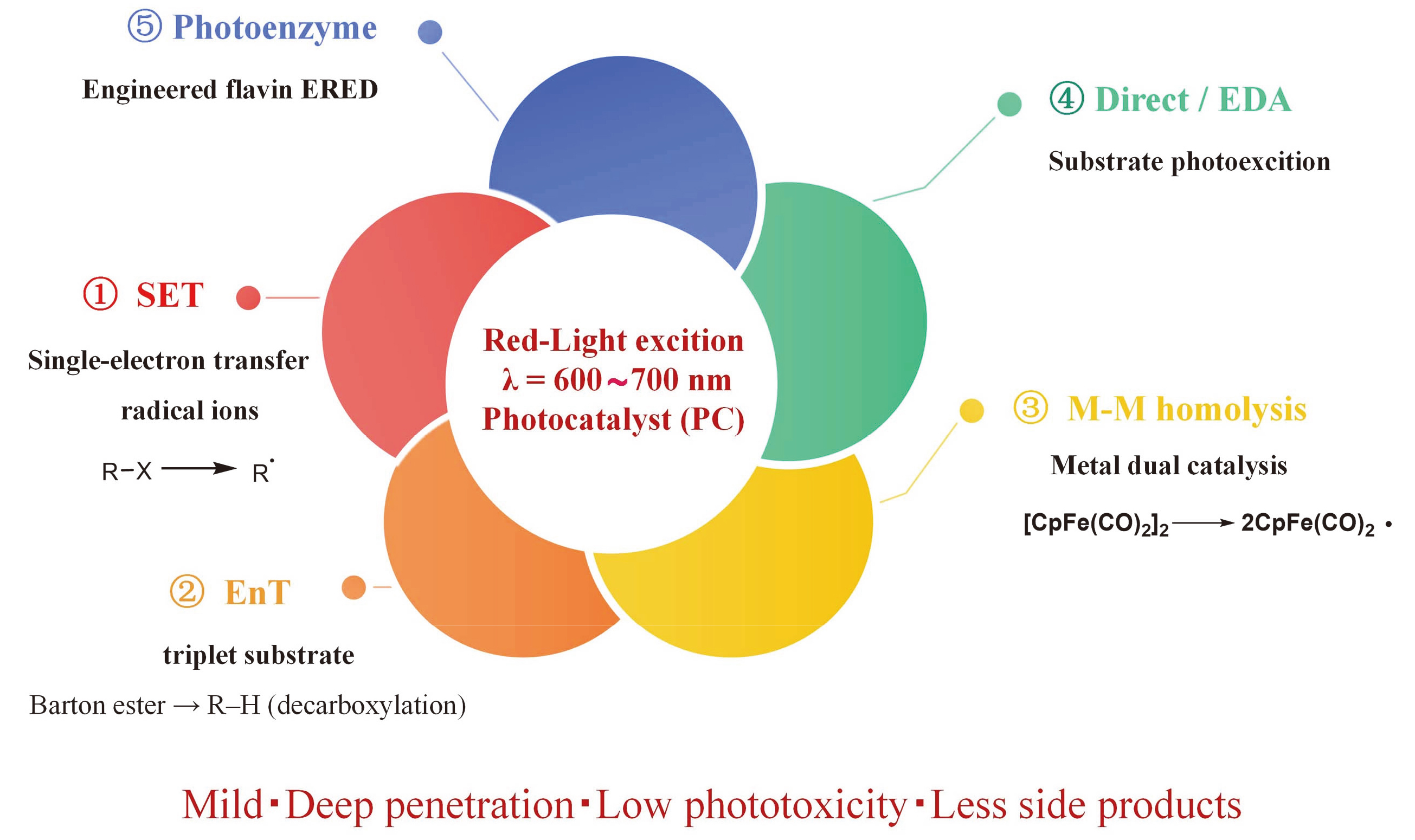
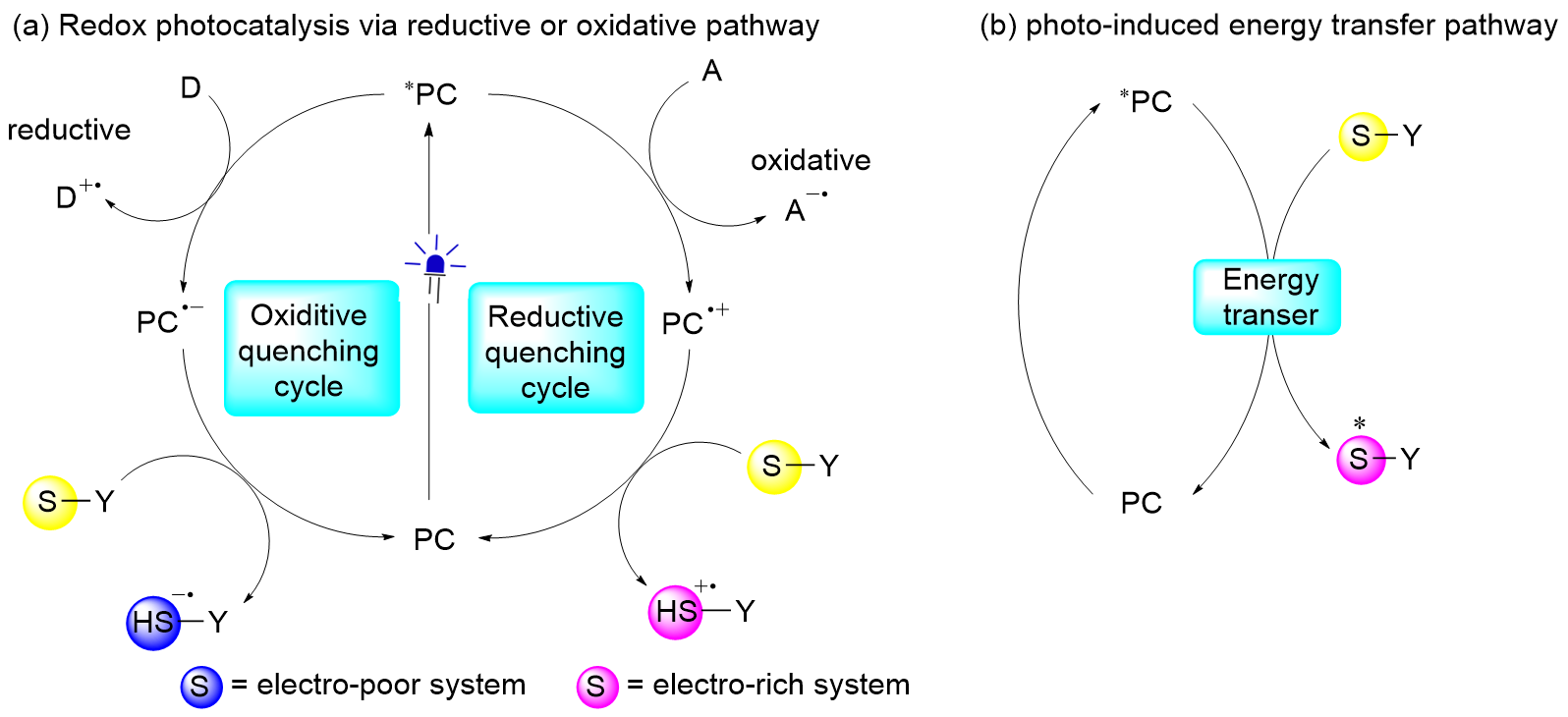
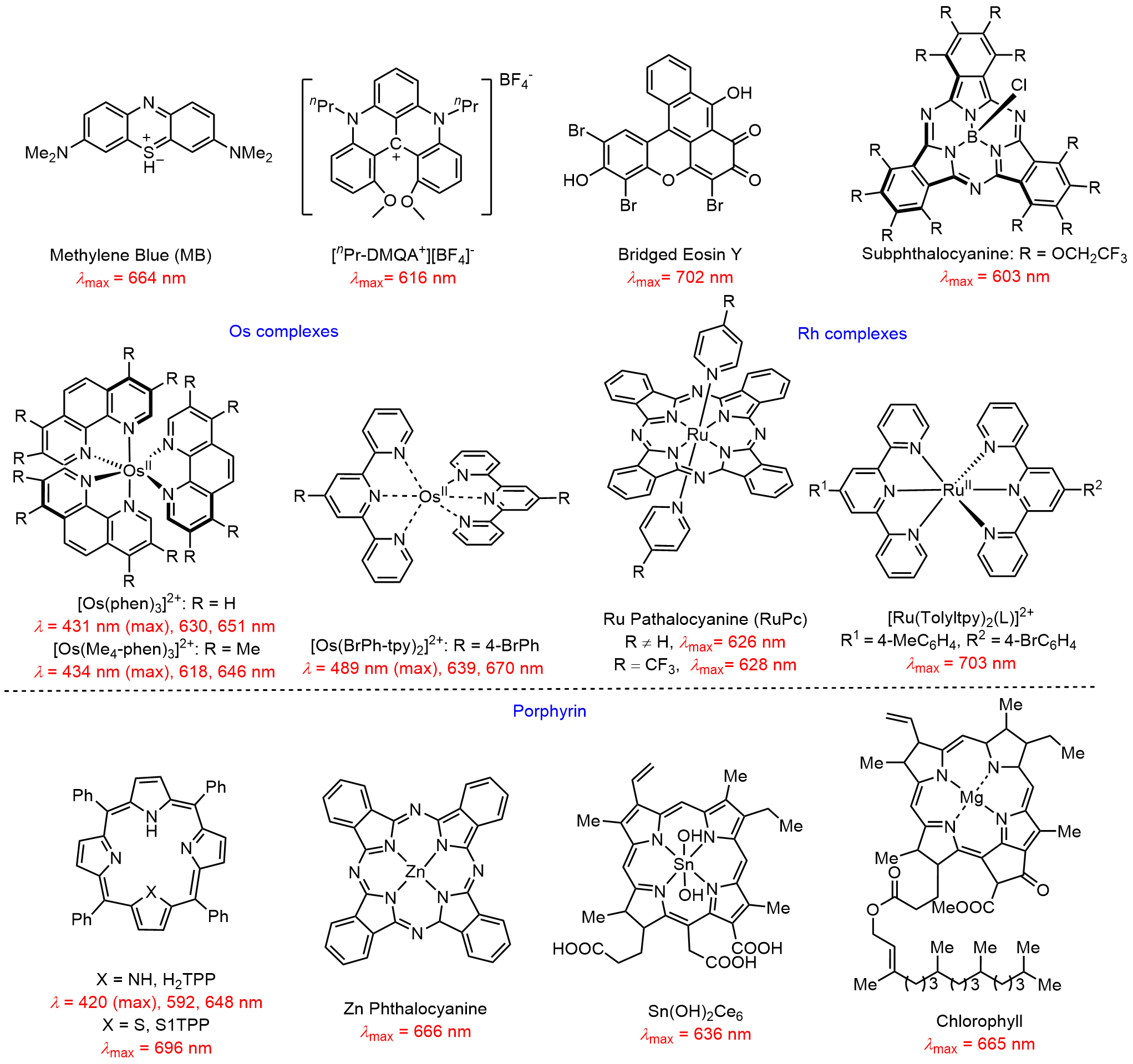
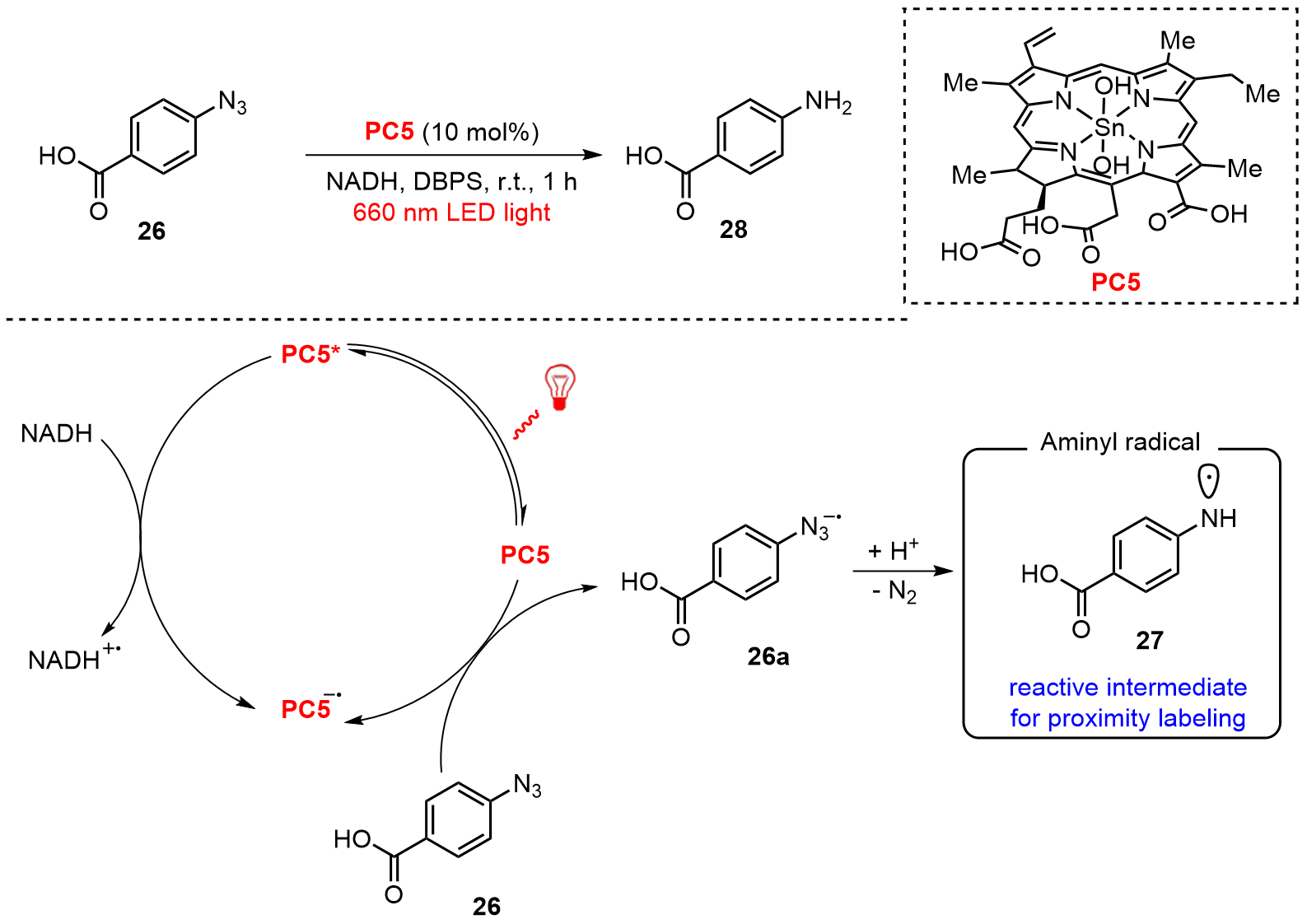
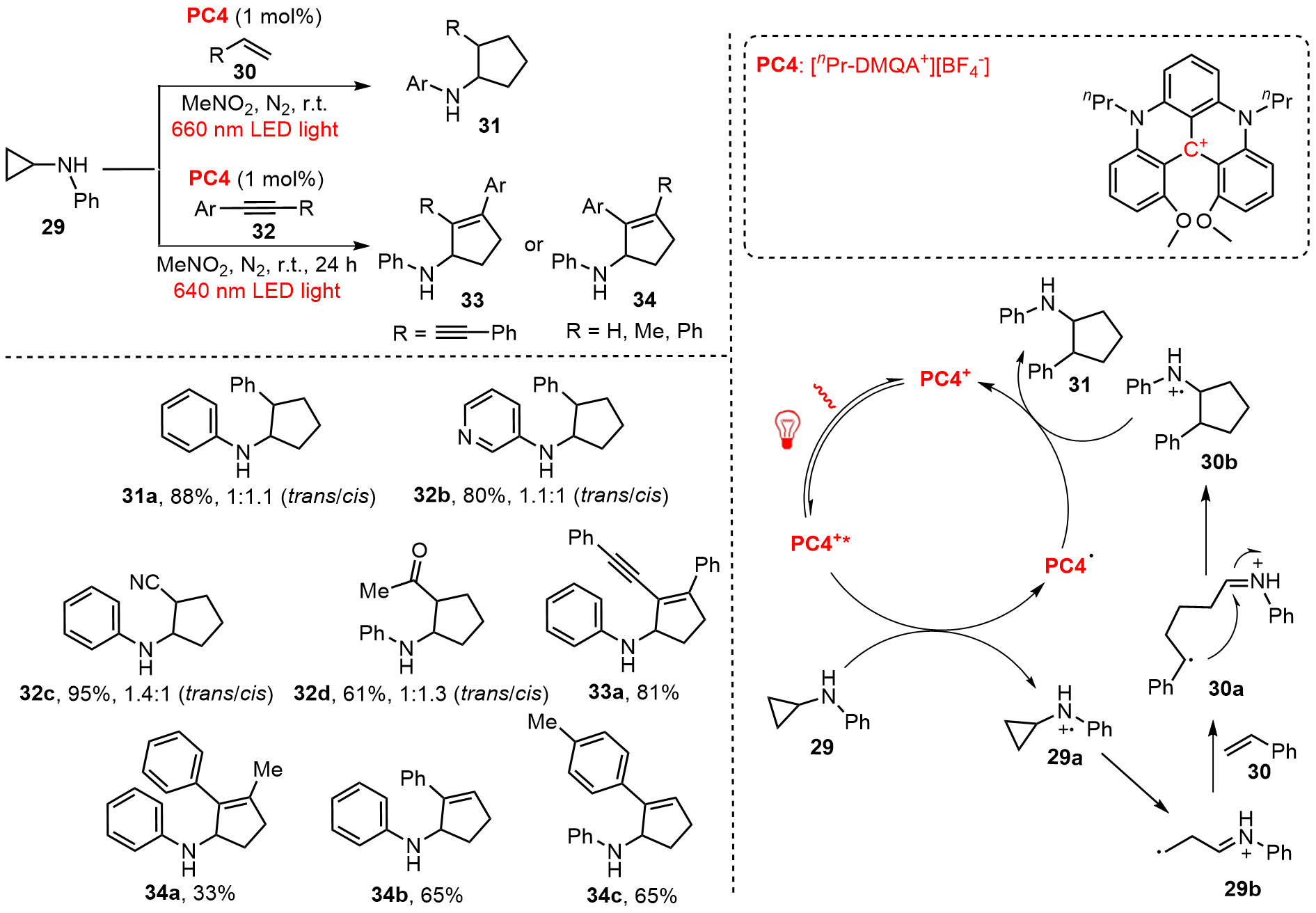
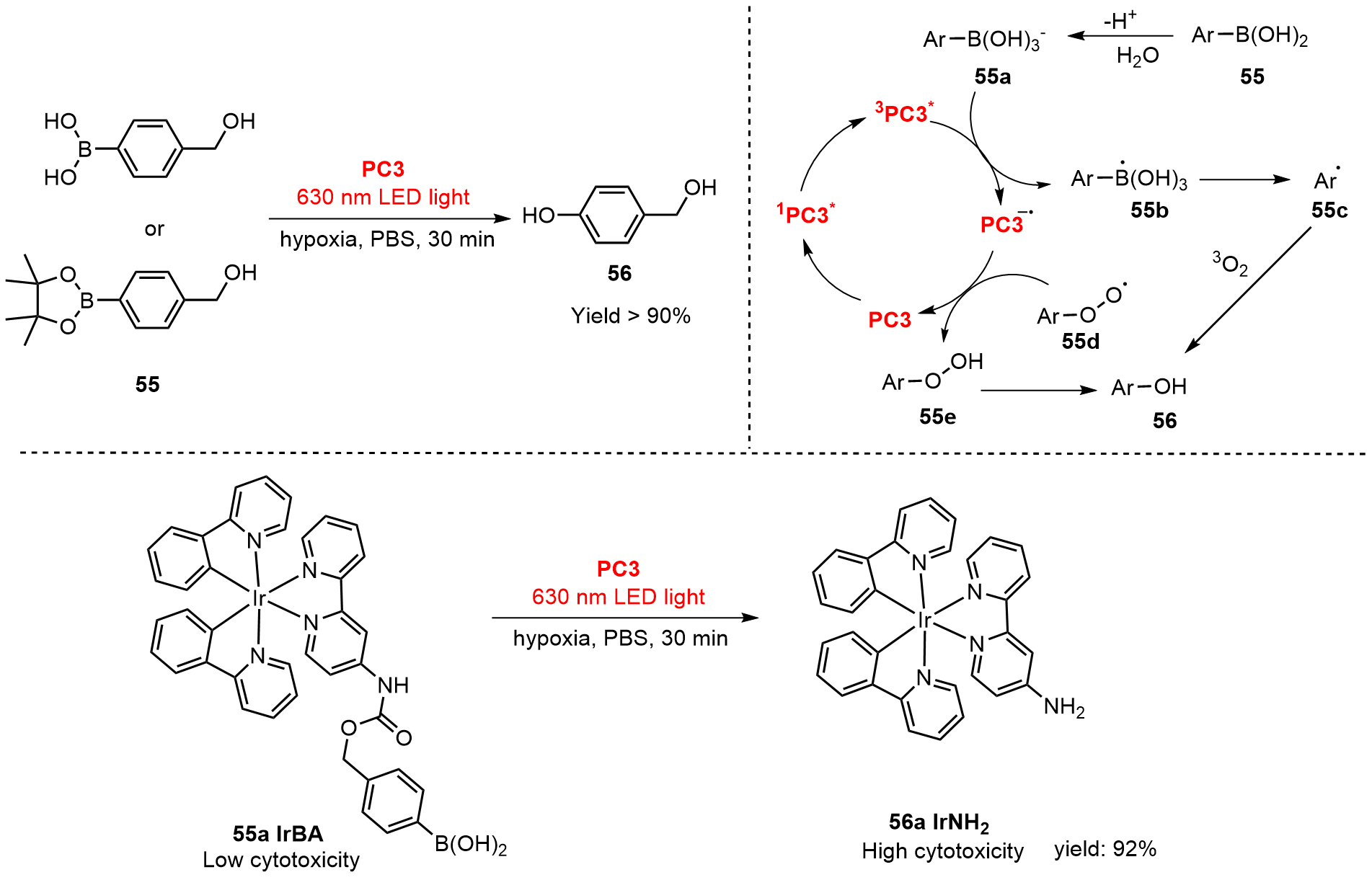
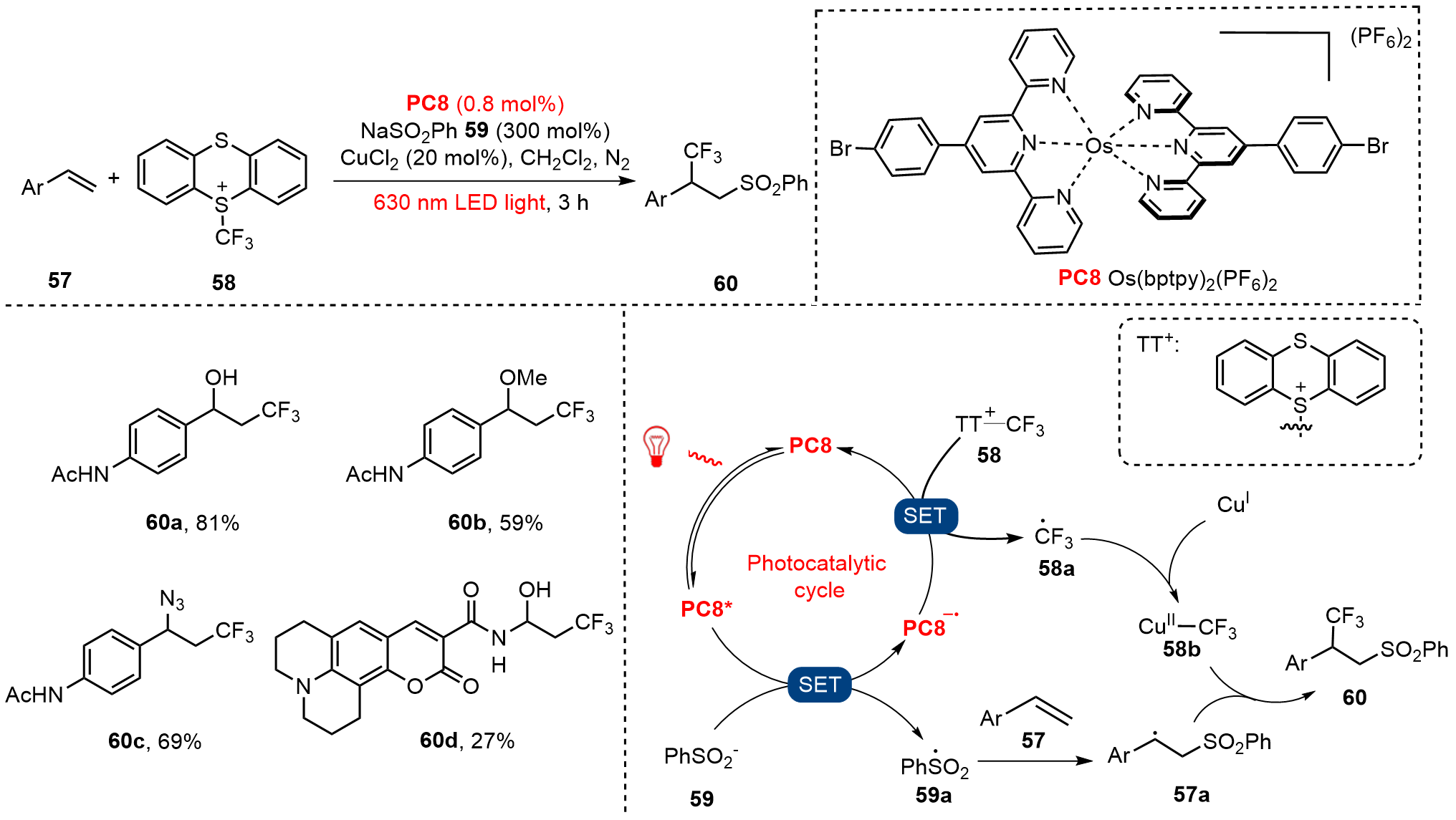
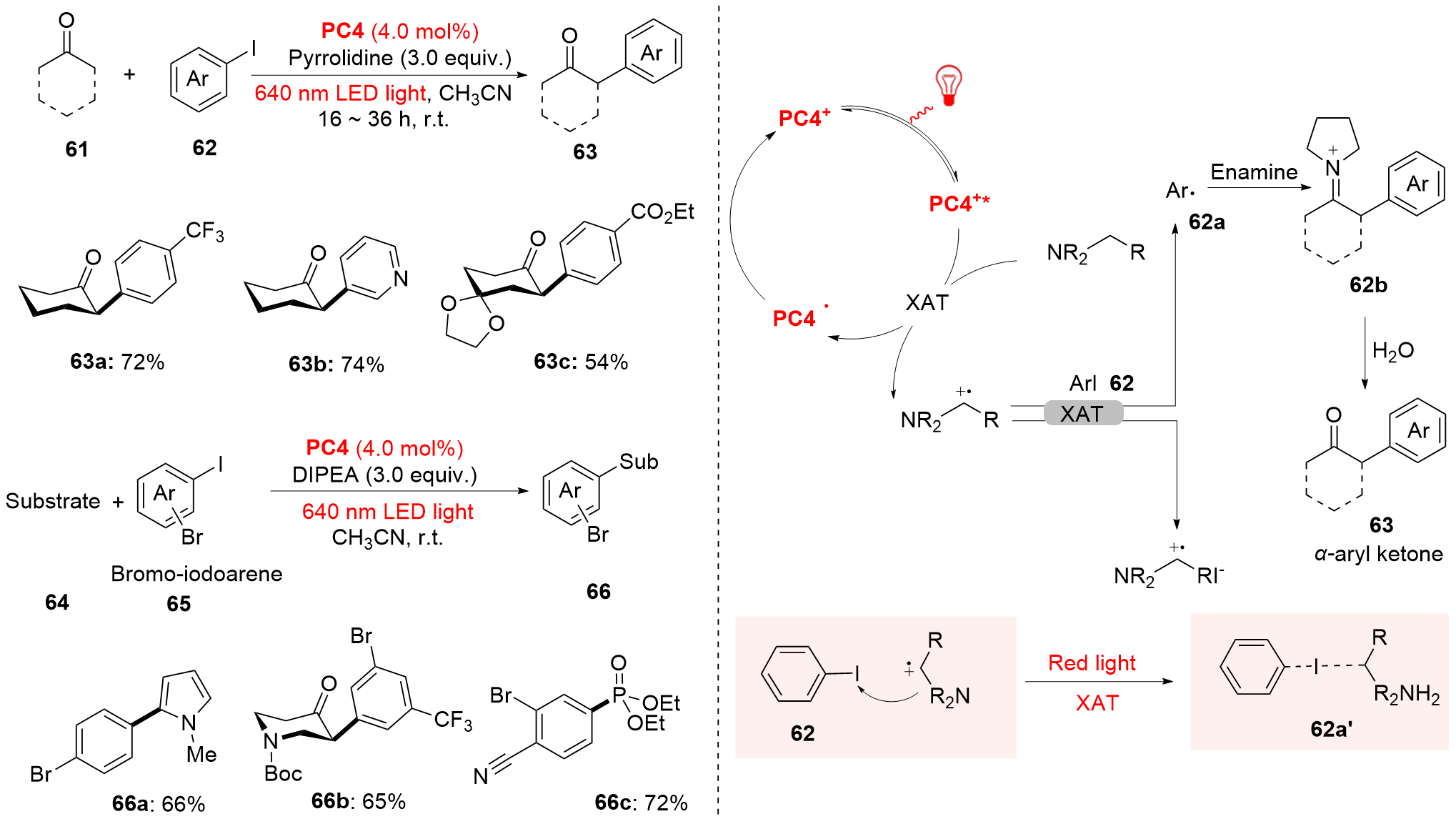
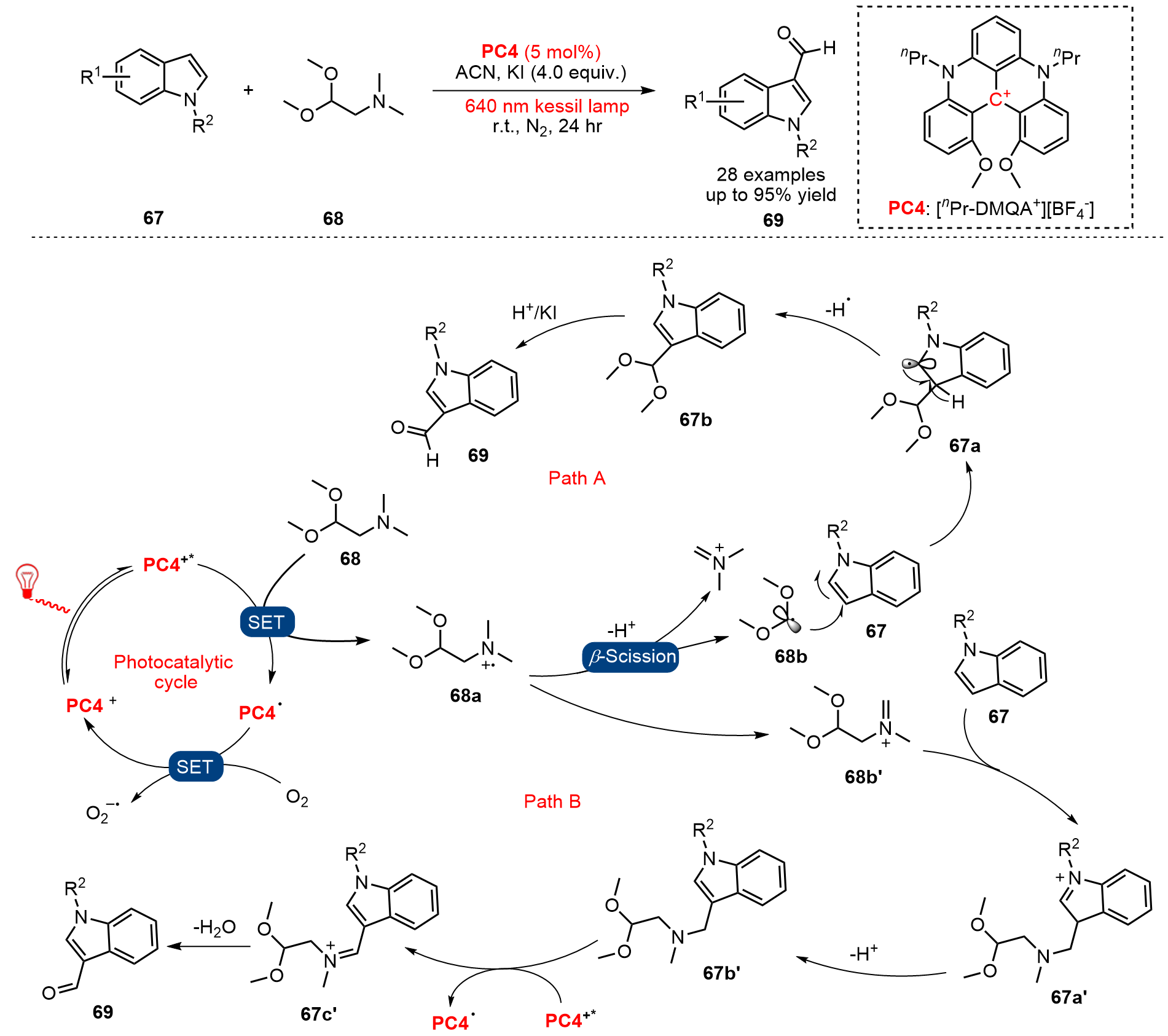
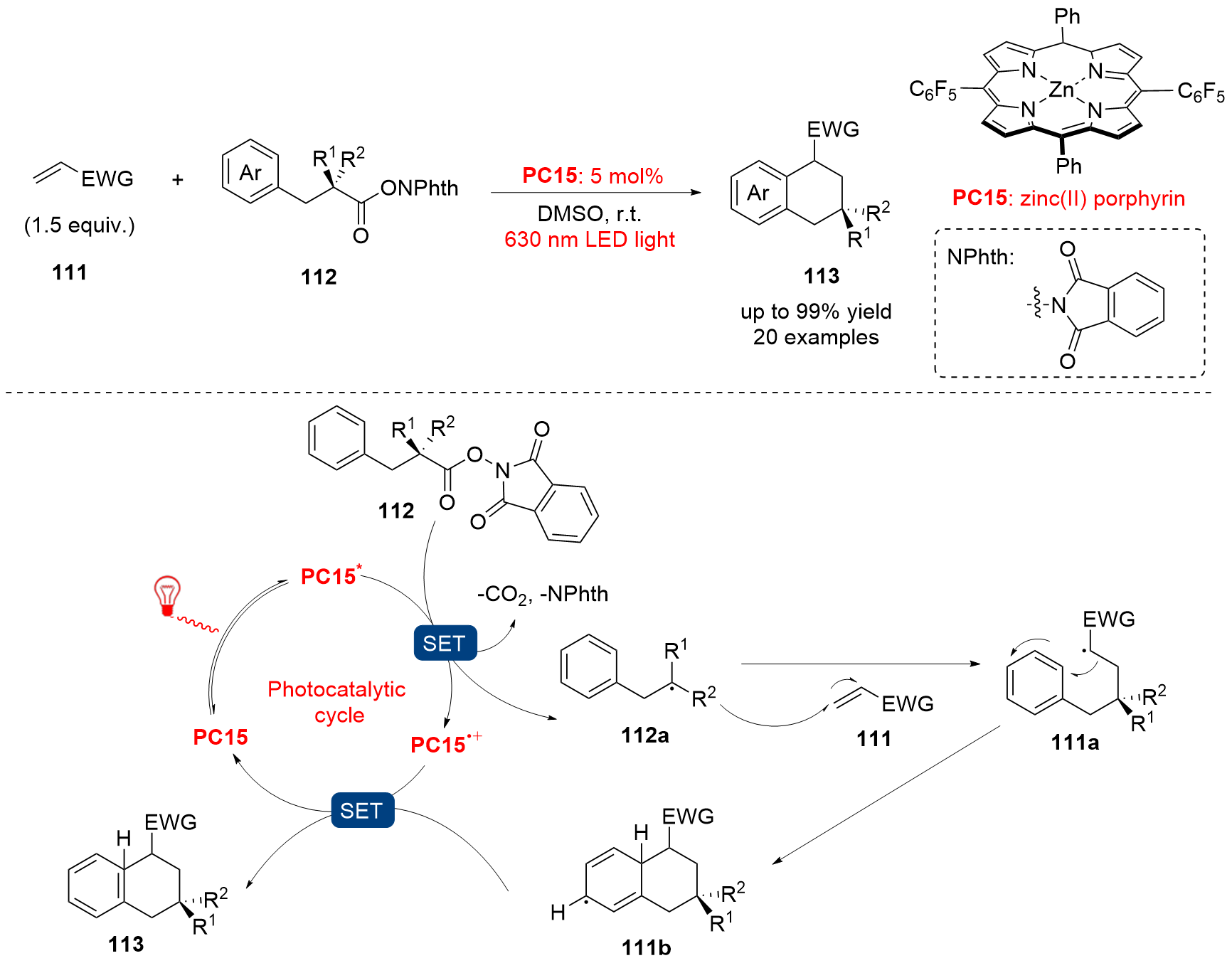
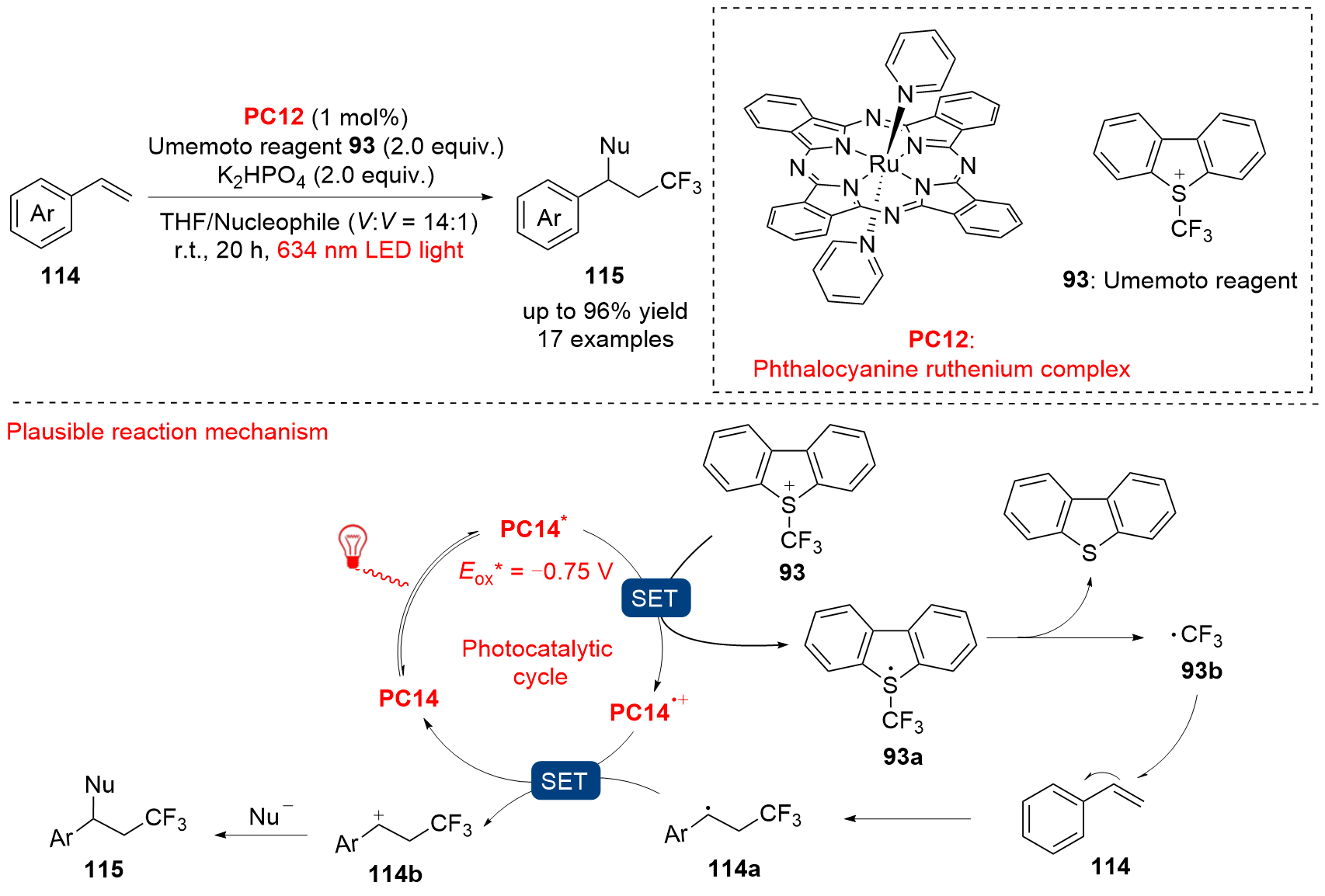
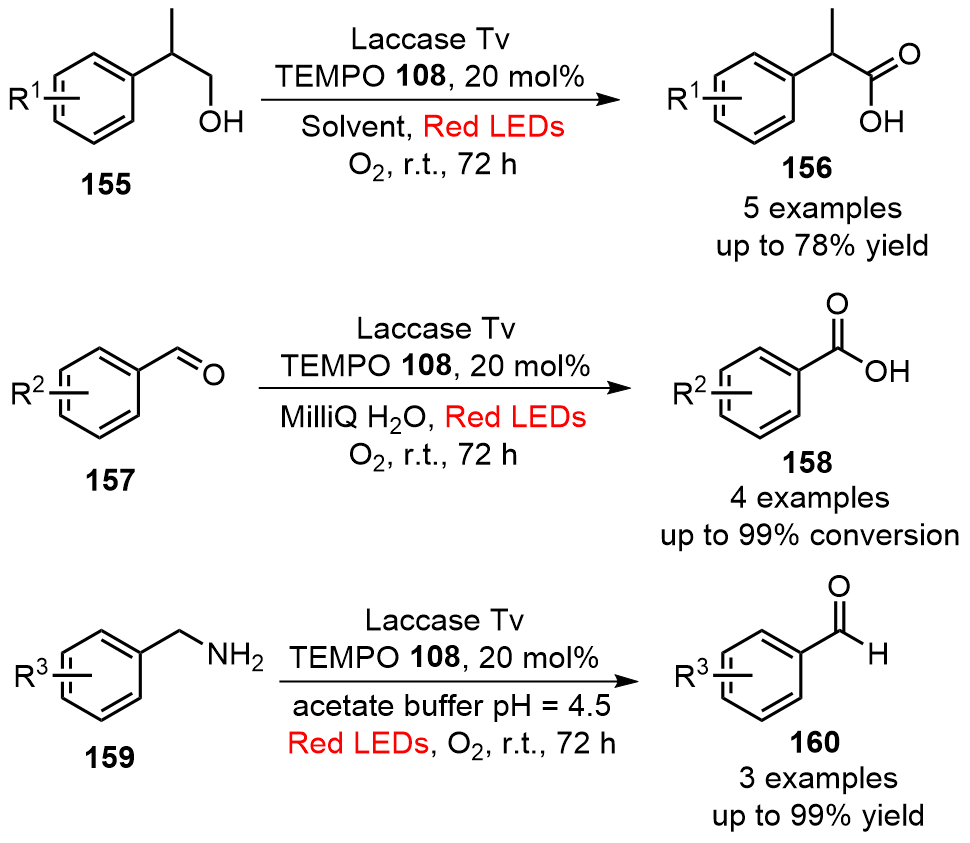
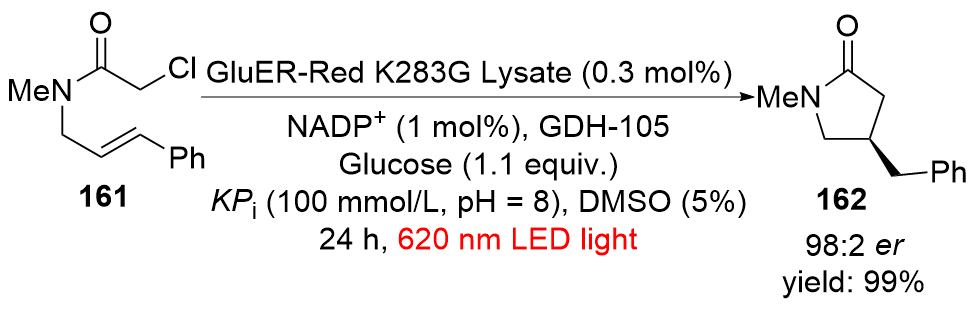
光化学领域的迅猛发展为可见光介导的有机合成带来了诸多技术突破, 其中红光因具有波长较长、光子能量较低、对生物体系损伤小且反应副产物少的独特优势, 已成为该领域的研究热点之一. 与传统紫外光及蓝光催化体系相比, 红光催化能够以更温和的方式实现有机反应的高效、可控进行, 有效避免非特异性副反应的发生. 基于此, 系统梳理了近年来红光介导有机合成反应的研究进展, 依据反应的核心作用机理, 将其划分为单电子转移、能量转移、金属键均裂、底物直接激发及光酶催化五大类型, 并对各类反应的具体反应路径、调控规律及作用机理展开系统阐述与深入探讨, 以期为红光介导有机合成的后续研究与应用提供理论参考和研究思路.
张令红, 孔慢慢, 张曌霞, 江智勇. 红光介导有机合成反应[J]. 有机化学, 2026, 46(10): 3804-3837.
Linghong Zhang, Manman Kong, Zhaoxia Zhang, Zhiyong Jiang. Red Light-Mediated Organic Synthesis Reactions[J]. Chinese Journal of Organic Chemistry, 2026, 46(10): 3804-3837.
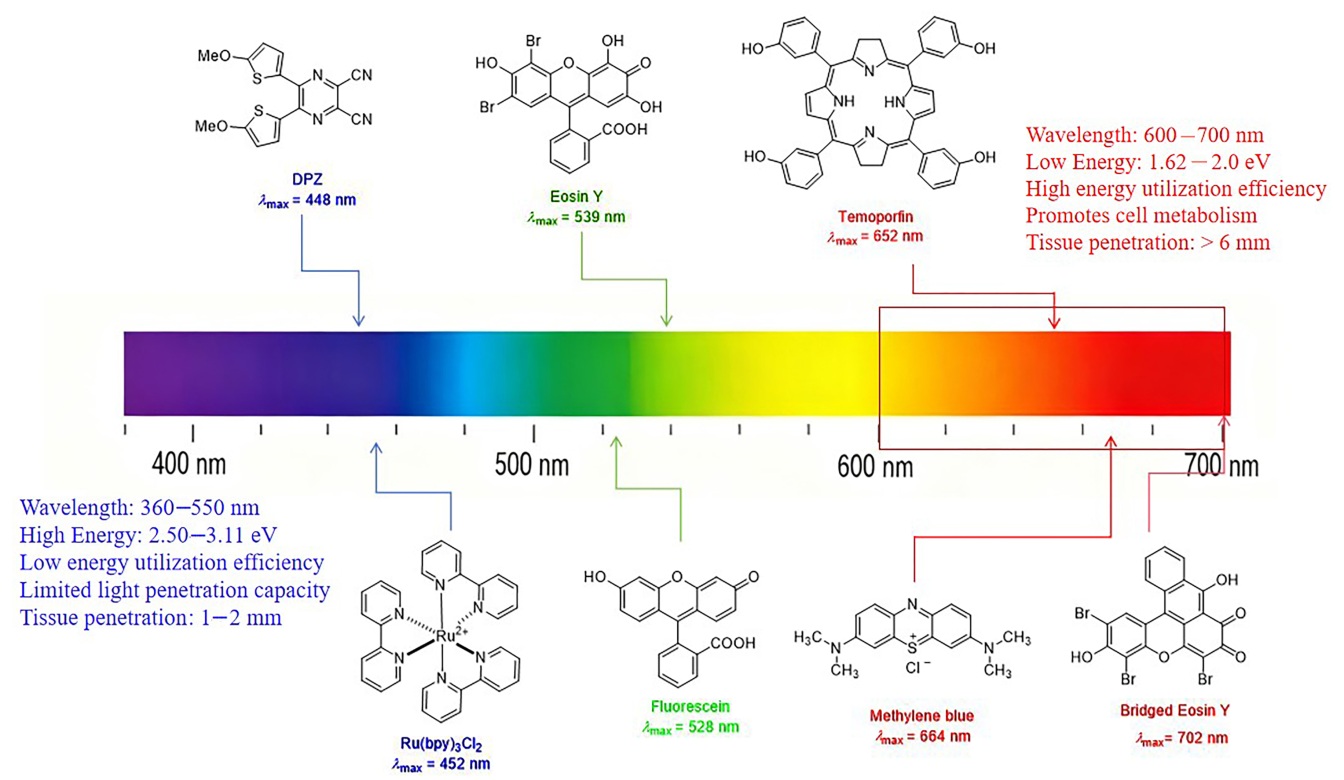
| 对比维度 | 红光催化(600~700 nm) | 蓝光催化(400~500 nm) |
|---|---|---|
| 光波长及能量 | 600~700 nm, 1.7~2.1 eV(低能量) | 400~500 nm, 2.6~3.1 eV(中高能量) |
| 反应路径 | 以电子转移为主, 能量转移较少 | 电子转移与能量转移均常见 |
| 常用催化剂 | Os(II)配合物、有机光敏染料 | Ru(II)配合物、Ir(III)配合物、有机荧光染料 |
| 能级匹配要求 | 能量转移需严格匹配, 电子转移对能级匹配要求宽松 | 能量转移对能级匹配要求高, 电子转移适配范围广 |
| 适用反应类型 | 交叉偶联、氧化还原环化、自由基加成(电子转移型) | 烯烃异构化、敏化发光、单线态氧生成(能量转移型); 交叉偶联、氧化(电子转移型) |
| 副反应情况 | 低能量导致副反应少(如过度氧化、键断裂) | 能量较高, 部分反应易出现过度反应、底物分解 |
| 反应条件 | 温和, 无需苛刻氛围(部分可在空气下进行) | 大部分反应需惰性氛围, 避免氧气干扰能量转移 |
| [1] |
(a)
doi: 10.1021/cr300503r |
|
(b)
doi: 10.1021/acs.chemrev.6b00057 |
|
|
(c)
doi: 10.1039/D5CS00019J |
|
| [2] |
doi: 10.1021/acs.chemrev.6b00018 |
| [3] |
doi: 10.1038/260153a0 |
| [4] |
doi: 10.1038/nnano.2009.326 |
| [5] |
pmid: 15941225 |
| [6] |
(a)
doi: 10.1039/D1QO01476E |
|
(b)
doi: 10.1039/D2DT01491B |
|
| [7] |
(a)
doi: 10.1039/D3OB00107E pmid: 39528711 |
|
(b)
doi: 10.1038/s41570-024-00585-3 pmid: 39528711 |
|
|
(c)
pmid: 39528711 |
|
|
(d)
doi: 10.3762/bjoc.21.22 pmid: 39528711 |
|
|
(e)
pmid: 39528711 |
|
|
(f)
doi: 10.1038/s41570-024-00663-6 pmid: 39528711 |
|
| [8] |
doi: 10.1039/C6RA11374E |
| [9] |
doi: 10.1039/C9OB00486F |
| [10] |
(a)
doi: 10.1016/S0040-4020(00)00048-X |
|
(b)
|
|
| [11] |
doi: 10.1021/jacs.0c05507 |
| [12] |
doi: 10.1021/jacs.2c01384 |
| [13] |
doi: 10.1055/a-1665-9220 |
| [14] |
doi: 10.1021/jacs.2c09745 |
| [15] |
doi: 10.1039/D3CC05174A |
| [16] |
doi: 10.1021/jacs.3c00254 |
| [17] |
doi: 10.1038/s41467-024-49514-4 pmid: 38890327 |
| [18] |
doi: 10.1021/jacs.3c13380 |
| [19] |
doi: 10.1039/D4CC06225F |
| [20] |
doi: 10.1039/D5GC00566C |
| [21] |
doi: 10.1021/acs.orglett.5c04313 |
| [22] |
doi: 10.1039/D5OB00476D |
| [23] |
doi: 10.1021/acs.orglett.6c01113 |
| [24] |
doi: 10.1021/jacs.5c04942 |
| [25] |
doi: 10.1021/jacs.6c00530 |
| [26] |
doi: 10.1021/acs.joc.1c01313 |
| [27] |
doi: 10.1039/D1CC06307C |
| [28] |
doi: 10.1038/s41557-022-01057-1 |
| [29] |
doi: 10.1039/D2CC03155H |
| [30] |
doi: 10.1039/D2GC03055A |
| [31] |
doi: 10.1021/acscatal.3c00473 |
| [32] |
doi: 10.1021/acs.orglett.4c01112 |
| [33] |
doi: 10.1021/acs.joc.4c00889 |
| [34] |
doi: 10.1021/jacs.5c17266 |
| [35] |
|
| [36] |
|
| [37] |
doi: 10.1021/acs.joc.1c03101 |
| [38] |
doi: 10.1016/j.chempr.2021.10.010 |
| [39] |
doi: 10.1039/d3sc03643j pmid: 37860659 |
| [40] |
doi: 10.1021/jacs.3c09545 pmid: 38165744 |
| [41] |
doi: 10.1021/jacs.6c00254 |
| [42] |
doi: 10.1021/acs.orglett.4c03087 |
| [43] |
doi: 10.1021/acs.orglett.5c00701 |
| [44] |
doi: 10.1246/bcsj.20200087 |
| [45] |
doi: 10.1021/jacs.3c06651 |
| [46] |
doi: 10.1039/D2NJ01107G |
| [47] |
doi: 10.1016/j.chempr.2024.09.017 |
| [48] |
doi: 10.1021/jacs.3c09837 |
| [1] | 曾添晴, 倪宇阳, 袁瑶, 朱钢国. 可见光诱导叔胺促进的烯烃酰基氟烷基化反应[J]. 有机化学, 2026, 46(9): 3737-3747. |
| [2] | 吕明, 赵博迪, 徐铭昊, 戚孝天. 非共价相互作用对噁唑酮与烯烃分步[2+2]环加成反应非对映选择性的调控效果研究[J]. 有机化学, 2026, 46(9): 3731-3736. |
| [3] | 李想, 张一智, 周刚, 刘晓磊, 沈晓. 锰催化α-硅基环丁醇的自由基Brook重排/烯基化反应[J]. 有机化学, 2026, 46(9): 3713-3721. |
| [4] | 赫景瑞, 王蕴歆, 梅海波, 韩建林. 电化学条件下以羧酸铵为酰氧基源的吲哚直接酰氧基化反应[J]. 有机化学, 2026, 46(9): 3578-3586. |
| [5] | 高浩雨, 武完瑾, 吴莎莎, 刘鑫宇, 何昊远, 席佳璐, 李子欣, 刘艳艳, 韩冰, 何曼曼, Laurent Maron, 赵征, 刘立杰. 三配位芳基硼自由基: 从分子设计到电子结构调控[J]. 有机化学, 2026, 46(9): 3414-3430. |
| [6] | 刘浩东, 张兆鹏, 陈奕龙, 赵增典, 李新进. 磁驱动炔烃的氢三氟甲基化反应[J]. 有机化学, 2026, 46(9): 3659-3665. |
| [7] | 罗海天, 桓臻, 杨金东, 程津培. 现代自由基化学中的取代基效应[J]. 有机化学, 2026, 46(9): 3317-3327. |
| [8] | 吴志杰, 周超, 李金山, 徐佳欣, 张义成, 刘杰, 王磊. 可见光促进通过氢原子转移合成1,4-二羰基衍生物[J]. 有机化学, 2026, 46(8): 3158-3168. |
| [9] | 王朝阳, 皮超, 密霞. N-烷氧基吡啶盐参与可见光诱导反应的研究进展[J]. 有机化学, 2026, 46(8): 2859-2891. |
| [10] | 吉伟文, 叶宁, 金健. 配体辅助电荷转移驱动的光促铁催化[J]. 有机化学, 2026, 46(7): 2683-2700. |
| [11] | 王雷雷, 吴娟娟, 侯易, 王景和, 孙岩, 刘静, 郭佳蕾, 齐笑, 朱超, 刘强, 吕雷阳. 铜催化6-氮杂尿嘧啶与环烷烃的交叉脱氢偶联反应[J]. 有机化学, 2026, 46(7): 2770-2778. |
| [12] | 鄢东, 何卫保, 唐裕才, 辛翠, 杨梓, 陈祥. 自由基串联反应合成1,3-苯并恶嗪研究进展[J]. 有机化学, 2026, 46(6): 2327-2336. |
| [13] | 陈安, 王泽艺, 李万梅, 徐骏. 光驱动一步法合成双碳取代双环[1.1.1]戊烷研究进展[J]. 有机化学, 2026, 46(6): 2177-2192. |
| [14] | 赵子鸣, 郑剑峰, 黄培强. 光催化的由亚胺合成胺的研究进展[J]. 有机化学, 2026, 46(5): 1984-2001. |
| [15] | 张帆, 郭松, 杨维成, 赵基钢, 罗勇. 基于密度泛函理论(DFT)计算的三氟甲氧基苯硝化反应过程分析[J]. 有机化学, 2026, 46(5): 2121-2128. |
| 阅读次数 | ||||||
|
全文 |
|
|||||
|
摘要 |
|
|||||