有机化学 ›› 2026, Vol. 46 ›› Issue (9): 3317-3327.DOI: 10.6023/cjoc202605001 上一篇 下一篇
综述与进展
罗海天a, 桓臻a, 杨金东a,*( ), 程津培a,b,c
收稿日期:2026-05-01
修回日期:2026-07-27
发布日期:2026-08-28
作者简介:† 共同第一作者
基金资助:
Hai-Tian Luoa, Zhen Huana, Jin-Dong Yanga,*(), Jin-Pei Chenga,b,c
Received:2026-05-01
Revised:2026-07-27
Published:2026-08-28
Contact:
About author:Dedicated to the 100th anniversary of the birth of Professor Xikui Jiang.
† These authors contributed equally to this work.
Supported by:文章分享
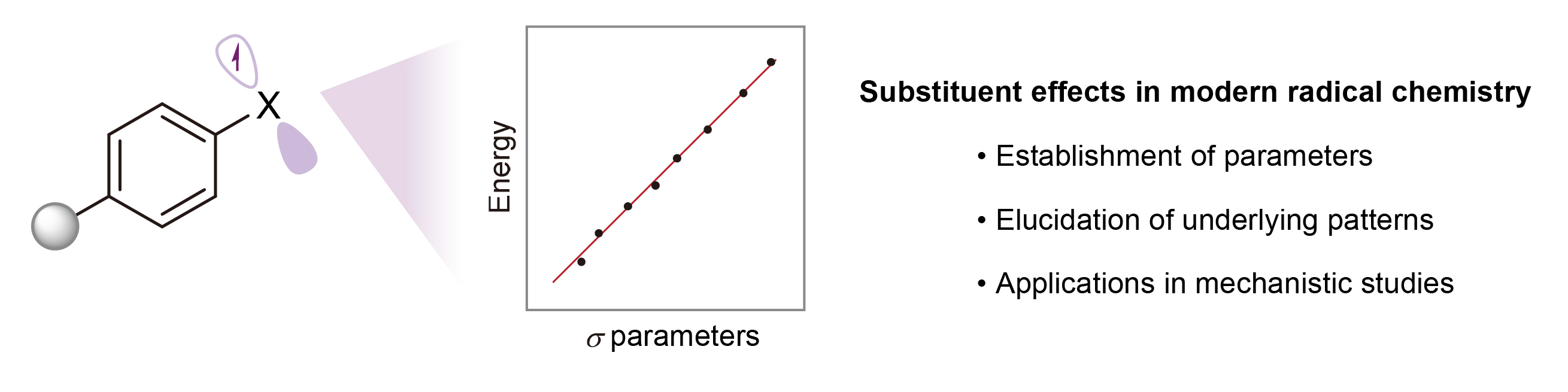
取代基效应是建立分子结构与化学行为之间定量关系的重要工具. 经典的取代基参数多适用于极性分子, 对包含自旋离域作用的开壳层体系的电子效应描述能力有限. 近年来, 研究者陆续建立了针对有机自由基体系的取代基效应定量分析方法, 扩充了相关的参数标度, 为反应机理的解析和新反应的设计提供了有力手段. 本文从标度的建立及其在机理研究中的应用两个方面出发, 综述了近三十年来面向自由基化学的取代基效应研究代表性进展, 着重介绍标度建立的方法, 参数所蕴含的规律, 以及利用取代基效应分析反应机理的典型实例.
罗海天, 桓臻, 杨金东, 程津培. 现代自由基化学中的取代基效应[J]. 有机化学, 2026, 46(9): 3317-3327.
Hai-Tian Luo, Zhen Huan, Jin-Dong Yang, Jin-Pei Cheng. Substituent Effects in Modern Radical Chemistry[J]. Chinese Journal of Organic Chemistry, 2026, 46(9): 3317-3327.
| Substituent | σmb | σJJ• | Substituent | σmb | σJJ• |
|---|---|---|---|---|---|
| H | 0 | 0 | p-Br | 0.13 | 0.23 |
| p-NMe2 | -0.96 | 1.00 | p-Cl | 0.11 | 0.22 |
| p-CF=CF2 | 0.40 | 0.86 | p-CH=CH2 | 0.03 | |
| p-SMe | -0.18 | 0.62 | p-Me | -0.29 | 0.15 |
| p-COMe | 0.56 | 0.54 | p-Et | 0.15 | |
| p-SOMe | 0.19 | 0.50 | p-CF3 | 0.49 | -0.01 |
| p-Ph | 0.06 | 0.47 | p-F | -0.24 | -0.02 |
| p-CN | 0.86 | 0.42 | m-Me | -0.20 | 0 |
| p-COOH | 0.31 | 0.38 | m-Br | 0.36 | 0.12 |
| p-CONH2 | 0.10 | 0.38 | m-tBu | -0.20 | 0.11 |
| p-SO2Me | 0.64 | 0.41 | m-CN | 0.89 | 0.11 |
| p-NO2 | 0.86 | 0.36 | m-OMe | -0.11 | 0.10 |
| p-OCOMe | -0.14 | 0.35 | m-CO2Me | 0.21 | 0.10 |
| p-CO2Me | 0.48 | 0.33 | m-Et | -0.15 | |
| p-SiMe3 | 0.14 | 0.31 | m-F | 0.23 | 0.03 |
| p-cPr | -0.31 | 0.29 | m-NO2 | 0.69 | 0.001 |
| p-tBu | -0.22 | 0.26 | m-Cl | 0.12 | -0.05 |
| p-OPh | -0.46 | m-CF3 | 0.39 | -0.07 | |
| p-OMe | -0.77 | 0.23 |
| Substituent | σmb | σJJ• | Substituent | σmb | σJJ• |
|---|---|---|---|---|---|
| H | 0 | 0 | p-Br | 0.13 | 0.23 |
| p-NMe2 | -0.96 | 1.00 | p-Cl | 0.11 | 0.22 |
| p-CF=CF2 | 0.40 | 0.86 | p-CH=CH2 | 0.03 | |
| p-SMe | -0.18 | 0.62 | p-Me | -0.29 | 0.15 |
| p-COMe | 0.56 | 0.54 | p-Et | 0.15 | |
| p-SOMe | 0.19 | 0.50 | p-CF3 | 0.49 | -0.01 |
| p-Ph | 0.06 | 0.47 | p-F | -0.24 | -0.02 |
| p-CN | 0.86 | 0.42 | m-Me | -0.20 | 0 |
| p-COOH | 0.31 | 0.38 | m-Br | 0.36 | 0.12 |
| p-CONH2 | 0.10 | 0.38 | m-tBu | -0.20 | 0.11 |
| p-SO2Me | 0.64 | 0.41 | m-CN | 0.89 | 0.11 |
| p-NO2 | 0.86 | 0.36 | m-OMe | -0.11 | 0.10 |
| p-OCOMe | -0.14 | 0.35 | m-CO2Me | 0.21 | 0.10 |
| p-CO2Me | 0.48 | 0.33 | m-Et | -0.15 | |
| p-SiMe3 | 0.14 | 0.31 | m-F | 0.23 | 0.03 |
| p-cPr | -0.31 | 0.29 | m-NO2 | 0.69 | 0.001 |
| p-tBu | -0.22 | 0.26 | m-Cl | 0.12 | -0.05 |
| p-OPh | -0.46 | m-CF3 | 0.39 | -0.07 | |
| p-OMe | -0.77 | 0.23 |
| [1] |
doi: 10.1021/ja00812a019 |
| [2] |
doi: 10.1021/ja01280a022 |
| [3] |
doi: 10.1021/cr00002a004 |
| [4] |
doi: 10.1021/jacs.6b08856 |
| [5] |
doi: 10.6023/cjoc202106018 |
|
(黄谋新, 贾宗宾, 罗三中, 程津培, 有机化学, 2021, 41, 3892.)
|
|
| [6] |
(a)
doi: 10.1021/ja00343a024 |
|
(b)
doi: 10.1139/v85-394 |
|
| [7] |
(a)
doi: 10.1021/jo00357a032 |
|
(b)
doi: 10.1021/jo00391a015 |
|
| [8] |
|
| [9] |
doi: 10.1002/anie.v64.21 |
| [10] |
doi: 10.1021/jo00048a048 |
| [11] |
doi: 10.1002/poc.v3:10 |
| [12] |
doi: 10.1021/ar950121h |
| [13] |
doi: 10.1021/jacs.2c10296 |
| [14] |
doi: 10.1021/ja00904a022 |
| [15] |
doi: 10.1021/jacs.5c04058 |
| [16] |
|
| [17] |
doi: 10.1021/jp908400g pmid: 20353185 |
| [18] |
doi: 10.1021/jacs.9b01262 |
| [19] |
doi: 10.1021/jacs.1c05255 |
| [20] |
(a)
doi: 10.1021/jacs.5c01554 |
|
(b)
doi: 10.1021/jacs.6c00571 |
|
|
(c)
doi: 10.1021/jacs.6b07026 |
|
| [21] |
(a)
|
|
(b)
|
|
| [22] |
doi: 10.1021/jo990517x |
| [23] |
(a)
doi: 10.1002/adsc.v352:10 pmid: 18567024 |
|
(b)
doi: 10.1002/chem.200800595 pmid: 18567024 |
|
| [24] |
doi: 10.1021/ja9913481 |
| [25] |
doi: 10.1021/ja0542789 |
| [26] |
doi: 10.1021/ja503869j pmid: 25025754 |
| [27] |
doi: 10.1021/acscatal.8b01941 |
| [28] |
doi: 10.1021/ja307229e |
| [29] |
doi: 10.1021/acscatal.0c01343 |
| [30] |
doi: 10.1021/jacs.7b00484 |
| [31] |
doi: 10.1038/s41557-022-00905-4 |
| [32] |
(a)
pmid: 32257582 |
|
(b)
doi: 10.1021/acscatal.9b02272 pmid: 32257582 |
| [1] | 张帆, 郭松, 杨维成, 赵基钢, 罗勇. 基于密度泛函理论(DFT)计算的三氟甲氧基苯硝化反应过程分析[J]. 有机化学, 2026, 46(5): 2121-2128. |
| [2] | 谈逸凡, 焦雷. 经历Pd(I)途径的钯催化自由基反应: 反应模式简述和近期进展[J]. 有机化学, 2026, 46(4): 1303-1319. |
| [3] | 黄涎廷, 沈小倩, 王庆许, 柳忠全. 无催化剂及无溶剂光引发下氮杂芳烃的自由基脱羧酰基化反应[J]. 有机化学, 2026, 46(3): 951-960. |
| [4] | 龙涛, 何述钟, 李超. 自由基-极性交叉转化反应在天然产物全合成中的研究进展[J]. 有机化学, 2025, 45(3): 748-763. |
| [5] | 邢德悦, 王阳, 房亭轩, 解瑞俊, 李潇, 贾慧劼, 竺宁. 苯并噻唑-2-酮类化合物的合成研究进展[J]. 有机化学, 2025, 45(12): 4298-4314. |
| [6] | 何卫保, 易荣楠, 杨梓, 伍智林, 何卫民. Langlois试剂在电化学三氟甲基化反应中的应用进展[J]. 有机化学, 2025, 45(10): 3534-3545. |
| [7] | 周岑, 赵新, 张霄. 三聚苯环化反应的研究进展[J]. 有机化学, 2025, 45(1): 42-55. |
| [8] | 刘悦灵, 钟欣欣, 张干兵. Pd(0)催化1-R-3-苯基亚丙基环丙烷(R=Me/H)与呋喃甲醛[3+2]环加成反应机理的密度泛函理论研究[J]. 有机化学, 2023, 43(2): 660-667. |
| [9] | 刘婷婷, 胡宇才, 沈安. 亚胺配体协同氮杂环卡宾钯配合物催化碳碳偶联反应的作用机制[J]. 有机化学, 2023, 43(2): 622-628. |
| [10] | 黄泽鑫, 尹宇强, 贾丰成, 吴安心. 吲哚及其衍生物C2—C3键断裂的反应研究进展[J]. 有机化学, 2022, 42(7): 2028-2044. |
| [11] | 石宇冰, 白文己, 母伟花, 李江平, 于嘉玮, 连冰. 钯催化C—H键官能团化形成C—X (X=O, N, F, I, ……)键的密度泛函理论研究进展[J]. 有机化学, 2022, 42(5): 1346-1374. |
| [12] | 朱有财, 丁欣欣, 孙莉, 刘振. CO2/C2H4耦合制备丙烯酸及其衍生物的研究进展[J]. 有机化学, 2022, 42(4): 965-977. |
| [13] | 李征, 谷迎春, 徐大振, 费学宁, 张磊. 有机膦催化的[4+2]环加成反应机理的密度泛函理论研究[J]. 有机化学, 2022, 42(3): 830-837. |
| [14] | 吴锦涛, 柳忠全. 自由基化学促进的饱和碳碳单键转化研究进展[J]. 有机化学, 2022, 42(1): 16-32. |
| [15] | 徐曼, 夏远志. 铑(III)催化N-苯氧基乙酰胺与亚甲基氧杂环丁酮氧化还原中性的碳氢活化/环化反应的机理研究[J]. 有机化学, 2021, 41(8): 3272-3278. |
| 阅读次数 | ||||||
|
全文 |
|
|||||
|
摘要 |
|
|||||


