有机化学 ›› 2025, Vol. 45 ›› Issue (9): 3314-3325.DOI: 10.6023/cjoc202502024 上一篇 下一篇
综述与进展
杨威a,*( ), 王兵兵b,*(), 徐小惠a, 孙钟a, 唐翠曼a, 刘佳琦a
收稿日期:2025-02-20
修回日期:2025-04-07
发布日期:2025-05-06
基金资助:
Wei Yanga,*(), Bingbing Wangb,*(), Xiaohui Xua, Zhong Suna, Cuiman Tanga, Jiaqi Liua
Received:2025-02-20
Revised:2025-04-07
Published:2025-05-06
Contact:
E-mail: Supported by:文章分享

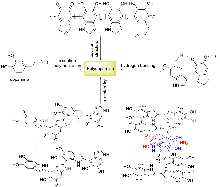
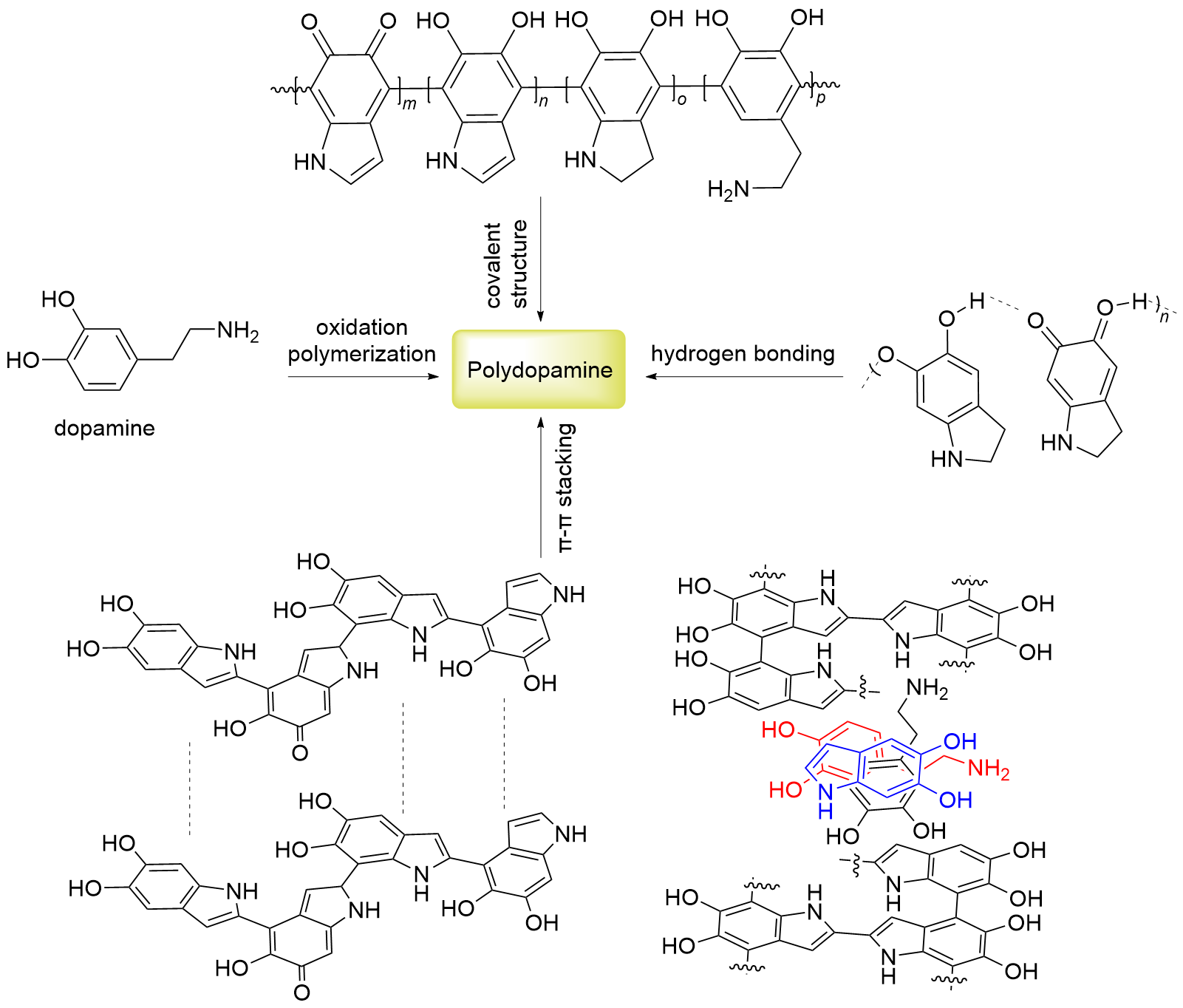
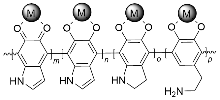
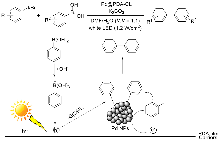
聚多巴胺(PDA)作为“贻贝激发”的仿生材料, 具有无毒环保和稳定可回收等优势, 在催化领域拥有巨大应用潜力. 聚多巴胺分子包含大量儿茶酚结构, 可以将贵金属离子还原, 其广泛存在的邻二酚/邻醌结构也可以与廉价金属离子配位, 因此, 聚多巴胺能够负载金属构成异相催化剂(M@PDA). 同时, PDA结构中的酚羟基与氨基基团具有酸性和碱性作用, 其自身也可以作为催化剂使用. 综述了M@PDA与PDA在多种有机转化中的应用, 对催化效率和催化剂的循环次数进行了详细描述, 并指出该领域面临的问题与挑战, 期望为聚多巴胺材料在异相催化领域未来的发展提供有益指导.
杨威, 王兵兵, 徐小惠, 孙钟, 唐翠曼, 刘佳琦. 仿生材料聚多巴胺在有机转化中的应用进展[J]. 有机化学, 2025, 45(9): 3314-3325.
Wei Yang, Bingbing Wang, Xiaohui Xu, Zhong Sun, Cuiman Tang, Jiaqi Liu. Recent Progress in the Application of Biomimetic Material Polydopamine in Organic Conversion[J]. Chinese Journal of Organic Chemistry, 2025, 45(9): 3314-3325.









| [36] |
|
| [37] |
|
| [38] |
doi: 10.1021/acs.langmuir.8b00509 pmid: 29528233 |
| [39] |
|
| [40] |
|
| [41] |
|
| [42] |
|
| [43] |
|
| [44] |
|
| [45] |
|
| [46] |
|
| [47] |
|
| [48] |
|
| [49] |
|
| [50] |
|
| [1] |
|
| [2] |
|
| [3] |
|
| [4] |
|
| [5] |
|
| [6] |
|
| [7] |
|
| [8] |
|
| [9] |
|
| [51] |
|
| [52] |
|
| [53] |
|
| [54] |
|
| [55] |
|
| [56] |
|
| [57] |
|
| [58] |
|
| [10] |
|
| [11] |
|
| [12] |
|
| [13] |
|
| [14] |
doi: 10.1021/la4020288 pmid: 23875692 |
| [15] |
|
| [16] |
|
| [17] |
|
| [59] |
|
| [60] |
|
| [61] |
|
| [62] |
|
| [63] |
|
| [64] |
|
| [65] |
|
| [66] |
|
| [18] |
|
| [19] |
doi: 10.1002/ejoc.201900445 |
| [20] |
|
| [21] |
|
| [22] |
|
| [23] |
|
| [24] |
|
| [25] |
|
| [26] |
|
| [27] |
|
| [28] |
|
| [29] |
|
| [30] |
|
| [31] |
|
| [32] |
|
| [33] |
|
| [34] |
|
| [35] |
|
| [67] |
|
| [68] |
|
| [69] |
|
| [70] |
|
| [71] |
|
| [1] | 贾晨旭, 安聪好, 黄军. 铜催化C—O偶联制备间苯氧基苯甲醛[J]. 有机化学, 2025, 45(9): 3412-3419. |
| [2] | 于志起, 陈灿源, 韩佳怡, 周建湖, 王林轩, 岳美娥, 贾肖飞. 多功能多孔有机聚合物负载钯纳米催化剂在炔烃氢羧基化中的应用[J]. 有机化学, 2025, 45(9): 3450-3457. |
| [3] | 解人杰, 谢复开, 孙然, 王欣, 王钰佳, 李蕾, 王贺. 电子供体-受体复合物(EDA)介导N-芳基丙烯酰胺与芳基硫鎓盐的自由基环化反应[J]. 有机化学, 2025, 45(8): 2913-2922. |
| [4] | 李旻昊, 王泽溟, 黄庆, 左伟伟. 钴(II)催化的酮不对称转移氢化反应[J]. 有机化学, 2025, 45(7): 2451-2460. |
| [5] | 王超, 陈洪平, 米明众, 李澳文, 齐燕, 刘永军. 锰催化的有机合成偶联反应进展[J]. 有机化学, 2025, 45(7): 2326-2334. |
| [6] | 周思成, 刘运奎. P/N-杂配铜(I)光催化剂介导的可见光催化反应进展[J]. 有机化学, 2025, 45(5): 1644-1668. |
| [7] | 吴凌苇, 崔浩, 张霄. 水溶性光催化剂介导的水相反应研究进展[J]. 有机化学, 2025, 45(4): 1097-1118. |
| [8] | 田勋, 邓国刚, 羊晓东. 钴催化C(sp2)—H活化构建苯并含氮杂环骨架的研究进展[J]. 有机化学, 2025, 45(2): 655-667. |
| [9] | 徐晶, 张娟, 高文超, 孟凡会, 杨朋, 常宏宏. 疏水型催化剂在有机合成反应中的应用[J]. 有机化学, 2025, 45(1): 136-150. |
| [10] | 高晋彬, 陆颖琪, 张辉, 高利柱, 熊兴泉. 生物质基催化剂在CO2化学转化中的应用[J]. 有机化学, 2024, 44(9): 2732-2741. |
| [11] | 麦尔哈巴•居来提, 布鲁努尔•玉散, 阿不都热合曼•乌斯曼. 无催化剂和无添加剂条件下直接合成N-磺酰基胍类化合物[J]. 有机化学, 2024, 44(4): 1276-1283. |
| [12] | 李路瑶, 贺忠文, 张振国, 贾振华, 罗德平. 三芳基碳正离子在有机合成中的应用[J]. 有机化学, 2024, 44(2): 421-437. |
| [13] | 潘旭玲, 黄有. 有机膦催化合成中环化合物的研究进展[J]. 有机化学, 2024, 44(12): 3609-3620. |
| [14] | 赵永哲, 孔翔飞, 张俊良, 杨俊锋. 含膦负载催化剂的合成及应用研究进展[J]. 有机化学, 2024, 44(12): 3587-3608. |
| [15] | 龙姣, 刘白雪, 张双双, 朱园园, 古双喜. 镍催化1,3-二烯的不对称氢官能团化反应研究进展[J]. 有机化学, 2024, 44(11): 3309-3320. |
| 阅读次数 | ||||||
|
全文 |
|
|||||
|
摘要 |
|
|||||


