有机化学 ›› 2026, Vol. 46 ›› Issue (1): 74-86.DOI: 10.6023/cjoc202505028 上一篇 下一篇
综述与进展
田灵燕a, 王守锋a,*( ), 曾伟b,*()
收稿日期:2025-05-26
修回日期:2025-07-22
发布日期:2025-08-26
基金资助:
Lingyan Tiana, Shoufeng Wanga,*(), Wei Zengb,*()
Received:2025-05-26
Revised:2025-07-22
Published:2025-08-26
Contact:
* E-mail: chm_wangsf@ujn.edu.cn;
wzeng@mail.sioc.ac.cn
Supported by:文章分享
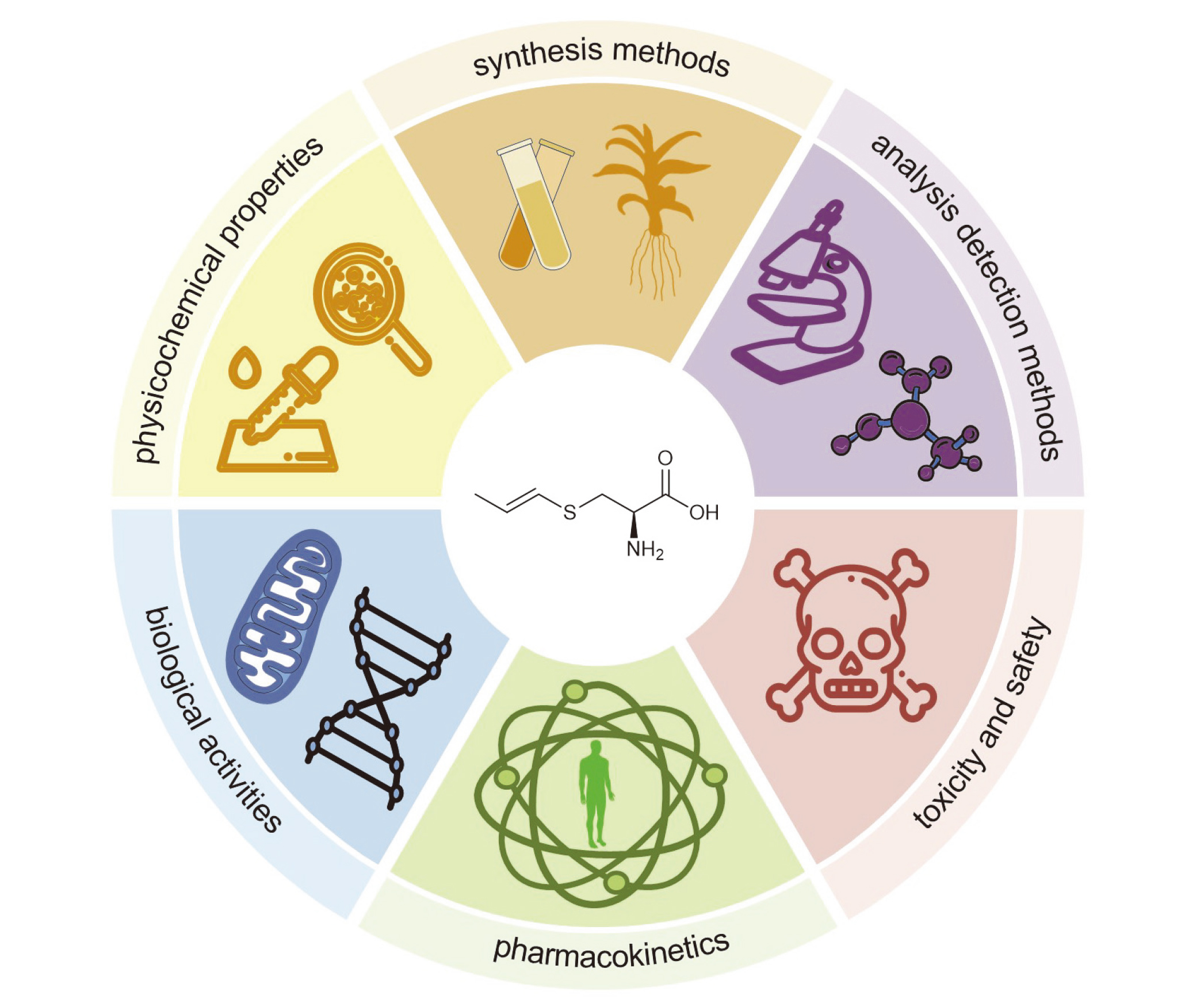
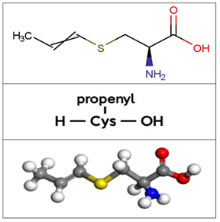
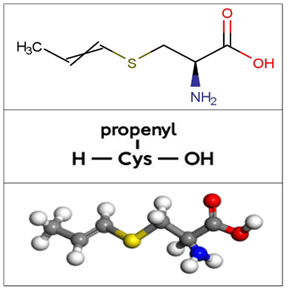
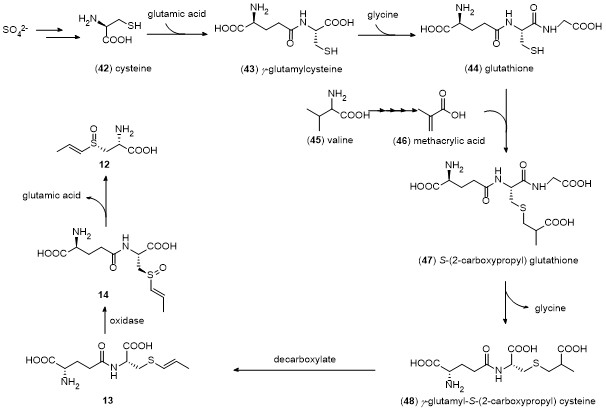
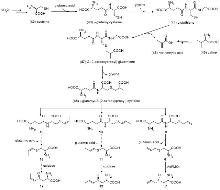
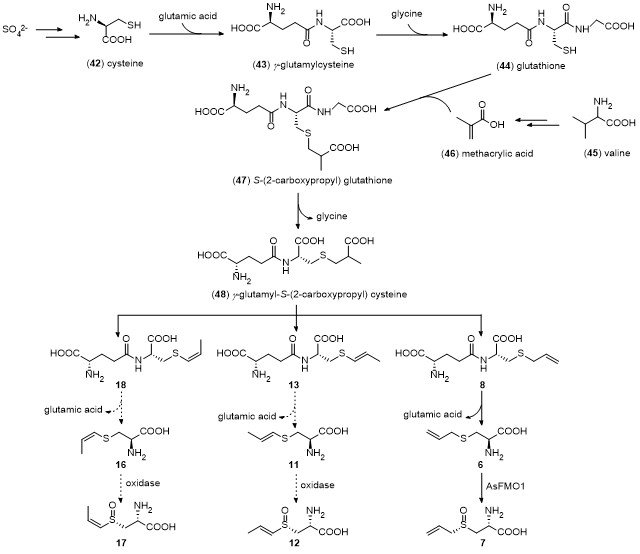
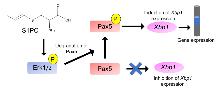
S-1-丙烯基-L-半胱氨酸(S-1-propenyl-L-cysteine, S1PC)是一种天然存在于葱属植物中的含硫氨基酸, 最早于20世纪60年代在大蒜制剂中被发现, 也是老化大蒜提取物(Aged garlic extract, AGE)中的重要组分, 在其发挥药理作用过程中扮演重要角色. 自2016年起, 已发现S1PC具有多种生物活性, 包括抗高血压、抗炎和调节免疫特性. 相较于完整大蒜, S1PC不仅气味更淡、毒性更低, 还能规避消化不良、口臭等不良反应, 对于期望获取大蒜健康益处的人群而言, 是一种更具吸引力的选择. S1PC已被发现在高血压动物模型中有降低血压的作用, 并且在体内、体外均有免疫调节作用. 此外, S1PC具有抗炎作用, 该特性有助于预防或管理与慢性炎症相关的疾病, 如牙龈炎和动脉粥样硬化. 基于上述发现, S1PC被认为与其同分异构体S-烯丙基-L-半胱氨酸(S-allyl-L-cysteine, SAC)一样, 是AGE中另一种重要的、具有药理活性且安全的成分. 综述了S1PC的理化性质等方面最新研究进展, 并提出了其未来潜在的应用发展方向.
田灵燕, 王守锋, 曾伟. 大蒜中S-1-丙烯基-L-半胱氨酸的合成及生物学特性研究进展[J]. 有机化学, 2026, 46(1): 74-86.
Lingyan Tian, Shoufeng Wang, Wei Zeng. Progress in the Synthesis and Biological Studies of S-1-Propenyl-L-cysteine from Garlic[J]. Chinese Journal of Organic Chemistry, 2026, 46(1): 74-86.


| Metabolite | Control vs WKYa | S1PC vs Controla |
|---|---|---|
| Betaine | ↑↑b | ↓ |
| Tryptophan | ↓↓ | ↑↑ |
| LysoPC (16∶0) | ↓↓ | ↑↑ |
| LysoPC (18∶3) | ↓↓ | ↑↑ |
| LysoPC (20∶4) | ↓↓ | ↑ |
| 3-(Acetyloxy)-2-hydroxypropyl icosanoate | ↑ | ↓↓ |
| Caproic acid | ↑↑ | ↓ |
| Metabolite | Control vs WKYa | S1PC vs Controla |
|---|---|---|
| Betaine | ↑↑b | ↓ |
| Tryptophan | ↓↓ | ↑↑ |
| LysoPC (16∶0) | ↓↓ | ↑↑ |
| LysoPC (18∶3) | ↓↓ | ↑↑ |
| LysoPC (20∶4) | ↓↓ | ↑ |
| 3-(Acetyloxy)-2-hydroxypropyl icosanoate | ↑ | ↓↓ |
| Caproic acid | ↑↑ | ↓ |
| Animal | Compound | T1/2/h | cmaxc/(mg•L-1) | BA/% |
|---|---|---|---|---|
| Rat | S1PCa | 0.56±0.072 | 4.2±0.92 | 88.0 |
| Dog | S1PCb | 5.6±0.58 | 2.0±0.22 | 100 |
| Animal | Compound | T1/2/h | cmaxc/(mg•L-1) | BA/% |
|---|---|---|---|---|
| Rat | S1PCa | 0.56±0.072 | 4.2±0.92 | 88.0 |
| Dog | S1PCb | 5.6±0.58 | 2.0±0.22 | 100 |
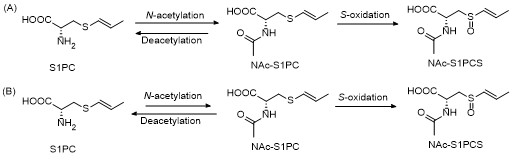
| Animal | Excreta | Excretiona/% of dose | ||||
|---|---|---|---|---|---|---|
| S1PC | NAc-S1PC | NAc-S1PCS | Total | |||
| Ratb | Urine | i.v. | 2.2±0.42 | 73±2.8 | 13±1.1 | 88±2.2 |
| Oral | 3.1±1.5 | 69±1.4 | 15±1.2 | 87±1.2 | ||
| Bile | i.v. | 0.35±0.15 | 0.26±0.18 | 0.01±0.01 | 0.62±0.34 | |
| Oral | 0.10±0.04 | 0.22±0.06 | 0.02±0.004 | 0.34±0.09 | ||
| Dogc | Urine | i.v. | 0.21±0.06 | 0.86±0.44 | 2.3±1.2 | 3.4±1.7 |
| Oral | 0.22±0.14 | 0.62±0.34 | 3.3±2.4 | 4.2±2.7 | ||
| Animal | Excreta | Excretiona/% of dose | ||||
|---|---|---|---|---|---|---|
| S1PC | NAc-S1PC | NAc-S1PCS | Total | |||
| Ratb | Urine | i.v. | 2.2±0.42 | 73±2.8 | 13±1.1 | 88±2.2 |
| Oral | 3.1±1.5 | 69±1.4 | 15±1.2 | 87±1.2 | ||
| Bile | i.v. | 0.35±0.15 | 0.26±0.18 | 0.01±0.01 | 0.62±0.34 | |
| Oral | 0.10±0.04 | 0.22±0.06 | 0.02±0.004 | 0.34±0.09 | ||
| Dogc | Urine | i.v. | 0.21±0.06 | 0.86±0.44 | 2.3±1.2 | 3.4±1.7 |
| Oral | 0.22±0.14 | 0.62±0.34 | 3.3±2.4 | 4.2±2.7 | ||
| [1] |
pmid: 16395514 |
| [2] |
doi: 10.2174/092986711796504664 pmid: 21728972 |
| [3] |
|
| [4] |
doi: 10.1080/17415993.2012.712123 |
| [5] |
doi: 10.3390/molecules190812591 pmid: 25153873 |
| [6] |
|
| [7] |
doi: 10.1021/jf00057a004 |
| [8] |
doi: 10.1093/jn/131.3.955S |
| [9] |
doi: 10.1055/s-2006-950216 |
| [10] |
doi: 10.5012/bkcs.2011.32.1.319 |
| [11] |
doi: 10.1007/s10068-021-01028-1 |
| [12] |
|
|
(刘肖, 周才琼, 食品与发酵工业, 2019, 45, 282.)
doi: 10.13995/j.cnki.11-1802/ts.017628 |
|
| [13] |
doi: 10.3390/molecules22040570 |
| [14] |
|
|
(盛晓婧, 庞旭, 张继光, 邱静, 钱永忠, 翁瑞, 农产品质量与安全, 2019, 49.)
|
|
| [15] |
doi: 10.3390/antiox11071345 |
| [16] |
|
| [17] |
doi: 10.1038/scientificamerican0385-114 pmid: 3975593 |
| [18] |
doi: 10.1002/anie.v31:9 |
| [19] |
doi: 10.1021/jo01347a029 |
| [20] |
|
| [21] |
doi: 10.1021/jf60223a035 |
| [22] |
doi: 10.1021/jf00116a062 |
| [23] |
doi: 10.1021/jo00153a001 |
| [24] |
doi: 10.1021/ja00194a065 |
| [25] |
|
| [26] |
doi: 10.1021/jo00423a044 |
| [27] |
|
| [28] |
pmid: 9202491 |
| [29] |
pmid: 10759524 |
| [30] |
doi: 10.1111/nph.1980.85.issue-4 |
| [31] |
doi: 10.1016/0031-9422(89)80031-7 |
| [32] |
doi: 10.1111/tpj.2015.83.issue-6 |
| [33] |
|
| [34] |
doi: 10.1021/ja00012a062 |
| [35] |
doi: 10.1248/cpb.9.77 |
| [36] |
doi: 10.3945/jn.114.208520 |
| [37] |
doi: 10.1074/jbc.RA120.014484 pmid: 32527723 |
| [38] |
doi: 10.1104/pp.108.125757 |
| [39] |
doi: 10.1080/10408398.2021.1926906 |
| [40] |
pmid: 15652575 |
| [41] |
doi: 10.1248/cpb.9.251 |
| [42] |
doi: 10.1055/s-2006-962031 pmid: 17262437 |
| [43] |
|
|
(吴文卉, 徐洋, 张雅迪, 于郑娇, 庞雨濛, 秦蕾, 王勇, 生物工程学报, 2024, 40, 1076.)
|
|
| [44] |
|
|
(翁瑞, 盛晓婧, 刘平香, 张继光, 邱静, 钱永忠, 中国农业科学, 2019, 52, 3199.)
doi: 10.3864/j.issn.0578-1752.2019.18.012 |
|
| [45] |
doi: 10.1021/jf60174a007 |
| [46] |
|
| [47] |
doi: 10.19026/ajfst.9.2007 |
| [48] |
|
| [49] |
pmid: 1775579 |
| [50] |
doi: 10.1021/np50074a014 |
| [51] |
|
| [52] |
doi: 10.1016/j.foodchem.2016.05.102 |
| [53] |
|
| [54] |
doi: 10.1021/acs.jafc.7b05480 |
| [55] |
doi: 10.1016/j.foodchem.2019.125499 |
| [56] |
|
| [57] |
doi: 10.1021/jf0106648 |
| [58] |
doi: 10.1016/j.jff.2023.105657 |
| [59] |
doi: 10.1093/eurheartj/ehn018 |
| [60] |
doi: 10.1016/S0140-6736(00)04728-0 pmid: 11377666 |
| [61] |
doi: 10.1038/ki.2015.142 |
| [62] |
doi: 10.1111/jch.2016.18.issue-12 |
| [63] |
doi: 10.3945/jn.114.202192 |
| [64] |
doi: 10.1038/ejcn.2012.178 pmid: 23169470 |
| [65] |
doi: 10.1016/j.maturitas.2010.06.001 |
| [66] |
doi: 10.1016/j.jchromb.2017.01.029 |
| [67] |
doi: S0731-7085(18)32284-2 pmid: 30807919 |
| [68] |
doi: 10.1111/jphp.12865 |
| [69] |
doi: 10.3389/fphar.2022.954938 |
| [70] |
|
| [71] |
doi: 10.1038/s41598-018-32431-0 |
| [72] |
|
| [73] |
doi: 10.1186/s12964-020-00683-x |
| [74] |
doi: 10.1038/s41598-021-01866-3 |
| [75] |
doi: 10.1016/j.molimm.2018.02.006 |
| [76] |
doi: 10.1038/ki.2013.135 |
| [77] |
|
| [78] |
doi: 10.1016/S0271-5317(01)00269-X |
| [79] |
doi: 10.3109/08923973.2015.1081932 |
| [80] |
doi: 10.3390/ijms19103107 |
| [81] |
doi: 10.3892/etm.2019.8388 pmid: 32010337 |
| [82] |
doi: 10.1016/j.nut.2004.07.018 |
| [83] |
doi: 10.1021/jf048601n |
| [84] |
doi: 10.1021/jf060043k |
| [85] |
doi: 10.1016/j.nut.2016.01.026 |
| [86] |
doi: 10.1038/nri982 pmid: 12511876 |
| [87] |
doi: 10.1016/j.it.2012.02.002 pmid: 22410243 |
| [88] |
doi: 10.1038/mi.2007.6 pmid: 19079156 |
| [89] |
doi: 10.1146/annurev-cellbio-092910-154005 pmid: 21801009 |
| [90] |
|
| [91] |
doi: 10.1016/j.biopha.2018.05.007 |
| [92] |
doi: 10.1016/j.mam.2011.09.001 pmid: 21982744 |
| [93] |
doi: 10.1016/j.intimp.2013.11.001 |
| [94] |
doi: 10.1080/15548627.2017.1402992 pmid: 29165043 |
| [95] |
doi: 10.1038/s41598-017-01246-w |
| [96] |
doi: 10.1080/15548627.2017.1362525 pmid: 28806133 |
| [97] |
|
| [98] |
doi: 10.1124/dmd.115.063230 |
| [99] |
doi: 10.3109/00498254.2016.1144229 |
| [100] |
|
| [101] |
doi: 10.4103/0973-7847.65321 |
| [102] |
doi: 10.1093/jn/136.3.769S |
| [103] |
doi: 10.1248/bpb.b16-00449 |
| [104] |
doi: 10.1007/BF02664770 pmid: 10757551 |
| [105] |
doi: 10.1093/jn/136.3.793S |
| [106] |
doi: 10.1186/s12906-019-2780-5 |
| [107] |
doi: 10.1002/ptr.6645 pmid: 32068926 |
| [1] | 刘小宇, 许庭瑞, 秦勇. 吗啡类生物碱的全合成研究新进展★[J]. 有机化学, 2025, 45(9): 3098-3112. |
| [2] | 莫百川, 李婷婷, 王芳, 李晓杰, 巴达日夫. 咔唑醌天然产物的合成研究进展[J]. 有机化学, 2025, 45(8): 2746-2766. |
| [3] | 王烁圻, 王成明. 一种毛兰素的高效合成方法[J]. 有机化学, 2025, 45(7): 2625-2629. |
| [4] | 林天星, 刘天飞. N-三氟甲基酰胺合成方法的研究进展[J]. 有机化学, 2025, 45(6): 1995-2006. |
| [5] | 李闯, 张成, 刘小宇, 秦勇. 二萜生物碱全合成研究进展[J]. 有机化学, 2025, 45(3): 881-895. |
| [6] | 邢德悦, 王阳, 房亭轩, 解瑞俊, 李潇, 贾慧劼, 竺宁. 苯并噻唑-2-酮类化合物的合成研究进展[J]. 有机化学, 2025, 45(12): 4298-4314. |
| [7] | 郭国菊, 吴启龙, 董宇振, 张洁, 石永佳, 柳清, 杨道山. 光/电化学驱动硫代磷酸酯类化合物的合成研究进展[J]. 有机化学, 2025, 45(10): 3719-3740. |
| [8] | 刘艺琦, 陈文婕, 赵泽艳, 王苏棋, 唐圣松, 何卫民, 彭俊梅. 关于8种含氮杂环光催化合成的研究进展[J]. 有机化学, 2025, 45(10): 3546-3586. |
| [9] | 曹素芳, 刘云云, 万结平. α-三氟甲基酮的合成及其脱氟转化反应研究进展[J]. 有机化学, 2025, 45(1): 86-103. |
| [10] | 张雅芳, 黄轩, 林琪, 钟海琼, 翁志强, 吴伟. 噻唑类化合物的合成研究进展[J]. 有机化学, 2024, 44(5): 1458-1479. |
| [11] | 吴游金, 金正盛, 刘咏嘉, 黄文倩, 赵桂龙. 基于NYX-2925 L-脯氨酸衍生的N-甲基-D-天冬氨酸(NMDA)受体部分激动剂的设计、合成和活性研究[J]. 有机化学, 2024, 44(4): 1247-1263. |
| [12] | 杜友龙, 王倩, 梅海波, Romana Pajkert, Gerd-Volker Röschenthaler, 韩建林. α,α-二氟-β-氨基膦酸酯的合成与应用研究进展[J]. 有机化学, 2024, 44(12): 3686-3701. |
| [13] | 光明甲, 姜硕, 朱宝玉, 张如松, 王鲲鹏, 王明慧, 许良忠. 新型吡咯-2-甲酸及其衍生物的设计、合成和杀虫、杀螨活性[J]. 有机化学, 2023, 43(8): 2895-2904. |
| [14] | 关丽, 周艳艳, 毛永爆, 付恺森, 关文惠, 付义乐. 甲川链修饰菁染料的合成研究进展[J]. 有机化学, 2023, 43(8): 2682-2698. |
| [15] | 何金燕, 田富云, 吴青青, 郑月明, 陈玉婷, 许海燕, 金正盛, 詹丽, 程新强, 顾跃玲, 高召兵, 赵桂龙. 基于[3.3.3]螺桨烷的电压门控钙离子通道α2δ亚基配体的合成和生物活性研究[J]. 有机化学, 2023, 43(6): 2226-2238. |
| 阅读次数 | ||||||
|
全文 |
|
|||||
|
摘要 |
|
|||||


