有机化学 ›› 2026, Vol. 46 ›› Issue (9): 3431-3447.DOI: 10.6023/cjoc202605004 上一篇 下一篇
综述与进展
浮晓静, 吴萍, 宋佳威, 辛鑫, 徐文瑨*( ), 张成潘*()
收稿日期:2026-05-07
修回日期:2026-06-06
发布日期:2026-07-14
基金资助:
Xiaojing Fu, Ping Wu, Jiawei Song, Xin Xin, Wenjin Xu*(), Chengpan Zhang*()
Received:2026-05-07
Revised:2026-06-06
Published:2026-07-14
Contact:
About author:Dedicated to the 100th anniversary of the birth of Professor Xikui Jiang.
Supported by:文章分享
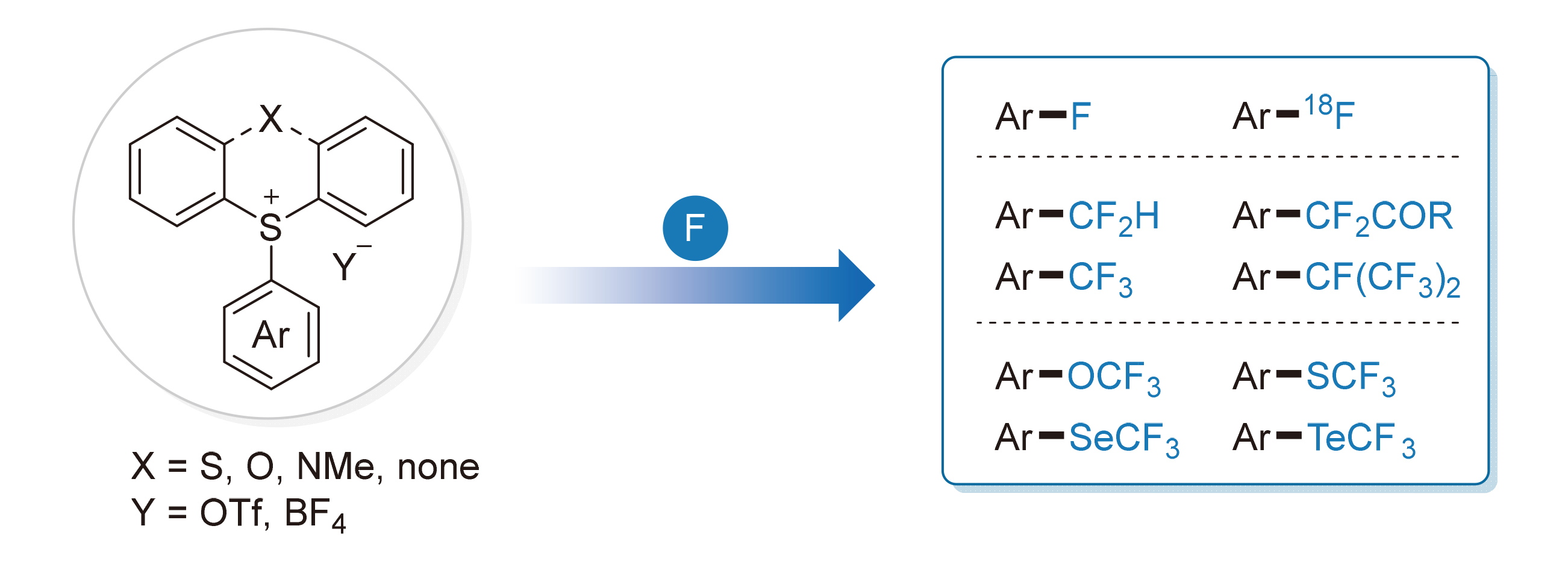
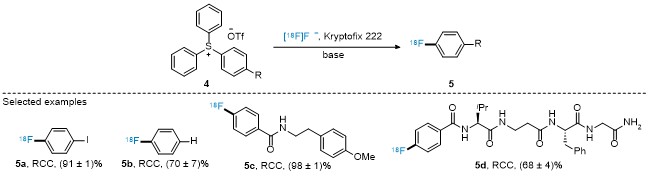
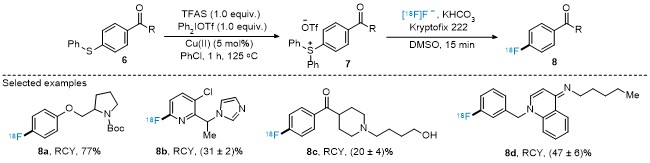
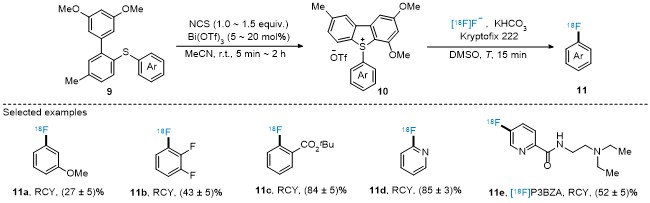
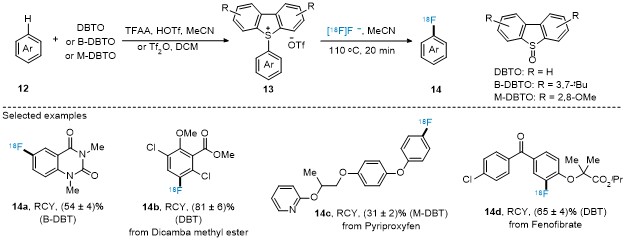
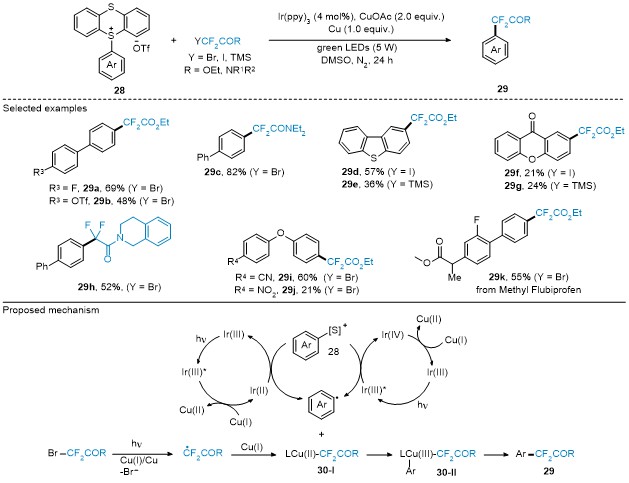
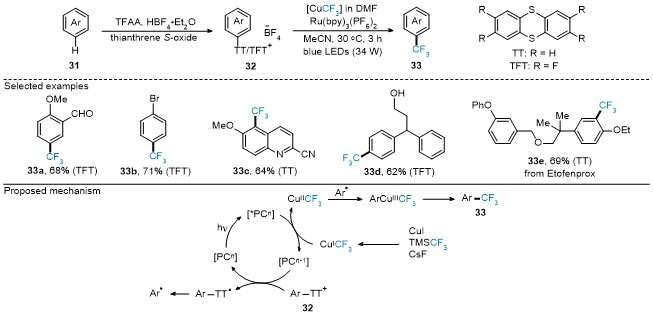
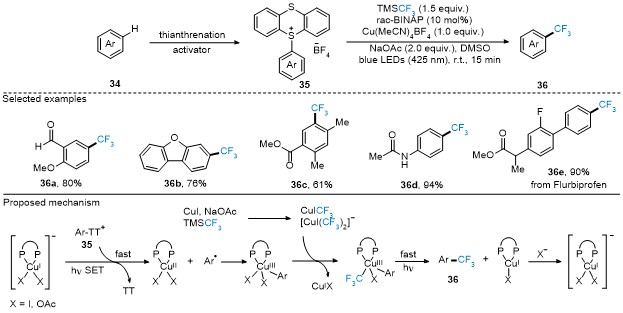
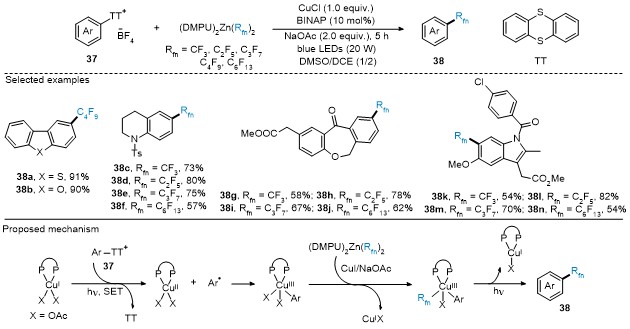
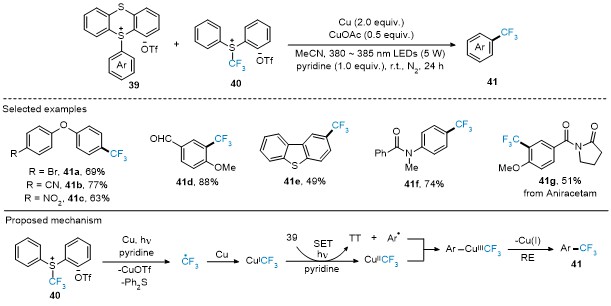
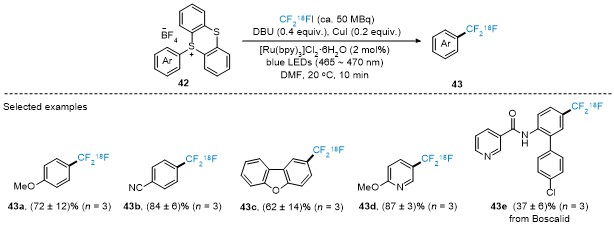
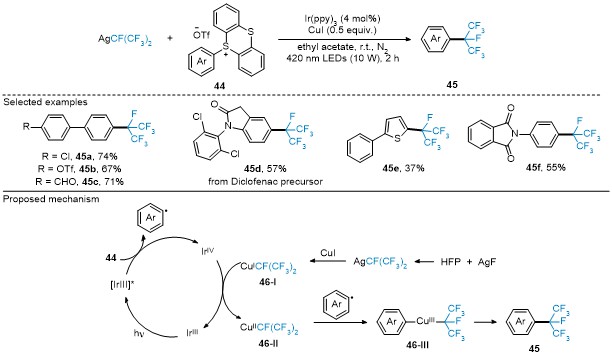
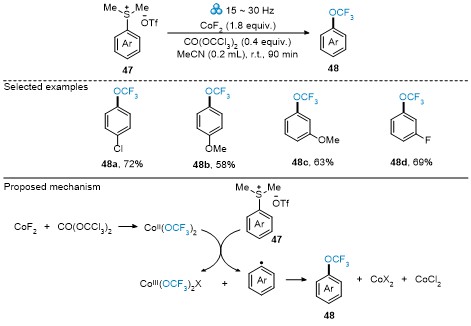
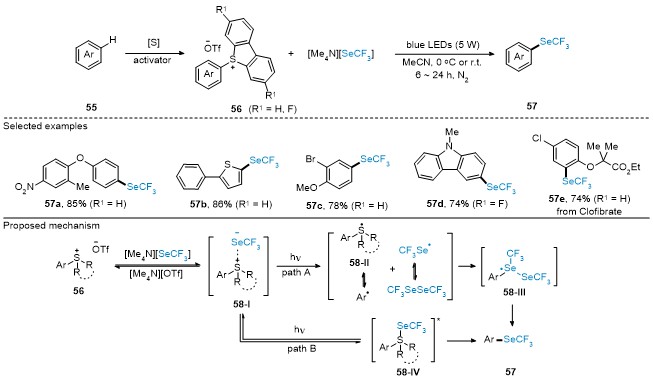
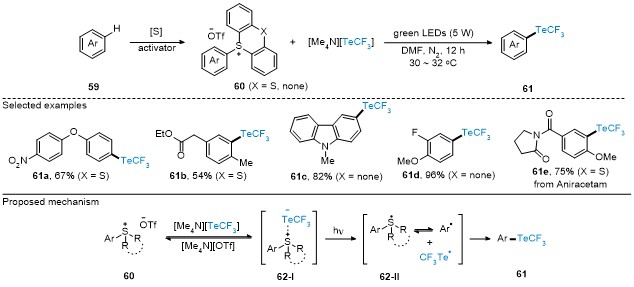
芳基锍盐因制备简单、结构多样、位点选择性好和反应性质丰富等优点, 已成为芳烃精准官能团化的重要原料. 近年来, 芳基锍盐在氟化及氟烷基化反应中得到了广泛应用, 其中环状芳基锍盐如噻蒽锍盐、吩噁噻锍盐、二苯并噻吩锍盐和吩噻嗪锍盐等尤为受到关注. 此文全面总结了芳基锍盐参与的氟化和氟烷基化反应, 主要分为以下三类: (1) Ar—F键与Ar—[18F]键的构建, 包括过渡金属和可见光协同催化的氟化反应, 以及放射性[18F]标记的芳香亲核取代反应; (2) Ar—CF2H键、Ar—CF2COR键、Ar—CF3键和Ar—CF(CF3)2键的构建, 涵盖过渡金属催化的偶联、无催化剂参与的偶联以及光诱导的自由基偶联等; (3) Ar—OCF3键、Ar—SCF3键、Ar—SeCF3键及Ar—TeCF3键的构建, 涉及的反应机理包括过渡金属催化、机械化学转化以及光催化电子供体-受体(EDA)复合物活化等. 这些反应为芳基锍盐在氟化学中的进一步应用提供了重要参考.
浮晓静, 吴萍, 宋佳威, 辛鑫, 徐文瑨, 张成潘. 芳基锍盐的氟化和氟烷基化反应研究进展[J]. 有机化学, 2026, 46(9): 3431-3447.
Xiaojing Fu, Ping Wu, Jiawei Song, Xin Xin, Wenjin Xu, Chengpan Zhang. Progress on Fluorination and Fluoroalkylation Reactions of Aryl Sulfonium Salts[J]. Chinese Journal of Organic Chemistry, 2026, 46(9): 3431-3447.
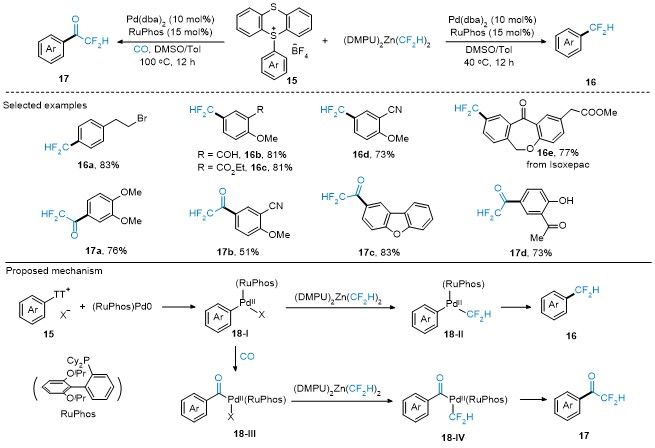
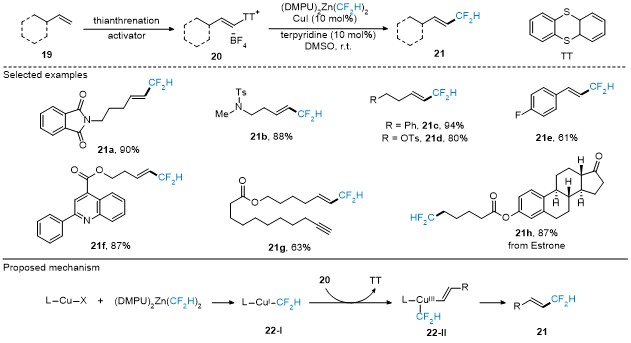




| [1] |
(a)
|
|
(b)
doi: 10.2174/0929867326666191003155703 |
|
|
(c)
doi: 10.1021/acs.jmedchem.7b01788 |
|
|
(d)
doi: 10.1021/acsomega.0c00830 |
|
|
(e)
|
|
| [2] |
(a)
doi: 10.1002/ps.v80.7 |
|
(b)
doi: 10.1016/j.cclet.2021.07.064 |
|
| [3] |
(a)
doi: 10.1021/acs.chemrev.1c00632 |
|
(b)
doi: 10.1016/j.actbio.2021.10.027 |
|
| [4] |
(a)
doi: 10.1039/B711844A pmid: 26756377 |
|
(b)
doi: 10.1016/j.jfluchem.2019.109420 pmid: 26756377 |
|
|
(c)
doi: 10.1021/acs.chemrev.5b00392 pmid: 26756377 |
|
| [5] |
(a)
doi: 10.1021/acscatal.4c04986 |
|
(b)
doi: 10.1021/acs.accounts.0c00471 |
|
|
(c)
doi: 10.1002/anie.v58.42 |
|
|
(d)
|
|
| [6] |
(a)
doi: 10.1038/nature25749 |
|
(b)
doi: 10.1039/C5RA11337G |
|
|
(c)
|
|
| [7] |
(a)
doi: 10.1016/j.tetlet.2017.12.005 |
|
(b)
|
|
|
(c)
doi: 10.1016/j.cclet.2020.06.003 |
|
|
(d)
doi: 10.1002/tcr.v21.12 |
|
|
(e)
doi: 10.1055/a-1677-5971 |
|
|
(f)
|
|
|
(g)
|
|
|
(h)
doi: 10.1021/acs.accounts.5c00863 |
|
|
(i)
|
|
|
(j)
doi: 10.1039/D5QO01417D |
|
|
(k)
doi: 10.1055/s-0041-1737493 |
|
|
(l)
doi: 10.6023/cjoc202209004 |
|
|
(徐浩, 张杰, 左峻泽, 王丰晓, 吕健, 混旭, 杨道山, 有机化学, 2022, 42, 4037.)
doi: 10.6023/cjoc202209004 |
|
|
(m)
|
|
| [8] |
(a)
doi: 10.1039/D3CS00503H pmid: 28686248 |
|
(b)
doi: 10.1039/c7dt01685a pmid: 28686248 |
|
| [9] |
(a)
doi: 10.1021/jo00409a027 pmid: 31680351 |
|
(b)
doi: 10.1021/jo00256a042 pmid: 31680351 |
|
|
(c)
pmid: 31680351 |
|
|
(d)
doi: 10.1021/ol503177q pmid: 31680351 |
|
|
(e)
doi: 10.1038/s41586-019-0982-0 pmid: 31680351 |
|
|
(f)
doi: 10.1007/s11426-019-9652-x pmid: 31680351 |
|
|
(g)
doi: 10.1002/anie.201912383 pmid: 31680351 |
|
|
(h)
doi: 10.1021/jacs.3c03413 pmid: 31680351 |
|
|
(i)
pmid: 31680351 |
|
|
(j)
doi: 10.1016/j.cclet.2025.111132 pmid: 31680351 |
|
|
(k)
doi: 10.1021/acs.orglett.5c04859 pmid: 31680351 |
|
|
(l)
pmid: 31680351 |
|
| [10] |
(a)
doi: 10.1021/acs.orglett.1c03986 |
|
(b)
doi: 10.1021/acs.joc.2c00771 |
|
|
(c)
doi: 10.1039/D4OB01220H |
|
| [11] |
doi: 10.1021/cr500366b pmid: 25474722 |
| [12] |
doi: 10.1038/s41557-019-0353-3 |
| [13] |
(a)
doi: 10.1002/anie.v47:47 pmid: 23086547 |
|
(b)
doi: 10.1002/anie.201204687 pmid: 23086547 |
|
|
(c)
doi: 10.1002/cjoc.v41.15 pmid: 23086547 |
|
|
(朱源, 陈乐园, 侯文彬, 李祎亮, 有机化学, 2021, 41, 1774.)
doi: 10.6023/cjoc202010030 pmid: 23086547 |
|
|
(d)
doi: 10.1016/j.bioorg.2025.108272 pmid: 23086547 |
|
| [14] |
|
| [15] |
doi: 10.1038/srep09941 |
| [16] |
doi: 10.1021/jacs.8b06730 |
| [17] |
doi: 10.1002/anie.v59.5 |
| [18] |
(a)
doi: 10.1021/acs.jmedchem.6b01691 pmid: 33406177 |
|
(b)
doi: 10.1039/D1CS00360G pmid: 33406177 |
|
|
(c)
doi: 10.1039/d0ob02374d pmid: 33406177 |
|
|
(d)
doi: 10.1016/j.jfluchem.2023.110238 pmid: 33406177 |
|
| [19] |
doi: 10.1002/anie.v58.41 |
| [20] |
doi: 10.1021/acscatal.4c02975 |
| [21] |
doi: 10.1021/acs.orglett.4c04250 |
| [22] |
doi: 10.1021/jacs.4c14391 |
| [23] |
doi: 10.1021/acs.orglett.5c05385 |
| [24] |
|
| [25] |
(a)
doi: 10.3390/molecules30143009 |
|
(b)
doi: 10.6023/cjoc202506034 |
|
|
(何卫保, 易荣楠, 杨梓, 伍智林, 何卫民, 有机化学, 2025, 45, 3534.)
|
|
|
(c)
doi: 10.1039/D1CS00200G |
|
|
(d)
doi: 10.1002/cjoc.v40.21 |
|
|
(e)
doi: 10.1002/adsc.v362.20 |
|
|
(f)
doi: 10.1039/D2CC04082D |
|
| [26] |
doi: 10.1021/acs.orglett.4c04092 |
| [27] |
doi: 10.1039/D6CC01493C |
| [28] |
doi: 10.1021/acs.orglett.5c04518 |
| [29] |
|
| [30] |
(a)
doi: 10.1021/ja01089a020 |
|
(b)
doi: 10.1021/cr00002a004 |
|
|
(c)
doi: 10.1016/j.bmc.2014.09.052 |
|
|
(d)
doi: 10.1584/jpestics.30.354 |
|
|
(e)
doi: 10.1016/j.bmc.2015.08.008 |
|
|
(f)
doi: 10.1021/acs.jafc.4c02841 |
|
| [31] |
doi: 10.1021/acs.orglett.6c00007 |
| [32] |
(a)
doi: 10.1039/D3OB00258F |
|
(b)
doi: 10.1002/cjoc.v41.17 |
|
|
(c)
doi: 10.1002/chem.v28.58 |
|
|
(d)
doi: 10.6023/cjoc202202025 |
|
|
(冉龙玉, 张成潘, 有机化学, 2022, 42, 2045.)
doi: 10.6023/cjoc202202025 |
|
| [33] |
|
| [34] |
(a)
doi: 10.1055/a-2335-8627 |
|
(b)
doi: 10.1021/acs.joc.2c02777 |
|
|
(c)
doi: 10.1016/j.cclet.2022.108045 |
|
|
(d)
doi: 10.1055/s-0040-1707211 |
|
| [35] |
doi: 10.1002/anie.v59.14 |
| [36] |
(a)
doi: 10.1002/chem.201704637 pmid: 29072337 |
|
(b)
doi: 10.1016/j.tet.2021.132476 pmid: 29072337 |
|
|
(c)
doi: 10.1002/ajoc.v10.1 pmid: 29072337 |
|
|
(d)
doi: 10.1002/adsc.v363.7 pmid: 29072337 |
|
|
(e)
pmid: 29072337 |
|
| [37] |
doi: 10.1039/D2QO00235C |
| [38] |
(a)
|
|
(b)
doi: 10.1002/anie.v57.51 |
|
|
(c)
doi: 10.1016/j.isci.2022.105566 |
|
|
(d)
doi: 10.1002/slct.v8.26 |
|
| [39] |
doi: 10.1039/D5QO00215J |
| [40] |
(a)
doi: 10.1021/jacs.6c00530 |
|
(b)
doi: 10.1021/jacs.5c16665 |
| [1] | 种千惠, 王光明, 吴国伊, 闫倩倩, 王标兵, 张卡卡. 水中分散的有机长效发光材料[J]. 有机化学, 2026, 46(9): 3688-3696. |
| [2] | 汪静莉, 陈曦, 马立业, 易文斌. 脱硫氟化构建N-氟烷基化合物的研究进展[J]. 有机化学, 2026, 46(9): 3399-3413. |
| [3] | 易千禧, 梁宸伟, 程瑶航, 安光辉. 可见光介导钌催化苯胺衍生物对位酰基化和二氟烷基化[J]. 有机化学, 2026, 46(8): 3276-3287. |
| [4] | 张美, 陈嫚, 陈雨, 姚秋丽, 王安俊. 四丁基氟化铵促进的α-(三氟甲基)苯乙烯与硫酚的氢硫醇化反应[J]. 有机化学, 2026, 46(6): 2346-2357. |
| [5] | 吴少华, 龚帆, 曹柱, 邓清海. 高价碘试剂介导的烯烃自由基氟烷基双官能化研究进展[J]. 有机化学, 2026, 46(4): 1390-1427. |
| [6] | 范润东, 陈冰然, 黎富奇, 陈锦秀, 严琼姣, 汪伟, 周慧. 无光敏剂光诱导α-三氟甲基烯烃的氢二氟烷基化反应[J]. 有机化学, 2026, 46(2): 641-652. |
| [7] | 韩哲, 崔银, 丁成荣, 杨建, 张国富. “SO2F”源直接构建磺酰氟官能团的合成应用研究进展[J]. 有机化学, 2025, 45(7): 2245-2264. |
| [8] | 车琳, 江忠涛, 杨慧, 胡芳东, 夏莹. 无过渡金属参与的偕二氟环丙烷双脱氟烷氧基化合成环丙酮缩酮[J]. 有机化学, 2025, 45(6): 2222-2230. |
| [9] | 林天星, 刘天飞. N-三氟甲基酰胺合成方法的研究进展[J]. 有机化学, 2025, 45(6): 1995-2006. |
| [10] | 王曼曼, 习文慧, 吴昊, 白大昌. 过渡金属催化碳氢键活化合成烷基氟烷基化合物的研究进展[J]. 有机化学, 2025, 45(2): 516-530. |
| [11] | 罗婷, 肖宇峰, 李珣, 夏雯, 张卡卡. 基于分子内电荷转移技术构建高效热激活延迟荧光型有机余辉材料[J]. 有机化学, 2025, 45(11): 4202-4209. |
| [12] | 王丽梅, 刘晓圆, 昝金成, 孙书涛, 刘磊, 李伟, 刘希功. 锰催化环丁醇开环的C—C键氟化反应[J]. 有机化学, 2024, 44(7): 2333-2340. |
| [13] | 邹震雷, 李和寅, 黄梦君, 沈胤朴, 刘继阳, 王之兆, 张为钢, 王毅, 潘毅. 关于惰性含氟温室气体转化与利用的研究进展[J]. 有机化学, 2024, 44(6): 1831-1852. |
| [14] | 刘君君, 卢涛涛, 马平, 赵庆阳, 邝福儿. 钯催化的碳(sp3)-硅键转化实现碳(sp3)-碳(sp2)偶联制备三氟丙基(杂)芳烃[J]. 有机化学, 2024, 44(4): 1319-1326. |
| [15] | 李洋, 董亚楠, 李跃辉. 经由N-硼基酰胺中间体的酰胺高效转化合成腈类化合物[J]. 有机化学, 2024, 44(2): 638-643. |
| 阅读次数 | ||||||
|
全文 |
|
|||||
|
摘要 |
|
|||||