有机化学 ›› 2026, Vol. 46 ›› Issue (9): 3399-3413.DOI: 10.6023/cjoc202606003 上一篇 下一篇
综述与进展
汪静莉a, 陈曦b, 马立业a, 易文斌a,*( )
)
收稿日期:2026-06-03
修回日期:2026-06-24
发布日期:2026-07-23
基金资助:
Jingli Wanga, Xi Chenb, Liye Maa, Wenbin Yia,*()
Received:2026-06-03
Revised:2026-06-24
Published:2026-07-23
Contact:
About author:Dedicated to the 100th anniversary of the birth of Professor Xikui Jiang.
Supported by:文章分享
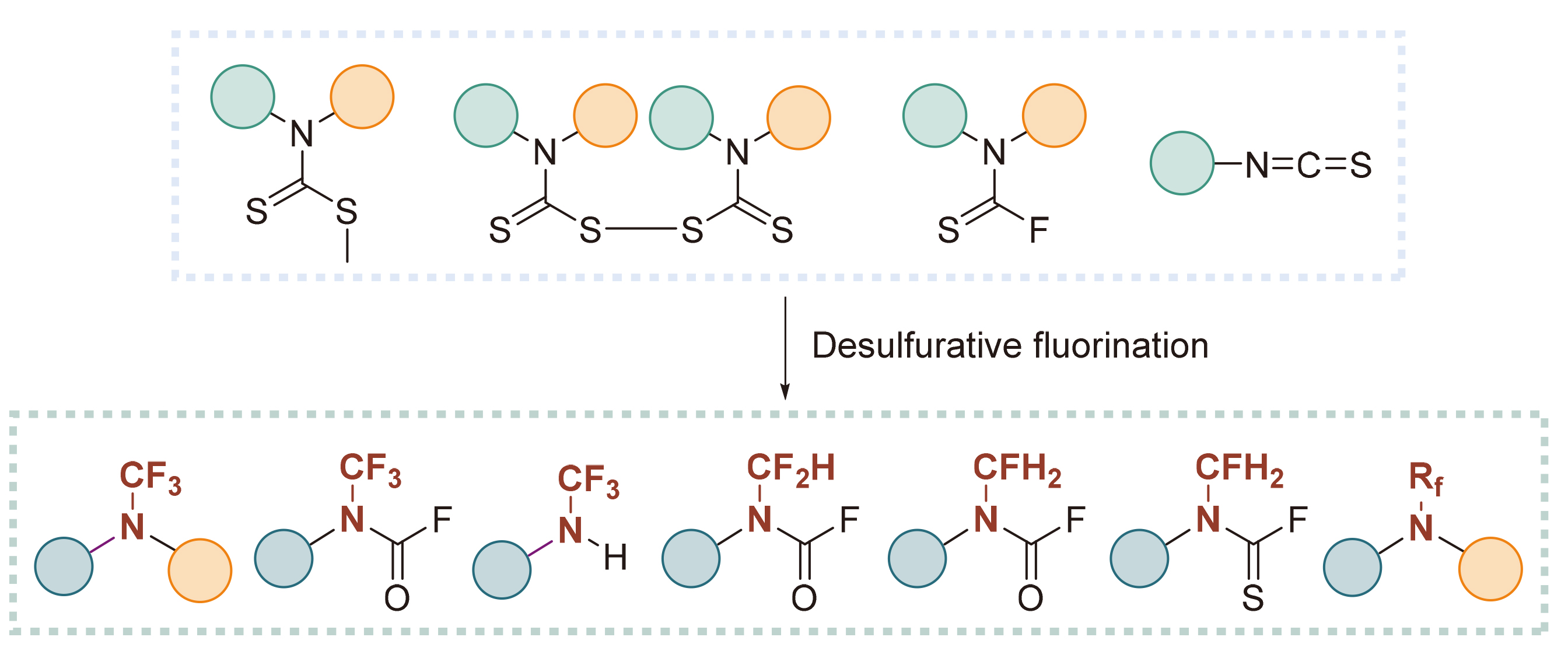
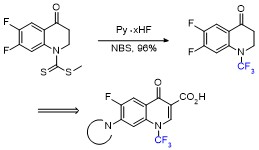
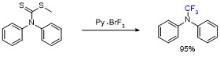
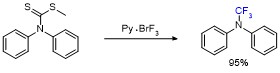
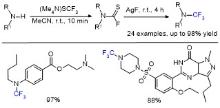
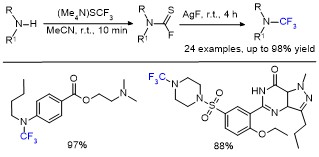
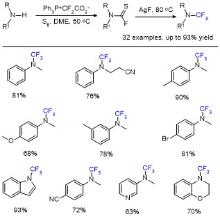
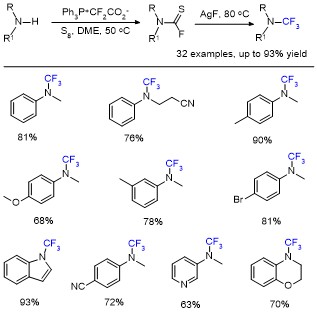
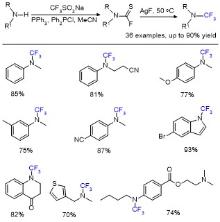
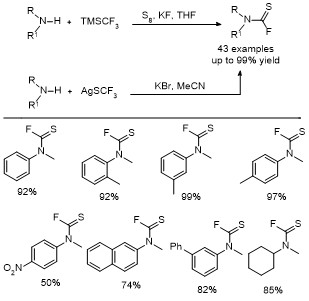
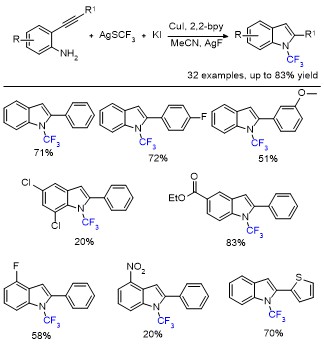
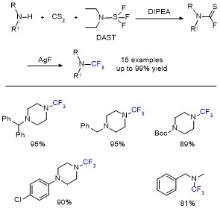
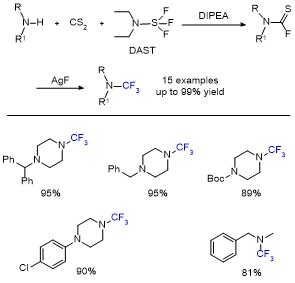
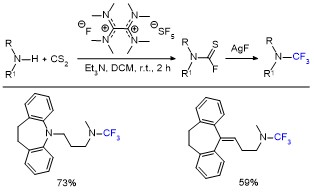
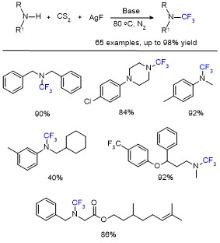
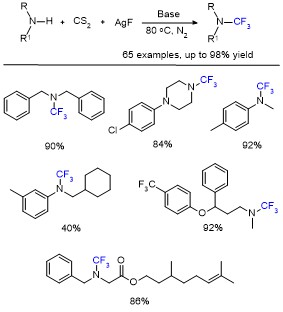
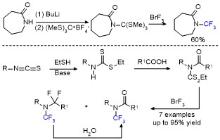
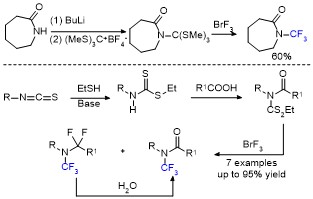
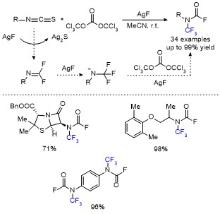
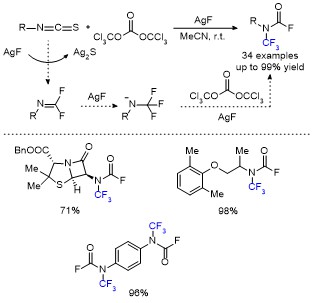
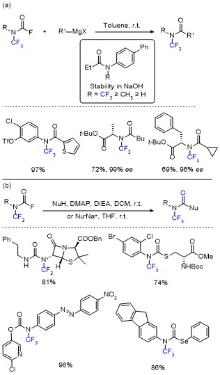
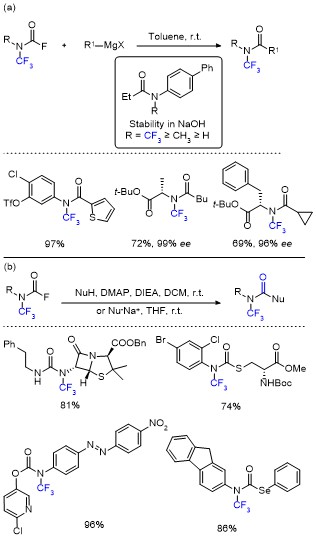
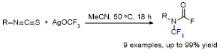
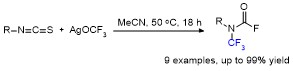
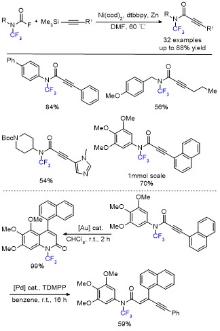
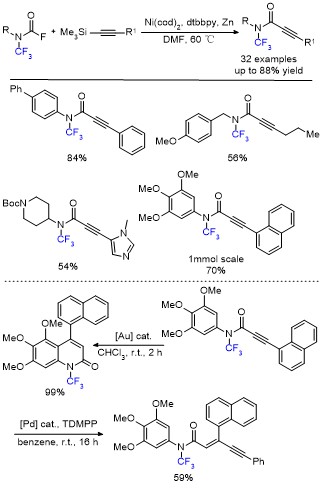
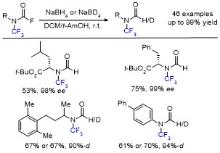
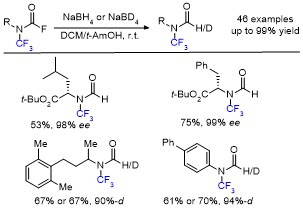
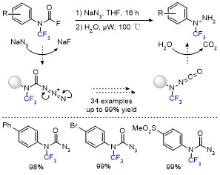
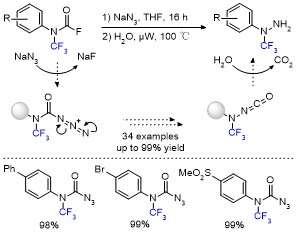
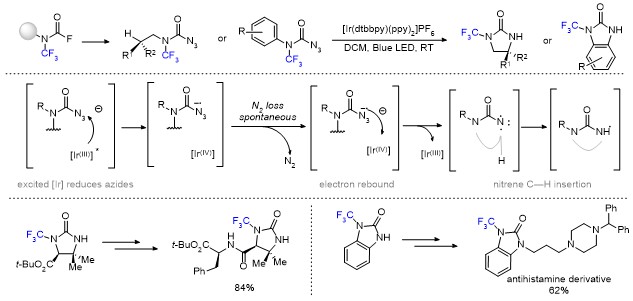
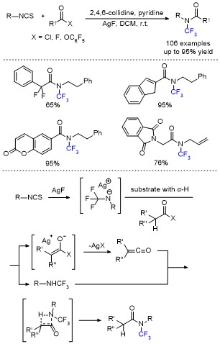
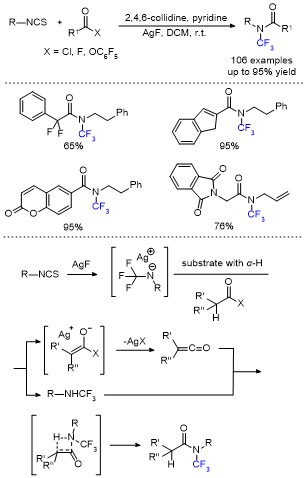
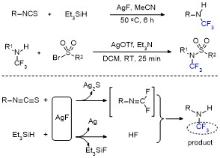
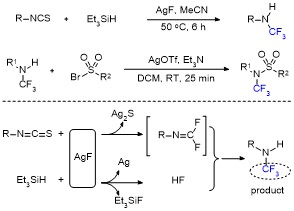
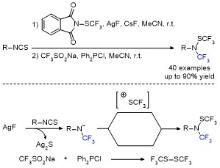
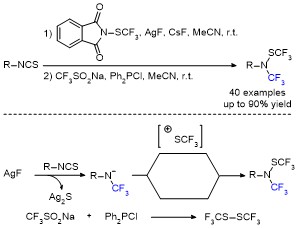
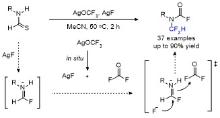
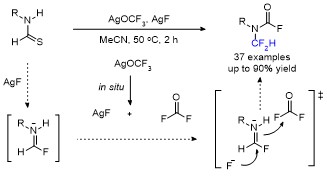
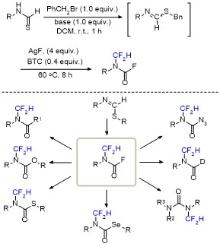
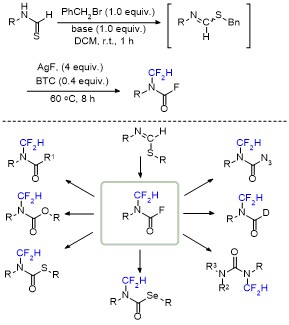
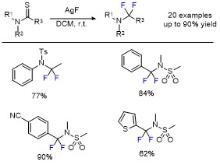
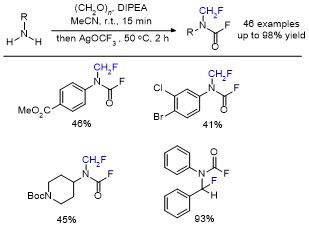
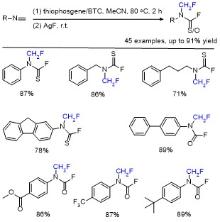
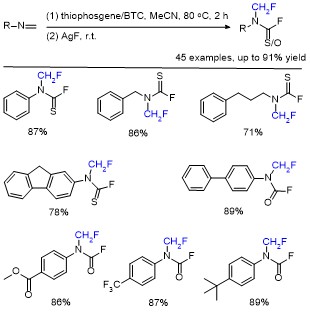
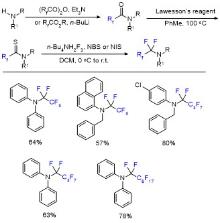
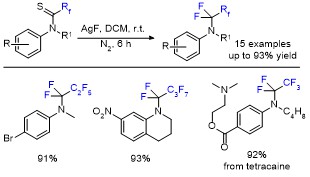
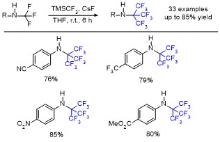
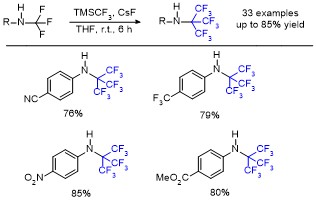
N-氟烷基化合物是医药、农药及功能材料领域的重要功能分子, 将氟烷基引入胺类氮原子, 可精准调控分子理化性质与生物活性, 现已成为药物结构修饰的研究热点. 脱硫氟化作为构建N-氟烷基结构的高效策略, 以硫代酰胺、二硫代氨基甲酸酯、硫代氨基甲酰氟及硫代异氰酸酯等硫代羰基化合物为前体, 在氟化试剂、路易斯酸或氧化助剂作用下, 实现C=S键脱硫转化, 高效构筑N-CF3、N-CF2H、N-CH2F及全氟烷基官能团. 系统综述了近年来脱硫氟化法合成各类N-氟烷基化合物的研究进展, 总结了不同硫代前体的反应规律、作用机理及底物适用范围, 评述了各类合成策略的优势与局限性. 同时介绍了该类化合物在抗菌活性分子、杂环药物及功能砌块合成中的应用, 并分析了当前脱硫氟化技术存在的底物普适性不足、工业化工艺欠缺等问题. 最后对新型催化体系、绿色氟化技术及规模化合成方法的发展方向进行了展望, 旨在为含氟胺类功能分子的设计与合成提供参考.
汪静莉, 陈曦, 马立业, 易文斌. 脱硫氟化构建N-氟烷基化合物的研究进展[J]. 有机化学, 2026, 46(9): 3399-3413.
Jingli Wang, Xi Chen, Liye Ma, Wenbin Yi. Research Progress on the Construction of N-Fluoroalkyl Compounds via Desulfurative Fluorination[J]. Chinese Journal of Organic Chemistry, 2026, 46(9): 3399-3413.








| [1] |
doi: 10.1016/S0022-1139(01)00375-X |
| [2] |
doi: 10.1021/jm1013693 |
| [3] |
doi: 10.1021/acs.jmedchem.7b01788 |
| [4] |
doi: 10.3390/molecules29061408 |
| [5] |
doi: 10.1021/acs.chemrev.1c00632 |
| [6] |
doi: 10.1039/b610738a |
| [7] |
doi: 10.1016/j.jfluchem.2014.06.014 |
| [8] |
doi: 10.1007/s00128-007-9262-z |
| [9] |
doi: 10.1021/ja01477a016 |
| [10] |
doi: 10.1016/S0022-1139(00)85127-1 |
| [11] |
doi: 10.1016/S0022-1139(00)80138-4 |
| [12] |
pmid: 10956459 |
| [13] |
doi: 10.1016/j.jfluchem.2012.03.008 |
| [14] |
doi: 10.1246/bcsj.71.1973 |
| [15] |
doi: 10.1002/jlcr.v44:12 |
| [16] |
doi: 10.1246/cl.1995.683 |
| [17] |
doi: 10.1021/jm040204g |
| [18] |
doi: 10.1021/ol3000348 pmid: 22313187 |
| [19] |
doi: 10.1016/S0022-1139(01)00391-8 |
| [20] |
doi: 10.1002/anie.201609480 pmid: 27936300 |
| [21] |
doi: 10.1002/anie.v56.52 |
| [22] |
doi: 10.1039/c3cc44271c |
| [23] |
doi: 10.1002/anie.201508495 pmid: 26474170 |
| [24] |
doi: 10.1039/C9CC03282G |
| [25] |
doi: 10.1021/acs.joc.0c01634 |
| [26] |
doi: 10.1021/acs.orglett.9b00383 |
| [27] |
doi: 10.1039/D3QO02007J |
| [28] |
doi: 10.1002/ejoc.v2019.35 |
| [29] |
|
| [30] |
doi: 10.31635/ccschem.024.202404432 |
| [31] |
doi: 10.1021/ja00947a021 |
| [32] |
doi: 10.1021/jo901560b pmid: 19835360 |
| [33] |
doi: 10.1038/s41586-019-1518-3 |
| [34] |
doi: 10.1002/chem.v26.10 |
| [35] |
doi: 10.1021/jacs.1c07780 |
| [36] |
doi: 10.1002/anie.v61.52 |
| [37] |
doi: 10.1002/anie.202004321 pmid: 32293088 |
| [38] |
doi: 10.1021/jacs.2c02004 pmid: 35333063 |
| [39] |
|
| [40] |
doi: 10.1016/j.chempr.2021.07.005 |
| [41] |
|
| [42] |
doi: 10.1039/d2sc06542h pmid: 37035709 |
| [43] |
doi: 10.1021/jacs.3c13711 pmid: 38180777 |
| [44] |
doi: 10.1002/anie.v63.15 |
| [45] |
doi: 10.1021/acs.joc.4c01752 |
| [46] |
doi: 10.1038/s41557-025-01767-2 |
| [47] |
doi: 10.1002/anie.v64.28 |
| [48] |
|
| [49] |
doi: 10.1016/S0040-4039(00)76719-0 |
| [50] |
doi: 10.1039/D4SC06335J |
| [1] | 黄斌, 许展图, 陈静, 苏伟平, 朱晨. 可见光诱导三氟甲基化研究进展: 三氟乙酸与三氟乙酸酐作为廉价高效的三氟甲基化试剂[J]. 有机化学, 2026, 46(9): 3461-3479. |
| [2] | 刘浩东, 张兆鹏, 陈奕龙, 赵增典, 李新进. 磁驱动炔烃的氢三氟甲基化反应[J]. 有机化学, 2026, 46(9): 3659-3665. |
| [3] | 赵明琪, 黄丹凤, 温欢, 张丹, 王克虎, 王君姣, 张博生, 胡雨来. 可见光驱动CF3Br与未活化烯烃的溴-三氟甲基化反应研究[J]. 有机化学, 2026, 46(9): 3603-3614. |
| [4] | 毛婷, 曾鳞媛, 温吉林, 贾佳. 可见光介导下铱催化脂肪族α-溴代三氟甲基的脱溴环化反应[J]. 有机化学, 2025, 45(7): 2520-2528. |
| [5] | 刘帅, 陈坤泉, 孙德群, 刘强, 陈祥雨. 三氟甲基鏻盐分子内电荷转移复合物促使的杂芳烃三氟甲基化反应[J]. 有机化学, 2025, 45(7): 2545-2551. |
| [6] | 陈旭欣, 张丹丹, 龙鸿新, 刘国凯. 无需光敏剂光诱导炔丙酸酯自由基二氟甲基化合成3-二氟甲基香豆素[J]. 有机化学, 2025, 45(5): 1739-1746. |
| [7] | 区洁晴, 屈培珍, 赵亮. 可见光介导下钯催化脂肪族α-溴代三氟甲基的脱溴还原反应[J]. 有机化学, 2025, 45(4): 1334-1341. |
| [8] | 蒋洁, 李佳丽, 潘若涵, 陈宇, 刘佳乐, 唐裕才. 可见光诱导2-芳基吲哚与二氟甲基亚磺酸钠二氟甲基化/环化反应[J]. 有机化学, 2025, 45(4): 1239-1248. |
| [9] | 何卫保, 易荣楠, 杨梓, 伍智林, 何卫民. Langlois试剂在电化学三氟甲基化反应中的应用进展[J]. 有机化学, 2025, 45(10): 3534-3545. |
| [10] | 周兰, 何红, 杨德巧, 侯中伟, 王磊. N-苄基丙烯酰胺的电化学三氟甲基化/螺环化合成三氟甲基取代2-氮杂螺[4.5]癸烷[J]. 有机化学, 2024, 44(3): 981-988. |
| [11] | 王睿, 高朗, 周岑, 张霄. 苯基吩噻嗪多孔有机聚合物催化的非活化末端烯烃的卤代全氟烷基化反应[J]. 有机化学, 2023, 43(3): 1136-1145. |
| [12] | 陈祥, 欧阳文韬, 李潇, 何卫民. 可见光诱导有机光催化合成二氟乙基苯并噁嗪[J]. 有机化学, 2023, 43(12): 4213-4219. |
| [13] | 涂志, 余金生, 周剑. 溴二氟甲基三甲基硅烷的合成及其在有机合成中的应用[J]. 有机化学, 2023, 43(10): 3491-3507. |
| [14] | 顾清云, 程振凤, 曾小宝. 电化学氧化三氟甲基亚磺酸钠与α-羰基二硫缩烯酮的三氟甲基化反应[J]. 有机化学, 2022, 42(5): 1537-1544. |
| [15] | 锅小龙, 王玉贤, 赵志强, 王庆, 左剑, 王陆瑶. 电化学氧化下喹喔啉-2(1H)-酮的三氟甲基化及电描述符对反应性能的评价[J]. 有机化学, 2022, 42(2): 641-649. |
| 阅读次数 | ||||||
|
全文 |
|
|||||
|
摘要 |
|
|||||